Introduction
Procure-to-Pay (P2P) Suites are comprehensive software solutions that streamline the entire procurement lifecycle from requisition and purchase orders to invoice processing and supplier payments. In plain terms, these platforms help organizations automate procurement workflows, enforce compliance, improve supplier collaboration, and optimize working capital. P2P has become critical as enterprises seek greater efficiency, spend visibility, and risk management. Modern suites incorporate AI, analytics, and cloud capabilities to reduce manual effort, mitigate fraud, and accelerate payment cycles.
Real-world use cases include:
- Automating invoice approvals and payments.
- Managing supplier onboarding and compliance.
- Tracking organizational spend and procurement KPIs.
- Integrating with ERP systems for financial transparency.
- Enabling analytics for procurement cost optimization.
What buyers should evaluate:
- Automation and workflow capabilities.
- Supplier management and compliance features.
- Invoice capture, matching, and approval workflows.
- Reporting and analytics dashboards.
- Integration with ERP, accounting, and payment systems.
- AI/ML support for predictive analytics and fraud detection.
- Cloud, on-premises, or hybrid deployment options.
- Ease of use and user adoption.
- Security and access controls.
- Vendor support and training resources.
Best for:
Procurement managers, finance teams, and enterprises looking to optimize spend, automate workflows, and strengthen supplier relationships.
Not ideal for:
Small businesses with low transaction volume or simple purchasing processes; standalone accounting software or lightweight procurement tools may suffice.
Key Trends in Procure-to-Pay Suites
- Integration of AI and machine learning for invoice validation and fraud detection.
- Cloud-native and SaaS deployment enabling scalability and remote access.
- Real-time spend analytics and procurement dashboards.
- Automated compliance and audit trail management.
- Integration with ERP, financial systems, and payment gateways.
- Supplier collaboration platforms with self-service portals.
- Robotic process automation (RPA) for repetitive procurement tasks.
- Modular subscription pricing models for SMB and enterprise adoption.
- Mobile access for approvals, order tracking, and supplier communication.
- Enhanced cybersecurity with SSO, MFA, and encryption.
How We Selected These Tools (Methodology)
- Market adoption and recognition across industries.
- Completeness of P2P features including requisition, purchase order, invoice, and payment management.
- Reliability and performance in high-volume transactional environments.
- Security posture including encryption, access controls, and audit logging.
- Integration capabilities with ERP, accounting, and payment systems.
- Supplier network connectivity and ecosystem support.
- AI/ML and analytics capabilities for spend insight and risk management.
- Flexibility in deployment: cloud, hybrid, and on-premises.
- Customer support, onboarding, and training offerings.
- Pricing transparency and overall value for organizations of different sizes.
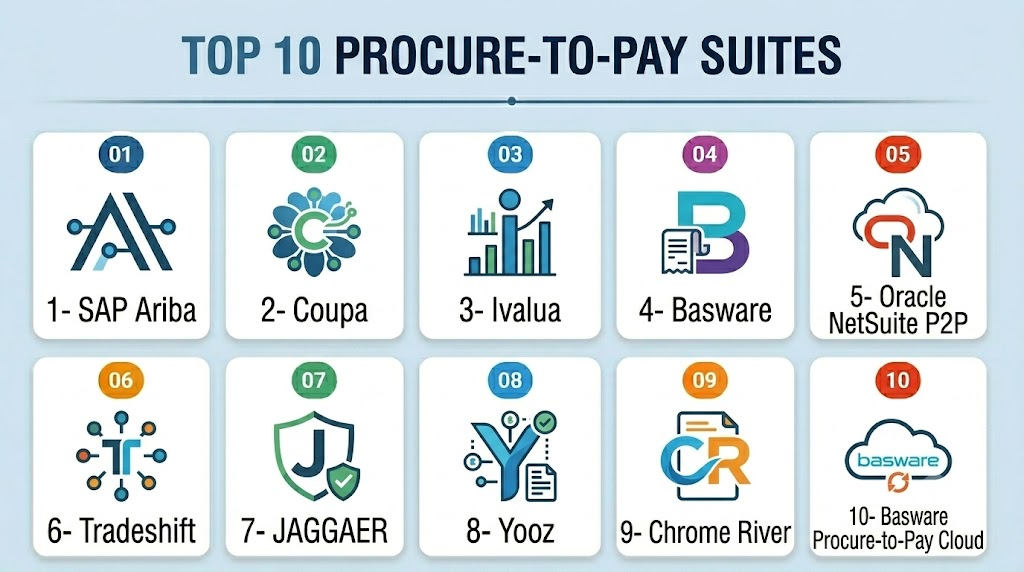
Top 10 Procure-to-Pay Suites
1- SAP Ariba
Short description: Enterprise P2P suite enabling end-to-end procurement automation, supplier collaboration, and spend management for large organizations.
Key Features
- Supplier management and onboarding
- Automated requisition and purchase orders
- Invoice processing and approval workflows
- Spend analysis and reporting dashboards
- Contract management
- AI-powered predictive analytics
- Integration with SAP ERP and financial systems
Pros
- Comprehensive enterprise-grade P2P solution
- Strong supplier collaboration tools
- Extensive reporting and analytics
Cons
- High implementation complexity
- Premium pricing
Platforms / Deployment
- Web / Windows / macOS
- Cloud / Hybrid
Security & Compliance
- SSO, MFA, encryption, audit logs
- SOC 2, ISO 27001, GDPR
Integrations & Ecosystem
Integrates with ERP systems, payment gateways, and financial applications.
- SAP ERP and S/4HANA
- Payment processors
- Supplier networks
- API extensibility
Support & Community
Extensive documentation, dedicated support tiers, and large global community.
2- Coupa
Short description: Cloud-based P2P suite for expense, procurement, and invoice automation, with strong analytics and supplier collaboration capabilities.
Key Features
- Requisition and purchase order automation
- Invoice capture and approval workflows
- Expense and spend management
- Supplier portal and performance monitoring
- Real-time spend analytics
- AI-driven predictive insights
- Cloud-native deployment
Pros
- User-friendly interface and adoption
- Fast deployment for mid-market and enterprise
- Advanced analytics capabilities
Cons
- Limited on-premises options
- May require configuration for complex ERP systems
Platforms / Deployment
- Web / iOS / Android
- Cloud
Security & Compliance
- Not publicly stated
Integrations & Ecosystem
Connects with ERP, financial systems, and payment providers.
- API integration
- Supplier network connectivity
- Accounting software links
Support & Community
Vendor support with onboarding resources and online knowledge base.
3- Ivalua
Short description: P2P suite offering procurement, sourcing, and supplier management automation with analytics for large enterprises.
Key Features
- Procurement and requisition workflows
- Invoice management and matching
- Supplier performance tracking
- Contract lifecycle management
- Spend analysis dashboards
- Workflow automation
- ERP and finance system integration
Pros
- Flexible and configurable
- Strong supplier management
- Advanced analytics
Cons
- Higher complexity for small organizations
- Requires training for advanced modules
Platforms / Deployment
- Web
- Cloud / Hybrid
Security & Compliance
- Not publicly stated
Integrations & Ecosystem
ERP and financial system integration, supplier portal, APIs for data exchange.
- Core ERP connectors
- Payment gateways
- Supplier network integrations
Support & Community
Varies / Not publicly stated
4- Basware
Short description: Global P2P and e-invoicing solution focused on automation, visibility, and compliance for mid to large organizations.
Key Features
- Purchase requisition and order automation
- Invoice capture and workflow approval
- Supplier network and onboarding
- Spend analytics
- Payment management
- Cloud deployment
- Compliance and audit reporting
Pros
- Extensive global supplier network
- Strong invoice automation
- Cloud-first approach
Cons
- Limited advanced analytics compared to enterprise suites
- Customization may be required for ERP integration
Platforms / Deployment
- Web
- Cloud / Hybrid
Security & Compliance
- Not publicly stated
Integrations & Ecosystem
- ERP systems integration
- Payment gateways
- Supplier network connectors
Support & Community
Vendor support and online documentation
5- Oracle NetSuite P2P
Short description: Cloud-based P2P and financial management suite integrating procurement, invoice, and payment automation for mid-market enterprises.
Key Features
- Purchase requisition and order management
- Invoice capture and approval workflows
- Vendor management and onboarding
- Spend reporting and dashboards
- Cloud-native platform
- Integration with NetSuite ERP
- Workflow automation
Pros
- Unified platform with ERP integration
- Scalable for growing enterprises
Cons
- Limited standalone customization
- May require training for advanced workflows
Platforms / Deployment
- Web / Cloud
- SaaS
Security & Compliance
- Not publicly stated
Integrations & Ecosystem
- NetSuite ERP and financial systems
- Supplier networks
- Payment gateways
Support & Community
Documentation and vendor support
6- Tradeshift
Short description: Cloud P2P platform emphasizing supplier collaboration, invoice automation, and dynamic workflows.
Key Features
- Purchase requisitions and order management
- Invoice automation and matching
- Supplier onboarding and network
- Spend visibility dashboards
- Workflow customization
- API integration
- AI-assisted invoice validation
Pros
- Excellent supplier collaboration
- Cloud-native and scalable
- AI capabilities for efficiency
Cons
- Smaller footprint in traditional enterprise ERP ecosystems
- Customization may require technical support
Platforms / Deployment
- Web / iOS / Android
- Cloud
Security & Compliance
- Not publicly stated
Integrations & Ecosystem
- ERP and accounting system connectors
- Supplier network integration
- Payment platforms
Support & Community
Vendor support with online resources
7- JAGGAER
Short description: Enterprise P2P suite for procurement automation, supplier management, and spend analytics, tailored for large organizations.
Key Features
- Requisition and purchase order workflows
- Invoice management
- Supplier performance and compliance
- Contract management
- Analytics dashboards
- Workflow automation
- ERP integrations
Pros
- Enterprise-grade functionality
- Flexible workflow configuration
Cons
- Implementation can be lengthy
- Higher cost for smaller companies
Platforms / Deployment
- Web
- Cloud / Hybrid
Security & Compliance
- Not publicly stated
Integrations & Ecosystem
ERP, financial systems, supplier portals, API connectivity.
Support & Community
Documentation and customer support
8- Yooz
Short description: P2P and invoice automation suite for small to mid-sized enterprises focusing on speed, ease of use, and cost efficiency.
Key Features
- Automated invoice capture
- Purchase order matching
- Supplier portal
- Workflow approval automation
- Spend reporting
- Cloud deployment
- ERP integration
Pros
- Fast deployment and user-friendly
- Affordable for SMBs
Cons
- Limited enterprise-scale analytics
- Smaller supplier network
Platforms / Deployment
- Web / iOS / Android
- Cloud
Security & Compliance
- Not publicly stated
Integrations & Ecosystem
ERP and accounting systems, supplier portals, APIs.
Support & Community
Vendor support and documentation
9- Chrome River
Short description: P2P and expense management solution emphasizing invoice automation and compliance for mid to large enterprises.
Key Features
- Invoice capture and approval
- Purchase requisition workflows
- Supplier management
- Reporting dashboards
- Cloud-native platform
- Integration with ERP and accounting systems
Pros
- Strong automation features
- Cloud-first deployment
Cons
- May require integration with existing ERP for full functionality
- Learning curve for advanced reporting
Platforms / Deployment
- Web / Cloud
- SaaS
Security & Compliance
- Not publicly stated
Integrations & Ecosystem
ERP and financial system connectors, supplier portals.
Support & Community
Documentation and vendor support
10- Basware Procure-to-Pay Cloud
Short description: Cloud P2P suite with strong invoice automation, procurement workflows, and supplier collaboration features.
Key Features
- Purchase requisition and order management
- Invoice capture and processing
- Supplier portal and onboarding
- Spend analytics
- Workflow automation
- Cloud deployment
- Compliance dashboards
Pros
- Cloud-native and scalable
- Efficient invoice processing
Cons
- Limited advanced analytics
- ERP integration may require configuration
Platforms / Deployment
- Web / Cloud
- SaaS
Security & Compliance
- Not publicly stated
Integrations & Ecosystem
ERP, payment gateways, supplier networks, API extensibility.
Support & Community
Vendor support and online resources
Comparison Table (Top 10)
| Tool Name | Best For | Platform(s) Supported | Deployment | Standout Feature | Public Rating |
|---|---|---|---|---|---|
| SAP Ariba | Large enterprises | Web / Windows / macOS | Cloud / Hybrid | End-to-end procurement automation | N/A |
| Coupa | Mid-market & enterprise | Web / iOS / Android | Cloud | AI-driven spend analytics | N/A |
| Ivalua | Large enterprises | Web | Cloud / Hybrid | Flexible supplier management | N/A |
| Basware | Global organizations | Web | Cloud / Hybrid | Invoice automation & supplier network | N/A |
| Oracle NetSuite P2P | Mid-market | Web / Cloud | SaaS | ERP-integrated P2P | N/A |
| Tradeshift | Mid to large enterprises | Web / iOS / Android | Cloud | Supplier collaboration & dynamic workflows | N/A |
| JAGGAER | Enterprise | Web | Cloud / Hybrid | Procurement automation & analytics | N/A |
| Yooz | SMB | Web / iOS / Android | Cloud | Fast deployment and invoice automation | N/A |
| Chrome River | Mid to large enterprises | Web / Cloud | SaaS | Invoice automation & compliance | N/A |
| Basware Procure-to-Pay Cloud | SMB to enterprise | Web / Cloud | SaaS | Cloud-native P2P with supplier collaboration | N/A |
Evaluation & Scoring of Procure-to-Pay Suites
| Tool Name | Core (25%) | Ease (15%) | Integrations (15%) | Security (10%) | Performance (10%) | Support (10%) | Value (15%) | Weighted Total (0–10) |
|---|---|---|---|---|---|---|---|---|
| SAP Ariba | 9 | 7 | 8 | 9 | 9 | 8 | 7 | 8.2 |
| Coupa | 8 | 8 | 8 | 8 | 8 | 8 | 8 | 8.0 |
| Ivalua | 8 | 7 | 8 | 8 | 8 | 7 | 7 | 7.7 |
| Basware | 8 | 7 | 7 | 8 | 8 | 7 | 7 | 7.6 |
| Oracle NetSuite P2P | 8 | 8 | 7 | 8 | 8 | 7 | 8 | 7.8 |
| Tradeshift | 8 | 8 | 7 | 7 | 8 | 7 | 7 | 7.6 |
| JAGGAER | 9 | 7 | 8 | 8 | 9 | 7 | 7 | 8.0 |
| Yooz | 7 | 8 | 7 | 7 | 7 | 7 | 8 | 7.4 |
| Chrome River | 8 | 8 | 7 | 8 | 8 | 7 | 7 | 7.7 |
| Basware Procure-to-Pay Cloud | 8 | 8 | 7 | 8 | 8 | 7 | 7 | 7.7 |
Which Procure-to-Pay Suite Is Right for You?
Solo / Freelancer
Standalone invoicing tools may suffice; full P2P suites are often unnecessary.
SMB
Yooz, Basware Procure-to-Pay Cloud, and Oracle NetSuite P2P offer cloud deployment, automation, and cost efficiency.
Mid-Market
Coupa, Tradeshift, and Chrome River provide scalable automation, supplier collaboration, and analytics.
Enterprise
SAP Ariba, Ivalua, Basware, and JAGGAER deliver end-to-end P2P automation, compliance, and advanced analytics.
Budget vs Premium
Budget solutions focus on invoice automation and spend tracking. Premium platforms provide full ERP integration, AI analytics, and multi-supplier workflows.
Feature Depth vs Ease of Use
Enterprise suites prioritize depth and flexibility; SMB-focused tools emphasize simplicity and speed of deployment.
Integrations & Scalability
Cloud-native platforms scale easily and integrate with ERP, payment systems, and supplier networks.
Security & Compliance Needs
Regulated industries require encryption, SSO, MFA, and audit logs to maintain compliance and mitigate risk.
Frequently Asked Questions (FAQs)
1- What is the typical pricing model for P2P suites?
Most offer SaaS subscription or enterprise licensing. Pricing varies by user count, features, and deployment type.
2- How long does implementation take?
Implementation ranges from a few weeks for SMBs to several months for large enterprise deployments.
3- Do P2P suites integrate with ERP systems?
Yes, integration with ERP and accounting software is a core requirement for most platforms.
4- Are cloud deployments secure?
Cloud solutions typically include encryption, access controls, and audit logs, but certifications should be verified.
5- Can AI improve P2P processes?
AI helps with invoice validation, fraud detection, spend forecasting, and automated approvals.
6- Can SMBs benefit from full P2P suites?
Yes, cloud-native solutions like Yooz or Basware offer scalable automation without enterprise complexity.
7- How often should P2P processes be monitored?
Organizations should monitor in real-time for approvals, payments, and supplier compliance.
8- What are common mistakes in P2P implementations?
Common errors include lack of user adoption, poor supplier onboarding, and ignoring workflow optimization.
9- Are mobile approvals supported?
Yes, many suites offer mobile apps for approvals, order tracking, and supplier communications.
10- What alternatives exist for small businesses?
SMBs may use standalone invoicing software, accounting platforms, or lightweight procurement tools.
Conclusion
Procure-to-Pay suites drive financial efficiency by automating workflows and centralizing spend data. Selecting the right platform requires careful analysis of organizational scale and ERP compatibility. SMBs should prioritize intuitive cloud solutions, while enterprises need robust, scalable automation. Security, AI capabilities, and supplier collaboration are critical evaluation criteria before adoption. Shortlisting top candidates and running a pilot program are essential steps to validate functionality. Successful implementation fosters transparency, strengthens compliance, and provides actionable insights. Focusing on strategic integration ensures long-term ROI and a more agile, data-driven procurement model.

Find Trusted Cardiac Hospitals
Compare heart hospitals by city and services — all in one place.
Explore Hospitals
Procure-to-Pay initiatives are most successful when they remove manual handoffs between purchasing and finance. A streamlined process from requisition to payment not only reduces administrative effort but also improves budget control, approval transparency, and supplier relationships.