Introduction
Obligation tracking tools are specialized software solutions designed to help organizations monitor, manage, and ensure compliance with legal, contractual, regulatory, and internal obligations. In plain English, these tools ensure that important dates, deliverables, and responsibilities are never missed, reducing the risk of non-compliance, penalties, or operational disruptions. as companies face increasing regulatory complexity across global markets, real-time obligation visibility and automation are more critical than ever. Modern tools leverage AI to identify obligations, automate reminders, and provide actionable dashboards. Organizations across industries from legal firms to manufacturing and finance rely on these platforms to streamline risk management and governance.
Real-world use cases include:
- Tracking regulatory filings and compliance deadlines for financial institutions.
- Monitoring contractual obligations such as renewal dates, deliverables, and payment terms.
- Managing corporate governance requirements and board resolutions.
- Ensuring ESG (Environmental, Social, Governance) commitments are met.
- Coordinating multi-department compliance tasks within enterprise projects.
Evaluation criteria for buyers:
- Comprehensive obligation capture and categorization.
- Automated alerts and reminders.
- Integration with existing ERP, CRM, or legal systems.
- Customizable dashboards and reporting.
- Security and compliance certifications.
- Ease of onboarding and usability.
- Performance and reliability.
- Pricing and scalability options.
- Audit trail and record-keeping capabilities.
- AI-driven analytics for predictive compliance insights.
Best for: Legal teams, compliance officers, contract managers, risk managers, and medium-to-large enterprises in regulated industries.
Not ideal for: Small businesses with limited obligations or organizations relying on manual tracking spreadsheets; basic calendar reminders may suffice.
Key Trends in Obligation Tracking Tools
- Increased AI-driven obligation extraction from contracts and regulatory documents.
- Predictive compliance analytics to anticipate risks before deadlines.
- Integration with enterprise collaboration platforms for cross-functional visibility.
- Cloud-native deployments with secure, multi-tenant environments.
- Mobile accessibility for on-the-go obligation management.
- Enhanced audit trails and compliance reporting to support regulatory inspections.
- ESG and sustainability obligations becoming standard modules.
- Workflow automation and conditional alerts based on obligation type or severity.
- SaaS pricing models with modular subscription options.
- Cross-border compliance support with multi-jurisdiction capabilities.
How We Selected These Tools (Methodology)
- Evaluated market adoption and mindshare among regulated enterprises.
- Assessed feature completeness, including obligation capture, reporting, and automation.
- Verified reliability and performance signals through user reviews and case studies.
- Reviewed security posture including SSO, MFA, and encryption.
- Considered integration ecosystem with ERP, CRM, legal, and productivity tools.
- Analyzed customer fit across SMB, mid-market, and enterprise segments.
- Checked scalability and cloud deployment capabilities.
- Assessed support quality, documentation, and community engagement.
- Verified AI or analytics capabilities for predictive insights.
- Ensured adaptability to regulatory updates and global obligations.
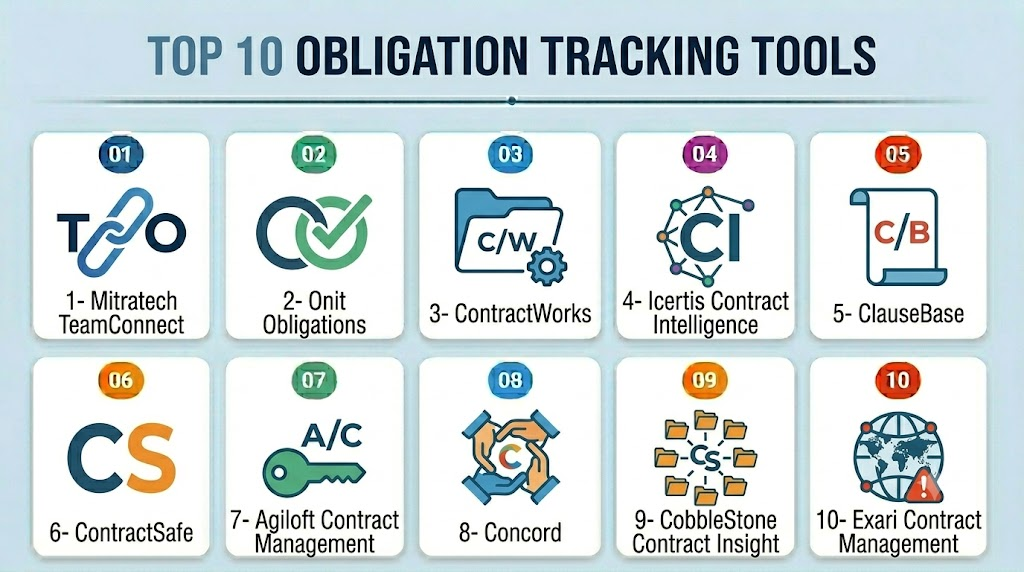
Top 10 Obligation Tracking Tools
1- Mitratech TeamConnect
Short description: Enterprise-grade compliance and legal management platform for tracking contracts, regulatory obligations, and risk mitigation.
Key Features
- Contract lifecycle and obligation management.
- Automated alerts and dashboards.
- Compliance tracking across multiple jurisdictions.
- Integration with ERP and document management systems.
- AI-driven reporting and analytics.
- Audit trail and record-keeping.
Pros
- Strong enterprise-level compliance features.
- Comprehensive reporting and analytics.
Cons
- Complex setup for small teams.
- Pricing may be high for SMBs.
Platforms / Deployment
- Web / Windows / macOS
- Cloud / Hybrid
Security & Compliance
- SSO, MFA, encryption, audit logs
- SOC 2, ISO 27001, GDPR
Integrations & Ecosystem
Supports extensive integrations with document management, ERP, CRM, and productivity tools.
- SharePoint, SAP, Salesforce
- Microsoft Teams, Outlook
- REST API for custom workflows
- Document repositories
- Analytics and BI tools
Support & Community
- Tiered support options
- Onboarding and training programs
- Varies / Not publicly stated community engagement
2- Onit Obligations
Short description: Legal operations platform designed to monitor and automate contractual and regulatory obligations.
Key Features
- Centralized obligation repository.
- Automated reminders and escalation rules.
- Reporting dashboards with KPIs.
- Integration with legal matter management.
- AI-based obligation extraction.
Pros
- Easy automation of recurring obligations.
- Scalable for large legal teams.
Cons
- Limited advanced analytics outside legal domain.
- May require dedicated admin resources.
Platforms / Deployment
- Web / iOS / Android
- Cloud / Hybrid
Security & Compliance
- SSO, MFA, encryption
- Not publicly stated on certifications
Integrations & Ecosystem
- Legal matter management systems
- ERP and CRM connectors
- Email and calendar systems
- Custom API integrations
Support & Community
- Dedicated account managers
- Training sessions
- Documentation available
3- ContractWorks
Short description: Obligation and contract tracking tool focused on SMB and mid-market legal teams.
Key Features
- Contract repository with obligation alerts.
- Auto-notifications for deadlines and renewals.
- Document tagging and categorization.
- Reporting and audit-ready dashboards.
- Bulk import and export of obligations.
Pros
- Intuitive interface for SMBs.
- Fast deployment and minimal setup.
Cons
- Limited advanced analytics.
- No AI obligation extraction.
Platforms / Deployment
- Web / Windows / macOS
- Cloud
Security & Compliance
- SSO, encryption, audit logs
- SOC 2 Type II
Integrations & Ecosystem
- Email and calendar systems
- Document storage systems
- API access for custom workflows
Support & Community
- Online support and knowledge base
- Live chat available
- Community forums limited
4- Icertis Contract Intelligence
Short description: Enterprise-focused platform with AI-powered obligation tracking and contract lifecycle management.
Key Features
- AI obligation extraction from contracts.
- Automated compliance dashboards.
- Multi-jurisdiction tracking.
- Customizable alerts and escalations.
- Analytics for risk and performance monitoring.
Pros
- Strong AI and analytics capabilities.
- Enterprise scalability.
Cons
- High cost for smaller teams.
- Steeper learning curve.
Platforms / Deployment
- Web
- Cloud / Hybrid
Security & Compliance
- SSO, MFA, encryption, audit logs
- SOC 2, ISO 27001
Integrations & Ecosystem
- ERP, CRM, HRIS
- Document management systems
- APIs for custom integrations
Support & Community
- Global support and training programs
- Active enterprise community
5- ClauseBase
Short description: Smart contract drafting and obligation tracking platform for legal teams and law firms.
Key Features
- Clause library with obligation templates.
- Automatic obligation tracking in contracts.
- Real-time collaborative drafting.
- Analytics dashboards.
- API for integration with other tools.
Pros
- Efficient drafting plus obligation management.
- Flexible clause and template management.
Cons
- Primarily focused on legal teams.
- Less suitable for regulatory-only obligations.
Platforms / Deployment
- Web
- Cloud
Security & Compliance
- SSO, encryption, audit logs
- Not publicly stated
Integrations & Ecosystem
- Document management systems
- CRM and ERP connectors
- REST API
Support & Community
- Online documentation and onboarding
- Customer success managers
- Community forums limited
6- ContractSafe
Short description: Simple and secure contract and obligation tracking for small to mid-sized teams.
Key Features
- Contract repository and tagging.
- Automatic reminders for key obligations.
- Searchable document database.
- Reporting dashboards.
- Permission-based access.
Pros
- Quick to deploy and easy to use.
- Affordable for SMBs.
Cons
- Limited enterprise features.
- No advanced AI analytics.
Platforms / Deployment
- Web / iOS / Android
- Cloud
Security & Compliance
- SSO, encryption
- SOC 2 Type II
Integrations & Ecosystem
- Email notifications
- Calendar systems
- API access for basic integrations
Support & Community
- Email support and knowledge base
- Limited community engagement
7- Agiloft Contract Management
Short description: Robust platform for managing obligations, compliance, and contract lifecycles with high configurability.
Key Features
- Obligation tracking and automated alerts.
- Workflow automation and approvals.
- Audit trail and reporting.
- AI-powered document analysis.
- Customizable templates.
Pros
- Highly configurable for diverse obligations.
- Strong automation capabilities.
Cons
- Setup complexity for new users.
- Higher learning curve for non-technical teams.
Platforms / Deployment
- Web / Windows / macOS
- Cloud / On-premise / Hybrid
Security & Compliance
- SSO, MFA, encryption, audit logs
- SOC 2, ISO 27001
Integrations & Ecosystem
- ERP, CRM, document management
- APIs and custom connectors
- Email and calendar integrations
Support & Community
- Training and onboarding programs
- Active enterprise community
- Support tiers for SLAs
8- Concord
Short description: Cloud-based contract and obligation management software for SMBs and mid-market teams.
Key Features
- Automated reminders and notifications.
- Centralized contract repository.
- Reporting dashboards.
- Electronic signatures and approval workflows.
- Collaboration tools.
Pros
- Intuitive UI and simple onboarding.
- Cloud-native and fast deployment.
Cons
- Less suited for complex enterprise rules.
- Limited advanced analytics.
Platforms / Deployment
- Web / iOS / Android
- Cloud
Security & Compliance
- SSO, encryption
- SOC 2 Type II
Integrations & Ecosystem
- Google Workspace, Microsoft 365
- Slack and email systems
- REST API for custom workflows
Support & Community
- Email and live chat support
- Knowledge base and webinars
- Community forums limited
9- CobbleStone Contract Insight
Short description: Obligation and contract management platform with workflow automation for medium-to-large organizations.
Key Features
- AI-driven obligation extraction.
- Automated compliance alerts.
- Contract repository and reporting.
- Workflow and approval automation.
- Audit-ready dashboards.
Pros
- Strong workflow automation.
- Detailed reporting and analytics.
Cons
- Complex setup for smaller teams.
- Enterprise-oriented pricing.
Platforms / Deployment
- Web / Windows / macOS
- Cloud / Hybrid
Security & Compliance
- SSO, MFA, encryption, audit logs
- Not publicly stated
Integrations & Ecosystem
- ERP and CRM connectors
- Document management systems
- APIs for custom automation
Support & Community
- Dedicated customer support
- Onboarding and training programs
- Active enterprise user base
10- Exari Contract Management
Short description: Enterprise-focused solution for contract and obligation lifecycle management with risk mitigation features.
Key Features
- Centralized obligation tracking.
- Automated alerts and notifications.
- Compliance reporting dashboards.
- AI-assisted document analysis.
- Workflow automation.
Pros
- Enterprise scalability.
- Strong risk management and reporting.
Cons
- Requires dedicated admin resources.
- Steeper learning curve for smaller teams.
Platforms / Deployment
- Web
- Cloud / Hybrid
Security & Compliance
- SSO, encryption, audit logs
- SOC 2, ISO 27001
Integrations & Ecosystem
- ERP and CRM systems
- Document management integrations
- API for custom workflows
Support & Community
- Tiered support and training programs
- Varies / Not publicly stated community engagement
Comparison Table (Top 10)
| Tool Name | Best For | Platform(s) Supported | Deployment | Standout Feature | Public Rating |
|---|---|---|---|---|---|
| Mitratech TeamConnect | Enterprise compliance teams | Web / Windows / macOS | Cloud / Hybrid | AI dashboards & multi-jurisdiction | N/A |
| Onit Obligations | Legal operations | Web / iOS / Android | Cloud / Hybrid | Centralized obligation repo | N/A |
| ContractWorks | SMB legal teams | Web / Windows / macOS | Cloud | Simple alerts & dashboards | N/A |
| Icertis Contract Intelligence | Enterprise legal & compliance | Web | Cloud / Hybrid | AI-driven obligation extraction | N/A |
| ClauseBase | Law firms | Web | Cloud | Clause library & real-time drafting | N/A |
| ContractSafe | SMBs & mid-market teams | Web / iOS / Android | Cloud | Quick deployment & reminders | N/A |
| Agiloft Contract Management | Diverse obligations | Web / Windows / macOS | Cloud / On-prem / Hybrid | Highly configurable workflows | N/A |
| Concord | SMBs & mid-market teams | Web / iOS / Android | Cloud | Intuitive UI & e-signatures | N/A |
| CobbleStone Contract Insight | Medium-large organizations | Web / Windows / macOS | Cloud / Hybrid | Workflow automation | N/A |
| Exari Contract Management | Enterprise risk management | Web | Cloud / Hybrid | AI-assisted compliance | N/A |
Evaluation & Scoring of Obligation Tracking Tools
| Tool Name | Core (25%) | Ease (15%) | Integrations (15%) | Security (10%) | Performance (10%) | Support (10%) | Value (15%) | Weighted Total |
|---|---|---|---|---|---|---|---|---|
| Mitratech TeamConnect | 9 | 7 | 8 | 8 | 8 | 7 | 6 | 7.9 |
| Onit Obligations | 8 | 8 | 7 | 7 | 7 | 7 | 7 | 7.5 |
| ContractWorks | 7 | 9 | 6 | 7 | 7 | 8 | 8 | 7.6 |
| Icertis Contract Intelligence | 9 | 6 | 8 | 8 | 8 | 7 | 6 | 7.7 |
| ClauseBase | 8 | 8 | 6 | 7 | 7 | 7 | 7 | 7.4 |
| ContractSafe | 7 | 9 | 5 | 7 | 7 | 8 | 8 | 7.4 |
| Agiloft Contract Management | 9 | 6 | 8 | 8 | 8 | 7 | 6 | 7.7 |
| Concord | 7 | 9 | 6 | 7 | 7 | 7 | 8 | 7.5 |
| CobbleStone Contract Insight | 8 | 7 | 7 | 7 | 8 | 7 | 6 | 7.3 |
| Exari Contract Management | 9 | 6 | 8 | 8 | 8 | 7 | 6 | 7.7 |
Which Obligation Tracking Tool Is Right for You?
Solo / Freelancer
- Tools like ContractWorks and ContractSafe offer quick setup, affordable pricing, and straightforward alerts for limited obligations.
SMB
- Concord, ContractWorks, and ClauseBase provide usability, collaboration, and reporting suitable for small teams managing multiple contracts.
Mid-Market
- Onit Obligations and CobbleStone deliver advanced workflow automation, dashboards, and compliance monitoring for growing businesses.
Enterprise
- Mitratech TeamConnect, Icertis, Agiloft, and Exari are ideal for large enterprises requiring multi-jurisdiction compliance, AI-driven insights, and complex workflows.
Budget vs Premium
- Budget: ContractSafe, ContractWorks, Concord.
- Premium: Mitratech, Icertis, Agiloft, Exari for enterprise-grade AI and integration capabilities.
Feature Depth vs Ease of Use
- Simple interfaces: ContractSafe, Concord.
- Feature-rich with deeper configuration: Mitratech, Icertis, Agiloft.
Integrations & Scalability
- Enterprise tools provide extensive ERP/CRM/document management integrations and scale for global obligations. SMB tools focus on essential connectors and cloud deployment.
Security & Compliance Needs
- Enterprise-grade tools offer SSO, MFA, encryption, and SOC 2/ISO 27001 compliance. SMB tools cover basic encryption and access control.
Frequently Asked Questions (FAQs)
1- What pricing models do obligation tracking tools use?
Most tools use subscription-based SaaS pricing, tiered by users, contracts, or features. Enterprise plans may have custom pricing depending on scale and integrations.
2- How long does implementation take?
SMB tools can be set up in a few days, while enterprise-grade platforms require several weeks for configuration, workflow setup, and team onboarding.
3- Can these tools integrate with ERP or CRM systems?
Yes, most offer APIs and native connectors for ERP, CRM, document management, and calendar systems to ensure seamless data flow and alerts.
4- Are AI features necessary for obligation tracking?
AI helps automatically extract obligations and predict compliance risks. For high-volume contracts or regulatory obligations, AI significantly improves efficiency and accuracy.
5- How secure are obligation tracking tools?
Enterprise solutions provide encryption, SSO, MFA, and audit logs. Many comply with SOC 2 or ISO 27001 standards to protect sensitive compliance data.
6- What are common implementation mistakes?
Skipping data cleanup, underestimating user training, and not customizing alerts or workflows are frequent mistakes that can reduce tool effectiveness.
7- Can these tools handle multi-jurisdiction obligations?
Yes, enterprise tools can manage obligations across countries and regulatory frameworks, including local compliance rules and reporting requirements.
8- How do I migrate from spreadsheets or legacy systems?
Export existing obligations, map fields to the new tool, configure automated alerts, and validate that notifications and dashboards are accurate before full adoption.
9- Can small teams benefit from these tools?
Yes, SMB-friendly tools like ContractWorks or ContractSafe offer simplified interfaces and automated reminders, making obligation management easier for smaller teams.
10- Do these tools support reporting and audits?
Most tools provide dashboards, exportable reports, and audit trails to demonstrate compliance during internal reviews or regulatory inspections.
Conclusion
Choosing the right obligation tracking tool depends on your organization’s size, complexity, and compliance needs. Enterprise teams benefit from AI-powered platforms like Mitratech or Icertis, while SMBs may prefer simpler tools such as ContractWorks or ContractSafe. Evaluate each tool based on core features, ease of use, integrations, security, and value. Consider deployment models and scalability to ensure long-term alignment with organizational growth. Proper implementation and user adoption are critical for maximizing ROI and avoiding missed obligations. Regularly review dashboards, alerts, and reports to maintain compliance and reduce risk. Start by shortlisting 2-3 tools, run a pilot, and validate workflows before full-scale adoption.

Find Trusted Cardiac Hospitals
Compare heart hospitals by city and services — all in one place.
Explore Hospitals
Keeping track of contractual obligations is only part of the challenge—ensuring that critical deadlines and responsibilities never slip through the cracks is where these tools prove their value. Automated reminders and clear accountability can help organizations avoid compliance issues and costly oversights.