Introduction
B2B E-commerce Platforms are digital solutions that enable businesses to sell products or services to other businesses online. Unlike B2C platforms, B2B e-commerce must handle complex pricing, bulk ordering, multiple payment methods, purchase approvals, and integration with enterprise systems like ERP, CRM, and inventory management. B2B digital transformation has accelerated, with companies demanding faster procurement, seamless self-service portals, and personalized customer experiences.
Real-world use cases include:
- Manufacturers selling raw materials or components to other businesses online.
- Distributors providing a catalog of bulk products to retailers with dynamic pricing.
- Wholesalers enabling clients to place recurring orders via self-service portals.
- SaaS providers selling subscription-based services to enterprise customers.
- Multi-brand organizations integrating marketplaces for B2B client purchasing.
Evaluation Criteria for Buyers:
- Scalability for large catalogs and client bases.
- Pricing and discount management (tiered, contract-specific, dynamic pricing).
- Integration with ERP, CRM, and accounting systems.
- Self-service portal capabilities.
- Advanced analytics and reporting.
- Mobile accessibility for sales and buyers.
- Security and compliance (SSO, encryption, GDPR, SOC 2).
- Customization flexibility for workflows and catalogs.
- Internationalization and multi-currency support.
- Ease of onboarding and deployment.
Best for: B2B sellers, wholesalers, distributors, manufacturers, and SaaS providers needing online order management, self-service, and enterprise integrations.
Not ideal for: Small businesses with simple, low-volume B2C sales or single-tier pricing; traditional offline businesses not ready for e-commerce.
Key Trends in B2B E-commerce Platforms
- AI-driven product recommendations and dynamic pricing.
- Advanced analytics for buyer behavior, churn, and upsell/cross-sell opportunities.
- Self-service portals enabling faster reordering and account management.
- Integration with ERP, CRM, and PIM for real-time data synchronization.
- Headless commerce architectures for flexible front-end experiences.
- Omnichannel support combining online, mobile, and offline touchpoints.
- Subscription and recurring order capabilities for B2B SaaS or services.
- Automated approvals, workflows, and purchase order validation.
- Internationalization with multi-currency and multi-language support.
- Cloud-native deployments with enhanced security and scalability.
How We Selected These Tools (Methodology)
- Assessed market adoption and recognition in B2B e-commerce.
- Evaluated feature completeness for catalog management, pricing, and workflows.
- Considered performance and reliability signals from client reviews and case studies.
- Reviewed security posture, including encryption, access control, and compliance.
- Examined integration capabilities with ERP, CRM, and payment gateways.
- Measured fit across SMB, mid-market, and enterprise segments.
- Checked for AI and automation features enhancing ordering and pricing.
- Verified customization and scalability for global operations.
- Considered support, documentation, and community resources.
- Prioritized platforms with rapid deployment options and minimal downtime.
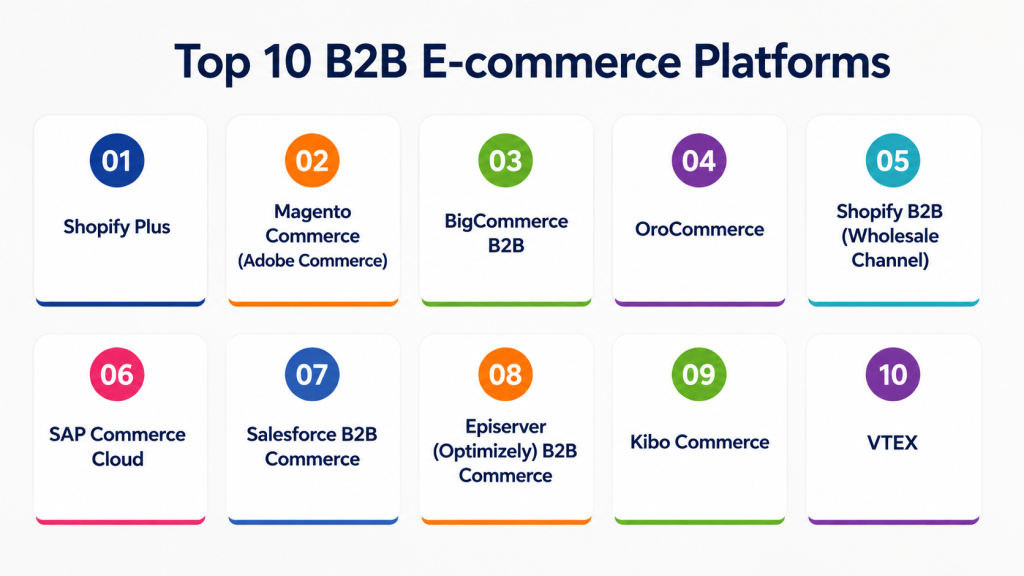
Top 10 B2B E-commerce Platforms
1- Shopify Plus
Short description: Enterprise-grade B2B e-commerce platform ideal for high-volume sellers and scalable catalog management.
Key Features
- Multi-channel sales support
- Advanced inventory management
- Tiered and contract-specific pricing
- Customer segmentation and personalized catalogs
- ERP and CRM integrations
- Analytics and reporting dashboards
- Secure checkout and payment processing
Pros
- Scalable for large B2B sellers
- User-friendly admin interface
- Strong app ecosystem for extensions
Cons
- Higher subscription cost for SMBs
- Limited out-of-the-box B2B features compared to dedicated B2B platforms
Platforms / Deployment
- Web / iOS / Android
- Cloud
Security & Compliance
- SSL encryption, MFA, PCI DSS compliant
- SOC 2, GDPR
Integrations & Ecosystem
Supports ERP, CRM, payment gateways, and third-party apps.
- Salesforce, NetSuite
- QuickBooks, Xero
- Payment providers
- API extensibility
- Third-party integrations
Support & Community
- 24/7 support
- Extensive documentation
- Large user community
2- Magento Commerce (Adobe Commerce)
Short description: Flexible, enterprise-grade B2B platform with advanced catalog, pricing, and workflow features.
Key Features
- Customer-specific catalogs
- Tiered pricing and quoting
- Requisition lists and order approval
- Multi-brand and multi-store support
- ERP and PIM integration
- AI-powered recommendations
- Analytics and reporting
Pros
- Highly customizable for complex B2B needs
- Strong global deployment support
- Robust multi-store and multi-language capabilities
Cons
- Requires technical expertise for setup
- Higher total cost of ownership
Platforms / Deployment
- Web
- Cloud / Self-hosted
Security & Compliance
- SSO, encryption, RBAC
- PCI DSS, GDPR
Integrations & Ecosystem
- ERP: SAP, Oracle
- CRM: Salesforce, Microsoft Dynamics
- Payment gateways and PIM systems
- Analytics tools
- API and extension marketplace
Support & Community
- Vendor support plans
- Large open-source community
- Documentation and training available
3- BigCommerce B2B
Short description: SaaS platform optimized for B2B operations with self-service portals and integrated quoting.
Key Features
- Tiered pricing and contract management
- Customer-specific catalogs
- Bulk ordering and reordering
- ERP and CRM integration
- Analytics and dashboards
- Self-service customer portals
- API and custom workflows
Pros
- Rapid deployment
- Strong cloud-based reliability
- Built-in B2B features for SMBs
Cons
- Limited complex feature support compared to Adobe Commerce
- Less customizable front-end experience
Platforms / Deployment
- Web
- Cloud
Security & Compliance
- SSL encryption, MFA
- PCI DSS, GDPR
Integrations & Ecosystem
- Salesforce, NetSuite
- Payment gateways
- Analytics tools
- API for custom extensions
Support & Community
- 24/7 support
- Community forums and documentation
- Onboarding guides
4- OroCommerce
Short description: Dedicated B2B e-commerce platform designed for manufacturers, distributors, and wholesalers.
Key Features
- Account-based pricing and catalogs
- Quoting and negotiation workflows
- Order approval and requisition management
- Multi-site and multi-language support
- ERP and CRM integrations
- Advanced reporting and analytics
- API-driven architecture
Pros
- Purpose-built for B2B
- Flexible workflows
- Supports complex pricing and negotiations
Cons
- Implementation complexity
- Requires technical expertise
Platforms / Deployment
- Web
- Cloud / Self-hosted
Security & Compliance
- SSO, encryption, RBAC
- Not publicly stated
Integrations & Ecosystem
- ERP systems
- CRM connectors
- Payment and shipping integrations
- API for custom workflows
Support & Community
- Vendor support
- Community forum and documentation
- Professional services
5- Shopify B2B (Wholesale Channel)
Short description: SaaS solution for businesses using Shopify for both B2B and B2C channels, with wholesale features.
Key Features
- Wholesale pricing tiers
- Customer-specific catalogs
- Bulk ordering
- Integration with Shopify POS and apps
- Discounts and promotions
- Analytics for sales trends
Pros
- Easy setup for existing Shopify users
- Unified platform for B2B and B2C
- Cloud reliability
Cons
- Limited advanced B2B features
- May require apps for complex workflows
Platforms / Deployment
- Web / iOS / Android
- Cloud
Security & Compliance
- SSL, PCI DSS
- MFA
Integrations & Ecosystem
- Shopify ecosystem apps
- Payment gateways
- ERP and CRM via APIs
Support & Community
- 24/7 support
- Active forums
- Extensive documentation
6- SAP Commerce Cloud
Short description: Enterprise B2B platform integrating with SAP ERP for complex operations and global deployments.
Key Features
- Advanced account-based catalogs
- Tiered and contract-specific pricing
- Order approvals and requisitions
- Multi-site and multi-language support
- AI recommendations and analytics
- ERP integration
- Workflow automation
Pros
- Strong global enterprise support
- Seamless SAP ERP integration
- Scalable and secure
Cons
- High total cost of ownership
- Complex deployment
Platforms / Deployment
- Web
- Cloud / Hybrid
Security & Compliance
- SSO, encryption, RBAC
- SOC 2, ISO 27001, GDPR
Integrations & Ecosystem
- SAP ERP and CRM
- Payment and logistics integrations
- API-driven customization
- Analytics and reporting tools
Support & Community
- Enterprise support plans
- Professional services
- Documentation and community
7- Salesforce B2B Commerce
Short description: Cloud-native B2B e-commerce integrated with Salesforce CRM for account-based selling.
Key Features
- Customer-specific catalogs
- Tiered pricing and contract management
- Quote-to-order workflows
- Self-service portals
- ERP and CRM integration
- Analytics dashboards
- AI-assisted recommendations
Pros
- Deep Salesforce integration
- Scalable for enterprise SaaS
- Cloud reliability
Cons
- Enterprise-focused cost
- Requires Salesforce expertise
Platforms / Deployment
- Web
- Cloud
Security & Compliance
- SSO, MFA, encryption
- SOC 2, GDPR
Integrations & Ecosystem
- Salesforce CRM
- ERP systems
- API for custom integrations
- Payment gateways
Support & Community
- 24/7 support
- Extensive documentation
- Salesforce community
8- Episerver (Optimizely) B2B Commerce
Short description: Flexible B2B commerce platform for mid-market and enterprise clients emphasizing personalization.
Key Features
- Customer segmentation and catalogs
- Tiered pricing
- Personalized recommendations
- Multi-site and multi-language support
- ERP and CRM integrations
- Workflow automation
- Analytics dashboards
Pros
- Strong personalization
- Flexible platform
- Supports mid-market and enterprise
Cons
- Requires technical expertise
- Implementation may take time
Platforms / Deployment
- Web
- Cloud / Hybrid
Security & Compliance
- Not publicly stated
Integrations & Ecosystem
- ERP and CRM connectors
- API for extensions
- Analytics and reporting tools
Support & Community
- Vendor support
- Documentation and guides
- Community forum
9- Kibo Commerce
Short description: Cloud-native B2B platform for wholesalers and distributors with strong omnichannel capabilities.
Key Features
- Customer-specific catalogs
- Tiered pricing
- Quoting and approval workflows
- Order management
- ERP and CRM integration
- Analytics dashboards
- Omnichannel support
Pros
- Cloud-native and scalable
- Strong order management
- Flexible deployment
Cons
- Mid-to-enterprise cost
- Requires implementation support
Platforms / Deployment
- Web
- Cloud
Security & Compliance
- Not publicly stated
Integrations & Ecosystem
- ERP and CRM systems
- Payment integrations
- API extensibility
- Analytics dashboards
Support & Community
- Vendor support
- Documentation
- Community resources
10- VTEX
Short description: B2B and B2C e-commerce platform supporting large catalogs and complex pricing for distributors.
Key Features
- Multi-channel commerce
- Customer-specific catalogs
- Tiered and dynamic pricing
- ERP and CRM integrations
- Order workflow automation
- Analytics and reporting
- Self-service portals
Pros
- Scalable for large operations
- Supports hybrid B2B/B2C needs
- Cloud-native reliability
Cons
- Enterprise-focused cost
- May require technical support for customization
Platforms / Deployment
- Web
- Cloud
Security & Compliance
- Not publicly stated
Integrations & Ecosystem
- ERP and CRM connectors
- Payment gateways
- API for custom workflows
- Analytics dashboards
Support & Community
- Vendor support
- Documentation and training
- Community forum
Comparison Table (Top 10)
| Tool Name | Best For | Platform(s) Supported | Deployment | Standout Feature | Public Rating |
|---|---|---|---|---|---|
| Shopify Plus | High-volume B2B sellers | Web / iOS / Android | Cloud | Scalable and user-friendly | N/A |
| Magento Commerce | Enterprise B2B | Web | Cloud/Self-hosted | Customizable workflows | N/A |
| BigCommerce B2B | SMB and mid-market | Web | Cloud | Rapid deployment | N/A |
| OroCommerce | Manufacturers and wholesalers | Web | Cloud/Self-hosted | Purpose-built B2B features | N/A |
| Shopify B2B (Wholesale) | SMBs using Shopify | Web / iOS / Android | Cloud | Unified B2B and B2C platform | N/A |
| SAP Commerce Cloud | Enterprise global B2B | Web | Cloud/Hybrid | Deep SAP ERP integration | N/A |
| Salesforce B2B Commerce | Enterprise SaaS | Web | Cloud | CRM-driven account-based selling | N/A |
| Episerver (Optimizely) | Mid-market and enterprise | Web | Cloud/Hybrid | Personalization | N/A |
| Kibo Commerce | Wholesalers and distributors | Web | Cloud | Omnichannel B2B support | N/A |
| VTEX | Large catalogs & hybrid B2B/B2C | Web | Cloud | Multi-channel scalability | N/A |
Evaluation & Scoring of B2B E-commerce Platforms
| Tool Name | Core (25%) | Ease (15%) | Integrations (15%) | Security (10%) | Performance (10%) | Support (10%) | Value (15%) | Weighted Total |
|---|---|---|---|---|---|---|---|---|
| Shopify Plus | 9 | 9 | 8 | 8 | 9 | 8 | 7 | 8.5 |
| Magento Commerce | 9 | 7 | 9 | 8 | 9 | 7 | 6 | 8.0 |
| BigCommerce B2B | 8 | 8 | 7 | 8 | 8 | 7 | 7 | 7.8 |
| OroCommerce | 8 | 7 | 8 | 7 | 8 | 7 | 6 | 7.5 |
| Shopify B2B | 8 | 9 | 7 | 8 | 8 | 7 | 7 | 7.9 |
| SAP Commerce Cloud | 9 | 7 | 9 | 9 | 9 | 8 | 6 | 8.3 |
| Salesforce B2B Commerce | 9 | 8 | 9 | 9 | 9 | 8 | 7 | 8.5 |
| Episerver (Optimizely) | 8 | 7 | 8 | 7 | 8 | 7 | 6 | 7.5 |
| Kibo Commerce | 8 | 7 | 8 | 7 | 8 | 7 | 6 | 7.5 |
| VTEX | 8 | 7 | 8 | 7 | 8 | 7 | 6 | 7.5 |
Which B2B E-commerce Platform Is Right for You?
Solo / Freelancer
- Shopify B2B or BigCommerce B2B for small-volume, simple catalog operations.
SMB
- Shopify Plus, BigCommerce B2B, OroCommerce for growing catalogs and recurring orders.
Mid-Market
- Episerver, Kibo Commerce, VTEX for multi-brand catalogs, personalization, and mid-level automation.
Enterprise
- Magento Commerce, SAP Commerce Cloud, Salesforce B2B Commerce for global, complex B2B operations with ERP and CRM integrations.
Budget vs Premium
- Budget: BigCommerce B2B, Shopify B2B
- Premium: Magento, SAP, Salesforce, Kibo Commerce
Feature Depth vs Ease of Use
- Deep features: Magento Commerce, SAP Commerce Cloud
- Ease of use: Shopify Plus, BigCommerce B2B
Integrations & Scalability
- Enterprise-grade: SAP Commerce Cloud, Salesforce B2B Commerce, Magento Commerce
- SMB-friendly: Shopify Plus, BigCommerce B2B, OroCommerce
Security & Compliance Needs
- Enterprise compliance: SAP, Salesforce, Magento
- Standard SMB security: Shopify Plus, BigCommerce
Frequently Asked Questions (FAQs)
1- What pricing models do B2B platforms support?
Supports tiered pricing, volume discounts, contract pricing, subscription-based services, and multi-currency options.
2- How long does implementation take?
SMBs can deploy in weeks; enterprise-grade platforms may require 3–12 months for full integration.
3- Can B2B platforms integrate with ERP and CRM?
Yes, modern platforms support ERP, CRM, PIM, and payment gateway integration for seamless operations.
4- Do B2B platforms support self-service portals?
Yes, most platforms enable buyers to reorder, manage accounts, and view pricing without sales intervention.
5- Are AI features common in B2B e-commerce?
Yes, AI is used for product recommendations, dynamic pricing, churn prediction, and personalized experiences.
6- How secure are these platforms?
Enterprise solutions provide SSO, MFA, encryption, and compliance with SOC 2, ISO 27001, and GDPR standards.
7- Can these platforms handle large catalogs?
Yes, platforms like SAP Commerce, Magento, and VTEX support extensive product catalogs and multi-brand operations.
8- Is mobile commerce supported?
Most platforms offer responsive web interfaces or dedicated mobile apps for buyers and sales teams.
9- Can pricing be automated?
Yes, tiered pricing, contract-specific rates, and dynamic discounts are supported with workflow automation.
10- What is the ROI for implementing a B2B e-commerce platform?
ROI comes from faster procurement, reduced manual errors, improved order accuracy, increased sales, and streamlined operations.
Conclusion
B2B E-commerce Platforms are critical for businesses to manage complex catalogs, bulk orders, dynamic pricing, and self-service buyer experiences. Enterprise platforms like SAP Commerce Cloud and Salesforce B2B Commerce provide scalability and global deployment capabilities, while SMB-focused platforms like Shopify Plus and BigCommerce B2B offer rapid deployment and ease of use. AI, automation, and advanced integrations enhance sales, analytics, and operational efficiency. Choosing the best platform depends on business size, catalog complexity, and integration requirements.

Find Trusted Cardiac Hospitals
Compare heart hospitals by city and services — all in one place.
Explore Hospitals
B2B buyers expect the same level of convenience they experience in consumer shopping, but with business-specific capabilities. Platforms that combine personalized pricing, bulk ordering, and seamless ERP integration can create a much smoother purchasing experience for both customers and suppliers.