Introduction
Search indexing pipelines are systems that process, transform, and organize raw data into a searchable format to deliver accurate and fast results. They are crucial for enterprises managing large volumes of data across diverse sources, from databases and document repositories to unstructured logs and media files. with the proliferation of AI, NLP, and personalized search, efficient indexing pipelines are more critical than ever for delivering real-time, context-aware search experiences.
Real-world use cases include:
- E-commerce platforms optimizing product search and recommendations.
- Enterprise knowledge management systems indexing internal documents.
- Media companies providing fast search across multimedia content.
- AI-powered chatbots retrieving accurate responses from large datasets.
- Government agencies indexing and searching regulatory or public records.
Key evaluation criteria for buyers:
- Throughput and performance.
- Scalability across data types and volumes.
- Integration with databases, search engines, and AI models.
- Support for real-time or near-real-time indexing.
- Security and compliance features.
- Ease of maintenance and monitoring.
- Flexibility for custom transformations and pipelines.
Best for: Large enterprises, SaaS platforms, e-commerce companies, and organizations needing advanced search capabilities.
Not ideal for: Small businesses with minimal data, or organizations whose search requirements are static and simple, where lightweight tools suffice.
Key Trends in Search Indexing Pipelines
- Integration of AI and ML models to enhance indexing relevance and ranking.
- Real-time data streaming for up-to-date search results.
- Increased adoption of vector and semantic indexing.
- Unified pipelines combining structured and unstructured data sources.
- Cloud-native deployments with auto-scaling capabilities.
- Emphasis on security and privacy compliance (GDPR, HIPAA).
- Self-service tooling with monitoring dashboards and observability.
- Hybrid architectures enabling both on-premises and cloud indexing.
- Automated schema evolution for dynamic datasets.
- Cost-efficient indexing through incremental updates and deduplication.
How We Selected These Tools (Methodology)
- Evaluated market adoption and popularity across industries.
- Reviewed feature completeness for structured, unstructured, and semantic indexing.
- Benchmarked performance and reliability across different workloads.
- Assessed security posture and compliance capabilities.
- Considered ecosystem integrations with databases, search engines, and AI platforms.
- Reviewed customer fit across enterprise, SMB, and developer segments.
- Examined flexibility for custom pipeline transformations.
- Compared ease of setup, monitoring, and management.
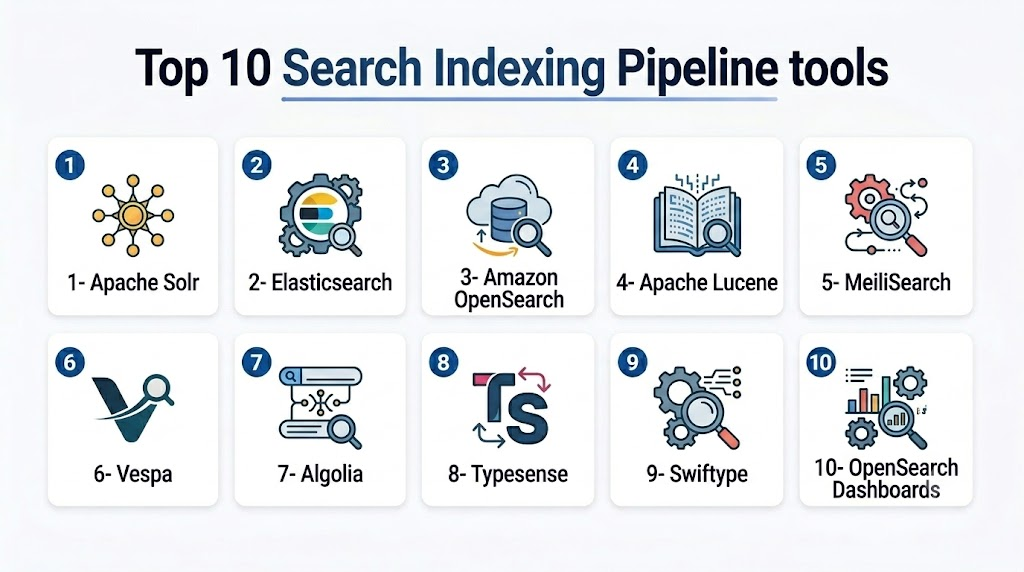
Top 10 Search Indexing Pipelines Tools
1- Apache Solr
Short description: Open-source search platform designed for enterprise search and indexing of structured and unstructured data.
Key Features
- Distributed indexing and replication
- Full-text search with faceted navigation
- Support for multiple document formats
- Real-time indexing with near-zero latency
- Rich plugin ecosystem
- Schema-less mode for flexibility
Pros
- Highly scalable for large datasets
- Active open-source community
Cons
- Requires expertise to configure optimally
- Limited native AI integration
Platforms / Deployment
- Web / Linux / Windows
- Cloud / Self-hosted / Hybrid
Security & Compliance
- Kerberos and SSL support
- Not publicly stated for SOC 2/ISO certifications
Integrations & Ecosystem
Supports integration with:
- Hadoop, Spark
- Kafka, NiFi
- Custom plugins via REST API
Support & Community
- Extensive documentation
- Community support with forums and mailing lists
2- Elasticsearch
Short description: Distributed search and analytics engine widely used for enterprise search, logging, and analytics.
Key Features
- Full-text search with scoring and ranking
- Real-time distributed indexing
- RESTful APIs for integration
- Kibana visualization for insights
- Vector search support
- Security and RBAC features
Pros
- Fast and scalable
- Strong integration ecosystem
Cons
- Enterprise features require subscription
- Can consume high memory under heavy load
Platforms / Deployment
- Web / Linux / Windows / macOS
- Cloud / Self-hosted / Hybrid
Security & Compliance
- SSO/SAML, TLS, RBAC
- Not publicly stated for HIPAA/SOC 2
Integrations & Ecosystem
Integrates with:
- Logstash, Beats
- Kafka, Spark
- ML frameworks for semantic search
Support & Community
- Commercial support available
- Strong open-source community
3- Amazon OpenSearch
Short description: Fully managed search and analytics service based on Elasticsearch for cloud-native indexing.
Key Features
- Managed cluster scaling and maintenance
- Real-time indexing
- Security features: VPC, IAM roles, encryption
- Kibana integration
- Automated snapshots
Pros
- Fully managed service reduces operational overhead
- Seamless integration with AWS ecosystem
Cons
- Vendor lock-in to AWS
- Limited custom plugin support
Platforms / Deployment
- Web / Cloud-native (AWS)
- Cloud-managed only
Security & Compliance
- IAM-based access control
- Encryption at rest and in transit
Integrations & Ecosystem
- AWS Lambda, S3, DynamoDB
- Event-driven pipelines via Kinesis
Support & Community
- AWS support tiers
- Documentation extensive, community forums active
4- Apache Lucene
Short description: Core search library powering Solr and Elasticsearch, ideal for developers building custom search solutions.
Key Features
- High-performance indexing
- Full-text search support
- In-memory and disk-based indexing
- Extensible APIs
Pros
- Lightweight and highly customizable
- Mature and proven technology
Cons
- Requires development effort for full pipelines
- Limited out-of-the-box features
Platforms / Deployment
- Java-based / Cross-platform
- Self-hosted
Security & Compliance
- Not publicly stated
Integrations & Ecosystem
- Integrates with Solr, Elasticsearch, and custom apps
- Supports plug-ins for custom analysis
Support & Community
- Community-driven support
- Extensive documentation available
5- MeiliSearch
Short description: Open-source, lightweight, fast search engine designed for instant search experiences.
Key Features
- Real-time indexing
- Typo-tolerant search
- API-first design
- Simple deployment and scaling
- Multi-language support
Pros
- Easy to set up and maintain
- Fast search response times
Cons
- Not ideal for very large datasets
- Limited advanced analytics features
Platforms / Deployment
- Web / Linux / Windows / macOS
- Cloud / Self-hosted
Security & Compliance
- Not publicly stated
Integrations & Ecosystem
- REST APIs for integration
- SDKs for multiple languages
Support & Community
- Active GitHub community
- Limited enterprise support
6- Vespa
Short description: Engine for real-time serving and indexing, optimized for AI and large-scale search applications.
Key Features
- Scalable distributed architecture
- Real-time document updates
- Vector search support
- Relevance ranking with ML
- API-first integrations
Pros
- Handles large-scale, real-time indexing
- Strong ML/AI integration
Cons
- Complex setup
- Learning curve for new users
Platforms / Deployment
- Web / Linux / macOS
- Cloud / Self-hosted / Hybrid
Security & Compliance
- Not publicly stated
Integrations & Ecosystem
- Java and REST APIs
- Compatible with ML frameworks
Support & Community
- Active community forums
- Enterprise support available
7- Algolia
Short description: Hosted search platform focused on fast and relevant search experiences for websites and apps.
Key Features
- Real-time indexing
- Typo tolerance and relevance ranking
- Search analytics dashboard
- Multi-platform SDKs
- API-first
Pros
- Easy to implement
- Excellent relevance tuning options
Cons
- Pricing can be high for large datasets
- Less control over backend
Platforms / Deployment
- Web / iOS / Android
- Cloud-managed
Security & Compliance
- API key-based authentication
- TLS/HTTPS
Integrations & Ecosystem
- Integrates with CMS, e-commerce, and app platforms
- SDKs for multiple languages
Support & Community
- Enterprise support available
- Documentation comprehensive
8- Typesense
Short description: Open-source search engine optimized for instant search with minimal configuration.
Key Features
- Typo-tolerant search
- Real-time indexing
- Multi-language support
- API-first design
- Simple deployment
Pros
- Fast and lightweight
- Easy to deploy and maintain
Cons
- Less suited for very large enterprise datasets
- Limited analytics tools
Platforms / Deployment
- Web / Linux / Windows / macOS
- Cloud / Self-hosted
Security & Compliance
- Not publicly stated
Integrations & Ecosystem
- REST APIs
- SDKs for web and mobile apps
Support & Community
- Active open-source community
- Community support forums
9- Swiftype
Short description: Search platform for websites and applications, providing real-time indexing and analytics.
Key Features
- Cloud-managed indexing
- Search analytics dashboard
- API access for custom integrations
- Real-time updates
- Relevance tuning
Pros
- Easy cloud deployment
- Strong analytics and relevance tools
Cons
- Limited on-prem options
- Less flexible for custom pipelines
Platforms / Deployment
- Web / Cloud-managed
- Cloud only
Security & Compliance
- API key and TLS-based authentication
Integrations & Ecosystem
- CMS, e-commerce, and web frameworks
- APIs for custom use cases
Support & Community
- Enterprise support available
- Documentation and community forums
10- OpenSearch Dashboards
Short description: Visualization and indexing platform built on OpenSearch, providing full-stack search capabilities.
Key Features
- Real-time data indexing
- Dashboard visualization
- Query and analytics API
- Plugin architecture
- Security features
Pros
- Deep integration with OpenSearch
- Strong visualization and monitoring
Cons
- Limited standalone use outside OpenSearch
- Complexity in large deployments
Platforms / Deployment
- Web / Linux / Windows
- Cloud / Self-hosted / Hybrid
Security & Compliance
- SSO/SAML, RBAC
- Encryption in transit
Integrations & Ecosystem
- OpenSearch ecosystem
- Plugins for analytics, visualization, and ML
Support & Community
- OpenSearch community
- Enterprise support via AWS
Comparison Table (Top 10)
| Tool Name | Best For | Platform(s) Supported | Deployment | Standout Feature | Public Rating |
|---|---|---|---|---|---|
| Apache Solr | Enterprise search | Web, Linux, Windows | Cloud/Self-hosted/Hybrid | Distributed indexing | N/A |
| Elasticsearch | Analytics & search | Web, Linux, Windows, macOS | Cloud/Self-hosted/Hybrid | Real-time indexing | N/A |
| Amazon OpenSearch | Cloud-native search | Web | Cloud-managed | Fully managed service | N/A |
| Apache Lucene | Custom search development | Java-based | Self-hosted | Lightweight library | N/A |
| MeiliSearch | Instant search for apps | Web, Linux, Windows, macOS | Cloud/Self-hosted | Typo-tolerant search | N/A |
| Vespa | AI & vector search | Web, Linux, macOS | Cloud/Self-hosted/Hybrid | ML-driven relevance | N/A |
| Algolia | SaaS search | Web, iOS, Android | Cloud-managed | Fast search relevance tuning | N/A |
| Typesense | Lightweight instant search | Web, Linux, Windows, macOS | Cloud/Self-hosted | Minimal config setup | N/A |
| Swiftype | Website & app search | Web | Cloud-managed | Real-time indexing | N/A |
| OpenSearch Dashboards | Full-stack search & visualization | Web, Linux, Windows | Cloud/Self-hosted/Hybrid | Visualization & monitoring | N/A |
Evaluation & Scoring of Search Indexing Pipelines
| Tool Name | Core (25%) | Ease (15%) | Integrations (15%) | Security (10%) | Performance (10%) | Support (10%) | Value (15%) | Weighted Total (0–10) |
|---|---|---|---|---|---|---|---|---|
| Apache Solr | 9 | 7 | 8 | 7 | 9 | 8 | 8 | 8.2 |
| Elasticsearch | 10 | 8 | 9 | 7 | 9 | 8 | 7 | 8.6 |
| Amazon OpenSearch | 9 | 9 | 8 | 8 | 8 | 8 | 7 | 8.3 |
| Apache Lucene | 8 | 6 | 7 | 6 | 8 | 7 | 9 | 7.5 |
| MeiliSearch | 7 | 9 | 7 | 6 | 7 | 6 | 8 | 7.5 |
| Vespa | 9 | 7 | 8 | 7 | 9 | 7 | 7 | 8.0 |
| Algolia | 8 | 9 | 7 | 7 | 8 | 7 | 6 | 7.7 |
| Typesense | 7 | 9 | 6 | 6 | 7 | 6 | 7 | 7.1 |
| Swiftype | 7 | 8 | 7 | 6 | 7 | 7 | 6 | 6.9 |
| OpenSearch Dashboards | 8 | 7 | 8 | 7 | 8 | 7 | 7 | 7.6 |
Which Search Indexing Pipeline Tool Is Right for You?
Solo / Freelancer
- Lightweight tools like MeiliSearch or Typesense are ideal for small projects with minimal setup and fast deployment.
SMB
- Elasticsearch or Algolia provide scalability, easy integration, and strong analytics for growing companies.
Mid-Market
- Apache Solr and Vespa offer enterprise-grade features with flexibility for hybrid deployment and real-time indexing.
Enterprise
- Amazon OpenSearch, OpenSearch Dashboards, and Solr handle large-scale indexing, distributed architecture, and complex pipelines.
Budget vs Premium
- Open-source tools like Lucene, Solr, and MeiliSearch minimize costs but may require more technical effort.
- Cloud-managed premium options like Algolia and OpenSearch reduce operational overhead at a subscription cost.
Feature Depth vs Ease of Use
- Choose Elasticsearch or Vespa for deep customization and ML-driven relevance.
- Use Algolia or MeiliSearch for simplicity and instant search capabilities.
Integrations & Scalability
- Cloud-native platforms are preferable for high-traffic apps.
- Open-source engines provide flexibility to integrate with internal systems and AI pipelines.
Security & Compliance Needs
- Enterprises with compliance requirements should prioritize Amazon OpenSearch or Solr with robust RBAC, SSO, and encryption.
Frequently Asked Questions (FAQs)
1- What is a search indexing pipeline?
A search indexing pipeline is a system that transforms raw data into a searchable format for fast and relevant query results. It handles data ingestion, parsing, and indexing in real-time or batch modes.
2- How do I choose between open-source and managed search tools?
Open-source tools provide flexibility and lower cost but require technical setup. Managed platforms reduce operational overhead, provide support, and scale automatically, often at a higher price.
3- Can search pipelines handle unstructured data?
Yes, modern indexing pipelines like Elasticsearch, Vespa, and Solr can process text, images, and multimedia for semantic and vector search capabilities.
4- What security features should I look for?
Key features include SSO/SAML, encryption at rest and in transit, RBAC, audit logs, and compliance with GDPR, HIPAA, or SOC 2 standards depending on your industry.
5- How do these pipelines integrate with AI models?
Many pipelines offer REST APIs and SDKs for integrating ML models for semantic ranking, vector search, and relevance tuning. Tools like Vespa and OpenSearch have built-in ML support.
6- Are these tools suitable for real-time search?
Yes, platforms like Elasticsearch, OpenSearch, Solr, and Vespa support near-real-time indexing to ensure search results reflect current data.
7- How scalable are search indexing pipelines?
Scalability depends on architecture. Distributed systems like Solr, Elasticsearch, and Vespa can scale horizontally to handle millions of documents and high query loads.
8- What are common mistakes in implementing search pipelines?
Common issues include improper schema design, not tuning relevance, underestimating index size, neglecting security configurations, and ignoring monitoring/logging.
9- Can small teams use these pipelines?
Yes, lightweight solutions like MeiliSearch, Typesense, and Algolia are suitable for smaller teams needing fast deployment with minimal infrastructure.
10- How often should indexes be updated?
Update frequency depends on data volatility. Real-time or near-real-time indexing is recommended for high-change datasets, while batch updates suffice for static content.
Conclusion
Search indexing pipelines are the backbone of fast, accurate, and scalable search in modern applications. Selecting the right tool depends on data volume, search complexity, team size, and budget. Open-source solutions offer flexibility and lower cost, while cloud-managed platforms provide speed and operational ease. Enterprises must balance performance, integrations, and security for compliance. Consider your use case carefully, pilot 2–3 options, and validate features before full deployment. Real-time indexing, vector search, and AI integrations will remain critical in 2026 and beyond. The ideal pipeline aligns technical capabilities with business goals, ensuring relevant and efficient search experiences. Always plan for scalability, monitoring, and continuous optimization to keep search responsive and reliable.

Find Trusted Cardiac Hospitals
Compare heart hospitals by city and services — all in one place.
Explore Hospitals
One practical challenge often overlooked is how indexing pipelines handle incremental updates at scale without degrading query freshness. As data changes rapidly, balancing indexing latency with system performance becomes critical for maintaining accurate search results.