Introduction
Data annotation platforms are software tools that allow teams to label, tag, and classify data to train machine learning (ML) and AI models. These platforms convert raw data such as text, images, audio, or video into structured formats that AI models can learn from. Essentially, they form the backbone of supervised learning workflows. with AI and generative models dominating industries, high-quality annotated datasets are more critical than ever. Accurate labeling directly impacts model performance, bias reduction, and reliability in production systems.
Real-world use cases include:
- Annotating medical images for diagnostic AI systems.
- Labeling customer support chat logs for natural language understanding.
- Tagging e-commerce product images for visual search and recommendation engines.
- Categorizing video footage for autonomous vehicles or security systems.
- Annotating text data for sentiment analysis, summarization, and NLP models.
Key criteria buyers should evaluate:
- Supported data types (image, video, text, audio, multi-modal)
- Automation features including AI-assisted labeling
- Workflow management and collaboration tools
- Quality assurance and inter-annotator agreement features
- Integration with ML pipelines and cloud storage
- Security and compliance standards
- Scalability for large datasets
- User interface and ease of use
- Cost, licensing, and flexibility
- Best for: AI/ML engineers, data scientists, annotation managers, and enterprises of all sizes that rely on high-quality labeled datasets for model training. Industries include healthcare, autonomous vehicles, retail, finance, and e-commerce.
- Not ideal for: Teams with minimal AI/ML projects or small datasets where manual labeling without dedicated platforms is sufficient.
Key Trends in Data Annotation Platforms
- AI-assisted labeling: Platforms increasingly offer pre-labeling suggestions and automated annotations to reduce human effort.
- Multi-modal support: Annotation across text, image, audio, and video in a single workflow.
- Workflow automation: Task assignment, review cycles, and consensus scoring are now integrated.
- Cloud-native and hybrid deployments: Flexible deployment options for distributed teams and secure environments.
- Bias detection and quality metrics: Built-in evaluation of labeling accuracy, inter-annotator agreement, and fairness.
- Integration with MLOps pipelines: Direct export to model training frameworks and CI/CD pipelines.
- Collaborative interfaces: Real-time collaboration for annotation teams and project managers.
- Scalable workforce options: Integration with crowdsourcing and managed annotation services.
- Advanced visualization tools: 3D labeling, polygon masks, bounding boxes, and segmentation support.
- Compliance and security enhancements: GDPR, SOC 2, HIPAA adherence, role-based access, and encryption.
How We Selected These Tools (Methodology)
- Evaluated market adoption and enterprise mindshare.
- Assessed feature completeness including multi-modal support, automation, and collaboration tools.
- Considered performance and reliability signals from deployments with large datasets.
- Verified security posture through known compliance certifications and access control features.
- Examined integration capabilities with ML pipelines, cloud storage, and APIs.
- Measured customer fit across solo developers, SMBs, and enterprise deployments.
- Reviewed quality assurance and annotation workflow capabilities.
- Checked scalability and dataset handling capacity.
- Prioritized platforms with modern UI/UX and reporting dashboards.
- Compared value for cost including subscription and licensing models.
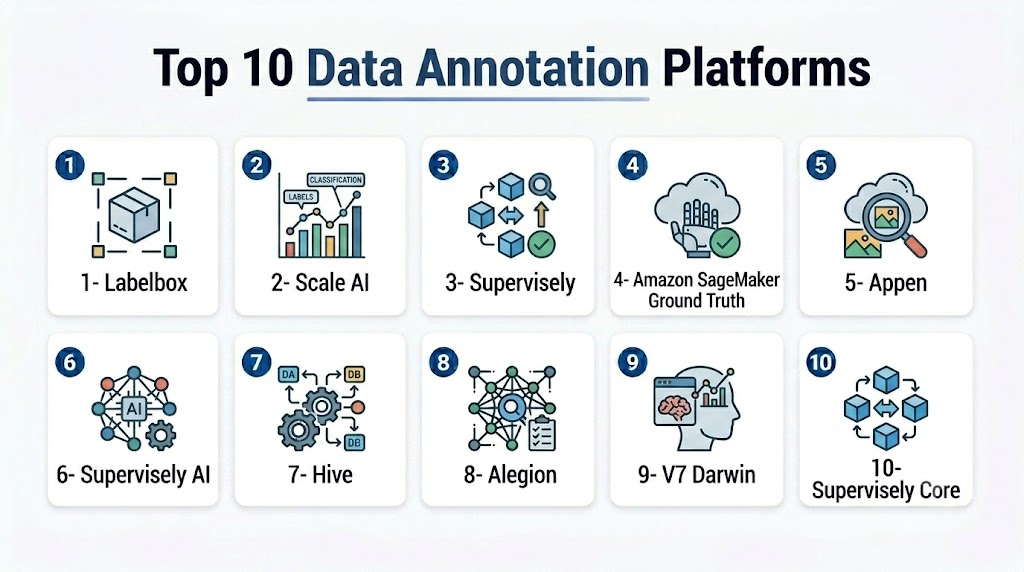
Top 10 Data Annotation Platforms
1- Labelbox
Short description: A comprehensive data annotation platform for images, video, and text, offering AI-assisted labeling and scalable workflows for enterprise teams.
Key Features
- Multi-modal annotation (image, video, text)
- AI-assisted labeling suggestions
- Workflow automation and project management
- Inter-annotator agreement metrics
- Quality review and auditing tools
- API integration with ML pipelines
Pros
- Enterprise-ready with robust dashboards
- Scales efficiently for large datasets
- Strong AI-assisted labeling capabilities
Cons
- Premium pricing for full features
- Initial setup may be complex for small teams
Platforms / Deployment
- Web / Cloud
Security & Compliance
- SOC 2, ISO 27001, GDPR
- SSO/SAML, encryption, RBAC
Integrations & Ecosystem
Supports seamless integration with ML frameworks and cloud storage.
- TensorFlow, PyTorch
- AWS, GCP, Azure storage
- REST API and SDKs
Support & Community
- Professional support tiers
- Knowledge base and tutorials
- Active user community
2- Scale AI
Short description: Provides high-quality data annotation services with human-in-the-loop workflows, suitable for AI and autonomous vehicle projects.
Key Features
- Image, video, LiDAR, and text annotation
- Managed human workforce with quality assurance
- AI-assisted pre-labeling
- Scalable project management dashboards
- Real-time progress tracking
Pros
- Access to managed annotation workforce
- High-quality labeling standards
- Advanced automation features
Cons
- Higher cost compared to self-service platforms
- Primarily cloud-based
Platforms / Deployment
- Web / Cloud
Security & Compliance
- SOC 2, HIPAA (for healthcare)
- Encryption and RBAC
Integrations & Ecosystem
Integrates with ML training pipelines and cloud storage.
- TensorFlow, PyTorch
- AWS, GCP storage
- REST API for automation
Support & Community
- Dedicated support
- Documentation and onboarding guides
- Varies / Not publicly stated
3- Supervisely
Short description: Enterprise-focused annotation platform with advanced image and video labeling, including segmentation, detection, and polygon masks.
Key Features
- Advanced image and video labeling tools
- 3D and polygon annotation support
- Team collaboration and project management
- AI-assisted labeling and smart suggestions
- Model evaluation and benchmarking
Pros
- High customization for complex datasets
- Collaborative annotation workflows
- Supports advanced labeling types
Cons
- Requires technical knowledge for advanced features
- Cloud deployment primarily
Platforms / Deployment
- Web / Cloud / Hybrid
Security & Compliance
- SOC 2, GDPR
- Encryption and role-based access
Integrations & Ecosystem
- TensorFlow, PyTorch
- Python SDK
- REST API and ML pipelines
Support & Community
- Professional support
- Tutorials and webinars
- Active user forums
4- Amazon SageMaker Ground Truth
Short description: Managed data labeling service integrated with AWS, supporting text, image, video, and 3D point cloud annotation.
Key Features
- Automated data labeling using machine learning
- Support for multiple data types
- Managed human workforce options
- Integration with AWS ML services
- Quality control and auditing tools
Pros
- Native AWS integration
- Scales to large enterprise datasets
- Automation reduces labeling effort
Cons
- AWS ecosystem dependency
- Costs can escalate with volume
Platforms / Deployment
- Web / Cloud (AWS)
Security & Compliance
- SOC 2, ISO 27001, HIPAA
- Encryption, IAM controls
Integrations & Ecosystem
- AWS ML frameworks
- S3 storage integration
- API for automated workflows
Support & Community
- AWS support tiers
- Documentation and forums
- Active cloud community
5- Appen
Short description: Crowd-powered annotation platform for text, speech, image, and video, providing large-scale labeling for AI training.
Key Features
- Managed crowd workforce
- Multi-modal annotation (text, image, audio, video)
- QA workflows and inter-annotator agreement
- AI-assisted labeling
- Scalable projects with dashboards
Pros
- Large global workforce
- High scalability for enterprise datasets
- Supports complex labeling tasks
Cons
- Premium pricing
- Cloud-only deployment
Platforms / Deployment
- Web / Cloud
Security & Compliance
- SOC 2, ISO 27001
- Encryption, RBAC
Integrations & Ecosystem
- API access for ML pipelines
- Cloud storage support
- Python SDK
Support & Community
- Professional support
- Knowledge base and webinars
- Community support limited
6- Supervisely AI
Short description: AI-first annotation platform enabling teams to pre-label and accelerate data labeling with machine-assisted suggestions.
Key Features
- AI-assisted labeling workflows
- Image, video, and 3D annotation
- Task automation and collaboration
- Performance dashboards
- Custom metric support
Pros
- Speeds up labeling with AI assistance
- Supports complex data types
- Enterprise-grade workflow management
Cons
- Learning curve for new users
- Self-hosting configuration can be complex
Platforms / Deployment
- Web / Cloud / Hybrid
Security & Compliance
- SOC 2, GDPR
- Encryption and RBAC
Integrations & Ecosystem
- Python SDK and REST APIs
- ML model evaluation integration
- Cloud storage connectors
Support & Community
- Professional support tiers
- Active community forum
- Documentation and tutorials
7- Hive
Short description: AI and human-in-the-loop data annotation platform for text, image, and video, optimized for enterprise AI applications.
Key Features
- Multi-modal annotation
- AI-assisted labeling
- Scalable human workforce
- Quality control workflows
- Real-time dashboards
Pros
- Fast and scalable labeling
- Supports large enterprise projects
- AI suggestions reduce manual effort
Cons
- Cloud-only
- Premium pricing
Platforms / Deployment
- Web / Cloud
Security & Compliance
- SOC 2, HIPAA
- Encryption, RBAC
Integrations & Ecosystem
- Python SDK
- REST API
- Cloud ML pipeline support
Support & Community
- Vendor support
- Documentation and onboarding guides
- Community limited
8- Alegion
Short description: Data annotation and training data platform with managed services and automation for AI and computer vision projects.
Key Features
- Managed labeling services
- Multi-modal data support
- AI-assisted annotation
- Workflow automation and QA
- Collaboration dashboards
Pros
- Enterprise-ready
- Managed workforce option
- Automation reduces labeling overhead
Cons
- Cost can be high for SMBs
- Cloud-only deployment
Platforms / Deployment
- Web / Cloud
Security & Compliance
- SOC 2, ISO 27001
- Encryption and RBAC
Integrations & Ecosystem
- API integration with ML pipelines
- Cloud storage connectors
- SDKs for Python and Java
Support & Community
- Professional support
- Knowledge base
- Community limited
9- V7 Darwin
Short description: Annotation platform for computer vision, providing image and video labeling with advanced AI-assisted tools.
Key Features
- Polygon, bounding box, segmentation tools
- AI-assisted pre-labeling
- Multi-user collaboration
- Workflow management and QA
- Dataset versioning
Pros
- Strong computer vision support
- Speeds labeling with AI suggestions
- Collaborative team workflows
Cons
- Focused on vision data
- Cloud-only deployment
Platforms / Deployment
- Web / Cloud
Security & Compliance
- SOC 2, GDPR
- Encryption and RBAC
Integrations & Ecosystem
- REST API
- Python SDK
- ML pipeline connectors
Support & Community
- Vendor support
- Tutorials and documentation
- Community forums
10- Supervisely Core
Short description: Centralized platform for dataset management, labeling, and model evaluation with collaborative annotation capabilities.
Key Features
- Multi-modal annotation
- AI-assisted labeling
- Project management dashboards
- Data versioning and QA
- API integration for pipelines
Pros
- Centralized project management
- Supports complex datasets
- Enterprise-grade collaboration
Cons
- Learning curve for advanced features
- Self-hosting setup can be complex
Platforms / Deployment
- Web / Cloud / Hybrid
Security & Compliance
- SOC 2, GDPR
- Encryption, RBAC
Integrations & Ecosystem
- Python SDK and REST API
- ML pipelines and cloud storage
- Plugin ecosystem for extended functionality
Support & Community
- Vendor support tiers
- Active documentation and webinars
- Community forum
Comparison Table (Top 10)
| Tool Name | Best For | Platform(s) Supported | Deployment | Standout Feature | Public Rating |
|---|---|---|---|---|---|
| Labelbox | Enterprise AI teams | Web | Cloud | AI-assisted multi-modal labeling | N/A |
| Scale AI | Autonomous vehicles, NLP | Web | Cloud | Managed workforce + QA | N/A |
| Supervisely | Computer vision | Web | Cloud/Hybrid | Advanced image/video labeling | N/A |
| Amazon SageMaker GT | AWS-centric enterprises | Web | Cloud | Managed auto-labeling | N/A |
| Appen | Large-scale crowd annotation | Web | Cloud | Global managed workforce | N/A |
| Supervisely AI | AI-first labeling | Web | Cloud/Hybrid | AI-assisted annotation | N/A |
| Hive | Enterprise text/image/video | Web | Cloud | Fast scalable labeling | N/A |
| Alegion | Managed services | Web | Cloud | Workforce + automation | N/A |
| V7 Darwin | Computer vision teams | Web | Cloud | AI-assisted vision labeling | N/A |
| Supervisely Core | Dataset/project management | Web | Cloud/Hybrid | Centralized collaborative labeling | N/A |
Evaluation & Scoring of Data Annotation Platforms
| Tool Name | Core (25%) | Ease (15%) | Integrations (15%) | Security (10%) | Performance (10%) | Support (10%) | Value (15%) | Weighted Total |
|---|---|---|---|---|---|---|---|---|
| Labelbox | 9 | 8 | 9 | 8 | 9 | 8 | 7 | 8.55 |
| Scale AI | 9 | 7 | 8 | 8 | 9 | 8 | 6 | 8.25 |
| Supervisely | 8 | 7 | 8 | 7 | 8 | 7 | 7 | 7.70 |
| Amazon SageMaker GT | 8 | 8 | 8 | 9 | 8 | 7 | 6 | 7.85 |
| Appen | 8 | 7 | 7 | 8 | 8 | 7 | 6 | 7.35 |
| Supervisely AI | 9 | 7 | 8 | 7 | 8 | 7 | 6 | 7.50 |
| Hive | 8 | 8 | 7 | 7 | 8 | 7 | 6 | 7.35 |
| Alegion | 8 | 7 | 7 | 8 | 8 | 7 | 6 | 7.35 |
| V7 Darwin | 8 | 7 | 7 | 7 | 8 | 7 | 6 | 7.15 |
| Supervisely Core | 9 | 7 | 8 | 8 | 8 | 7 | 7 | 7.75 |
Which Data Annotation Platform Is Right for You?
Solo / Freelancer
MetricBench or Labelbox starter tiers are ideal for small projects, simple datasets, and experimentation with AI-assisted labeling.
SMB
Supervisely AI or V7 Darwin balance cost, usability, and collaboration for small-to-medium teams.
Mid-Market
Scale AI, Alegion, and Hive provide scalability, managed workforce options, and QA workflows for growing ML projects.
Enterprise
Labelbox Enterprise, Amazon SageMaker Ground Truth, and Supervisely Core support large-scale AI initiatives with workflow automation, collaboration, and compliance.
Budget vs Premium
Open-source or basic tiers of Labelbox are budget-friendly. Scale AI and Alegion are premium, offering managed services and high-scale capabilities.
Feature Depth vs Ease of Use
Supervisely and V7 Darwin provide advanced labeling features, while Labelbox and Hive prioritize usability and collaborative workflow management.
Integrations & Scalability
Enterprise platforms like Amazon SageMaker GT and Supervisely Core scale to millions of annotated items and integrate with MLOps pipelines.
Security & Compliance Needs
SOC 2, ISO 27001, HIPAA compliant options include Scale AI, Labelbox, Amazon SageMaker GT, and Supervisely Core for regulated industries.
Frequently Asked Questions (FAQs)
1- What types of data do these platforms support?
Most platforms support images, video, text, audio, and multi-modal data. Specialized tools may focus on computer vision or NLP tasks.
2- How is AI-assisted labeling different from manual annotation?
AI-assisted labeling uses machine learning to pre-label or suggest labels, reducing human effort and accelerating workflows.
3- Can small teams use enterprise-grade platforms?
Yes, many offer starter or SMB tiers to accommodate smaller datasets without enterprise-level costs.
4- How do platforms ensure labeling quality?
They include quality control measures such as inter-annotator agreement, review workflows, and consensus scoring.
5- Are these platforms secure and compliant?
Enterprise platforms often comply with SOC 2, ISO 27001, GDPR, and HIPAA. Open-source tools require self-managed security.
6- How scalable are these platforms?
Cloud-based SaaS platforms like Scale AI and Amazon SageMaker GT scale to millions of annotations with managed workforce support.
7- What integrations are typically available?
Platforms offer SDKs, REST APIs, and cloud storage integrations for seamless pipeline connectivity.
8- How long does onboarding take?
Depends on platform complexity; self-service tools can be ready in hours, enterprise platforms may require days for setup and team training.
9- Can I switch platforms easily?
Migration may require data format conversion, but most platforms support exports in common ML-ready formats.
10- What are alternatives to dedicated annotation platforms?
Alternatives include in-house annotation scripts, spreadsheets, or crowdsourcing without specialized platforms, but these lack automation and quality controls.
Conclusion
Data annotation platforms are critical for building accurate and reliable AI and ML models. They ensure raw data is transformed into structured, high-quality labels that improve model performance. Choosing the right platform depends on team size, project complexity, and compliance requirements. Enterprise platforms offer scalability and advanced workflows, while smaller teams can leverage cost-effective or AI-assisted options. Integrations with ML pipelines and automation features are key for efficiency and quality. Pilot projects help validate platform capabilities before scaling to production datasets. Investing in the right annotation solution accelerates AI development, reduces errors, and enhances overall model reliability.

Find Trusted Cardiac Hospitals
Compare heart hospitals by city and services — all in one place.
Explore Hospitals
One aspect worth considering is how these platforms handle large-scale multi-label projects with evolving annotation guidelines. As datasets grow, versioning of labels and maintaining annotation consistency across teams becomes critical for long-term model reliability.