Introduction
AI Usage Control Tools are platforms designed to monitor, manage, and enforce policies around AI system usage within organizations. They provide mechanisms to ensure that AI models are deployed safely, ethically, and in line with regulatory, security, and corporate standards. These tools are increasingly critical as AI adoption accelerates across industries, and enterprises seek to mitigate risks such as data leakage, inappropriate AI output, overuse, or unauthorized deployment.
Real-world use cases include:
- Controlling access to large language models across teams to prevent sensitive data exposure.
- Monitoring AI-powered content generation in marketing to ensure compliance with brand and legal guidelines.
- Limiting AI model usage in regulated industries such as healthcare, finance, or defense.
- Tracking and auditing AI decision-making in automated workflows to meet governance requirements.
- Enforcing usage quotas or permissions for developers and internal users across multi-cloud environments.
Evaluation criteria for buyers:
- Granularity of access control and user permissions.
- Integration with existing AI platforms and MLOps pipelines.
- Real-time usage monitoring and alerts.
- Logging and audit capabilities for compliance.
- Support for multi-cloud and hybrid deployments.
- Ability to enforce policy on models, APIs, or generated outputs.
- Scalability and ease of use for large teams.
- Security and regulatory compliance features.
Best for: Enterprises, AI operations teams, IT security managers, compliance officers, and organizations deploying AI at scale in regulated or sensitive environments.
Not ideal for: Small teams with minimal AI deployment or projects with limited risk exposure, where lightweight monitoring or internal policies may suffice.
Key Trends in AI Usage Control Tools
- Integration with MLOps and AI governance platforms for continuous control.
- AI-driven policy enforcement, including automated anomaly detection in usage.
- Multi-cloud and hybrid deployment support for enterprise AI landscapes.
- Role-based and attribute-based access controls becoming standard.
- Real-time dashboards and AI usage analytics for operational visibility.
- Automated compliance reporting aligned with GDPR, HIPAA, and ISO 27001.
- Support for usage quotas, rate limiting, and monitoring of model output.
- Enhanced logging for audit trails and forensic investigations.
- Increasing adoption of AI ethics checks integrated with usage control.
- Subscription-based SaaS pricing models alongside enterprise licensing.
How We Selected These Tools (Methodology)
- Evaluated market adoption and vendor mindshare in AI governance.
- Reviewed feature completeness: access control, policy enforcement, logging, and reporting.
- Considered reliability and performance signals under high AI workloads.
- Examined security posture, including encryption, SSO, and audit capabilities.
- Assessed integrations with AI platforms, MLOps pipelines, and cloud providers.
- Verified customer fit across different segments: SMB, mid-market, and enterprise.
- Considered ease of deployment and management for operational teams.
- Evaluated scalability and ability to enforce policies on multiple AI models.
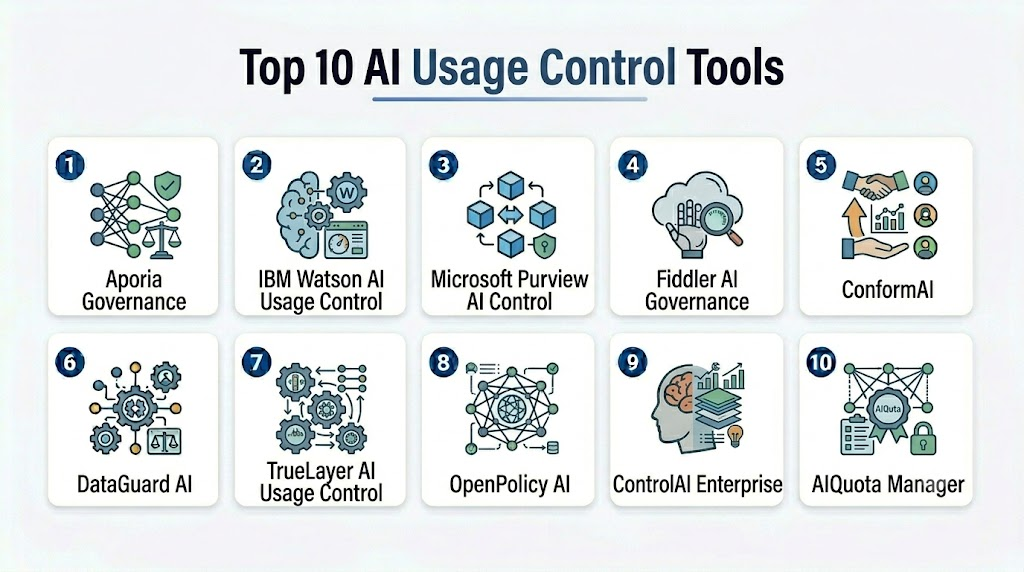
Top 10 AI Usage Control Tools
1- Aporia Governance
Short description: Enterprise-focused AI usage control platform providing real-time monitoring, policy enforcement, and audit-ready reporting for cloud and on-prem AI deployments.
Key Features
- Real-time AI model usage monitoring
- Granular access control and policy enforcement
- Automated alerts for abnormal usage
- Integration with major cloud platforms
- Audit trails and compliance reporting
- Multi-team collaboration dashboards
Pros
- Enterprise-grade compliance features
- Supports multiple AI model types
- Strong logging and alerting capabilities
Cons
- Premium pricing for smaller teams
- Initial setup can be complex
Platforms / Deployment
- Web / Windows / Linux
- Cloud / Hybrid
Security & Compliance
- Not publicly stated
Integrations & Ecosystem
Supports CI/CD and MLOps pipelines for policy enforcement
- TensorFlow, PyTorch
- AWS, Azure, GCP integrations
- API endpoints for custom alerts
- SIEM connectivity
Support & Community
- Enterprise onboarding and documentation
- Varies / Not publicly stated
2- IBM Watson AI Usage Control
Short description: Controls and audits enterprise AI usage across IBM Watson services, focusing on ethical compliance, policy management, and usage transparency.
Key Features
- Centralized policy management for AI services
- Access control for teams and individual users
- Automated reporting for usage compliance
- Role-based dashboards
- Integration with enterprise identity providers
- Alerts for unauthorized usage attempts
Pros
- Tight integration with IBM ecosystem
- Comprehensive audit and compliance features
Cons
- Limited to IBM AI services
- May require enterprise subscription
Platforms / Deployment
- Web
- Cloud
Security & Compliance
- Not publicly stated
Integrations & Ecosystem
- Works with IBM Cloud, Watson NLP, and AI services
- API for custom workflows
- Enterprise identity provider integrations
Support & Community
- IBM enterprise support
- Varies / Not publicly stated
3- Microsoft Purview AI Control
Short description: A platform for controlling access and usage of AI models and services in Microsoft ecosystem, focusing on compliance, policy enforcement, and monitoring.
Key Features
- Role-based access controls
- Usage analytics for AI workloads
- Integration with Microsoft 365 compliance tools
- Policy enforcement for AI API usage
- Alerts and anomaly detection
- Reporting for regulatory compliance
Pros
- Deep integration with Microsoft services
- Strong compliance reporting
- Supports large enterprise deployments
Cons
- Primarily limited to Microsoft AI products
- Steep learning curve for smaller teams
Platforms / Deployment
- Web
- Cloud / Hybrid
Security & Compliance
- Not publicly stated
Integrations & Ecosystem
- Microsoft Azure AI, MLOps pipelines
- Microsoft 365 compliance dashboards
- API integration for automation
Support & Community
- Enterprise support
- Varies / Not publicly stated
4- Fiddler AI Governance
Short description: Focused on model monitoring and usage control, offering insights into ethical, compliant, and secure AI operations for enterprises.
Key Features
- Model usage tracking in real-time
- Policy enforcement for user access
- Bias and fairness monitoring
- Alerting for unusual AI activity
- Multi-cloud deployment support
- Dashboard and analytics for usage insights
Pros
- Strong real-time monitoring
- Flexible integration with existing AI pipelines
Cons
- Pricing may be high for SMBs
- Limited pre-built compliance templates
Platforms / Deployment
- Web / Windows / Linux
- Cloud / Hybrid
Security & Compliance
- Not publicly stated
Integrations & Ecosystem
- TensorFlow, PyTorch, Hugging Face
- API for workflow integration
- Dashboard connectors for SIEM
Support & Community
- Enterprise support
- Varies / Not publicly stated
5- ConformAI
Short description: AI usage enforcement tool providing policy-based controls, usage limits, and compliance reporting for corporate AI deployments.
Key Features
- Policy-driven AI usage control
- Quotas and rate limiting per team or user
- Real-time alerts and notifications
- Audit trails for regulatory compliance
- Dashboard for governance analytics
- Multi-cloud and hybrid support
Pros
- Granular enforcement of AI usage
- Real-time alerts improve oversight
Cons
- May require dedicated admins for setup
- Advanced features limited to premium plans
Platforms / Deployment
- Web / Linux
- Cloud / Hybrid
Security & Compliance
- Not publicly stated
Integrations & Ecosystem
- Supports major ML frameworks
- APIs for integration into CI/CD
- Alerts via Slack, Teams, or email
Support & Community
- Documentation and onboarding
- Varies / Not publicly stated
6- DataGuard AI
Short description: Platform designed to monitor and restrict AI usage in enterprise data environments, ensuring data privacy and secure model deployment.
Key Features
- Data-aware AI usage control
- Real-time policy enforcement
- Access control by role, team, or project
- Monitoring of output for data leakage
- Reporting dashboards for compliance
- Alerts and anomaly detection
Pros
- Protects sensitive data in AI workflows
- Strong policy enforcement capabilities
Cons
- May be complex to deploy in small teams
- Focused on data security; less on model insights
Platforms / Deployment
- Web / Windows / Linux
- Cloud / Hybrid
Security & Compliance
- Not publicly stated
Integrations & Ecosystem
- Connects to MLOps pipelines
- API for automated enforcement
- Integrates with SIEM solutions
Support & Community
- Enterprise support
- Varies / Not publicly stated
7- TrueLayer AI Usage Control
Short description: Developer-focused platform providing usage policies, quotas, and monitoring for API-based AI deployments.
Key Features
- API usage control for AI models
- Quotas and throttling mechanisms
- Real-time monitoring dashboards
- Alerts for misuse or overuse
- Multi-team management
- Integration with CI/CD workflows
Pros
- Developer-friendly and flexible
- Good for controlling API consumption
Cons
- Less suitable for non-technical teams
- Limited enterprise compliance features
Platforms / Deployment
- Web
- Cloud
Security & Compliance
- Not publicly stated
Integrations & Ecosystem
- API-first integrations
- CI/CD pipeline hooks
- Dashboard export options
Support & Community
- Developer documentation
- Varies / Not publicly stated
8- OpenPolicy AI
Short description: Open-source AI usage control framework enabling customizable policy enforcement and monitoring for research and production teams.
Key Features
- Customizable policy definitions
- Real-time usage monitoring
- Logging and audit capabilities
- Multi-model support
- Flexible deployment and integration
Pros
- Free and highly flexible
- Supports experimental workflows
Cons
- Requires internal expertise for deployment
- Limited pre-built templates
Platforms / Deployment
- Linux / macOS / Windows
- Self-hosted / Cloud
Security & Compliance
- Not publicly stated
Integrations & Ecosystem
- TensorFlow, PyTorch, Hugging Face
- API for integration with AI pipelines
- Open-source community contributions
Support & Community
- Community-driven
- Extensive documentation
9- ControlAI Enterprise
Short description: Enterprise platform offering usage governance, access management, and policy compliance for AI across multi-cloud environments.
Key Features
- Enterprise access controls
- Multi-cloud AI usage monitoring
- Compliance reporting and auditing
- Quotas and user-level policy enforcement
- Alerts and anomaly detection
- Integration with identity providers
Pros
- Enterprise-grade controls
- Multi-cloud support
Cons
- May be overkill for small teams
- Premium subscription required for full features
Platforms / Deployment
- Web / Windows / Linux
- Cloud / Hybrid
Security & Compliance
- Not publicly stated
Integrations & Ecosystem
- Supports CI/CD and MLOps tools
- API endpoints for automated enforcement
- Alerts via email or collaboration tools
Support & Community
- Enterprise support
- Varies / Not publicly stated
10- AIQuota Manager
Short description: Focuses on enforcing quotas, access, and governance for AI APIs and model endpoints in mid-market and enterprise environments.
Key Features
- User- and team-level usage quotas
- Access control policies
- Audit logs and usage reporting
- Alerts for policy violations
- API-first integrations
- Dashboard analytics for usage trends
Pros
- Easy to enforce limits across teams
- Supports multi-tenant deployments
Cons
- Limited model-level insights
- Fewer compliance-focused features
Platforms / Deployment
- Web / Linux / Windows
- Cloud / Hybrid
Security & Compliance
- Not publicly stated
Integrations & Ecosystem
- API for CI/CD and MLOps integration
- Slack, Teams alerts
- Supports major AI frameworks
Support & Community
- Documentation available
- Varies / Not publicly stated
Comparison Table (Top 10)
| Tool Name | Best For | Platform(s) Supported | Deployment | Standout Feature | Public Rating |
|---|---|---|---|---|---|
| Aporia Governance | Enterprise AI compliance | Web / Windows / Linux | Cloud / Hybrid | Real-time usage monitoring | N/A |
| IBM Watson AI Usage Control | IBM ecosystem users | Web | Cloud | Centralized AI policy management | N/A |
| Microsoft Purview AI Control | Microsoft AI users | Web | Cloud / Hybrid | Role-based access & analytics | N/A |
| Fiddler AI Governance | Enterprise model monitoring | Web / Windows / Linux | Cloud / Hybrid | Multi-cloud model usage tracking | N/A |
| ConformAI | Corporate AI governance | Web / Linux | Cloud / Hybrid | Policy-driven AI usage enforcement | N/A |
| DataGuard AI | Data-sensitive AI usage | Web / Windows / Linux | Cloud / Hybrid | Data-aware AI control | N/A |
| TrueLayer AI Usage Control | Developer teams | Web | Cloud | API-based usage quotas | N/A |
| OpenPolicy AI | Research and experimental teams | Linux / macOS / Windows | Self-hosted / Cloud | Customizable policy framework | N/A |
| ControlAI Enterprise | Enterprise multi-cloud | Web / Windows / Linux | Cloud / Hybrid | Multi-cloud AI policy enforcement | N/A |
| AIQuota Manager | Quota management | Web / Linux / Windows | Cloud / Hybrid | User- and team-level AI quotas | N/A |
Evaluation & Scoring of AI Usage Control Tools
| Tool Name | Core (25%) | Ease (15%) | Integrations (15%) | Security (10%) | Performance (10%) | Support (10%) | Value (15%) | Weighted Total (0–10) |
|---|---|---|---|---|---|---|---|---|
| Aporia Governance | 9 | 7 | 8 | 7 | 8 | 7 | 7 | 8.0 |
| IBM Watson AI Usage Control | 8 | 7 | 7 | 7 | 7 | 7 | 6 | 7.3 |
| Microsoft Purview AI Control | 8 | 6 | 7 | 7 | 8 | 6 | 6 | 7.2 |
| Fiddler AI Governance | 8 | 7 | 7 | 6 | 7 | 6 | 7 | 7.1 |
| ConformAI | 7 | 7 | 6 | 6 | 7 | 6 | 7 | 6.9 |
| DataGuard AI | 8 | 6 | 7 | 7 | 7 | 6 | 6 | 7.0 |
| TrueLayer AI Usage Control | 7 | 8 | 6 | 6 | 7 | 6 | 7 | 6.9 |
| OpenPolicy AI | 7 | 7 | 6 | 5 | 6 | 6 | 8 | 6.9 |
| ControlAI Enterprise | 8 | 6 | 7 | 7 | 7 | 6 | 6 | 7.0 |
| AIQuota Manager | 7 | 7 | 6 | 6 | 6 | 6 | 7 | 6.8 |
Which AI Usage Control Tool Is Right for You?
Solo / Freelancer
OpenPolicy AI or TrueLayer AI Usage Control are cost-effective and flexible for small-scale or individual projects.
SMB
Fiddler AI Governance and AIQuota Manager offer a balance between usability, integration, and basic compliance needs.
Mid-Market
Aporia Governance and ConformAI provide enterprise-level visibility and multi-model support for growing teams.
Enterprise
IBM Watson AI Usage Control, Microsoft Purview AI Control, and ControlAI Enterprise provide full-scale compliance, monitoring, and governance features.
Budget vs Premium
Open-source and lightweight SaaS options reduce cost, whereas enterprise platforms provide advanced monitoring, reporting, and multi-cloud support.
Feature Depth vs Ease of Use
Enterprise tools deliver comprehensive controls but may require training; smaller tools prioritize ease of deployment.
Integrations & Scalability
Tools should integrate with your existing AI pipeline, MLOps frameworks, and collaboration tools to ensure scalability.
Security & Compliance Needs
Prioritize platforms offering audit trails, RBAC, MFA, and regulatory compliance if deploying AI in sensitive industries.
Frequently Asked Questions (FAQs)
1- What are the typical pricing models for AI Usage Control Tools?
Pricing varies from free open-source frameworks to subscription-based SaaS or enterprise licensing, depending on deployment, features, and support.
2- How quickly can organizations implement these tools?
Implementation ranges from a few hours for lightweight tools to several weeks for enterprise platforms with multi-cloud integration and policy setup.
3- Can these tools monitor all types of AI models?
Most support LLMs, NLP, and vision models. Multi-modal support is expanding in 2026, though some specialized AI systems may require custom integrations.
4- How granular are access control capabilities?
Most enterprise tools offer user- and role-level access policies, enabling fine-grained control over AI model usage.
5- Are these tools suitable for regulated industries?
Yes, enterprise platforms provide compliance reporting aligned with GDPR, HIPAA, ISO 27001, and other regulatory frameworks.
6- Can these tools enforce usage limits?
Many platforms provide quotas, rate limiting, and real-time alerts to ensure AI usage aligns with organizational policies.
7- Do small teams benefit from AI usage control tools?
Yes, lightweight or open-source solutions like OpenPolicy AI help smaller teams enforce safe AI practices without high costs.
8- How often should usage policies be reviewed?
Policies should be continuously monitored and periodically reviewed, especially after model updates or new AI deployments.
9- Are integrations with CI/CD and MLOps pipelines available?
Most tools offer APIs or connectors for integration, enabling automated policy enforcement and monitoring.
10- Are there alternatives to dedicated AI usage control tools?
Manual oversight, internal policies, or lightweight monitoring scripts can supplement dedicated tools but may lack scalability and reporting features.
Conclusion
AI Usage Control Tools are essential for ensuring safe, compliant, and efficient AI deployments in modern organizations. The choice depends on scale, model types, regulatory requirements, and team expertise. Smaller teams may prefer OpenPolicy AI or TrueLayer AI Usage Control for flexibility and affordability, while mid-market and enterprise organizations benefit from Aporia Governance, IBM Watson AI Usage Control, and Microsoft Purview AI Control. Start by shortlisting 2–3 tools, run a pilot, validate integrations and compliance reporting, and scale usage control across your AI ecosystem to mitigate risk and maintain trust in AI operations.

Find Trusted Cardiac Hospitals
Compare heart hospitals by city and services — all in one place.
Explore Hospitals
A practical challenge often overlooked is enforcing AI usage policies consistently across multiple teams and tools. Organizations should also consider auditability, role-based access controls, and monitoring capabilities to maintain governance as AI adoption scales.