Introduction
Behavioral biometrics tools analyze how users interact with devices, applications, and digital services. Instead of relying solely on passwords, tokens, or fingerprints, these platforms evaluate behavioral patterns such as typing rhythm, mouse movements, touchscreen gestures, scrolling behavior, device handling, and navigation habits to verify identity continuously. As cybercrime becomes increasingly sophisticated, traditional authentication methods are often insufficient against account takeover attacks, credential theft, bot activity, and social engineering. Behavioral biometrics adds an invisible security layer that continuously assesses risk without introducing additional friction for legitimate users.
Real-World Use Cases
- Banking fraud prevention and account takeover detection
- Continuous authentication for remote employees
- E-commerce fraud detection and payment protection
- Identity verification during customer onboarding
- Detection of bots, automated attacks, and synthetic identities
Evaluation Criteria for Buyers
When evaluating behavioral biometrics platforms, consider:
- Behavioral signal collection depth
- Real-time risk scoring capabilities
- AI and machine learning sophistication
- Fraud detection accuracy
- False positive management
- Integration flexibility
- Regulatory compliance support
- Scalability and performance
- Continuous authentication capabilities
- Reporting and investigation tools
Best for: Banks, fintech firms, insurance providers, government agencies, e-commerce businesses, enterprises with high-value digital assets, and organizations facing sophisticated fraud threats.
Not ideal for: Small organizations with minimal online transactions or environments where traditional MFA already provides sufficient protection at lower complexity and cost.
Key Trends in Behavioral Biometrics
- AI-powered behavioral profiling is becoming more accurate and adaptive.
- Continuous authentication is replacing one-time login verification.
- Behavioral biometrics is increasingly integrated into fraud orchestration platforms.
- Real-time bot detection and human verification capabilities are expanding.
- Zero Trust architectures are incorporating behavioral risk scoring.
- Mobile behavioral intelligence is becoming a major differentiator.
- Synthetic identity detection is receiving greater investment.
- Explainable AI features are improving investigation workflows.
- Privacy-preserving analytics are becoming more important for compliance.
- Behavioral biometrics is increasingly used alongside device intelligence and identity verification systems.
How We Selected These Tools (Methodology)
The tools in this guide were selected based on:
- Market adoption among financial institutions and enterprises
- Behavioral analytics capabilities and maturity
- Continuous authentication functionality
- Fraud prevention effectiveness
- AI and machine learning sophistication
- Scalability for large transaction volumes
- Integration ecosystem and API availability
- Customer deployment success across industries
- Security and compliance posture
- Overall innovation and future readiness
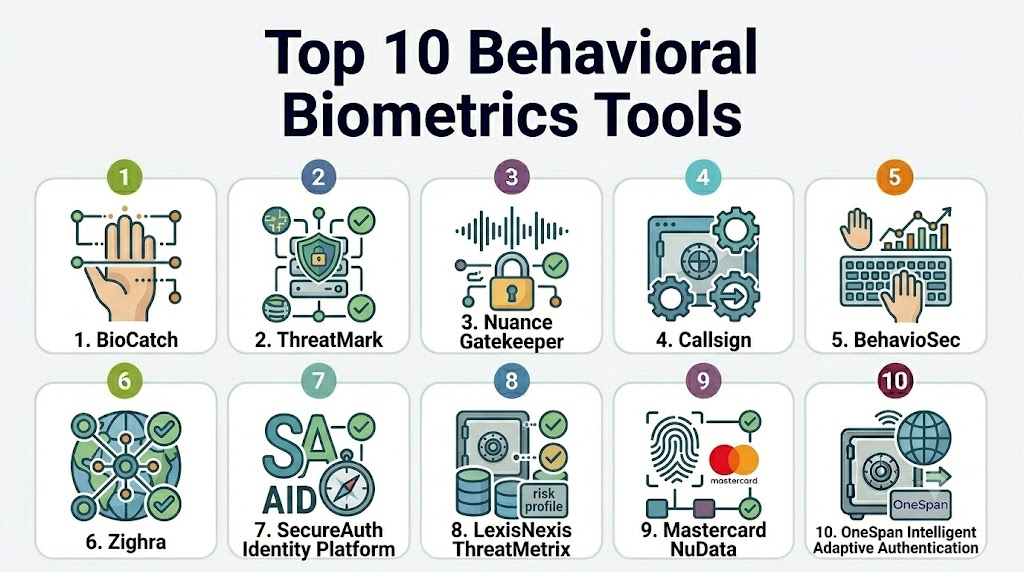
Top 10 Behavioral Biometrics Tools
1- BioCatch
Short description: BioCatch is one of the most recognized behavioral biometrics platforms in the financial services industry. It specializes in fraud prevention, account takeover detection, mule account identification, and digital banking security.
Key Features
- Continuous behavioral authentication
- Real-time fraud detection
- Account takeover prevention
- Mule account detection
- Device and behavioral intelligence
- Adaptive risk scoring
- Banking-focused analytics
Pros
- Strong financial services expertise
- Mature fraud detection models
- Large enterprise customer base
Cons
- Enterprise-focused pricing
- Complex implementation for smaller organizations
- Primarily optimized for banking use cases
Platforms / Deployment
- Cloud
Security & Compliance
- RBAC
- Audit logging
- Encryption
- Not publicly stated for some certifications
Integrations & Ecosystem
BioCatch integrates with banking systems, fraud platforms, SIEM solutions, and identity providers.
- APIs
- Fraud management platforms
- Banking applications
- Risk engines
- Security monitoring tools
Support & Community
Strong enterprise onboarding, consulting services, and dedicated support programs.
2- ThreatMark
Short description: ThreatMark combines behavioral biometrics, device intelligence, and transaction monitoring to identify fraud across digital banking environments.
Key Features
- Behavioral analysis
- Fraud prevention
- Device intelligence
- Session monitoring
- Risk scoring
- Transaction protection
- Threat detection
Pros
- Banking-focused platform
- Strong transaction analysis
- Comprehensive fraud intelligence
Cons
- Less suitable outside financial services
- Requires behavioral data collection maturity
Platforms / Deployment
- Cloud
Security & Compliance
- Encryption
- Access controls
- Not publicly stated for additional certifications
Integrations & Ecosystem
ThreatMark integrates with banking platforms and fraud prevention ecosystems.
- APIs
- Banking systems
- Fraud monitoring solutions
- Security platforms
Support & Community
Enterprise support with implementation guidance and customer success teams.
3- Nuance Gatekeeper
Short description: Nuance Gatekeeper uses behavioral biometrics and voice biometrics to secure customer service channels, contact centers, and digital platforms.
Key Features
- Voice biometrics
- Behavioral analytics
- Fraud detection
- Continuous authentication
- Contact center protection
- Omnichannel security
- Risk assessment
Pros
- Strong voice authentication capabilities
- Contact center specialization
- Omnichannel coverage
Cons
- Voice-focused deployments may require tuning
- Enterprise-oriented pricing
Platforms / Deployment
- Cloud
Security & Compliance
- Encryption
- Role-based access controls
- Not publicly stated for additional certifications
Integrations & Ecosystem
Supports integration with customer service and fraud prevention systems.
- Contact center platforms
- CRM systems
- Fraud platforms
- APIs
Support & Community
Comprehensive enterprise support and professional services.
4- Callsign
Short description: Callsign provides AI-driven identity verification and behavioral intelligence designed to reduce authentication friction while improving security.
Key Features
- Behavioral biometrics
- Passive authentication
- AI-driven risk analysis
- Adaptive authentication
- Continuous trust scoring
- Identity intelligence
- Fraud prevention
Pros
- Reduced user friction
- Strong adaptive authentication
- AI-powered risk engine
Cons
- Requires behavioral baseline creation
- Enterprise deployment focus
Platforms / Deployment
- Cloud
Security & Compliance
- MFA support
- Access controls
- Encryption
Integrations & Ecosystem
Integrates with IAM, identity providers, and fraud detection tools.
- APIs
- IAM platforms
- Authentication systems
- Security platforms
Support & Community
Strong documentation and enterprise support services.
5- BehavioSec
Short description: BehavioSec specializes in behavioral biometrics for digital identity verification, continuous authentication, and fraud prevention.
Key Features
- Keystroke analysis
- Touchscreen analytics
- Mouse movement analysis
- Continuous authentication
- Fraud detection
- Adaptive profiling
- Risk assessment
Pros
- Behavioral biometrics specialist
- Strong passive authentication
- Flexible deployment
Cons
- Narrower platform scope than larger competitors
- Requires behavioral training data
Platforms / Deployment
- Cloud
Security & Compliance
- Encryption
- Access controls
- Not publicly stated for additional certifications
Integrations & Ecosystem
Offers APIs for security and fraud ecosystems.
- APIs
- IAM platforms
- Fraud systems
- Banking applications
Support & Community
Good enterprise support and implementation assistance.
6- Zighra
Short description: Zighra focuses on behavioral identity analytics for workforce security, continuous authentication, and insider threat detection.
Key Features
- Workforce authentication
- Behavioral profiling
- Insider threat monitoring
- Continuous identity verification
- Risk scoring
- Device behavior analytics
- Security monitoring
Pros
- Strong workforce protection
- Insider threat visibility
- Continuous authentication focus
Cons
- Less focused on consumer fraud
- Smaller ecosystem than larger vendors
Platforms / Deployment
- Cloud
Security & Compliance
- Access controls
- Encryption
- Not publicly stated for certifications
Integrations & Ecosystem
Supports integration with enterprise security stacks.
- SIEM tools
- IAM platforms
- Security analytics
- APIs
Support & Community
Dedicated enterprise support and onboarding programs.
7- SecureAuth Identity Platform
Short description: SecureAuth combines identity management, adaptive authentication, and behavioral analytics to improve access security.
Key Features
- Adaptive authentication
- Behavioral risk scoring
- Identity verification
- MFA orchestration
- Risk-based access
- Session analytics
- Identity intelligence
Pros
- Strong IAM integration
- Broad authentication capabilities
- Enterprise scalability
Cons
- Behavioral analytics not as deep as specialized vendors
- Configuration complexity
Platforms / Deployment
- Cloud / Hybrid
Security & Compliance
- MFA
- SSO
- SAML
- RBAC
Integrations & Ecosystem
Extensive identity ecosystem integrations.
- Active Directory
- IAM platforms
- Cloud services
- Security tools
Support & Community
Strong enterprise support and implementation services.
8- LexisNexis ThreatMetrix
Short description: ThreatMetrix combines digital identity intelligence, behavioral analysis, and fraud prevention for large-scale online businesses.
Key Features
- Digital identity intelligence
- Behavioral analytics
- Device fingerprinting
- Fraud detection
- Risk scoring
- Account protection
- Transaction monitoring
Pros
- Large identity intelligence network
- Strong fraud prevention capabilities
- Scalable platform
Cons
- Complex deployments
- Enterprise-oriented pricing
Platforms / Deployment
- Cloud
Security & Compliance
- Encryption
- Access controls
- Not publicly stated for additional certifications
Integrations & Ecosystem
Extensive integrations across fraud and identity ecosystems.
- APIs
- Fraud platforms
- Banking systems
- E-commerce platforms
Support & Community
Comprehensive enterprise support and consulting services.
9- Mastercard NuData
Short description: NuData leverages behavioral biometrics and machine learning to distinguish legitimate users from fraudsters and bots.
Key Features
- Passive authentication
- Behavioral profiling
- Bot detection
- Fraud prevention
- Real-time analytics
- Adaptive risk scoring
- Machine learning models
Pros
- Strong fraud detection accuracy
- Effective bot mitigation
- Scalable architecture
Cons
- Enterprise-focused
- Limited transparency into some scoring models
Platforms / Deployment
- Cloud
Security & Compliance
- Encryption
- Access management
- Not publicly stated for additional certifications
Integrations & Ecosystem
Works across digital commerce and financial services environments.
- APIs
- Payment platforms
- Fraud systems
- Identity services
Support & Community
Strong enterprise support backed by Mastercard resources.
10- OneSpan Intelligent Adaptive Authentication
Short description: OneSpan combines behavioral analytics, device intelligence, and adaptive authentication to protect digital banking and enterprise applications.
Key Features
- Behavioral analytics
- Adaptive authentication
- Device intelligence
- Fraud prevention
- Continuous risk assessment
- Authentication orchestration
- Transaction protection
Pros
- Strong banking heritage
- Broad authentication capabilities
- Enterprise scalability
Cons
- May require specialized implementation expertise
- Enterprise pricing structure
Platforms / Deployment
- Cloud / Hybrid
Security & Compliance
- MFA
- Encryption
- Access controls
- Audit logging
Integrations & Ecosystem
Integrates with authentication and banking platforms.
- APIs
- IAM solutions
- Banking systems
- Fraud tools
Support & Community
Strong enterprise-grade support and professional services.
Comparison Table (Top 10)
| Tool Name | Best For | Platform(s) Supported | Deployment | Standout Feature | Public Rating |
|---|---|---|---|---|---|
| BioCatch | Banking Fraud Prevention | Web | Cloud | Behavioral Fraud Analytics | N/A |
| ThreatMark | Digital Banking Security | Web | Cloud | Transaction Risk Analysis | N/A |
| Nuance Gatekeeper | Contact Centers | Web | Cloud | Voice + Behavioral Biometrics | N/A |
| Callsign | Adaptive Authentication | Web | Cloud | AI Trust Scoring | N/A |
| BehavioSec | Continuous Authentication | Web | Cloud | Behavioral Profiling | N/A |
| Zighra | Workforce Security | Web | Cloud | Insider Threat Detection | N/A |
| SecureAuth | Identity Security | Web | Cloud/Hybrid | Adaptive Authentication | N/A |
| ThreatMetrix | Fraud Prevention | Web | Cloud | Digital Identity Network | N/A |
| NuData | Bot & Fraud Detection | Web | Cloud | Passive Authentication | N/A |
| OneSpan | Banking Authentication | Web | Cloud/Hybrid | Intelligent Adaptive Authentication | N/A |
Evaluation & Scoring of Behavioral Biometrics
| Tool | Core | Ease | Integrations | Security | Performance | Support | Value | Weighted Total |
|---|---|---|---|---|---|---|---|---|
| BioCatch | 10 | 8 | 9 | 9 | 10 | 9 | 7 | 8.95 |
| ThreatMark | 9 | 8 | 8 | 9 | 9 | 8 | 8 | 8.50 |
| Nuance Gatekeeper | 9 | 8 | 8 | 9 | 9 | 9 | 7 | 8.50 |
| Callsign | 9 | 9 | 8 | 9 | 9 | 8 | 8 | 8.65 |
| BehavioSec | 8 | 8 | 8 | 8 | 8 | 8 | 8 | 8.00 |
| Zighra | 8 | 8 | 7 | 8 | 8 | 7 | 8 | 7.80 |
| SecureAuth | 8 | 8 | 9 | 9 | 8 | 8 | 8 | 8.25 |
| ThreatMetrix | 10 | 8 | 9 | 9 | 10 | 9 | 7 | 8.95 |
| NuData | 9 | 8 | 8 | 9 | 9 | 8 | 8 | 8.50 |
| OneSpan | 9 | 8 | 8 | 9 | 9 | 8 | 8 | 8.50 |
Which Behavioral Biometrics Tool Is Right for You?
Solo / Freelancer
Most behavioral biometrics platforms target enterprises rather than individual users. Traditional MFA and passwordless authentication solutions are often more practical for solo professionals.
SMB
Callsign and SecureAuth provide a balance between security, usability, and deployment flexibility. SMBs should prioritize platforms that integrate easily with existing identity infrastructure.
Mid-Market
BehavioSec, OneSpan, and ThreatMark offer strong behavioral analytics capabilities without requiring the scale of the largest enterprise deployments.
Enterprise
BioCatch, ThreatMetrix, NuData, and Nuance Gatekeeper are strong choices for organizations handling high transaction volumes, sensitive customer data, and sophisticated fraud threats.
Budget vs Premium
Premium platforms such as BioCatch, ThreatMetrix, and NuData deliver extensive intelligence networks and advanced fraud analytics. Budget-conscious organizations may prefer SecureAuth or BehavioSec depending on their use cases.
Feature Depth vs Ease of Use
Organizations seeking deep fraud analytics should consider BioCatch and ThreatMetrix. Those prioritizing easier deployment may find Callsign and SecureAuth more approachable.
Integrations & Scalability
Large enterprises should prioritize vendors with extensive API ecosystems, IAM integrations, and proven scalability across millions of users and transactions.
Security & Compliance Needs
Highly regulated industries such as banking, insurance, and healthcare should evaluate audit capabilities, encryption standards, access controls, and compliance support alongside behavioral analytics performance.
Frequently Asked Questions (FAQs)
1- What is behavioral biometrics?
Behavioral biometrics analyzes user interaction patterns such as typing, mouse movements, touch gestures, and navigation behavior. These patterns help verify identity continuously and detect suspicious activity.
2- How does behavioral biometrics differ from traditional biometrics?
Traditional biometrics uses physical traits like fingerprints or facial recognition. Behavioral biometrics focuses on how users interact with systems rather than who they physically are.
3- Can behavioral biometrics stop account takeover attacks?
Behavioral biometrics is highly effective at identifying unusual behavior associated with account takeover attempts. It is most effective when combined with MFA and identity verification controls.
4- Does behavioral biometrics impact user experience?
Most solutions operate passively in the background. Legitimate users often experience little to no additional authentication friction during normal activity.
5- Are these platforms suitable for small businesses?
Some solutions can work for SMBs, but many platforms are designed primarily for financial institutions and large enterprises with advanced security requirements.
6- How long does implementation typically take?
Implementation timelines vary from a few weeks to several months depending on integration complexity, behavioral model training, and regulatory requirements.
7- Can behavioral biometrics detect bots?
Yes. Many platforms use behavioral analysis to distinguish human users from automated scripts, bots, and fraudulent automation frameworks.
8- What integrations are commonly required?
Organizations commonly integrate behavioral biometrics platforms with IAM systems, fraud management tools, SIEM platforms, authentication providers, and customer applications.
9- Is behavioral biometric data privacy sensitive?
Yes. Organizations should evaluate privacy policies, data retention practices, and regulatory compliance requirements before deployment.
10- Can companies switch between behavioral biometrics vendors?
Yes, although switching may require retraining behavioral models, updating integrations, and validating detection accuracy after migration.
Conclusion
Behavioral biometrics has become a critical layer in modern identity security and fraud prevention strategies. As cybercriminals increasingly bypass passwords and exploit stolen credentials, organizations need continuous, context-aware methods to distinguish legitimate users from attackers. Platforms such as BioCatch, ThreatMetrix, NuData, Callsign, and OneSpan provide advanced capabilities for detecting account takeovers, preventing fraud, and enabling adaptive authentication. The best solution depends on your organization’s risk profile, industry requirements, user base, and existing security ecosystem. Financial institutions may prioritize fraud intelligence and transaction monitoring, while enterprises may focus on workforce authentication and insider threat detection. Start by shortlisting two or three vendors, running a proof of concept, validating integration requirements, and measuring detection accuracy against your security objectives before committing to a full deployment.

Find Trusted Cardiac Hospitals
Compare heart hospitals by city and services — all in one place.
Explore Hospitals
One area that could be explored further is user acceptance and accessibility. Behavioral patterns can vary due to age, disabilities, or temporary changes in usage habits, so maintaining accuracy without impacting legitimate users remains an important challenge.