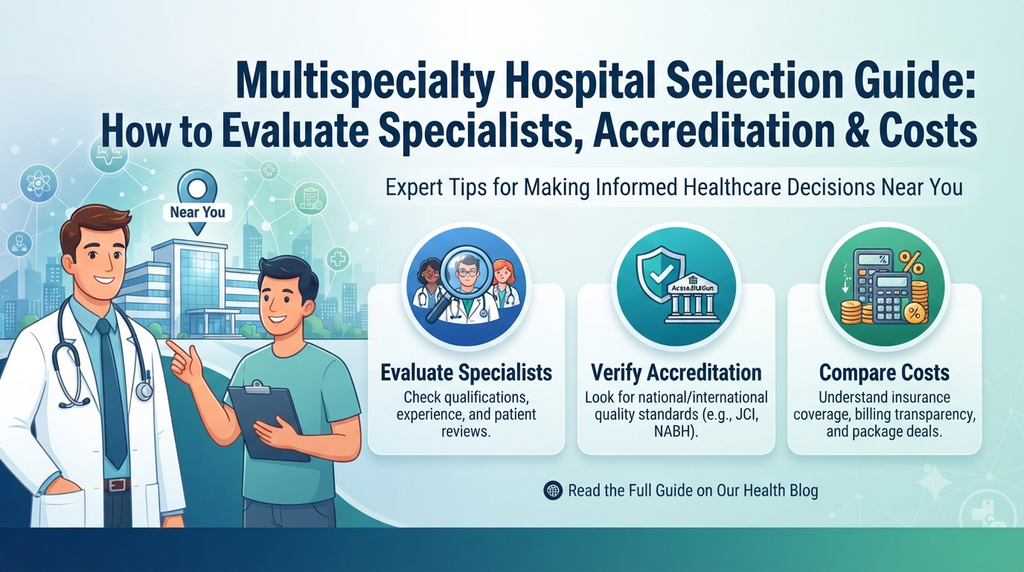
When a loved one needs medical care, the responsibility of choosing the right hospital often falls on family members who have very little time to make a high-stakes decision. Looking up nearby hospitals online usually brings up dozens of options—each showcasing modern buildings, long lists of medical departments, and high star ratings. Yet two hospitals located on the exact same road can differ dramatically in specialist availability, emergency readiness, infection control, and final treatment costs. Picking a facility solely because it is closest to home or appears first in search results can lead to unexpected expenses or mid-treatment referrals when a required specialist or diagnostic machine is unavailable. Knowing how to choose a multispecialty hospital near you begins with a practical rule: match the hospital’s real clinical capabilities to the patient’s specific health needs, then verify safety standards, cost transparency, and follow-up convenience before making a choice.
1. What Is a Multispecialty Hospital?
A multispecialty hospital is a healthcare facility that brings multiple medical and surgical departments together under one roof. Instead of focusing on a single organ system or health condition, it houses physicians, surgeons, diagnostic laboratories, imaging suites, inpatient wards, and emergency units within a unified clinical organisation.
Multispecialty vs. Super-Specialty Hospitals
Patients often encounter two related terms when comparing facilities:
- Multispecialty hospital: Offers broad medical and surgical care across several core disciplines—such as general medicine, general surgery, paediatrics, obstetrics and gynaecology, orthopaedics, cardiology, and neurology—supported by routine and advanced diagnostics.
- Super-specialty hospital: Focuses deeply on one or a small number of highly specialised fields—such as cardiac sciences, oncology, neurosciences, or organ transplantation—equipped with sub-specialists and dedicated tertiary-level technology for complex interventions.
Why Breadth Alone Does Not Guarantee Quality
Having twenty departments listed on a brochure does not automatically make a hospital suitable for every patient. Service depth varies widely from one facility to another. One multispecialty hospital may have a full-time cardiac catheterisation lab and round-the-clock neurology coverage, while another of similar size may only offer visiting outpatient consultations in those departments twice a week. Evaluating how well-staffed and equipped the specific department you need actually is matters far more than counting the total number of specialties advertised.
2. First Identify Your Medical Requirements
Before comparing hospital buildings or reading reviews, clarify what kind of medical care the patient actually needs right now. Different clinical situations call for very different hospital capabilities.
A. Routine Consultation
For new symptoms, fever, digestive discomfort, or a general health check-up, a patient typically needs a qualified general physician or a relevant outpatient specialist, basic blood and urine testing, standard imaging such as an X-ray or ultrasound, and clear scheduling for follow-up visits. A massive tertiary complex is rarely necessary for straightforward outpatient evaluations.
B. Chronic Disease Management
Conditions such as diabetes, hypertension, thyroid disorders, asthma, arthritis, or chronic kidney disease require ongoing oversight rather than a one-time visit. Look for regular specialist availability, reliable laboratory testing for periodic monitoring, pharmacy access, nutritional or lifestyle counselling, and smooth internal referrals when a condition affects multiple organs.
C. Planned Surgery
Elective procedures—such as hernia repair, gallbladder removal, joint replacement, or gynaecological surgery—require an experienced operating surgeon, a dedicated anaesthesiology team, well-equipped operation theatres, structured postoperative recovery wards, and immediate access to an Intensive Care Unit (ICU) in case unexpected complications arise.
D. Complex Medical Conditions
When a patient has overlapping health issues—such as heart disease alongside kidney impairment, or a condition requiring coordinated input from physicians, surgeons, and rehabilitation specialists—multidisciplinary teamwork becomes critical. The hospital should have multiple relevant departments working together, advanced diagnostic imaging, and established inpatient escalation pathways.
E. Emergency Medical Needs
Sudden chest pain, difficulty breathing, signs of stroke (such as facial drooping, arm weakness, or slurred speech), severe trauma, heavy bleeding, or loss of consciousness require immediate action. Never delay emergency medical care to compare hospitals, check insurance lists, or read reviews. Seek immediate stabilization at the nearest equipped emergency facility; planned transfers can always be arranged once the patient is medically stable.
3. Check Whether the Required Medical Specialists Are Available
A hospital’s clinical strength rests directly on the doctors treating patients. When evaluating hospital specialist availability, look past general promotional claims and check the specific department relevant to your condition.
Common Departments in a Multispecialty Hospital
Depending on its size and clinical scope, a multispecialty hospital may include:
- General Medicine and Internal Medicine: Adult diagnosis, infections, metabolic disorders, and multi-system medical care.
- Cardiology: Heart rhythm disorders, coronary artery disease, hypertension, and cardiac interventions.
- Neurology: Stroke, epilepsy, migraines, movement disorders, and nerve conditions.
- Orthopaedics: Fractures, joint pain, spine disorders, and joint replacement surgery.
- Gastroenterology and Hepatology: Digestive tract, liver, gallbladder, and pancreatic diseases.
- Nephrology: Kidney diseases, electrolyte imbalances, and dialysis services.
- Oncology: Medical, surgical, and radiation cancer care.
- General and Laparoscopic Surgery: Minimally invasive and open abdominal, soft-tissue, and emergency surgeries.
- Urology: Urinary tract, prostate, and kidney stone treatments.
- Obstetrics and Gynaecology: Pregnancy care, childbirth, and women’s reproductive health.
- Paediatrics: Infant, child, and adolescent medical care.
- Pulmonology: Asthma, COPD, tuberculosis, sleep disorders, and respiratory care.
- Dermatology, Ophthalmology, ENT, and Psychiatry: Skin, eye, ear-nose-throat, and mental health services.
How to Verify Doctor Qualifications and Availability
Knowing how to verify doctor qualifications protects patients from relying on unverified claims:
- Check medical degrees and specialist training: Look for recognized primary medical qualifications (such as MBBS) followed by postgraduate specialist degrees (such as MD, MS, or DNB) and, where applicable for super-specialties, DM or MCh credentials.
- Verify medical council registration: In India, qualified doctors must be registered with the National Medical Commission (NMC) via the Indian Medical Register or their respective State Medical Council. You can verify registration numbers through official council directories.
- Assess relevant clinical experience: Ask how regularly the specialist treats your specific condition or performs the proposed procedure.
- Confirm consultation schedules: Check whether the doctor is a full-time consultant available daily or a visiting specialist who consults only on specific days and hours. For inpatient procedures, ask who manages care during nights and weekends.
Not every hospital needs every specialty. What matters is whether the hospital has qualified, accessible expertise for your specific health concern.
4. Understand Hospital Accreditation and Quality Standards
Hospital accreditation provides an independent benchmark of whether a healthcare organisation follows structured systems for clinical care and safety. In India, the primary national body overseeing healthcare quality accreditation is the National Accreditation Board for Hospitals and Healthcare Providers (NABH), a constituent board of the Quality Council of India (QCI).
What NABH Standards Assess
An NABH accredited hospital undergoes third-party assessment across key operational and clinical areas, including:
- Patient care processes: Standardised clinical protocols, initial assessment, and continuity of care.
- Patient rights and education: Informed consent, privacy, clear communication, and grievance handling.
- Medication management: Safe storage, prescription verification, accurate dispensing, and monitoring for adverse drug reactions.
- Infection prevention and control: Sterilisation, hand hygiene, biomedical waste management, and outbreak prevention.
- Patient safety: Accurate patient identification, surgical safety checklists, and fall prevention.
- Staff qualifications and training: Credential verification for doctors and nurses, plus ongoing skill training.
- Infrastructure and facility safety: Fire safety, medical gas systems, equipment calibration, and backup power.
- Emergency preparedness: Structured triage, resuscitation readiness, and disaster response plans.
How to Check Hospital Accreditation
Do not rely solely on a logo printed on a brochure or signboard. To verify whether a facility holds active accreditation:
- Visit the official NABH website and search its public directory of accredited healthcare organisations.
- Check the exact name and address of the hospital branch, as accreditation applies to a specific physical facility rather than an entire hospital chain automatically.
- Note the certificate’s validity dates and scope—full hospital accreditation involves comprehensive multi-chapter compliance, whereas entry-level certification represents an initial step toward full quality standards.
What Accreditation Does—and Does Not—Mean
Accreditation confirms that a hospital has established systems, safety protocols, and quality monitoring processes. However, it does not guarantee a specific medical outcome for an individual patient, nor does it replace verifying whether the hospital has the right specialist and equipment for your exact diagnosis.
5. Evaluate Emergency and Critical Care Facilities
Even if you are choosing a hospital for a routine consultation or planned procedure, strong hospital emergency facilities and critical care backup provide an essential safety net if an unexpected complication occurs.
Key Emergency and Critical Care Checklist
When evaluating a hospital’s acute care readiness, check for:
- 24/7 Emergency Department: Confirm that the emergency room operates round the clock with dedicated casualty medical officers and trained emergency nurses—not merely an on-call doctor who must travel from home.
- Ambulance access and transport: Availability of Basic Life Support (BLS) and Advanced Life Support (ALS) ambulances with trained paramedics.
- Triage and resuscitation readiness: A clear triage system to prioritise life-threatening cases immediately, supported by defibrillators, airway management tools, and emergency medications.
- Intensive Care Unit (ICU): Availability of adult, cardiac (CCU), or neonatal/paediatric (NICU/PICU) intensive care beds staffed by trained intensivists and critical care nurses.
- Ventilator and life-support equipment: Functional mechanical ventilators, multiparameter monitors, and infusion pumps.
- Blood bank or transfusion support: Either a licensed in-house blood bank or a formal, rapid tie-up with an accredited blood centre for timely blood component availability.
- Emergency diagnostics and operation theatre: 24-hour access to urgent blood tests, X-ray/CT imaging, and emergency surgical theatres when life-saving intervention cannot wait until morning.
The exact critical care setup needed depends on the patient’s condition, but confirming that advertised emergency services are actively staffed around the clock prevents dangerous delays during a crisis.
6. Check Diagnostic and Laboratory Services
Accurate diagnosis drives safe treatment. Delays or inaccuracies in blood tests or medical imaging can postpone care or lead to repeated procedures.
Core Diagnostic Capabilities to Review
- Laboratory services: Routine haematology (complete blood counts), biochemistry (blood sugar, liver and kidney function tests), urine analysis, microbiology (cultures and sensitivity testing), and histopathology/biopsy services.
- Imaging services: Digital X-ray, ultrasound (including Doppler studies), CT scan, and MRI, depending on clinical requirements.
- Cardiopulmonary and specialised diagnostics: Electrocardiography (ECG), echocardiography, treadmill testing (TMT), endoscopy, colonoscopy, and pulmonary function testing (PFT).
Practical Questions About Diagnostics
- On-site availability: Are the required tests performed inside the hospital, or are samples sent to an external laboratory? External outsourcing is common for rare tests, but routine and urgent tests should ideally be processed on-site.
- Operating hours and emergency support: Can urgent scans or blood panels be run at night or on holidays?
- Reporting timelines: How quickly are routine versus urgent reports delivered?
- Digital access to reports: Can patients download test results and scan images online or receive physical copies easily for second opinions and future visits?
7. Compare Hospital Hygiene, Infection Control and Patient Safety
Hospital-acquired infections and preventable clinical errors pose serious risks, particularly for older adults, surgical patients, and people with weakened immunity. Observing hospital patient safety standards during an outpatient visit reveals a great deal about daily operational discipline.
What Patients and Caregivers Can Observe
- General cleanliness: Are waiting areas, corridors, examination rooms, and washrooms visibly clean, dry, and well-ventilated?
- Hand hygiene facilities: Are alcohol-based hand rubs or handwashing stations accessible across wards and consultation areas, and do doctors and nurses consistently use them before examining patients?
- Biomedical waste segregation: Are colour-coded waste bins properly maintained and kept away from general patient seating?
- Clean drinking water and sanitation: Basic hygiene in public toilets and drinking water areas reflects overall facility maintenance.
- Visitor and attendant discipline: Controlled visitor hours and limits on the number of attendants in wards and ICUs help reduce infection exposure and noise.
Clinical Safety Practices to Ask About
Visible cleanliness is encouraging, but true clinical safety depends on behind-the-scenes protocols:
- Sterilisation procedures: How surgical instruments and reusable devices are sterilised and tracked.
- Patient identification: Use of two patient identifiers (such as full name and date of birth or hospital registration number) on wristbands before administering medicines, drawing blood, or starting procedures.
- Medication safety: Clear documentation of drug allergies and verification of dosages before administration.
8. Compare Treatment Costs and Financial Transparency
Healthcare expenses in India can vary widely depending on the city, hospital category, room type, and clinical complexity. Conducting a structured hospital treatment cost comparison before a planned admission helps families avoid financial shock.
Common Components of a Hospital Bill
When asking about charges, check every cost category rather than just the surgeon’s fee:
- Outpatient consultation and registration fees
- Pre-admission blood tests, imaging, and cardiac clearances
- Room or bed charges (general ward, twin-sharing, single private room, or deluxe suite)
- ICU and high-dependency unit (HDU) daily charges
- Operation theatre (OT) charges and equipment usage fees
- Surgeon, assistant surgeon, and anaesthetist fees
- Pharmacy medicines, surgical consumables, implants, or stents
- Nursing and routine monitoring charges
- Post-discharge follow-up visits and rehabilitation
Why Written Estimates Matter—and Why Final Bills Can Vary
For any planned procedure or inpatient stay, ask the hospital’s billing or admission desk for a written cost estimate specifying what is included and excluded. Keep in mind that an estimate is based on an expected, uncomplicated recovery. Final bills can legitimately change if diagnostic findings require additional procedures, if a patient needs extra days in the ICU, or if underlying conditions such as diabetes or infections prolong hospitalisation.
Illustrative Hospital Cost Comparison (Hypothetical Examples Only)
Note: The figures below are purely illustrative examples to show how billing components compare across different hospital setups. They do not represent actual prices at any specific hospital.
| Cost Component | Hospital A (Mid-Sized Multispecialty — Illustrative Example) | Hospital B (Large Corporate Multispecialty — Illustrative Example) |
| OPD Consultation Fee | ₹600 – ₹900 | ₹1,200 – ₹1,800 |
| Pre-Operative Diagnostic Panel | ₹3,500 – ₹5,000 | ₹6,000 – ₹9,000 |
| Room Category Chosen | Twin-Sharing Room (₹3,000/day) | Single Private Room (₹7,500/day) |
| Planned Procedure Package (e.g., Laparoscopic Surgery) | ₹55,000 – ₹70,000 | ₹95,000 – ₹1,25,000 |
| Consumables & Specialised Implants | Billed separately if outside standard package | Often billed separately or capped by package tier |
| Post-Discharge Follow-Up | 1 free follow-up within 7 days | Paid consultation after discharge |
Notice how room category selection alone can influence the total bill—in many hospitals, choosing a higher room tier also increases linked charges such as doctor visit fees and procedure tariffs.
9. Verify Health Insurance and Government Scheme Coverage
Confirming hospital insurance coverage before a planned admission prevents last-minute out-of-pocket payments.
Private and Employer Health Insurance Checks
- Network empanelment: Verify whether the hospital is on your insurer’s or Third-Party Administrator’s (TPA) active cashless network list—check both the hospital’s insurance desk and your insurer’s official portal, as network agreements change periodically.
- Pre-authorisation timeline: For planned hospitalisation, submit pre-authorisation documents at least 48 to 72 hours before admission.
- Room rent limits and proportionate deductions: Check whether your policy caps daily room rent (for example, 1% of the sum insured). Selecting a room above your eligible limit can trigger proportionate deductions across the entire hospital bill.
- Co-payments, deductibles, and sub-limits: Confirm whether your policy requires you to pay a fixed percentage of every claim or caps coverage for specific procedures such as cataract surgery or joint replacement.
- Waiting periods and exclusions: Verify that the diagnosis is not subject to an initial waiting period or pre-existing disease exclusion.
- Reimbursement process: If using a non-network hospital, ask what original bills, discharge summaries, implant stickers, and investigation reports are needed for reimbursement.
Government Health Assurance Schemes (Ayushman Bharat PM-JAY)
Eligible families in India may qualify for cashless secondary and tertiary hospitalisation cover under Ayushman Bharat Pradhan Mantri Jan Arogya Yojana (AB-PMJAY) or state-specific health schemes. Because not every multispecialty hospital is empanelled—and empanelled hospitals may only cover specific approved clinical packages—always verify beneficiary eligibility, hospital empanelment status, and approved specialty packages through official NHA/PM-JAY portals or the hospital’s dedicated Ayushman Mitra helpdesk before planned treatment.
10. Consider Location, Accessibility and Follow-Up Convenience
Proximity matters, especially when repeated visits are required, but travel time should be evaluated realistically alongside clinical capability.
- Normal vs. peak-hour traffic: A hospital 8 kilometres away on an arterial road may take 15 minutes at noon but over an hour during office rush hours or monsoon waterlogging.
- Ambulance and emergency approach: Check whether ambulances have unobstructed entry and dedicated drop-off bays.
- Public transport and parking: Accessible metro, bus, or auto-rickshaw connectivity and adequate parking reduce stress for family members visiting daily.
- Mobility and disability support: Look for step-free entrances, wheelchairs at the gate, wide lifts, handrails, and accessible washrooms for older adults or patients recovering from surgery.
- Caregiver support: Availability of clean waiting lounges, affordable meals, nearby pharmacies, and short-stay accommodation if a patient is admitted for several days.
- Follow-up convenience: For chronic conditions or post-surgical wound checks and physiotherapy, a hospital that is easy to reach makes patients far more likely to complete their follow-up schedule.
11. Evaluate Communication and Patient Experience
Clear, respectful communication directly affects patient safety. When patients and caregivers understand their diagnosis and treatment plan, medication errors drop and recovery improves.
Signs of Patient-Centred Communication
- Doctors explain the diagnosis in plain, understandable language rather than rushing through medical jargon.
- Treatment alternatives—including non-surgical options or watchful waiting where appropriate—are discussed alongside potential risks, benefits, and expected recovery timelines.
- Informed consent is treated as a genuine conversation before any surgery or invasive procedure, not merely a form pushed across a desk to sign quickly.
- Nurses and doctors welcome questions from both the patient and designated family caregivers.
- Written discharge summaries clearly explain final diagnosis, procedures performed, medication schedules, warning signs that require urgent return, and follow-up dates.
Knowing Your Patient Rights
Under Indian healthcare standards and the Ministry of Health and Family Welfare’s Patient Rights Charter guidelines, patients are entitled to:
- Care with dignity, privacy, and confidentiality.
- Clear information about their medical condition, proposed treatment, and estimated costs.
- Access to copies of their medical records, test reports, and discharge summaries.
- Seeking a second medical opinion without obstruction.
- Access to a defined hospital grievance redressal mechanism if concerns arise during care.
Warm reception staff are helpful, but never mistake hospitality perks for clinical competence; prioritise clear clinical communication above all else.
12. How to Use Online Hospital Reviews Without Depending on Them
Online ratings and patient reviews offer helpful clues, provided you read them critically.
- Focus on recent reviews: Hospital leadership, department heads, and billing processes change over time. Reviews from the past six to twelve months are more relevant than comments from five years ago.
- Look for recurring patterns: A single angry review or a single glowing five-star rating carries little weight. Pay attention when dozens of reviewers independently mention the same strength (such as attentive ICU nursing) or the same friction point (such as three-hour pharmacy queues or surprise billing).
- Filter by department: A hospital may receive rave reviews for maternity care while struggling with orthopaedic appointment delays. Look for feedback specific to the department you need.
- Recognise selection bias: People who experience extreme frustration or extraordinary relief are far more likely to post online reviews than the majority of patients who receive routine, uneventful care.
- Cross-check with objective facts: Use reviews alongside NABH accreditation verification, doctor credential checks, and direct phone or in-person enquiries.
13. Questions to Ask Before Selecting a Hospital
Use these twelve practical hospital selection tips as a direct question list when calling or visiting a hospital before planned treatment:
- Specialist availability: Does the hospital have a qualified specialist for my specific medical condition?
- Doctor credentials: What are the doctor’s medical degrees, specialist training, and registration details?
- Consultation schedule: Is the specialist available regularly on-site, and who covers inpatient care after hours?
- Diagnostic readiness: Are all required blood tests, scans, and specialised investigations performed in-house?
- Emergency operations: Is the emergency department staffed 24 hours a day with emergency physicians?
- Critical care backup: Does the hospital have an operational ICU and ventilator support if needed during or after treatment?
- Accreditation status: Is this specific hospital facility currently NABH-accredited or certified under an applicable quality programme?
- Cost transparency: Can I get a written estimate detailing room charges, doctor fees, diagnostics, and exclusions before admission?
- Insurance acceptance: Is the hospital on my health insurer’s active cashless network for my specific policy?
- Government scheme eligibility: If I am eligible for Ayushman Bharat PM-JAY or a state scheme, is this hospital empanelled for my required treatment package?
- Medical records access: How and when will I receive copies of my test reports, imaging files, and discharge summary?
- Follow-up and grievance support: How are post-treatment follow-ups scheduled, and whom can we contact if we have a concern during care?
14. A Practical Hospital Comparison Checklist
Use this best multispecialty hospital selection checklist to compare two or three shortlisted facilities side by side before making a planned healthcare decision.
| Evaluation Factor | Hospital A | Hospital B | Hospital C |
| Required specialist available | |||
| Doctor qualifications verified | |||
| Relevant accreditation verified (e.g., NABH) | |||
| 24/7 emergency department operational | |||
| ICU and critical care support available | |||
| Required diagnostic services on-site | |||
| Infection-control & hygiene observed | |||
| Health insurance cashless acceptance | |||
| Government scheme empanelment (if applicable) | |||
| Written treatment cost estimate obtained | |||
| Travel time (normal & peak traffic) | |||
| Accessibility (ramps, lifts, wheelchairs) | |||
| Follow-up convenience | |||
| Easy access to medical records & reports |
15. Common Mistakes to Avoid When Choosing a Hospital
- Choosing solely based on proximity: Being five minutes away helps little if the facility lacks the required specialist or imaging scanner, forcing an ambulance transfer mid-illness. How to avoid: Confirm clinical capability first, then compare travel time among qualified options.
- Assuming the biggest hospital is always the best: Large hospitals can sometimes feel fragmented or overwhelming for routine care, with long waiting times. How to avoid: Match hospital scale to your actual clinical need.
- Relying entirely on online star ratings: High ratings may reflect marketing campaigns or aesthetic lobbies rather than clinical safety. How to avoid: Combine reviews with NABH verification and specialist checks.
- Skipping verification of doctor qualifications: Titles on clinic boards can be confusing. How to avoid: Check postgraduate degrees (MD/MS/DNB/DM/MCh) and medical council registration.
- Assuming every advertised department runs daily: Some departments rely on visiting doctors who consult once or twice a week. How to avoid: Confirm exact OPD days and inpatient coverage hours.
- Overlooking emergency and ICU backup for planned procedures: Even routine surgeries carry rare anaesthetic or bleeding risks. How to avoid: Ensure an operational ICU and blood transfusion access are available on-site.
- Taking accreditation logos at face value: Displayed badges may be expired or belong to a different branch. How to avoid: Verify active status on the official NABH directory.
- Waiting until admission day to check insurance: Discovering policy exclusions or room-rent caps at the admission counter creates severe stress. How to avoid: Verify cashless network status and policy terms at least 3 days before planned admission.
- Comparing only surgeon fees while ignoring ancillary charges: Consumables, ICU days, and room upgrades often make up a major portion of final bills. How to avoid: Request an itemised written estimate.
- Ignoring mobility and caregiver accessibility: Steep stairs, scarce wheelchairs, or lack of lifts create serious hazards for frail patients. How to avoid: Check physical accessibility during your initial consultation visit.
- Leaving without complete medical records: Missing scan CDs, biopsy slides, or discharge notes complicate future consultations. How to avoid: Collect all original reports and a detailed discharge summary before leaving.
- Delaying emergency care to compare hospitals: Spending critical minutes calling multiple hospitals during a heart attack, stroke, or severe injury endangers life. How to avoid: Go immediately to the nearest equipped emergency room for urgent stabilisation.
16. How to Choose a Hospital for Different Patient Needs
For Families with Children
Prioritise a hospital with a dedicated paediatrics department, child-friendly emergency triage, reliable vaccination and diagnostic labs, and doctors who communicate clearly with anxious parents.
For Older Adults
Look for step-free mobility access, geriatric-sensitive nursing care, strong coordination between internal medicine and sub-specialists (such as cardiology, neurology, and orthopaedics), careful medication reviews to prevent drug interactions, and convenient follow-up access.
For Patients with Chronic Conditions
Focus on consistent availability of the same treating specialist, accurate on-site lab monitoring, well-maintained longitudinal health records, and reasonable travel time for regular check-ups.
For Planned Surgery
Prioritise the surgeon’s specific procedural experience, full-time anaesthesiology support, modern operation theatres, infection-control protocols, ICU backup, and a transparent written cost estimate.
For Complex or Multi-System Medical Conditions
Choose a tertiary-level multispecialty or relevant super-specialty centre where multiple departments collaborate through multidisciplinary case discussions, supported by advanced imaging and 24/7 critical care.
17. Frequently Asked Questions
1. What should I check before choosing a multispecialty hospital?
Check five core areas: whether the required specialist is qualified and regularly available, whether required diagnostic and emergency/ICU facilities operate on-site, whether the hospital holds active quality accreditation such as NABH, how transparent its treatment estimates and insurance coverage are, and how easily the patient can travel there for follow-ups.
2. Is a NABH-accredited hospital always the best choice?
NABH accreditation is a strong, reliable indicator that a hospital follows assessed patient safety, hygiene, and clinical governance standards. However, it does not guarantee individual treatment outcomes, and a non-accredited facility may still have skilled doctors. Always combine accreditation checks with verification of the specific specialist and facilities your condition requires.
3. How can I verify whether a hospital is NABH-accredited?
You can check the official directory on the National Accreditation Board for Hospitals and Healthcare Providers (NABH) website by searching the hospital’s exact name and city. Confirm that the certificate applies to the specific branch you plan to visit and that its accreditation validity is current.
4. What is the difference between a multispecialty and a super-specialty hospital?
A multispecialty hospital provides comprehensive care across many common medical and surgical fields (such as general medicine, surgery, paediatrics, orthopaedics, and gynaecology) under one roof. A super-specialty hospital concentrates intensively on one or a few advanced areas—such as cardiology, oncology, or neurology—with sub-specialist teams and specialised technology.
5. Should I choose the nearest hospital or a specialised hospital?
In a life-threatening emergency, go immediately to the nearest facility capable of emergency stabilisation. For planned consultations, complex diagnoses, or elective surgeries, choose a hospital that has the right specialist, diagnostic tools, and safety infrastructure—even if it requires a slightly longer commute.
6. How can I verify a doctor’s qualifications?
Check the doctor’s medical degrees (such as MBBS followed by MD, MS, DNB, DM, or MCh) and verify their registration number through the National Medical Commission (NMC) Indian Medical Register or the relevant State Medical Council website.
7. What emergency facilities should a hospital provide?
A reliable hospital emergency setup should include a 24/7 emergency department staffed by trained doctors and nurses, clear triage protocols, resuscitation equipment, ambulance access, 24-hour basic lab and imaging support, blood transfusion access, and an operational Intensive Care Unit (ICU).
8. How do I check whether a hospital accepts my health insurance?
Check your health insurer’s official network hospital directory online or via customer support, and confirm directly with the hospital’s insurance/TPA desk using your exact policy name. For planned admissions, apply for cashless pre-authorisation a few days in advance and verify room-rent limits and co-payment clauses.
9. Can I use Ayushman Bharat at any multispecialty hospital?
No. Ayushman Bharat PM-JAY cashless benefits can only be availed at hospitals officially empanelled under the scheme, and only for the specific medical or surgical packages approved for that facility. Always verify hospital empanelment and package coverage through official NHA/PM-JAY channels or the hospital’s Ayushman Mitra desk beforehand.
10. Why should patients ask for a written treatment estimate?
A written estimate helps families understand expected room charges, doctor fees, diagnostic costs, and excluded consumables before admission. While unexpected clinical developments can alter final bills, an itemised estimate promotes transparency and prevents avoidable misunderstandings.
11. How can I evaluate a hospital’s infection-control practices?
Observe whether wards, washrooms, and waiting rooms are clean, whether hand sanitisers are widely available and used by staff before patient contact, and whether biomedical waste bins are properly segregated. You can also ask about the hospital’s infection-control protocols and visitor policies.
12. Are online hospital ratings reliable?
Online ratings offer helpful context about patient experiences such as waiting times, billing clarity, and staff communication, but they are prone to bias and do not measure clinical outcomes accurately. Use recent, department-specific review patterns alongside official accreditation and specialist verification.
13. What should I check before planned hospital admission?
Before a planned admission, confirm the treating doctor’s schedule, obtain a written cost estimate, verify cashless insurance pre-authorisation or scheme approval, check room eligibility, carry all previous medical records and current medications, and clarify fasting or pre-procedure instructions.
14. What should I do if I need emergency medical care?
Seek immediate help without delay. Call local emergency ambulance services (such as 108 or 112 in India, or a hospital’s direct emergency ambulance line) and proceed to the nearest equipped emergency department. Do not spend critical emergency time comparing hospital reviews or insurance lists.
Conclusion: Choose Based on Clinical Needs, Safety and Accessibility
Selecting the right multispecialty hospital does not require medical expertise—it requires a clear, step-by-step approach. Begin with the patient’s specific clinical need, confirm that qualified specialists and essential diagnostic and critical care facilities are genuinely operational, check independent quality indicators such as NABH accreditation, and verify treatment estimates, insurance coverage, and travel convenience before planned care. Treat online star ratings and advertisements as secondary clues rather than final proof. Above all, verify essential services directly with the hospital ahead of any scheduled procedure—and if an acute medical emergency ever arises, prioritise immediate stabilization at the nearest appropriate emergency facility without delay.

Find Trusted Cardiac Hospitals
Compare heart hospitals by city and services — all in one place.
Explore Hospitals