Introduction
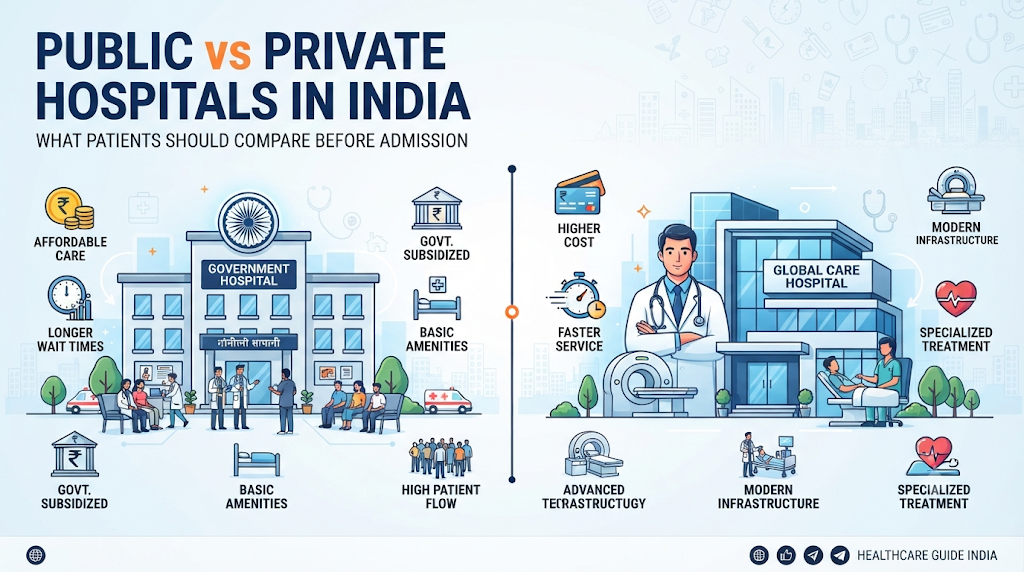
Deciding between public vs private hospitals in India is one of the most important choices a family makes when someone needs a consultation, diagnostic tests, surgery, or emergency care. Across the country, patients often weigh affordability, waiting times, specialist availability, treatment facilities, location, and insurance or government scheme coverage—such as Ayushman Bharat PM-JAY—while trying to judge where they will receive the safest, most reliable care. However, ownership alone does not guarantee better outcomes: a government medical college hospital may offer deep tertiary expertise and subsidised care that smaller private facilities lack, while a well-equipped private hospital may provide faster scheduling or specific specialty services without automatically offering superior clinical quality. Ultimately, the right choice depends on the patient’s specific medical condition, urgency, and the verified clinical capabilities, safety standards, and cost transparency of the individual hospital, guided by a qualified treating doctor.
Understanding Public and Private Hospitals in India
Public healthcare vs private healthcare in India reflects a mixed delivery system in which government-run institutions and non-government providers operate side by side. While both serve millions of people every year, they differ in who owns them, how they are financed, and how they are organised.
Public Hospitals
Public hospitals are owned, funded, or managed by central, state, or local government authorities—such as state health departments, municipal corporations, or central ministries and autonomous bodies. Their funding comes primarily from public budgets and government programmes rather than commercial profit generation.
In practice, public facilities span multiple tiers of the health system, from primary and secondary care to tertiary referral centres:
- Primary and secondary facilities: Sub-health centres, Primary Health Centres (PHCs), Community Health Centres (CHCs), sub-divisional/taluk hospitals, and district or civil hospitals.
- Tertiary and specialised facilities: Government medical college hospitals and specialized central or state institutes that combine patient care with medical education and training.
Depending on state policy and the specific service, public hospitals may provide care free of user charges or at heavily subsidised rates, alongside publicly funded diagnostic and pharmacy initiatives. However, infrastructure, bed strength, specialist staffing, and equipment availability vary considerably across states, districts, and individual institutions.
Private Hospitals
Private hospitals are operated by non-government entities, including private companies, partnership firms, sole proprietors, charitable trusts, societies, and religious or community organisations. They rely on private capital, user fees, health insurance reimbursements, scheme empanelment payments, and—in the case of charitable or trust-run institutions—donations, endowments, or grants.
Just like public facilities, the private sector is diverse rather than uniform:
- Corporate hospital chains and large multispecialty hospitals: Often located in urban centres, offering broad specialty departments, intensive care, and structured billing systems.
- Mid-sized hospitals and independent nursing homes: Common across cities and towns, often focused on general medicine, surgery, maternity, or select specialties.
- Specialty centres: Dedicated eye, cardiac, oncology, orthopaedic, or maternity hospitals.
- Charitable and not-for-profit hospitals: Run by trusts or societies, sometimes offering concessional rates or charity wards alongside paying beds, depending on their governance and funding model.
Treatments in private hospitals follow the institution’s pricing structure, which can differ sharply from one hospital to another even within the same city. Treating all private hospitals as identical—or assuming every private hospital is a large corporate chain—is a common misconception. Similarly, not-for-profit or charitable hospitals operate under different missions and financial models than commercial chains.
Public vs Private Hospitals: Key Differences at a Glance
The table below summarises how public and private healthcare services commonly differ across key dimensions. Because wide variation exists within both sectors, these points describe typical patterns rather than uniform rules for every hospital.
| Comparison Factor | Public Hospitals | Private Hospitals |
| Ownership and management | Owned or managed by central, state, or local government authorities; administrators and medical staff follow public service or institutional rules. | Operated by private companies, trusts, societies, or individuals; managed by hospital boards, proprietors, or corporate teams. |
| Funding model | Primarily funded through public budgets and government schemes, sometimes supplemented by nominal user charges or scheme reimbursements. | Funded through patient payments, private health insurance, scheme empanelment payouts, investments, or charitable donations/trust funds. |
| Treatment costs | Often free or subsidised under government policy, though nominal registration, bed, test, or incidental charges may apply depending on state and facility. | Typically billed under the hospital’s tariff or package rates; costs vary widely by city, hospital tier, room category, and clinical complexity. |
| Waiting time | Can be short or long depending on outpatient footfall, staffing, department load, and urgency; emergency triage prioritises acute cases. | Can vary with appointment scheduling, demand, specialist availability, and pre-authorisation or bed availability. |
| Doctor availability | Staffing depends on sanctioned posts, recruitment, postings, and teaching schedules (in medical colleges); resident doctors often support care alongside faculty. | Staffing depends on hospital hiring, consultant schedules, visiting specialists, and duty rosters; availability varies by shift and hospital size. |
| Specialist services | Range from basic care at lower tiers to broad and super-specialty departments at district hospitals and medical colleges; depends on local postings and equipment. | Range from single-specialty nursing homes to multispecialty and tertiary centres; depends on the specific hospital’s departments and retained specialists. |
| Infrastructure | Varies widely across states and facilities—from basic ward and diagnostic setups to large campuses with extensive beds and teaching facilities. | Varies widely—from small clinics and nursing homes to high-tech facilities with advanced imaging and critical care; no automatic uniformity. |
| Diagnostic services | Depend on on-site labs, radiology equipment, functional status, and public diagnostic networks or tie-ups. | Depend on in-house laboratories and imaging units or outsourced diagnostic partners; turnaround times and pricing vary. |
| Emergency care | Many district and medical college hospitals run round-the-clock casualty/emergency services, though capability depends on trauma, ICU, and specialist readiness. | Many hospitals offer 24/7 emergency care, while actual critical-care depth, emergency physicians, and blood/ICU backup vary by facility. |
| Insurance and schemes | Widely aligned with AB PM-JAY and state government health schemes; selected facilities may also participate in specific insurance arrangements. | Commonly accept private health insurance (cashless or reimbursement) and may participate in AB PM-JAY or state schemes if empanelled. |
| Patient support | Often includes help desks, scheme facilitation desks, and social/patient welfare support, though crowding can strain individual attention. | Often includes front-desk coordinators, insurance desks, and caregiver amenities, though service levels depend on hospital policy and staffing. |
| Accreditation | May hold National Quality Assurance Standards (NQAS) certification, NABH accreditation, or state quality recognition, depending on the facility. | May hold NABH accreditation or entry-level certification, or operate with state registration without national accreditation. |
Treatment Costs and Affordability
Government hospital treatment cost and private hospital treatment cost are among the most closely watched aspects of choosing a hospital in India. In official household health surveys by the National Statistical Office (such as National Sample Survey health rounds), average out-of-pocket expenditure per hospitalisation has historically been substantially lower in public hospitals than in private hospitals, while medicines, diagnostics, and non-medical or incidental costs remain major contributors to household spending across settings. However, national averages never tell the full story for an individual family.
What Makes Up Total Treatment Cost?
Whether a patient visits a public or private facility, total expenses rarely consist of a single flat fee. A realistic cost comparison looks at every component:
- Consultation fees: Outpatient (OPD) registration or specialist consultation charges, plus follow-up visit fees.
- Diagnostic investigations: Blood and urine panels, microbiology, pathology biopsies, electrocardiograms (ECGs), X-rays, ultrasounds, CT scans, MRIs, and specialised tests.
- Medicines and consumables: Prescription drugs, intravenous fluids, syringes, dressings, surgical sutures, implants, stents, or prostheses.
- Surgery and procedure charges: Surgeon fees, operative room charges, anaesthesia charges, and procedural equipment fees.
- Room and ICU charges: General ward, semi-private room, private room, deluxe room, High Dependency Unit (HDU), or Intensive Care Unit (ICU) daily charges.
- Doctor and specialist fees: Primary consultant rounds, visiting specialist opinions, and multidisciplinary team fees.
- Nursing and other hospital services: Nursing care charges, physiotherapy, dietetics, biomedical waste or administrative fees where applicable, and ambulance charges.
- Pre-hospitalisation and post-hospitalisation expenses: Outpatient tests and medicines before admission, and follow-up consultations, rehabilitation, dressings, and ongoing medications after discharge.
- Additional expenses from complications or extended stays: Longer ICU or ward stays, repeat imaging, additional antibiotics or blood products, or secondary procedures if recovery is delayed or complications arise.
Subsidised Care vs. Varied Billing Models
Public hospitals often reduce financial barriers through free or low-cost consultations, subsidised or free essential medicines and diagnostics under state programmes, and lower bed charges. Even so, patients can still face out-of-pocket costs—for example, if a specific test or drug is temporarily out of stock, if an external scan is needed, if a particular implant is charged separately, or if families pay for transport, food, or lost wages.
Private hospitals use varied billing models: some quote package rates for defined procedures or normal/caesarean deliveries, while others bill on a fee-for-service basis where every test, medicine, consumable, and bed-day is added up. A lower initial quote or an attractive advertised package does not always reflect the final bill. Packages often exclude pre-admission workups, post-discharge medicines, blood components, prolonged ICU care, upgraded room categories, or treatment for pre-existing or co-existing conditions and complications.
Practical Steps for Cost Transparency
Before non-emergency admission, patients or caregivers should ask for a written cost estimate that clearly lists what is included and what is excluded. At discharge—or periodically during a long stay—requesting an itemised bill helps verify charges against the estimate and insurance or scheme approvals. Blanket assumptions such as “government hospitals are always completely free” or “private hospitals always charge the same high amount for every procedure” can lead to unexpected financial strain.
Doctor Availability and Specialist Expertise
A hospital building, brand name, or bed count cannot treat a complex condition on its own—qualified clinicians and coordinated care teams do. When comparing facilities, patients should look past ownership labels and evaluate the actual clinical expertise available for the diagnosis.
Key questions around medical staffing include:
- Qualifications and relevant specialisation: Does the doctor hold recognised medical qualifications and training relevant to the specific condition (for example, general medicine versus cardiology, neurology, gastroenterology, paediatrics, or oncology)?
- Experience with the specific condition or procedure: How routinely does the team manage this exact condition or surgery, rather than only general cases?
- Availability of senior consultants: Who makes key clinical decisions—a senior specialist, a junior doctor, or a resident? In teaching hospitals, residents and trainees often provide day-to-day care under senior faculty supervision; in private hospitals, consultants may divide time across clinics or other facilities.
- Multidisciplinary teams: Complex illnesses—such as cancer, stroke, severe trauma, or high-risk pregnancy—often require coordination among physicians, surgeons, organ specialists, radiologists, pathologists, pharmacists, and rehabilitation therapists.
- Supporting clinical specialists: Major procedures and critical care rely heavily on qualified anaesthesiologists, intensivists (critical care specialists), and surgical or medical assistants—not just the primary surgeon or physician.
- Doctor availability during emergencies: Who is physically on-site or immediately reachable at night, on weekends, and on public holidays when a patient’s condition changes suddenly?
- Continuity of care and follow-up arrangements: Will the same clinical team or a clearly designated unit oversee post-operative checks, test reviews, and long-term management?
- Referral systems for advanced treatment: If the patient’s condition requires higher-level intervention not offered on-site, does the hospital have clear, timely referral pathways to an appropriate centre?
A hospital with modern equipment is not automatically the best fit if the required specialist or multidisciplinary team is absent or infrequently available. Conversely, a facility with strong clinical teams in a given specialty may be well suited even if its physical surroundings are modest.
Infrastructure, Diagnostic Facilities, and Medical Technology
Medical needs vary widely, from a routine fever evaluation or minor fracture to complex surgery or intensive care. Evaluating hospital facilities and services means matching the facility’s physical and technical infrastructure to what the patient actually needs.
Important infrastructure elements to check include:
- Laboratory and pathology services: Routine blood and urine testing, biochemistry, microbiology/cultures, and histopathology, along with reliable quality control and timely reporting.
- Imaging facilities: X-ray, ultrasound/Doppler, computed tomography (CT), and magnetic resonance imaging (MRI)—whether available in-house or through timely external arrangements, and whether trained radiologists interpret scans promptly.
- Operation theatres (OTs): Appropriate surgical infrastructure, sterile workflows, and anaesthesia support suited to the planned procedure.
- Intensive Care Units (ICUs) and HDUs: Availability of monitored beds, ventilators, continuous monitoring, and trained critical-care nursing and medical staff when high-risk procedures or unstable illnesses are involved.
- Blood bank or blood storage facilities: Access to safe, screened blood components if surgery, trauma, obstetrics, or certain medical conditions carry bleeding or anaemia risks.
- Dialysis services: Availability of haemodialysis or peritoneal dialysis units for patients with acute kidney injury or chronic kidney disease.
- Cardiac care facilities: Access to ECG, echocardiography, coronary care, or catheterisation/interventional cardiology where cardiac conditions are suspected or treated.
- Cancer treatment infrastructure: Diagnostic pathology/imaging, medical oncology, surgical oncology, and radiation therapy facilities where oncology care is needed.
- Neonatal and maternity facilities: Labour rooms, obstetric care, and newborn care units (such as SNCU/NICU) for pregnancy and infant care.
- Infection prevention and control systems: Hand-hygiene infrastructure, sterilisation (CSSD), isolation practices where needed, and biomedical waste management.
- Ambulance and emergency support: Access to ambulances, oxygen supply, resuscitation equipment, and emergency triage.
High-end technology is only valuable when paired with trained operators, proper maintenance, and clinical need. A patient coming in for a straightforward outpatient consultation or minor procedure does not necessarily need tertiary cardiac or oncology infrastructure, whereas someone facing high-risk surgery or potential organ support needs verified critical-care and diagnostic readiness.
Waiting Time, Appointments, and Patient Experience
Everyday friction in healthcare often comes down to time and communication. Waiting times and patient experience differ across facilities, departments, and days of the week, and neither sector has a monopoly on speed or smoothness.
Where Waiting Times Can Differ
- OPD registration and consultation queues: High-volume outpatient departments in large public hospitals can involve early-morning queues and long waits, though some centres use token systems, online booking, or specialty clinics. Busy private clinics or popular specialists can also have multi-hour waits or multi-day appointment backlogs.
- Specialist appointments: Access to super-specialists may depend on referral rules, clinic days, or advance booking slots in either sector.
- Diagnostic test scheduling: Routine blood tests are often quick, while ultrasound, CT, or MRI slots can take longer depending on machine capacity, patient load, and scheduling systems.
- Admission procedures: Bed availability, billing/insurance clearance, or pre-admission formalities can slow down admission.
- Surgery scheduling: Planned surgeries depend on operation theatre schedules, pre-anaesthetic fitness checks, bed availability, and urgency priorities.
- Discharge formalities: Final doctor sign-off, pharmacy/medicine dispensing, discharge summary preparation, and insurance or billing clearance can take time.
- Follow-up consultations: Return visits may require fresh registration, appointment slots, or lab result review before seeing the doctor.
Patient Experience Beyond Queues
Practical comfort and clarity matter greatly to patients and families, especially during multi-day stays or repeated visits:
- Communication: Do doctors and nurses explain what is happening in plain language and answer questions patiently?
- Patient guidance and help desks: Are signage, registration counters, and enquiry desks clear enough for first-time visitors?
- Language support: Can staff communicate comfortably in the patient’s and family’s preferred language?
- Caregiver facilities: Are there waiting areas, seating, sanitation, food options, or family accommodation rules that support caregivers without compromising ward hygiene and safety?
Emergency Care: What Should Patients Consider?
Emergency situations behave very differently from scheduled appointments. When a person experiences chest pain, severe breathing difficulty, signs of stroke, major trauma, heavy bleeding, high fever with confusion, or acute obstetric or paediatric distress, time and clinical readiness are critical.
When evaluating emergency capability ahead of time—or understanding what emergency care involves—key elements include:
- Emergency department availability: Whether a dedicated casualty or emergency department operates 24/7 with trained staff.
- Initial assessment and stabilisation: Rapid triage and immediate life-saving stabilisation (airway, breathing, circulation, pain/bleeding control).
- Ambulance coordination: Availability and response time of ambulances (such as public emergency ambulance services or hospital ambulances) and safe patient transfer.
- ICU and critical-care capability: Immediate access to resuscitation rooms, ventilators, and critical-care beds if stabilisation requires intensive monitoring.
- Availability of specialists and emergency support staff: On-call or on-site availability of emergency physicians, surgeons, anaesthesiologists, orthopaedicians, paediatricians, or other relevant specialists.
- Blood and diagnostic services: Rapid access to essential blood tests, bedside imaging, and blood bank support.
- Referral and transfer arrangements: Clear protocols if a patient needs stabilisation first and safe transfer to a higher-equipped centre.
- Distance and travel time: How quickly an ambulance or family vehicle can reach the hospital given local traffic and geography.
Not every hospital—public or private—has the same emergency or critical-care depth. A clinic or small hospital may handle minor emergencies well but lack round-the-clock ICU or specialty surgical backup for severe trauma or critical illness.
Safety Note: In a medical emergency, seek immediate emergency medical assistance or go to the nearest capable emergency facility right away. Do not delay urgent care to compare hospital prices, read reviews, or debate hospital ownership.
Health Insurance and Government Healthcare Schemes
How treatment is financed can shape both hospital choice and out-of-pocket costs. Patients in India may rely on private health insurance, Ayushman Bharat empanelled hospitals, state government health schemes, or direct payment.
Private Health Insurance
Private health insurance policies—whether individual, family floater, or employer-sponsored—generally reimburse or cover inpatient hospitalisation (and defined day-care procedures) subject to policy terms:
- Cashless hospitalisation: Where approved, the insurer or Third-Party Administrator (TPA) settles eligible bills directly with a network hospital, though non-payable items, room-rent sub-limits, co-payments, or deductibles may still apply.
- Reimbursement-based treatment: The patient or family pays the hospital and submits bills, discharge summaries, and supporting documents to the insurer for claim processing.
- Important limits: Not every private hospital is part of every insurer’s cashless network. Policies often include waiting periods for pre-existing conditions or specific ailments, disease-wise caps, room-category restrictions, and exclusions.
Government Healthcare Schemes (AB PM-JAY and State Schemes)
Ayushman Bharat Pradhan Mantri Jan Arogya Yojana (AB PM-JAY) is a flagship publicly funded health protection scheme aimed at eligible low-income households identified through defined criteria, providing coverage for secondary and tertiary hospitalisation across empanelled public and private hospitals according to official health benefit packages. Many states also run their own state health insurance or financial assistance schemes—either integrated with AB PM-JAY or operating alongside state-specific programmes.
Key realities patients must keep in mind:
- Eligibility and empanelment vary: Not every household is automatically eligible under every scheme, and not every hospital—public or private—is empanelled under AB PM-JAY or a given state scheme. Empanelment status can also change over time.
- Package and state differences: Covered procedures, package rates, co-payment or referral rules, and administrative workflows can vary by state and scheme guidelines.
- Pre-authorisation and paperwork: Many cashless scheme or insurance admissions require pre-authorisation approval before or shortly after admission, along with valid identity/eligibility documents, scheme cards, or policy details and referral papers where applicable.
Questions to Ask the Insurance or Scheme Desk Before Admission
- Is this hospital currently empanelled under my specific insurance policy, AB PM-JAY, or my state health scheme?
- Is the exact planned diagnosis or procedure covered under a package or policy benefit, and are there sub-limits, caps, or exclusions?
- Do I need prior pre-authorisation or a referral document before admission?
- Which items—such as specific implants, diagnostics, companions’ meals, upgraded rooms, or post-discharge medicines—will not be covered and must be paid out of pocket?
- What documents and timelines are required if cashless approval is delayed or if I have to file a reimbursement claim?
Quality, Accreditation, and Patient Safety
Hospital quality and patient safety cannot be judged solely by whether a hospital is public or private. Both sectors include facilities with strong safety systems and facilities with gaps, making structured quality indicators and everyday clinical practices essential to check.
Accreditation and Quality Frameworks in India
- NABH Accreditation: Offered by the National Accreditation Board for Hospitals and Healthcare Providers (NABH), accreditation indicates that a hospital has been independently assessed against published standards covering patient rights, care processes, infection control, medication safety, facility management, and quality improvement. (NABH also offers entry-level certification and specific programme accreditations.)
- National Quality Assurance Standards (NQAS): Developed under the Ministry of Health and Family Welfare framework for public health facilities (and used to assess facilities across levels such as district hospitals, CHCs, PHCs, and urban health centres), NQAS evaluates service provision, patient rights, clinical services, infection control, support services, quality management, and outcomes.
- Hospital Registration and Regulatory Oversight: Depending on the state, hospitals are subject to state-specific clinical establishment laws, the Clinical Establishments (Registration and Regulation) Act, 2010 (where adopted/applicable), municipal or state health department registration, and rules governing areas such as biomedical waste, pharmacy, blood banks, or radiation safety.
Accreditation and quality certification are helpful signals of structured processes, but they do not guarantee a specific clinical outcome, nor does every accredited hospital perform identically. Equally, a hospital that is not currently NABH-accredited is not automatically unsafe—especially in smaller towns or specialised public/charitable setups—provided it meets applicable legal requirements and demonstrates sound clinical and safety practices.
Practical Patient Safety Practices to Observe
- Infection prevention and control: Clean environments, accessible hand hygiene, proper wound/catheter care, and safe needle/injection practices.
- Patient identification: Checking the patient’s name and identifier (such as a wristband or chart) before giving medications, drawing blood, or starting procedures.
- Medication safety: Clear labelling, checking allergies, explaining new medicines and dosages, and avoiding duplicate or unverified drugs.
- Surgical safety: Proper pre-operative verification, site marking where relevant, consent, and post-operative monitoring.
- Medical record management: Accurate, legible, and complete case sheets, lab/imaging reports, and discharge summaries.
- Consent and communication: Clear explanation of risks, benefits, and alternatives before procedures, and accessible ways to raise concerns.
Patient Rights and Billing Transparency
Understanding patient rights in Indian hospitals helps families participate actively in care rather than feeling passive or uninformed. In 2019, the Ministry of Health and Family Welfare (MoHFW) issued a Charter of Patients’ Rights outlining standards around respectful care, information, informed consent, confidentiality, access to records, transparency in rates/billing, second opinions, and grievance redressal.
While the Charter serves as an important national benchmark and policy guidance, how specific rights are enforced or implemented on the ground depends on state laws, rules adopted under the Clinical Establishments Act or state-specific acts, scheme rules, and institutional policies. The Charter itself is a government policy document/advisory rather than a standalone universal statute with identical enforcement mechanisms across every state, so patients should check state-specific rules and hospital grievance channels when needed (this guide provides general information, not legal advice).
Key patient expectations and practical steps include:
- Information about diagnosis and proposed treatment: Asking what the suspected or confirmed diagnosis is, why a test or procedure is advised, and what alternatives exist.
- Informed consent: Giving voluntary, informed permission before surgeries, anaesthesia, invasive procedures, or blood transfusions after risks and options are explained.
- Access to medical records: Requesting copies of test results, imaging reports, treatment notes, and discharge summaries for continuity of care or a second opinion.
- Privacy and confidentiality: Expecting dignity and privacy during examinations and appropriate handling of personal health information.
- Estimated charges and itemised billing: Asking for clear cost estimates upfront and an itemised bill showing individual charges rather than an unexplained lump sum.
- Seeking a second opinion: Consulting another qualified doctor—especially before major elective surgery or high-cost treatment—without fear of offending the current care team.
- Raising a grievance: Using the hospital’s patient relations desk, nodal officer, grievance register, or state health/scheme grievance channels if a billing or service issue arises.
- Understanding discharge summaries and prescriptions: Reviewing discharge instructions, warning signs that require urgent return, follow-up dates, and exact medicine names/doses before leaving.
When Might a Public Hospital Be a Suitable Option?
A public hospital may be worth serious consideration in several situations, provided the specific facility has the right clinical setup for the patient’s needs:
- Affordability and lower out-of-pocket costs: When families need cost-effective outpatient care, routine inpatient admission, or access to subsidised/free medicines and diagnostics under public programmes.
- Beneficiaries of government schemes: When a patient is eligible under AB PM-JAY or a state government health scheme and seeks care at an empanelled government facility.
- Medical colleges and district hospitals: When a patient needs care from departments available at a government medical college or district hospital—such as general medicine, general surgery, paediatrics, obstetrics and gynaecology, or select specialty units—where teaching and public referral networks operate.
- Specific public-sector specialty programmes: When a condition is covered under a dedicated national or state public health programme or specialised government institute.
Even when a public hospital fits financially or programmatically, patients should verify whether the specific hospital currently has the required specialist, working diagnostic equipment, and bed or critical-care capacity for their condition.
When Might a Private Hospital Be a Suitable Option?
A private hospital may be worth considering in other circumstances, again depending on the individual hospital rather than ownership alone:
- Access to a specific available specialist or team: When a patient wants to see a particular specialist or clinical team available at that facility.
- Required diagnostic or procedural availability: When specific imaging, lab tests, or procedures are readily available there on a timeline that suits the medical need.
- Private health insurance coverage: When the patient holds private health insurance and the hospital offers cashless or well-supported claim processes within policy terms.
- Scheduling and convenience: When appointment timing, inpatient room options, or caregiver arrangements align better with the family’s practical constraints for non-urgent care.
- Specific specialty or multidisciplinary setups: When a particular hospital offers a specialty department or integrated service suited to the patient’s care plan.
Private ownership does not automatically guarantee lower costs, faster clinical recovery, or superior outcomes; patients should compare clinical capability, safety, and transparent billing across options.
A Practical Checklist: 15 Questions to Ask Before Choosing a Hospital
Not every question below will apply to every visit—for example, a routine outpatient check-up needs fewer questions than a planned surgery or high-risk admission. Use the ones relevant to your situation:
- Is the hospital registered under the applicable regulatory framework? (Confirm state registration/licensing as applicable in your state.)
- Does it have the department needed for the patient’s condition? (Verify the exact clinical department, not just general care.)
- Is the relevant specialist available? (Check if the needed specialist is on staff or visiting and when they are available.)
- Does it provide the required diagnostic tests? (Confirm whether needed lab tests, X-ray, ultrasound, CT, or MRI are available on-site or via a reliable tie-up.)
- Is emergency support available? (Check 24/7 emergency/casualty coverage and stabilisation readiness if there is any risk of acute deterioration.)
- Does it have the required ICU or critical-care facilities? (Ask about ICU/HDU availability and staffing if surgery or illness carries critical-care risk.)
- What is the estimated total treatment cost? (Request an overall estimate for the expected stay or procedure, not just consultation or room rates.)
- Can the hospital provide an itemised estimate? (Ask for a breakdown of room, doctor, procedure, diagnostic, and support charges.)
- Are medicines and consumables included in the estimate? (Clarify whether drugs, surgical supplies, implants, and blood products are inside or outside the estimate.)
- Does the hospital accept the patient’s insurance policy? (Check cashless network status and policy terms with both the hospital desk and insurer/TPA.)
- Is it currently empanelled under the applicable government scheme? (Verify active empanelment under AB PM-JAY or the relevant state scheme.)
- Are pre-authorisation or referral documents required? (Confirm approvals, IDs, or referrals needed before admission so claims are not rejected.)
- Does it hold relevant accreditation or quality certification? (Check for NABH accreditation, NQAS certification, or state quality recognition where relevant.)
- How can patients obtain medical records and raise complaints? (Ask about medical record request procedures, billing queries, and grievance redressal contacts.)
- What follow-up care and post-discharge support are available? (Clarify post-discharge check-ups, physiotherapy/rehab, wound care, and who to contact after going home.)
Common Mistakes Patients Should Avoid
Awareness of common pitfalls can help families avoid financial surprises and care delays:
- Choosing only by hospital reputation: Popularity or word-of-mouth may not reflect current specialist availability or suitability for a specific condition.
- Assuming the most expensive hospital provides the best care: Higher charges or luxury amenities do not automatically translate into better clinical outcomes.
- Assuming every government hospital offers identical services: Capabilities differ widely between a primary health centre, a district hospital, and a tertiary medical college—and across states and districts.
- Comparing only consultation fees instead of total treatment expenses: A low initial consultation fee can be followed by high diagnostic, procedure, room, or medicine costs, while a seemingly simple visit can escalate if tests or admission are needed.
- Ignoring specialist qualifications: Failing to check whether a doctor has the relevant specialty training or experience for a complex problem.
- Not verifying insurance coverage: Assuming a policy covers a procedure or hospital without checking network status, sub-limits, exclusions, or pre-authorisation rules.
- Assuming a hospital accepts PM-JAY without checking: Treating scheme acceptance as automatic rather than confirming live empanelment and package coverage.
- Ignoring emergency and ICU capacity: Selecting a facility for higher-risk care without checking whether emergency response, blood/diagnostics, and critical-care support are in place.
- Not asking for written cost estimates: Relying on verbal approximations that leave room for misunderstanding later.
- Failing to collect medical records and discharge documents: Leaving without complete reports, prescriptions, and discharge summaries needed for follow-up or a second opinion.
- Delaying urgent care while comparing multiple facilities: Spending critical hours shopping around during an acute medical emergency instead of getting immediate emergency care.
Final Decision Framework: How to Compare Hospitals for Your Situation
When comparing two or more specific hospitals, weigh them systematically against nine criteria:
- Clinical capability for the required treatment: Can the hospital safely manage this exact condition or procedure?
- Relevant doctor and specialist availability: Are the needed specialists and supporting clinicians available when required?
- Emergency and critical-care readiness: If things worsen or complications arise, can the hospital handle emergencies and critical care?
- Total expected cost: What is the realistic overall expense, including tests, medicines, consumables, and potential extras?
- Insurance or government scheme eligibility: How much is covered under verified insurance or scheme rules, and what remains out of pocket?
- Quality and safety indicators: What registration, accreditation/quality certifications (such as NABH or NQAS), and safety practices are visible?
- Location and accessibility: How practical is travel for the patient and family caregivers?
- Waiting time and continuity of care: How timely is care, and will follow-up be consistent?
- Patient communication and transparency: Are explanations clear, respectful, and honest, with transparent billing?
Medical urgency and clinical capability should always come first. A slightly higher cost or longer travel distance is secondary if a hospital lacks the clinical capability or specialist support needed to keep a patient safe; conversely, paying more for unnecessary extras is avoidable when a capable, accessible option meets the clinical need.
Hypothetical Comparison Example (Fictional Illustration Only)
Note: The hospitals, figures, and circumstances below are entirely fictional examples created to illustrate how to apply the decision framework—they do not represent real hospitals or actual Indian pricing or wait times.
Suppose Ramesh (fictional) is advised to undergo a routine planned hernia repair, with no emergency symptoms. His family compares two fictional facilities in the same city:
- Government General & Teaching Hospital (Fictional Example): Offers low-cost care with experienced surgical faculty and residents, general ward beds, and scheme support, but outpatient and surgery scheduling involves longer queues and less predictable timing for a non-urgent procedure.
- MetroCare Multispecialty Hospital (Fictional Example): A private hospital offering a scheduled surgery slot within days and a private room, with a written estimate of ₹65,000, but the family’s insurance policy has a room-rent cap that could leave ₹14,000 in non-covered charges.
How should they decide? First, they confirm that both facilities have qualified surgeons, anaesthesia support, and safe operating facilities for a straightforward hernia repair. Next, they compare total expected cost after insurance, timing, and comfort: if Ramesh’s family can comfortably manage the estimated out-of-pocket amount and values a predictable surgery date, they might choose the private option after getting an itemised written estimate; if keeping out-of-pocket costs minimal is the priority and waiting for a scheduled slot is medically safe, they might choose the public hospital after confirming surgery dates and required tests. Had Ramesh instead arrived with a strangulated, acutely painful hernia, immediate emergency evaluation at the nearest capable emergency facility would take priority over any cost or schedule comparison.
Frequently Asked Questions
1. Are government hospitals free in India?
Many government hospitals provide consultations, inpatient care, medicines, or tests free of charge or at heavily subsidised rates, depending on the state, facility level, and applicable government schemes. However, they are not uniformly free for every service in every state—nominal fees, specific tests or medicines bought externally, or incidental family expenses may still apply.
2. Are private hospitals better than government hospitals?
Neither category is universally better. Quality varies widely within both public and private hospitals. Large public medical colleges and district hospitals can offer extensive clinical depth and affordable care, while well-run private hospitals may offer shorter waits or specific facilities—yet a poorly equipped or poorly managed facility can exist in either sector.
3. Can patients receive treatment in private hospitals under Ayushman Bharat PM-JAY?
Yes, eligible beneficiaries can receive covered inpatient treatment at private hospitals that are actively empanelled under AB PM-JAY for the relevant health benefit packages. Not every private hospital is empanelled, so patients should verify current empanelment and package coverage through official scheme channels or the hospital’s scheme desk before admission.
4. Do government hospitals provide advanced medical treatment?
Many government medical college hospitals and specialized public institutes provide advanced medical and surgical care, including complex surgeries, intensive care, and specialised departments. Availability depends on the specific institution, state infrastructure, equipment status, and specialist staffing, as lower-tier facilities focus on primary and secondary care.
5. How can patients check whether a hospital is NABH-accredited?
Patients can check a hospital’s accreditation or certification status directly through the official NABH (National Accreditation Board for Hospitals and Healthcare Providers) directory/portal rather than relying solely on informal claims, and can ask the hospital for details of its current accreditation cycle and scope.
6. Can private health insurance be used in government hospitals?
Whether a private health insurance policy can be used at a government hospital depends on the insurer’s network arrangements, policy terms, and the hospital’s billing/empanelment setup. While government schemes like AB PM-JAY and state schemes are central to public-hospital financing, patients with private policies should confirm directly with their insurer and the hospital before relying on cashless or reimbursement coverage.
7. What should patients compare before hospital admission?
Patients should compare clinical capability for their condition, specialist and critical-care availability, emergency readiness, total estimated cost (including medicines, diagnostics, and room charges), insurance or government scheme coverage, quality/safety indicators, location, and waiting times.
8. Are treatment costs the same across all private hospitals?
No. Treatment costs vary substantially across private hospitals based on city, hospital tier and ownership model, room category, doctor fees, diagnostic requirements, implants or medicines used, and whether the hospital bills via fixed packages or itemised fee-for-service charges.
9. What should patients do if they are unhappy with hospital services?
Patients or caregivers can first raise concerns with the hospital’s patient relations desk, medical superintendent/administrator, or grievance officer—preferably in writing—and keep copies of bills and medical records. If unresolved, they can approach relevant state health or scheme grievance mechanisms, consumer forums where applicable, or seek legal/regulatory guidance appropriate to their state.
10. Can patients request their medical records and discharge summary?
Yes, patients generally have the right to access their medical records, test reports, and discharge summary, which are essential for ongoing care, follow-up, insurance claims, or second opinions. It is good practice to request copies promptly at discharge and keep an organised personal file.
Conclusion
Public and private hospitals both play vital roles in India’s healthcare landscape, serving distinct and overlapping needs across cities, towns, and rural areas. Deciding between them works best when families look beyond broad labels and compare the specific hospital’s clinical capabilities, available specialists, safety practices, transparent costs, insurance or scheme eligibility, and practical accessibility against the patient’s actual medical condition.
Always consult a qualified treating doctor regarding medical needs, ask clear questions before non-emergency admission, verify coverage and cost estimates in writing, and never delay urgent care during a medical emergency.

Find Trusted Cardiac Hospitals
Compare heart hospitals by city and services — all in one place.
Explore Hospitals