Introduction: Does the Type of Hospital Really Matter?
Imagine a family facing an important medical decision. A relative has been experiencing persistent chest discomfort and shortness of breath, alongside long-standing type 2 diabetes and mildly elevated blood pressure. A local doctor suggests further evaluation and possible cardiac intervention. While researching options, the family comes across two very different facilities: a large city hospital with dozens of departments under one roof, and a dedicated cardiac center known for advanced heart procedures. Both sound credible, both advertise experienced specialists, and both list impressive equipment. Which one makes more sense? Situations like this show why comparing multispecialty vs superspecialty hospitals can feel overwhelming. Patients and caregivers are often asked to make high-stakes choices while managing stress, time pressure, and unfamiliar medical terms. Marketing slogans, hospital size, and broad category names can make it hard to tell what a facility actually does well and what happens if a patient needs care outside a single narrow area.
In everyday healthcare conversations, people frequently use “multispecialty” and “superspecialty” as if they represent a simple ladder where one automatically sits above the other. In reality, those labels describe different organizational models rather than a guaranteed rank of quality. A thoughtful decision depends on matching the patient’s actual clinical needs to verified capabilities—such as specialist expertise, subspecialty training, diagnostic and surgical infrastructure, emergency and critical care readiness, coordination across medical teams, location, cost, and insurance coverage. Furthermore, hospital labels and regulatory definitions vary across countries, health systems, and individual institutions, so actual clinical capability matters far more than the name on the building.
What Is a Multispecialty Hospital?
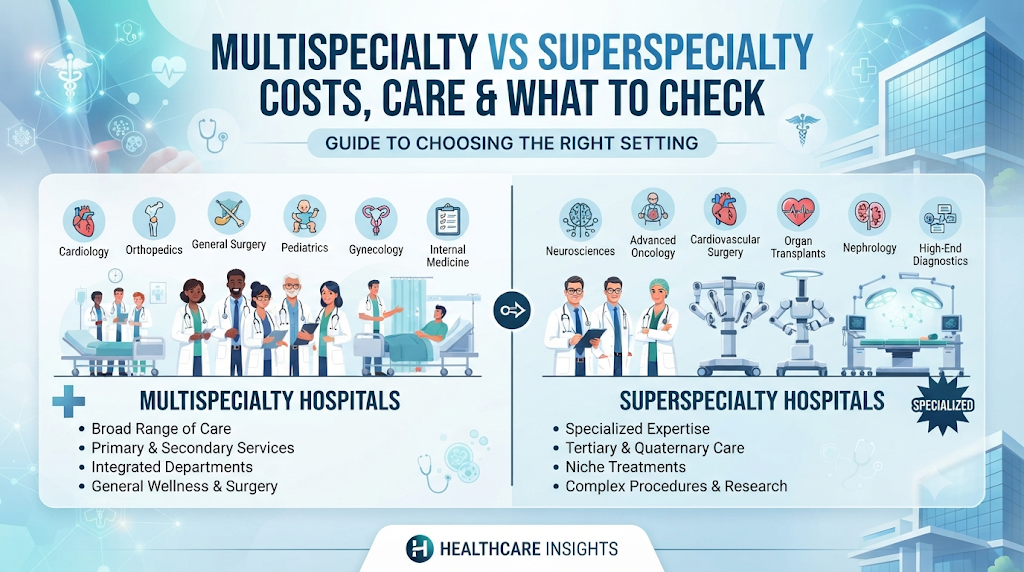
A multispecialty hospital is a healthcare facility that brings together multiple medical and surgical departments within a single institution to diagnose and treat a wide range of health conditions. Rather than focusing on just one disease group or organ system, it is structured to address routine care, acute illnesses, surgeries, and overlapping health issues in one place.
How Departments and Teams Work Together
Inside a multispecialty hospital, care typically involves both generalists and specialist consultants. General physicians or internal medicine specialists often serve as a central point of evaluation—especially when symptoms cut across systems or when a patient has several ongoing conditions—while organ- or condition-specific specialists provide targeted consultations and procedures.
Because multiple departments share a roof, teams can coordinate care more easily when a patient’s situation has more than one dimension. For example, a patient admitted for a surgical issue who also has high blood pressure, kidney concerns, or diabetes may benefit from input from surgeons, physicians, anesthetists, and relevant specialists without having to travel between separate hospitals. Shared diagnostic laboratories, imaging units, inpatient wards, and emergency or critical care services support this workflow.
Common Departments in a Multispecialty Hospital
Exact offerings vary considerably from one institution to another, depending on hospital size, location, and ownership model. However, a multispecialty hospital may include departments such as:
- General medicine (internal medicine)
- General surgery
- Cardiology (heart and blood vessel care)
- Neurology (nervous system care)
- Orthopedics (bones, joints, ligaments, and musculoskeletal care)
- Gynecology and obstetrics (women’s health, pregnancy, and childbirth)
- Pediatrics (care for infants, children, and adolescents)
- Gastroenterology (digestive system and liver care)
- Urology (urinary tract and male reproductive health)
- Dermatology (skin, hair, and nail conditions)
- ENT (ear, nose, and throat)
- Ophthalmology (eye health and vision care)
- Radiology and pathology (imaging and laboratory diagnostics)
- Emergency and critical care (acute stabilization and intensive care units)
Typical Advantages of a Multispecialty Hospital
- Access to multiple specialties: Patients can often consult different specialists within the same facility.
- Convenience for coexisting conditions: People managing more than one health issue may find it easier to address related needs in one location.
- Coordinated consultations: Clinicians from different departments can share records and discuss cases more directly.
- Shared diagnostic infrastructure: Imaging, blood tests, and other diagnostics are frequently integrated into the care pathway.
- Broader emergency support: Many multispecialty hospitals operate round-the-clock emergency departments and general or specialized intensive care units, though actual readiness varies by facility.
- Continuity of care across departments: Ongoing follow-up and cross-departmental referrals can sometimes be handled smoothly within the same system.
Potential Limitations to Keep in Mind
- Limits on highly complex procedures: A broad department list does not mean a hospital performs every high-complexity or rare procedure.
- Variation in subspecialty depth: One department may have broad general coverage rather than deep subspecialty teams for complex cases.
- Differences in coordination: Having multiple departments does not automatically guarantee seamless teamwork if communication silos exist.
- Uneven infrastructure: Advanced equipment or specialized surgical suites may be present in some departments but not others.
- Labels do not prove capability: A long list of departments on a brochure tells you what the hospital intends to cover, not the depth of staff or equipment behind each service.
What Is a Superspecialty Hospital?
A superspecialty hospital is a healthcare facility focused on a specific medical specialty or a selected group of advanced specialties. In many health systems and healthcare discussions, “superspecialty” refers to advanced, subspecialized care involving complex diagnostics, specialized interventions, and dedicated clinical teams for particular conditions.
Note that regulatory and industry terminology is not uniform worldwide. In some countries or health systems, “specialty hospital” and “superspecialty hospital” are used interchangeably or carry specific licensing or credentialing meanings; in others, subspecialty training refers to advanced fellowship-level expertise within a broader specialty. Regardless of the label, the defining idea is concentrated focus rather than wide-ranging general coverage.
Subspecialists, Advanced Infrastructure, and Focused Pathways
Superspecialty hospitals typically organize their staff, equipment, and clinical protocols around a defined set of conditions. Instead of spreading resources across every medical field, they concentrate investment in specialized diagnostic tools, dedicated operating rooms or procedure suites, specialized nursing and critical care staff, and structured care pathways for complex or less common cases.
Multidisciplinary collaboration still happens in a superspecialty setting, but it usually centers on a specific disease or organ system—bringing together subspecialists, specialized surgeons, pathologists, radiologists, therapists, and case coordinators who work with that condition regularly.
Common Examples of Superspecialty Focus Areas
Depending on the healthcare market and institution, examples include:
- Cardiac hospitals focused on heart and vascular conditions
- Cancer hospitals (oncology centers) focused on cancer diagnosis and treatment
- Neuroscience hospitals focused on brain, spine, and nervous system disorders
- Orthopedic and joint replacement hospitals focused on musculoskeletal and joint care
- Kidney and urology hospitals focused on renal and urinary tract conditions
- Advanced eye hospitals focused on complex vision and eye disorders
- Pediatric specialty hospitals focused on specialized care for children
- Fertility and reproductive medicine centers focused on assisted reproduction and related care
Potential Advantages of a Superspecialty Hospital
- Concentrated expertise: Clinicians and support teams deal frequently with specific complex conditions.
- Specialized equipment and facilities: Infrastructure is tailored to advanced diagnostics and targeted treatments within the focus area.
- Experience with complex or uncommon cases: High volume in a narrow field can support refined workflows for intricate procedures.
- Dedicated treatment pathways: Protocols, post-procedure care, and follow-up schedules are often built around specific conditions.
- Focused multidisciplinary teams: Specialists working on the same disease group often collaborate closely on complex plans.
Potential Limitations to Keep in Mind
- Limited services outside the focus area: A facility centered on one specialty may not treat unrelated medical problems.
- Need for external referrals: Patients who develop an unrelated issue—or who need broad medical management—may have to visit another hospital.
- Variable emergency scope: Emergency services, if available, may be geared toward the hospital’s core specialty rather than every type of medical emergency.
- Coordination across institutions: Managing multiple health conditions across separate hospitals can require extra effort from patients and families.
- Cost considerations: Specialized technology, targeted therapies, and complex procedures can result in higher expenses depending on the treatment and institution.
Importantly, a superspecialty hospital is not automatically superior in every clinical situation. If a patient needs broad evaluation across unrelated conditions, or if a local multispecialty hospital already has the exact expertise and facilities required, a superspecialty label is not necessarily the better fit.
Multispecialty vs Superspecialty Hospitals: Key Differences
The table below highlights common patterns seen when comparing a multispecialty hospital and a superspecialty hospital. These points reflect general tendencies rather than guaranteed features of every institution.
| Comparison Factor | Multispecialty Hospital | Superspecialty Hospital |
| Primary focus | Multiple medical specialties under one institution | One specific specialty or a selected group of advanced specialties |
| Department coverage | Broad range of general and specialty departments | Focused on targeted specialty areas |
| Specialist availability | Spread across multiple departments | Concentrated expertise in selected fields |
| Complex treatment | Depends on available departments and capabilities | May offer advanced capabilities within its focus area |
| Diagnostic infrastructure | Broad range of tests and imaging, depending on the hospital | Specialized diagnostic tools relevant to its focus area |
| Multidisciplinary care | Across several departments for varied or overlapping needs | Within its specialty focus for specific complex conditions |
| Emergency services | Depends on actual facilities; often broader acute coverage | May be focused on core specialty emergencies or limited outside its focus |
| Multiple health conditions | May handle more needs under one roof | May require coordination with other providers for unrelated conditions |
| Referrals | Internal referrals across departments may be available | External referrals may be needed for conditions outside its scope |
| Treatment continuity | Potentially across multiple departments in one hospital | Potentially strong within its specialty pathway |
| Cost | Varies by treatment, room category, and institution | Varies by specialization, technology, and treatment complexity |
| Best suited for | Broad healthcare needs, routine or varied care, multi-condition management | Focused specialist evaluation, complex or targeted procedures in a specific field |
Which Hospital Is Better for Different Medical Conditions?
Choosing between a multispecialty hospital and a superspecialty hospital rarely comes down to a simple rule. It depends on the exact condition, how urgent or complex the situation is, what tests or procedures are needed, and whether other health problems are involved. Below is how different clinical situations often play out—without prescribing care or recommending specific hospitals.
Heart-Related Conditions
Heart care spans everything from routine blood pressure and cholesterol checks to diagnostic testing (such as electrocardiograms, echocardiograms, stress tests, or angiography), complex interventional or surgical procedures, and acute cardiac emergencies.
- Medical expertise needed: General physicians or cardiologists for routine evaluation and risk management; interventional cardiologists, cardiac surgeons, and critical care specialists when advanced procedures or intensive monitoring are required.
- Setting considerations: Routine checkups or straightforward evaluations may be handled in outpatient clinics or multispecialty settings, while complex cardiac interventions or specialized heart care may be sought at hospitals with dedicated cardiac teams and catheterization or surgical facilities.
- Facilities to verify: Non-invasive and invasive diagnostic availability, cardiac catheterization or surgical suites if needed, intensive care unit (ICU) support, and round-the-clock emergency response.
- When a referral may be necessary: If an initial evaluation identifies a complex structural, rhythm, or surgical issue that requires specialized cardiac infrastructure or subspecialists not available locally.
Cancer Treatment
Cancer care is rarely a single step. It often involves oncology consultations, pathology and tissue diagnosis, advanced imaging, surgical oncology, medical oncology (such as chemotherapy or targeted therapy), radiation oncology, and coordinated decision-making among multiple specialists.
- Medical expertise needed: Surgical, medical, and radiation oncologists alongside pathologists, radiologists, palliative and supportive care specialists, and oncology nurses.
- Setting considerations: Both comprehensive multispecialty hospitals with dedicated oncology units and specialized cancer hospitals can provide structured care, depending on the specific cancer type and required modalities.
- Facilities to verify: Accurate pathology and molecular/imaging diagnostics, availability of required treatment modalities (surgery, systemic therapy, radiation), infection control, and multidisciplinary tumor board or team coordination.
- When a referral may be necessary: When a specific cancer type, clinical trial option, or specialized surgical or radiation technique requires a dedicated center.
Neurological Conditions
Neurological concerns range from outpatient neurology consultations and headache or seizure evaluations to acute stroke assessment, neurosurgery, advanced neuroimaging (such as MRI or CT), and neurological intensive care.
- Medical expertise needed: Neurologists, neurosurgeons, neuroradiologists, neuro-anesthetists, neuro-critical care specialists, and rehabilitation therapists.
- Setting considerations: Routine neurological follow-up may fit well in a multispecialty hospital, while acute stroke protocols, complex brain or spine surgery, or specialized neuro-ICU care call for verified neurological and critical care readiness.
- Facilities to verify: Rapid neuroimaging, acute stroke or neurosurgical capability if relevant, neurological ICU monitoring, and physical/occupational rehabilitation.
- When a referral may be necessary: When rapid specialist intervention, neurosurgical expertise, or specialized neuro-rehabilitation is needed beyond the initial facility’s scope.
Orthopedic Conditions
Orthopedic needs range from routine bone and joint consultations and uncomplicated fracture care to joint replacement, complex trauma or reconstructive surgery, and physical rehabilitation.
- Medical expertise needed: Orthopedic surgeons (including subspecialists in areas such as joint replacement, spine, sports medicine, or trauma where applicable), anesthesiologists, and physiotherapists.
- Setting considerations: Many routine orthopedic consultations and standard fracture treatments are handled in multispecialty hospitals, while complex joint reconstructions or specialized orthopedic surgeries may be considered at centers with dedicated orthopedic teams and rehabilitation programs.
- Facilities to verify: Imaging and surgical operating theaters, perioperative pain and infection-control protocols, and structured physiotherapy/rehabilitation services.
- When a referral may be necessary: For complex revisions, specialized subspecialty procedures, or intensive inpatient/outpatient rehabilitation.
Kidney and Urinary Conditions
Kidney and urinary care includes nephrology consultations, urology evaluations, ongoing dialysis, kidney-related surgeries, and critical care support when acute kidney injury or complications arise.
- Medical expertise needed: Nephrologists, urologists, dialysis nursing teams, vascular access specialists if needed, and critical care clinicians for severe illness.
- Setting considerations: Routine nephrology or urology care and outpatient dialysis may take place in multispecialty hospitals or dedicated renal/urology centers depending on local availability.
- Facilities to verify: Laboratory and imaging support, dialysis unit capacity and water/infection standards if dialysis is needed, surgical capabilities for urological conditions, and ICU access if complications occur.
- When a referral may be necessary: When specialized urological surgery, complex renal management, or higher-acuity critical care is required.
Pregnancy and Women’s Health
Women’s health spans routine gynecological care and standard antenatal checkups to high-risk pregnancies and deliveries requiring specialized maternal or newborn care.
- Medical expertise needed: Obstetricians and gynecologists, and—for higher-risk cases—maternal-fetal specialists, anesthesiologists, and neonatologists or pediatricians.
- Setting considerations: Routine obstetric and gynecological care is commonly provided in multispecialty hospitals with maternity services, while high-risk pregnancies or anticipated newborn support needs require careful verification of specialized capabilities.
- Facilities to verify: Labor and delivery suites, cesarean surgical readiness, blood bank support, and neonatal intensive care unit (NICU) / adult critical care availability if high-risk factors are present.
- When a referral may be necessary: Early in pregnancy or before delivery if risk factors point to a need for higher-level maternal or neonatal support.
Multiple Chronic Conditions
Patients living with several ongoing conditions—such as diabetes, hypertension, heart or kidney issues, or thyroid disorders—often need regular monitoring across multiple systems rather than a single isolated procedure.
- Medical expertise needed: A primary physician or internal medicine specialist who sees the big picture, working alongside relevant specialists so treatments do not conflict.
- Setting considerations: A multispecialty hospital is often practical when multiple specialties and diagnostics are needed together, provided communication across teams is clear.
- Facilities to verify: Shared medical records across departments, coordinated appointment scheduling, medication review practices, and accessible outpatient follow-up.
- When a referral may be necessary: If one specific condition develops complications requiring a specialized center, while keeping the primary care physician informed so overall care stays aligned.
Why Clinical Capabilities Matter More Than Hospital Labels
Two hospitals with identical category labels can offer very different real-world care. A hospital’s website or promotional brochure may list a long roster of departments, yet a patient’s actual experience depends on whether experienced clinicians, working equipment, and round-the-clock support teams are genuinely in place when needed.
When evaluating any hospital, look beyond the label and check practical clinical capabilities:
- Specialist qualifications and relevant experience: Confirm the treating doctor’s training, specialty/subspecialty credentials, and familiarity with the specific condition or procedure.
- Availability of subspecialists: Check whether advanced subspecialists are on staff or only visit occasionally.
- Diagnostic equipment and facilities: Verify that necessary imaging, laboratory tests, and specialized diagnostics are available on-site and reliably maintained.
- Surgical infrastructure: Ask about operating room readiness, anesthesia support, and post-operative recovery facilities for planned or urgent surgeries.
- Intensive care capabilities: Know what level of ICU exists and whether intensivist or critical care coverage is continuous.
- Emergency department availability: Confirm whether emergency care operates 24/7 and what emergencies the facility is equipped to stabilize.
- Blood bank and laboratory services: Essential for surgeries, trauma, complex medical care, and timely test results.
- Infection prevention and patient safety: Look for clear hygiene protocols, surgical safety checks, and low-risk care practices.
- Multidisciplinary case discussions: For complex conditions, ask how doctors from different disciplines review cases together.
- Rehabilitation and post-treatment support: Recovery often continues after discharge through physical therapy, nutrition, or specialized nursing.
- Referral arrangements and transfer facilities: If a patient’s condition changes or exceeds local scope, clear transfer pathways protect patient safety.
Never rely solely on marketing material. Calling the department directly, asking targeted questions during a consultation, and checking official hospital service disclosures help confirm what is truly available.
Understanding Hospital Accreditation, Quality, and Safety
Hospital accreditation is a formal assessment by an independent accrediting body confirming that a healthcare facility meets established standards for quality, safety, and operational processes. In India, the National Accreditation Board for Hospitals & Healthcare Providers (NABH) is a prominent accreditation body for hospitals and healthcare organizations; internationally, organizations such as Joint Commission bodies and frameworks aligned with the International Society for Quality in Health Care (ISQua) principles also set healthcare quality benchmarks.
Accreditation vs. Specialty Clinical Expertise
It is important to distinguish hospital accreditation from specialty-specific clinical expertise or an individual doctor’s skill:
- Accreditation evaluates organizational systems—such as policies, documentation, facility safety, medication handling, infection control, and patient rights—against set standards.
- Clinical expertise reflects the specific training, judgment, and experience of the doctors, nurses, and specialists treating a particular medical condition.
Accreditation is a valuable indicator of structured quality management, but it does not mean every department is equally advanced, nor does it guarantee a successful treatment outcome. Quality and safety should be one pillar of your decision alongside specialist fit and verified clinical facilities.
Core Quality and Safety Systems to Look For
- Infection prevention and control: Hand hygiene compliance, sterilization of instruments, isolation precautions, and monitoring of healthcare-associated infections.
- Medication safety: Safe prescribing, clear labeling, proper storage (especially for high-alert drugs), and checks to reduce medication errors.
- Emergency preparedness: Readiness for medical emergencies, power or equipment backups, and clear rapid-response protocols.
- Patient rights and grievance procedures: Transparent communication, informed consent, privacy protection, and a clear channel for raising concerns or complaints.
- Quality monitoring and clinical governance: Ongoing tracking of safety indicators, adverse event reviews, and leadership oversight of clinical quality.
Cost Comparison – Are Superspecialty Hospitals More Expensive?
A common assumption is that superspecialty hospitals are always more expensive than multispecialty hospitals. In reality, hospital costs depend far more on the specific treatment, complexity, length of stay, and institutional pricing than on the “multispecialty” or “superspecialty” label alone. A straightforward procedure at a specialized center can sometimes cost less than a prolonged hospitalization with ICU care and multiple specialists elsewhere—or vice versa.
Key Factors That Shape Total Cost
- Consultation fees: Initial and follow-up visits with generalists or specialists.
- Diagnostic investigations: Blood panels, pathology, X-rays, ultrasounds, CT/MRI scans, or specialized tests.
- Room category: General ward, shared room, private room, or suite—often tied to other charges as well.
- Hospital stay duration: Total days admitted, including pre-procedure and recovery days.
- Specialist and surgical fees: Surgeon, assistant, anesthetist, and specialist consultation fees.
- Medical equipment and implants: Devices, stents, prosthetics, or specialized consumables used during care.
- Medicines and consumables: Pharmacy items, dressings, fluids, and supplies billed during admission.
- Intensive care: ICU or high-dependency unit charges, which add significantly to daily costs.
- Rehabilitation: Physiotherapy, occupational therapy, or post-discharge recovery sessions.
- Follow-up consultations: Post-discharge checkups, repeat scans, or ongoing maintenance therapy.
- Insurance coverage and exclusions: Policy limits, sub-limits (such as room-rent caps), co-payments, waiting periods, and non-payable consumables.
How to Request Clear Cost Information
Before committing to planned care, patients and families can ask the hospital billing or insurance desk for:
- A written cost estimate tailored to the proposed treatment plan.
- An itemized breakdown separating room, doctor, procedure, diagnostic, and pharmacy/consumable charges.
- Details of potential add-ons, such as extra ICU days, additional tests, or unforeseen procedures.
- Insurance network and cashless confirmation, including pre-authorization requirements if applicable.
- Package inclusions and exclusions, so you know what is bundled and what is billed separately.
- Expected follow-up expenses after discharge.
Illustrative Cost Comparison Example (Hypothetical Figures)
The figures below are purely hypothetical and illustrative—created only to show how different cost components can compare across two fictional planned care options. They are not actual hospital prices, real quotes, or market averages.
| Cost Component | Illustrative Option A (Fictional Multispecialty Estimate) | Illustrative Option B (Fictional Superspecialty Estimate) |
| Diagnostics & Pre-op Tests | $450 | $600 |
| Procedure & Specialist Fees | $2,200 | $2,800 |
| Room & Standard Ward Stay (3 days) | $600 | $750 |
| Medicines & Consumables | $350 | $450 |
| Estimated Follow-Up (First 30 days) | $200 | $250 |
| Illustrative Total (Before Insurance) | $3,800 | $4,850 |
In practice, out-of-pocket costs could shift dramatically depending on whether a patient needs an unexpected ICU stay, uses a different room tier, or has insurance coverage with specific caps or exclusions. Always verify numbers directly with the chosen hospital and insurer.
Questions to Ask Before Choosing a Hospital
Use this checklist when speaking with doctors, hospital coordinators, or insurance desks.
A. Medical Expertise
- Does the hospital treat this particular condition?
- Is the required specialist available?
- Does the case require a subspecialist?
- Is a multidisciplinary team available?
- Who will coordinate the treatment?
B. Infrastructure and Services
- Are the necessary diagnostic facilities available?
- Is the required surgical or treatment infrastructure present?
- Is intensive care available if required?
- Are emergency services available around the clock?
- Are blood bank, laboratory, and pharmacy services accessible?
C. Quality and Patient Safety
- Does the hospital have recognized accreditation?
- What infection-control systems are followed?
- Are patient safety procedures explained?
- Is there a clear complaint or grievance process?
D. Cost and Insurance
- Is a written estimate available?
- What is included in the treatment package?
- Is the hospital covered by the patient’s insurance?
- What costs may not be covered?
- Are payment and refund terms clear?
E. Accessibility and Follow-Up
- Is the hospital accessible for repeated visits?
- Are follow-up consultations available?
- Is rehabilitation offered?
- Can medical records and test results be shared with other treating doctors?
Common Mistakes Patients Should Avoid
- Assuming a larger hospital is always better. Size alone does not guarantee the right specialist or best fit for a specific need. How to avoid it: Focus on the specific department, clinicians, and facilities required for your condition rather than building size or bed count.
- Assuming superspecialty means better treatment for every condition. A focused center excels in its niche, not necessarily across unrelated health issues. How to avoid it: Match the hospital’s focus to your actual condition and check how unrelated health needs will be handled.
- Choosing solely on the basis of advertisements or rankings. Marketing campaigns and unofficial lists rarely reflect individual clinical fit. How to avoid it: Treat promotions and rankings as starting points only, and verify concrete clinical capabilities and doctor qualifications.
- Ignoring the experience and qualifications of the treating specialist. A good hospital still depends on the clinician managing your care. How to avoid it: Ask about the treating doctor’s specialty training and experience with conditions like yours.
- Assuming every listed department offers advanced treatment. A department name may cover basic care without offering complex procedures. How to avoid it: Ask specifically whether the exact test, therapy, or surgery you need is performed regularly there.
- Ignoring emergency and critical care capabilities. Unexpected complications or sudden worsening can require rapid acute support. How to avoid it: Verify 24/7 emergency readiness and ICU availability before or during treatment planning.
- Choosing based only on the lowest quoted price. A low initial quote can exclude key items or overlook essential safety or clinical support. How to avoid it: Compare itemized estimates, package inclusions, and clinical readiness side by side.
- Ignoring insurance coverage and additional charges. Surprise bills often stem from exclusions, room limits, or unbundled items. How to avoid it: Confirm network status, pre-authorization, and exclusions with both the hospital and your insurer in advance.
- Not checking referral arrangements. Unclear transfer or referral pathways can cause delays if care needs shift. How to avoid it: Ask how the hospital handles specialist referrals within the facility or transfers to external centers if needed.
- Failing to consider long-term follow-up and rehabilitation. Recovery frequently extends well past discharge. How to avoid it: Plan ahead for follow-up visits, rehabilitation, travel distance, and portable medical records.
Practical Hospital Selection Framework
Follow these eight steps to move systematically from initial medical need to an informed choice.
Step 1 – Understand the Medical Requirement
Clarify the condition being addressed, how urgent it is, and what kind of medical or surgical specialist is relevant. If symptoms are new, unclear, or worsening rapidly, prioritize prompt medical evaluation.
Step 2 – Identify the Required Treatment Capabilities
Determine whether you need routine outpatient care, advanced diagnostics, surgical or specialized therapy, urgent/critical care support, or coordinated input from multiple specialties.
Step 3 – Shortlist Suitable Hospitals
Identify candidate hospitals—including both multispecialty and superspecialty options where relevant—that align with your clinical needs and geographic reach.
Step 4 – Verify Specialist Availability
Check the qualifications, relevant experience, and appointment or admission availability of the clinicians who would actually manage the case.
Step 5 – Confirm Infrastructure
Verify that required diagnostics, treatment rooms or operating theaters, pharmacy/lab/blood bank support, and critical care or rehabilitation resources are available.
Step 6 – Evaluate Safety and Quality
Review accreditation status, infection-control practices, patient safety standards, and grievance or feedback mechanisms.
Step 7 – Compare Financial and Practical Factors
Review written cost estimates, insurance coverage and exclusions, travel convenience for repeat visits, and post-care follow-up logistics.
Step 8 – Discuss the Choice with the Treating Clinician
Review your shortlist and questions with a qualified doctor to confirm whether a multispecialty setting, a superspecialty center, or a referral makes clinical sense.
Reusable Hospital Comparison Checklist
You can copy and use this quick worksheet to compare two or three shortlisted hospitals:
| Evaluation Item | Hospital 1 | Hospital 2 | Hospital 3 |
| Hospital Type (Multispecialty / Superspecialty) | |||
| Relevant Specialist / Subspecialist Available? | |||
| Required Diagnostics & Treatment Facilities Ready? | |||
| Emergency & ICU / Post-Care Support Verified? | |||
| Accreditation & Safety / Grievance Info Clear? | |||
| Written / Itemized Estimate Obtained? | |||
| Insurance / Cashless Coverage Confirmed? | |||
| Location & Follow-Up / Rehab Practical? |
Realistic Patient Scenarios
The following fictional scenarios illustrate how different factors shape hospital selection. They are for educational illustration only and do not provide medical diagnosis, treatment instructions, or hospital endorsements.
Scenario 1: Ongoing Care for Diabetes, Hypertension, and Multiple Needs
- Broad healthcare requirement: A fictional middle-aged patient manages type 2 diabetes and high blood pressure while also needing periodic eye, kidney, and general health checks.
- Hospital setting to consider: A multispecialty hospital with internal medicine and relevant specialty clinics may be worth considering for coordinated routine care.
- Capabilities to verify: Availability of internal medicine and relevant specialists, reliable lab and diagnostic testing, medication reconciliation, and accessible outpatient follow-up.
- Multidisciplinary or referral support: Coordination across primary and specialty doctors helps prevent conflicting treatments; external referrals would only be needed if a rare or highly specialized issue arises outside the hospital’s scope.
Scenario 2: Evaluation for a Complex Cardiac Condition
- Broad healthcare requirement: A fictional patient has been told they need thorough evaluation for a complex heart rhythm or structural condition that may require specialized testing or a targeted procedure.
- Hospital setting to consider: Both a cardiac-focused superspecialty hospital and a multispecialty hospital with strong cardiology and critical care departments could be explored, depending on verified capabilities.
- Capabilities to verify: Qualified cardiac specialists/subspecialists, specialized cardiac diagnostic and procedural facilities, monitoring/ICU readiness, and emergency support.
- Multidisciplinary or referral support: Collaboration among cardiology, imaging, anesthesia, and other relevant departments is important—especially if the patient also has non-cardiac conditions.
Scenario 3: Planned Cancer Treatment
- Broad healthcare requirement: A fictional patient has a newly diagnosed cancer and is preparing for a planned treatment course that may combine imaging, pathology review, surgery, systemic therapy, or radiation.
- Hospital setting to consider: A dedicated cancer hospital or a multispecialty hospital with established oncology services may be considered based on the exact treatment plan.
- Capabilities to verify: Accurate pathology and imaging, availability of the specific treatments required, infection-control standards, and supportive/rehabilitation care.
- Multidisciplinary or referral support: Multidisciplinary input across oncology disciplines is often central to cancer care planning; referrals may occur if a specific modality or subspecialty is located elsewhere.
Scenario 4: Complicated Orthopedic Condition
- Broad healthcare requirement: A fictional patient faces a complex joint or musculoskeletal issue where surgery and structured physical recovery are both expected to play major roles.
- Hospital setting to consider: An orthopedic-focused superspecialty center or a multispecialty hospital with strong orthopedics and rehabilitation services could be evaluated.
- Capabilities to verify: Orthopedic surgical expertise, imaging and operating room facilities, pain and infection management, and structured rehabilitation services.
- Multidisciplinary or referral support: Coordination between orthopedic surgeons, physiotherapists, and medical specialists (if general health conditions exist) supports safer recovery; referral may be needed if specialized subspecialty care is required.
Scenario 5: Coordinated Care from Multiple Specialists
- Broad healthcare requirement: A fictional patient has overlapping symptoms affecting digestion, joints, and general energy, requiring input from more than one specialist before a clear plan is settled.
- Hospital setting to consider: A multispecialty hospital where multiple specialties and diagnostic services operate under one roof may be practical to explore.
- Capabilities to verify: Access to the relevant specialists, shared diagnostic and medical record systems, and clear communication among clinicians.
- Multidisciplinary or referral support: A coordinating physician or clear case notes across specialties help avoid fragmented care; targeted referrals can be made if a specific complex issue requires a specialized center.
Frequently Asked Questions
1. What is the main difference between a multispecialty and superspecialty hospital?
A multispecialty hospital offers multiple medical and surgical departments to address a broad range of conditions, while a superspecialty hospital focuses on a specific specialty or selected group of advanced specialties and their associated treatments.
2. Is a superspecialty hospital always better than a multispecialty hospital?
No. Neither is automatically better in every situation. A superspecialty hospital may offer focused expertise in its area, while a multispecialty hospital may be better suited for broad or multi-condition care—depending on each hospital’s actual capabilities.
3. Which hospital is better for patients with multiple health conditions?
A multispecialty hospital is often convenient when multiple departments and shared diagnostics are needed under one roof, though patients in any setting benefit from clear coordination among their doctors.
4. Can multispecialty hospitals perform complex surgeries?
Some multispecialty hospitals perform complex surgeries when they have the required surgical teams, specialized equipment, anesthesia, and critical care support, while others focus on routine and moderate procedures. Always verify specific capabilities.
5. Do superspecialty hospitals provide emergency services?
Some do, particularly for emergencies related to their core specialty, while others have limited emergency scope outside their focus area. Always check 24/7 emergency and critical care availability directly.
6. Are superspecialty hospitals more expensive?
Not necessarily across the board. Total cost depends on the specific treatment, length of stay, room tier, tests, equipment/implants, ICU needs, insurance coverage, and individual hospital pricing rather than the label alone.
7. How can patients verify a hospital’s specialty services?
Patients can ask their treating doctor, contact the hospital department directly to confirm specialist availability and equipment, review accreditation status, and request written details on services and costs.
8. Does NABH accreditation guarantee better treatment outcomes?
No. Accreditation indicates that a hospital meets established quality, safety, and process standards, which supports safer care, but it does not guarantee a specific clinical outcome or replace checking specialist expertise.
9. Can a patient be referred from a multispecialty to a superspecialty hospital?
Yes. Referrals happen in both directions—such as from a multispecialty hospital to a specialized center for a specific complex procedure, or to a multispecialty setting when broader multi-department care is needed.
10. What should patients check before selecting a hospital?
Check specialist qualifications and availability, required diagnostic and treatment infrastructure, emergency and critical care support, quality and safety systems, itemized costs and insurance coverage, and convenience for follow-up care.
Final Recommendation – How to Choose the Right Setting
Choosing between a multispecialty and a superspecialty hospital is not about declaring one category a universal winner. Multispecialty hospitals can be especially practical when patients need access to multiple medical departments, broad diagnostic and emergency support, or coordinated care across several health conditions in one place. Superspecialty hospitals can be a strong fit when a patient’s condition calls for concentrated expertise, specialized equipment, and dedicated treatment pathways within a specific specialty or group of specialties.
Ultimately, either setting can be appropriate—or inappropriate—depending on the facts on the ground. The right hospital is the one with the verified clinical team, appropriate infrastructure, safety and quality systems, emergency/post-care readiness, and practical accessibility to manage your specific medical needs safely and effectively. When in doubt, consult a qualified healthcare professional who knows your medical history to help align your clinical needs with the right care setting.

Find Trusted Cardiac Hospitals
Compare heart hospitals by city and services — all in one place.
Explore Hospitals