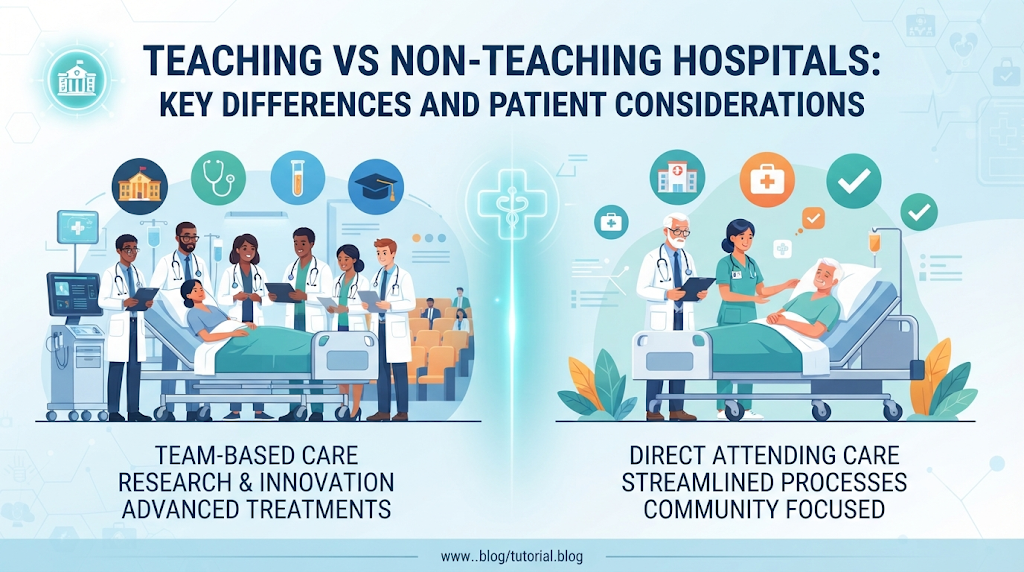
When facing a medical diagnosis, planned surgery, or sudden health emergency, choosing where to receive treatment is one of the most consequential decisions a patient or family can make. Among the many labels used to describe healthcare institutions, one distinction frequently raises questions: teaching vs non-teaching hospitals.
Understanding the difference between teaching and non-teaching hospitals helps patients set realistic expectations about who will manage their care, how clinical decisions are made, what facilities may be available, and how appointments or hospital stays are organized. Some patients worry that visiting a teaching hospital means being treated solely by inexperienced trainees, while others assume non-teaching hospitals lack advanced medical expertise. In reality, both models play essential roles in modern healthcare, and neither category automatically guarantees superior or inferior treatment.
Ultimately, the quality of healthcare depends on a hospital’s actual clinical capabilities, qualified medical staff, safety protocols, infrastructure, and patient outcomes—not simply whether it carries a teaching designation. This guide breaks down how both hospital types operate, addresses common patient concerns, and offers practical tools to help you choose the right facility for your medical needs.
What Is a Teaching Hospital?
A teaching hospital is a medical center that combines clinical patient care with the formal education and practical training of future healthcare professionals. Typically affiliated with a medical college, university, or accredited postgraduate medical training board, a teaching hospital serves two interconnected missions: treating patients and educating the next generation of doctors, nurses, and allied health specialists.
How Medical Education and Patient Care Coexist
In a teaching hospital, clinical care and academic learning happen side by side within a structured hierarchy of supervision:
- Undergraduate Medical Education: Medical students pursuing their primary medical degree (such as MBBS or MD, depending on the country) observe consultations, participate in ward rounds, and learn clinical history-taking and physical examination skills under close faculty supervision.
- Postgraduate Residency and Fellowship Training: Qualified doctors who have completed their primary medical degree undergo specialized postgraduate training (residency) or super-specialty training (fellowship). These doctors manage day-to-day patient care while gaining advanced expertise in fields such as internal medicine, surgery, pediatrics, cardiology, or oncology.
- Academic and Clinical Activities: Care delivery often includes structured teaching rounds, multidisciplinary tumor boards or case conferences, mortality and morbidity reviews, and clinical audits. These academic discussions allow complex patient cases to be reviewed from multiple angles.
Because healthcare systems vary globally, the exact structure of a teaching hospital differs across countries and institutions. Some are massive public academic medical centers handling thousands of patients daily, while others are private specialty hospitals accredited to train postgraduate residents in specific departments.
What Is a Non-Teaching Hospital?
A non-teaching hospital is a healthcare facility whose primary institutional mandate is direct patient care rather than formal undergraduate or postgraduate medical degree education. These hospitals operate without an attached medical college or formal academic residency program as their core organizational function.
Clinical Structure and Capabilities
In a non-teaching hospital, treatment is delivered directly by credentialed healthcare professionals hired by the institution, including:
- Consultants and Specialists: Experienced physicians and surgeons who lead diagnosis, outpatient consultations, inpatient management, and surgical procedures.
- Duty Doctors and Medical Officers: Qualified general physicians who provide round-the-clock ward coverage, monitor admitted patients, and coordinate with senior consultants.
- Nursing and Allied Health Teams: Registered nurses, pharmacists, physiotherapists, laboratory technologists, and imaging specialists who support daily clinical care.
A common misconception is that non-teaching hospitals only handle basic illnesses. In practice, many non-teaching hospitals are sophisticated multi-specialty or super-specialty institutions equipped with advanced intensive care units (ICUs), cardiac catheterization labs, robotic surgical suites, and comprehensive emergency departments. Furthermore, while non-teaching hospitals do not run formal medical college degree programs, many still conduct continuing medical education (CME) workshops, nursing training, and clinical skill development for their staff.
Teaching vs Non-Teaching Hospitals: Core Differences
While individual hospitals vary widely depending on funding, size, and ownership, the table below highlights general institutional tendencies between teaching and non-teaching hospitals.
8. Teaching vs Non-Teaching Hospital Comparison Table
| Comparison Area | Teaching Hospital | Non-Teaching Hospital |
| Primary institutional role | Dual mission of clinical patient care and formal medical/healthcare education. | Focused primarily on direct clinical care, diagnostics, and treatment delivery. |
| Medical students | Commonly present during outpatient clinics, ward rounds, and approved examinations under supervision. | Generally absent, except during occasional short-term observational postings. |
| Resident doctors | Core part of the clinical team; handle daily ward management, documentation, and supervised procedures. | Typically not present; ward coverage is usually managed by employed medical officers or duty doctors. |
| Consultant supervision | Layered supervision model where senior faculty oversee residents, interns, and students. | Direct consultant-led care model with fewer intermediary academic training tiers. |
| Clinical decision-making | Often collaborative, involving team discussions, case reviews, and academic rounds alongside the lead consultant. | Typically streamlined directly through the treating consultant and relevant specialists. |
| Specialist availability | Frequently houses a broad spectrum of departments and sub-specialties under one roof, especially in large academic centers. | Ranges from single-specialty clinics to large multi-specialty hospitals with full-time or visiting specialists. |
| Complex case management | Often equipped for rare, multi-system, or complex referrals due to academic departments and multi-specialty boards. | Capable of managing complex cases if the specific facility possesses the required specialists and critical-care infrastructure. |
| Multidisciplinary care | Built into academic structures through joint clinics, case conferences, and cross-departmental consultations. | Arranged via formal inter-departmental referrals coordinated by the primary treating doctor. |
| Patient waiting time | May involve longer clinic or ward round durations due to teaching discussions and high patient volume, though workflows vary. | May offer more predictable appointment slots in private settings, though busy centers also experience delays. |
| Treatment coordination | Managed across a tiered medical team (interns, residents, fellows, and consultants). | Coordinated more directly between the patient, treating consultant, nurses, and care coordinators. |
| Research and clinical studies | More likely to conduct clinical trials, epidemiological studies, and academic medical publications. | Less focused on academic research, though select large private centers participate in clinical trials. |
| Patient communication | Patients may interact with multiple team members (students, residents, and faculty) during their stay. | Communication is often concentrated with the primary consultant and a smaller core nursing/duty team. |
| Cost and billing | Varies dramatically by ownership—public teaching hospitals may be free or low-cost, while private ones follow standard private fee structures. | Varies based on ownership, room tier, and institutional pricing; private non-teaching hospitals charge standard commercial rates. |
| Patient experience | Academic environment with team-based rounds; high clinical depth, sometimes accompanied by busier outpatient environments. | Often structured around administrative convenience, individualized scheduling, and direct consultant interaction. |
Note: These comparisons reflect general institutional patterns rather than rigid rules. A well-managed non-teaching hospital may offer deep multidisciplinary care, just as a modern private teaching hospital may feature highly streamlined appointment scheduling.
Who Actually Provides Treatment in a Teaching Hospital?
One of the most frequent concerns regarding patient care in teaching hospitals is understanding who is actually making medical decisions. Knowing the distinct roles within a teaching hospital’s clinical team empowers patients to communicate confidently.
1. Medical Students
Medical students are undergraduates studying to become doctors. They have not yet earned their medical license.
- What they do: Observe consultations and procedures, take preliminary medical histories, and perform basic physical examinations.
- What they do not do: Medical students never independently diagnose conditions, prescribe medications, perform unsupervised procedures, or replace qualified treating doctors. Every interaction is supervised by qualified clinicians.
2. Interns
Interns are medical graduates who have completed their classroom and initial clinical coursework and are undergoing a mandatory, closely supervised practical training year (such as the Compulsory Rotating Medical Internship in India).
- What they do: Assist with routine clinical tasks within their permitted scope, such as recording vital signs, updating patient charts, drawing blood samples, and assisting during ward procedures.
- Supervision: Interns work under the direct oversight of resident doctors and senior faculty and do not make independent major treatment decisions.
3. Resident Doctors
Resident doctors in teaching hospitals are fully qualified, licensed medical graduates pursuing postgraduate specialization (such as MD, MS, or DNB) or super-specialization (DM or MCh).
- What they do: Serve as the frontline clinical team in wards and emergency rooms. They evaluate patients daily, order routine investigations, monitor treatment responses, document clinical progress, and perform procedures appropriate to their level of training.
- Supervision: Residents operate under institutional clinical governance policies and the direct supervision of senior consultants and faculty members, escalating complex or deteriorating cases immediately.
4. Consultants and Senior Faculty
Consultants, professors, and department heads are experienced, fully credentialed specialists who hold ultimate clinical responsibility for patient care.
- What they do: Establish definitive diagnoses, formulate and approve treatment plans, perform or directly supervise complex surgeries and interventions, lead ward rounds, and oversee the clinical work of residents and students.
How Supervision and Escalation Work
In a well-regulated teaching hospital, clinical responsibility follows a clear chain of command. While a junior resident may conduct the initial admission assessment at night, the senior resident and attending consultant review the case, verify the diagnosis, and approve the treatment plan. Whenever a patient’s condition changes unexpectedly, institutional protocols require residents to escalate the case promptly to the on-call consultant.
Potential Advantages of Teaching Hospitals for Patients
When evaluating teaching hospital advantages, patients often look at clinical depth and institutional resources. Depending on the specific hospital’s funding and accreditation, potential benefits include:
- Multidisciplinary Expertise: Large teaching hospitals typically house dozens of medical and surgical departments on a single campus. If a patient has overlapping health issues—such as diabetes, kidney disease, and a cardiac condition—specialists from each field can collaborate easily.
- Complex Case Discussions: Difficult or unusual diagnoses frequently undergo formal review during departmental case conferences or multidisciplinary boards, meaning multiple experienced minds evaluate the treatment strategy.
- Broad Spectrum of Specialist Departments: Many teaching centers maintain specialized units—such as pediatric surgery, neurosurgery, rheumatology, endocrinology, or medical genetics—that may not be economically viable for smaller community hospitals.
- Advanced Diagnostic Facilities: Academic institutions often invest in specialized pathology labs, molecular diagnostics, advanced neuroimaging, and nuclear medicine facilities to support both clinical care and postgraduate training.
- Academic and Clinical Experience: Senior faculty members combine decades of hands-on clinical practice with ongoing academic teaching, keeping them actively engaged with evolving medical literature and clinical guidelines.
- Research and Clinical Trials: Teaching hospitals are more likely to participate in ethically approved clinical trials and medical research, which can occasionally provide eligible patients with access to emerging therapies or diagnostic protocols.
- Culture of Continuous Learning: An environment centered around teaching encourages regular peer review, evidence-based protocols, and critical questioning of clinical assumptions.
Important qualification: These advantages depend heavily on the specific institution’s infrastructure, funding, and staffing. Being a teaching hospital does not automatically mean a facility has newer equipment or superior outcomes compared to a top-tier non-teaching hospital.
Potential Advantages of Non-Teaching Hospitals for Patients
Exploring non-teaching hospital advantages reveals why many patients prefer these institutions for both routine and specialized care. Potential benefits include:
- Consultant-Led Treatment Models: Patients often experience more direct, one-on-one interaction with their primary treating consultant during outpatient visits, inpatient rounds, and surgical follow-ups, without multiple layers of trainees.
- Streamlined Workflows: Without the parallel demands of academic lectures, student bedside clinics, and teaching rounds, administrative and clinical workflows may move more directly from consultation to testing and treatment.
- Clearer, More Direct Communication: Interacting primarily with a single consultant and a dedicated nursing team can reduce the feeling of having to repeat one’s medical history to several different trainees.
- Focused Specialization: Many non-teaching hospitals operate as centers of excellence dedicated to specific fields—such as orthopedics, eye care, maternity, cardiac sciences, or oncology—allowing them to refine clinical pathways for those procedures.
- Convenient Appointment Coordination: Many private non-teaching hospitals invest heavily in digital appointment scheduling, dedicated patient coordinators, and structured diagnostic packages to minimize logistical friction.
- Continuity of Care: Because non-teaching hospitals do not rotate resident doctors across departments every few months, patients managing long-term conditions may experience consistent follow-up with the exact same clinical team over many years.
- Individualized Service: Smaller staff-to-patient ratios in certain private non-teaching facilities can allow for more personalized administrative assistance, billing transparency, and discharge planning.
Important qualification: Just as teaching hospitals vary, these characteristics are not guaranteed across all non-teaching hospitals. High-volume non-teaching facilities can still have long waiting times, and fragmented communication can occur in any poorly coordinated hospital.
Important Patient Concerns Before Choosing a Hospital
When comparing options during hospital selection for patients, practical day-to-day questions often matter most.
A. Will Medical Students Examine or Treat Me?
In a teaching hospital, medical students may accompany consultants during outpatient consultations or ward rounds to observe and learn. In some instances, a student may ask to take your medical history or perform a basic physical examination under the supervision of a doctor.
- Your rights: Students do not treat you independently. All interactions remain bound by strict medical confidentiality. Furthermore, patients have the right to ask who is in the room, understand each person’s role, and politely decline student participation during sensitive examinations without any negative impact on their medical care.
B. Will I Receive Treatment From an Experienced Doctor?
Yes. In both teaching and non-teaching hospitals, a qualified specialist or consultant oversees your care. In a teaching hospital, residents handle daily ward monitoring, while the consultant guides overall clinical decisions.
- What to ask: Upon admission or consultation, ask clearly: “Who is my primary treating consultant, and who is the best point of contact on the team if my symptoms change?”
C. Will Treatment Take Longer in a Teaching Hospital?
Waiting times depend on patient volume, staffing ratios, emergency triage priorities, and administrative efficiency rather than teaching status alone. In teaching hospitals, bedside teaching rounds or multi-specialist consultations can occasionally extend inpatient rounds or outpatient clinic schedules. Conversely, some teaching hospitals have large emergency teams capable of stabilizing critical trauma cases rapidly. Always ask about typical outpatient wait times and scheduled procedure timelines when booking.
D. Are Teaching Hospitals Better for Serious or Complex Conditions?
Complex conditions—such as rare cancers, multi-organ failure, or high-risk surgeries—require specific capabilities: experienced specialists, multidisciplinary teams, 24/7 intensive care units, blood bank support, and advanced diagnostics. Many large teaching hospitals possess these resources, but so do major non-teaching tertiary care hospitals. Evaluate the hospital’s specific departmental capabilities and specialist track record rather than relying solely on the “teaching” label.
E. Are Non-Teaching Hospitals More Convenient?
For planned consultations, diagnostic tests, or elective procedures, many private non-teaching hospitals offer structured appointment slots, centralized billing, and single-window discharge processes. However, location, traffic accessibility, insurance network agreements, and outpatient crowd levels vary widely across individual hospitals of both types.
F. Are There Differences in Treatment Costs?
Teaching status alone does not determine what a patient pays. Healthcare costs depend primarily on:
- Ownership model: Government-funded public hospitals (both teaching and non-teaching) generally offer free or heavily subsidized care, whereas private hospitals charge commercial fees.
- Clinical complexity and room category: General wards versus private rooms, ICU days, surgical implants, and specialized medications drive the bulk of hospital bills.
- Insurance coverage: Whether the hospital is empaneled under your health insurance policy or government health scheme significantly impacts out-of-pocket expenses.
Teaching Hospitals and Non-Teaching Hospitals in India
In India, patients frequently encounter a mix of public and private healthcare institutions, making it essential not to confuse hospital ownership with teaching status. These are two completely separate classifications:
- Government Teaching Hospitals: Attached to central or state government medical colleges (such as AIIMS institutions, state medical college hospitals, and municipal medical colleges). They handle massive patient volumes, offer free or highly subsidized care, and serve as major referral centers for complex conditions.
- Private Teaching Hospitals: Attached to private medical colleges or deemed universities. They combine medical education with private healthcare infrastructure and offer varied pricing tiers, often including subsidized general wards alongside paid private rooms.
- Government Non-Teaching Hospitals: Include district hospitals, sub-district hospitals, community health centers (CHCs), and specialized government civil hospitals. While they do not house undergraduate medical colleges, they form the backbone of public secondary healthcare—and note that under initiatives such as the National Board of Examinations in Medical Sciences (NBEMS), select district and private hospitals also run accredited DNB postgraduate training programs.
- Private Non-Teaching Hospitals: Range from small nursing homes and single-specialty clinics to large corporate multi-specialty and super-specialty hospital chains focused exclusively on patient care.
Regulatory and Quality Frameworks in India
- National Medical Commission (NMC): The NMC regulates medical education, sets minimum infrastructure, faculty, and clinical workload standards for medical colleges and their attached teaching hospitals, and oversees medical professional ethics in India.
- National Accreditation Board for Hospitals & Healthcare Providers (NABH): NABH accreditation is a voluntary quality benchmark applicable to both teaching and non-teaching hospitals. An NABH-accredited hospital has demonstrated adherence to standardized patient safety, infection control, medication management, and clinical governance protocols.
When choosing the right hospital in India, verify whether the facility holds relevant quality accreditations (such as NABH), check NMC recognition if seeking a teaching institution, and confirm empanelment under relevant insurance or public schemes like Ayushman Bharat PM-JAY.
Patient Safety, Privacy, and Informed Consent
Regardless of whether you choose a teaching or non-teaching hospital, fundamental principles of patient safety in hospitals and medical ethics protect your autonomy and dignity.
Understanding Three Distinct Types of Consent
Patients should recognize the difference between three separate forms of consent:
- Consent for Medical Treatment and Procedures: Before any surgery, invasive diagnostic test, or high-risk therapy, your doctor must explain the diagnosis, proposed procedure, potential risks, expected benefits, and alternative options in a language you understand. You have the right to ask questions before signing.
- Consent for Participation in Clinical Teaching: While general outpatient or inpatient admission in a teaching hospital implies exposure to a team-based care environment, ethical medical guidelines emphasize patient dignity and privacy. Patients have the right to know the identity and role of trainees present and may decline student involvement during physical examinations, particularly intimate or sensitive exams.
- Consent for Clinical Research: Participation in any clinical trial, experimental therapy, or research data collection is strictly voluntary. It requires separate, detailed written informed consent approved by an Institutional Ethics Committee. Refusing to join a research study will never compromise your standard medical treatment.
Confidentiality and Access to Medical Records
- Privacy: Your medical history, test results, and diagnosis are confidential. Even when cases are discussed for educational purposes in a teaching hospital, patient identities must be protected.
- Medical Records: Patients have the right to receive clear discharge summaries, copies of diagnostic reports, prescriptions, and itemized bills. If you feel uncomfortable with how an examination is conducted or how communication is handled, you have the right to speak directly with the attending consultant or contact the hospital’s patient relations or grievance redressal desk.
When Might Each Type of Hospital Be Suitable?
Rather than assuming one hospital category is universally superior, match your specific medical situation to the capabilities of the institution:
- Rare or Multi-System Complicated Conditions: Look for a tertiary care center—often a large academic teaching hospital or a major multi-specialty non-teaching institute—where multiple sub-specialists can collaborate on diagnosis and treatment.
- Routine Consultation for Common Illnesses: Both a neighborhood non-teaching clinic/hospital and the outpatient department of a teaching hospital can manage common infections or minor ailments effectively. Proximity, appointment convenience, and timely doctor access matter most here.
- Specialized or Complex Surgery: Prioritize the surgical team’s specific experience with that procedure, availability of advanced operating theaters, post-operative ICU support, and infection control standards—whether in a teaching or non-teaching center.
- Maternity and Newborn Care: Look for a facility with experienced obstetricians, 24/7 anesthesia and blood bank availability, and an appropriately equipped Neonatal Intensive Care Unit (NICU) in case of unexpected newborn complications.
- Acute Medical Emergencies (Heart Attack, Stroke, Major Trauma): In an emergency, speed and immediate clinical capability outweigh every other factor. Go immediately to the nearest hospital equipped with a 24/7 emergency department, resuscitation facilities, ICU, and relevant emergency specialists.
- Long-Term Chronic Disease Management: Conditions like diabetes, hypertension, asthma, or arthritis benefit from continuity of care, accessible follow-up appointments, and reliable diagnostic monitoring—attributes found in well-organized outpatient clinics of both types.
- Seeking a Second Opinion: Academic teaching hospitals and senior consultants at specialized non-teaching centers are both strong options when you want an independent review of a complex diagnosis or major surgical recommendation.
- Rehabilitation and Post-Acute Follow-Up: Look for hospitals or dedicated rehabilitation centers offering structured physiotherapy, occupational therapy, nursing care, and clear communication with your primary treating specialist.
9. Practical Hospital-Selection Checklist
Use the following checklist as a practical decision-making guide when comparing hospitals for yourself or a family member (note: this tool supports informed questions and does not replace professional medical advice):
- 1. Relevant Medical Specialty: Does the hospital have a dedicated department for my specific health condition?
- 2. Specialist Availability: Is an appropriately qualified and experienced specialist available to lead my care?
- 3. Clear Clinical Responsibility: Do I know which consultant will be primarily responsible for my treatment decisions?
- 4. Supervision Structure (if a teaching hospital): How are resident doctors supervised, and how frequently does the senior consultant review admitted patients?
- 5. Diagnostic Equipment: Are the required laboratory, pathology, and imaging tests (such as MRI, CT, or specialized blood panels) available on-site?
- 6. 24/7 Emergency Services: Does the hospital maintain a round-the-clock emergency department staffed by trained emergency doctors?
- 7. Critical Care (ICU) Support: Is an appropriately equipped Intensive Care Unit (or NICU/PICU if relevant) available in case complications arise?
- 8. Surgical and Blood Bank Facilities: If surgery is planned, does the hospital have modern operating theaters, full-time anesthetists, and reliable blood bank access?
- 9. Multidisciplinary Coordination: If I need input from a second specialist (for example, a cardiologist before orthopedic surgery), how smoothly are internal consultations arranged?
- 10. Transparent Cost Estimates: Has the hospital provided a clear written estimate covering consultation fees, diagnostics, procedure charges, room tiers, and consumables?
- 11. Health Insurance and Scheme Empanelment: Does the hospital accept my health insurance policy (cashless or reimbursement) or applicable government healthcare scheme?
- 12. Visiting and Communication Policies: Are family visiting rules, daily doctor update timings, and caregiver access clearly explained?
- 13. Patient Grievance Mechanism: Is there an accessible patient relations desk or formal process to raise concerns about care, privacy, or billing?
- 14. Follow-Up and Discharge Support: Does the hospital provide comprehensive discharge summaries, medication instructions, and structured follow-up appointments?
- 15. Quality and Safety Accreditations: Does the hospital adhere to recognized national or international patient-safety and quality standards (such as NABH accreditation)?
Common Myths About Teaching and Non-Teaching Hospitals
Misconceptions often cloud hospital quality and specialist care decisions. Separating myth from reality helps families focus on what truly matters.
Myth 1: Teaching hospitals are always better than non-teaching hospitals.
- Reality: Teaching hospitals vary enormously in funding, staffing, and infrastructure, just as non-teaching hospitals do. Many non-teaching hospitals deliver world-class clinical outcomes, while under-resourced teaching hospitals may face operational strain.
- Patient takeaway: Evaluate the specific hospital’s track record, accreditation, and facilities rather than relying on its teaching status.
Myth 2: Medical students independently treat patients in teaching hospitals.
- Reality: Medical students are unlicensed trainees who observe and learn under strict supervision. Licensed doctors—residents and consultants—are responsible for diagnosis, prescriptions, and procedures.
- Patient takeaway: You can always ask team members to introduce themselves and clarify their roles.
Myth 3: Teaching hospitals always have more experienced doctors.
- Reality: Senior faculty in teaching hospitals bring deep academic and clinical experience, while top non-teaching hospitals frequently recruit veteran consultants with decades of high-volume surgical and clinical expertise.
- Patient takeaway: Check the qualifications and experience of the specific treating specialist rather than generalizing by hospital category.
Myth 4: Non-teaching hospitals cannot handle complicated medical conditions.
- Reality: Many large non-teaching tertiary care centers routinely perform organ transplants, complex neurosurgeries, advanced cancer therapies, and high-risk cardiac interventions.
- Patient takeaway: Ask whether the hospital regularly treats your specific condition and has the necessary ICU and specialist backup.
Myth 5: Teaching hospitals always have longer waiting times.
- Reality: While high-volume public teaching hospitals can have crowded outpatient departments, many private teaching hospitals operate on structured appointment schedules. Conversely, popular non-teaching specialists can also have multi-week waiting lists.
- Patient takeaway: Inquire about actual appointment wait times and urgent triage pathways directly with the hospital’s outpatient desk.
Myth 6: Non-teaching hospitals always provide faster treatment.
- Reality: Speed of care depends on bed availability, diagnostic turnaround times, insurance approvals, and emergency triage—not simply whether residents are present.
- Patient takeaway: Confirm diagnostic turnaround times and admission procedures in advance for planned care.
Myth 7: Teaching hospitals are always cheaper.
- Reality: Government-funded teaching hospitals offer free or low-cost treatment, but private teaching hospitals charge private healthcare fees comparable to private non-teaching institutions.
- Patient takeaway: Verify hospital ownership (public vs. private) and request an itemized cost estimate beforehand.
Myth 8: Medical education automatically improves every patient’s outcome.
- Reality: An academic environment supports continuous learning and peer discussion, but individual patient outcomes depend on timely diagnosis, adherence to safety protocols, nursing care quality, and appropriate clinical infrastructure.
- Patient takeaway: Look for accredited safety systems, low hospital-acquired infection rates, and clear clinical communication.
Myth 9: A hospital’s teaching status guarantees its quality.
- Reality: Teaching recognition confirms that an institution meets educational criteria to train students or residents; it is distinct from hospital-wide patient-safety and clinical quality accreditation.
- Patient takeaway: Look for dedicated healthcare quality certifications alongside regulatory compliance.
Illustrative Patient Scenarios
Scenario 1: Navigating a Complex, Multi-System Diagnosis
- Primary concern: A 58-year-old patient with long-standing diabetes and chronic kidney disease develops unexplained neurological weakness and requires coordinated evaluation across neurology, nephrology, and endocrinology.
- Hospital capabilities that matter: Availability of all three sub-specialties on the same campus, integrated diagnostic labs, multidisciplinary case consultation, and inpatient monitoring.
- Questions to ask: “Are neurology, nephrology, and endocrinology consultants available full-time at this hospital? How will the different specialists coordinate my treatment plan?”
- Why teaching status alone isn’t enough: While a large teaching hospital often houses these departments under one roof, a major multi-specialty non-teaching hospital with full-time specialists can provide equally coordinated care. The deciding factor is integrated specialist availability and communication.
Scenario 2: Scheduling a Planned, Routine Procedure
- Primary concern: A 36-year-old working parent needs a planned, uncomplicated gallbladder surgery (laparoscopic cholecystectomy) and wants predictable scheduling, clear cost estimates, and smooth discharge coordination.
- Hospital capabilities that matter: Experienced laparoscopic surgeon, accredited operation theater, transparent surgical package pricing, insurance cashless processing, and convenient post-operative follow-up.
- Questions to ask: “Who will perform the surgery, what is included in the estimated surgical package, and how many days of hospital stay are typically expected?”
- Why teaching status alone isn’t enough: A private non-teaching hospital may offer highly streamlined scheduling and single-point communication, while a well-organized private teaching hospital could offer a comparable experience. Focusing on surgeon experience, safety accreditation, and administrative clarity guides the best choice.
Scenario 3: Responding to an Acute Medical Emergency
- Primary concern: A 64-year-old individual experiences sudden chest pain, sweating, and shortness of breath at home—classic warning signs of a heart attack.
- Hospital capabilities that matter: Immediate proximity, 24/7 emergency resuscitation team, rapid ECG and cardiac biomarker testing, and round-the-clock cardiac catheterization lab (cath lab) availability.
- Questions to ask: In an acute emergency, ambulance teams or family members should immediately confirm: “Does the nearest hospital have a 24/7 emergency department and an active cardiac cath lab right now?”
- Why teaching status alone isn’t enough: Delaying emergency care to travel across town to a specific teaching or non-teaching hospital can cost critical minutes. Immediate access to emergency life-saving infrastructure is the overriding priority.
10. Frequently Asked Questions
1. What is the main difference between a teaching and non-teaching hospital?
A teaching hospital combines patient care with the formal clinical education and training of medical students, interns, and postgraduate resident doctors. A non-teaching hospital focuses primarily on delivering direct clinical care through employed consultants, specialists, and medical officers without running formal medical degree programs.
2. Are teaching hospitals better for patients?
Neither type is automatically better for every patient. Teaching hospitals often offer strong multidisciplinary collaboration and academic depth for complex conditions, while non-teaching hospitals often provide streamlined workflows and direct consultant-led communication. Quality depends on the individual hospital’s specialists, safety standards, and infrastructure.
3. Do medical students treat patients in teaching hospitals?
No. Medical students are unlicensed trainees who observe clinical care and may take medical histories or perform basic examinations under direct supervision. They never diagnose conditions, prescribe medications, or perform procedures independently.
4. Are resident doctors qualified to provide patient care?
Yes. Resident doctors are fully qualified, licensed medical graduates who have completed their primary medical degree and are undergoing specialized postgraduate training. They manage daily inpatient care and procedures within defined institutional guidelines.
5. Who supervises resident doctors?
Resident doctors are supervised by senior residents, attending specialists, department heads, and senior faculty consultants. Complex clinical decisions, surgical plans, and escalating medical issues are overseen by the responsible consultant.
6. Do teaching hospitals have more specialists?
Large academic teaching hospitals frequently maintain a wide range of medical and surgical sub-specialties under one roof. However, major multi-specialty non-teaching hospitals also employ extensive teams of full-time specialists and super-specialists.
7. Are non-teaching hospitals better for routine treatment?
Many patients find private non-teaching hospitals convenient for routine consultations and planned procedures due to structured appointment scheduling and direct consultant access. However, outpatient departments at teaching hospitals also handle routine illnesses effectively every day.
8. Are teaching hospitals more affordable?
Not necessarily. Treatment cost depends on whether the hospital is government-owned or privately operated, not its teaching status. Government teaching and non-teaching hospitals offer free or subsidized care, whereas private hospitals in both categories charge private medical fees.
9. Can patients refuse student participation in examinations?
Yes. Patients have the right to privacy, dignity, and informed consent. You may ask who is present during your consultation or examination and politely request that medical students step out during physical examinations without affecting your quality of care.
10. Are government hospitals always teaching hospitals?
No. While many large government hospitals are attached to medical colleges, thousands of government district hospitals, sub-district hospitals, and community health centers operate as non-teaching public healthcare facilities.
11. Can private hospitals be teaching hospitals?
Yes. Many private medical colleges, charitable trusts, and corporate healthcare institutions operate accredited teaching hospitals that train undergraduate medical students or postgraduate residents alongside delivering private patient care.
12. What should patients compare before selecting a hospital?
Before choosing a hospital, compare specialist availability, the primary consultant’s experience, ICU and diagnostic capabilities, quality and safety accreditations (such as NABH), transparent cost estimates, insurance coverage, and clear follow-up support.
Conclusion
Choosing between a teaching and a non-teaching hospital is not about finding a universally “better” institution—it is about finding the right match for your specific medical needs. Both hospital models play vital roles in modern healthcare and can deliver safe, effective, and compassionate care when backed by qualified specialists, strong clinical governance, and reliable infrastructure.
Teaching hospitals bring together academic depth, multidisciplinary collaboration, and structured team-based oversight, which can be especially valuable when navigating complex or multi-system health conditions. Non-teaching hospitals, meanwhile, often offer streamlined clinical workflows, direct consultant-led communication, and focused specialty care that many patients appreciate for planned procedures and ongoing management.
Rather than relying on a hospital’s teaching label—or confusing public and private ownership with clinical quality—focus on what directly shapes your care: the experience of your treating specialist, the availability of necessary diagnostic and critical-care facilities, transparent cost estimates, recognized patient-safety accreditations, and clear communication. By asking the right questions and evaluating a hospital’s actual capabilities against your health needs, you and your family can move forward with clarity and confidence.

Find Trusted Cardiac Hospitals
Compare heart hospitals by city and services — all in one place.
Explore Hospitals