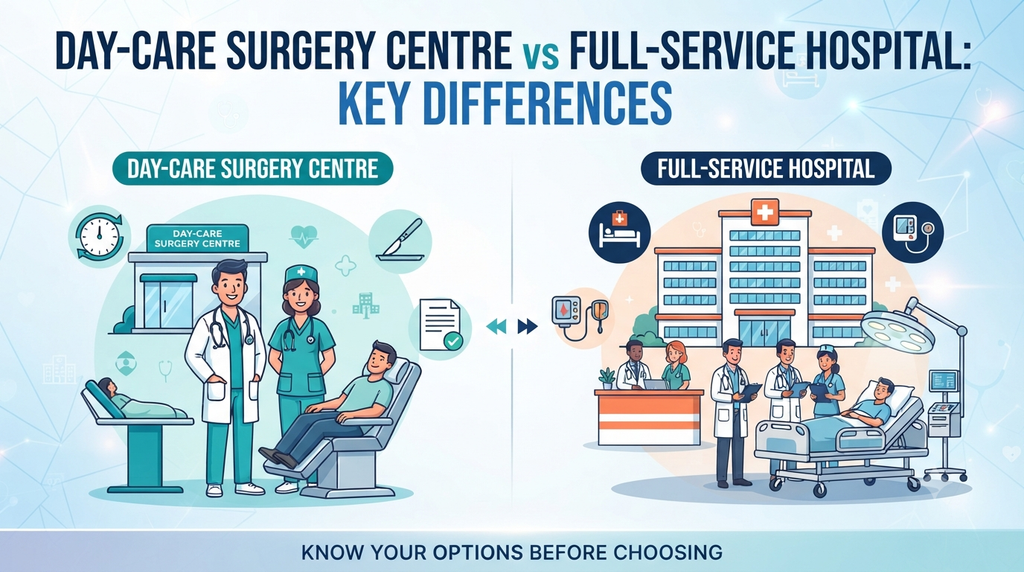
The Short Answer: A day-care surgery centre (also known as an ambulatory or outpatient surgery centre) is a specialized healthcare facility designed for scheduled surgical procedures where medically suitable patients are expected to go home on the same day. A full-service hospital, by contrast, provides comprehensive inpatient and outpatient medical and surgical care—including overnight wards, multi-specialty teams, emergency departments, and intensive care units (ICUs)—to manage complex operations and higher-risk patients. Neither setting is universally superior; the safer, more appropriate choice depends on the specific procedure, the patient’s overall health, anaesthesia requirements, and the facility’s verified emergency capabilities.
Two Surgical Settings, Different Levels of Care
Consider a common scenario: a patient is advised to undergo a planned surgical procedure, such as cataract extraction, a laparoscopic gallbladder removal, or an uncomplicated inguinal hernia repair. When reviewing options, the patient notices two distinct types of facilities—a standalone day-care surgery centre promising streamlined admission and same-day discharge, and a larger multi-specialty hospital offering round-the-clock inpatient beds and intensive care infrastructure.
For patients and caregivers, choosing between these two environments can feel overwhelming. Advances in minimally invasive surgical techniques and modern short-acting anaesthetic agents mean that many procedures once requiring several days in a hospital bed can now be completed safely without an overnight stay. At the same time, not every operation—and not every patient—is suited for same-day discharge.
Choosing a surgical facility should never be based solely on convenience, shorter waiting times, or advertised package prices. Matching the clinical environment to the patient’s medical profile and the complexity of the surgery is a foundational principle of patient safety. Understanding how day-care surgery centres and full-service hospitals differ in infrastructure, staffing, emergency readiness, and recovery support empowers patients to ask informed questions and make safe decisions alongside their treating doctors.
What Is a Day-Care Surgery Centre?
A day-care surgery centre is a dedicated healthcare facility structured to perform selected, planned surgical procedures or diagnostic interventions with the expectation that the patient will recover sufficiently to be discharged home on the same calendar day. In international medical literature, these facilities are also referred to as ambulatory surgery centres (ASCs) or outpatient surgical units. They may operate as independent, standalone centres or as distinct, dedicated units within a larger hospital campus.
Because day-care centres focus exclusively on scheduled, non-emergency procedures, their workflows are built around predictability and efficiency. Typical features of a well-equipped day-care surgery centre include:
- Scheduled surgical procedures: Operations are booked in advance rather than admitted through an emergency ward, reducing sudden schedule disruptions.
- Structured pre-operative assessment: Patients are evaluated prior to the day of surgery to verify fitness for same-day discharge.
- Dedicated operating or procedure rooms: Sterile surgical suites equipped for targeted specialties such as ophthalmology, general surgery, orthopaedics, or endoscopy.
- Targeted anaesthesia services: Qualified anaesthesiologists and monitoring equipment suited to the specific procedures performed at the centre.
- Post-anaesthesia care units (PACUs): Recovery bays where nurses and doctors monitor vital signs, pain levels, and alertness immediately after surgery.
- Short-term observation: A recovery period typically lasting a few hours until discharge criteria are met.
- Standardized discharge planning and follow-up: Written home-care instructions, pain management plans, emergency contact numbers, and scheduled review visits.
Examples of Procedures Performed in Day-Care Settings
Depending on the facility’s equipment, clinical staffing, and the individual patient’s health status, procedures commonly considered for day-care surgery include:
- Ophthalmology: Cataract surgery (such as phacoemulsification) and selected minor eyelid or tear-duct procedures.
- General Surgery: Excision of benign skin or subcutaneous lumps (such as lipomas or sebaceous cysts), selected uncomplicated hernia repairs, and certain anorectal procedures (such as haemorrhoidectomy or fissure surgery).
- Minimally Invasive (Laparoscopic) Surgery: Selected diagnostic laparoscopies or uncomplicated laparoscopic cholecystectomies (gallbladder removal) in carefully screened patients.
- Orthopaedics: Diagnostic or therapeutic knee and shoulder arthroscopy, carpal tunnel release, trigger finger release, and minor hardware removal.
- Ear, Nose, and Throat (ENT): Tonsillectomy, adenoidectomy, septoplasty, and grommet (tympanostomy tube) insertion in suitable candidates.
- Gynaecology and Urology: Diagnostic hysteroscopy, dilation and curettage (D&C), cystoscopy, and selected minor fertility or urological interventions.
- Dermatology, Plastic Surgery, and Endoscopy: Skin lesion excisions, minor reconstructive procedures, and upper or lower gastrointestinal endoscopies performed under sedation.
Important Clinical Caveat: The name of a procedure alone never automatically qualifies a patient for day-care surgery. For example, while an uncomplicated hernia repair or laparoscopic gallbladder removal may be performed as a day-care case in a healthy adult, the exact same operation may require inpatient admission in an older adult with heart disease, poorly controlled diabetes, or a history of complicated abdominal surgeries. Surgical complexity, anaesthesia depth, expected recovery time, and emergency support all determine eligibility.
What Is a Full-Service Hospital?
A full-service hospital is a comprehensive healthcare institution equipped to provide a wide spectrum of inpatient, outpatient, diagnostic, and emergency medical and surgical care around the clock. Unlike day-care centres, which narrow their scope to planned procedures with same-day discharge, full-service hospitals are designed to manage both routine operations and complex, high-risk, or unpredictable medical situations.
Depending on its size, tier, and clinical specialization, a full-service hospital typically offers:
- Multiple surgical and medical specialties: Access to general surgeons, cardiologists, pulmonologists, nephrologists, neurologists, internal medicine physicians, and other specialists under one roof.
- Comprehensive operating theatre complexes: Multiple operating suites capable of handling prolonged, multi-stage, or emergency operations.
- Inpatient wards and private rooms: Bedded facilities allowing patients to stay overnight or for several days to weeks under continuous nursing supervision.
- Full-spectrum anaesthesia and recovery services: Continuous anaesthesiology coverage capable of managing high-risk airway, cardiac, or respiratory needs.
- 24/7 Emergency Department (Casualty): Immediate triage, resuscitation, and stabilization for acute medical or surgical emergencies.
- Intensive Care Units (ICUs) and High-Dependency Units (HDUs): Specialized critical-care beds equipped with mechanical ventilators, invasive hemodynamic monitoring, and critical-care specialists.
- Advanced diagnostic imaging and laboratory services: On-site CT scans, MRI, ultrasound, X-ray, and round-the-clock pathology and microbiology labs.
- Blood bank or licensed blood storage facilities: Rapid access to cross-matched red blood cells, plasma, and platelets if significant surgical bleeding occurs.
- Coordinated post-operative and rehabilitation care: Inpatient physiotherapy, respiratory therapy, nutritional support, and structured multidisciplinary discharge planning.
Important Clinical Caveat: Just as day-care centres vary in capability, not all hospitals offer identical infrastructure. Small nursing homes or single-specialty hospitals may be registered as inpatient facilities without having an advanced cardiac ICU, an in-house blood bank, or 24-hour sub-specialty consultants. Patients should verify the exact on-site capabilities of any hospital rather than assuming every hospital possesses every advanced facility.
Day-Care Surgery Centre vs Full-Service Hospital: Key Differences
The table below outlines how day-care surgery centres and full-service hospitals typically compare across core clinical, operational, and financial dimensions.
| Comparison Factor | Day-Care Surgery Centre | Full-Service Hospital |
| Primary Focus | Selected, scheduled surgical and diagnostic procedures designed for same-day discharge. | Broad spectrum of planned and emergency inpatient and outpatient medical and surgical care. |
| Patient Stay | Usually planned same-day discharge after a few hours of observation. | May include same-day discharge, overnight observation, or extended multi-day inpatient admission. |
| Procedure Suitability | Selected low-to-moderate complexity procedures with strict patient screening. | Wide range of simple, moderate, and highly complex surgeries, depending on hospital capability. |
| Inpatient Beds | Limited to recovery bays or short-stay observation beds; typically lacks overnight wards. | Dedicated inpatient wards, private rooms, and step-down units for overnight or prolonged stays. |
| Emergency Support | Must maintain resuscitation equipment, trained staff, and a formal emergency transfer plan. | Often features an on-site 24/7 emergency department and immediate multi-specialty rescue teams. |
| ICU Availability | Usually unavailable or limited to basic stabilization; relies on transfer to a partner hospital. | Often provides on-site Intensive Care Units (ICUs) and High-Dependency Units (HDUs). |
| Specialist Access | Focused on the operating surgeon and anaesthesiologist; outside consultations via referral. | Multiple medical and surgical specialists available on-site for pre- and post-operative co-management. |
| Diagnostic Services | Focused on basic pre-operative checks or specialty-specific imaging. | Broad on-site laboratory, pathology, blood bank, and advanced imaging (CT, MRI, ultrasound). |
| Recovery Model | Short-term post-operative monitoring followed by structured recovery at home with a caregiver. | Flexible model supporting immediate monitoring, inpatient nursing care, and bedside rehabilitation. |
| Cost Structure | May be lower for uncomplicated cases due to the absence of overnight room and ward charges. | May involve higher overall charges reflecting 24/7 infrastructure, inpatient beds, and broader staffing. |
| Complex Medical Conditions | Suitability depends heavily on disease stability, procedure risk, and facility backup. | Generally more appropriate when patients have unstable chronic illnesses or high surgical risk. |
Which Procedures Are Suitable for Day-Care Surgery?
Determining whether an operation can be safely performed in a day-care setting depends on surgical and recovery characteristics rather than a fixed checklist of operations. Clinical guidelines from organizations such as the Association of Surgeons of India (ASI) and the Royal College of Surgeons of England emphasize evaluating the following procedural factors:
- Expected Surgical Duration: Procedures with predictable, limited operating times are generally better suited for day-care settings than lengthy operations that increase fatigue, hypothermia, or prolonged anaesthetic exposure.
- Anticipated Blood Loss: Operations should carry a minimal risk of significant bleeding, without an expected need for blood transfusion.
- Anaesthesia Requirements: The anaesthetic technique used should allow rapid, clear-headed recovery without prolonged airway support or heavy intravenous infusions.
- Post-Operative Pain Control: Pain following the operation must be manageable at home using oral medications (tablets or capsules) rather than continuous intravenous pain pumps or epidural infusions.
- Risk of Immediate Complications: The likelihood of sudden post-operative problems—such as internal bleeding, severe swelling affecting breathing, or organ injury—should be low.
- Need for Prolonged Clinical Observation: Procedures that require frequent overnight blood tests, continuous heart rhythm monitoring, or complex surgical drain management usually require hospital admission.
- Return of Basic Bodily Functions: Before going home, patients typically need to tolerate oral fluids without persistent vomiting, walk safely (if physically able prior to surgery), and pass urine when relevant to the procedure or anaesthesia type.
- Availability of Home Support: Because anaesthetic and sedative medications temporarily impair judgment and coordination, day-care surgery requires a responsible adult to escort the patient home and stay with them for at least the first 24 hours.
- Access to Emergency Help After Discharge: The patient must live within a reasonable travel distance of emergency medical care and have reliable transport and telephone access should an urgent problem arise at home.
Because these variables interact, a procedure that is routinely performed as a day-care surgery in one individual may legitimately require an overnight hospital stay in another.
Which Patients May Need a Full-Service Hospital?
Even when a planned operation is technically straightforward, a patient’s underlying health profile or social circumstances may make a full-service hospital the safer choice. Clinical situations where a full-service hospital is often preferred include:
- Significant or Unstable Medical Conditions: Patients with poorly controlled high blood pressure, recent heart attack or angina, heart failure, severe asthma or chronic obstructive pulmonary disease (COPD), unstable diabetes, or advanced kidney or liver disease.
- Higher Anticipated Anaesthesia Risk: Individuals classified at higher perioperative risk—such as those with severe obstructive sleep apnea, a history of difficult airway management, or prior adverse reactions to anaesthesia.
- Complex or Prolonged Surgical Procedures: Operations involving major body cavities, extensive tissue dissection, or a higher risk of post-operative fluid shifts.
- Potential Need for Blood Transfusion: Surgeries where bleeding risk is moderate to high, requiring immediate access to cross-matched blood products.
- Expected Need for ICU or High-Dependency Care: Cases where close post-operative organ support, invasive blood pressure monitoring, or specialized critical-care nursing may be necessary.
- Multiple Co-Existing Conditions Requiring Specialist Coordination: Patients whose medications (such as blood thinners, insulin, or immunosuppressants) require active adjustment by physicians or cardiologists before and after surgery.
- Lack of Appropriate Home Support: Patients who live alone, lack a reliable adult caregiver for the first 24 hours, or reside far away from emergency medical services.
- Need for Extended Inpatient Rehabilitation: Surgeries where safe mobility, wound care, or physical therapy must be established with professional staff before returning home.
Ultimately, patient eligibility for day-care versus inpatient surgery must be decided by the treating surgeon and anaesthesiologist following a thorough clinical evaluation.
Comparing Anaesthesia and Post-Anaesthesia Recovery Support
Safe anaesthesia is central to every surgical setting. Whether an operation takes place in a day-care centre or a full-service hospital, the goal of anaesthesia is to keep the patient comfortable, pain-free, and physiologically stable throughout the procedure and immediate recovery.
Types of Anaesthesia Used
Depending on the procedure and facility capabilities, anaesthesia may involve:
- Local Anaesthesia: Numbing medication injected directly around the surgical site while the patient remains awake (common in minor skin procedures or certain cataract surgeries).
- Monitored Anaesthesia Care (Sedation): Intravenous medications given to relax the patient and reduce discomfort, often combined with local anaesthesia (frequently used in endoscopies and minor procedures).
- Regional Anaesthesia: Numbing a larger region of the body—such as a nerve block for an arm or leg, or spinal anaesthesia for lower-body procedures.
- General Anaesthesia: A controlled state of reversible unconsciousness requiring continuous airway and breathing management.
Not every day-care surgery centre offers general anaesthesia or complex regional blocks; some smaller centres restrict their scope strictly to local anaesthesia or light sedation.
Monitoring and Recovery Standards
According to safety standards issued by the Indian Society of Anaesthesiologists (ISA), the World Health Organization (WHO), and the American Society of Anesthesiologists (ASA), safe surgical care requires:
- Pre-Anaesthesia Check-Up (PAC): A dedicated assessment before surgery to review medical history, airway anatomy, medications, and fasting instructions.
- Qualified Anaesthesia Professionals: Administration and continuous monitoring by a trained, registered anaesthesiologist whenever general anaesthesia, regional anaesthesia, or deep sedation is used.
- Continuous Intra-Operative Monitoring: Standard monitors tracking heart rate and rhythm (ECG), blood pressure, blood oxygen saturation ($\text{SpO}_2$), and exhaled carbon dioxide (capnography) during general anaesthesia or deep sedation.
- Structured Post-Anaesthesia Recovery: A dedicated recovery area staffed by trained nurses and supervised by an anaesthesiologist to manage immediate post-operative concerns—most commonly pain, post-operative nausea and vomiting (PONV), shivering, or blood pressure fluctuations—before the patient is cleared to leave.
Patients should explicitly ask whether a qualified anaesthesiologist will be present throughout their procedure and recovery, and whether the centre maintains complete monitoring equipment for the specific type of anaesthesia planned.
Emergency Readiness and Patient Safety
One of the most critical distinctions between a day-care surgery centre and a full-service hospital lies in how unexpected medical emergencies are managed. Although serious complications during carefully selected day-care surgeries are uncommon, no surgical or anaesthetic intervention is entirely free of risk. Rare events—such as severe allergic reactions (anaphylaxis), unexpected airway difficulties, heart rhythm disturbances, or sudden bleeding—can occur without warning.
What Emergency Readiness Looks Like in a Day-Care Centre
A responsible day-care surgery centre must be fully equipped and rehearsed to initiate immediate life-saving stabilization for any procedure it performs. Essential safety components include:
- Resuscitation Equipment: A fully stocked crash cart containing a defibrillator, airway management tools (laryngoscopes, endotracheal tubes, supraglottic airways), oxygen supply, and suction devices.
- Emergency Medications: Immediately accessible drugs to treat cardiac arrest, severe allergic reactions, dangerously low blood pressure, asthma attacks, and anaesthetic emergencies.
- Trained Clinical Staff: Doctors and nurses certified in Basic Life Support (BLS) and Advanced Cardiac Life Support (ACLS) who conduct regular emergency drills.
- Clear Escalation Protocols: Written, step-by-step clinical protocols specifying when to halt a procedure, summon additional help, and initiate emergency transfer.
- Ambulance and Hospital Transfer Arrangements: Immediate access to an equipped ambulance (capable of advanced life support during transit) and a formal, pre-arranged tie-up with a nearby full-service hospital equipped with an emergency department and ICU.
Why a Transfer Plan Is Not Identical to On-Site Emergency Care
In a full-service hospital, if a patient experiences an unexpected surgical or cardiac complication, an internal “Code Blue” team, blood bank, interventional radiology suite, or ICU bed is typically minutes away within the same building.
In a standalone day-care centre, staff can stabilize the patient initially, but definitive critical care requires transporting the patient by ambulance to the receiving hospital. Even with an excellent transfer agreement, ambulance transit introduces travel time and logistical handover. Therefore, understanding how a day-care centre handles emergencies—and how far away the receiving hospital is—is vital for informed patient consent.
Overnight Admission and ICU Requirements
Patients preparing for day-care surgery should clearly understand the difference between planned same-day discharge and guaranteed same-day discharge. While going home the same day is the intended plan, clinical teams prioritize safety over schedules. If a patient’s recovery does not meet established safety benchmarks, the plan must change.
Common Reasons for Unplanned Overnight Observation
Following a planned day-care procedure, a patient may require overnight admission if they experience:
- Persistent Nausea or Vomiting: Inability to keep fluids or oral pain medications down, risking dehydration.
- Inadequate Pain Control: Pain that remains severe despite standard oral medications and requires supervised injectable pain relief.
- Unexpected Bleeding or Swelling: Oozing from the surgical site that requires prolonged pressure, dressing changes, or surgical re-exploration.
- Delayed Recovery from Anaesthesia: Prolonged drowsiness, dizziness, low oxygen levels, or unstable blood pressure.
- Difficulty Passing Urine: Post-operative urinary retention, particularly after lower abdominal, pelvic, or spinal anaesthesia procedures.
- More Extensive Surgery Than Anticipated: Occasionally, a surgeon discovers during a minimally invasive procedure that a more extensive repair is needed to treat the condition safely.
When ICU or High-Dependency Care Is Needed
Intensive care or high-dependency monitoring is required when a patient needs continuous organ support—such as mechanical ventilation, intravenous medications to maintain blood pressure, or intensive cardiac monitoring following a major complication or exacerbation of a chronic illness.
Because most standalone day-care centres do not operate full ICUs, they rely on strict pre-operative screening to minimize the likelihood of needing critical care, combined with rapid stabilization and transfer agreements if an unforeseen crisis occurs. Conversely, patients whose medical conditions carry a known risk of needing post-operative ICU or HDU observation should be scheduled directly in a full-service hospital with verified critical-care beds.
Pre-Operative Assessment and Patient Selection
The pre-operative assessment is the primary safeguard that determines whether a patient should be treated at a day-care centre or a full-service hospital. Rather than relying on a brief glance at test reports on the morning of surgery, thorough pre-operative evaluation examines the whole patient:
- Detailed Medical History: Reviewing heart disease, lung conditions, diabetes, thyroid disorders, bleeding tendencies, and stroke history.
- Current Medications and Supplements: Identifying blood thinners (antiplatelets or anticoagulants), diabetes medications, blood pressure drugs, and herbal supplements that may affect bleeding or anaesthesia.
- Allergies and Past Anaesthesia Experiences: Checking for allergies to antibiotics, latex, or anaesthetic agents, as well as personal or family history of adverse anaesthesia reactions.
- Targeted Diagnostic Investigations: Ordering relevant blood tests (such as complete blood count, blood sugar, kidney function, or coagulation profile), electrocardiogram (ECG), or chest imaging based on the patient’s age, health, and planned surgery.
- Functional Status and Frailty: Assessing everyday physical capacity—such as whether the patient can climb a flight of stairs or walk briskly without chest pain or breathlessness—alongside age-related frailty considerations.
- Home Environment and Transport: Confirming that the patient has a reliable escort home, a safe living space (for example, access to a ground-floor bathroom if mobility is limited), and an adult caregiver for the first 24 hours.
This holistic evaluation explains why two patients scheduled for the exact same operation may receive different facility recommendations: a 35-year-old with no medical conditions and strong family support at home may be an ideal day-care candidate, whereas a 72-year-old with coronary artery disease and sleep apnea undergoing the same procedure may be advised to use a full-service hospital.
Comparing Costs and Financial Considerations
Cost is a practical concern for most families planning surgery, and day-care surgery is often assumed to be substantially less expensive than hospital-based surgery. While day-care surgery may reduce overall expenses for medically suitable procedures—primarily because overnight room rent, multi-day nursing charges, and inpatient diet fees are avoided—it is not automatically cheaper in every situation.
To make an accurate financial comparison, patients should request a comprehensive, itemized cost estimate from both types of facilities rather than comparing headline package prices alone. Key cost components to examine include:
- Surgeon and Assistant Fees: Professional charges for performing the operation.
- Anaesthesiologist Fees: Charges for pre-anaesthesia evaluation, intra-operative care, and recovery supervision.
- Operating Theatre and Equipment Charges: Fees for theatre time, specialized laparoscopic or laser instruments, and single-use consumables.
- Implant or Mesh Costs: Charges for intraocular lenses, surgical meshes, orthopaedic screws, or stents, if applicable.
- Pre-Operative Diagnostic Tests: Blood work, ECGs, scans, and specialist clearances.
- Facility and Recovery-Room Charges: Admission fees and post-anaesthesia recovery bay charges.
- Medications and Dressings: Drugs administered during the stay and take-home prescriptions.
- Routine Follow-Up Visits: Whether post-operative consultations or suture removals are included in the package.
- Contingency Costs (Unplanned Admission or Transfer): How billing changes if an unexpected complication requires an overnight stay, ambulance transfer, or admission to a partner full-service hospital.
Health Insurance Considerations
In India, most modern health insurance policies cover listed day-care procedures (procedures requiring less than 24 hours of hospitalization due to technological advancement), provided the facility meets the insurer’s definition of a registered hospital or day-care centre. However, policy terms vary:
- Some insurers require pre-authorization even for day-care claims.
- Certain policies apply co-payments, room-rent sub-limits, or exclusions for specific consumables.
- If an unplanned transfer from a standalone day-care centre to a full-service hospital occurs, patients should understand how cashless or reimbursement claims are processed across two separate facilities.
Confirming both clinical suitability and insurance coverage in advance prevents unexpected financial stress during recovery.
Recovery, Discharge, and Follow-Up Care
Safe surgical care extends well beyond the operating room. Understanding what happens after the procedure helps patients and caregivers prepare effectively.
What to Expect After a Day-Care Procedure
- Recovery-Room Monitoring: Immediately after surgery, nurses monitor blood pressure, pulse, oxygen levels, breathing, surgical dressings, and pain scores.
- Clinical Assessment Before Discharge: Before releasing a patient, the surgeon and/or anaesthesiologist evaluate alertness, pain control, ability to tolerate fluids, and mobility. Rather than relying on a single rigid clock time, discharge readiness is tailored to the specific procedure and individual recovery pace.
- Written Discharge Summary and Instructions: Patients receive clear written documentation detailing the procedure performed, medications to take (with exact doses and timing), wound-care steps, bathing guidelines, and physical activity or driving restrictions.
- Emergency Contact and Warning Signs: The discharge sheet should list a 24/7 contact number for the surgical team or centre and clearly explain warning signs—such as high fever, worsening redness or pus at the wound, severe uncontrolled pain, persistent vomiting, chest pain, or shortness of breath—that warrant immediate medical attention.
- Mandatory Caregiver Escort: Patients who have received general anaesthesia, regional blocks, or sedation must not drive themselves home or travel unaccompanied on public transport. Having a responsible adult at home during the first 24 hours ensures medication reminders, mobility assistance, and quick action if warning signs appear.
- Scheduled Follow-Up: A post-operative clinic visit or teleconsultation is arranged to inspect healing and review pathology results if tissue was biopsied.
How Full-Service Hospital Recovery Differs
In a full-service hospital, patients admitted overnight or longer receive continuous bedside nursing care, scheduled intravenous medications, vital-sign checks throughout the night, and immediate physician evaluation if discomfort or complications arise. Before discharge, hospital teams can also coordinate inpatient physiotherapy or dietitian counseling when needed.
Indian Healthcare Standards and Regulatory Context
For patients in India, evaluating a day-care surgery centre or full-service hospital involves understanding the regulatory and quality frameworks that govern healthcare establishments.
- State Registration and Clinical Establishments Act: Healthcare facilities in India are regulated primarily at the state level. Depending on the state or union territory, facilities may be registered under the Clinical Establishments (Registration and Regulation) Act, 2010 (where adopted and enforced) or under respective state nursing home and clinical establishment acts (such as state-specific Nursing Homes Registration Acts). Registration verifies that a facility meets baseline statutory requirements for infrastructure, biomedical waste disposal, fire safety, and qualified staffing.
- Qualified Medical Practitioners (NMC): Under regulations of the National Medical Commission (NMC) and State Medical Councils, surgical procedures and anaesthesia must be performed only by appropriately qualified, registered medical practitioners practicing within their recognized scope of training.
- NABH Accreditation and Certification: The National Accreditation Board for Hospitals & Healthcare Providers (NABH) operates voluntary quality accreditation and certification programs in India—including standards for Full Hospitals, Small Healthcare Organizations (SHCO), and specific Day-Care / Eye Care / Dental / Clinic standards. NABH accreditation assesses patient safety protocols, infection control, medication management, surgical safety checklists (such as the WHO Surgical Safety Checklist), and emergency preparedness.
- Guidelines from Professional Bodies: Organizations such as the Ministry of Health and Family Welfare (MoHFW), the Indian Society of Anaesthesiologists (ISA), and the Association of Surgeons of India (ASI) publish clinical practice guidelines and minimum monitoring standards to promote safe perioperative care.
What Patients Should Keep in Mind
- State-by-State Variation: Licensing rules and minimum infrastructure norms for day-care centres vary across Indian states; no single uniform licensing rule applies identically nationwide.
- Verify Active Accreditation: If a facility advertises NABH accreditation or certification, patients can verify its current validity and exact scope on the official NABH directory.
- Accreditation Is a Quality Benchmark, Not a Guarantee: While accreditation indicates adherence to structured safety and infection-control processes, it cannot guarantee a complication-free outcome for an individual patient.
- ICU Requirements Depend on Facility Scope: Indian regulatory frameworks do not mandate that every standalone day-care centre maintain a full on-site ICU; rather, facilities are expected to maintain resuscitation capabilities and formal emergency transfer arrangements appropriate to the scope of procedures they offer.
Patient Safety and Facility Verification Checklist
Before finalizing your surgical booking, use this practical checklist to verify facility readiness and personal preparation:
- Clinical Suitability Confirmed: Both the operating surgeon and the anaesthesiologist have reviewed my medical history and confirmed that the chosen setting matches my health risk.
- Facility Registration Verified: The centre or hospital holds valid registration with the relevant state health authority.
- Accreditation Checked (If Applicable): Any claimed quality accreditation (such as NABH) is active and covers the surgical specialty involved.
- Anaesthesia Coverage Confirmed: A qualified, registered anaesthesiologist will administer and monitor my anaesthesia throughout the procedure and recovery.
- Emergency Equipment & Transfer Plan Clarified: The facility has resuscitation equipment on-site and a clear, documented transfer protocol to a nearby full-service hospital with ICU facilities.
- Itemized Cost Estimate Obtained: I have a written breakdown of surgeon fees, anaesthesia fees, theatre charges, consumables, follow-ups, and potential overnight stay costs.
- Insurance Pre-Authorization Checked: My health insurer has confirmed coverage for the specific procedure and facility type.
- Pre-Operative Instructions Understood: I have clear written instructions on fasting, regular medications (especially blood thinners or diabetes drugs), and arrival time.
- Caregiver & Transport Arranged: A responsible adult is confirmed to accompany me home and stay with me for at least 24 hours after discharge.
- Emergency Contact Saved: I have a 24-hour phone number to reach the clinical team after discharge.
Questions to Ask Before Choosing a Day-Care Surgery Centre or Hospital
Asking direct, practical questions during your consultation helps clarify whether a facility is equipped for your specific needs:
- Is my planned procedure clinically suitable for a day-care surgery centre given my overall health, or would a full-service hospital be safer for me?
- Who will perform my surgery, and what are their qualifications and experience with this specific procedure?
- Who will administer and monitor my anaesthesia, and will a qualified anaesthesiologist remain present throughout the operation and immediate recovery?
- Will I undergo a formal pre-anaesthesia check-up before the day of surgery?
- What vital-sign monitoring equipment is used during surgery and in the post-anaesthesia recovery area?
- How long will I normally need to stay under observation before being cleared for discharge?
- What happens if I experience severe pain, persistent nausea, or delayed recovery and cannot safely go home the same day?
- Does this facility have an on-site Intensive Care Unit (ICU) or High-Dependency Unit (HDU)?
- Is there an on-site emergency department, and what resuscitation equipment and ACLS-trained staff are immediately available?
- If an unexpected medical emergency occurs, what is the step-by-step protocol for transferring me to a full-service hospital?
- Which specific full-service hospital receives emergency transfers from this centre, how far away is it, and is an advanced life-support ambulance immediately available?
- What exact items are included in the quoted surgical package, and what additional charges could arise?
- How are costs handled if an unexpected complication requires overnight hospitalization or transfer to another hospital?
- Will I need a responsible adult to accompany me home and stay with me overnight?
- What written discharge instructions and post-operative follow-up appointments are included?
- Which specific warning symptoms after returning home require urgent medical evaluation, and whom should I contact at night or on weekends?
How to Choose the Right Setting for Different Patient Scenarios
Disclaimer: The following scenarios are hypothetical illustrations designed to show how clinical factors influence facility selection. They do not constitute medical advice or establish clinical eligibility rules for any individual patient.
Scenario 1: Low-Complexity Planned Procedure in a Medically Stable Patient
Hypothetical Example: A 38-year-old office worker with no chronic illnesses requires a scheduled arthroscopic knee procedure to repair a minor meniscus tear. Pre-operative blood tests and physical examination are normal, the expected surgical time is under 45 minutes, minimal blood loss is anticipated, and the patient’s spouse will drive them home and stay with them overnight.
- Clinical Consideration: Because the procedure has a predictable duration, low bleeding risk, manageable post-operative pain, and strong home support, a well-equipped day-care surgery centre with qualified anaesthesia and emergency transfer protocols may be an appropriate option if the treating team agrees.
Scenario 2: Patient with Multiple Chronic Medical Conditions
Hypothetical Example: A 68-year-old retired teacher with coronary artery disease (previous heart stent), insulin-dependent diabetes, and moderate sleep apnea needs an elective inguinal hernia repair. Although hernia repair is frequently performed as a day-care operation in healthy adults, this patient takes blood-thinning medication and requires careful blood-sugar and heart monitoring.
- Clinical Consideration: A full-service hospital is often more suitable in this situation. On-site access to cardiology and internal medicine specialists, round-the-clock laboratory testing, overnight nursing observation, and ICU backup provides essential safety margins during and after anaesthesia.
Scenario 3: Complex Surgical Procedure with Higher Bleeding or Recovery Needs
Hypothetical Example: A 52-year-old patient is scheduled for a major abdominal operation involving extensive tissue dissection, potential need for blood transfusion, and intravenous pain control for the first 48 hours.
- Clinical Consideration: Procedures with significant anticipated blood loss, prolonged operating times, or extended post-operative monitoring requirements fall outside the scope of same-day discharge. A full-service hospital with blood bank access, inpatient wards, and critical-care facilities is the appropriate setting.
Scenario 4: Unexpected Post-Operative Issue After a Planned Day-Care Surgery
Hypothetical Example: A 44-year-old healthy patient undergoes a planned day-care laparoscopic procedure. The surgery proceeds smoothly, but in the recovery bay, the patient experiences persistent vomiting that prevents them from drinking fluids or taking oral pain medication, alongside moderate dizziness when standing.
- Clinical Consideration: Even when day-care surgery is planned, discharge should never be rushed. If the facility is a hospital-based day-care unit, the patient can be admitted seamlessly to an inpatient ward overnight for intravenous fluids and symptom control. If the facility is a standalone day-care centre without overnight beds, the clinical team follows its escalation protocol to transfer the patient safely to its partner hospital for overnight observation.
Common Misconceptions About Day-Care Surgery Centres
Misconception 1: “Day-care surgery means the operation is always minor.”
- Reality: Advances in minimally invasive surgery allow moderately complex procedures—such as laparoscopic gallbladder removal or joint arthroscopy—to be performed on a day-care basis in carefully selected patients. “Day-care” refers to the planned length of stay, not that the surgery requires less technical skill or sterile precision.
Misconception 2: “Same-day discharge means there is zero risk.”
- Reality: Every surgical procedure and anaesthetic carries inherent risks, including bleeding, infection, blood clots, or reactions to medications. Careful patient selection reduces risk, but it never eliminates it entirely.
Misconception 3: “Every day-care surgery centre has an on-site ICU.”
- Reality: Many standalone day-care centres do not have an ICU. Instead, they rely on strict pre-operative screening to exclude high-risk patients, maintain on-site resuscitation equipment, and partner with a nearby full-service hospital for emergency transfers.
Misconception 4: “Full-service hospitals are automatically safer for every routine procedure.”
- Reality: While full-service hospitals offer broader emergency and specialist backup, a well-regulated, accredited day-care surgery centre with focused workflows, strict infection control, and experienced teams can provide safe, high-quality care for appropriately selected patients—sometimes with lower exposure to hospital-acquired infections found in crowded multi-specialty inpatient wards.
Misconception 5: “Day-care surgery is always cheaper than hospital surgery.”
- Reality: While avoiding overnight room charges often lowers the base bill, total costs depend on surgeon fees, specialized consumables, diagnostic tests, insurance terms, and whether any unexpected complications require hospital admission.
Misconception 6: “Patients can decide on their own whether they are fit for day-care surgery.”
- Reality: Patients play an active role in choosing among qualified facilities, but medical eligibility for day-care surgery must be determined jointly by the treating surgeon and anaesthesiologist after clinical evaluation.
Misconception 7: “Having a hospital transfer agreement is the exact same as having an on-site emergency department.”
- Reality: A transfer agreement ensures a receiving hospital will accept a patient during an emergency, which is a vital safety net. However, it still involves ambulance transit time, whereas an on-site emergency department and ICU offer immediate internal access.
Misconception 8: “Going home the same day means no follow-up care is needed.”
- Reality: Same-day discharge shifts early recovery from a hospital ward to the home environment. Following discharge instructions, taking prescribed medications, monitoring for warning signs, and attending follow-up appointments remain essential for safe healing.
Frequently Asked Questions (FAQs)
1. What is the difference between a day-care surgery centre and a hospital?
A day-care surgery centre focuses on scheduled surgical and diagnostic procedures where medically suitable patients are expected to return home the same day. A full-service hospital provides broader inpatient and outpatient care, including overnight wards, multiple medical specialties, 24/7 emergency services, and intensive care units for complex surgeries and higher-risk patients.
2. Is day-care surgery safe for every patient?
No. While day-care surgery is safe for many appropriately screened patients undergoing selected procedures, individuals with unstable heart, lung, or metabolic conditions, high anaesthesia risk, complex surgical needs, or no adult caregiver at home may require treatment in a full-service hospital.
3. Which procedures can be performed in a day-care surgery centre?
Depending on the centre’s equipment and the patient’s health, common examples include cataract surgery, selected hernia repairs, minor orthopaedic arthroscopies, certain ENT operations, minor general surgical excisions, and endoscopic procedures. However, eligibility always depends on individual patient evaluation rather than the procedure name alone.
4. Does a day-care surgery centre need an ICU?
Most standalone day-care surgery centres do not have an on-site ICU, and Indian regulatory standards generally do not mandate one if the centre restricts its scope to low-risk, planned procedures. However, every day-care centre must have on-site resuscitation equipment, trained staff, and a formal emergency transfer arrangement with a nearby hospital that has ICU facilities.
5. Can a patient be admitted overnight after planned day-care surgery?
Yes. Same-day discharge is a clinical plan, not a guarantee. If a patient experiences persistent nausea, uncontrolled pain, unexpected bleeding, or delayed recovery from anaesthesia, the clinical team will arrange overnight observation—either in an in-house short-stay unit (if available) or by transferring the patient to a partner hospital.
6. Is day-care surgery less expensive than hospital surgery?
Day-care surgery can be more cost-effective for uncomplicated cases because patients avoid overnight room rent and multi-day ward charges. However, total expenses depend on surgical complexity, implants or consumables, diagnostic tests, insurance coverage, and whether unplanned admission occurs.
7. What happens if a complication occurs during day-care surgery?
The surgical and anaesthesia team immediately initiates on-site emergency stabilization using resuscitation equipment and emergency medications. If the patient requires ongoing critical care, blood transfusion, or inpatient surgical management beyond the centre’s scope, they are transported via ambulance to a pre-arranged receiving hospital.
8. Do day-care centres provide general anaesthesia?
Many accredited day-care surgery centres provide general anaesthesia, regional blocks, and sedation using modern short-acting medications, while smaller centres may offer only local anaesthesia or light sedation. Patients should confirm in advance what types of anaesthesia are offered and verify that a qualified anaesthesiologist will be present.
9. How should patients prepare for same-day discharge?
Patients should complete all required pre-operative tests, follow fasting and medication instructions strictly, arrange for a responsible adult to escort them home and stay with them for at least 24 hours, prepare a comfortable recovery area at home, and keep the surgical team’s emergency contact number readily accessible.
10. When should a patient choose a full-service hospital instead?
A full-service hospital is generally more appropriate when the planned surgery is complex or prolonged, carries a significant risk of bleeding or transfusion, requires extended post-operative monitoring or ICU backup, or when the patient has significant chronic medical conditions or lacks reliable support at home.
Conclusion
Day-care surgery centres and full-service hospitals play complementary roles in modern healthcare. Day-care centres offer focused, streamlined care that allows medically suitable patients to recover comfortably in their own homes after selected planned procedures. Full-service hospitals provide comprehensive multi-specialty expertise, overnight inpatient wards, blood banks, emergency departments, and intensive care units essential for complex operations and higher-risk patients.
Neither facility model is right for every situation. Safe surgical care depends on matching the setting to the complexity of the procedure, the patient’s overall health, anaesthesia requirements, recovery needs, and verified facility capabilities. Before scheduling any operation, discuss your individual risk profile openly with your surgeon and anaesthesiologist, verify the facility’s emergency and accreditation credentials, and choose the environment best equipped to safeguard your recovery.

Find Trusted Cardiac Hospitals
Compare heart hospitals by city and services — all in one place.
Explore Hospitals