Introduction
Personalization engines are software platforms that allow businesses to deliver individualized experiences to users based on behavior, preferences, and contextual data. By dynamically adjusting content, product recommendations, and marketing messaging, these tools improve engagement, retention, and conversions.
In today’s competitive digital ecosystem, personalized experiences are essential to maintaining relevance and driving revenue. Businesses that deploy personalization engines can tailor messaging across web, mobile, email, and in-app environments, ensuring that users receive the most relevant content at the right time.
Real-world use cases include:
- Recommending products based on browsing or purchase history.
- Personalizing website or app content for user segments.
- Optimizing email marketing campaigns with individualized content.
- Delivering targeted in-app notifications and messages.
- Driving conversion optimization via contextual offers and promotions.
Key evaluation criteria for personalization engines:
- Real-time recommendation and targeting capabilities.
- Omnichannel integration across web, mobile, and email.
- Machine learning and AI capabilities for predictive recommendations.
- Analytics and reporting dashboards.
- Ease of deployment and management.
- Scalability to support high traffic and large user bases.
- Support for multivariate testing and experimentation.
- Security, access controls, and compliance.
- Workflow and automation capabilities.
- Cost-effectiveness and ROI potential.
Best for: Marketing teams, product managers, UX designers, and developers in SMBs, mid-market, and enterprises seeking to enhance user engagement and drive conversions.
Not ideal for: Organizations with minimal traffic, simple content strategies, or limited digital channels, where basic analytics or static recommendations may suffice.
Key Trends in Personalization Engines
- AI-driven recommendations: Machine learning powers predictive and real-time personalization.
- Omnichannel personalization: Integrated experiences across web, mobile, email, and apps.
- Real-time content adaptation: Content dynamically updates based on user behavior.
- Predictive analytics: Anticipates user preferences to increase engagement and conversions.
- Automated A/B and multivariate testing: Supports testing of personalized experiences.
- Privacy-first design: Compliance with GDPR, CCPA, and global data regulations.
- Cloud-native deployments: SaaS platforms ensure scalability and rapid implementation.
- Integration with marketing ecosystems: Connects with CRMs, analytics, and marketing automation.
- Cross-device tracking: Ensures consistent personalization across user devices.
- Collaboration and workflow automation: Streamlines content approvals and personalization processes for teams.
How We Selected These Tools (Methodology)
- Evaluated market adoption and customer mindshare.
- Assessed feature richness, including AI recommendations, experimentation, and analytics.
- Reviewed reliability and scalability for large user bases.
- Examined security and compliance, including access controls and GDPR compliance.
- Evaluated integration capabilities with CRMs, analytics, and marketing tools.
- Tested ease of deployment and team adoption.
- Analyzed support, documentation, and community engagement.
- Considered innovation in AI, predictive analytics, and automation.
- Reviewed flexibility for multi-channel personalization.
- Evaluated pricing models and total cost of ownership.
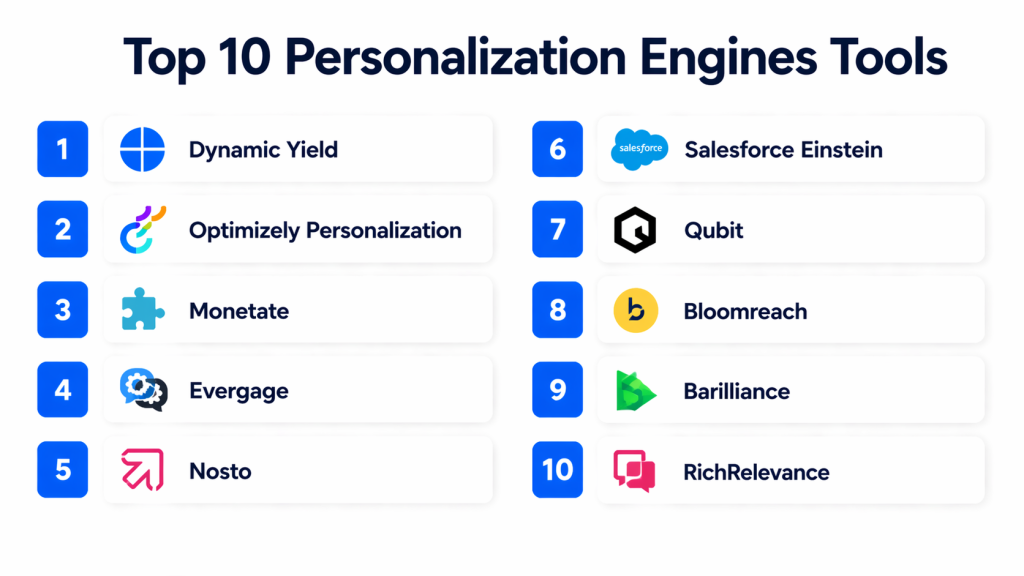
Top 10 Personalization Engines Tools
#1 — Dynamic Yield
Short description: A robust personalization platform for mid-market and enterprise businesses, delivering AI-powered product and content recommendations across web, mobile, and email.
Key Features
- Real-time behavioral targeting.
- Multivariate and A/B testing.
- Omnichannel personalization.
- Segmentation and audience management.
- AI-driven product recommendations.
- Analytics dashboards.
- SDKs and APIs for integration.
Pros
- Advanced AI recommendation engine.
- Supports complex omnichannel personalization.
- Detailed analytics and reporting.
Cons
- Enterprise pricing can be high.
- Requires setup and training for full feature utilization.
Platforms / Deployment
- Web, iOS, Android
- Cloud
Security & Compliance
- SSO/SAML, RBAC
- GDPR compliant
Integrations & Ecosystem
- CRM platforms: Salesforce, HubSpot, Marketo
- Analytics: Google Analytics, Segment
- SDKs for web and mobile
Support & Community
- Documentation, training, and enterprise-level support.
#2 — Optimizely Personalization
Short description: Provides AI-driven personalization integrated with experimentation and A/B testing for enterprise teams.
Key Features
- Predictive recommendations using AI.
- Multivariate and A/B testing of content.
- Real-time audience segmentation.
- Integration with analytics and marketing platforms.
- Centralized dashboard for content experimentation.
Pros
- Seamless integration with Optimizely experimentation tools.
- Supports dynamic, AI-driven personalization.
Cons
- Steeper learning curve for new users.
- Premium pricing.
Platforms / Deployment
- Web, iOS, Android
- Cloud
Security & Compliance
- SOC 2, ISO 27001
- SSO/SAML
Integrations & Ecosystem
- CRM and marketing automation integrations
- APIs for custom workflows
Support & Community
- Enterprise support, documentation, and user community.
#3 — Monetate
Short description: Focuses on real-time personalization for e-commerce and marketing teams to optimize product and content recommendations.
Key Features
- AI-driven product recommendations.
- Behavioral targeting and segmentation.
- Multichannel personalization.
- Experimentation support.
- Analytics dashboards for performance measurement.
Pros
- Strong e-commerce focus.
- Real-time recommendations.
Cons
- Less suitable for non-commerce content.
- Enterprise pricing.
Platforms / Deployment
- Web, iOS, Android
- Cloud
Security & Compliance
- Not publicly stated
Integrations & Ecosystem
- Analytics, CRM, and marketing platform integrations
Support & Community
- Documentation, training, and support tiers.
#4 — Evergage
Short description: A personalization platform providing AI-driven content and product recommendations across digital channels.
Key Features
- Predictive and real-time recommendations.
- Behavioral segmentation and targeting.
- Email, web, and mobile personalization.
- A/B testing capabilities.
- Analytics dashboards.
Pros
- Real-time personalization and targeting.
- Supports multiple channels and devices.
Cons
- Complexity may require dedicated support.
- Premium pricing structure.
Platforms / Deployment
- Web, iOS, Android
- Cloud
Security & Compliance
- GDPR compliance
- SSO/SAML support
Integrations & Ecosystem
- CRMs, email marketing, analytics platforms
Support & Community
- Documentation, training, and support tiers.
#5 — Nosto
Short description: Designed for e-commerce and retail, Nosto delivers AI-powered product recommendations and personalized shopping experiences.
Key Features
- Product recommendations via AI.
- Segmentation and targeting based on behavior.
- Multi-channel support for web, mobile, and email.
- Real-time analytics and dashboards.
- Experimentation and A/B testing.
Pros
- Strong retail focus with AI recommendations.
- Easy integration with e-commerce platforms.
Cons
- Limited non-retail personalization.
- Cost can scale with traffic.
Platforms / Deployment
- Web, iOS, Android
- Cloud
Security & Compliance
- Not publicly stated
Integrations & Ecosystem
- Shopify, Magento, analytics APIs
Support & Community
- Documentation, onboarding support, professional services.
#6 — Salesforce Einstein
Short description: AI-powered personalization integrated with the Salesforce ecosystem, delivering recommendations and insights across CRM and digital channels.
Key Features
- Predictive recommendations and AI insights.
- Omnichannel personalization.
- Integration with Salesforce CRM and marketing clouds.
- Behavioral segmentation and targeting.
- Analytics dashboards for conversion tracking.
Pros
- Seamless integration with Salesforce ecosystem.
- Enterprise-grade AI personalization.
Cons
- Requires Salesforce investment.
- Learning curve for non-Salesforce users.
Platforms / Deployment
- Web, iOS, Android
- Cloud
Security & Compliance
- SOC 2, ISO 27001
- SSO/SAML, GDPR
Integrations & Ecosystem
- Salesforce CRM, Marketing Cloud
- Analytics APIs
Support & Community
- Enterprise support, training, and Salesforce community.
#7 — Qubit
Short description: Personalization engine focused on retail and e-commerce customer journey optimization.
Key Features
- AI-driven recommendations.
- Behavior-based targeting and segmentation.
- Multichannel personalization: web and mobile.
- Experimentation and testing tools.
- Analytics dashboards.
Pros
- Optimized for e-commerce customer journeys.
- Supports multi-channel personalization.
Cons
- Enterprise pricing may be high for SMBs.
- Limited out-of-the-box integration beyond retail.
Platforms / Deployment
- Web, iOS
- Cloud
Security & Compliance
- Not publicly stated
Integrations & Ecosystem
- CRM, e-commerce platforms, analytics integration
Support & Community
- Documentation, onboarding support, training.
#8 — Bloomreach
Short description: Combines content and commerce personalization for large-scale digital experience management.
Key Features
- AI-powered product and content recommendations.
- Omnichannel personalization across web, mobile, and email.
- Behavioral targeting and segmentation.
- Experimentation and A/B testing.
- Real-time analytics dashboards.
Pros
- Comprehensive content + commerce personalization.
- Enterprise scalability.
Cons
- Complexity requires dedicated teams.
- Premium pricing.
Platforms / Deployment
- Web, iOS, Android
- Cloud
Security & Compliance
- SSO/SAML, RBAC
- Not publicly stated
Integrations & Ecosystem
- E-commerce platforms, analytics, CRM, SDKs
Support & Community
- Enterprise support and professional services.
#9 — Barilliance
Short description: Personalization platform for online retailers delivering real-time product recommendations and engagement tools.
Key Features
- Real-time product recommendations.
- Behavioral targeting and personalization.
- Email and web personalization.
- Analytics dashboards.
- Campaign testing and optimization.
Pros
- Strong focus on online retail.
- Easy deployment for e-commerce sites.
Cons
- Limited enterprise experimentation features.
- Less suitable for non-retail businesses.
Platforms / Deployment
- Web
- Cloud
Security & Compliance
- Not publicly stated
Integrations & Ecosystem
- E-commerce platforms, CRM, analytics tools
Support & Community
- Documentation, onboarding support.
#10 — RichRelevance
Short description: Enterprise personalization platform delivering AI-driven recommendations and targeted content for digital commerce.
Key Features
- AI-powered product and content recommendations.
- Multichannel personalization.
- Experimentation and A/B testing support.
- Analytics dashboards and reporting.
- Audience segmentation and targeting.
Pros
- Enterprise-grade personalization engine.
- Scalable across high-traffic websites and apps.
Cons
- Premium pricing.
- May require dedicated resources to manage campaigns.
Platforms / Deployment
- Web, iOS, Android
- Cloud
Security & Compliance
- SSO/SAML, RBAC
- Not publicly stated
Integrations & Ecosystem
- CRM, marketing automation, analytics SDKs
Support & Community
- Enterprise support, documentation, and professional services.
Comparison Table (Top 10)
| Tool Name | Best For | Platform(s) Supported | Deployment | Standout Feature | Public Rating |
|---|---|---|---|---|---|
| Dynamic Yield | Mid-market & enterprise | Web, iOS, Android | Cloud | AI recommendations, omnichannel | N/A |
| Optimizely Personalization | Enterprise | Web, iOS, Android | Cloud | Integrated experimentation + personalization | N/A |
| Monetate | E-commerce | Web, iOS, Android | Cloud | Real-time recommendations | N/A |
| Evergage | Marketing & product teams | Web, iOS, Android | Cloud | Behavioral segmentation | N/A |
| Nosto | Retail/e-commerce | Web, iOS, Android | Cloud | AI product recommendations | N/A |
| Salesforce Einstein | Enterprise CRM users | Web, iOS, Android | Cloud | AI-driven predictive personalization | N/A |
| Qubit | Retail & e-commerce | Web, iOS | Cloud | Customer journey optimization | N/A |
| Bloomreach | Enterprise | Web, iOS, Android | Cloud | Content + commerce personalization | N/A |
| Barilliance | Online retailers | Web | Cloud | Real-time product recommendations | N/A |
| RichRelevance | Enterprise | Web, iOS, Android | Cloud | AI recommendations & targeting | N/A |
Evaluation & Scoring of Personalization Engines
| Tool Name | Core (25%) | Ease (15%) | Integrations (15%) | Security (10%) | Performance (10%) | Support (10%) | Value (15%) | Weighted Total (0–10) |
|---|---|---|---|---|---|---|---|---|
| Dynamic Yield | 10 | 8 | 9 | 9 | 9 | 8 | 8 | 9.0 |
| Optimizely Personalization | 9 | 7 | 9 | 9 | 8 | 8 | 7 | 8.3 |
| Monetate | 8 | 7 | 8 | 7 | 8 | 7 | 8 | 7.8 |
| Evergage | 8 | 8 | 8 | 8 | 8 | 7 | 8 | 8.0 |
| Nosto | 8 | 8 | 7 | 7 | 8 | 7 | 8 | 7.8 |
| Salesforce Einstein | 9 | 7 | 9 | 9 | 8 | 8 | 7 | 8.3 |
| Qubit | 8 | 7 | 8 | 8 | 8 | 7 | 7 | 7.8 |
| Bloomreach | 9 | 7 | 8 | 8 | 9 | 7 | 7 | 8.0 |
| Barilliance | 7 | 8 | 7 | 7 | 7 | 7 | 8 | 7.4 |
| RichRelevance | 9 | 7 | 8 | 8 | 9 | 7 | 7 | 8.0 |
Weighted scores compare feature richness, integrations, usability, security, and value across tools.
Which Personalization Engines Tool Is Right for You?
Solo / Freelancer
- Barilliance or Nosto for lightweight personalization.
SMB
- Monetate or Evergage for accessible AI-driven recommendations.
Mid-Market
- Dynamic Yield or Bloomreach for AI-based omnichannel personalization.
Enterprise
- Optimizely Personalization, Salesforce Einstein, RichRelevance for enterprise AI and experimentation.
Budget vs Premium
- Budget: Barilliance, Nosto.
- Premium: Dynamic Yield, Optimizely, Salesforce Einstein.
Feature Depth vs Ease of Use
- Developers/marketers benefit from AI-powered insights with integrated analytics.
Integrations & Scalability
- Bloomreach and Salesforce Einstein excel in enterprise integrations with CRM, analytics, and e-commerce platforms.
Security & Compliance Needs
- GDPR-compliant platforms like Dynamic Yield, Optimizely, and Salesforce Einstein are suitable for regulated industries.
Frequently Asked Questions (FAQs)
1. What pricing models do personalization engines follow?
Subscription tiers vary based on traffic, users, and features, with enterprise plans offering analytics and AI recommendations.
2. Can personalization engines integrate with CRMs and email platforms?
Yes, common integrations include Salesforce, HubSpot, and Marketo.
3. Are AI recommendations standard?
Yes, most modern engines provide predictive and real-time AI recommendations.
4. Can personalization be applied to mobile apps?
Yes, iOS and Android SDKs are standard for delivering app personalization.
5. How fast are changes deployed?
Changes are often near real-time, enabling immediate updates to content and recommendations.
6. Do these tools comply with data privacy regulations?
Leading engines include GDPR and CCPA compliance features.
7. Can personalization engines conduct experiments?
Yes, multivariate testing and A/B experimentation are integrated in most platforms.
8. Is analytics included?
Yes, tools provide dashboards, reporting, and conversion tracking metrics.
9. Do they require technical teams?
Visual editors minimize developer dependency, but SDK integrations may require engineering support.
10. Can personalization engines scale globally?
Enterprise platforms support high traffic, multi-device, and multi-channel global personalization.
Conclusion
Personalization engines are essential for delivering tailored user experiences, driving engagement, and boosting conversions. Small teams can start with Barilliance or Nosto, while mid-market and enterprise teams benefit from Dynamic Yield, Optimizely Personalization, and Salesforce Einstein for AI-driven omnichannel personalization. Evaluate team size, traffic, and integrations, then pilot 2–3 tools to determine the best fit. Adopting the right personalization engine improves user satisfaction, accelerates experimentation, and maximizes revenue.

Find Trusted Cardiac Hospitals
Compare heart hospitals by city and services — all in one place.
Explore Hospitals
This explains how document conversion tools help keep file content accurate while switching between formats like PDF, Word, and images.