Introduction
Recommendation engines are software systems designed to suggest relevant content, products, or services to users based on data analysis. They leverage algorithms, user behavior, and contextual signals to deliver personalized experiences that drive engagement, conversions, and loyalty. In today’s digital landscape, organizations across e-commerce, streaming platforms, SaaS products, and online marketplaces rely heavily on these tools to remain competitive.
The relevance of recommendation engines in 2026+ is underscored by the rising expectations of personalization, AI-driven insights, and omnichannel experiences. Businesses are moving beyond basic collaborative filtering to more advanced techniques, such as deep learning-based predictions, natural language processing, and hybrid recommendation models.
Real-world use cases include:
- E-commerce platforms suggesting products based on browsing history.
- Streaming services recommending movies, shows, or music tailored to viewer preferences.
- News and content portals delivering personalized article feeds.
- SaaS dashboards suggesting features or workflows to optimize user productivity.
- Retail and in-store experiences integrating recommendation engines for digital kiosks and mobile apps.
Key evaluation criteria buyers should consider:
- Algorithm diversity and accuracy
- Real-time personalization capabilities
- AI and machine learning support
- Integration flexibility with existing tech stack
- Data security and privacy compliance
- Scalability and performance under load
- Ease of use and administrative experience
- Reporting and analytics
- Pricing model and total cost of ownership
- Customer support and community presence
Best for: Digital product teams, marketing teams, e-commerce operators, and mid-to-large enterprises looking to enhance personalization, engagement, and revenue.
Not ideal for: Small projects or companies without sufficient user data or without the need for advanced personalization; in such cases, simpler recommendation or manual curation may suffice.
Key Trends in Recommendation Engines
- Growing adoption of AI-powered hybrid algorithms combining collaborative, content-based, and knowledge-based approaches.
- Real-time recommendation delivery across web, mobile, email, and push notifications.
- Privacy-first personalization, aligning with GDPR, CCPA, and other compliance frameworks.
- Integration with data lakes, CDPs, and analytics platforms for unified customer insights.
- Low-code/no-code personalization interfaces to simplify implementation for marketing teams.
- Microservices and API-driven architectures for seamless embedding in existing platforms.
- Automated model retraining and optimization using ML pipelines.
- Cloud-native deployment and managed recommendation services for scalability.
- Focus on explainable recommendations for transparency and trust.
- Subscription and consumption-based pricing models replacing traditional license fees.
How We Selected These Tools (Methodology)
- Market adoption and mindshare across industries.
- Breadth and depth of core recommendation features.
- Reliability and performance under real-world loads.
- Security posture and privacy compliance capabilities.
- Ecosystem integrations and API flexibility.
- Support for various deployment models (cloud, hybrid, self-hosted).
- Customer fit across enterprise, SMB, and developer segments.
- Historical stability and update frequency.
- Analytics and reporting capabilities for actionable insights.
- Scalability for high-volume personalization scenarios.
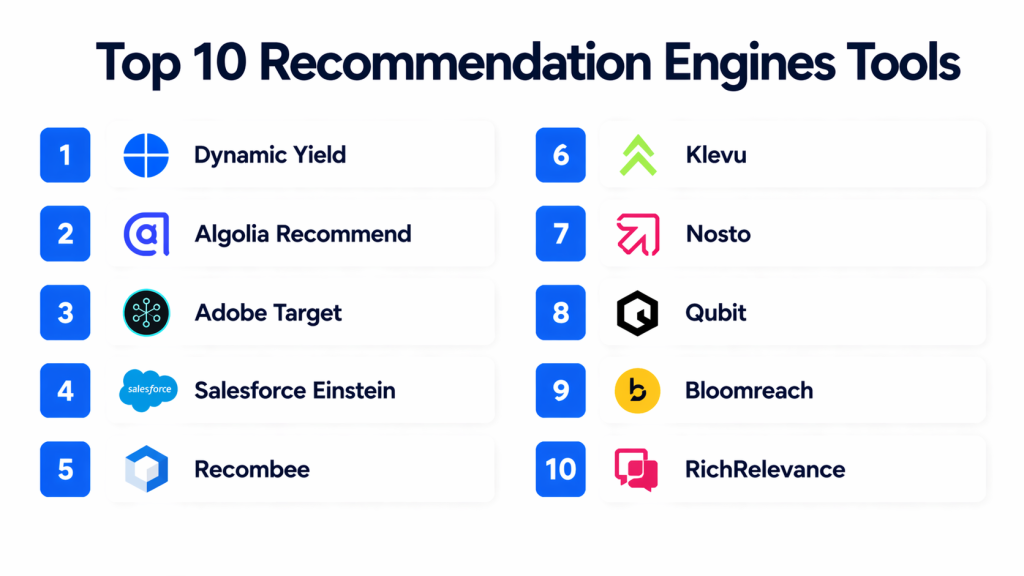
Top 10 Recommendation Engines Tools
#1 — Dynamic Yield
Short description (2–3 lines): A comprehensive personalization and recommendation platform for e-commerce and digital experiences. Ideal for retailers, travel, and media companies seeking omnichannel personalization.
Key Features
- AI-driven product and content recommendations
- A/B testing and personalization workflows
- Omnichannel delivery across web, email, mobile
- Behavioral targeting and segmentation
- Real-time analytics dashboards
- API-first architecture for integrations
- Multivariate testing support
Pros
- Strong AI personalization with multiple algorithm options
- Easy-to-use interface for marketers
- Omnichannel coverage ensures consistent experience
Cons
- Can be costly for smaller teams
- Learning curve for advanced AI feature utilization
- Heavy focus on enterprise clients
Platforms / Deployment
- Web, iOS, Android
- Cloud
Security & Compliance
- SSO/SAML, encryption, RBAC
- GDPR, SOC 2
Integrations & Ecosystem
Dynamic Yield integrates with major e-commerce platforms, analytics tools, and marketing automation systems.
- Shopify, Magento, Salesforce Commerce Cloud
- Google Analytics, Segment
- APIs for custom integration
Support & Community
- Enterprise-level support tiers
- Onboarding assistance available
- Active user community for best practices
#2 — Algolia Recommend
Short description (2–3 lines): AI-driven recommendation API for search and product discovery, built for developers seeking fast and scalable integration.
Key Features
- Real-time product recommendations
- Personalized search results
- Machine learning-based ranking
- API-first implementation
- A/B testing for recommendation performance
- Multi-language support
Pros
- Developer-friendly with robust APIs
- High-performance recommendation engine
- Flexible integration with existing platforms
Cons
- Limited visual personalization capabilities
- May require developer resources to maximize value
Platforms / Deployment
- Web, Linux, Windows
- Cloud
Security & Compliance
- API key-based authentication, encryption
- GDPR compliance
Integrations & Ecosystem
- APIs for custom web, mobile, and backend integrations
- Connectors for e-commerce platforms
- Compatible with analytics tools
Support & Community
- Documentation and developer guides available
- Community forum and support tickets
#3 — Adobe Target
Short description (2–3 lines): Enterprise personalization and recommendation engine integrated into Adobe Experience Cloud. Suited for large enterprises and marketing teams.
Key Features
- AI-driven product/content recommendations
- Automated personalization and targeting
- A/B and multivariate testing
- Behavior-based audience segmentation
- Real-time analytics dashboards
Pros
- Strong enterprise integration with Adobe stack
- Advanced personalization capabilities
- Extensive analytics and reporting
Cons
- Expensive and complex for SMBs
- Steep learning curve for beginners
Platforms / Deployment
- Web, iOS, Android
- Cloud
Security & Compliance
- SSO/SAML, encryption
- SOC 2, GDPR
Integrations & Ecosystem
- Adobe Experience Cloud apps
- Marketing automation and analytics tools
- APIs for custom implementation
Support & Community
- Dedicated enterprise support
- Extensive documentation and community forums
#4 — Salesforce Einstein
Short description (2–3 lines): AI-powered recommendation engine embedded in Salesforce CRM, ideal for sales, service, and marketing teams.
Key Features
- Personalized product and content suggestions
- Predictive analytics for customer engagement
- Integration with CRM workflows
- Automated recommendations via AI models
- Cross-channel deployment
- Real-time insights
Pros
- Seamless integration with Salesforce ecosystem
- Strong AI prediction capabilities
- Real-time actionable insights
Cons
- Best suited for Salesforce users only
- Limited customization outside Salesforce platform
Platforms / Deployment
- Web, iOS, Android
- Cloud
Security & Compliance
- SSO/SAML, encryption, RBAC
- GDPR, SOC 2
Integrations & Ecosystem
- Salesforce CRM modules
- Marketing automation tools
- API support for external applications
Support & Community
- Salesforce enterprise support tiers
- Active Trailblazer community
#5 — Recombee
Short description (2–3 lines): Cloud-based recommendation API offering real-time personalization for web, mobile, and e-commerce platforms. Suitable for startups and mid-sized businesses.
Key Features
- Real-time product and content recommendations
- Collaborative filtering and content-based algorithms
- API-first implementation
- Personalization for multiple channels
- A/B testing and analytics dashboards
- Flexible recommendation logic
Pros
- Scalable and affordable for SMBs
- Developer-friendly API
- Real-time personalization capabilities
Cons
- Limited built-in UI components
- Smaller ecosystem compared to enterprise competitors
Platforms / Deployment
- Web, iOS, Android
- Cloud
Security & Compliance
- API keys, encryption
- GDPR
Integrations & Ecosystem
- REST API for custom apps
- E-commerce platform integration
- Analytics connectors
Support & Community
- Documentation and developer guides
- Email support
#6 — Klevu
Short description (2–3 lines): AI-driven search and recommendation platform focused on e-commerce. Optimized for boosting conversions and product discovery.
Key Features
- AI-powered product recommendations
- Natural language search
- Personalized ranking and filters
- Analytics dashboard
- API for custom integrations
- Omnichannel deployment
Pros
- Optimized for e-commerce conversions
- Easy integration with popular platforms
- Strong natural language processing
Cons
- Primarily e-commerce-focused
- Limited enterprise-level features outside retail
Platforms / Deployment
- Web
- Cloud
Security & Compliance
- Not publicly stated
Integrations & Ecosystem
- Shopify, Magento, BigCommerce
- REST API for custom solutions
- Analytics integration
Support & Community
- Documentation and onboarding guides
- Email support
#7 — Nosto
Short description (2–3 lines): Personalization and recommendation platform tailored for online retail, focusing on AI-driven product suggestions.
Key Features
- AI-based product recommendations
- Automated personalization workflows
- Pop-ups, emails, and on-site banners
- Behavioral tracking and segmentation
- Reporting and analytics
Pros
- Strong retail focus
- Easy-to-use interface for marketers
- Multichannel personalization
Cons
- Limited non-retail applicability
- Enterprise features may be less comprehensive
Platforms / Deployment
- Web, iOS
- Cloud
Security & Compliance
- Not publicly stated
Integrations & Ecosystem
- E-commerce platforms (Shopify, Magento)
- Email marketing integrations
- APIs for custom development
Support & Community
- Email support and documentation
- Community forum
#8 — Qubit
Short description (2–3 lines): Personalization and recommendation platform for e-commerce and digital experience optimization, with AI and behavioral analytics.
Key Features
- AI-driven product and content recommendations
- Behavioral targeting
- Experimentation and A/B testing
- Data-driven personalization
- Analytics and insights
Pros
- Deep analytics and personalization
- Enterprise-grade features
- Real-time recommendation updates
Cons
- Expensive for smaller businesses
- Limited outside retail
Platforms / Deployment
- Web
- Cloud
Security & Compliance
- Not publicly stated
Integrations & Ecosystem
- Major e-commerce platforms
- REST APIs for custom integration
Support & Community
- Enterprise support
- Documentation
#9 — Bloomreach
Short description (2–3 lines): Commerce experience cloud offering AI-based recommendations, personalization, and search optimization for retailers and brands.
Key Features
- AI-powered product recommendations
- Search and merchandising optimization
- Behavioral analytics
- Content personalization
- Omnichannel deployment
Pros
- Combines search and recommendation
- Strong for enterprise retail brands
- Analytics-driven insights
Cons
- High cost for smaller teams
- Complexity for non-technical users
Platforms / Deployment
- Web
- Cloud
Security & Compliance
- Not publicly stated
Integrations & Ecosystem
- E-commerce platforms
- Marketing automation
- APIs for custom solutions
Support & Community
- Documentation, enterprise support tiers
- Community forums
#10 — RichRelevance
Short description (2–3 lines): Enterprise personalization and recommendation engine for retail and commerce, focused on conversion optimization.
Key Features
- Product and content recommendations
- Personalized emails and on-site suggestions
- AI-driven analytics and insights
- A/B and multivariate testing
- Behavioral targeting
Pros
- Strong enterprise retail solution
- Flexible recommendation algorithms
- Omnichannel personalization
Cons
- Costly for smaller businesses
- Steeper learning curve
Platforms / Deployment
- Web, iOS, Android
- Cloud
Security & Compliance
- Not publicly stated
Integrations & Ecosystem
- E-commerce platforms
- CRM integrations
- API support for custom solutions
Support & Community
- Enterprise-level support
- Documentation and resources
Comparison Table (Top 10)
| Tool Name | Best For | Platform(s) Supported | Deployment | Standout Feature | Public Rating |
|---|---|---|---|---|---|
| Dynamic Yield | Enterprise retailers | Web, iOS, Android | Cloud | Omnichannel personalization | N/A |
| Algolia Recommend | Developer-first apps | Web, Linux, Windows | Cloud | Real-time API recommendations | N/A |
| Adobe Target | Enterprise marketing teams | Web, iOS, Android | Cloud | AI-driven targeting | N/A |
| Salesforce Einstein | CRM-integrated AI | Web, iOS, Android | Cloud | Predictive recommendations | N/A |
| Recombee | SMBs and startups | Web, iOS, Android | Cloud | Real-time API | N/A |
| Klevu | E-commerce search | Web | Cloud | Natural language search | N/A |
| Nosto | Online retail | Web, iOS | Cloud | Marketing personalization | N/A |
| Qubit | Enterprise e-commerce | Web | Cloud | Behavioral analytics | N/A |
| Bloomreach | Enterprise retail | Web | Cloud | Search + recommendation synergy | N/A |
| RichRelevance | Retail enterprises | Web, iOS, Android | Cloud | AI-driven omnichannel personalization | N/A |
Evaluation & Scoring of Recommendation Engines
| Tool Name | Core (25%) | Ease (15%) | Integrations (15%) | Security (10%) | Performance (10%) | Support (10%) | Value (15%) | Weighted Total (0–10) |
|---|---|---|---|---|---|---|---|---|
| Dynamic Yield | 9 | 8 | 8 | 9 | 9 | 8 | 7 | 8.5 |
| Algolia Recommend | 8 | 8 | 9 | 8 | 9 | 7 | 8 | 8.3 |
| Adobe Target | 9 | 7 | 8 | 9 | 9 | 8 | 6 | 8.3 |
| Salesforce Einstein | 8 | 8 | 7 | 9 | 8 | 8 | 7 | 8.0 |
| Recombee | 7 | 8 | 8 | 8 | 8 | 7 | 8 | 7.9 |
| Klevu | 7 | 8 | 7 | 7 | 8 | 7 | 8 | 7.6 |
| Nosto | 7 | 8 | 7 | 7 | 7 | 7 | 7 | 7.3 |
| Qubit | 8 | 7 | 7 | 7 | 8 | 7 | 6 | 7.3 |
| Bloomreach | 8 | 7 | 7 | 7 | 8 | 7 | 6 | 7.3 |
| RichRelevance | 8 | 7 | 7 | 7 | 8 | 7 | 6 | 7.3 |
Interpretation: Scores are comparative across these top 10 tools. Weighted totals highlight relative strengths in features, integration flexibility, and ease of use. High-scoring tools generally balance AI capability, deployment flexibility, and usability. Organizations should select based on specific workflow, user base, and data infrastructure requirements.
Which Recommendation Engines Tool Is Right for You?
Solo / Freelancer
- Recombee or Algolia Recommend provide lightweight API-based solutions ideal for individual developers and small-scale projects.
SMB
- Nosto or Klevu offer easy integration with existing e-commerce platforms, affordable pricing, and pre-built personalization workflows.
Mid-Market
- Dynamic Yield or Qubit deliver strong omnichannel personalization with AI-driven insights and real-time testing capabilities.
Enterprise
- Adobe Target, Salesforce Einstein, Bloomreach, or RichRelevance are suitable for large enterprises needing advanced AI, compliance support, and integration with large tech stacks.
Budget vs Premium
- Open-source or API-first tools like Recombee are cost-effective. Premium platforms offer advanced AI, enterprise support, and omnichannel coverage.
Feature Depth vs Ease of Use
- Enterprise tools deliver depth but require training. SMB-focused tools provide simpler interfaces with adequate personalization capabilities.
Integrations & Scalability
- Consider API flexibility, prebuilt connectors, and the ability to scale as user base and data volume grows.
Security & Compliance Needs
- Evaluate SOC 2, GDPR compliance, encryption, and RBAC support, particularly if handling sensitive user data.
Frequently Asked Questions (FAQs)
1. What pricing models do recommendation engines use?
Most offer subscription-based or consumption-based pricing. Enterprise solutions often have tiered plans based on traffic or personalization events.
2. How long does implementation typically take?
Depends on complexity and platform. Simple API integrations can be completed in weeks, while full omnichannel deployments may take several months.
3. Can these tools handle high traffic volumes?
Yes, most cloud-based engines like Dynamic Yield and Algolia Recommend are designed for real-time, high-traffic scenarios.
4. What data is needed for personalization?
User behavior data, transaction history, content metadata, and contextual signals (e.g., location, device) are commonly used.
5. How secure are these platforms?
Enterprise platforms offer encryption, SSO, RBAC, and GDPR/SOC 2 compliance. SMB tools may provide basic security features.
6. Are AI capabilities necessary for small businesses?
Not always. Basic rule-based or collaborative filtering may suffice for smaller audiences with less data.
7. Can I switch tools easily?
Most offer export of user/item datasets and APIs, but switching can require redevelopment of integration points and retraining models.
8. Do these engines integrate with marketing platforms?
Yes, many integrate with e-commerce, CRM, analytics, and marketing automation tools for consistent personalization.
9. Are real-time recommendations supported?
Top-tier tools support real-time recommendations with updates based on user behavior within milliseconds.
10. What common mistakes should I avoid?
Avoid neglecting data quality, failing to test recommendations, overcomplicating personalization rules, and underestimating integration complexity.
Conclusion
Recommendation engines are critical for businesses aiming to deliver personalized, engaging, and conversion-optimized digital experiences. While enterprise platforms like Adobe Target, Salesforce Einstein, and Dynamic Yield provide depth and omnichannel capabilities, SMBs and developers can achieve strong results with tools like Recombee, Algolia Recommend, or Nosto. Selecting the right tool requires balancing features, ease of integration, scalability, security compliance,

Find Trusted Cardiac Hospitals
Compare heart hospitals by city and services — all in one place.
Explore Hospitals
This explains how recommendation engines suggest relevant content by analyzing user behavior and preferences.