Introduction
Learning Management Systems (LMS) are platforms designed to deliver, track, and manage educational and training content for organizations. They centralize learning activities, assessments, certifications, and reporting, creating a structured environment for employee development and skill growth.
Organizations today need LMS platforms to support remote and hybrid learning, compliance training, onboarding, and professional development initiatives. These tools enable HR and learning teams to track learner progress, measure engagement, and align training programs with business objectives. Real-world use cases include employee onboarding, regulatory compliance training, skills development, leadership programs, and e-learning course delivery.
When evaluating LMS platforms, buyers should consider:
- Course creation and management capabilities
- Assessments, quizzes, and certifications
- Reporting and analytics dashboards
- Integration with HRIS, collaboration, and productivity tools
- Mobile accessibility for learners
- Gamification and engagement features
- Scalability for small to large teams
- Security and compliance measures
- Customization and branding options
- Pricing and total value
Best for: HR and L&D teams, training managers, and organizational leaders in SMBs to enterprise organizations seeking structured, measurable, and scalable learning programs.
Not ideal for: Very small teams or organizations with informal training that does not require centralized tracking or analytics.
Key Trends in Learning Management Systems (LMS)
- AI-powered adaptive learning recommendations
- Microlearning and mobile-first content delivery
- Integration with HRIS, talent management, and collaboration tools
- Gamification for learner engagement
- Data-driven analytics for skill gaps and completion tracking
- Continuous learning and performance-linked development
- Compliance tracking and certification management
- Cloud-based deployment for accessibility and scalability
- Customizable course templates and branding
- Subscription and SaaS pricing models for flexibility
How We Selected These Tools (Methodology)
- Evaluated market adoption and mindshare across SMBs and enterprises
- Assessed feature completeness including course management, assessments, and analytics
- Analyzed reliability and performance through case studies and customer reviews
- Examined security and compliance posture including encryption, SSO, and audit logs
- Reviewed integration capabilities with HRIS, talent management, and productivity tools
- Considered usability, user interface, and onboarding experience
- Evaluated scalability for global and distributed teams
- Reviewed vendor support, documentation, and community presence
- Assessed mobile access and multi-device support
- Evaluated pricing transparency and total value
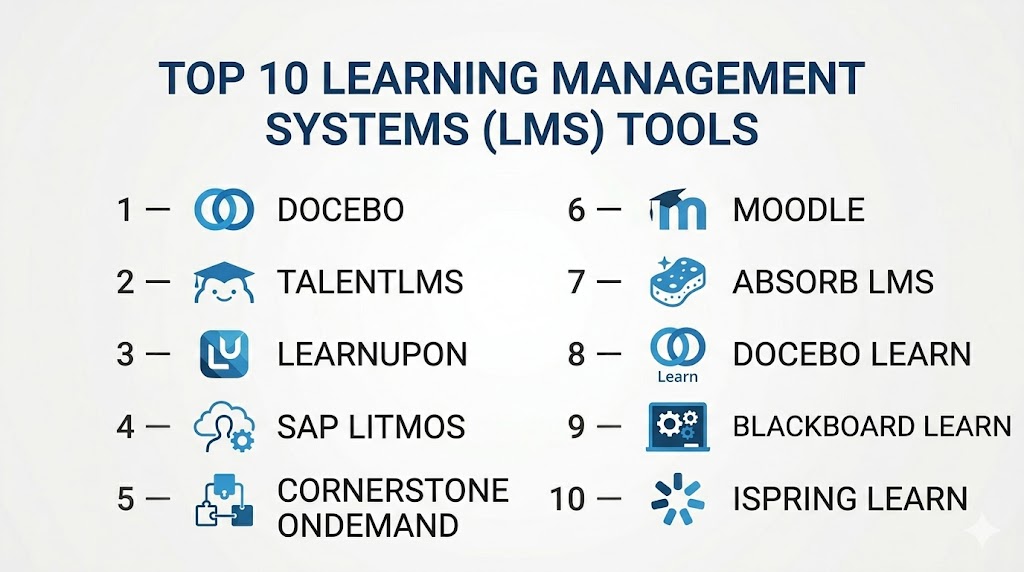
Top 10 Learning Management Systems (LMS) Tools
#1 — Docebo
Short description: Docebo offers a scalable LMS platform for enterprises and SMBs, providing AI-driven learning, compliance management, and social learning capabilities.
Key Features
- AI-powered content recommendations
- Course creation and learning paths
- Gamification and social learning
- Analytics dashboards and reporting
- Compliance tracking and certifications
- Mobile app access
- Integration with HRIS and productivity tools
Pros
- Highly scalable for large organizations
- Advanced analytics and AI-driven learning
Cons
- Premium pricing
- Learning curve for full feature utilization
Platforms / Deployment
- Web / iOS / Android
- Cloud
Security & Compliance
- SSO, encryption, audit logs
- GDPR, SOC 2
Integrations & Ecosystem
- HRIS, collaboration platforms, content libraries
- API access for custom workflows
- Gamification and analytics plugins
Support & Community
- Enterprise support tiers
- Knowledge base and webinars
- Active user community
#2 — TalentLMS
Short description: TalentLMS is an intuitive LMS designed for SMBs, offering easy course creation, tracking, and reporting features with strong mobile support.
Key Features
- Course creation and management
- Assessments and quizzes
- Gamification and badges
- Analytics dashboards
- Mobile app and offline learning
- Integration with HRIS and productivity tools
Pros
- Affordable and easy to adopt
- Mobile-friendly and intuitive interface
Cons
- Limited enterprise features
- Basic analytics for large-scale reporting
Platforms / Deployment
- Web / iOS / Android
- Cloud
Security & Compliance
- SSO, encryption
- GDPR
Integrations & Ecosystem
- HRIS, collaboration tools
- API for custom integrations
- Analytics dashboards
Support & Community
- Email and chat support
- Knowledge base
- Community resources
#3 — LearnUpon
Short description: LearnUpon provides a robust LMS for employee training, compliance management, and customer education, suitable for mid-market and enterprise organizations.
Key Features
- Multi-tenant course management
- Assessments and certifications
- Reporting and analytics
- Integration with HRIS and CRM
- Gamification and engagement features
- Mobile learning support
Pros
- Comprehensive compliance management
- Scalable for multiple departments or clients
Cons
- Higher pricing for SMBs
- Setup requires onboarding
Platforms / Deployment
- Web / iOS / Android
- Cloud
Security & Compliance
- SSO, encryption, audit logs
- GDPR, SOC 2
Integrations & Ecosystem
- HRIS, CRM, content libraries
- API for custom workflows
- Analytics dashboards
Support & Community
- Enterprise support tiers
- Knowledge base and webinars
- Community forums
#4 — SAP Litmos
Short description: SAP Litmos provides a cloud-based LMS with course authoring, compliance tracking, and analytics for organizations of all sizes.
Key Features
- Course creation and e-learning management
- Assessments, certifications, and compliance tracking
- Analytics and reporting dashboards
- Mobile learning and offline access
- Integration with HRIS, Salesforce, and collaboration tools
Pros
- Enterprise-grade features and scalability
- Strong mobile support
Cons
- Can be complex for SMB adoption
- Premium pricing
Platforms / Deployment
- Web / iOS / Android
- Cloud
Security & Compliance
- SSO, encryption, audit logs
- SOC 2, GDPR
Integrations & Ecosystem
- HRIS, Salesforce, productivity tools
- API access
- Analytics and reporting plugins
Support & Community
- Tiered support options
- Knowledge base and webinars
- Community forums
#5 — Cornerstone OnDemand
Short description: Cornerstone OnDemand offers a comprehensive LMS with learning, performance, and compliance management for enterprise organizations.
Key Features
- Course management and certifications
- Compliance and regulatory tracking
- Reporting and analytics
- Social and collaborative learning
- Mobile access and gamification
- Integration with HRIS and productivity platforms
Pros
- Highly scalable for large enterprises
- Advanced analytics and compliance management
Cons
- Steeper learning curve
- Expensive for smaller organizations
Platforms / Deployment
- Web / iOS / Android
- Cloud
Security & Compliance
- SSO, MFA, encryption, audit logs
- SOC 2, ISO 27001, GDPR
Integrations & Ecosystem
- HRIS, content libraries, collaboration tools
- API for custom workflows
- Gamification and reporting dashboards
Support & Community
- Enterprise support tiers
- Knowledge base, webinars, and tutorials
- Community forums
#6 — Moodle
Short description: Moodle is an open-source LMS widely used for education and corporate training, offering flexibility, customization, and a strong global community.
Key Features
- Course creation and management
- Assessments and quizzes
- Mobile learning support
- Gamification and engagement tools
- Customizable workflows and plugins
- Reporting and analytics
Pros
- Open-source and highly customizable
- Strong global community support
Cons
- Requires technical setup and maintenance
- Advanced features need plugins and customization
Platforms / Deployment
- Web / iOS / Android
- Cloud / Self-hosted
Security & Compliance
- SSO, encryption
- Varies / N/A
Integrations & Ecosystem
- HRIS, content libraries, productivity apps
- Plugin ecosystem
- API access
Support & Community
- Community support
- Documentation and forums
- Paid support options
#7 — Absorb LMS
Short description: Absorb LMS provides a user-friendly platform with learning, compliance, and development tools for mid-market and enterprise companies.
Key Features
- Course and content management
- Assessments and certification
- Reporting and analytics
- Mobile and blended learning support
- Gamification and engagement
- Integration with HRIS and productivity tools
Pros
- Easy adoption and intuitive interface
- Strong analytics for learning outcomes
Cons
- Advanced customization may require support
- Premium pricing
Platforms / Deployment
- Web / iOS / Android
- Cloud
Security & Compliance
- SSO, encryption, audit logs
- GDPR, SOC 2
Integrations & Ecosystem
- HRIS, content libraries, collaboration tools
- API access
- Analytics dashboards
Support & Community
- Customer support tiers
- Knowledge base, webinars
- Community forums
#8 — Docebo Learn
Short description: Docebo Learn provides AI-powered learning paths, mobile-friendly courses, and engagement tools to improve organizational learning.
Key Features
- AI-driven learning recommendations
- Course management and learning paths
- Gamification and social learning
- Analytics and reporting dashboards
- Mobile learning support
- Compliance and certification tracking
Pros
- AI-powered personalized learning
- Scalable for global organizations
Cons
- Costly for SMBs
- Learning curve for advanced features
Platforms / Deployment
- Web / iOS / Android
- Cloud
Security & Compliance
- SSO, MFA, encryption
- SOC 2, GDPR
Integrations & Ecosystem
- HRIS, collaboration tools, content libraries
- API access
- Analytics dashboards
Support & Community
- Tiered support
- Knowledge base, webinars
- Community forums
#9 — Blackboard Learn
Short description: Blackboard Learn is a widely-used LMS for education and corporate training, offering flexible course management, mobile learning, and analytics.
Key Features
- Course creation and content management
- Assessments and quizzes
- Reporting and analytics dashboards
- Mobile access and offline learning
- Integration with HRIS and collaboration tools
Pros
- Flexible and widely adopted
- Strong support for blended learning
Cons
- Can be complex for new users
- Less modern UI compared to newer platforms
Platforms / Deployment
- Web / iOS / Android
- Cloud
Security & Compliance
- SSO, encryption
- GDPR
Integrations & Ecosystem
- HRIS, content libraries, productivity tools
- API access
- Analytics dashboards
Support & Community
- Customer support
- Knowledge base
- Community forums
#10 — iSpring Learn
Short description: iSpring Learn is an easy-to-use LMS for SMBs and mid-market organizations, supporting rapid course creation, tracking, and mobile learning.
Key Features
- Course and content management
- Assessments and quizzes
- Progress tracking and reporting
- Mobile and offline learning support
- Integration with HRIS and collaboration tools
Pros
- Intuitive and fast deployment
- Affordable for SMBs
Cons
- Limited advanced analytics
- Enterprise scalability is restricted
Platforms / Deployment
- Web / iOS / Android
- Cloud
Security & Compliance
- SSO, encryption
- GDPR
Integrations & Ecosystem
- HRIS, productivity tools, content libraries
- API access
- Reporting dashboards
Support & Community
- Customer support
- Knowledge base
- Community resources
Comparison Table (Top 10)
| Tool Name | Best For | Platform(s) Supported | Deployment | Standout Feature | Public Rating |
|---|---|---|---|---|---|
| Docebo | SMB / Enterprise | Web / iOS / Android | Cloud | AI-powered learning paths | N/A |
| TalentLMS | SMB | Web / iOS / Android | Cloud | User-friendly and intuitive | N/A |
| LearnUpon | Mid-market / Enterprise | Web / iOS / Android | Cloud | Multi-tenant course management | N/A |
| SAP Litmos | SMB / Enterprise | Web / iOS / Android | Cloud | Compliance training | N/A |
| Cornerstone OnDemand | Enterprise | Web / iOS / Android | Cloud | Learning + performance integration | N/A |
| Moodle | SMB / Mid-market | Web / iOS / Android | Cloud / Self-hosted | Open-source and customizable | N/A |
| Absorb LMS | Mid-market / Enterprise | Web / iOS / Android | Cloud | Blended learning support | N/A |
| Docebo Learn | Enterprise | Web / iOS / Android | Cloud | AI-driven personalization | N/A |
| Blackboard Learn | Education / Corporate | Web / iOS / Android | Cloud | Flexible course management | N/A |
| iSpring Learn | SMB / Mid-market | Web / iOS / Android | Cloud | Rapid course creation | N/A |
Evaluation & Scoring of Learning Management Systems (LMS)
| Tool Name | Core (25%) | Ease (15%) | Integrations (15%) | Security (10%) | Performance (10%) | Support (10%) | Value (15%) | Weighted Total (0–10) |
|---|---|---|---|---|---|---|---|---|
| Docebo | 9 | 8 | 8 | 8 | 8 | 8 | 7 | 8.1 |
| TalentLMS | 8 | 9 | 7 | 8 | 7 | 8 | 8 | 7.9 |
| LearnUpon | 8 | 8 | 8 | 8 | 8 | 8 | 7 | 8.0 |
| SAP Litmos | 9 | 7 | 8 | 9 | 8 | 8 | 7 | 8.2 |
| Cornerstone OnDemand | 9 | 7 | 8 | 9 | 8 | 8 | 7 | 8.2 |
| Moodle | 8 | 7 | 7 | 8 | 7 | 7 | 7 | 7.4 |
| Absorb LMS | 8 | 8 | 8 | 8 | 7 | 7 | 7 | 7.7 |
| Docebo Learn | 9 | 7 | 8 | 9 | 8 | 8 | 7 | 8.2 |
| Blackboard Learn | 8 | 7 | 7 | 8 | 7 | 7 | 7 | 7.4 |
| iSpring Learn | 7 | 8 | 7 | 8 | 7 | 7 | 7 | 7.3 |
Interpretation: Weighted totals provide a comparative assessment of LMS capabilities, usability, integration, security, support, and overall value. Higher scores indicate a well-rounded platform suitable for organizational learning initiatives.
Which Learning Management Systems (LMS) Tool Is Right for You?
Solo / Freelancer
TalentLMS, iSpring Learn, and Moodle are affordable and easy to adopt for individual trainers or small teams.
SMB
Docebo, Absorb LMS, and LearnUpon provide scalable solutions for small and mid-sized organizations needing structured training and reporting.
Mid-Market
SAP Litmos, Docebo Learn, and Absorb LMS offer enterprise-grade features, analytics, and mobile learning capabilities.
Enterprise
Cornerstone OnDemand, Docebo, and LearnUpon provide advanced compliance management, global scalability, and AI-driven insights.
Budget vs Premium
SMBs can use TalentLMS or iSpring Learn, while enterprises may invest in Cornerstone OnDemand or Docebo for comprehensive learning and analytics.
Feature Depth vs Ease of Use
Enterprise teams may accept complex systems for advanced reporting, while SMBs prioritize intuitive, easy-to-adopt platforms.
Integrations & Scalability
Prioritize LMS platforms that integrate with HRIS, productivity, and collaboration tools while scaling to support large, distributed teams.
Security & Compliance Needs
Ensure encryption, SSO/MFA, audit logs, SOC 2, and GDPR compliance for safe handling of employee and learner data.
Frequently Asked Questions (FAQs)
1. What pricing models do LMS platforms use?
Most offer subscription-based per-user or per-course pricing, with enterprise licensing for larger organizations.
2. How long does implementation take?
SMBs can deploy in days or weeks; enterprise deployment may take several months due to integration and customization.
3. Can LMS platforms support hybrid learning?
Yes, they support remote, on-site, and blended learning with mobile access and offline content.
4. Are LMS platforms mobile-friendly?
Yes, all platforms provide responsive web and mobile app access for learners and administrators.
5. What common mistakes occur during adoption?
Poor content planning, inadequate training for admins, and ignoring integrations are frequent pitfalls.
6. How secure are LMS platforms?
Top LMS platforms use encryption, SSO/MFA, audit logs, and comply with GDPR and SOC 2 standards.
7. Can LMS platforms handle compliance training?
Yes, most include compliance management, certification tracking, and reporting tools.
8. What integrations are essential?
HRIS, talent management, collaboration, and content libraries are key for seamless workflows.
9. Are there open-source LMS alternatives?
Yes, platforms like Moodle are open-source but require technical setup and maintenance.
10. How do I measure ROI?
Track course completion, employee skill improvements, compliance adherence, and engagement metrics.
Conclusion
Learning Management Systems are essential for organizations seeking to deliver effective, measurable training and development programs. SMBs benefit from TalentLMS, iSpring Learn, and Moodle for affordability and ease of adoption, while mid-market and enterprise organizations gain advanced analytics, mobile learning, and compliance features through Docebo, Cornerstone OnDemand, and SAP Litmos. Selecting the right LMS requires evaluating integrations, usability, scalability, security, and overall value. Shortlist platforms, run pilot programs, and implement structured workflows to ensure successful organizational learning outcomes.

Find Trusted Cardiac Hospitals
Compare heart hospitals by city and services — all in one place.
Explore Hospitals
An LMS can show that a course was completed, but completion alone does not always mean the learner understood it. Short knowledge checks or follow-up tasks can help teams see whether people are actually applying what they learned. This can give a much better picture of training results.