Introduction
Capacity Planning Tools are specialized platforms that help organizations forecast, allocate, and optimize IT and operational resources to meet current and future demand. They provide analytics, predictive modeling, and reporting to ensure that infrastructure, applications, and services have sufficient capacity to handle workloads efficiently while minimizing over-provisioning. In essence, these tools help organizations balance performance, cost, and risk by anticipating future resource needs.
In with hybrid cloud environments, microservices, and high-volume digital operations, capacity planning is critical for ensuring business continuity and operational efficiency. Real-world use cases include predicting server and storage needs for SaaS applications, scaling cloud infrastructure automatically, modeling network traffic and application performance, aligning IT capacity with seasonal demand, and forecasting resource requirements for large-scale software deployments. Buyers should evaluate accuracy, AI-driven predictions, integration capabilities, reporting, scalability, ease of use, cost efficiency, and security.
Best for: IT operations, DevOps teams, cloud architects, enterprise IT organizations, and digital service providers.
Not ideal for: Small organizations with minimal infrastructure complexity or static workloads where manual monitoring suffices.
Evaluation criteria include:
- Forecasting accuracy and AI-assisted predictions
- Integration with monitoring, cloud, and ITSM systems
- Multi-cloud and hybrid infrastructure support
- Scalability for large enterprise workloads
- Real-time dashboards and analytics
- Automation of resource allocation and scaling
- Reporting and visualization capabilities
- Security and compliance (SSO, MFA, SOC 2, ISO)
- Ease of use and deployment flexibility
- Pricing and value for the organization
Key Trends in Capacity Planning Tools
- AI-driven predictive capacity modeling
- Integration with observability and ITSM platforms
- Multi-cloud and hybrid resource management
- Automated scaling and resource optimization
- Real-time performance monitoring and analytics
- Low-code workflow automation for capacity adjustments
- Proactive cost management for cloud infrastructure
- Predictive maintenance and resource health alerts
- Subscription and usage-based pricing models
- Compliance-ready reporting and audit trails
How We Selected These Tools (Methodology)
- Assessed market adoption and mindshare
- Evaluated feature completeness, including predictive analytics and automation
- Reviewed performance and reliability under enterprise-scale workloads
- Examined security posture and compliance features
- Analyzed integration ecosystem with monitoring, cloud, and ITSM platforms
- Considered scalability for hybrid and multi-cloud environments
- Evaluated ease of use and deployment flexibility
- Assessed analytics, dashboards, and reporting
- Reviewed vendor support, documentation, and community strength
- Balanced cost versus value for SMBs and enterprise users
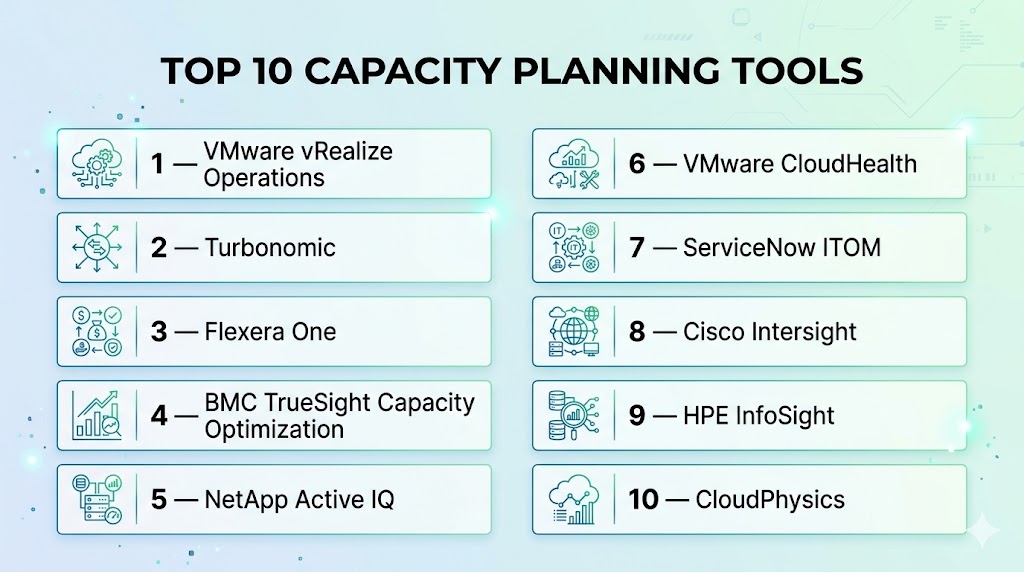
Top 10 Capacity Planning Tools
#1 — VMware vRealize Operations
Short description : VMware vRealize Operations provides AI-driven capacity management for virtualized and cloud environments, helping IT teams forecast and optimize resources.
Key Features
- Predictive analytics and AI-assisted forecasts
- Resource optimization recommendations
- Multi-cloud and hybrid support
- Integration with VMware and third-party monitoring
- Custom dashboards and reporting
- Automated scaling suggestions
Pros
- Deep integration with VMware ecosystem
- Accurate predictive analytics
- Enterprise-grade scalability
Cons
- Steep learning curve
- High cost for small deployments
- Limited support for non-VMware environments
Platforms / Deployment
- Web
- Cloud / Hybrid
Security & Compliance
- SOC 2, ISO 27001
- Encryption, SSO, MFA
Integrations & Ecosystem
- VMware vSphere, NSX, vSAN
- Cloud platforms: AWS, Azure
- APIs for automation
Support & Community
Enterprise support, extensive documentation, and active community forums.
#2 — Turbonomic
Short description : Turbonomic automates capacity management and resource allocation across on-premises and cloud environments using AI-driven policies.
Key Features
- AI-based workload placement
- Predictive capacity management
- Cost optimization recommendations
- Multi-cloud support
- Automated remediation of resource constraints
- Custom reporting
Pros
- Reduces operational overhead
- Optimizes resource utilization and cost
- Supports hybrid IT environments
Cons
- Enterprise pricing
- Learning curve for advanced automation
- Cloud dependency for some features
Platforms / Deployment
- Web
- Cloud / Hybrid
Security & Compliance
- SOC 2
- Encryption, SSO
Integrations & Ecosystem
- VMware, AWS, Azure, Google Cloud
- Monitoring: Datadog, New Relic
- APIs for custom automation
Support & Community
Enterprise-grade support, documentation, and professional services.
#3 — Flexera One
Short description : Flexera One provides capacity planning, cloud cost management, and IT asset optimization, enabling organizations to manage resources efficiently.
Key Features
- Predictive capacity and cost analytics
- Multi-cloud management
- Resource optimization recommendations
- Integration with ITSM and monitoring platforms
- Real-time dashboards
- Automated alerts for capacity thresholds
Pros
- Strong multi-cloud support
- Comprehensive cost and capacity insights
- Scalable for enterprise environments
Cons
- Complex setup
- Enterprise pricing
- Requires technical expertise
Platforms / Deployment
- Web
- Cloud / Hybrid
Security & Compliance
- SOC 2, ISO 27001
- Encryption, SSO
Integrations & Ecosystem
- AWS, Azure, Google Cloud
- ITSM: ServiceNow, Jira
- APIs for automated workflows
Support & Community
Enterprise support, documentation, and online knowledge base.
#4 — BMC TrueSight Capacity Optimization
Short description : BMC TrueSight provides predictive capacity planning, performance monitoring, and optimization for hybrid IT environments.
Key Features
- Predictive analytics for workloads
- Resource optimization recommendations
- Hybrid cloud support
- Integration with monitoring and ITSM tools
- Automated reporting
- Threshold-based alerts
Pros
- Enterprise-ready and scalable
- Comprehensive hybrid IT support
- Predictive insights reduce downtime
Cons
- High cost for SMBs
- Complex implementation
- Learning curve for advanced analytics
Platforms / Deployment
- Web
- Cloud / Hybrid
Security & Compliance
- SOC 2, ISO 27001
- Encryption, SSO
Integrations & Ecosystem
- Monitoring: AppDynamics, Dynatrace
- ITSM: ServiceNow
- APIs for automation
Support & Community
Enterprise support and documentation.
#5 — NetApp Active IQ
Short description : NetApp Active IQ provides AI-driven capacity planning and predictive analytics for storage and hybrid IT infrastructures.
Key Features
- Predictive capacity analysis
- Storage optimization recommendations
- Multi-cloud integration
- Anomaly detection and alerting
- Real-time dashboards
- Automated reporting
Pros
- Strong storage-centric optimization
- AI-assisted predictions
- Enterprise scalability
Cons
- Focused on NetApp environments
- Cloud dependency
- High pricing
Platforms / Deployment
- Web
- Cloud / Hybrid
Security & Compliance
- SOC 2, ISO 27001
- Encryption, SSO
Integrations & Ecosystem
- NetApp storage products
- Cloud: AWS, Azure, Google Cloud
- APIs for custom analytics
Support & Community
Enterprise support, documentation, and professional services.
#6 — VMware CloudHealth
Short description : CloudHealth by VMware enables cloud cost management, capacity planning, and operational optimization for hybrid and multi-cloud environments.
Key Features
- Multi-cloud visibility and analytics
- Capacity planning and forecasting
- Cost optimization
- Automated recommendations
- Integration with ITSM and monitoring platforms
- Real-time dashboards
Pros
- Strong multi-cloud support
- Combines cost and capacity insights
- Scalable for enterprise environments
Cons
- Enterprise pricing
- Complex onboarding
- Limited on-premises resource analysis
Platforms / Deployment
- Web
- Cloud / Hybrid
Security & Compliance
- SOC 2, ISO 27001
- Encryption, SSO
Integrations & Ecosystem
- AWS, Azure, Google Cloud
- ITSM: ServiceNow
- APIs for automation
Support & Community
Enterprise support and professional services.
#7 — ServiceNow ITOM
Short description : ServiceNow ITOM provides predictive capacity planning, performance monitoring, and AI-driven insights across hybrid infrastructures.
Key Features
- Predictive analytics and forecasting
- Resource optimization
- Integration with ITSM and monitoring tools
- Dashboards and reporting
- Automation of capacity-related tasks
- Multi-cloud and hybrid support
Pros
- Enterprise-grade scalability
- Strong integration ecosystem
- AI-assisted resource optimization
Cons
- High cost
- Requires ServiceNow expertise
- Cloud-focused
Platforms / Deployment
- Web
- Cloud / Hybrid
Security & Compliance
- SOC 2, ISO 27001
- Encryption, SSO, MFA
Integrations & Ecosystem
- AWS, Azure, GCP
- Monitoring: Datadog, New Relic
- APIs for automation
Support & Community
Enterprise support, documentation, and professional services.
#8 — Cisco Intersight
Short description : Cisco Intersight offers AI-driven capacity planning and infrastructure optimization for hybrid IT and data center environments.
Key Features
- Predictive analytics for IT resources
- Capacity planning and forecasting
- AI-driven recommendations
- Integration with Cisco and third-party infrastructure
- Real-time dashboards
- Multi-cloud support
Pros
- Strong data center and hybrid support
- AI-assisted optimization
- Enterprise scalability
Cons
- Focused on Cisco environments
- Enterprise pricing
- Requires technical expertise
Platforms / Deployment
- Web
- Cloud / Hybrid
Security & Compliance
- SOC 2, ISO 27001
- Encryption, SSO
Integrations & Ecosystem
- Cisco UCS, HyperFlex
- AWS, Azure
- APIs for automation
Support & Community
Enterprise support, documentation, and professional services.
#9 — HPE InfoSight
Short description : HPE InfoSight provides AI-driven capacity planning, predictive analytics, and storage optimization for enterprise IT environments.
Key Features
- Predictive analytics and resource forecasting
- AI-assisted storage optimization
- Multi-cloud support
- Integration with ITSM and monitoring tools
- Automated reporting and alerts
Pros
- Strong AI-driven recommendations
- Enterprise-grade support
- Predictive insights improve uptime
Cons
- Focused on HPE infrastructure
- Cloud dependency
- Higher pricing
Platforms / Deployment
- Web
- Cloud / Hybrid
Security & Compliance
- SOC 2, ISO 27001
- Encryption, SSO
Integrations & Ecosystem
- HPE storage and compute
- ITSM: ServiceNow
- APIs for automation
Support & Community
Enterprise support and documentation.
#10 — CloudPhysics
Short description : CloudPhysics provides predictive analytics and capacity planning for VMware environments and cloud infrastructures, helping optimize resource allocation.
Key Features
- Predictive capacity modeling
- Resource optimization recommendations
- Integration with VMware and cloud platforms
- Reporting and analytics dashboards
- Automated alerts
Pros
- Strong VMware focus
- Predictive analytics for proactive management
- Enterprise scalability
Cons
- Limited multi-cloud support
- Enterprise pricing
- Cloud-centric deployment
Platforms / Deployment
- Web
- Cloud
Security & Compliance
- SOC 2
- Encryption, SSO
Integrations & Ecosystem
- VMware vSphere, NSX, vSAN
- AWS, Azure
- APIs for automation
Support & Community
Enterprise support, documentation, and professional services.
Comparison Table (Top 10)
| Tool Name | Best For | Platform(s) Supported | Deployment | Standout Feature | Public Rating |
|---|---|---|---|---|---|
| VMware vRealize Operations | Enterprise IT | Web | Cloud / Hybrid | AI-driven predictive analytics | N/A |
| Turbonomic | Enterprise & Hybrid | Web | Cloud / Hybrid | Automated resource allocation | N/A |
| Flexera One | Mid-market & Enterprise | Web | Cloud / Hybrid | Multi-cloud capacity insights | N/A |
| BMC TrueSight Capacity Optimization | Enterprise IT | Web | Cloud / Hybrid | Predictive analytics for workloads | N/A |
| NetApp Active IQ | Storage & Hybrid IT | Web | Cloud / Hybrid | AI-driven storage optimization | N/A |
| VMware CloudHealth | Multi-cloud IT | Web | Cloud / Hybrid | Cost + capacity analytics | N/A |
| ServiceNow ITOM | Enterprise IT | Web | Cloud / Hybrid | ITSM integration & forecasting | N/A |
| Cisco Intersight | Hybrid IT / Data Center | Web | Cloud / Hybrid | AI-driven resource optimization | N/A |
| HPE InfoSight | Enterprise IT | Web | Cloud / Hybrid | Predictive storage and capacity | N/A |
| CloudPhysics | VMware-focused IT | Web | Cloud | Predictive modeling & analytics | N/A |
Evaluation & Scoring of Capacity Planning Tools
| Tool Name | Core (25%) | Ease (15%) | Integrations (15%) | Security (10%) | Performance (10%) | Support (10%) | Value (15%) | Weighted Total (0–10) |
|---|---|---|---|---|---|---|---|---|
| VMware vRealize Operations | 9 | 7 | 8 | 9 | 9 | 8 | 6 | 8.2 |
| Turbonomic | 8 | 7 | 8 | 8 | 8 | 7 | 6 | 7.7 |
| Flexera One | 8 | 7 | 7 | 8 | 8 | 7 | 6 | 7.6 |
| BMC TrueSight | 8 | 7 | 7 | 8 | 8 | 7 | 6 | 7.6 |
| NetApp Active IQ | 8 | 7 | 7 | 8 | 8 | 7 | 6 | 7.6 |
| VMware CloudHealth | 8 | 7 | 8 | 8 | 8 | 7 | 6 | 7.7 |
| ServiceNow ITOM | 9 | 7 | 8 | 9 | 9 | 8 | 6 | 8.2 |
| Cisco Intersight | 8 | 7 | 7 | 8 | 8 | 7 | 6 | 7.6 |
| HPE InfoSight | 8 | 7 | 7 | 8 | 8 | 7 | 6 | 7.6 |
| CloudPhysics | 8 | 7 | 7 | 8 | 8 | 7 | 6 | 7.6 |
Interpretation: Weighted totals provide a comparative overview of predictive accuracy, integration, security, and overall value. High scores indicate enterprise readiness; tool choice should align with IT environment complexity and organizational requirements.
Which Capacity Planning Tool Is Right for You?
Solo / Freelancer
CloudPhysics or open-source VMware tools for small VMware-focused workloads.
SMB
Flexera One, Turbonomic, or VMware CloudHealth for hybrid cloud cost and capacity optimization.
Mid-Market
ServiceNow ITOM, BMC TrueSight, or VMware vRealize Operations for predictive capacity and integration.
Enterprise
HPE InfoSight, NetApp Active IQ, Cisco Intersight for large-scale hybrid cloud or data center operations.
Budget vs Premium
Open-source or smaller-scale tools offer low cost; premium enterprise tools provide AI-driven forecasting, advanced analytics, and integration support.
Feature Depth vs Ease of Use
VMware vRealize Operations and ServiceNow ITOM offer deep insights; Flexera One and Turbonomic provide simpler, quicker adoption.
Integrations & Scalability
Enterprise-scale organizations benefit from ServiceNow ITOM, VMware vRealize Operations, and CloudHealth for multi-cloud and high-volume environments.
Security & Compliance Needs
Tools with SOC 2, ISO, and encryption like VMware vRealize Operations, HPE InfoSight, and ServiceNow ITOM are recommended for compliance-driven organizations.
Frequently Asked Questions (FAQs)
1. What pricing models exist?
Subscription-based or usage-based pricing is common; some platforms provide open-source or entry-level versions.
2. How long does onboarding take?
Small-scale deployments can be operational in hours; enterprise-level configurations may require several days for setup and integrations.
3. Can these tools scale globally?
Yes, enterprise-grade tools like VMware vRealize Operations, ServiceNow ITOM, and CloudHealth are designed for multi-region, hybrid, and multi-cloud environments.
4. Are AI capabilities standard?
Predictive analytics and AI-driven optimization are available mainly in enterprise-grade tools; smaller or open-source tools may lack advanced AI.
5. What platforms are supported?
Web dashboards are standard; some tools offer iOS and Android applications for monitoring.
6. How secure are these platforms?
Enterprise tools provide encryption, SSO, MFA, and compliance with SOC 2 and ISO 27001 where stated.
7. Can these tools integrate with monitoring systems?
Yes, integrations with monitoring tools like Datadog, New Relic, Splunk, and ITSM systems are common.
8. Do these tools replace IT operations staff?
No, they complement staff by providing forecasting, automation, and insights, reducing manual capacity planning effort.
9. What are common implementation mistakes?
Neglecting integration setup, underestimating training needs, or not defining scaling thresholds properly.
10. Are open-source options viable?
Yes, some VMware-focused or community-supported tools provide flexibility, though enterprise features may require paid subscriptions.
Conclusion
Capacity Planning Tools are essential for IT operations, DevOps, and enterprise IT teams managing hybrid and cloud infrastructures. Enterprise-grade platforms like VMware vRealize Operations, ServiceNow ITOM, and HPE InfoSight provide AI-driven predictive analytics, integration with monitoring and ITSM systems, and automated optimization for large-scale environments. SMBs can benefit from Flexera One, Turbonomic, and CloudHealth for actionable insights with faster deployment. Selecting the right tool depends on the organization’s size, complexity, compliance requirements, and budget. Teams should shortlist tools, pilot workflows, and validate predictions to ensure optimal resource utilization, reduced downtime, and cost efficiency.

Find Trusted Cardiac Hospitals
Compare heart hospitals by city and services — all in one place.
Explore Hospitals
Capacity planning should also consider sudden changes in demand, not just normal growth. A system may have enough resources during regular usage but struggle during a traffic spike or unexpected event. Testing these peak scenarios can help teams understand how much extra capacity they really need.