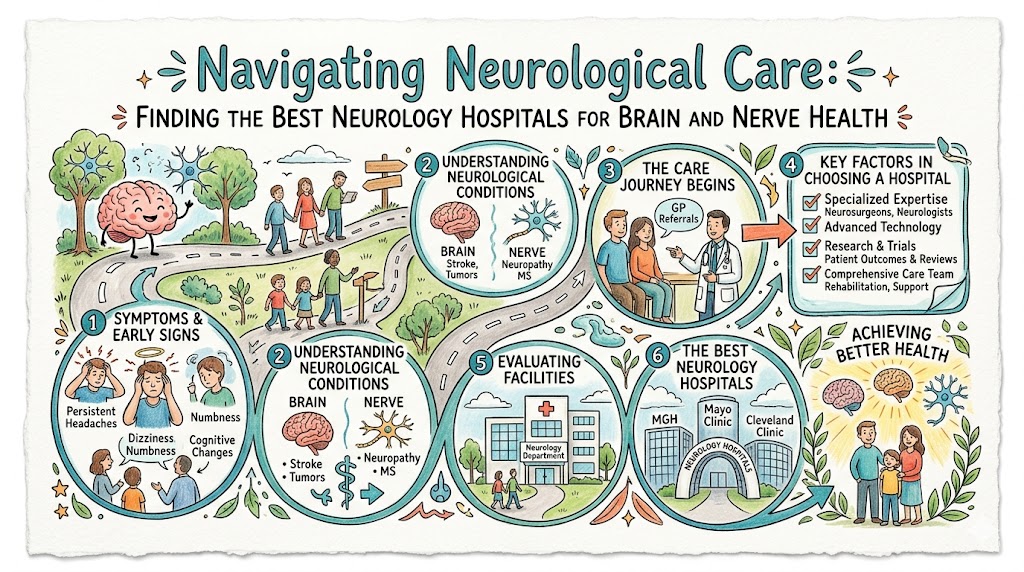
INTRODUCTION
The human brain and nervous system are the command center of everything we do. From the beat of our heart to the complex thoughts that define our personality, our nerves act as the intricate wiring that keeps us connected to the world. When that system faces a challenge—whether it is a sudden emergency like a stroke or a chronic, slow-moving condition like a nerve disorder—the world can feel fragile.If you or a loved one are currently navigating the uncertainty of neurological symptoms, please know that you are not alone. It is natural to feel anxious when dealing with conditions that affect the brain, but understanding the landscape of modern medicine is your first step toward clarity. Specialized care is not just a luxury; it is a necessity for complex conditions involving the central nervous system.The importance of early diagnosis cannot be overstated. When we address neurological issues with precision and speed, we protect quality of life and long-term functionality. This is where specialized neuroscience hospitals come into play. These institutions are designed specifically to handle the delicate nature of brain and nerve treatment, offering a level of care that goes far beyond what a general clinic can provide.At Myhospitalnow, we believe that every patient deserves access to information that empowers them to make the right choice for their health. Whether you are dealing with debilitating migraines, persistent nerve pain, or the sudden onset of neurological weakness, finding a facility that integrates advanced diagnostics with a compassionate, multidisciplinary team is vital.Consider the story of a patient named Rohan. Rohan was a vibrant professional who suddenly began experiencing episodes of unexplained dizziness and numbness in his left arm. Like many, he felt confused and slightly frightened, unsure if this was something that would pass or a sign of a deeper issue. He needed guidance on where to turn. By understanding the role of specialized neurology hospitals, patients like Rohan can transition from a state of fear to a state of proactive, expert-driven care. This guide is written to help you navigate those waters, ensuring that you understand what to look for and why the right environment is the cornerstone of your recovery.
WHAT IS A NEUROLOGY HOSPITAL?
A neurology hospital, often referred to as a neuroscience center, is a specialized medical facility dedicated exclusively or primarily to the diagnosis, treatment, and rehabilitation of disorders affecting the brain, spinal cord, and peripheral nerves. While general hospitals are equipped for a broad spectrum of medical needs, a dedicated neurology hospital is built around the unique complexities of the nervous system.
The difference lies in the integration of specialized technology and personnel. In a standard medical setting, a neurologist might have to wait for diagnostic equipment to be available or might operate without a dedicated, 24/7 neuro-emergency team. In a specialized neuroscience hospital, those systems are the heartbeat of the institution.
The Team Approach
Central to these hospitals are two core specialists:
- The Neurologist: A doctor who specializes in evaluating and treating disorders of the nervous system. They manage conditions through medication, lifestyle changes, and long-term monitoring.
- The Neurosurgeon: A specialist who performs surgical procedures on the brain, spinal cord, and peripheral nerves to treat physical injuries, tumors, or structural abnormalities.
Specialized care matters because the nervous system is incredibly delicate. A mistake or a delay in treatment in this field can have lasting consequences. These hospitals offer high-tech intensive care units (ICUs) staffed by nurses and doctors trained specifically in “neuro-monitoring”—the ability to track tiny changes in brain pressure or electrical activity that others might miss. When you choose a facility designed for neuroscience, you are choosing an environment where every piece of equipment, every procedure, and every team member is focused on the complexities of the human nervous system.
COMMON BRAIN & NERVE CONDITIONS TREATED
Neurological conditions can vary from acute, life-threatening emergencies to chronic, life-altering diseases. Understanding the nature of these conditions is essential for recognizing when to seek help.
Stroke
A stroke occurs when the blood supply to part of the brain is interrupted or reduced. This prevents brain tissue from getting oxygen and nutrients, leading to rapid cell death. Symptoms include sudden numbness, confusion, trouble speaking, and loss of balance. Immediate specialized care is non-negotiable.
Epilepsy
Epilepsy is a chronic disorder that causes unprovoked, recurrent seizures. It is characterized by abnormal electrical activity in the brain. Treatment in a neurology hospital focuses on finding the right medication regimen to control seizures and improve the patient’s daily life.
Parkinson’s Disease
This is a progressive disorder that affects the nervous system and the parts of the body controlled by the nerves. Symptoms start slowly, often with a tremor in just one hand. As it progresses, it affects movement and balance, requiring a team of movement disorder specialists for long-term management.
Brain Tumors
Whether benign or malignant, brain tumors require the precise hand of a neurosurgeon and the diagnostic expertise of a radiology team to map out the safest path for removal or treatment.
Neuropathy
Neuropathy refers to damage to the peripheral nerves. It often causes numbness, pain, and tingling, particularly in the hands and feet. Neurology hospitals use nerve conduction studies to pinpoint exactly where the damage is occurring.
Multiple Sclerosis (MS)
MS is a condition where the immune system eats away at the protective covering of nerves. It causes communication problems between the brain and the rest of the body. Specialized centers provide modern therapies to slow the progression of the disease and manage symptoms effectively.
Spinal Cord Disorders
From herniated discs to stenosis, spinal cord issues can cause radiating pain, weakness, and loss of sensation. Advanced hospitals use minimally invasive surgical techniques to treat these structures while preserving the health of the surrounding nerves.
COMMON NEUROLOGICAL CONDITIONS
| Condition | Common Symptoms | Specialist Needed | Treatment Type |
| Stroke | Weakness, speech issues | Neurologist | Emergency care |
| Epilepsy | Seizures | Neurologist | Medication |
| Parkinson’s | Tremors | Movement specialist | Long-term care |
| Brain Tumor | Headache, vision problems | Neurosurgeon | Surgery |
| Neuropathy | Numbness, tingling | Nerve specialist | Therapy |
WHY SPECIALIZED NEUROLOGY HOSPITALS MATTER
When it comes to the brain, every second counts. Specialized neurology hospitals provide a structural advantage that general facilities simply cannot match.
Faster Diagnosis and Intervention
In a specialized center, the diagnostic tools—like advanced MRI and CT scan machines—are often dedicated to the neurology department. This means no waiting for transport or scheduling conflicts. For a patient experiencing a stroke, having an MRI scanner steps away from the emergency entrance can mean the difference between permanent disability and full recovery.
The Power of the Team
These hospitals function as a multidisciplinary hub. It is not just one doctor looking at a chart; it is a collaborative effort involving neurologists, neurosurgeons, radiologists, and specialized nurses. If a patient is diagnosed with a condition that requires surgery, the neurosurgeon is already part of the same team that made the diagnosis, allowing for a seamless transition into treatment.
Dedicated Neuro-ICU
The Intensive Care Unit (ICU) in a general hospital is great, but a Neuro-ICU is optimized for brain protection. They monitor intracranial pressure, oxygenation levels specifically for brain tissue, and subtle changes in consciousness. This focused environment is critical for recovery after brain trauma or complex surgery.
For instance, consider a patient recovering from a brain aneurysm. In a general setting, their blood pressure might be monitored normally. In a Neuro-ICU, the staff is trained to keep the blood pressure within a very specific, narrow window to prevent re-bleeding, a level of vigilance that can save lives.
ADVANCED DIAGNOSTIC TECHNOLOGY
The ability to “see” the brain is one of the greatest triumphs of modern medicine. Advanced diagnostic technology allows specialists to visualize the anatomy and functionality of the nervous system with incredible clarity.
MRI (Magnetic Resonance Imaging)
MRI uses strong magnets and radio waves to create detailed images of the brain and spinal cord. It is the gold standard for identifying tumors, multiple sclerosis, and soft tissue damage that a standard X-ray could never see.
CT Scan (Computed Tomography)
A CT scan is essentially a series of X-rays taken from different angles. It is incredibly fast, making it the primary tool in emergency rooms to quickly identify bleeding in the brain following a head injury or a stroke.
EEG (Electroencephalogram)
An EEG records the electrical activity of the brain. It is the primary tool for diagnosing epilepsy. It helps doctors see if there are “spikes” in brain waves that correlate with seizure activity.
Nerve Conduction Studies
This test measures how well and how fast the nerves can send electrical signals. It is vital for diagnosing conditions like carpal tunnel syndrome, neuropathy, or nerve compression.
NEUROLOGY DIAGNOSTIC TESTS
| Test | Purpose | Conditions Detected |
| MRI | Brain imaging | Tumors, stroke |
| CT Scan | Emergency scan | Bleeding, trauma |
| EEG | Brain wave test | Epilepsy |
| Nerve conduction test | Nerve function | Neuropathy |
STROKE EMERGENCY CARE
A stroke is the most common emergency in neurology. It occurs when a blood vessel in the brain is blocked (ischemic) or bursts (hemorrhagic). The brain cells in the affected area begin to die within minutes. This is why medical professionals often use the acronym “FAST”—Face drooping, Arm weakness, Speech difficulty, Time to call emergency services.
When a patient arrives at a top-tier neurology hospital, they enter a “Stroke Protocol.” This is a pre-planned, rapid-response system. Before the patient even arrives, the hospital team is notified. As the patient comes through the doors, a team of neurologists, radiologists, and nurses is already standing by.
The Golden Hour
The goal is to restore blood flow to the brain as quickly as possible. If the stroke is caused by a clot, doctors may use a clot-busting drug (thrombolytic) or a mechanical procedure to physically remove the blockage. Time is literally brain. Every minute that passes without intervention can lead to the loss of millions of neurons.
After the emergency phase, the focus shifts to stabilization in the Neuro-ICU. Here, the team monitors the patient’s vitals around the clock, watching for secondary brain swelling or complications. The emotional weight of this process for families is immense. Knowing that your loved one is in the hands of a team that does this hundreds of times a year provides a level of comfort that is hard to replace.
ROLE OF NEUROLOGISTS & NEUROSURGEONS
It is a common question: what is the difference between these two specialists?
A neurologist is the primary physician for the nervous system. Think of them as the “diagnostician” and “manager.” They treat diseases using non-surgical methods. They are the ones who manage epilepsy medications, help control Parkinson’s tremors, and conduct complex cognitive tests to determine the cause of memory loss. They focus on the biological and chemical functions of the nerves.
A neurosurgeon, on the other hand, is the specialist who intervenes when a physical problem needs a physical solution. If a tumor is pressing on a nerve, a herniated disc is pinching the spinal cord, or an aneurysm needs to be clipped, the neurosurgeon is called.
Often, they work in tandem. A neurologist might diagnose a patient with a spinal tumor through an MRI, and then refer the patient to a neurosurgeon for the procedure. After surgery, the patient returns to the care of the neurologist for ongoing recovery and symptom management. This partnership is the backbone of successful neuroscience care.
ICU & REHABILITATION SERVICES
Recovery is a marathon, not a sprint. While the acute care happens in the hospital, the journey to regaining functionality often involves intensive rehabilitation.
The Role of Rehabilitation
Rehabilitation services are designed to retrain the brain and body. Neuroplasticity—the brain’s ability to rewire itself—is the principle behind this.
- Physiotherapy: Focuses on restoring strength and balance. Whether learning to walk again or improving fine motor skills, physiotherapists work to get the patient back on their feet.
- Speech Therapy: Often overlooked, this is vital for stroke patients. It helps restore the ability to speak, swallow, and communicate effectively.
- Occupational Therapy: Teaches patients how to perform activities of daily living, such as dressing, eating, or cooking, despite physical limitations.
- Cognitive Rehab: For patients with brain injuries or Alzheimer’s, this involves memory and problem-solving exercises to maintain as much independence as possible.
REHABILITATION SERVICES
| Service | Purpose |
| Physiotherapy | Improve movement |
| Speech therapy | Restore communication |
| Occupational therapy | Daily activity support |
| Cognitive rehab | Memory improvement |
HOW TO CHOOSE THE BEST NEUROLOGY HOSPITAL
Selecting the right hospital can be overwhelming, especially when you are already dealing with a health crisis. Here are the pillars you should evaluate:
- Specialized Emergency Units: Does the hospital have a dedicated stroke unit? This is the single most important factor for emergencies.
- Multidisciplinary Teams: Look for hospitals that have a balance of neurologists, neurosurgeons, and physical therapists under one roof.
- Technology: Ask if they have in-house MRI/CT capabilities and neuro-monitoring equipment.
- Rehabilitation Programs: Does the hospital have a dedicated ward for post-operative or post-stroke recovery? Transitioning from the ICU to rehab within the same network is much easier for the patient.
- Clinical Reputation: Look for centers that participate in research or are affiliated with leading medical schools, as they are usually at the forefront of new treatment protocols.
REAL-LIFE PATIENT SCENARIOS
- The Stroke Survivor: Imagine an elderly gentleman who experienced sudden speech loss. His family recognized the symptoms and brought him to a neurology-certified hospital. Within 45 minutes of arrival, he received a clot-busting medication. Because of the rapid response, he regained his speech within 24 hours.
- The Migraine Journey: A young woman suffering from chronic, debilitating migraines for years. She finally sought care at a specialized center. Instead of just “painkillers,” her neurologist used brain mapping and a personalized diet and medication plan to reduce her headache frequency by 80%.
- The Epilepsy Warrior: A teenager with uncontrolled seizures found a center with an advanced epilepsy monitoring unit. They adjusted his medication precisely after tracking his brain waves for 72 hours, finally giving him the freedom to return to school safely.
FUTURE OF NEUROLOGY CARE
The future of neuroscience is incredibly bright. We are moving toward an era of personalized medicine. AI-assisted diagnosis is already helping radiologists identify small strokes that the human eye might miss. Robotic neurosurgery is making complex procedures less invasive, with smaller incisions and faster recovery times.
Tele-neurology is also changing the game. Patients in remote areas can now consult with top-tier specialists via high-definition video, ensuring that expert advice is not limited by geography. We are also seeing advances in neuro-mapping, which allows us to see how different parts of the brain communicate, opening new doors for treating Alzheimer’s and depression.
FAQs
1. What does a neurology hospital treat?
A neurology hospital treats conditions involving the brain, spinal cord, and nerves. This includes strokes, epilepsy, Parkinson’s disease, tumors, nerve injuries, migraines, and degenerative conditions like MS.
2. When should I see a neurologist?
You should see a neurologist if you experience persistent headaches, unexplained numbness, memory loss, balance issues, tremors, or seizures. Any sudden neurological symptom is an emergency.
3. What are stroke symptoms?
Think FAST: Face drooping (one side), Arm weakness (difficulty lifting), Speech difficulty (slurred or confused), and Time to call emergency services.
4. Can neurological disorders be cured?
Some, like certain types of brain tumors or nerve compressions, can be cured. Others are chronic and managed with medications and therapy to ensure a high quality of life.
5. What is the difference between a neurologist and a neurosurgeon?
A neurologist manages conditions through medicine and non-invasive therapy. A neurosurgeon performs surgery on the nervous system.
6. Is an MRI safe?
Yes, MRIs do not use radiation. They use magnets. However, they are not safe for people with certain metal implants, so always tell your doctor about any implants.
7. How long does stroke recovery take?
It varies widely depending on the severity of the stroke. Recovery can take weeks, months, or years, with rehabilitation playing a critical role in long-term improvement.
8. Is epilepsy hereditary?
Some types of epilepsy have a genetic component, but many do not. A neurologist can help determine the specific type of epilepsy through genetic testing and monitoring.
9. What is a Neuro-ICU?
It is an Intensive Care Unit specifically for patients with brain or spine conditions, equipped with specialized monitoring for intracranial pressure and electrical activity.
10. What should I bring to a first neurology appointment?
Bring all your medical records, a list of current medications, a diary of your symptoms, and a family member or caregiver to help note down the doctor’s instructions.
11. Are there non-surgical options for back pain?
Yes, most back pain is treated through physical therapy, medication, and lifestyle changes. Surgery is usually considered a last resort.
12. How does age affect brain health?
As we age, our risk for conditions like Alzheimer’s and Parkinson’s increases. Regular checkups and a healthy lifestyle can help mitigate these risks.
13. What is neuroplasticity?
It is the brain’s ability to reorganize itself by forming new neural connections, which allows for recovery after injuries like strokes.
14. Can stress cause neurological symptoms?
Yes, extreme stress can manifest as migraines, tension headaches, or even psychosomatic neurological symptoms, which a neurologist can help diagnose.
15. How do I know if I need a specialist?
If your symptoms are interfering with your daily activities or if you have had a sudden change in health, a consultation with a neurologist is the safest path to a diagnosis.
HOW TO CHOOSE A NEUROLOGY HOSPITAL
| Feature | Why It Matters |
| Stroke Unit | Faster emergency care |
| MRI/CT Technology | Accurate diagnosis |
| Experienced Specialists | Better treatment planning |
| Rehabilitation Services | Faster recovery |
| ICU Support | Critical patient care |
FINAL CONCLUSION
Navigating the world of neurological care can feel daunting, but you are not navigating it alone. The brain is the most complex organ in the body, and it deserves the most precise, specialized care available. From the lightning-fast response of a stroke team to the long-term, compassionate support of a rehabilitation center, the best neurology hospitals are designed to protect your health and restore your quality of life.Early diagnosis is the bridge to a better tomorrow. If you notice symptoms, do not wait; seek the guidance of a trusted specialist. Remember, the goal of modern neuroscience is not just to treat the disease, but to treat the person behind the symptoms. With the right team, the right technology, and a clear plan, many neurological conditions can be effectively managed, allowing you to return to the life you love.

Find Trusted Cardiac Hospitals
Compare heart hospitals by city and services — all in one place.
Explore Hospitals
Neurology hospitals are most valuable when they provide specialized care for disorders affecting the brain, spinal cord, and nervous system through advanced diagnostics, experienced neurologists, and comprehensive treatment programs. By offering services such as neurological evaluations, brain imaging, stroke care, epilepsy management, movement disorder treatment, neurorehabilitation, spine and nerve care, minimally invasive procedures, advanced surgical options, and multidisciplinary support, these hospitals help patients receive accurate diagnosis, personalized treatment plans, improved recovery outcomes, and better long-term management of neurological conditions.