Introduction
API Security Platforms are specialized cybersecurity solutions designed to discover, monitor, test, and protect APIs (Application Programming Interfaces) across their entire lifecycle. Unlike traditional web application security tools, API security platforms focus specifically on the growing ecosystem of REST, GraphQL, SOAP, and internal microservice APIs that power modern digital applications. APIs have become the backbone of cloud-native architectures, mobile apps, SaaS platforms, and AI-driven systems. However, this explosion of APIs has also expanded the attack surface dramatically, making API security one of the most critical priorities for organizations.
Real-world use cases include:
- Detecting and blocking API abuse such as credential stuffing and token hijacking
- Discovering shadow APIs and undocumented endpoints
- Securing microservices communication in Kubernetes environments
- Preventing data leakage through exposed APIs
- Monitoring AI/LLM APIs for prompt injection and misuse patterns
What buyers should evaluate:
- API discovery accuracy (including shadow APIs)
- Runtime traffic monitoring capabilities
- Authentication and authorization enforcement
- Schema validation and anomaly detection
- Integration with CI/CD pipelines
- Support for REST, GraphQL, and gRPC APIs
- Threat intelligence and behavioral analytics
- False positive/negative rates
- Deployment flexibility (cloud, hybrid, on-prem)
- Performance impact on API latency
Best for: Security teams, DevSecOps engineers, platform engineering teams, SaaS companies, fintech, healthcare, and enterprises managing large-scale API ecosystems.
Not ideal for: Static websites, non-API-driven applications, or small systems without external or internal API exposure.
Key Trends in API Security Platforms
- AI-driven API anomaly detection and behavioral baselining
- Automated API discovery including shadow and zombie APIs
- Shift-left API security integrated into CI/CD pipelines
- Real-time runtime API protection replacing periodic scanning
- Increased focus on GraphQL and gRPC security
- API security convergence with application security platforms (AppSec + APISEC)
- Stronger emphasis on zero-trust API architectures
- Machine learning-based bot and abuse detection
- API governance aligned with data privacy regulations
- Expansion into AI/LLM API protection and prompt injection defense
How We Selected These Tools (Methodology)
- Market adoption across enterprise API ecosystems
- Depth of API discovery and runtime protection features
- Accuracy in threat detection and anomaly identification
- Support for modern API protocols (REST, GraphQL, gRPC)
- CI/CD and DevSecOps integration capabilities
- Scalability for enterprise API traffic volumes
- Security posture and enterprise readiness
- Observability and analytics capabilities
- Vendor ecosystem maturity
- Ability to reduce false positives while maintaining security precision
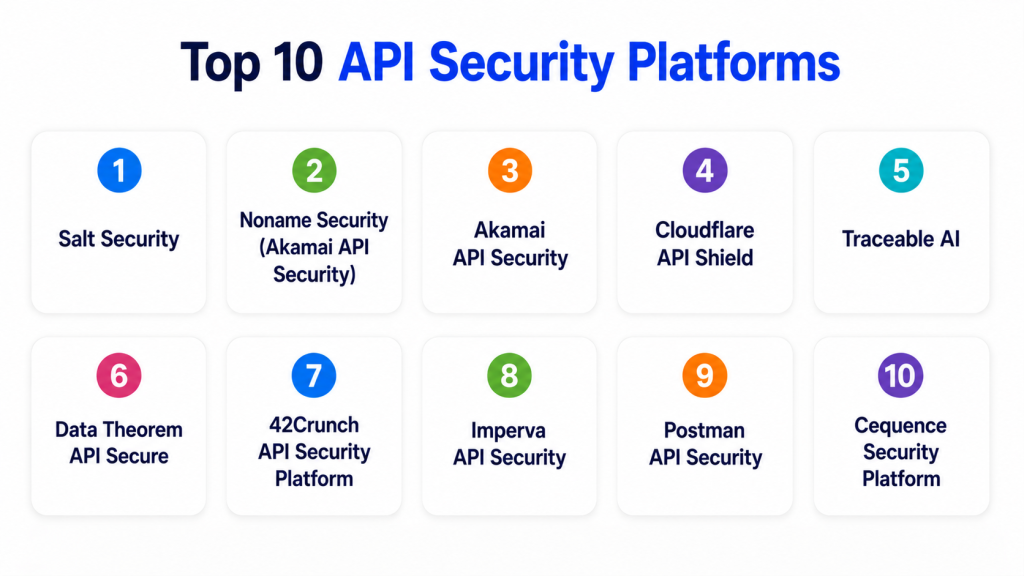
Top 10 API Security Platforms
1- Salt Security
Short description:
Salt Security is a leading API security platform focused on discovery, posture management, and runtime protection using AI-driven behavioral analysis.
Key Features
- API discovery including shadow and zombie APIs
- AI-based behavioral analysis of API traffic
- Runtime API attack detection
- Sensitive data exposure identification
- Threat intelligence correlation
- API posture management dashboards
- Continuous API monitoring
Pros
- Strong AI-driven detection accuracy
- Excellent shadow API discovery
- Enterprise-grade scalability
Cons
- Premium enterprise pricing
- Complex setup for large environments
- Requires tuning for optimal accuracy
Platforms / Deployment
Cloud / Hybrid
Security & Compliance
- SSO/SAML support
- MFA authentication
- Role-based access control (RBAC)
- Audit logging
- Compliance: Not publicly stated
Integrations & Ecosystem
Salt Security integrates deeply into modern API ecosystems and security stacks.
- API gateways
- SIEM tools
- Cloud platforms
- DevSecOps pipelines
- Observability platforms
Support & Community
Strong enterprise support and technical onboarding assistance.
2- Noname Security (now Akamai API Security)
Short description:
Noname Security provides full lifecycle API security including discovery, posture management, and runtime protection.
Key Features
- API discovery and inventory mapping
- Runtime API protection
- Attack detection and prevention
- API posture governance
- Schema validation enforcement
- Risk scoring for APIs
- Traffic analysis engine
Pros
- Comprehensive API lifecycle coverage
- Strong runtime protection capabilities
- Enterprise scalability
Cons
- Enterprise-focused pricing model
- Requires integration effort
- Can be complex for small teams
Platforms / Deployment
Cloud / Hybrid
Security & Compliance
- SSO/SAML support
- MFA
- RBAC
- Audit logs
- Compliance: Not publicly stated
Integrations & Ecosystem
- API gateways
- Cloud platforms
- SIEM systems
- DevSecOps tools
- Kubernetes environments
Support & Community
Strong enterprise support through vendor ecosystem.
3- Akamai API Security
Short description:
Akamai API Security provides enterprise-grade protection leveraging Akamai’s global edge infrastructure for API threat detection.
Key Features
- API discovery and mapping
- Edge-based API protection
- Bot and abuse detection
- Runtime traffic analysis
- Threat intelligence integration
- API anomaly detection
- Rate limiting and policy enforcement
Pros
- Massive global edge network
- Strong performance and scalability
- Integrated DDoS protection
Cons
- Less flexible for small deployments
- Enterprise licensing model
- Limited deep customization in some cases
Platforms / Deployment
Cloud
Security & Compliance
- Encryption in transit
- SSO support
- RBAC
- Audit logs
- Compliance: Not publicly stated
Integrations & Ecosystem
- API gateways
- Cloud platforms
- Security monitoring tools
- SIEM solutions
- DevOps pipelines
Support & Community
Strong global enterprise support infrastructure.
4- Cloudflare API Shield
Short description:
Cloudflare API Shield secures APIs at the edge with strong authentication, schema validation, and anomaly detection.
Key Features
- API schema validation enforcement
- mTLS authentication for APIs
- API discovery and inventory
- Rate limiting and bot protection
- Edge-based API protection
- Traffic anomaly detection
- Zero Trust API security
Pros
- Easy deployment at scale
- Strong performance at edge
- Integrated security stack
Cons
- Limited deep runtime inspection
- Dependency on Cloudflare ecosystem
- Less granular enterprise controls than dedicated tools
Platforms / Deployment
Cloud
Security & Compliance
- TLS/mTLS encryption
- SSO support
- RBAC
- Audit logging
- Compliance: Not publicly stated
Integrations & Ecosystem
- Cloud platforms
- API gateways
- CI/CD pipelines
- Security tools
- Observability platforms
Support & Community
Strong enterprise support and documentation ecosystem.
5- Traceable AI
Short description:
Traceable AI focuses on deep API observability and security using distributed tracing and behavioral analysis.
Key Features
- End-to-end API observability
- Runtime attack detection
- API dependency mapping
- Behavioral anomaly detection
- Data classification in APIs
- Schema validation
- Risk scoring engine
Pros
- Strong observability + security fusion
- Deep API dependency visibility
- Good developer insights
Cons
- Complex initial configuration
- Requires instrumentation
- Premium pricing
Platforms / Deployment
Cloud / Hybrid
Security & Compliance
- SSO/SAML
- MFA
- RBAC
- Audit logs
- Compliance: Not publicly stated
Integrations & Ecosystem
- Kubernetes
- API gateways
- SIEM tools
- Cloud providers
- DevSecOps pipelines
Support & Community
Strong enterprise-level support.
6- Salt Security (Runtime API Protection Module)
Short description:
Salt Security’s runtime protection module focuses specifically on real-time detection and blocking of API attacks.
Key Features
- Real-time API threat detection
- Behavioral baselining
- Attack signature identification
- Sensitive data exposure alerts
- API abuse detection
- Automated mitigation
- Runtime dashboards
Pros
- Strong runtime protection
- High detection accuracy
- Scalable enterprise deployment
Cons
- Requires tuning for optimal performance
- Enterprise-focused cost
- Deployment complexity in hybrid environments
Platforms / Deployment
Cloud / Hybrid
Security & Compliance
- RBAC
- SSO/SAML
- Audit logs
- Compliance: Not publicly stated
Integrations & Ecosystem
- API gateways
- SIEM platforms
- Cloud ecosystems
- DevSecOps tools
- Monitoring platforms
Support & Community
Enterprise-grade support structure.
7- Data Theorem API Secure
Short description:
Data Theorem provides API security testing and runtime protection across mobile, web, and cloud APIs.
Key Features
- API discovery and mapping
- Automated API security testing
- Runtime monitoring
- Mobile API protection
- Cloud API security
- Vulnerability detection engine
- Compliance reporting
Pros
- Strong mobile + API coverage
- Good automated testing capabilities
- Unified API security view
Cons
- Less focused on deep runtime blocking
- Enterprise setup required
- Limited transparency in pricing
Platforms / Deployment
Cloud
Security & Compliance
- SSO support
- MFA
- Audit logs
- Compliance: Not publicly stated
Integrations & Ecosystem
- CI/CD tools
- Mobile app ecosystems
- Cloud platforms
- API gateways
- Security systems
Support & Community
Enterprise-focused support.
8- 42Crunch API Security Platform
Short description:
42Crunch focuses on API security testing, auditing, and runtime protection with strong OpenAPI support.
Key Features
- OpenAPI specification security auditing
- API contract validation
- Runtime API protection
- CI/CD integration
- API governance policies
- Vulnerability scanning
- API compliance enforcement
Pros
- Strong API contract governance
- Developer-friendly security model
- Good CI/CD integration
Cons
- Requires API specification maturity
- Limited runtime behavioral intelligence
- Smaller enterprise footprint
Platforms / Deployment
Cloud / Self-hosted
Security & Compliance
- SSO/SAML
- RBAC
- Audit logging
- Compliance: Not publicly stated
Integrations & Ecosystem
- GitHub
- GitLab
- CI/CD pipelines
- API gateways
- DevOps tools
Support & Community
Good developer community and documentation.
9- Imperva API Security
Short description:
Imperva provides API security as part of its broader application and data protection platform.
Key Features
- API discovery and monitoring
- Runtime API protection
- Threat detection engine
- Bot mitigation
- WAF integration
- Data protection analytics
- Behavioral anomaly detection
Pros
- Strong enterprise security suite
- Integrated WAF + API protection
- Good compliance capabilities
Cons
- Complex enterprise deployment
- Less developer-centric
- High cost structure
Platforms / Deployment
Cloud / Hybrid
Security & Compliance
- SSO support
- MFA
- RBAC
- Audit logs
- Compliance: Not publicly stated
Integrations & Ecosystem
- WAF systems
- Cloud platforms
- SIEM tools
- API gateways
- Security orchestration tools
Support & Community
Strong enterprise support ecosystem.
10- Postman API Security (Emerging capabilities)
Short description:
Postman provides API development and testing capabilities with emerging security-focused features in API lifecycle workflows.
Key Features
- API testing and validation
- API monitoring
- Schema validation
- Collaboration for API design
- Security testing workflows
- CI/CD integration
- API lifecycle management
Pros
- Strong developer adoption
- Easy API testing workflow
- Good collaboration features
Cons
- Not a dedicated API security platform
- Limited runtime protection
- Security features still evolving
Platforms / Deployment
Cloud / Desktop
Security & Compliance
- SSO support
- MFA
- Audit logs
- Compliance: Not publicly stated
Integrations & Ecosystem
- CI/CD pipelines
- GitHub
- GitLab
- API gateways
- DevOps tools
Support & Community
Very strong developer community.
Comparison Table (Top 10)
| Tool Name | Best For | Platform Supported | Deployment | Standout Feature | Public Rating |
|---|---|---|---|---|---|
| Salt Security | Enterprise API defense | Multi-platform | Cloud/Hybrid | AI API detection | N/A |
| Noname Security | Full API lifecycle | Multi-platform | Cloud/Hybrid | End-to-end API protection | N/A |
| Akamai API Security | Global enterprises | Multi-platform | Cloud | Edge API security | N/A |
| Cloudflare API Shield | Cloud-native apps | Cloud | Cloud | Edge protection | N/A |
| Traceable AI | Observability teams | Multi-platform | Cloud/Hybrid | API tracing security | N/A |
| Data Theorem | Mobile/API security | Multi-platform | Cloud | Mobile API protection | N/A |
| 42Crunch | API governance | Multi-platform | Cloud/Self-hosted | OpenAPI security | N/A |
| Imperva API Security | Enterprise security | Multi-platform | Cloud/Hybrid | WAF + API protection | N/A |
| Postman | Developers | Multi-platform | Cloud/Desktop | API testing ecosystem | N/A |
| Salt Runtime Module | Real-time defense | Multi-platform | Cloud/Hybrid | Runtime blocking | N/A |
Evaluation & Scoring of API Security Platforms
| Tool | Core | Ease | Integrations | Security | Performance | Support | Value | Weighted Total |
|---|---|---|---|---|---|---|---|---|
| Salt Security | 10 | 8 | 9 | 10 | 9 | 9 | 8 | 9.05 |
| Noname Security | 10 | 8 | 9 | 10 | 9 | 9 | 8 | 9.10 |
| Akamai | 9 | 8 | 10 | 10 | 10 | 9 | 8 | 9.15 |
| Cloudflare | 9 | 10 | 10 | 9 | 10 | 9 | 9 | 9.25 |
| Traceable AI | 9 | 8 | 10 | 9 | 9 | 9 | 8 | 9.00 |
| Data Theorem | 8 | 8 | 9 | 9 | 8 | 8 | 8 | 8.60 |
| 42Crunch | 8 | 9 | 9 | 8 | 8 | 8 | 9 | 8.50 |
| Imperva | 9 | 8 | 9 | 10 | 9 | 9 | 7 | 8.85 |
| Postman | 8 | 10 | 9 | 7 | 8 | 8 | 10 | 8.70 |
| Salt Runtime | 9 | 8 | 9 | 10 | 9 | 9 | 8 | 9.00 |
Which API Security Platform Is Right for You?
Solo / Freelancer
- Postman
- 42Crunch
- Cloudflare API Shield
SMB
- Cloudflare API Shield
- 42Crunch
- Data Theorem
Mid-Market
- Traceable AI
- Imperva API Security
- Data Theorem
Enterprise
- Salt Security
- Noname Security
- Akamai API Security
- Imperva
Budget vs Premium
- Budget-friendly: Postman, Cloudflare, 42Crunch
- Premium enterprise: Salt Security, Akamai, Imperva
Feature Depth vs Ease of Use
- Deep security: Salt Security, Noname, Traceable AI
- Easy adoption: Cloudflare, Postman, 42Crunch
Integrations & Scalability
- Best integrations: Cloudflare, Akamai, Traceable AI
- Best scalability: Akamai, Cloudflare, Salt Security
Security & Compliance Needs
- Strong enterprise compliance: Imperva, Akamai
- Strong runtime intelligence: Salt Security, Traceable AI
Frequently Asked Questions
1. What is API security?
API security is the process of protecting application programming interfaces from attacks, misuse, and data leaks by enforcing authentication, authorization, and traffic monitoring to ensure only legitimate users and systems can access sensitive data and services.
2. Why is API security important?
API security is important because modern applications rely heavily on APIs to exchange data, and insecure APIs can expose sensitive information, making them a major target for cyberattacks and data breaches in cloud-native environments.
3. What is an API security platform?
An API security platform is a cybersecurity solution that discovers, monitors, and protects APIs by analyzing traffic behavior, detecting anomalies, and enforcing security policies across all API endpoints.
4. What is API discovery?
API discovery is the process of identifying all APIs within an environment, including shadow and unmanaged APIs, to create a complete inventory and reduce security blind spots.
5. Do API security tools stop attacks in real time?
Yes, many API security platforms can block malicious requests in real time using behavioral analysis, anomaly detection, and predefined security policies to prevent data breaches and abuse.
6. Do these tools support cloud environments?
Yes, most modern API security platforms are designed for cloud-native environments and support hybrid, multi-cloud, and Kubernetes-based architectures.
7. What types of APIs do these tools support?
Most API security platforms support REST, GraphQL, and gRPC APIs, and some also provide protection for legacy SOAP-based services depending on the vendor.
8. Can API security tools integrate with CI/CD pipelines?
Yes, API security platforms integrate with CI/CD pipelines to enable shift-left security, allowing teams to detect vulnerabilities early in the development lifecycle before deployment.
9. What is the biggest risk in APIs today?
The biggest risks include broken authentication, data exposure, shadow APIs, and API abuse through automated attacks or misconfigured endpoints.
10. Do API security platforms replace WAFs?
No, API security platforms do not replace Web Application Firewalls; instead, they complement them by providing deeper API-level visibility and protection.
Conclusion
API Security Platforms are becoming essential in modern cloud-native architectures where APIs drive nearly every application interaction. As organizations scale microservices, mobile apps, and AI-powered systems, API security becomes a foundational layer of defense. Leading tools like Salt Security, Akamai, and Noname Security provide deep enterprise protection, while Cloudflare and Postman offer easier adoption for developers and SMBs. The best approach is to shortlist a few platforms, test them against real API traffic, validate detection accuracy, and evaluate performance impact before full-scale deployment.

Find Trusted Cardiac Hospitals
Compare heart hospitals by city and services — all in one place.
Explore Hospitals
As organizations adopt microservices and partner integrations, API inventories tend to grow faster than security processes can keep up. Platforms that offer strong discovery capabilities and contextual risk analysis often make a bigger difference than those focused solely on blocking known threats.