Introduction
Application Security Testing (AST) platforms especially SAST (Static Application Security Testing) and DAST (Dynamic Application Security Testing) are security tools designed to detect vulnerabilities in applications during development and runtime. SAST analyzes source code, binaries, or bytecode to find security flaws early, while DAST tests running applications to identify exploitable vulnerabilities from an external attacker’s perspective.software is increasingly cloud-native, API-driven, and continuously deployed. This makes application security testing a critical pillar of DevSecOps. Organizations can no longer rely on periodic security audits; instead, they need continuous, automated scanning embedded into CI/CD pipelines.
Real-world use cases include:
- Detecting insecure coding patterns before code is merged into production
- Scanning web applications for SQL injection and XSS vulnerabilities
- Securing APIs exposed in microservices architectures
- Validating security compliance for financial or healthcare applications
- Running automated security tests in CI/CD pipelines before deployment
What buyers should evaluate:
- Depth of SAST and DAST coverage
- Accuracy and false positive reduction
- CI/CD integration capabilities
- API security and microservices support
- Language and framework compatibility
- Runtime scanning performance (DAST speed)
- Developer experience and usability
- Reporting and compliance dashboards
- Shift-left security capabilities
- Scalability across large enterprise codebases
Best for: DevSecOps teams, application security engineers, enterprise developers, security compliance teams, and organizations building cloud-native or API-heavy applications.
Not ideal for: Static websites with no backend logic, very small projects without CI/CD pipelines, or teams without dedicated development workflows.
Key Trends in Application Security Testing (SAST/DAST)
- AI-assisted vulnerability detection and auto-remediation suggestions
- Shift-left security integrated deeply into CI/CD pipelines
- Unified SAST + DAST + SCA platforms replacing point tools
- API-first security testing becoming standard
- Continuous application security testing instead of periodic scans
- Cloud-native AST tools optimized for Kubernetes and microservices
- Reduced false positives using ML-based triaging
- Security testing embedded directly into developer IDEs
- DevSecOps automation with policy-as-code integration
- Increased focus on supply chain and dependency security correlation
How We Selected These Tools (Methodology)
- Market adoption across enterprise and developer ecosystems
- Depth of SAST and DAST capabilities combined
- Accuracy of vulnerability detection and false positive handling
- CI/CD and DevSecOps integration strength
- Language and framework support breadth
- Performance in large-scale enterprise environments
- Security compliance and governance readiness
- API and microservices testing capabilities
- Developer experience and usability
- Ecosystem maturity and vendor reliability
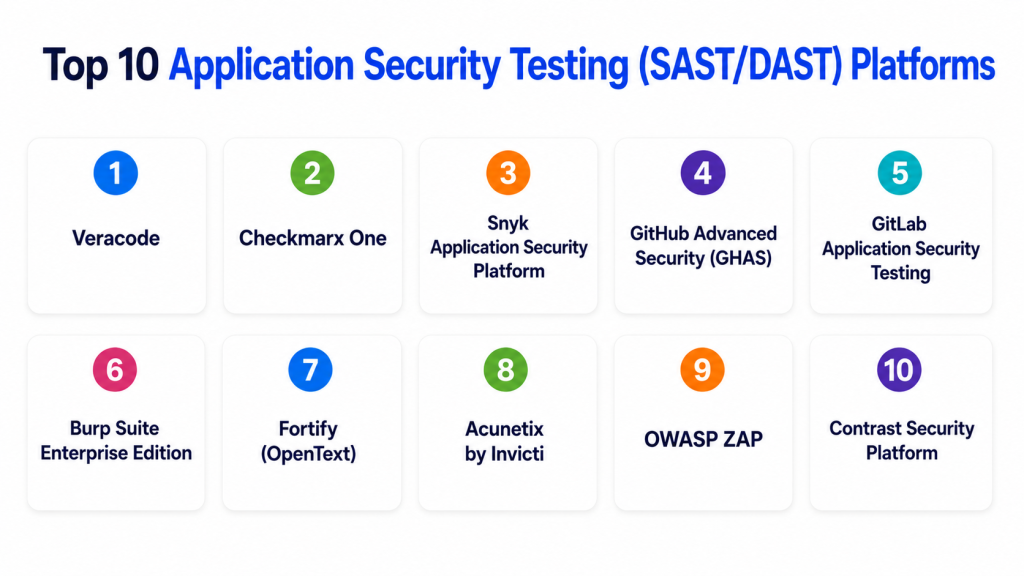
Top 10 Application Security Testing (SAST/DAST) Platforms
1- Veracode
Short description:
Veracode is a widely adopted enterprise application security platform offering both SAST and DAST capabilities, designed for continuous security testing across development pipelines.
Key Features
- Static application security testing (SAST)
- Dynamic application security testing (DAST)
- Software composition analysis (SCA)
- API security testing
- CI/CD pipeline integration
- Policy-based security enforcement
- Centralized security dashboards
Pros
- Strong enterprise-grade security coverage
- Easy policy enforcement
- Mature compliance reporting
Cons
- Enterprise pricing model
- Can be slow for large scans
- Limited flexibility in customization
Platforms / Deployment
Cloud / Hybrid
Security & Compliance
- SSO/SAML support
- MFA authentication
- RBAC controls
- Audit logging
- Compliance: Not publicly stated
Integrations & Ecosystem
Veracode integrates well with enterprise DevSecOps workflows.
- Jenkins
- GitHub
- GitLab
- Azure DevOps
- CI/CD pipelines
Support & Community
Strong enterprise support with mature documentation.
2- Checkmarx One
Short description:
Checkmarx One is a unified application security platform combining SAST, DAST, SCA, and API security testing.
Key Features
- Unified SAST + DAST + SCA
- API security testing
- CI/CD integration
- Developer security feedback loops
- Risk prioritization engine
- Cloud-native scanning
- Policy enforcement
Pros
- Strong unified platform approach
- Good developer experience
- High scalability
Cons
- Complex initial setup
- Premium pricing
- Requires tuning for accuracy
Platforms / Deployment
Cloud / Self-hosted / Hybrid
Security & Compliance
- SSO/SAML
- RBAC
- Audit logs
- Compliance: Not publicly stated
Integrations & Ecosystem
- GitHub
- GitLab
- Jenkins
- Azure DevOps
- Jira
Support & Community
Strong enterprise-grade vendor support.
3- Snyk Application Security Platform
Short description:
Snyk provides developer-first application security testing across code, dependencies, containers, and runtime environments.
Key Features
- SAST for application code
- SCA for dependency scanning
- Container security testing
- Infrastructure-as-code scanning
- CI/CD integration
- Automated fix suggestions
- API security coverage
Pros
- Excellent developer experience
- Fast scanning feedback loops
- Strong ecosystem integration
Cons
- Advanced features require paid tiers
- Can generate alert noise
- Limited deep customization
Platforms / Deployment
Cloud / Hybrid
Security & Compliance
- SSO/SAML support
- MFA
- Audit logs
- Compliance: Not publicly stated
Integrations & Ecosystem
- GitHub
- GitLab
- Bitbucket
- Kubernetes
- CI/CD tools
Support & Community
Strong developer community and enterprise support.
4- GitHub Advanced Security (GHAS)
Short description:
GitHub Advanced Security provides built-in SAST, secret scanning, and dependency analysis directly within GitHub repositories.
Key Features
- Code scanning (SAST)
- Secret detection
- Dependency vulnerability scanning
- Security alerts in PRs
- CI/CD integration
- Automated fixes (Dependabot)
- Security dashboards
Pros
- Native GitHub integration
- Easy developer adoption
- Strong automation capabilities
Cons
- GitHub ecosystem dependency
- Limited standalone usage
- Advanced customization constraints
Platforms / Deployment
Cloud
Security & Compliance
- SSO integration
- RBAC
- Audit logging
- Compliance: Not publicly stated
Integrations & Ecosystem
- GitHub repositories
- CI/CD pipelines
- Azure DevOps
- Security tools
Support & Community
Strong GitHub ecosystem support.
5- GitLab Application Security Testing
Short description:
GitLab provides integrated SAST and DAST capabilities as part of its DevSecOps platform.
Key Features
- SAST scanning
- DAST scanning
- Dependency scanning
- API security testing
- CI/CD pipeline integration
- Security dashboards
- Auto-remediation suggestions
Pros
- Fully integrated DevSecOps platform
- Easy pipeline setup
- Strong automation support
Cons
- Best within GitLab ecosystem
- Limited external flexibility
- Advanced features require paid tiers
Platforms / Deployment
Cloud / Self-hosted
Security & Compliance
- SSO support
- RBAC
- Audit logs
- Compliance: Not publicly stated
Integrations & Ecosystem
- GitLab CI/CD
- Kubernetes
- Docker
- Cloud platforms
Support & Community
Strong enterprise support and active community.
6- Burp Suite Enterprise Edition
Short description:
Burp Suite Enterprise Edition is a leading DAST tool for automated web application security testing.
Key Features
- Dynamic application security testing
- Web vulnerability scanning
- API security testing
- Automated scan scheduling
- CI/CD integration
- Crawling and mapping tools
- Vulnerability reporting
Pros
- Industry-leading DAST capabilities
- Highly accurate vulnerability detection
- Strong security research foundation
Cons
- Primarily DAST-focused
- Requires configuration effort
- Limited SAST capabilities
Platforms / Deployment
Cloud / Self-hosted
Security & Compliance
- RBAC support
- Audit logging
- Encryption support
- Compliance: Not publicly stated
Integrations & Ecosystem
- CI/CD pipelines
- Jira
- Jenkins
- Security orchestration tools
- API gateways
Support & Community
Strong security researcher community.
7- Fortify (OpenText)
Short description:
Fortify provides enterprise-grade SAST and DAST solutions with strong compliance and governance capabilities.
Key Features
- SAST scanning
- DAST scanning
- Software composition analysis
- Policy enforcement
- Security dashboards
- CI/CD integration
- Compliance reporting
Pros
- Strong enterprise governance
- Mature security platform
- High compliance support
Cons
- Complex setup
- High enterprise cost
- Slower scanning in large environments
Platforms / Deployment
Cloud / Self-hosted / Hybrid
Security & Compliance
- SSO support
- RBAC
- Audit logs
- Compliance: Not publicly stated
Integrations & Ecosystem
- Jenkins
- GitHub
- GitLab
- Azure DevOps
- CI/CD tools
Support & Community
Enterprise-level vendor support.
8- Veracode DAST (Standalone Module)
Short description:
Veracode DAST provides automated scanning for running applications to identify runtime vulnerabilities.
Key Features
- Web application scanning
- API testing
- Authentication handling
- CI/CD integration
- Scheduled scans
- Vulnerability reporting
- Risk prioritization
Pros
- Strong enterprise DAST engine
- Easy integration with Veracode ecosystem
- Good compliance support
Cons
- Limited standalone flexibility
- Enterprise dependency
- Requires tuning
Platforms / Deployment
Cloud
Security & Compliance
- SSO/SAML
- RBAC
- Audit logs
- Compliance: Not publicly stated
Integrations & Ecosystem
- CI/CD tools
- DevSecOps platforms
- Jira
- Security dashboards
Support & Community
Strong enterprise support.
9- Acunetix by Invicti
Short description:
Acunetix is a powerful DAST-focused web application security testing tool with strong automation capabilities.
Key Features
- Web vulnerability scanning
- API security testing
- Automated crawling
- CI/CD integration
- False positive reduction engine
- Scheduling and reporting
- Compliance scanning
Pros
- High scan accuracy
- Easy to deploy
- Strong automation features
Cons
- Primarily DAST-focused
- Limited SAST coverage
- Enterprise features require upgrades
Platforms / Deployment
Cloud / Self-hosted
Security & Compliance
- SSO support
- Audit logs
- RBAC
- Compliance: Not publicly stated
Integrations & Ecosystem
- Jira
- Jenkins
- GitHub
- CI/CD pipelines
- Security tools
Support & Community
Strong vendor support and documentation.
10- OWASP ZAP
Short description:
OWASP ZAP is a widely used open-source DAST tool for finding vulnerabilities in web applications.
Key Features
- Web application scanning
- API security testing
- Passive and active scanning
- Proxy interception
- Automation support
- Add-on extensions
- CI/CD integration
Pros
- Free and open-source
- Strong community support
- Highly extensible
Cons
- Requires manual configuration
- Limited enterprise reporting
- Slower for large-scale scanning
Platforms / Deployment
Cloud / Self-hosted
Security & Compliance
- Local scanning support
- Encryption support: Not publicly stated
- Compliance: Not publicly stated
Integrations & Ecosystem
- CI/CD pipelines
- Jenkins
- Docker
- Security testing tools
Support & Community
Very strong open-source community.
Comparison Table (Top 10)
| Tool Name | Best For | Platform Supported | Deployment | Standout Feature | Public Rating |
|---|---|---|---|---|---|
| Veracode | Enterprise AppSec | Multi-platform | Cloud/Hybrid | SAST + DAST suite | N/A |
| Checkmarx One | Unified AppSec | Multi-platform | Hybrid | Full AST platform | N/A |
| Snyk | Developers | Multi-platform | Cloud/Hybrid | Developer-first security | N/A |
| GitHub Advanced Security | GitHub users | Cloud apps | Cloud | Native integration | N/A |
| GitLab AST | DevSecOps teams | Multi-platform | Hybrid | CI/CD integration | N/A |
| Burp Suite | DAST testing | Web apps | Cloud/Self-hosted | Web scanning engine | N/A |
| Fortify | Enterprises | Multi-platform | Hybrid | Compliance security | N/A |
| Acunetix | Web security | Web apps | Cloud/Self-hosted | Fast vulnerability scanning | N/A |
| OWASP ZAP | Open-source users | Web apps | Self-hosted | Free DAST tool | N/A |
| Veracode DAST | Enterprise DAST | Web apps | Cloud | Automated scanning | N/A |
Evaluation & Scoring of Application Security Testing Platforms
| Tool | Core | Ease | Integrations | Security | Performance | Support | Value | Weighted Total |
|---|---|---|---|---|---|---|---|---|
| Veracode | 10 | 8 | 9 | 10 | 9 | 9 | 7 | 9.05 |
| Checkmarx One | 10 | 8 | 9 | 10 | 9 | 9 | 7 | 9.10 |
| Snyk | 9 | 9 | 10 | 9 | 9 | 9 | 9 | 9.20 |
| GitHub Advanced Security | 9 | 10 | 10 | 9 | 9 | 9 | 10 | 9.35 |
| GitLab AST | 9 | 9 | 9 | 9 | 9 | 9 | 9 | 9.05 |
| Burp Suite | 9 | 8 | 8 | 10 | 9 | 9 | 8 | 8.90 |
| Fortify | 10 | 7 | 9 | 10 | 9 | 9 | 7 | 8.95 |
| Acunetix | 9 | 9 | 8 | 9 | 9 | 8 | 9 | 8.80 |
| OWASP ZAP | 8 | 9 | 8 | 8 | 8 | 8 | 10 | 8.60 |
| Veracode DAST | 9 | 8 | 9 | 10 | 9 | 9 | 7 | 8.90 |
Which Application Security Testing Tool Is Right for You?
Solo / Freelancer
- OWASP ZAP
- Snyk
- Acunetix
SMB
- Snyk
- GitLab AST
- Acunetix
Mid-Market
- Checkmarx One
- Burp Suite
- Fortify
Enterprise
- Veracode
- Checkmarx One
- Fortify
- GitHub Advanced Security
Budget vs Premium
- Budget-friendly: OWASP ZAP, Snyk, Acunetix
- Premium enterprise: Veracode, Fortify, Checkmarx
Feature Depth vs Ease of Use
- Deep enterprise coverage: Checkmarx, Veracode
- Easy adoption: GitHub Advanced Security, Snyk
Integrations & Scalability
- Best integrations: GitHub, GitLab, Snyk
- Best scalability: Veracode, Fortify, Checkmarx
Security & Compliance Needs
- Strong compliance focus: Veracode, Fortify
- Developer-first security: Snyk, GitHub Advanced Security
Frequently Asked Questions
1. What is SAST in application security?
SAST analyzes source code to find vulnerabilities before execution. It helps detect issues early in development.
It is part of shift-left security practices.
2. What is DAST?
DAST tests running applications from an external perspective. It simulates real attacker behavior.
It identifies runtime vulnerabilities.
3. Why do we need both SAST and DAST?
SAST finds issues in code, DAST finds runtime vulnerabilities. Together they provide full coverage.
They reduce security blind spots.
4. Are these tools suitable for DevSecOps?
Yes, they are core components of DevSecOps workflows.They integrate into CI/CD pipelines.
They automate security testing.
5. Do these tools support APIs?
Yes, most modern tools support API security testing. This is critical for microservices.
API security is a growing focus area.
6. Do application security tools slow development?
They can introduce scan time overhead. However, CI/CD optimization reduces delays.
Automation minimizes disruption.
7. Are open-source tools reliable?
Yes, tools like OWASP ZAP are widely used. But they may lack enterprise features.
They require more manual configuration.
8. What is the biggest challenge in AST?
Managing false positives and scan accuracy. Also integrating into fast CI/CD pipelines.
Scalability is another challenge.
9. Can AST tools fix vulnerabilities automatically?
Some tools provide auto-fix suggestions. However, full automation is limited.
Developer review is still required.
10. What is the future of AST tools?
AI-driven vulnerability detection is growing. Unified security platforms are replacing point tools.
Continuous testing is becoming standard.
Conclusion
Application Security Testing (SAST/DAST) platforms are essential for securing modern software development lifecycles. As applications become more distributed, API-heavy, and cloud-native, security must be embedded directly into development pipelines rather than applied at the end. Tools like GitHub Advanced Security and Snyk simplify adoption for developers, while enterprise platforms like Veracode, Checkmarx One, and Fortify provide deep governance and compliance capabilities. The best approach is to shortlist 2–3 tools, test them in real CI/CD pipelines, evaluate scan accuracy, and validate performance impact before scaling across teams.

Find Trusted Cardiac Hospitals
Compare heart hospitals by city and services — all in one place.
Explore Hospitals
Many teams discover that the success of SAST and DAST programs depends less on scan frequency and more on how seamlessly findings fit into developer workflows. Faster remediation usually comes from actionable results and low false positives rather than simply running more security tests.