Introduction
Case Management Platforms help organizations manage, track, automate, and resolve cases, requests, incidents, investigations, or customer interactions through a centralized workflow system. These platforms are widely used across industries such as healthcare, legal services, government, insurance, financial services, HR, and customer support. In modern organizations, managing large volumes of cases manually creates delays, compliance risks, fragmented communication, and inconsistent service delivery.
Today’s platforms combine workflow automation, AI-powered routing, analytics, collaboration, document management, and compliance controls into a unified operational system. Businesses increasingly rely on these tools to improve efficiency, ensure accountability, and deliver faster resolutions across teams and departments.
Real-world use cases include:
- Customer complaint resolution
- Employee HR case handling
- Insurance claims processing
- Legal matter management
- Healthcare patient case coordination
Evaluation Criteria for Buyers:
- Workflow automation capabilities
- Scalability and deployment flexibility
- Security and compliance support
- Reporting and analytics
- Ease of customization
- AI and automation features
- Integration ecosystem
- Mobile accessibility
- Collaboration and document management
- Total cost of ownership
Best for: Enterprises, government agencies, legal teams, healthcare providers, HR departments, insurance companies, and customer service operations requiring structured workflows and compliance-focused case handling.
Not ideal for: Small teams with very simple ticketing requirements or organizations that only need lightweight task management software.
Key Trends in Case Management Platforms
- AI-powered case routing and prioritization are becoming standard.
- Low-code workflow builders reduce dependency on developers.
- Predictive analytics help organizations forecast resolution delays.
- Hybrid deployment models remain important for regulated industries.
- Stronger compliance and audit tracking features are being prioritized.
- Integration with CRM, ERP, and collaboration tools continues to expand.
- Mobile-first case management is growing across field operations.
- Automation and RPA reduce repetitive administrative work.
- Unified communication and omnichannel support are improving customer experiences.
- Subscription-based pricing models are replacing traditional licensing.
How We Selected These Tools
- Evaluated market adoption and enterprise mindshare.
- Compared workflow automation and case lifecycle capabilities.
- Assessed AI, analytics, and reporting functionality.
- Reviewed security and compliance readiness.
- Considered integration support and extensibility.
- Evaluated usability for technical and non-technical teams.
- Analyzed deployment flexibility and scalability.
- Reviewed vendor reputation and support ecosystem.
- Considered industry-specific use cases and customization depth.
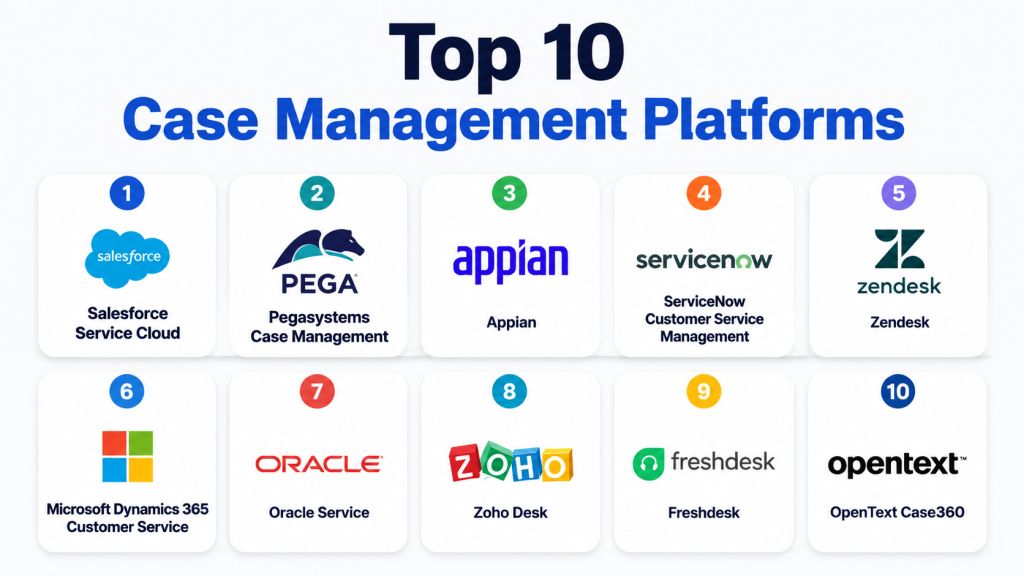
Top 10 Case Management Platforms
1- Salesforce Service Cloud
Short Description: Salesforce Service Cloud provides enterprise-grade customer and case management capabilities with AI-powered automation, omnichannel support, and extensive workflow customization.
Key Features
- AI-powered case routing
- Omnichannel customer support
- Workflow automation
- Knowledge management
- SLA tracking and escalation
- Analytics dashboards
- Mobile case management
Pros
- Extensive customization capabilities
- Strong ecosystem and integrations
- Advanced AI and automation tools
Cons
- Expensive for smaller businesses
- Complex implementation
- Advanced customization may require specialists
Platforms / Deployment
- Web, iOS, Android
- Cloud
Security & Compliance
- SSO/SAML, MFA, encryption, RBAC
- SOC 2, GDPR, HIPAA support
Integrations & Ecosystem
Salesforce integrates with ERP, communication, analytics, and productivity platforms.
- Slack
- Microsoft 365
- SAP
- Oracle
- REST APIs
- AppExchange ecosystem
Support & Community
Large enterprise support ecosystem with extensive documentation, certifications, consulting partners, and active community forums.
2- Pegasystems Case Management
Short Description: Pega delivers AI-driven case management and workflow automation for enterprises requiring complex process orchestration and compliance management.
Key Features
- AI-driven decisioning
- Dynamic case workflows
- Real-time analytics
- Low-code development
- Process automation
- Compliance tracking
- Omnichannel communication
Pros
- Strong enterprise scalability
- Excellent workflow automation
- Advanced AI integration
Cons
- High implementation complexity
- Premium pricing
- Steep learning curve
Platforms / Deployment
- Web, iOS, Android
- Cloud / Hybrid
Security & Compliance
- SSO, MFA, audit logging
- GDPR, SOC 2
Integrations & Ecosystem
Supports enterprise application integration across multiple systems.
- SAP
- Salesforce
- Oracle
- REST APIs
- BPM integration
Support & Community
Enterprise-grade support, training programs, and active implementation partner network.
3- Appian
Short Description: Appian combines low-code automation, workflow orchestration, and case management into a unified platform for digital transformation initiatives.
Key Features
- Low-code process design
- Workflow automation
- AI document processing
- Case lifecycle management
- RPA integration
- Reporting dashboards
- Mobile support
Pros
- Fast application deployment
- User-friendly low-code tools
- Strong automation ecosystem
Cons
- Licensing costs can scale quickly
- Complex advanced customization
- Requires governance planning
Platforms / Deployment
- Web, iOS, Android
- Cloud / Hybrid
Security & Compliance
- SSO/SAML, encryption, audit logs
- SOC 2, ISO 27001, GDPR
Integrations & Ecosystem
Strong API-driven integration capabilities with enterprise systems.
- SAP
- Salesforce
- Microsoft 365
- REST APIs
- RPA integrations
Support & Community
Strong documentation, enterprise onboarding resources, and partner support ecosystem.
4- ServiceNow Customer Service Management
Short Description: ServiceNow provides enterprise service and case management with automation, workflow orchestration, and integrated IT service capabilities.
Key Features
- Case lifecycle management
- AI virtual agents
- Workflow automation
- SLA management
- Self-service portals
- Omnichannel support
- Advanced reporting
Pros
- Excellent enterprise workflows
- Strong ITSM integration
- Scalable platform architecture
Cons
- Expensive licensing
- Requires experienced administrators
- Can be complex for SMBs
Platforms / Deployment
- Web, iOS, Android
- Cloud
Security & Compliance
- SSO, MFA, encryption
- SOC 2, ISO 27001, GDPR
Integrations & Ecosystem
Extensive enterprise integrations across IT and business systems.
- Microsoft Teams
- Salesforce
- Jira
- SAP
- APIs and automation connectors
Support & Community
Large enterprise support ecosystem and extensive learning resources.
5- Zendesk
Short Description: Zendesk offers customer-focused case and ticket management for support teams needing simplicity, automation, and omnichannel communication.
Key Features
- Ticket and case management
- Omnichannel communication
- Workflow automation
- SLA tracking
- Knowledge base
- AI chatbots
- Reporting tools
Pros
- Easy to deploy
- User-friendly interface
- Strong customer support tools
Cons
- Limited advanced workflow depth
- Enterprise customization can be restrictive
- Costs increase with add-ons
Platforms / Deployment
- Web, iOS, Android
- Cloud
Security & Compliance
- SSO, encryption
- SOC 2, GDPR
Integrations & Ecosystem
Supports integrations with CRM, collaboration, and productivity platforms.
- Slack
- Salesforce
- Microsoft Teams
- APIs
- Marketplace apps
Support & Community
Strong online support, documentation, and active user forums.
6- Microsoft Dynamics 365 Customer Service
Short Description: Microsoft Dynamics 365 provides enterprise customer and case management tightly integrated with the Microsoft ecosystem.
Key Features
- AI-powered recommendations
- Omnichannel engagement
- Workflow automation
- Case tracking
- SLA management
- Reporting dashboards
- Knowledge management
Pros
- Strong Microsoft integration
- Enterprise scalability
- Familiar interface for Microsoft users
Cons
- Complex licensing structure
- Advanced setup requires expertise
- Customization can become costly
Platforms / Deployment
- Web, Windows, iOS, Android
- Cloud / Hybrid
Security & Compliance
- SSO, MFA, encryption
- SOC 2, ISO 27001, GDPR
Integrations & Ecosystem
Deep integration with Microsoft products and enterprise systems.
- Microsoft 365
- Teams
- Power Platform
- Azure
- REST APIs
Support & Community
Extensive enterprise support and strong global partner ecosystem.
7- Oracle Service
Short Description: Oracle Service delivers customer and case management with AI-driven automation and enterprise workflow orchestration.
Key Features
- AI recommendations
- Workflow automation
- Omnichannel support
- Knowledge management
- Analytics dashboards
- SLA management
- Mobile accessibility
Pros
- Enterprise-grade scalability
- Strong Oracle ecosystem integration
- Advanced analytics
Cons
- Higher cost structure
- Complex implementation
- Learning curve for administrators
Platforms / Deployment
- Web, iOS, Android
- Cloud / Hybrid
Security & Compliance
- SSO, encryption, RBAC
- GDPR, SOC 2
Integrations & Ecosystem
Strong enterprise integrations and APIs.
- Oracle ERP
- SAP
- Salesforce
- APIs
- AI services
Support & Community
Comprehensive enterprise support and implementation services.
8- Zoho Desk
Short Description: Zoho Desk provides affordable case and ticket management for SMBs needing automation and multichannel customer support.
Key Features
- Ticket automation
- Omnichannel communication
- Workflow rules
- SLA tracking
- AI assistant
- Reporting dashboards
- Knowledge base
Pros
- Affordable pricing
- Easy setup
- Strong SMB focus
Cons
- Limited enterprise scalability
- Fewer advanced workflow tools
- Reporting customization limitations
Platforms / Deployment
- Web, iOS, Android
- Cloud
Security & Compliance
- SSO, encryption
- GDPR support
Integrations & Ecosystem
Part of the larger Zoho business application ecosystem.
- Zoho CRM
- Slack
- Microsoft 365
- APIs
- Marketplace integrations
Support & Community
Strong SMB support resources and active user community.
9- Freshdesk
Short Description: Freshdesk provides modern customer and case management with automation, AI, and omnichannel engagement features.
Key Features
- AI chatbots
- Ticket automation
- SLA management
- Omnichannel support
- Reporting dashboards
- Team collaboration
- Workflow automation
Pros
- Simple and intuitive interface
- Fast deployment
- Competitive pricing
Cons
- Limited enterprise workflow complexity
- Advanced analytics require higher tiers
- Customization limitations
Platforms / Deployment
- Web, iOS, Android
- Cloud
Security & Compliance
- SSO, encryption
- GDPR, SOC 2
Integrations & Ecosystem
Strong integration support for collaboration and CRM tools.
- Slack
- Salesforce
- Microsoft Teams
- APIs
- Freshworks ecosystem
Support & Community
Good onboarding resources and active support forums.
10- OpenText Case360
Short Description: OpenText Case360 provides enterprise case management focused on compliance-heavy industries and complex workflows.
Key Features
- Dynamic case workflows
- Compliance management
- Document management
- Process automation
- Analytics dashboards
- Collaboration tools
- SLA monitoring
Pros
- Strong compliance support
- Enterprise workflow depth
- Advanced document management
Cons
- Complex implementation
- Premium pricing
- Requires technical expertise
Platforms / Deployment
- Web, Windows
- Cloud / On-prem / Hybrid
Security & Compliance
- SSO, MFA, audit logs
- GDPR, HIPAA support
Integrations & Ecosystem
Enterprise integration capabilities for regulated industries.
- SAP
- Oracle
- Microsoft systems
- APIs
- ECM integrations
Support & Community
Enterprise-focused support with implementation consulting services.
Comparison Table
| Tool Name | Best For | Platforms Supported | Deployment | Standout Feature | Public Rating |
|---|---|---|---|---|---|
| Salesforce Service Cloud | Enterprise customer service | Web, iOS, Android | Cloud | AI-driven service workflows | N/A |
| Pegasystems | Complex enterprise workflows | Web, iOS, Android | Cloud / Hybrid | AI-powered case orchestration | N/A |
| Appian | Low-code automation | Web, iOS, Android | Cloud / Hybrid | Unified low-code workflow platform | N/A |
| ServiceNow | Enterprise service management | Web, iOS, Android | Cloud | Integrated IT and customer workflows | N/A |
| Zendesk | SMB customer support | Web, iOS, Android | Cloud | Easy omnichannel support | N/A |
| Dynamics 365 | Microsoft-centric enterprises | Web, Windows, Mobile | Cloud / Hybrid | Microsoft ecosystem integration | N/A |
| Oracle Service | Large enterprise support | Web, Mobile | Cloud / Hybrid | AI-powered service automation | N/A |
| Zoho Desk | SMB support teams | Web, Mobile | Cloud | Affordable automation | N/A |
| Freshdesk | Modern SMB support | Web, Mobile | Cloud | Fast deployment | N/A |
| OpenText Case360 | Compliance-heavy enterprises | Web, Windows | Hybrid | Advanced compliance workflows | N/A |
Evaluation & Scoring
| Tool Name | Core | Ease | Integrations | Security | Performance | Support | Value | Weighted Total |
|---|---|---|---|---|---|---|---|---|
| Salesforce Service Cloud | 9 | 8 | 10 | 9 | 9 | 9 | 7 | 8.75 |
| Pegasystems | 9 | 7 | 9 | 9 | 9 | 8 | 6 | 8.20 |
| Appian | 9 | 8 | 8 | 9 | 8 | 8 | 7 | 8.10 |
| ServiceNow | 9 | 7 | 9 | 9 | 9 | 8 | 6 | 8.15 |
| Zendesk | 7 | 9 | 7 | 8 | 8 | 8 | 9 | 8.00 |
| Dynamics 365 | 8 | 7 | 9 | 9 | 8 | 8 | 7 | 7.95 |
| Oracle Service | 8 | 6 | 9 | 9 | 8 | 8 | 6 | 7.75 |
| Zoho Desk | 7 | 9 | 7 | 7 | 7 | 7 | 9 | 7.75 |
| Freshdesk | 7 | 9 | 7 | 7 | 7 | 7 | 9 | 7.75 |
| OpenText Case360 | 8 | 6 | 8 | 9 | 8 | 7 | 6 | 7.45 |
These scores are comparative and designed to help buyers evaluate platforms across usability, security, integrations, and overall value. Enterprise tools generally score higher in scalability and workflow depth, while SMB-focused platforms perform better in ease of use and affordability. Buyers should align scoring priorities with their operational needs and compliance requirements.
Which Case Management Platform Is Right for You?
Solo / Freelancer
Freelancers and small service teams typically benefit from lightweight and affordable platforms like Zoho Desk or Freshdesk. These tools provide easy onboarding, automation, and multichannel support without enterprise complexity.
SMB
SMBs should consider Zendesk, Zoho Desk, or Freshdesk because they balance affordability, automation, and usability. These platforms support customer support growth while remaining easy to manage.
Mid-Market
Mid-sized organizations often require stronger workflow orchestration and integrations. Appian, Dynamics 365, and ServiceNow provide better scalability and process automation capabilities.
Enterprise
Large enterprises handling compliance-heavy workflows should evaluate Salesforce Service Cloud, Pegasystems, ServiceNow, or OpenText Case360. These platforms offer advanced automation, governance, analytics, and enterprise integration depth.
Budget vs Premium
Budget-focused organizations should prioritize Zoho Desk and Freshdesk. Premium enterprise buyers requiring scalability and governance may benefit more from Salesforce, Pega, or ServiceNow.
Feature Depth vs Ease of Use
Zendesk and Freshdesk are easier to deploy and manage, while Appian, Pegasystems, and ServiceNow provide significantly deeper workflow and automation functionality.
Integrations & Scalability
Salesforce, Dynamics 365, and ServiceNow offer the broadest integration ecosystems and scalability for enterprise operations and global teams.
Security & Compliance Needs
Healthcare, government, and financial services organizations should prioritize platforms with advanced compliance controls such as Salesforce, OpenText Case360, ServiceNow, and Pegasystems.
Frequently Asked Questions
1. What is a Case Management Platform?
A Case Management Platform helps organizations track, manage, and resolve cases through structured workflows and centralized information management. These systems improve collaboration, automation, and accountability across departments.
2. Which industries use Case Management Platforms the most?
Industries such as healthcare, legal, insurance, banking, HR, customer service, and government agencies heavily rely on these platforms. They help manage high-volume workflows and compliance-sensitive operations.
3. Are these platforms suitable for SMBs?
Yes, several platforms like Zendesk, Zoho Desk, and Freshdesk are designed specifically for SMBs. They provide affordable pricing, automation, and user-friendly interfaces without enterprise-level complexity.
4. Do Case Management Platforms support AI features?
Modern platforms increasingly include AI-powered routing, automation, chatbots, predictive analytics, and workflow recommendations. These capabilities help organizations improve efficiency and reduce response times.
5. How important are integrations in case management?
Integrations are critical because case workflows often depend on CRM, ERP, communication, and analytics systems. Strong integrations improve operational visibility and reduce manual work across teams.
6. Are cloud-based case management platforms secure?
Most leading vendors provide enterprise-grade security including SSO, MFA, encryption, RBAC, and audit logging. Many also support compliance standards such as GDPR, SOC 2, and HIPAA.
7. What should buyers evaluate before choosing a platform?
Organizations should evaluate scalability, workflow automation, reporting, security, compliance, integrations, customization, and total cost of ownership before making a decision.
8. How long does implementation usually take?
Implementation timelines vary depending on complexity. SMB-focused deployments may take days or weeks, while enterprise rollouts involving integrations and custom workflows can take several months.
9. Can these tools replace traditional ticketing systems?
Yes, modern Case Management Platforms go beyond ticketing by supporting workflows, collaboration, compliance tracking, document management, and advanced automation capabilities.
10. Which platform is best for enterprise-scale operations?
Salesforce Service Cloud, Pegasystems, ServiceNow, and Appian are among the strongest enterprise-grade options for organizations requiring scalability, governance, and advanced automation.
Conclusion
Case Management Platforms have become essential for organizations that need structured workflows, faster resolution times, and better operational visibility across teams. Modern platforms now combine AI, automation, analytics, and omnichannel communication to improve efficiency while maintaining compliance and governance standards. Enterprise organizations may prefer Salesforce, ServiceNow, Pegasystems, or Appian for advanced workflow orchestration and scalability, while SMBs can benefit from simpler and more affordable platforms like Zendesk, Freshdesk, or Zoho Desk. The right platform depends on workflow complexity, integration needs, compliance requirements, and long-term scalability goals. Businesses should carefully evaluate automation depth, usability, security, and deployment flexibility before making a final decision. A smart next step is to shortlist 2–3 platforms, test real workflows through a pilot deployment, and validate integrations, reporting, and governance capabilities before scaling organization-wide.

Find Trusted Cardiac Hospitals
Compare heart hospitals by city and services — all in one place.
Explore Hospitals