Introduction
Digital Wallet SDKs are software development kits that allow developers to integrate digital payment wallets, tokenized payment methods, loyalty cards, passes, and financial services directly into mobile and web applications. Instead of building wallet functionality from scratch, organizations can use SDKs to accelerate payment integration, improve security, and provide seamless customer experiences. As digital payments continue to expand globally, Digital Wallet SDKs have become critical for fintech companies, e-commerce platforms, banks, marketplaces, mobility applications, and subscription businesses. Consumers increasingly expect one-click checkout, biometric authentication, tokenized payments, and support for multiple wallet ecosystems.
Real World Use Cases
- Mobile commerce applications
- Retail checkout experiences
- Digital banking and fintech apps
- Loyalty and rewards programs
- Travel and transportation ticketing
- Cryptocurrency and Web3 wallet integrations
Evaluation Criteria for Buyers
When evaluating Digital Wallet SDKs, consider:
- Platform compatibility
- Payment method coverage
- Security architecture
- Developer experience
- API quality
- Global payment support
- Compliance capabilities
- Scalability
- Documentation quality
- Ecosystem integrations
Best for: Fintech startups, payment providers, banks, marketplaces, SaaS platforms, e-commerce businesses, mobile app developers, and enterprises building digital payment experiences.
Not ideal for: Organizations that only need basic payment links or businesses that can rely entirely on third-party hosted checkout pages without custom wallet functionality.
Key Trends in Digital Wallet SDKs
- AI-driven fraud prevention embedded within payment workflows.
- Expansion of tokenized payment credentials.
- Growth of wallet-based identity verification.
- Increased support for real-time payments.
- Open banking integrations becoming more common.
- Cross-platform SDKs reducing development complexity.
- Embedded finance capabilities expanding beyond payments.
- Biometric authentication becoming standard.
- Stronger compliance and privacy controls.
- Growing convergence between traditional wallets and digital asset wallets.
How We Selected These Tools
Our evaluation considered:
- Industry adoption and market presence
- Developer popularity and community engagement
- API maturity and SDK quality
- Security and compliance capabilities
- Mobile and web platform support
- Integration flexibility
- Enterprise readiness
- Documentation quality
- Innovation roadmap
- Suitability across different business sizes
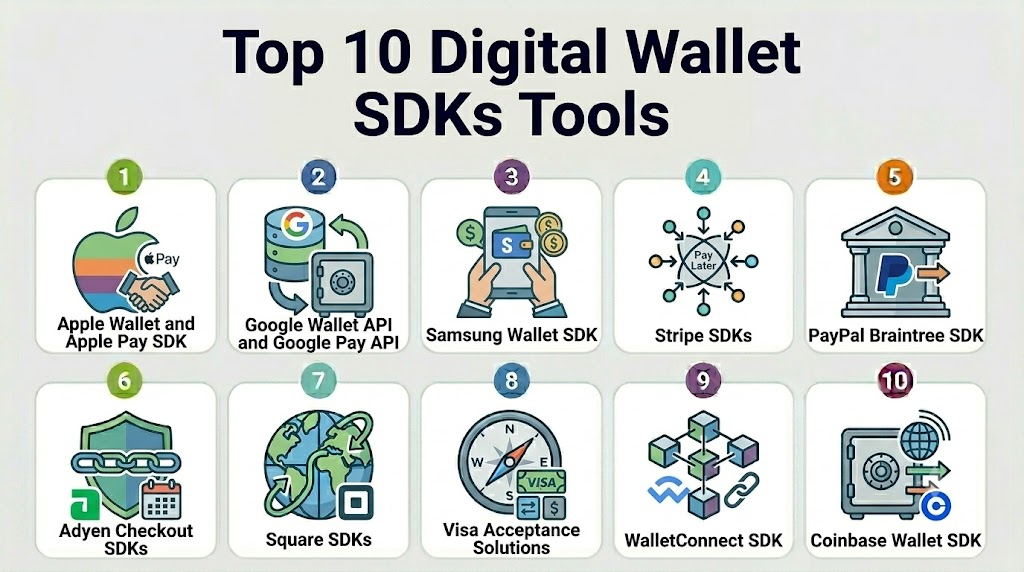
Top 10 Digital Wallet SDKs Tools
1- Apple Wallet and Apple Pay SDK
Short Description:
Apple Wallet and Apple Pay SDK enable businesses to integrate Apple Pay, digital passes, loyalty cards, tickets, and payment experiences into iOS applications.
Key Features
- Apple Pay integration
- Tokenized payments
- Face ID and Touch ID authentication
- Loyalty card support
- Digital ticket management
- Secure Element integration
- Wallet pass distribution
Pros
- Strong consumer adoption
- Excellent security architecture
- Native iOS experience
Cons
- Apple ecosystem only
- Limited customization
- Requires Apple device support
Platforms / Deployment
- iOS
- Cloud
Security & Compliance
- Tokenization
- Biometric authentication
- Encryption
- MFA capabilities
Integrations & Ecosystem
Strong integration with Apple’s ecosystem and payment infrastructure.
- Banking apps
- Retail applications
- Ticketing systems
- Loyalty platforms
- Payment gateways
Support & Community
Extensive developer documentation and strong enterprise support ecosystem.
2- Google Wallet API and Google Pay API
Short Description:
Google Wallet and Google Pay APIs allow developers to add payments, digital credentials, loyalty cards, and passes across Android and web environments.
Key Features
- Google Pay checkout
- Pass management
- Loyalty cards
- Transit tickets
- Tokenized transactions
- Android integration
- Web payment support
Pros
- Broad Android reach
- Web compatibility
- Easy deployment
Cons
- Android-centric ecosystem
- Regional availability variations
- Wallet feature differences across markets
Platforms / Deployment
- Android
- Web
- Cloud
Security & Compliance
- Tokenization
- Encryption
- Secure authentication
Integrations & Ecosystem
Supports extensive Google ecosystem integrations.
- Android applications
- Retail systems
- Payment processors
- Banking platforms
- Commerce solutions
Support & Community
Large developer community and comprehensive documentation.
3- Samsung Wallet SDK
Short Description:
Samsung Wallet SDK enables payment, identity, ticketing, and loyalty experiences across Samsung mobile devices.
Key Features
- Samsung Pay support
- Digital passes
- Identity storage
- Ticketing capabilities
- Loyalty programs
- Secure authentication
- Device-level integration
Pros
- Strong Samsung device integration
- Secure environment
- Good regional adoption
Cons
- Limited outside Samsung ecosystem
- Smaller developer ecosystem
- Device dependency
Platforms / Deployment
- Android
- Cloud
Security & Compliance
- Tokenization
- Encryption
- Biometric authentication
Integrations & Ecosystem
- Banking systems
- Loyalty platforms
- Transit providers
- Retail applications
Support & Community
Good documentation with enterprise-focused support.
4- Stripe SDKs
Short Description:
Stripe SDKs provide developers with wallet integration, payment processing, recurring billing, and embedded finance capabilities.
Key Features
- Apple Pay support
- Google Pay support
- Payment tokenization
- Mobile SDKs
- Fraud detection
- Subscription billing
- Global payments
Pros
- Developer-friendly
- Extensive ecosystem
- Fast implementation
Cons
- Advanced features increase complexity
- Pricing varies by region
- Dependency on Stripe infrastructure
Platforms / Deployment
- Web
- iOS
- Android
- Cloud
Security & Compliance
- Encryption
- RBAC
- Audit capabilities
- Compliance support
Integrations & Ecosystem
One of the largest payment ecosystems available.
- E-commerce platforms
- CRM systems
- SaaS platforms
- Mobile apps
- Banking solutions
Support & Community
Exceptional documentation and strong developer community.
5- PayPal Braintree SDK
Short Description:
Braintree provides wallet integration, payment acceptance, and omnichannel payment experiences for developers and enterprises.
Key Features
- PayPal integration
- Apple Pay support
- Google Pay support
- Vaulted payments
- Fraud tools
- Mobile SDKs
- Global transactions
Pros
- Strong PayPal ecosystem
- Mature platform
- Global reach
Cons
- Some advanced features require configuration
- Regional limitations
- Learning curve for complex implementations
Platforms / Deployment
- Web
- Android
- iOS
- Cloud
Security & Compliance
- Encryption
- Tokenization
- Fraud controls
Integrations & Ecosystem
- E-commerce systems
- Marketplaces
- Mobile applications
- Subscription platforms
Support & Community
Well-established documentation and support channels.
6- Adyen Checkout SDKs
Short Description:
Adyen provides enterprise-grade payment SDKs with support for digital wallets, global payments, and omnichannel commerce.
Key Features
- Wallet integrations
- Global payment methods
- Unified commerce
- Risk management
- Tokenization
- Omnichannel support
- Real-time analytics
Pros
- Enterprise scalability
- Global coverage
- Strong payment capabilities
Cons
- Enterprise-oriented complexity
- Smaller SMB focus
- Advanced setup requirements
Platforms / Deployment
- Web
- Android
- iOS
- Cloud
Security & Compliance
- Encryption
- Tokenization
- Compliance tooling
Integrations & Ecosystem
- Retail systems
- Commerce platforms
- POS environments
- Financial applications
Support & Community
Strong enterprise support and technical documentation.
7- Square SDKs
Short Description:
Square SDKs help businesses integrate payments, wallets, commerce services, and POS experiences into applications.
Key Features
- Wallet payments
- In-app checkout
- POS integration
- Developer APIs
- Business management tools
- Mobile payments
- Commerce workflows
Pros
- Easy implementation
- Strong SMB focus
- Commerce ecosystem
Cons
- Limited global coverage
- Regional restrictions
- Enterprise features less extensive
Platforms / Deployment
- Web
- Android
- iOS
- Cloud
Security & Compliance
- Encryption
- Payment security controls
- Fraud management
Integrations & Ecosystem
- Retail systems
- Inventory platforms
- Commerce tools
- Business applications
Support & Community
Strong developer resources and onboarding materials.
8- Visa Acceptance Solutions
Short Description:
Visa Acceptance Solutions offers payment APIs and wallet integration capabilities for enterprise payment applications.
Key Features
- Wallet support
- Global payment acceptance
- Token management
- Risk services
- Cross-border payments
- Enterprise APIs
- Analytics
Pros
- Global infrastructure
- Trusted payment network
- Enterprise capabilities
Cons
- Enterprise focus
- Implementation complexity
- Requires payment expertise
Platforms / Deployment
- Web
- Mobile
- Cloud
Security & Compliance
- Tokenization
- Encryption
- Risk controls
Integrations & Ecosystem
- Banking systems
- Payment gateways
- Enterprise commerce platforms
Support & Community
Strong enterprise support model.
9- WalletConnect SDK
Short Description:
WalletConnect SDK enables applications to connect securely with cryptocurrency wallets and Web3 ecosystems.
Key Features
- Web3 wallet connectivity
- Multi-wallet support
- Cross-platform access
- Decentralized authentication
- Session management
- Blockchain interoperability
- Open ecosystem
Pros
- Broad Web3 adoption
- Flexible integration
- Multi-wallet compatibility
Cons
- Focused on blockchain use cases
- Less suitable for traditional payments
- Ecosystem complexity
Platforms / Deployment
- Web
- Android
- iOS
- Cloud
Security & Compliance
- Secure session architecture
- Encrypted communication
Integrations & Ecosystem
- Crypto wallets
- DeFi applications
- NFT platforms
- Blockchain networks
Support & Community
Large open-source community and extensive documentation.
10- Coinbase Wallet SDK
Short Description:
Coinbase Wallet SDK enables developers to connect applications with self-custody crypto wallets and Web3 services.
Key Features
- Self-custody wallet access
- Web3 connectivity
- Blockchain support
- NFT compatibility
- Developer APIs
- Authentication tools
- Multi-chain support
Pros
- Strong Web3 ecosystem
- User-friendly wallet experience
- Growing developer adoption
Cons
- Primarily crypto-focused
- Regulatory considerations
- Not suitable for all payment scenarios
Platforms / Deployment
- Web
- Android
- iOS
- Cloud
Security & Compliance
- Encryption
- Self-custody security model
Integrations & Ecosystem
- Blockchain applications
- Web3 services
- NFT ecosystems
- Crypto marketplaces
Support & Community
Active developer community and improving documentation.
Comparison Table
| Tool Name | Best For | Platform Supported | Deployment | Standout Feature | Public Rating |
|---|---|---|---|---|---|
| Apple Wallet & Apple Pay | iOS Payments | iOS | Cloud | Native Apple ecosystem | N/A |
| Google Wallet & Google Pay | Android Payments | Android, Web | Cloud | Android ecosystem reach | N/A |
| Samsung Wallet | Samsung Users | Android | Cloud | Samsung device integration | N/A |
| Stripe SDKs | Developers & SaaS | Web, Android, iOS | Cloud | Developer ecosystem | N/A |
| PayPal Braintree | Global Commerce | Web, Android, iOS | Cloud | PayPal network integration | N/A |
| Adyen Checkout | Enterprise Commerce | Web, Android, iOS | Cloud | Omnichannel payments | N/A |
| Square SDKs | SMB Commerce | Web, Android, iOS | Cloud | Commerce ecosystem | N/A |
| Visa Acceptance Solutions | Large Enterprises | Web, Mobile | Cloud | Visa network capabilities | N/A |
| WalletConnect SDK | Web3 Applications | Web, Android, iOS | Cloud | Multi-wallet connectivity | N/A |
| Coinbase Wallet SDK | Crypto Platforms | Web, Android, iOS | Cloud | Self-custody wallet support | N/A |
Evaluation & Scoring of Digital Wallet SDKs
| Tool | Core | Ease | Integrations | Security | Performance | Support | Value | Weighted Total |
|---|---|---|---|---|---|---|---|---|
| Apple Wallet | 9 | 9 | 8 | 10 | 9 | 9 | 8 | 8.95 |
| Google Wallet | 9 | 9 | 8 | 9 | 9 | 9 | 8 | 8.80 |
| Samsung Wallet | 8 | 8 | 7 | 9 | 8 | 8 | 8 | 8.00 |
| Stripe SDKs | 10 | 9 | 10 | 9 | 9 | 10 | 8 | 9.30 |
| Braintree | 9 | 8 | 9 | 9 | 8 | 8 | 8 | 8.50 |
| Adyen | 10 | 8 | 9 | 9 | 10 | 9 | 7 | 8.85 |
| Square | 8 | 9 | 8 | 8 | 8 | 8 | 9 | 8.30 |
| Visa Acceptance | 9 | 7 | 9 | 9 | 10 | 9 | 7 | 8.55 |
| WalletConnect | 9 | 8 | 9 | 8 | 8 | 9 | 9 | 8.60 |
| Coinbase Wallet SDK | 8 | 8 | 8 | 8 | 8 | 8 | 8 | 8.00 |
Which Digital Wallet SDK Tool Is Right for You?
Solo / Freelancer
Stripe SDKs and Square SDKs are typically the easiest options for rapid implementation and small-scale applications.
SMB
Square SDKs, Stripe SDKs, and Braintree offer a strong balance between functionality, ease of deployment, and manageable operational complexity.
Mid-Market
Stripe SDKs, Adyen Checkout SDKs, and Braintree provide scalable infrastructure and extensive wallet support.
Enterprise
Adyen Checkout SDKs, Visa Acceptance Solutions, Apple Wallet, and Google Wallet integrations are strong choices for large-scale payment ecosystems.
Budget vs Premium
- Budget-friendly: Square SDKs, WalletConnect SDK
- Premium enterprise: Adyen, Visa Acceptance Solutions
- Balanced investment: Stripe SDKs, Braintree
Feature Depth vs Ease of Use
- Highest feature depth: Stripe, Adyen, Visa
- Easiest implementation: Apple Wallet, Google Wallet, Square
Integrations & Scalability
- Best integrations: Stripe SDKs
- Best enterprise scalability: Adyen and Visa
- Best Web3 ecosystem: WalletConnect
Security & Compliance Needs
Organizations with strict security requirements should prioritize Apple Wallet, Google Wallet, Adyen, Visa Acceptance Solutions, and Stripe.
Frequently Asked Questions
1- What is a Digital Wallet SDK?
A Digital Wallet SDK is a software toolkit that helps developers integrate payment wallets, loyalty programs, digital passes, and payment functionality into applications.
2- Why use an SDK instead of building wallet functionality?
SDKs significantly reduce development time, improve security, and provide access to tested payment infrastructure.
3- Which SDK is best for startups?
Stripe SDKs and Square SDKs are often preferred due to ease of implementation and strong documentation.
4- Are Digital Wallet SDKs secure?
Most leading SDKs implement encryption, tokenization, secure authentication, and fraud prevention controls.
5- Can Digital Wallet SDKs support multiple payment methods?
Yes. Many platforms support cards, wallets, bank transfers, and alternative payment methods.
6- Are these SDKs suitable for enterprise use?
Platforms such as Adyen, Stripe, and Visa Acceptance Solutions are designed to support enterprise-scale transaction volumes.
7- How difficult is implementation?
Implementation complexity varies. Basic integrations can be completed quickly, while enterprise deployments may require significant planning.
8- Do Digital Wallet SDKs support Web3 applications?
Some do. WalletConnect SDK and Coinbase Wallet SDK are specifically designed for blockchain and Web3 ecosystems.
9- What is tokenization?
Tokenization replaces sensitive payment data with secure tokens, reducing exposure to fraud and data theft.
10- How should organizations evaluate Digital Wallet SDKs?
Focus on platform compatibility, payment coverage, security controls, developer experience, integration flexibility, and scalability requirements.
Conclusion
Digital Wallet SDKs have become foundational components of modern digital commerce, mobile banking, embedded finance, and Web3 ecosystems. The right SDK can accelerate development, improve payment experiences, enhance security, and simplify compliance requirements. Stripe SDKs stand out for developer flexibility and ecosystem breadth, while Adyen and Visa Acceptance Solutions excel in enterprise payment environments. Apple Wallet and Google Wallet remain essential for consumer-facing mobile experiences, while WalletConnect and Coinbase Wallet SDK serve the growing Web3 ecosystem. Rather than choosing a single universal winner, organizations should evaluate wallet coverage, platform support, integration requirements, security expectations, and scalability needs. Start by shortlisting two or three options, running a proof of concept, and validating integration, security, and operational requirements before full deployment.

Find Trusted Cardiac Hospitals
Compare heart hospitals by city and services — all in one place.
Explore Hospitals
One aspect that deserves attention is the developer experience and quality of documentation provided by wallet SDK vendors. Well-maintained SDKs with clear migration paths can significantly reduce integration effort and long-term maintenance challenges.