Introduction
Payment Orchestration Platforms are centralized systems that help businesses manage, optimize, route, and monitor digital payments across multiple payment gateways, processors, banks, fraud tools, and financial services providers. Instead of relying on a single payment provider, companies use orchestration platforms to improve payment success rates, reduce transaction costs, strengthen fraud prevention, and simplify global payment operations. In the modern digital commerce ecosystem, businesses increasingly operate across multiple countries, currencies, and payment methods. This complexity has made payment orchestration a strategic infrastructure layer for enterprises, SaaS companies, marketplaces, fintech firms, travel platforms, gaming companies, and subscription businesses. Modern orchestration platforms now support AI-driven payment routing, smart retries, real-time analytics, token vaulting, compliance automation, and unified transaction visibility.
Real-world use cases include:
- Smart payment routing across multiple gateways
- Global payment acceptance optimization
- Subscription billing and recurring payment management
- Fraud detection and payment risk reduction
- Marketplace and multi-vendor payment processing
What Buyers Should Evaluate:
- Multi-gateway integration support
- Smart routing and failover capabilities
- Global payment method coverage
- Fraud prevention and risk management
- API flexibility and developer tools
- Reporting and analytics quality
- Compliance and security capabilities
- Transaction cost optimization
- Scalability for enterprise workloads
- Tokenization and vault management
Best for: Enterprise merchants, SaaS businesses, fintech companies, marketplaces, travel platforms, gaming companies, subscription businesses, and global e-commerce operations managing high transaction volumes.
Not ideal for: Small local businesses with simple payment requirements, merchants using only one payment provider, or businesses without international payment operations.
Key Trends in Payment Orchestration Platforms
- AI-driven payment routing is improving authorization rates and reducing failed transactions.
- Multi-acquirer strategies are becoming standard for global enterprises.
- Payment orchestration is increasingly integrated with fraud prevention and identity verification systems.
- Real-time payment support is expanding across banking networks globally.
- Tokenization and network token support are improving payment security and recurring billing stability.
- Unified analytics dashboards are helping finance teams optimize payment performance.
- Embedded finance and integrated payouts are becoming orchestration priorities.
- Regulatory compliance automation is growing in importance across regions.
- API-first orchestration platforms are replacing rigid legacy payment infrastructures.
- Cross-border payment optimization is becoming essential for digital commerce scalability.
How We Selected These Tools
The following Payment Orchestration Platforms were selected using multiple evaluation criteria relevant to global payment operations:
- Enterprise market adoption and payment volume scale
- Breadth of payment integrations and gateway support
- Smart routing and orchestration functionality
- Fraud prevention and risk management maturity
- API quality and developer ecosystem
- Global payment and currency coverage
- Reliability and transaction uptime performance
- Compliance and security posture
- Customer suitability across SMB, mid-market, and enterprise segments
- Vendor innovation in AI and automation capabilities
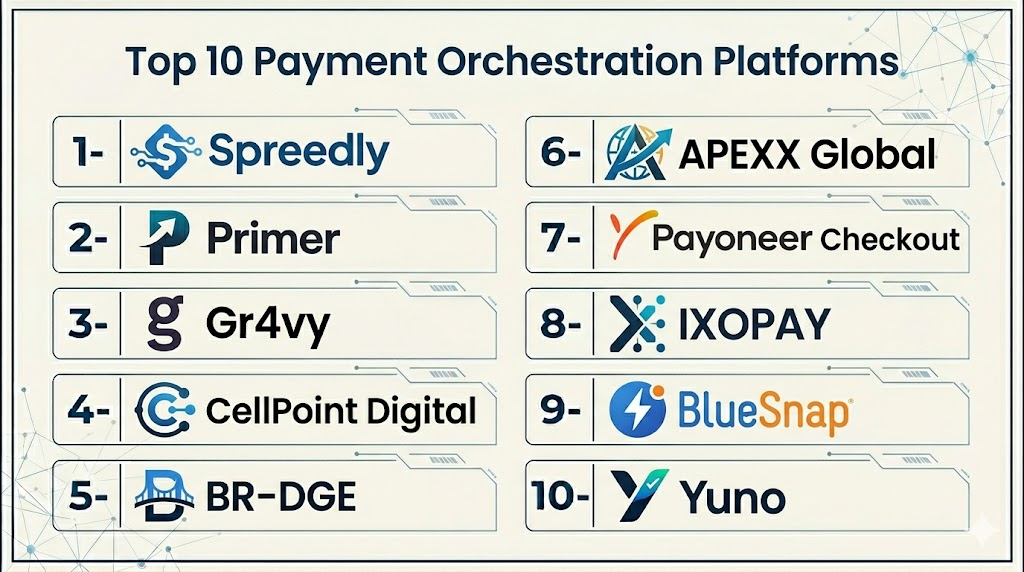
Top 10 Payment Orchestration Platforms
1- Spreedly
Short description: Spreedly is a payment orchestration platform focused on payment gateway connectivity, tokenization, and transaction optimization for enterprises and digital commerce businesses.
Key Features
- Multi-gateway payment routing
- Universal token vault
- PCI-compliant tokenization
- Smart transaction retries
- Payment failover automation
- API-driven payment orchestration
- Real-time payment analytics
Pros
- Strong gateway integration ecosystem
- Flexible token management
- Developer-friendly APIs
Cons
- Enterprise-focused pricing
- Requires technical integration expertise
- Smaller ecosystem than some payment giants
Platforms / Deployment
- Web
- Cloud
Security & Compliance
- PCI DSS support
- Encryption
- MFA
- Tokenization
- Audit logging
Integrations & Ecosystem
Spreedly integrates with numerous payment gateways, fraud systems, and commerce platforms to support flexible payment infrastructure.
- Stripe integrations
- Adyen integrations
- PayPal integrations
- Fraud prevention tools
- Subscription billing systems
Support & Community
Strong enterprise support model with detailed documentation and developer resources.
2- Primer
Short description: Primer provides a no-code and API-driven payment orchestration platform designed for modern commerce businesses and fintech operations.
Key Features
- Drag-and-drop payment workflows
- Multi-provider orchestration
- AI-powered routing logic
- Unified payment analytics
- Fraud prevention integrations
- Cross-border payment optimization
- Payment failover automation
Pros
- Modern user experience
- Flexible orchestration workflows
- Strong developer tooling
Cons
- Growing ecosystem compared to older providers
- Enterprise onboarding may take time
- Pricing transparency varies
Platforms / Deployment
- Web
- Cloud
Security & Compliance
- PCI DSS support
- Encryption
- RBAC
- MFA
Integrations & Ecosystem
Primer supports broad payment provider connectivity and modular payment operations.
- Stripe integrations
- Checkout.com integrations
- Fraud management systems
- Open APIs
- Analytics tools
Support & Community
Growing payment infrastructure community with strong onboarding support.
3- Gr4vy
Short description: Gr4vy focuses on cloud-native payment orchestration and payment infrastructure management for digital commerce platforms.
Key Features
- Cloud-native orchestration
- Payment routing automation
- Token management
- Multi-gateway support
- Fraud prevention integrations
- API-first infrastructure
- Merchant analytics
Pros
- Flexible deployment model
- Modern API architecture
- Strong payment routing controls
Cons
- Smaller market presence
- Advanced enterprise features still evolving
- Limited brand recognition compared to large providers
Platforms / Deployment
- Cloud
Security & Compliance
- PCI DSS support
- Encryption
- Audit logs
- MFA
Integrations & Ecosystem
Gr4vy emphasizes flexible integrations and payment infrastructure modularity.
- Gateway APIs
- Fraud systems
- CRM integrations
- Subscription platforms
- Analytics systems
Support & Community
Developer-focused support with growing enterprise adoption.
4- CellPoint Digital
Short description: CellPoint Digital specializes in payment orchestration solutions for airlines, travel companies, and global commerce enterprises.
Key Features
- Airline payment optimization
- Alternative payment methods
- Smart routing capabilities
- Fraud prevention tools
- Global acquiring support
- Multi-currency transactions
- Tokenization services
Pros
- Strong travel industry focus
- Global payment method support
- Enterprise scalability
Cons
- Less SMB-oriented
- Specialized industry positioning
- Enterprise implementation complexity
Platforms / Deployment
- Web
- Cloud / Hybrid
Security & Compliance
- PCI DSS support
- Encryption
- MFA
- Fraud monitoring
Integrations & Ecosystem
CellPoint Digital integrates deeply with travel commerce ecosystems and payment providers.
- Airline reservation systems
- Payment gateways
- Fraud prevention tools
- Loyalty systems
- Analytics platforms
Support & Community
Strong enterprise onboarding with travel-sector expertise.
5- BR-DGE
Short description: BR-DGE provides modular payment orchestration and payment optimization solutions for merchants and digital businesses.
Key Features
- Payment routing engine
- Merchant analytics
- Fraud management integrations
- Gateway failover support
- API orchestration tools
- Multi-provider payment support
- Checkout optimization
Pros
- Flexible orchestration capabilities
- Strong payment analytics
- Good API accessibility
Cons
- Smaller ecosystem
- Enterprise implementation learning curve
- Limited public market visibility
Platforms / Deployment
- Cloud
Security & Compliance
- PCI DSS support
- Encryption
- RBAC
- MFA
Integrations & Ecosystem
BR-DGE supports integrations with payment providers and digital commerce systems.
- Gateway APIs
- Fraud prevention systems
- E-commerce platforms
- Analytics dashboards
- Payment processing APIs
Support & Community
Growing support ecosystem with enterprise-focused onboarding.
6- APEXX Global
Short description: APEXX Global enables enterprises to consolidate global payment providers, fraud tools, and financial services into a unified orchestration layer.
Key Features
- Global payment connectivity
- Smart payment routing
- Fraud management integrations
- Unified reporting dashboard
- Multi-currency support
- Alternative payment methods
- API orchestration framework
Pros
- Strong international payment support
- Enterprise-grade scalability
- Unified operational visibility
Cons
- Complex onboarding for smaller businesses
- Premium enterprise pricing
- Technical integration requirements
Platforms / Deployment
- Web
- Cloud
Security & Compliance
- PCI DSS support
- Encryption
- Audit logging
- MFA
Integrations & Ecosystem
APEXX Global focuses on enterprise-grade payment orchestration connectivity.
- Acquirer integrations
- Gateway integrations
- Fraud tools
- ERP systems
- Subscription platforms
Support & Community
Enterprise-focused support with strong implementation assistance.
7- Payoneer Checkout
Short description: Payoneer Checkout supports global payment acceptance and payment orchestration capabilities for cross-border commerce businesses.
Key Features
- Cross-border payments
- Multi-currency support
- Merchant payment routing
- International settlement support
- Checkout optimization
- Alternative payment methods
- Payment analytics
Pros
- Strong global commerce support
- Good international payment coverage
- Flexible merchant operations
Cons
- Less advanced orchestration than enterprise specialists
- Regional feature variations
- Smaller orchestration ecosystem
Platforms / Deployment
- Web
- Cloud
Security & Compliance
- Encryption
- MFA
- Fraud monitoring
- Audit logs
Integrations & Ecosystem
Payoneer Checkout integrates with global commerce and marketplace environments.
- Marketplace systems
- Payment gateways
- Merchant APIs
- E-commerce integrations
- Banking systems
Support & Community
Strong global merchant support and onboarding services.
8- IXOPAY
Short description: IXOPAY provides enterprise payment orchestration infrastructure with routing, tokenization, and payment optimization capabilities.
Key Features
- Multi-acquirer routing
- Smart transaction retries
- Token vault management
- Fraud prevention integrations
- Real-time analytics
- Alternative payment support
- Enterprise payment optimization
Pros
- Strong enterprise routing features
- Flexible payment infrastructure
- Comprehensive tokenization support
Cons
- Enterprise-focused deployment complexity
- Requires experienced payment teams
- Pricing may not suit SMBs
Platforms /Deployment
- Web
- Cloud / Hybrid
Security & Compliance
- PCI DSS support
- Encryption
- MFA
- RBAC
Integrations & Ecosystem
IXOPAY supports extensive payment and fraud ecosystem integrations.
- Acquirer integrations
- Fraud management systems
- ERP systems
- Subscription billing tools
- API integrations
Support & Community
Strong enterprise onboarding and payment optimization support.
9- BlueSnap
Short description: BlueSnap combines payment processing and orchestration capabilities for global digital businesses and SaaS platforms.
Key Features
- Global payment processing
- Smart payment routing
- Subscription billing
- Fraud management
- Multi-currency support
- Unified reporting
- Embedded payments
Pros
- Unified commerce capabilities
- Strong subscription support
- Good SMB and mid-market flexibility
Cons
- Less customizable than some enterprise platforms
- Enterprise feature depth varies
- Integration complexity can vary
Platforms / Deployment
- Web
- Cloud
Security & Compliance
- PCI DSS support
- Encryption
- MFA
- Fraud monitoring
Integrations & Ecosystem
BlueSnap integrates payment processing, subscription management, and commerce systems.
- E-commerce platforms
- CRM systems
- ERP integrations
- Subscription billing systems
- Analytics tools
Support & Community
Strong customer onboarding and commerce-focused support.
10- Yuno
Short description: Yuno is a modern payment orchestration platform focused on global payment connectivity, smart routing, and checkout optimization.
Key Features
- Multi-provider orchestration
- AI-based routing
- Unified checkout management
- Fraud detection integrations
- Payment analytics
- Alternative payment support
- Cross-border optimization
Pros
- Modern orchestration architecture
- Strong payment optimization features
- Rapid global expansion
Cons
- Emerging platform ecosystem
- Smaller enterprise footprint
- Feature maturity still evolving
Platforms / Deployment
- Cloud
Security & Compliance
- PCI DSS support
- Encryption
- MFA
- Audit logging
Integrations & Ecosystem
Yuno focuses on API-first payment orchestration and modular payment infrastructure.
- Payment gateways
- Fraud systems
- E-commerce APIs
- Mobile payment tools
- Analytics platforms
Support & Community
Growing developer ecosystem with startup and enterprise onboarding support.
Comparison Table
| Tool Name | Best For | Platform(s) Supported | Deployment | Standout Feature | Public Rating |
|---|---|---|---|---|---|
| Spreedly | Enterprise payment routing | Web | Cloud | Universal token vault | N/A |
| Primer | Modern payment workflows | Web | Cloud | No-code orchestration | N/A |
| Gr4vy | API-first orchestration | Web | Cloud | Cloud-native architecture | N/A |
| CellPoint Digital | Travel and airlines | Web | Cloud / Hybrid | Airline payment optimization | N/A |
| BR-DGE | Flexible payment routing | Web | Cloud | Modular orchestration | N/A |
| APEXX Global | Enterprise global payments | Web | Cloud | Unified payment visibility | N/A |
| Payoneer Checkout | Cross-border commerce | Web | Cloud | International settlements | N/A |
| IXOPAY | Enterprise routing optimization | Web | Cloud / Hybrid | Multi-acquirer routing | N/A |
| BlueSnap | SaaS and subscriptions | Web | Cloud | Unified commerce payments | N/A |
| Yuno | Modern global orchestration | Web | Cloud | AI-based routing | N/A |
Evaluation & Scoring of Payment Orchestration Platforms
| Tool Name | Core 25% | Ease 15% | Integrations 15% | Security 10% | Performance 10% | Support 10% | Value 15% | Weighted Total |
|---|---|---|---|---|---|---|---|---|
| Spreedly | 9 | 8 | 9 | 9 | 9 | 8 | 7.5 | 8.5 |
| Primer | 8.5 | 9 | 8.5 | 8.5 | 8 | 8 | 8 | 8.4 |
| Gr4vy | 8 | 8 | 8 | 8.5 | 8 | 7.5 | 8 | 8.0 |
| CellPoint Digital | 9 | 7 | 8.5 | 9 | 9 | 8 | 7 | 8.2 |
| BR-DGE | 8 | 8 | 8 | 8 | 8 | 7.5 | 8 | 7.9 |
| APEXX Global | 9 | 7 | 8.5 | 9 | 9 | 8 | 7 | 8.2 |
| Payoneer Checkout | 7.5 | 8 | 7.5 | 8 | 8 | 8 | 8 | 7.8 |
| IXOPAY | 9 | 7 | 8.5 | 9 | 9 | 8 | 7 | 8.2 |
| BlueSnap | 8 | 8.5 | 8 | 8 | 8 | 8 | 8 | 8.1 |
| Yuno | 8.5 | 8 | 8 | 8 | 8 | 7.5 | 8 | 8.0 |
Which Payment Orchestration Platform Is Right for You?
Solo / Freelancer
Most solo businesses do not require full payment orchestration platforms. Simpler payment gateways are often more practical unless managing multiple providers or international payment complexity.
SMB
Growing e-commerce businesses and SaaS companies may benefit from Primer or BlueSnap because of easier onboarding, flexible integrations, and scalable payment optimization.
Mid-Market
Mid-sized global commerce businesses often choose Spreedly, Yuno, or BR-DGE for smart routing, tokenization, and payment optimization capabilities.
Enterprise
Large enterprises with international operations typically evaluate IXOPAY, APEXX Global, or CellPoint Digital because of multi-acquirer support and enterprise-grade orchestration infrastructure.
Budget vs Premium
Modern orchestration platforms may reduce payment failures and operational inefficiencies, but enterprise-grade routing systems often require larger implementation investments.
Feature Depth vs Ease of Use
Highly configurable orchestration platforms provide deeper routing logic and payment controls, while simplified platforms prioritize usability and faster deployment.
Integrations & Scalability
Businesses expecting global expansion should prioritize API flexibility, gateway coverage, token management, and multi-region payment optimization capabilities.
Security & Compliance Needs
Organizations handling sensitive payment data should prioritize PCI DSS alignment, encryption, fraud prevention integrations, tokenization, and audit logging capabilities.
Frequently Asked Questions (FAQs)
1- What is a Payment Orchestration Platform?
A Payment Orchestration Platform helps businesses manage multiple payment gateways, processors, fraud systems, and payment providers from one centralized infrastructure layer. It improves payment reliability, routing flexibility, and operational visibility.
2- Why do enterprises use payment orchestration?
Enterprises use orchestration to improve payment approval rates, reduce transaction failures, optimize payment costs, and support international payment operations across multiple providers and regions.
3- How does smart payment routing work?
Smart routing automatically directs transactions through the most appropriate payment provider based on factors such as geography, approval rates, transaction costs, and provider availability to improve payment success rates.
4- Are Payment Orchestration Platforms secure?
Most enterprise orchestration platforms provide PCI DSS alignment, encryption, tokenization, MFA, and fraud management integrations to help secure payment data and reduce transaction risks.
5- What is tokenization in payment orchestration?
Tokenization replaces sensitive payment card information with secure tokens, reducing PCI exposure while improving recurring billing stability and payment security across systems.
6- Can orchestration platforms reduce payment failures?
Yes. Features like intelligent retries, gateway failover, and dynamic routing can significantly reduce declined transactions and improve overall payment performance.
7- Do Payment Orchestration Platforms support subscriptions?
Many orchestration platforms support recurring billing, subscription management integrations, token vaulting, and payment retry automation for SaaS and subscription businesses.
8- What industries commonly use payment orchestration?
Industries such as e-commerce, travel, gaming, fintech, SaaS, digital marketplaces, and subscription businesses commonly use orchestration platforms because of their complex payment requirements.
9- Is payment orchestration only for large enterprises?
While orchestration originated in enterprise commerce, many modern platforms now support SMB and mid-market businesses through API-first and cloud-native deployment models.
10- What should buyers prioritize when selecting a platform?
Buyers should evaluate gateway coverage, routing intelligence, fraud management, tokenization, analytics, scalability, security controls, API quality, and international payment support before selecting a platform.
Conclusion
Payment Orchestration Platforms are becoming a foundational layer for modern digital commerce operations. As businesses expand globally and manage increasingly complex payment ecosystems, orchestration platforms help improve authorization rates, optimize transaction costs, reduce operational fragmentation, and strengthen payment reliability. Modern platforms now combine routing intelligence, fraud prevention, analytics, tokenization, and automation into unified payment infrastructure systems that support scalable commerce growth. The best orchestration platform ultimately depends on business size, transaction complexity, geographic reach, technical capabilities, and payment optimization goals. Enterprise organizations often prioritize routing control, multi-acquirer management, and high-volume scalability, while SMBs may focus more on ease of integration and operational simplicity. Platforms like Spreedly, Primer, IXOPAY, and APEXX Global each offer distinct strengths depending on operational priorities and payment infrastructure maturity. The most effective approach is to shortlist a few platforms, validate gateway integrations, test routing performance, evaluate security capabilities, and run controlled pilots before committing to long-term payment orchestration infrastructure.

Find Trusted Cardiac Hospitals
Compare heart hospitals by city and services — all in one place.
Explore Hospitals
Payment orchestration platforms are most valuable when they help businesses manage, optimize, and route payment transactions across multiple payment gateways, processors, and methods through a single integration. By providing intelligent payment routing, failover capabilities, fraud prevention, tokenization, analytics, multi-currency support, and unified transaction management, these platforms improve payment success rates, reduce processing costs, enhance customer experience, and simplify global payment operations.