Introduction
Personalization engines are platforms that tailor content, product recommendations, and user experiences based on individual behavior, preferences, and data signals. businesses rely heavily on personalization to drive engagement, conversion, and customer loyalty. By leveraging AI and real-time analytics, these engines allow brands to deliver highly relevant experiences at scale across web, mobile, email, and in-app channels.
Real-world use cases include:
- E-commerce platforms delivering personalized product recommendations.
- Media sites tailoring articles or video content based on reading/watching behavior.
- SaaS platforms providing contextual UI and feature suggestions for users.
- Marketing campaigns dynamically adjusting messaging based on user segments.
- Customer support platforms prioritizing help content based on user profile and history.
Evaluation criteria for buyers:
- AI/ML capabilities and recommendation algorithms
- Multi-channel personalization support
- Integration with analytics, CRM, and marketing tools
- Real-time decisioning and latency performance
- Security, compliance, and auditability
- Ease of setup and use for non-technical teams
- Scalability and reliability
- Reporting, insights, and experimentation support
Best for: Marketing teams, product managers, e-commerce operators, SaaS companies, and enterprises seeking to increase engagement and conversion rates.
Not ideal for: Small organizations with minimal traffic or limited personalization needs; simpler rules-based targeting or A/B testing may suffice.
Key Trends in Personalization Engines
- AI-driven predictive recommendations and behavioral targeting
- Integration with real-time analytics and observability tools
- Support for multi-channel personalization (web, mobile, email, in-app)
- Low-latency personalization for high-traffic environments
- Increased privacy and compliance features (GDPR, CCPA, SOC 2)
- Self-learning algorithms adapting to user behavior automatically
- Plug-and-play integrations with marketing automation and CRM platforms
- Rise of hybrid cloud and on-prem deployments for enterprise control
- Dynamic experimentation and continuous optimization capabilities
- Personalization for immersive experiences (AR/VR, voice assistants)
How We Selected These Tools (Methodology)
- Market adoption and brand mindshare across industries
- Feature completeness including multi-channel personalization and experimentation
- Reliability and performance under real-world load conditions
- Security posture including encryption, access controls, and compliance certifications
- Integration ecosystem with analytics, CRM, and marketing automation platforms
- Fit for different segments (SMB, mid-market, enterprise)
- Ease of use and learning curve for business users and developers
- Support, documentation quality, and community engagement
- Scalability and flexibility of deployment models
- Innovation and AI/ML capabilities for predictive personalization
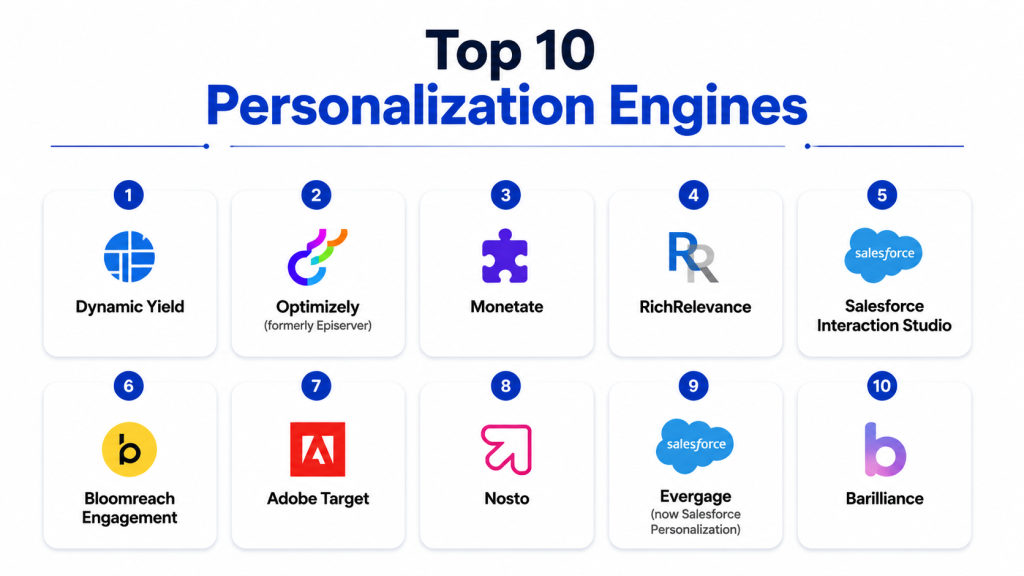
Top 10 Personalization Engines
1- Dynamic Yield
Short description: Dynamic Yield provides AI-powered personalization and recommendation engines for marketers and product teams, supporting omnichannel experiences.
Key Features
- Real-time behavioral targeting
- Product and content recommendations
- Multi-channel support (web, mobile, email)
- A/B testing and experimentation
- Predictive analytics and segmentation
- Personalization templates for non-technical users
Pros
- Robust AI recommendation engine
- Scales for enterprise environments
- Supports diverse channels
Cons
- Premium pricing for smaller teams
- Some setup complexity
- Advanced analytics may require training
Platforms / Deployment
- Web / iOS / Android
- Cloud
Security & Compliance
- Not publicly stated
Integrations & Ecosystem
- CRM, analytics, e-commerce platforms
- REST APIs and SDKs
- Marketing automation tools
- Experimentation platforms
Support & Community
- Documentation, enterprise support, professional services
2- Optimizely
Short description: Optimizely combines experimentation with personalization, helping businesses optimize user experiences through AI-driven insights.
Key Features
- Feature experimentation and A/B testing
- Behavioral targeting
- Multi-channel personalization
- Predictive and AI-driven recommendations
- Segmentation and audience targeting
Pros
- Strong experimentation framework
- Enterprise-grade analytics
- Multi-channel support
Cons
- Costly for smaller businesses
- Learning curve for complex campaigns
- Integration setup may be intensive
Platforms / Deployment
- Web / iOS / Android
- Cloud
Security & Compliance
- Not publicly stated
Integrations & Ecosystem
- CRM, analytics, marketing automation
- REST APIs
- SDKs for web and mobile
Support & Community
- Enterprise support, documentation, training programs
3- Monetate
Short description: Monetate delivers personalization and optimization solutions for retail and e-commerce businesses, emphasizing real-time recommendations.
Key Features
- Product and content recommendations
- A/B testing and segmentation
- Multi-channel personalization
- Real-time decisioning
- Predictive analytics
Pros
- Retail-focused use cases
- Real-time personalization
- Strong integration ecosystem
Cons
- Less suitable for non-retail verticals
- Enterprise pricing
- Setup can be complex
Platforms / Deployment
- Web / iOS / Android
- Cloud
Security & Compliance
- Not publicly stated
Integrations & Ecosystem
- E-commerce platforms, CRM, analytics
- SDKs and APIs
- Marketing automation integrations
Support & Community
- Enterprise support, documentation
4- RichRelevance
Short description: RichRelevance offers AI-driven personalization, recommendations, and merchandising solutions for retail and e-commerce.
Key Features
- Product recommendations and ranking
- Behavioral segmentation
- Multi-channel personalization
- Analytics and reporting
- Campaign management
Pros
- Strong recommendation engine
- Enterprise-grade analytics
- Supports multiple touchpoints
Cons
- Premium pricing
- Complexity for small teams
- Limited non-retail use cases
Platforms / Deployment
- Web / iOS / Android
- Cloud
Security & Compliance
- Not publicly stated
Integrations & Ecosystem
- CRM, e-commerce platforms, analytics
- APIs and SDKs
Support & Community
- Enterprise support, documentation
5- Salesforce Interaction Studio
Short description: Salesforce Interaction Studio enables real-time personalization across all digital channels with deep CRM integration.
Key Features
- Behavioral tracking and targeting
- Predictive recommendations
- Multi-channel personalization
- CRM integration with Salesforce platform
- A/B testing and experimentation
Pros
- Deep Salesforce ecosystem integration
- Real-time personalization
- Enterprise-ready
Cons
- Expensive for SMBs
- Best suited for Salesforce customers
- Complex setup
Platforms / Deployment
- Web / iOS / Android
- Cloud
Security & Compliance
- Not publicly stated
Integrations & Ecosystem
- Salesforce CRM, marketing clouds
- APIs and SDKs
- Analytics platforms
Support & Community
- Enterprise support, documentation, training
6- Bloomreach Engagement
Short description: Bloomreach Engagement focuses on AI-powered personalization and customer data orchestration for marketing and product teams.
Key Features
- Behavioral targeting and segmentation
- AI-driven recommendations
- Multi-channel campaign orchestration
- Customer journey analytics
- Predictive engagement scoring
Pros
- Strong AI capabilities
- Omnichannel personalization
- Marketing-oriented tools
Cons
- Premium pricing
- May require specialized training
- Complexity for SMBs
Platforms / Deployment
- Web / iOS / Android
- Cloud
Security & Compliance
- Not publicly stated
Integrations & Ecosystem
- CRM, analytics, e-commerce
- APIs, SDKs
- Marketing automation tools
Support & Community
- Enterprise support, documentation
7- Adobe Target
Short description: Adobe Target offers AI-driven personalization, testing, and automated recommendations for enterprises seeking rich experiences.
Key Features
- A/B and multivariate testing
- Automated personalization using AI
- Behavioral targeting
- Integration with Adobe Experience Cloud
- Advanced analytics
Pros
- Strong AI-powered personalization
- Enterprise-ready
- Integration with Adobe suite
Cons
- Expensive
- Best suited for Adobe users
- Steep learning curve
Platforms / Deployment
- Web / iOS / Android
- Cloud
Security & Compliance
- Not publicly stated
Integrations & Ecosystem
- Adobe Experience Cloud, analytics
- APIs, SDKs
- Marketing automation integrations
Support & Community
- Enterprise support, documentation, training
8- Nosto
Short description: Nosto is a personalization engine designed for e-commerce, offering product recommendations and targeted marketing automation.
Key Features
- Product recommendations and personalization
- Behavioral segmentation
- Multi-channel targeting
- Email and onsite personalization
- Analytics and insights
Pros
- Focused on e-commerce
- Easy setup
- Real-time personalization
Cons
- Limited non-e-commerce functionality
- Enterprise features premium
- Smaller ecosystem
Platforms / Deployment
- Web / iOS / Android
- Cloud
Security & Compliance
- Not publicly stated
Integrations & Ecosystem
- E-commerce platforms, analytics, marketing automation
- APIs and SDKs
Support & Community
- Documentation, email support
9- Evergage
Short description: Evergage, now Salesforce Personalization, provides real-time personalization and behavioral targeting integrated with Salesforce CRM.
Key Features
- Real-time personalization
- Predictive recommendations
- Multi-channel engagement
- CRM integration
- Analytics and reporting
Pros
- Salesforce integration
- Real-time decisioning
- Enterprise-grade features
Cons
- Enterprise pricing
- Best for Salesforce ecosystem
- Complexity for small teams
Platforms / Deployment
- Web / iOS / Android
- Cloud
Security & Compliance
- Not publicly stated
Integrations & Ecosystem
- Salesforce CRM, analytics
- APIs and SDKs
- Marketing automation
Support & Community
- Enterprise support, documentation
10- Barilliance
Short description: Barilliance offers AI-powered personalization and recommendation tools for e-commerce and online retailers.
Key Features
- Product recommendations
- Behavioral targeting
- Email and onsite personalization
- Analytics and reporting
- Segmentation and campaigns
Pros
- Focused e-commerce solution
- Easy deployment
- Real-time personalization
Cons
- Less suited for non-retail applications
- Premium plans for advanced AI
- Smaller integration ecosystem
Platforms / Deployment
- Web / iOS / Android
- Cloud
Security & Compliance
- Not publicly stated
Integrations & Ecosystem
- E-commerce platforms, email marketing tools
- APIs and SDKs
Support & Community
- Documentation, email support
Comparison Table (Top 10)
| Tool Name | Best For | Platform(s) Supported | Deployment | Standout Feature | Public Rating |
|---|---|---|---|---|---|
| Dynamic Yield | Marketers & Product teams | Web, iOS, Android | Cloud | Real-time behavioral targeting | N/A |
| Optimizely | Experimentation & personalization | Web, iOS, Android | Cloud | Experimentation + AI | N/A |
| Monetate | Retail & e-commerce | Web, iOS, Android | Cloud | Real-time recommendations | N/A |
| RichRelevance | Retail personalization | Web, iOS, Android | Cloud | AI recommendation engine | N/A |
| Salesforce Interaction Studio | Enterprise CRM personalization | Web, iOS, Android | Cloud | Deep Salesforce integration | N/A |
| Bloomreach Engagement | Omnichannel marketing | Web, iOS, Android | Cloud | AI-powered personalization | N/A |
| Adobe Target | Enterprise personalization | Web, iOS, Android | Cloud | AI + Adobe suite integration | N/A |
| Nosto | E-commerce personalization | Web, iOS, Android | Cloud | Product recommendations | N/A |
| Evergage | Real-time behavioral targeting | Web, iOS, Android | Cloud | Salesforce integration | N/A |
| Barilliance | Online retail personalization | Web, iOS, Android | Cloud | AI-driven recommendations | N/A |
Evaluation & Scoring of Personalization Engines
| Tool Name | Core (25%) | Ease (15%) | Integrations (15%) | Security (10%) | Performance (10%) | Support (10%) | Value (15%) | Weighted Total (0–10) |
|---|---|---|---|---|---|---|---|---|
| Dynamic Yield | 10 | 9 | 9 | 8 | 9 | 9 | 8 | 9.0 |
| Optimizely | 9 | 8 | 8 | 8 | 9 | 8 | 8 | 8.5 |
| Monetate | 8 | 8 | 7 | 7 | 8 | 8 | 8 | 7.9 |
| RichRelevance | 9 | 7 | 8 | 8 | 8 | 7 | 7 | 8.0 |
| Salesforce Interaction Studio | 9 | 7 | 9 | 9 | 8 | 8 | 7 | 8.3 |
| Bloomreach Engagement | 9 | 8 | 8 | 8 | 8 | 8 | 8 | 8.3 |
| Adobe Target | 10 | 7 | 8 | 8 | 9 | 7 | 7 | 8.1 |
| Nosto | 8 | 9 | 7 | 7 | 8 | 7 | 8 | 7.9 |
| Evergage | 9 | 7 | 8 | 8 | 8 | 7 | 7 | 8.0 |
| Barilliance | 8 | 8 | 7 | 7 | 8 | 7 | 8 | 7.9 |
Interpretation: Scores compare features, usability, integrations, security, and value. Weighted totals indicate overall suitability for different team sizes and business needs.
Which Personalization Engine Is Right for You?
Solo / Freelancer
Nosto or Barilliance offer quick setup and lightweight personalization for small websites and e-commerce stores.
SMB
Dynamic Yield or Bloomreach Engagement provide robust AI-driven personalization while remaining manageable for mid-sized teams.
Mid-Market
Optimizely, Monetate, or RichRelevance allow multi-channel personalization, advanced experimentation, and integration flexibility.
Enterprise
Salesforce Interaction Studio and Adobe Target are enterprise-grade, supporting CRM integration, advanced AI, and omnichannel deployment.
Budget vs Premium
Open-source or simpler platforms (Barilliance, Nosto) are cost-efficient. Premium platforms (Optimizely, Adobe Target) offer advanced AI, analytics, and enterprise support.
Feature Depth vs Ease of Use
Lightweight engines are easier to deploy but have fewer AI features. Enterprise engines deliver richer features at the cost of learning complexity.
Integrations & Scalability
Enterprises should prioritize engines with strong APIs, SDKs, and CRM/analytics integration (Salesforce, Optimizely, Adobe Target) to ensure scalability.
Security & Compliance Needs
Look for platforms with audit logging, encryption, RBAC, and compliance certifications (SOC 2, GDPR) when handling sensitive user data.
Frequently Asked Questions (FAQs)
- What pricing models are common for personalization engines?
Most platforms charge based on traffic, number of users, or features. Some offer subscription tiers, while open-source variants may have optional enterprise support. - How quickly can a personalization engine be deployed?
Cloud-hosted engines can be integrated in hours to days, while enterprise setups may require weeks for CRM and analytics integration. - Can these engines support multi-channel personalization?
Yes. Most support web, mobile, email, and in-app experiences simultaneously. - How do personalization engines improve conversion rates?
By delivering tailored content and recommendations, they increase user engagement, encourage repeat visits, and drive higher sales or retention. - Are these engines secure?
Top platforms use encryption, RBAC, and audit logs. Compliance with GDPR, SOC 2, and similar standards is increasingly common. - Can small teams use enterprise-grade engines?
Yes, but they may face higher costs and complexity. Lightweight engines are often better suited for SMBs or smaller sites. - Do personalization engines integrate with existing analytics platforms?
Yes. Integrations with CRM, Google Analytics, Adobe Analytics, and marketing automation tools are standard. - Is AI required for personalization?
No, but AI improves recommendations, predictive targeting, and segmentation beyond rules-based approaches. - Can engines handle real-time personalization?
Yes. Modern engines process user behavior in real time to deliver immediate tailored experiences. - Can a business switch engines mid-project?
Yes, but migrating data, recommendations, and integration points requires careful planning to avoid disruption.
Conclusion
Personalization engines are vital for modern businesses seeking to enhance engagement, conversion, and loyalty. The best solution depends on team size, budget, channel requirements, and AI/analytics needs. Small teams may choose lightweight, cost-effective engines, while enterprises benefit from platforms with robust AI, CRM integration, and omnichannel capabilities. Evaluate 2–3 tools, run a pilot, and validate security, compliance, and integration before full-scale deployment. A strategic approach ensures measurable ROI and improved customer experiences across channels.

Find Trusted Cardiac Hospitals
Compare heart hospitals by city and services — all in one place.
Explore Hospitals
Personalization engines are explained in a clear and simple way, and the comparison helps in understanding how AI is used to deliver more relevant and user-focused digital experiences.