Introduction
SaaS Management Platforms (SMPs) are centralized systems that help organizations discover, manage, govern, and optimize their growing portfolio of Software-as-a-Service applications. As companies adopt hundreds of SaaS tools across departments, visibility and control become difficult without a unified management layer. SaaS sprawl is one of the biggest operational and security challenges for enterprises. Employees can easily sign up for new tools, leading to shadow IT, security risks, compliance gaps, and unnecessary software costs. SaaS management platforms solve this by providing centralized visibility, automated governance, and lifecycle management for all SaaS applications.
Real-world use cases
- Discovering all SaaS apps used across departments (including shadow IT)
- Reducing software costs by eliminating unused or duplicate subscriptions
- Managing employee onboarding and offboarding across SaaS tools
- Enforcing security policies like SSO, MFA, and access controls
- Monitoring SaaS usage and license optimization
- Ensuring compliance with audit-ready reporting
What buyers should evaluate
- SaaS discovery accuracy (including shadow IT detection)
- License optimization and cost management features
- Integration depth with SaaS ecosystems
- Identity and access management controls
- Automation for onboarding/offboarding workflows
- Security and compliance reporting capabilities
- API extensibility and workflow automation
- Real-time usage analytics and insights
- Scalability across enterprise SaaS environments
- Ease of deployment and ongoing management
Best for:
IT leaders, SaaSOps teams, finance operations, and security teams in mid-sized to large organizations managing complex SaaS ecosystems.
Not ideal for:
Small teams with minimal SaaS usage, startups with fewer than 10–15 applications, or organizations that already use tightly controlled single-vendor ecosystems.
Key Trends in SaaS Management Platforms
- AI-driven SaaS discovery and automated classification of applications
- Expansion of SaaSOps into full IT + Finance + Security convergence
- Automated license reclamation using behavioral usage patterns
- Deep integration with identity platforms for access governance
- Real-time shadow IT detection using network and browser telemetry
- Zero-touch onboarding and offboarding automation
- Unified SaaS + cloud cost optimization (FinOps + SaaSOps convergence)
- Stronger focus on security posture of SaaS applications
- API-first SaaS governance ecosystems
- Predictive analytics for SaaS spend optimization and renewal forecasting
How We Selected These Tools (Methodology)
- Market adoption across SaaSOps and IT management teams
- Depth of SaaS discovery and shadow IT detection capabilities
- License optimization and cost governance maturity
- Integration ecosystem coverage across SaaS tools
- Identity, access, and security governance capabilities
- Automation strength for lifecycle management workflows
- Reporting and analytics depth for enterprise visibility
- API extensibility and workflow orchestration capabilities
- Scalability across large SaaS environments
- Customer adoption across SMB, mid-market, and enterprise segments
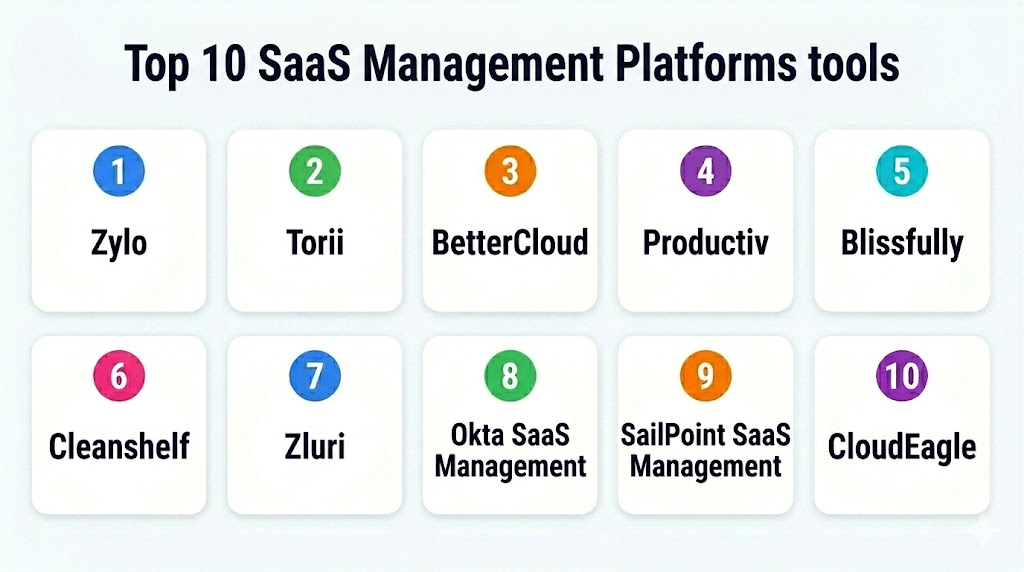
Top 10 SaaS Management Platforms
1- Zylo
Short description: Zylo is a leading SaaS management platform focused on SaaS discovery, spend optimization, and enterprise SaaSOps governance.
Key Features
- SaaS application discovery across enterprise environments
- License optimization and renewal tracking
- Shadow IT detection and monitoring
- Spend analytics and forecasting
- Vendor contract management
- Usage-based optimization recommendations
- Automated reporting dashboards
Pros
- Strong enterprise SaaS visibility
- Excellent spend optimization capabilities
- Mature SaaSOps workflows
Cons
- Enterprise-focused pricing model
- Complex onboarding for smaller teams
Platforms / Deployment
- Web / Cloud
Security & Compliance
- SSO, RBAC, MFA, audit logs
- Encryption in transit and at rest
- Compliance: Not publicly stated
Integrations & Ecosystem
Integrates with enterprise SaaS ecosystems:
- Finance tools
- Identity providers
- SaaS applications (CRM, HR, productivity tools)
- API-based workflow automation
Support & Community
Strong enterprise support with structured onboarding and SaaSOps advisory services.
2- Torii
Short description: Torii is a SaaS management platform that provides deep visibility into SaaS usage and automates application lifecycle workflows.
Key Features
- SaaS discovery and inventory management
- Automated onboarding/offboarding workflows
- License optimization and usage tracking
- Shadow IT detection
- Workflow automation engine
- SaaS cost analytics
- Access control monitoring
Pros
- Strong automation capabilities
- Easy SaaS lifecycle management
- Good UI and usability
Cons
- Limited advanced enterprise governance features
- Pricing not fully transparent publicly
Platforms / Deployment
- Web / Cloud
Security & Compliance
- SSO, RBAC, encryption
- Audit logging capabilities
- Compliance: Not publicly stated
Integrations & Ecosystem
- HR systems
- Identity providers
- SaaS applications
- IT service management tools
- API integrations
Support & Community
Strong onboarding support and growing SaaSOps user base.
3- BetterCloud
Short description: BetterCloud is a SaaS operations platform focused on security, automation, and IT workflow management.
Key Features
- SaaS application governance
- Automated user lifecycle workflows
- Security policy enforcement
- Shadow IT detection
- Data protection policies for SaaS apps
- Workflow automation builder
- Usage analytics dashboards
Pros
- Strong SaaS security controls
- Mature automation engine
- Good enterprise adoption
Cons
- Complex configuration
- Requires training for full utilization
Platforms / Deployment
- Web / Cloud
Security & Compliance
- SSO, MFA, RBAC, audit logs
- Encryption standards applied
- Compliance: Not publicly stated
Integrations & Ecosystem
- Google Workspace
- Microsoft 365
- Identity providers
- ITSM tools
- SaaS APIs
Support & Community
Strong enterprise support with training and documentation.
4- Productiv
Short description: Productiv focuses on SaaS usage intelligence and application portfolio optimization for enterprise IT and finance teams.
Key Features
- SaaS usage analytics and benchmarking
- Application portfolio management
- License optimization insights
- Employee app usage tracking
- Spend visibility and forecasting
- Department-level SaaS insights
- Vendor rationalization tools
Pros
- Strong usage analytics depth
- Excellent for SaaS cost optimization
- Clean and modern interface
Cons
- Less focus on workflow automation
- Enterprise pricing structure
Platforms / Deployment
- Cloud
Security & Compliance
- SSO, RBAC, encryption
- Audit logs
- Compliance: Not publicly stated
Integrations & Ecosystem
- SaaS applications
- Finance systems
- Identity platforms
- Data warehouses
- API integrations
Support & Community
Strong enterprise onboarding and analytics-driven support.
5- Blissfully (Evernote Work Suite legacy category)
Short description: Blissfully provides SaaS management capabilities focused on discovery, spend tracking, and lifecycle governance.
Key Features
- SaaS discovery across organization
- Spend tracking and optimization
- Vendor management
- Employee lifecycle automation
- Shadow IT detection
- SaaS inventory dashboard
- Contract tracking
Pros
- Easy SaaS visibility setup
- Strong financial insights
- Good SMB-to-mid-market fit
Cons
- Limited advanced automation
- Smaller feature ecosystem than leaders
Platforms / Deployment
- Cloud
Security & Compliance
- SSO, RBAC, encryption
- Compliance: Not publicly stated
Integrations & Ecosystem
- SaaS applications
- HR systems
- Finance tools
- API integrations
Support & Community
Moderate support with standard onboarding resources.
6- Cleanshelf
Short description: Cleanshelf focuses on SaaS management and optimization with strong emphasis on usage analytics and cost reduction.
Key Features
- SaaS application discovery
- License optimization recommendations
- Usage analytics dashboard
- Shadow IT identification
- SaaS spend tracking
- Vendor lifecycle management
- Renewal forecasting
Pros
- Strong cost optimization capabilities
- Good SaaS visibility features
- Simple deployment
Cons
- Limited automation depth
- Smaller ecosystem compared to leaders
Platforms / Deployment
- Cloud
Security & Compliance
- RBAC, SSO, encryption
- Compliance: Not publicly stated
Integrations & Ecosystem
- SaaS apps
- Finance systems
- Identity providers
- APIs
Support & Community
Standard enterprise support and documentation.
7- Zluri
Short description: Zluri is a modern SaaS management platform offering SaaS discovery, access governance, and automation.
Key Features
- SaaS discovery and cataloging
- Access management and governance
- Automated onboarding/offboarding
- License optimization
- Shadow IT detection
- SaaS spend analytics
- Workflow automation engine
Pros
- Strong automation capabilities
- Good balance of IT + security features
- Fast-growing SaaSOps platform
Cons
- Some advanced features still evolving
- Enterprise maturity still developing
Platforms / Deployment
- Cloud
Security & Compliance
- SSO, RBAC, MFA
- Audit logs
- Compliance: Not publicly stated
Integrations & Ecosystem
- Identity providers
- SaaS applications
- HR tools
- ITSM systems
- APIs
Support & Community
Responsive support with growing enterprise adoption.
8- Okta SaaS Management (Okta Integration Network layer)
Short description: Okta SaaS Management extends identity governance into SaaS discovery and lifecycle management.
Key Features
- SaaS application discovery via identity layer
- Access governance and policy enforcement
- Lifecycle automation (JML workflows)
- Shadow IT detection via identity signals
- Role-based access control
- Centralized application visibility
- Security posture insights
Pros
- Strong identity-native integration
- Excellent enterprise security alignment
- Deep SaaS access control
Cons
- Best value within Okta ecosystem
- Limited standalone SaaS optimization depth
Platforms / Deployment
- Cloud
Security & Compliance
- SSO, MFA, RBAC, encryption
- Audit logs
- Compliance: Not publicly stated
Integrations & Ecosystem
- Okta Identity Cloud
- SaaS applications
- ITSM tools
- Security platforms
- APIs
Support & Community
Strong enterprise support within Okta ecosystem.
9- SailPoint SaaS Management
Short description: SailPoint extends identity governance into SaaS environments with strong compliance and access control capabilities.
Key Features
- SaaS identity governance
- Access certification workflows
- Policy-based access controls
- SaaS discovery via identity mapping
- Risk-based access insights
- Lifecycle automation
- Compliance reporting
Pros
- Strong governance and compliance focus
- Enterprise-grade identity security
- Good audit capabilities
Cons
- Complex implementation
- Less focused on cost optimization
Platforms / Deployment
- Cloud / Hybrid
Security & Compliance
- Strong IAM controls
- SSO, MFA, RBAC, audit logs
- Compliance: Not publicly stated
Integrations & Ecosystem
- Identity providers
- SaaS applications
- Security tools
- ITSM platforms
- APIs
Support & Community
Enterprise-grade support with governance-focused documentation.
10- CloudEagle
Short description: CloudEagle provides SaaS management, procurement optimization, and lifecycle automation for modern IT teams.
Key Features
- SaaS discovery and inventory management
- License optimization and renewals tracking
- Automated onboarding/offboarding workflows
- SaaS procurement intelligence
- Shadow IT detection
- Usage analytics dashboards
- Vendor management workflows
Pros
- Strong procurement + SaaSOps integration
- Good cost optimization tools
- Easy onboarding
Cons
- Smaller ecosystem compared to top enterprise tools
- Limited advanced governance features
Platforms / Deployment
- Cloud
Security & Compliance
- SSO, RBAC, encryption
- Audit logs
- Compliance: Not publicly stated
Integrations & Ecosystem
- SaaS applications
- HR systems
- Finance tools
- Identity providers
- APIs
Support & Community
Good SMB and mid-market support with onboarding assistance.
Comparison Table (Top 10)
| Tool Name | Best For | Platform(s) Supported | Deployment | Standout Feature | Public Rating |
|---|---|---|---|---|---|
| Zylo | Enterprise SaaS optimization | Multi-SaaS | Cloud | Spend intelligence | N/A |
| Torii | SaaS lifecycle automation | Multi-SaaS | Cloud | Workflow automation | N/A |
| BetterCloud | SaaS operations & security | Multi-SaaS | Cloud | Automation engine | N/A |
| Productiv | SaaS analytics | Multi-SaaS | Cloud | Usage intelligence | N/A |
| Blissfully | SMB SaaS tracking | Multi-SaaS | Cloud | Spend visibility | N/A |
| Cleanshelf | Cost optimization | Multi-SaaS | Cloud | License optimization | N/A |
| Zluri | SaaSOps automation | Multi-SaaS | Cloud | Governance + automation | N/A |
| Okta SaaS Management | Identity-driven SaaS control | Multi-SaaS | Cloud | Identity-based discovery | N/A |
| SailPoint | Governance & compliance | Multi-SaaS | Cloud/Hybrid | Access certification | N/A |
| CloudEagle | Procurement + SaaSOps | Multi-SaaS | Cloud | Procurement insights | N/A |
Evaluation & Scoring of SaaS Management Platforms
| Tool Name | Core (25%) | Ease (15%) | Integrations (15%) | Security (10%) | Performance (10%) | Support (10%) | Value (15%) | Weighted Total |
|---|---|---|---|---|---|---|---|---|
| Zylo | 9.2 | 8.0 | 9.0 | 9.0 | 9.0 | 8.8 | 8.5 | 8.9 |
| Torii | 9.0 | 9.0 | 9.0 | 8.8 | 8.8 | 8.8 | 9.0 | 8.9 |
| BetterCloud | 9.2 | 8.5 | 9.0 | 9.2 | 8.8 | 9.0 | 8.5 | 8.9 |
| Productiv | 8.8 | 9.0 | 8.8 | 8.8 | 8.8 | 8.8 | 8.5 | 8.7 |
| Blissfully | 8.0 | 8.8 | 8.0 | 8.0 | 8.0 | 8.0 | 9.0 | 8.2 |
| Cleanshelf | 8.3 | 8.5 | 8.2 | 8.5 | 8.3 | 8.0 | 8.8 | 8.4 |
| Zluri | 8.8 | 8.8 | 8.5 | 8.8 | 8.5 | 8.5 | 8.8 | 8.7 |
| Okta SaaS Mgmt | 9.0 | 8.5 | 9.5 | 9.5 | 9.0 | 9.0 | 8.0 | 9.0 |
| SailPoint | 9.2 | 7.8 | 9.0 | 9.8 | 9.0 | 9.0 | 7.8 | 8.8 |
| CloudEagle | 8.5 | 9.0 | 8.5 | 8.5 | 8.5 | 8.5 | 9.0 | 8.6 |
Which SaaS Management Platform Tool Is Right for You?
Solo / Freelancer
- Not typically applicable
SaaS management platforms are designed for multi-tool enterprise environments.
SMB
- CloudEagle
- Cleanshelf
Focus on cost optimization and SaaS visibility.
Mid-Market
- Torii
- Zluri
- Productiv
Balance automation, visibility, and governance.
Enterprise
- Zylo
- BetterCloud
- Okta SaaS Management
- SailPoint
Best for large-scale SaaS governance and compliance.
Budget vs Premium
- Budget-friendly: CloudEagle, Cleanshelf, Blissfully
- Premium: Zylo, SailPoint, Okta ecosystem tools
Feature Depth vs Ease of Use
- Deep enterprise governance: SailPoint, Zylo
- Easier adoption: Torii, CloudEagle
Integrations & Scalability
- Strongest ecosystems: Okta, BetterCloud, Zylo
- SMB-friendly integrations: Zluri, CloudEagle
Security & Compliance Needs
- Strong governance focus: SailPoint, Okta
- Balanced SaaSOps + security: BetterCloud, Zylo
Frequently Asked Questions (FAQs)
1- What is a SaaS management platform?
It is a tool that helps organizations discover, manage, and optimize SaaS applications.
It provides visibility into usage, cost, and access control.
2- Why do companies need SaaS management platforms?
Because SaaS sprawl creates security, cost, and governance risks.
These platforms centralize control and visibility.
3- What is SaaS sprawl?
SaaS sprawl happens when employees use too many unmanaged applications.
It leads to inefficiency and security risks.
4- Can SaaS management tools reduce costs?
Yes, they identify unused licenses and optimize subscriptions.
This often reduces SaaS spending significantly.
5- Do these tools improve security?
Yes, they detect shadow IT and enforce access policies.
They also help manage user lifecycle securely.
6- Are SaaS management platforms suitable for SMBs?
Yes, many tools are designed for SMB and mid-market use.
However, enterprise tools may be too complex.
7- What is shadow IT?
Shadow IT refers to unauthorized apps used within an organization.
SaaS management tools help detect and control it.
8- Do these tools integrate with HR systems?
Yes, many integrate with HR platforms for onboarding/offboarding automation.
This ensures proper access control.
9- What is SaaSOps?
SaaSOps is the operational discipline of managing SaaS applications.
It includes governance, cost, and lifecycle management.
10- How long does implementation take?
It varies by tool complexity.
SMB tools may take days, enterprise tools may take weeks.
Conclusion
SaaS Management Platforms have become essential for modern organizations managing large and growing SaaS ecosystems. They solve critical challenges around visibility, cost control, security, and governance. The right platform depends on your organization’s size, maturity, and priorities. SMBs may focus on cost optimization, while enterprises prioritize governance and identity integration. A practical next step is to shortlist 2–3 platforms, run a pilot with real SaaS data, and evaluate visibility, automation, and integration depth before full deployment.

Find Trusted Cardiac Hospitals
Compare heart hospitals by city and services — all in one place.
Explore Hospitals
SaaS management platforms deliver the most value when they can unify procurement, usage tracking, and renewal management in a single workflow rather than treating them as separate modules. In practice, the biggest gap often comes from fragmented visibility across departments, which leads to duplicate subscriptions and missed renewal optimization opportunities.