Introduction
STEM Coding Education Platforms are specialized online and offline environments designed to teach students and professionals the fundamentals of coding, programming, and computational thinking, often through interactive lessons, challenges, and projects. These platforms are particularly relevant, as coding becomes a core skill across education systems, workforce development programs, and corporate training initiatives. By leveraging gamification, AI tutors, and real-world problem solving, STEM coding platforms make learning programming concepts engaging, scalable, and accessible. They bridge the gap between theoretical computer science knowledge and practical application.
Real-world use cases include:
- K-12 education integrating coding into STEM curricula
- College and university computer science courses
- Corporate upskilling programs in software development and data literacy
- Coding bootcamps for learners seeking technical careers
- After-school programs or coding clubs for youth engagement
Evaluation Criteria for Buyers
When assessing platforms, buyers should consider:
- Programming language coverage (Python, JavaScript, Scratch, etc.)
- Curriculum alignment with grade level or skill level
- Gamification and engagement features
- AI-powered tutoring or adaptive learning
- Project-based learning and coding challenges
- Integration with classroom management or LMS
- Analytics and performance tracking
- Device and platform compatibility
- Security and data privacy standards
- Cost and subscription flexibility
Best for: K-12 schools, universities, coding bootcamps, corporate L&D programs, after-school coding clubs.
Not ideal for: Learners needing hardware-based programming labs or environments requiring physical robotics kits for hands-on STEM activities.
Key Trends in STEM Coding Education Platforms
- AI-driven personalized coding pathways
- Gamification to improve engagement and retention
- Cross-platform accessibility on web, tablet, and mobile
- Project-based learning and collaborative coding
- Integration with school LMS and corporate learning systems
- Adaptive assessments and performance analytics
- VR/AR coding environments for immersive learning
- Low-code/no-code support for beginners
- Cloud-hosted IDEs for instant access and collaboration
- Focus on diversity, equity, and accessibility in STEM
How We Selected These Tools (Methodology)
Our selection of the Top 10 STEM Coding Education Platforms was based on:
- Market adoption and user base size
- Breadth and depth of coding curriculum
- Platform reliability and performance signals
- Security posture and compliance standards
- Integration capabilities with LMS and other learning tools
- Learner engagement features such as gamification and AI tutoring
- Scalability across educational institutions or corporate training programs
- Support and community resources for instructors and students
- Innovation and use of AI/VR/AR features
- Relevance to multiple user types, including K-12, higher education, and enterprise
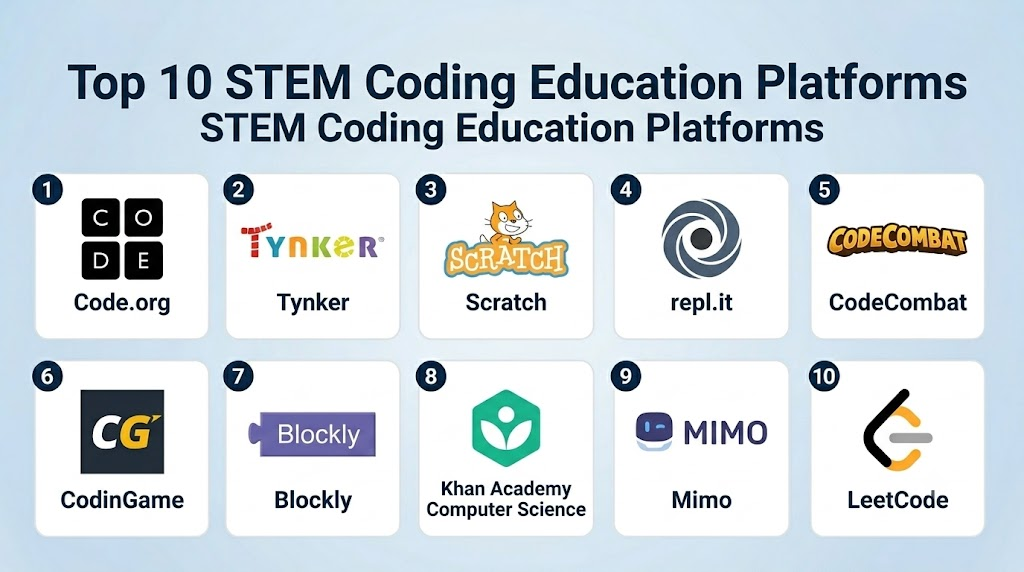
Top 10 STEM Coding Education Platforms
1- Code.org
Short description: Code.org offers K-12 students beginner-friendly coding lessons with drag-and-drop and text-based programming for multiple age levels.
Key Features
- Block-based and text-based coding
- Curriculum aligned with K-12 standards
- Hour of Code tutorials
- Interactive exercises and games
- Teacher dashboards
- Classroom management tools
- Cloud-hosted accessibility
Pros
- Free access for most content
- Strong alignment with school curricula
- Highly gamified and engaging
Cons
- Limited advanced programming topics
- Mainly targeted at K-12
- Requires internet access
Platforms / Deployment
Web, iOS, Android / Cloud
Security & Compliance
Not publicly stated
Integrations & Ecosystem
Integrates with Google Classroom and other LMS
- Classroom dashboards
- Teacher reporting
- Google SSO support
Support & Community
Active educator community and tutorials
2- Tynker
Short description: Tynker provides coding lessons for students from elementary to high school with gamified challenges and interactive projects.
Key Features
- Drag-and-drop coding
- Python, JavaScript, and Scratch support
- Gamified learning paths
- STEM integration modules
- Teacher dashboards and assignments
- Coding challenges and competitions
- Cloud-hosted student workspaces
Pros
- Supports multiple coding languages
- Gamification increases student motivation
- Teacher-friendly dashboards
Cons
- Subscription required for advanced modules
- Limited college/university content
- Some features require newer devices
Platforms / Deployment
Web / Cloud
Security & Compliance
Varies / N/A
Integrations & Ecosystem
LMS and classroom integrations
- Google Classroom
- Clever integration
- API for custom tools
Support & Community
Educational support and online community forums
3- Scratch
Short description: Scratch is a free visual programming language and community for children to learn coding fundamentals through interactive storytelling and games.
Key Features
- Block-based coding
- Project sharing community
- Cross-platform accessibility
- Creative game and animation projects
- Teacher guides and classroom resources
- Online Scratch studio collaboration
- Multi-language support
Pros
- Completely free
- Community-driven sharing
- Engaging for young learners
Cons
- Limited text-based programming
- Primarily for beginners
- Not suitable for professional coding skill building
Platforms / Deployment
Web, iOS, Android / Cloud
Security & Compliance
Varies / N/A
Integrations & Ecosystem
Supports classroom management and custom extensions
- Teacher dashboards
- Project sharing
- Scratch extensions for robotics
Support & Community
Large global community of learners and educators
4- repl.it
Short description: Repl.it is an online IDE and coding platform for learners and developers to practice and build projects in multiple programming languages.
Key Features
- Supports 50+ programming languages
- Collaborative coding in real-time
- Cloud-hosted IDE
- Git integration
- Instant project deployment
- Classroom mode for instructors
- AI-assisted code suggestions
Pros
- Multi-language support
- Great for collaborative coding
- No local setup required
Cons
- Free plan has limits on compute
- Classroom management is basic
- Some enterprise features require paid plans
Platforms / Deployment
Web / Cloud
Security & Compliance
Not publicly stated
Integrations & Ecosystem
- GitHub integration
- Google Classroom
- API access for tools
Support & Community
Documentation, tutorials, active developer forums
5- CodeCombat
Short description: CodeCombat teaches coding through role-playing games where students write code to progress through challenges.
Key Features
- Python and JavaScript coding
- Gamified learning experience
- Classroom and teacher dashboards
- Project-based progression
- Real-time code evaluation
- Multiplayer coding challenges
- Adaptive difficulty
Pros
- Engaging game-based approach
- Reinforces programming logic
- Classroom management support
Cons
- Paid subscription for full access
- Focused on K-12 and beginners
- Limited advanced topics
Platforms / Deployment
Web / Cloud
Security & Compliance
Not publicly stated
Integrations & Ecosystem
- LMS integration
- Teacher analytics
- Gamified coding competitions
Support & Community
Teacher resources and online forums
6- CodinGame
Short description: CodinGame provides interactive coding challenges, puzzles, and competitions for learners from beginner to advanced levels.
Key Features
- Code in multiple languages
- Interactive coding games and challenges
- Multiplayer competitions
- Learning paths and practice projects
- AI coding support
- Cloud-based development
- Scoreboards and gamification
Pros
- Wide range of languages
- Competitive coding environment
- Scalable for schools and coding clubs
Cons
- Requires self-guided learning
- Paid plans for classroom features
- Limited direct curriculum alignment
Platforms / Deployment
Web / Cloud
Security & Compliance
Not publicly stated
Integrations & Ecosystem
- GitHub integration
- API for learning management
- Leaderboards for classrooms
Support & Community
Active community of learners and educators
7- Blockly
Short description: Blockly provides block-based programming that integrates into learning platforms and apps for interactive STEM coding education.
Key Features
- Drag-and-drop programming blocks
- Embeddable into apps and websites
- Supports multiple languages
- Teacher assignment capabilities
- Interactive coding exercises
- Cloud or local deployment
- API for educational platforms
Pros
- Flexible integration into custom apps
- Beginner-friendly coding introduction
- Open-source foundation
Cons
- Limited out-of-the-box curriculum
- Mainly block-based
- Needs developer setup for custom use
Platforms / Deployment
Web / Cloud / Self-hosted
Security & Compliance
Varies / N/A
Integrations & Ecosystem
- LMS embedding
- Custom web apps
- Educational platforms
Support & Community
Documentation and open-source community
8- Khan Academy Computer Science
Short description: Khan Academy provides free online coding lessons and computer science courses for K-12 and early college learners.
Key Features
- JavaScript and HTML/CSS lessons
- Interactive coding exercises
- Teacher tracking dashboards
- Project-based learning
- Embedded tutorials and challenges
- Cloud-hosted environment
- Free and accessible globally
Pros
- Free access
- Structured curriculum
- Interactive exercises for engagement
Cons
- Limited advanced programming languages
- Not designed for enterprise training
- Internet required for access
Platforms / Deployment
Web / Cloud
Security & Compliance
Varies / N/A
Integrations & Ecosystem
- Teacher dashboards
- LMS integration via APIs
- Online coding communities
Support & Community
Community Q&A and educator resources
9- Mimo
Short description: Mimo is a mobile-first coding platform that teaches Python, JavaScript, and other languages through short lessons and exercises.
Key Features
- Bite-sized coding lessons
- Multiple programming languages
- Interactive coding challenges
- Mobile app focus
- Progress tracking
- Cloud-hosted learning
- Gamified experience
Pros
- Mobile-friendly
- Beginner-friendly lessons
- Gamification motivates learners
Cons
- Limited curriculum depth for advanced learners
- Subscription required for full access
- Mainly individual learning
Platforms / Deployment
iOS, Android / Cloud
Security & Compliance
Not publicly stated
Integrations & Ecosystem
- Mobile app integration
- LMS API for classroom tracking
- Cloud progress sync
Support & Community
Online documentation and community support
10- LeetCode
Short description: LeetCode provides coding challenges, competitions, and interview preparation tools for advanced learners and professional developers.
Key Features
- Coding challenges in multiple languages
- Interview problem sets
- Competitive programming contests
- Real-time code evaluation
- Cloud-based IDE
- Company-specific problem simulations
- Discussion forums
Pros
- Advanced-level coding practice
- Career-focused preparation
- Large active user community
Cons
- Not beginner-focused
- Paid plans for premium problems
- Less structured curriculum
Platforms / Deployment
Web / Cloud
Security & Compliance
Not publicly stated
Integrations & Ecosystem
- GitHub integration
- API for learning platforms
- Coding contests
Support & Community
Active developer forums and tutorials
Comparison Table
| Tool Name | Best For | Platform(s) Supported | Deployment | Standout Feature | Public Rating |
|---|---|---|---|---|---|
| Code.org | K-12 | Web, iOS, Android | Cloud | Beginner-friendly, gamified | N/A |
| Tynker | K-12 | Web | Cloud | Multi-language gamified paths | N/A |
| Scratch | K-8 | Web, iOS, Android | Cloud | Free visual coding | N/A |
| repl.it | All ages | Web | Cloud | Multi-language IDE | N/A |
| CodeCombat | K-12 | Web | Cloud | RPG coding gamification | N/A |
| CodinGame | All ages | Web | Cloud | Coding challenges & competitions | N/A |
| Blockly | K-12 | Web | Cloud / Self-hosted | Embeddable block programming | N/A |
| Khan Academy | K-12, early college | Web | Cloud | Free structured coding curriculum | N/A |
| Mimo | Beginner / Mobile learners | iOS, Android | Cloud | Bite-sized mobile lessons | N/A |
| LeetCode | Advanced / Professionals | Web | Cloud | Interview & competitive coding | N/A |
Evaluation & Scoring of STEM Coding Education Platforms
| Tool | Core | Ease | Integrations | Security | Performance | Support | Value | Weighted Total |
|---|---|---|---|---|---|---|---|---|
| Code.org | 9 | 9 | 8 | 7 | 9 | 8 | 10 | 8.8 |
| Tynker | 8 | 8 | 8 | 7 | 8 | 8 | 8 | 8.0 |
| Scratch | 8 | 9 | 7 | 7 | 8 | 8 | 10 | 8.1 |
| repl.it | 9 | 8 | 8 | 7 | 9 | 8 | 8 | 8.3 |
| CodeCombat | 8 | 8 | 7 | 7 | 8 | 8 | 8 | 7.9 |
| CodinGame | 8 | 7 | 8 | 7 | 8 | 8 | 8 | 7.9 |
| Blockly | 7 | 8 | 7 | 7 | 7 | 8 | 8 | 7.6 |
| Khan Academy | 8 | 9 | 7 | 7 | 8 | 8 | 10 | 8.1 |
| Mimo | 7 | 9 | 7 | 7 | 8 | 8 | 8 | 7.7 |
| LeetCode | 9 | 7 | 8 | 7 | 9 | 8 | 8 | 8.1 |
Which STEM Coding Education Platform Is Right for You?
Solo / Freelancer
Mimo or repl.it is ideal for individuals wanting self-paced coding learning.
SMB
CodeCombat or Tynker works well for after-school programs or small coding clubs.
Mid-Market
Code.org or CodinGame provides structured, scalable solutions for larger classrooms.
Enterprise
LeetCode and repl.it provide advanced coding practice and professional development at scale.
Budget vs Premium
- Budget: Scratch, Code.org
- Mid-range: Tynker, CodeCombat
- Premium: LeetCode, repl.it
Feature Depth vs Ease of Use
- Deepest functionality: LeetCode, repl.it
- Ease of use: Scratch, Mimo
- Balanced: CodeCombat, Tynker
Integrations & Scalability
Code.org and repl.it support LMS integration and cloud collaboration for larger institutions.
Security & Compliance Needs
Evaluate SSO, account management, and data privacy if deployed at enterprise scale.
Frequently Asked Questions (FAQs)
1. What languages do these platforms teach?
Most platforms cover Python, JavaScript, Scratch, and some support additional languages like Java or C#.
2. Are these platforms suitable for schools?
Yes, many are designed with K-12 curricula and teacher dashboards to manage classrooms.
3. Can beginners learn programming here?
Platforms like Code.org, Scratch, and Mimo are beginner-friendly with visual or interactive lessons.
4. Are advanced topics available?
Yes, LeetCode, repl.it, and CodinGame offer advanced coding challenges and professional prep.
5. How are platforms priced?
Pricing varies from free access (Scratch, Code.org) to subscription or enterprise licensing (LeetCode, repl.it).
6. Do platforms support LMS integration?
Many platforms integrate with Google Classroom, Canvas, or other LMS platforms.
7. Can learners collaborate on projects?
Platforms like repl.it and CodinGame support real-time collaborative coding.
8. Is mobile learning possible?
Yes, Mimo, Code.org, and Scratch provide mobile apps for learning on tablets or smartphones.
9. What is gamification’s role?
Gamification motivates learners through points, badges, challenges, and competitions.
10. How do I choose the right platform?
Evaluate learner age, skill level, curriculum alignment, scalability, and budget.
Conclusion
STEM Coding Education Platforms are essential for equipping learners with practical coding skills across K-12, higher education, and corporate training. They offer scalable, engaging, and interactive experiences through gamification, AI tutors, and project-based learning. Beginner-friendly platforms like Code.org, Scratch, and Tynker provide foundational coding education, while advanced tools such as repl.it, LeetCode, and CodinGame support professional development and complex programming challenges. Selecting the right platform depends on learner age, skill level, curriculum alignment, and budget. Institutions and educators should shortlist 2–3 platforms, run pilot programs, and evaluate integration, security, and effectiveness. Doing so ensures that learners acquire practical skills, stay motivated, and are prepared for future educational and career opportunities in technology.

Find Trusted Cardiac Hospitals
Compare heart hospitals by city and services — all in one place.
Explore Hospitals
I was curious about STEM and coding education platforms, and this content helped me understand how different tools support technical learning and skill development.