Introduction
Shift Marketplace Platforms are specialized workforce management solutions that allow organizations to create digital marketplaces where employees, contractors, and temporary workers can discover, claim, swap, and manage available shifts. Instead of relying solely on managers to fill scheduling gaps, these platforms empower workers with self-service scheduling options while helping businesses maintain optimal staffing levels. As labor shortages, workforce flexibility demands, and employee expectations continue to evolve, shift marketplaces have become increasingly important. Organizations across healthcare, retail, hospitality, logistics, manufacturing, and staffing industries are using these platforms to reduce overtime costs, improve employee satisfaction, and increase operational efficiency.
Real-world use cases include:
- Filling open shifts in hospitals and healthcare facilities
- Managing retail staffing during seasonal demand spikes
- Supporting warehouse and logistics workforce flexibility
- Enabling employee shift swaps and self-scheduling
- Building on-demand labor pools for hospitality businesses
What buyers should evaluate:
- Shift marketplace functionality
- Mobile workforce experience
- AI-powered scheduling capabilities
- Demand forecasting accuracy
- Compliance management
- Payroll integrations
- Multi-location support
- Workforce analytics
- Scalability
- Security controls
Best for: Healthcare providers, retailers, hospitality businesses, logistics operators, manufacturing organizations, staffing agencies, and enterprises managing large hourly workforces.
Not ideal for: Small organizations with predictable schedules and minimal staffing fluctuations where traditional scheduling software may be sufficient.
Key Trends in Shift Marketplace Platforms
- AI-driven shift recommendations are becoming standard functionality.
- Demand forecasting is helping organizations reduce labor costs.
- Mobile-first workforce experiences continue to dominate adoption.
- Internal talent marketplaces are merging with shift marketplaces.
- Automated compliance monitoring is reducing labor law violations.
- Predictive staffing analytics are improving workforce planning.
- Real-time labor optimization is becoming a competitive differentiator.
- Gig worker integration is expanding workforce flexibility.
- API-driven ecosystems are simplifying integrations.
- Employee self-service scheduling continues to grow in popularity.
How We Selected These Tools
Our evaluation focused on several important criteria:
- Market adoption and workforce management reputation
- Shift marketplace functionality and flexibility
- Mobile application quality
- Workforce forecasting capabilities
- Scheduling automation features
- Integration ecosystem maturity
- Enterprise scalability
- Workforce compliance support
- Security capabilities
- Customer support and implementation resources
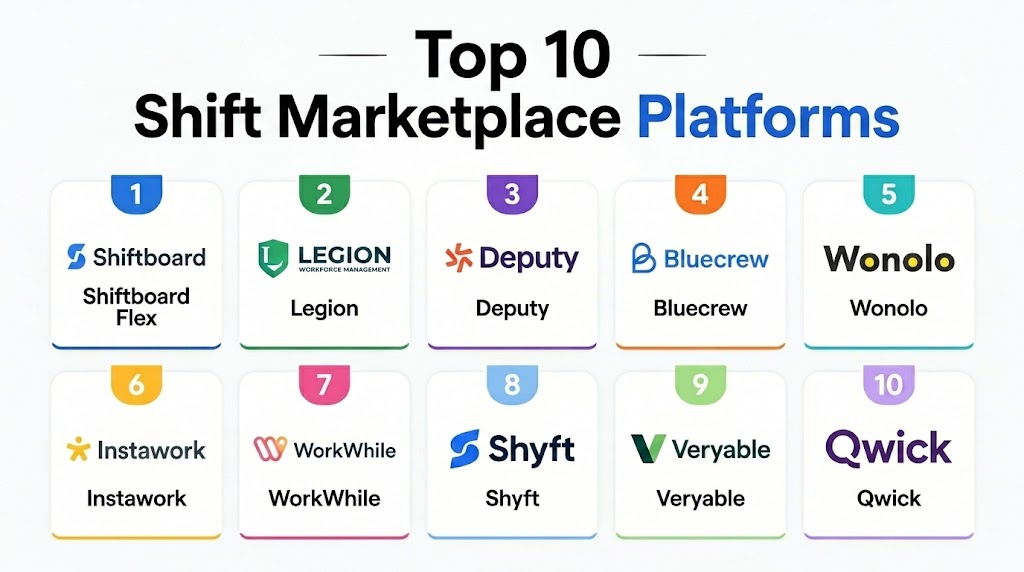
Top 10 Shift Marketplace Platforms
1- Shiftboard Flex
Short description: Shiftboard Flex is an enterprise workforce scheduling platform that provides sophisticated shift marketplace functionality for industries with complex staffing requirements.
Key Features
- Open shift marketplace
- Employee self-scheduling
- Shift swapping workflows
- Workforce forecasting
- Compliance monitoring
- Mobile workforce management
- Advanced analytics
Pros
- Strong enterprise capabilities
- Excellent workforce visibility
- Robust compliance support
Cons
- Higher implementation complexity
- Premium pricing
- Requires workforce planning expertise
Platforms / Deployment
Web / iOS / Android
Cloud
Security & Compliance
Role-based access controls, audit capabilities, MFA support.
Integrations & Ecosystem
Shiftboard integrates with workforce management, HR, payroll, and operational systems.
- HRIS integrations
- Payroll systems
- ERP platforms
- APIs
- Workforce analytics tools
Support & Community
Enterprise onboarding, implementation services, documentation, and dedicated support resources.
2- Legion Workforce Management
Short description: Legion combines AI-powered scheduling, labor forecasting, and shift marketplace capabilities into a modern workforce management platform.
Key Features
- AI scheduling
- Demand forecasting
- Shift marketplace
- Workforce analytics
- Mobile scheduling
- Compliance monitoring
- Labor optimization
Pros
- Strong AI functionality
- Accurate labor forecasting
- Modern user experience
Cons
- Enterprise-focused pricing
- Advanced setup requirements
- May exceed SMB requirements
Platforms / Deployment
Web / iOS / Android
Cloud
Security & Compliance
Role-based permissions, MFA, audit logging.
Integrations & Ecosystem
- Payroll systems
- HR platforms
- Workforce applications
- APIs
- Business intelligence tools
Support & Community
Comprehensive implementation and enterprise support programs.
3- Deputy
Short description: Deputy provides employee scheduling, workforce management, and shift marketplace functionality for small and mid-sized businesses.
Key Features
- Employee scheduling
- Shift marketplace
- Time tracking
- Availability management
- Payroll integration
- Compliance controls
- Mobile workforce app
Pros
- Easy implementation
- Strong mobile experience
- Affordable pricing
Cons
- Limited advanced forecasting
- Less enterprise functionality
- Customization limitations
Platforms / Deployment
Web / iOS / Android
Cloud
Security & Compliance
MFA and workforce security controls.
Integrations & Ecosystem
- Payroll software
- Accounting platforms
- HR systems
- APIs
Support & Community
Large customer base with strong support resources.
4- Bluecrew
Short description: Bluecrew combines shift marketplace capabilities with access to a flexible workforce pool for rapid staffing.
Key Features
- Shift fulfillment
- Workforce marketplace
- Scheduling
- Worker sourcing
- Compliance support
- Mobile workforce tools
- Analytics
Pros
- Fast staffing
- Large worker network
- Workforce flexibility
Cons
- Marketplace dependency
- Regional limitations
- Variable worker availability
Platforms / Deployment
Web / iOS / Android
Cloud
Security & Compliance
Standard workforce security controls.
Integrations & Ecosystem
- Workforce applications
- Scheduling systems
- APIs
- Reporting tools
Support & Community
Customer support and implementation assistance.
5- Wonolo
Short description: Wonolo helps businesses fill open shifts quickly using a marketplace of available workers.
Key Features
- On-demand staffing
- Shift marketplace
- Worker ratings
- Scheduling tools
- Mobile applications
- Workforce reporting
- Analytics
Pros
- Fast hiring
- Flexible staffing
- User-friendly interface
Cons
- Marketplace fees
- Geographic limitations
- Limited customization
Platforms / Deployment
Web / iOS / Android
Cloud
Security & Compliance
Standard access controls and workforce management security.
Integrations & Ecosystem
- APIs
- Workforce platforms
- Scheduling tools
Support & Community
Good onboarding and customer support resources.
6- Instawork
Short description: Instawork connects businesses with skilled hourly workers while providing shift management and scheduling capabilities.
Key Features
- Workforce marketplace
- Shift scheduling
- Worker ratings
- Mobile workforce tools
- Labor management
- Analytics
- Reporting
Pros
- Strong worker network
- Mobile-first design
- Quick staffing
Cons
- Marketplace model dependency
- Geographic availability varies
- Service fees
Platforms / Deployment
Web / iOS / Android
Cloud
Security & Compliance
Standard workforce management security controls.
Integrations & Ecosystem
- Payroll systems
- Workforce software
- APIs
Support & Community
Good support and onboarding resources.
7- WorkWhile
Short description: WorkWhile uses AI to match workers with shifts based on reliability, availability, and workforce requirements.
Key Features
- AI workforce matching
- Shift marketplace
- Scheduling tools
- Worker management
- Analytics
- Reporting
- Mobile app
Pros
- AI-driven matching
- Workforce flexibility
- Modern interface
Cons
- Smaller ecosystem
- Limited international reach
- Newer platform
Platforms / Deployment
Web / iOS / Android
Cloud
Security & Compliance
Standard workforce security controls.
Integrations & Ecosystem
- APIs
- Scheduling systems
- Workforce applications
Support & Community
Growing support and documentation resources.
8- Shyft
Short description: Shyft specializes in workforce communication, scheduling, and employee-driven shift marketplace functionality.
Key Features
- Shift swapping
- Team communication
- Employee scheduling
- Open shift marketplace
- Mobile workforce tools
- Notifications
- Reporting
Pros
- Excellent communication tools
- Strong employee engagement
- Easy adoption
Cons
- Limited workforce sourcing
- Less advanced forecasting
- Employee-focused approach
Platforms / Deployment
Web / iOS / Android
Cloud
Security & Compliance
Role-based access controls and workforce security features.
Integrations & Ecosystem
- HR systems
- Scheduling platforms
- APIs
Support & Community
Comprehensive support and knowledge resources.
9- Veryable
Short description: Veryable provides manufacturing and logistics organizations with on-demand labor marketplace capabilities.
Key Features
- Workforce marketplace
- Labor matching
- Scheduling
- Workforce analytics
- Mobile access
- Worker ratings
- Reporting
Pros
- Manufacturing specialization
- Fast staffing access
- Workforce flexibility
Cons
- Industry-specific focus
- Regional limitations
- Marketplace dependency
Platforms / Deployment
Web / iOS / Android
Cloud
Security & Compliance
Standard workforce security controls.
Integrations & Ecosystem
- APIs
- Workforce management tools
- Scheduling systems
Support & Community
Dedicated customer support resources.
10- Qwick
Short description: Qwick focuses on hospitality staffing by connecting businesses with experienced professionals for shift-based work.
Key Features
- Hospitality workforce marketplace
- Shift fulfillment
- Talent matching
- Mobile applications
- Scheduling
- Analytics
- Workforce ratings
Pros
- Hospitality expertise
- Flexible staffing
- Quick workforce access
Cons
- Industry-specific
- Geographic limitations
- Marketplace costs
Platforms / Deployment
Web / iOS / Android
Cloud
Security & Compliance
Standard workforce security and access controls.
Integrations & Ecosystem
- APIs
- Scheduling systems
- Workforce applications
Support & Community
Responsive support and onboarding assistance.
Comparison Table
| Tool Name | Best For | Platform(s) Supported | Deployment | Standout Feature | Public Rating |
|---|---|---|---|---|---|
| Shiftboard Flex | Enterprise workforce management | Web, iOS, Android | Cloud | Advanced shift marketplace | N/A |
| Legion | AI workforce optimization | Web, iOS, Android | Cloud | Demand forecasting | N/A |
| Deputy | SMB scheduling | Web, iOS, Android | Cloud | Ease of use | N/A |
| Bluecrew | Flexible staffing | Web, iOS, Android | Cloud | Worker marketplace | N/A |
| Wonolo | On-demand labor | Web, iOS, Android | Cloud | Rapid staffing | N/A |
| Instawork | Hourly workforce hiring | Web, iOS, Android | Cloud | Skilled worker network | N/A |
| WorkWhile | AI shift matching | Web, iOS, Android | Cloud | Intelligent matching | N/A |
| Shyft | Employee shift swaps | Web, iOS, Android | Cloud | Workforce communication | N/A |
| Veryable | Manufacturing staffing | Web, iOS, Android | Cloud | Industrial workforce access | N/A |
| Qwick | Hospitality staffing | Web, iOS, Android | Cloud | Hospitality specialization | N/A |
Evaluation & Scoring of Shift Marketplace Platforms
| Tool Name | Core | Ease | Integrations | Security | Performance | Support | Value | Weighted Total |
|---|---|---|---|---|---|---|---|---|
| Shiftboard Flex | 9 | 8 | 8 | 9 | 9 | 8 | 7 | 8.30 |
| Legion | 9 | 8 | 8 | 8 | 9 | 8 | 7 | 8.15 |
| Deputy | 8 | 9 | 7 | 7 | 8 | 8 | 9 | 8.10 |
| Bluecrew | 8 | 8 | 7 | 7 | 8 | 8 | 8 | 7.85 |
| Wonolo | 8 | 8 | 6 | 7 | 8 | 7 | 8 | 7.65 |
| Instawork | 8 | 8 | 7 | 7 | 8 | 8 | 8 | 7.85 |
| WorkWhile | 8 | 8 | 6 | 7 | 8 | 7 | 8 | 7.65 |
| Shyft | 8 | 9 | 7 | 7 | 8 | 8 | 8 | 8.00 |
| Veryable | 8 | 7 | 6 | 7 | 8 | 7 | 8 | 7.50 |
| Qwick | 8 | 8 | 6 | 7 | 8 | 7 | 8 | 7.65 |
Which Shift Marketplace Platform Is Right for You?
Solo / Freelancer
Wonolo, Instawork, WorkWhile, and Qwick provide access to large numbers of flexible shift opportunities.
SMB
Deputy and Shyft offer strong scheduling capabilities with relatively simple implementations and affordable pricing.
Mid-Market
Legion and Shiftboard Flex provide advanced workforce optimization and marketplace functionality.
Enterprise
Shiftboard Flex and Legion deliver the most comprehensive workforce planning, compliance, and labor optimization capabilities.
Budget vs Premium
- Budget-friendly: Deputy, Shyft
- Premium solutions: Shiftboard Flex, Legion
Feature Depth vs Ease of Use
- Deep functionality: Shiftboard Flex, Legion
- Ease of use: Deputy, Shyft
Integrations & Scalability
Large organizations should prioritize Shiftboard Flex and Legion due to broader integration ecosystems.
Security & Compliance Needs
Healthcare, manufacturing, and highly regulated industries should focus on enterprise-grade workforce governance capabilities.
Frequently Asked Questions
1. What is a Shift Marketplace Platform?
A Shift Marketplace Platform allows employees and workers to discover, claim, exchange, and manage available shifts through a centralized digital marketplace. These solutions reduce scheduling gaps and improve workforce flexibility. They are widely used in industries that depend on hourly workers and dynamic staffing levels.
2. How does a shift marketplace improve workforce management?
Shift marketplaces reduce the administrative burden on managers by enabling employees to self-manage many scheduling activities. Workers can pick up open shifts, swap schedules, and update availability. This often leads to higher employee satisfaction and better workforce utilization.
3. Which industries benefit most from these platforms?
Healthcare, retail, hospitality, logistics, manufacturing, and staffing industries benefit significantly from shift marketplaces. These sectors frequently experience changing labor demands and staffing shortages. Marketplace functionality helps maintain adequate staffing levels efficiently.
4. Are Shift Marketplace Platforms suitable for small businesses?
Yes, many solutions such as Deputy and Shyft are designed specifically for small and medium-sized businesses. They offer scheduling, communication, and shift marketplace features without the complexity of large enterprise workforce systems. Implementation is usually straightforward.
5. How do AI features improve scheduling outcomes?
AI helps forecast labor demand, recommend staffing adjustments, and match workers to available shifts. These capabilities improve labor efficiency while reducing overtime expenses. Organizations can also make better workforce planning decisions using predictive insights.
6. Can these platforms integrate with payroll and HR systems?
Most modern platforms offer integrations with payroll software, HRIS platforms, workforce management tools, and scheduling systems. These integrations reduce manual work and improve data consistency across departments. API support is increasingly becoming a standard feature.
7. What security features should buyers prioritize?
Buyers should evaluate role-based access controls, MFA, audit logging, data encryption, and workforce compliance features. Security becomes especially important when handling employee information, scheduling records, and workforce analytics. Enterprise organizations often require additional governance controls.
8. What are the most common implementation mistakes?
Organizations often underestimate change management and employee training requirements. Another common mistake is failing to evaluate integration needs before deployment. Conducting a pilot project and involving key stakeholders early can improve adoption and implementation success.
9. Do Shift Marketplace Platforms replace staffing agencies?
Not entirely. Many organizations use shift marketplaces to optimize internal workforce utilization while continuing to work with staffing agencies when necessary. These platforms often complement traditional staffing approaches rather than completely replacing them.
10. How should organizations choose the right platform?
Organizations should start by assessing workforce size, scheduling complexity, compliance requirements, and integration needs. Shortlisting two or three platforms and running pilot programs helps validate functionality and usability. Long-term scalability should be considered alongside current operational needs.
Conclusion
Shift Marketplace Platforms are rapidly becoming essential tools for organizations that manage large, flexible, and distributed workforces. By enabling employees to discover, claim, and exchange shifts through self-service marketplaces, these platforms help reduce labor shortages, improve workforce satisfaction, and increase operational efficiency. Enterprise-focused solutions such as Shiftboard Flex and Legion provide advanced forecasting, compliance, and workforce optimization capabilities, while Deputy and Shyft deliver accessible solutions for smaller organizations. Marketplace-driven platforms such as Wonolo, Instawork, WorkWhile, Veryable, and Qwick help businesses access flexible labor pools on demand. The best solution depends on workforce size, industry requirements, scheduling complexity, compliance obligations, and budget. Organizations should shortlist two or three leading platforms, conduct pilot deployments, validate integrations and security requirements, and select the platform that best aligns with long-term workforce strategy.

Find Trusted Cardiac Hospitals
Compare heart hospitals by city and services — all in one place.
Explore Hospitals
Shift marketplace platforms are most valuable when they help organizations quickly connect available workers with open shifts while maintaining operational flexibility. By automating shift matching, availability tracking, and workforce communication, these solutions help reduce staffing gaps, improve scheduling efficiency, and support better workforce management.