Introduction
Workforce Marketplace Platforms are digital platforms that connect organizations with external talent, including freelancers, contractors, consultants, gig workers, and specialized professionals. Unlike traditional job boards, these platforms often provide end-to-end capabilities such as talent sourcing, workforce management, compliance, onboarding, project collaboration, and payment processing. As organizations increasingly adopt flexible workforce models, workforce marketplaces have become strategic tools for accessing specialized skills, scaling teams quickly, reducing hiring costs, and supporting remote work initiatives. The rise of AI, global talent availability, and skills-based hiring has accelerated demand for these platforms.
Real-world use cases include:
- Hiring freelance developers, designers, and marketers
- Managing contingent workforce programs
- Building on-demand project teams
- Sourcing specialized consultants globally
- Supporting enterprise workforce agility initiatives
What buyers should evaluate:
- Talent pool quality and size
- Skills verification capabilities
- Compliance and worker classification support
- Global hiring coverage
- Payment and invoicing features
- AI matching capabilities
- Integrations with HR and procurement systems
- Security controls
- Analytics and reporting
- Scalability
Best for: Enterprises, staffing firms, consulting companies, agencies, technology firms, and organizations needing flexible workforce access.
Not ideal for: Businesses hiring only full-time employees through traditional recruitment channels or organizations with minimal contractor usage.
Key Trends in Workforce Marketplace Platforms
- AI-driven talent matching is becoming a primary differentiator.
- Skills-based hiring is replacing credential-based screening.
- Private talent clouds are gaining popularity among enterprises.
- Compliance automation is becoming increasingly important.
- Workforce marketplaces are integrating with HRIS and ERP systems.
- Cross-border hiring and payment capabilities are expanding rapidly.
- Internal talent marketplaces are converging with external workforce platforms.
- Predictive workforce analytics are improving workforce planning.
- Outcome-based contracting models are growing in adoption.
- Platform ecosystems are expanding through APIs and integrations.
How We Selected These Tools (Methodology)
The tools in this list were evaluated based on:
- Market adoption and brand recognition
- Talent network size and quality
- Workforce management capabilities
- Compliance and governance support
- User experience and ease of adoption
- Integration ecosystem maturity
- Enterprise readiness
- Global workforce support
- Analytics and reporting functionality
- Long-term scalability across business sizes
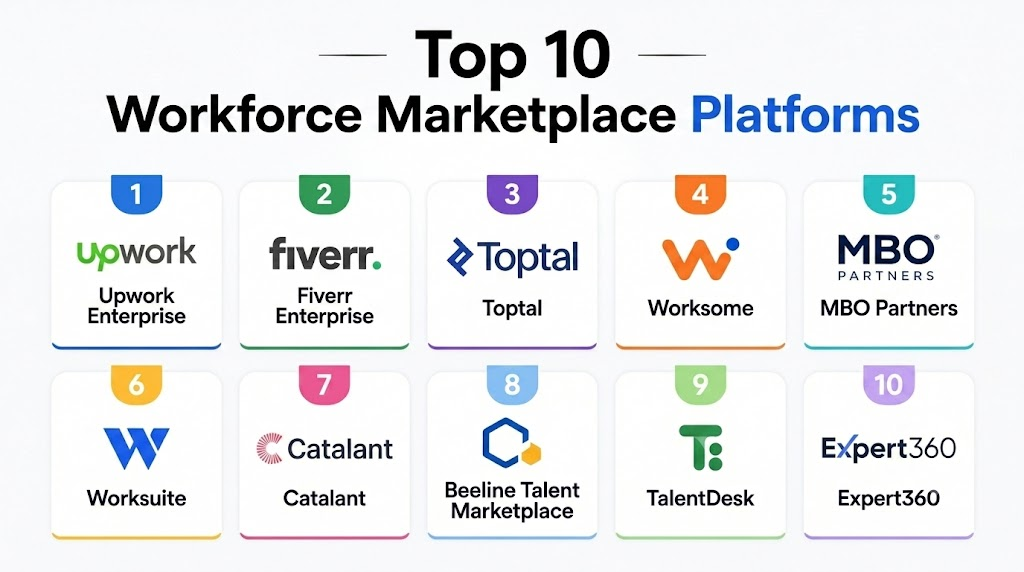
Top 10 Workforce Marketplace Platforms Tools
1- Upwork Enterprise
Short description: Upwork Enterprise provides organizations with access to one of the world’s largest freelance talent marketplaces while offering governance, compliance, and workforce management capabilities.
Key Features
- Global freelancer marketplace
- AI-powered talent recommendations
- Compliance management
- Workforce analytics
- Project management tools
- Enterprise controls
- Contract management
Pros
- Massive talent pool
- Fast hiring process
- Strong global coverage
Cons
- Variable freelancer quality
- Marketplace competition
- Enterprise fees may apply
Platforms / Deployment
- Web / iOS / Android
- Cloud
Security & Compliance
- MFA
- Access controls
- Enterprise governance features
Integrations & Ecosystem
Upwork Enterprise integrates with procurement, collaboration, and workforce management solutions.
- APIs
- HR systems
- Collaboration platforms
- Procurement tools
Support & Community
Strong documentation, onboarding resources, and enterprise support programs.
2- Fiverr Enterprise
Short description: Fiverr Enterprise enables organizations to source and manage freelance talent through Fiverr’s marketplace infrastructure while maintaining business oversight.
Key Features
- Talent sourcing
- Team collaboration
- Freelancer management
- Budget tracking
- Analytics
- Procurement workflows
- Project monitoring
Pros
- Easy adoption
- Large talent marketplace
- Rapid hiring
Cons
- Marketplace-focused model
- Limited customization
- Talent quality varies
Platforms / Deployment
- Web / iOS / Android
- Cloud
Security & Compliance
- MFA
- Role-based permissions
Integrations & Ecosystem
Supports productivity and project management integrations.
- APIs
- Collaboration tools
- Workflow systems
Support & Community
Comprehensive support resources and enterprise onboarding.
3- Toptal
Short description: Toptal specializes in connecting businesses with highly vetted freelance professionals across technology, finance, design, and consulting.
Key Features
- Curated talent network
- Talent vetting process
- Dedicated matching
- Global workforce access
- Project staffing
- Enterprise support
- Flexible engagement models
Pros
- High-quality talent
- Strong vetting standards
- Premium service experience
Cons
- Higher pricing
- Smaller pool than open marketplaces
- Less suitable for budget projects
Platforms / Deployment
- Web
- Cloud
Security & Compliance
- Not publicly stated
Integrations & Ecosystem
Primarily focused on talent sourcing and engagement workflows.
- APIs
- Collaboration tools
- Enterprise systems
Support & Community
Dedicated account management and talent matching assistance.
4- Worksome
Short description: Worksome combines freelancer marketplace functionality with enterprise-grade workforce management and compliance capabilities.
Key Features
- Freelancer sourcing
- Talent pools
- Compliance automation
- Contract management
- Payments
- Workforce analytics
- Onboarding workflows
Pros
- Strong compliance support
- Enterprise focus
- Global workforce capabilities
Cons
- Enterprise-oriented pricing
- Setup complexity
- Advanced features may exceed SMB needs
Platforms / Deployment
- Web
- Cloud
Security & Compliance
- MFA
- Audit capabilities
- Role-based access
Integrations & Ecosystem
Supports integration with workforce and finance systems.
- HRIS platforms
- ERP systems
- APIs
- Identity providers
Support & Community
Enterprise onboarding and dedicated customer success resources.
5- MBO Partners
Short description: MBO Partners focuses on independent contractor engagement, compliance, workforce management, and marketplace services.
Key Features
- Contractor sourcing
- Compliance management
- Payments
- Workforce analytics
- Talent engagement
- Onboarding
- Global support
Pros
- Compliance expertise
- Strong contractor experience
- Enterprise readiness
Cons
- Premium pricing
- Learning curve
- Best suited for larger organizations
Platforms / Deployment
- Web
- Cloud
Security & Compliance
- Compliance-focused workflows
- Access controls
- Audit capabilities
Integrations & Ecosystem
Supports workforce and HR ecosystem integration.
- APIs
- HR systems
- ERP tools
- Finance platforms
Support & Community
Strong support and contractor assistance programs.
6- Worksuite
Short description: Worksuite helps enterprises build and manage private workforce marketplaces and freelance talent clouds.
Key Features
- Talent CRM
- Private talent networks
- Compliance workflows
- Project assignment
- Payments
- Performance tracking
- Workforce visibility
Pros
- Flexible talent cloud model
- Strong governance features
- Scalable architecture
Cons
- Enterprise-focused
- Implementation effort required
- Premium pricing
Platforms / Deployment
- Web
- Cloud
Security & Compliance
- MFA
- Audit logs
- Access management
Integrations & Ecosystem
Strong enterprise integration capabilities.
- APIs
- HRIS systems
- ERP platforms
- Identity providers
Support & Community
Enterprise-grade support and implementation guidance.
7- Catalant
Short description: Catalant focuses on connecting organizations with independent consultants, subject matter experts, and professional service providers.
Key Features
- Consultant marketplace
- Project staffing
- Skills matching
- Workforce planning
- Analytics
- Engagement management
- Expert sourcing
Pros
- Strong consultant network
- Strategic workforce focus
- Enterprise capabilities
Cons
- Less suitable for gig work
- Premium positioning
- Specialized talent focus
Platforms / Deployment
- Web
- Cloud
Security & Compliance
- Not publicly stated
Integrations & Ecosystem
Supports workforce planning and enterprise workflows.
- APIs
- Enterprise applications
- HR platforms
Support & Community
Strong advisory and customer success support.
8- Beeline Talent Marketplace
Short description: Beeline Talent Marketplace extends contingent workforce management with marketplace functionality for sourcing external talent.
Key Features
- Talent sourcing
- Workforce governance
- Analytics
- Vendor management
- Compliance controls
- Resource planning
- Reporting
Pros
- Enterprise-scale capabilities
- Strong governance
- Advanced analytics
Cons
- Complex deployment
- Higher costs
- Requires workforce expertise
Platforms / Deployment
- Web
- Cloud
Security & Compliance
- Enterprise access controls
- Audit logging
- Governance features
Integrations & Ecosystem
Integrates with enterprise workforce ecosystems.
- ERP systems
- HR platforms
- Procurement software
- APIs
Support & Community
Enterprise support and implementation services.
9- TalentDesk
Short description: TalentDesk helps organizations manage freelance and contractor workforces through centralized workforce operations.
Key Features
- Talent database
- Onboarding
- Payments
- Project management
- Compliance workflows
- Analytics
- Workforce visibility
Pros
- Easy to use
- Strong payment workflows
- Good operational visibility
Cons
- Smaller ecosystem
- Fewer enterprise features
- Limited customization
Platforms / Deployment
- Web
- Cloud
Security & Compliance
- MFA
- Encryption
- Access controls
Integrations & Ecosystem
Supports business productivity integrations.
- Accounting software
- HR systems
- APIs
- Collaboration tools
Support & Community
Responsive support and onboarding assistance.
10- Expert360
Short description: Expert360 connects organizations with highly skilled independent consultants and project-based professionals.
Key Features
- Expert talent sourcing
- Consultant matching
- Project staffing
- Skills verification
- Workforce analytics
- Contract management
- Talent engagement
Pros
- High-quality consultant network
- Strong matching capabilities
- Professional services focus
Cons
- Regional concentration
- Smaller marketplace
- Premium pricing
Platforms / Deployment
- Web
- Cloud
Security & Compliance
- Not publicly stated
Integrations & Ecosystem
Focused on workforce engagement workflows.
- APIs
- Collaboration tools
- Enterprise applications
Support & Community
Dedicated support and talent matching assistance.
Comparison Table
| Tool Name | Best For | Platform(s) Supported | Deployment | Standout Feature | Public Rating |
|---|---|---|---|---|---|
| Upwork Enterprise | Global freelance hiring | Web, iOS, Android | Cloud | Massive talent pool | N/A |
| Fiverr Enterprise | Fast project hiring | Web, iOS, Android | Cloud | Easy marketplace access | N/A |
| Toptal | Premium talent sourcing | Web | Cloud | Curated talent network | N/A |
| Worksome | Enterprise freelancer programs | Web | Cloud | Compliance automation | N/A |
| MBO Partners | Contractor management | Web | Cloud | Compliance expertise | N/A |
| Worksuite | Private talent clouds | Web | Cloud | Talent CRM | N/A |
| Catalant | Consultant sourcing | Web | Cloud | Expert marketplace | N/A |
| Beeline Talent Marketplace | Enterprise workforce management | Web | Cloud | Workforce governance | N/A |
| TalentDesk | Workforce operations | Web | Cloud | Payment workflows | N/A |
| Expert360 | Professional consultants | Web | Cloud | Expert matching | N/A |
Evaluation & Scoring of Workforce Marketplace Platforms
| Tool | Core | Ease | Integrations | Security | Performance | Support | Value | Weighted Total |
|---|---|---|---|---|---|---|---|---|
| Upwork Enterprise | 9 | 9 | 8 | 8 | 9 | 8 | 8 | 8.55 |
| Fiverr Enterprise | 8 | 9 | 7 | 7 | 8 | 7 | 9 | 8.00 |
| Toptal | 9 | 8 | 7 | 7 | 9 | 9 | 6 | 8.00 |
| Worksome | 9 | 8 | 8 | 9 | 9 | 8 | 7 | 8.40 |
| MBO Partners | 9 | 7 | 8 | 9 | 8 | 8 | 7 | 8.05 |
| Worksuite | 9 | 8 | 8 | 8 | 8 | 8 | 7 | 8.05 |
| Catalant | 8 | 8 | 7 | 7 | 8 | 8 | 7 | 7.75 |
| Beeline | 9 | 7 | 9 | 9 | 9 | 8 | 6 | 8.25 |
| TalentDesk | 8 | 9 | 7 | 8 | 8 | 8 | 8 | 8.00 |
| Expert360 | 8 | 8 | 6 | 7 | 8 | 8 | 7 | 7.55 |
Which Workforce Marketplace Platform Is Right for You?
Solo / Freelancer
Upwork and Fiverr provide the largest opportunity pools and easiest access to projects.
SMB
TalentDesk, Fiverr Enterprise, and Upwork Enterprise offer simplicity, flexibility, and manageable costs.
Mid-Market
Worksome, Worksuite, and MBO Partners provide stronger workforce governance and scalability.
Enterprise
Beeline Talent Marketplace, Worksome, MBO Partners, and Worksuite offer enterprise-grade controls and workforce visibility.
Budget vs Premium
- Budget-focused: Fiverr Enterprise, Upwork Enterprise
- Premium solutions: Toptal, Beeline, Worksome
Feature Depth vs Ease of Use
- Deep functionality: Beeline, Worksome
- Balanced approach: Worksuite, MBO Partners
- Simplicity: Fiverr Enterprise, TalentDesk
Integrations & Scalability
Organizations with complex environments should prioritize Beeline, Worksome, and Worksuite.
Security & Compliance Needs
Highly regulated organizations should focus on Beeline, MBO Partners, and Worksome.
Frequently Asked Questions
1. What is a Workforce Marketplace Platform?
A Workforce Marketplace Platform helps organizations connect with freelancers, contractors, consultants, and temporary workers through a centralized digital platform. These solutions often include talent sourcing, onboarding, compliance management, payments, and workforce analytics. They help companies scale talent acquisition faster while improving visibility into external workforce operations.
2. How is a Workforce Marketplace Platform different from a traditional job board?
Traditional job boards primarily help employers advertise open positions and collect applications. Workforce Marketplace Platforms go further by providing talent matching, project management, contractor engagement, compliance support, payments, and workforce tracking. They are designed for ongoing workforce management rather than one-time hiring.
3. Are Workforce Marketplace Platforms suitable for global hiring?
Yes, many modern platforms support international talent sourcing and workforce management. They often include multi-currency payments, compliance workflows, contract management, and regional workforce support. This enables organizations to access specialized talent regardless of geographic location.
4. What industries benefit most from Workforce Marketplace Platforms?
Industries such as technology, consulting, marketing, healthcare, engineering, financial services, and creative services frequently use these platforms. Any organization that relies on flexible staffing, project-based work, or specialized expertise can benefit from workforce marketplace solutions.
5. What features should buyers prioritize when evaluating platforms?
Organizations should evaluate talent quality, compliance capabilities, integration options, analytics, payment automation, scalability, and security controls. The right platform should align with both current workforce needs and future growth plans. Ease of use and support quality should also be considered.
6. How long does implementation typically take?
Implementation timelines vary depending on platform complexity and organizational requirements. Small businesses may get started within days, while enterprise deployments involving integrations, compliance workflows, and workforce governance may take several weeks or months to fully implement.
7. Can Workforce Marketplace Platforms integrate with existing business systems?
Most leading platforms offer integrations with HRIS, ERP, procurement, payroll, CRM, and collaboration tools. Integration capabilities help eliminate manual work, improve data accuracy, and create a unified workforce management environment across the organization.
8. How important are AI capabilities in modern workforce marketplaces?
AI is becoming increasingly valuable for talent matching, skills identification, workforce planning, and project recommendations. Advanced platforms use AI to improve hiring efficiency, reduce time-to-fill positions, and identify the best-fit talent based on project requirements and historical performance.
9. What are common mistakes organizations make when selecting a platform?
Many organizations focus only on marketplace size while overlooking compliance, integrations, scalability, and workforce governance. Another common mistake is failing to involve stakeholders from HR, procurement, finance, and operations during the evaluation process. A structured pilot can help avoid costly mistakes.
10. Should companies use one platform or multiple workforce marketplaces?
The answer depends on workforce strategy and talent requirements. Smaller organizations often benefit from a single platform for simplicity and governance. Larger enterprises may use multiple platforms for different talent categories, although consolidation can improve visibility, compliance, and operational efficiency.
Conclusion
Workforce Marketplace Platforms have become a core component of modern workforce strategies, enabling organizations to access specialized talent faster and more efficiently than traditional hiring approaches. While platforms like Upwork Enterprise and Fiverr Enterprise excel at scale and accessibility, solutions such as Worksome, Worksuite, MBO Partners, and Beeline provide deeper workforce governance, compliance, and enterprise management capabilities. The best platform depends on your hiring volume, compliance requirements, talent needs, integration expectations, and budget. Rather than selecting a platform solely based on marketplace size, organizations should shortlist two or three solutions, conduct pilot programs, evaluate integration requirements, and validate security and workforce governance capabilities before making a long-term investment decision.

Find Trusted Cardiac Hospitals
Compare heart hospitals by city and services — all in one place.
Explore Hospitals
Workforce marketplace platforms are most effective when they connect organizations with qualified talent quickly and efficiently. By combining talent matching, availability management, and digital onboarding, these solutions help businesses reduce hiring friction, improve workforce flexibility, and access the right skills when they are needed most.