Introduction
Market Research Platforms are software solutions that help organizations gather, analyze, and visualize data about markets, competitors, and consumer behavior. In plain English, these tools enable businesses to make informed decisions by transforming raw data into actionable insights. market dynamics are evolving rapidly. Companies face increased competition, shifting consumer expectations, and a growing need for real-time intelligence. Market Research Platforms now often include AI-powered analytics, automated reporting, and cross-channel data integration, allowing businesses to respond faster and more accurately.
Real-world use cases include:
- Launching new products with data-backed market validation
- Understanding customer preferences and satisfaction
- Tracking competitor activities and market share
- Evaluating pricing strategies and trends
- Supporting investment and expansion decisions
What buyers should evaluate:
- Data sources and coverage
- Analytical depth and visualization capabilities
- AI and automation support
- Integration with existing systems
- Scalability for enterprise or SMB use
- Security and compliance features
- Ease of use and onboarding
- Performance and reliability
- Cost-effectiveness
- Support and community
Best for: Marketing teams, product managers, competitive intelligence analysts, SMBs and large enterprises seeking structured market insights.
Not ideal for: Companies with minimal market research needs, very small businesses, or those primarily relying on informal methods like surveys or spreadsheets.
Key Trends in Market Research Platforms
- AI-driven predictive analytics for forecasting trends
- Automated survey generation and sentiment analysis
- Integration with CRM, ERP, and social analytics platforms
- Real-time dashboards and mobile access
- Cloud-first deployment with hybrid options for sensitive data
- Enhanced privacy, GDPR, and SOC 2 compliance
- Natural language query and AI-assisted insight generation
- Subscription and consumption-based pricing models
- Visual storytelling and advanced data visualization tools
- Consolidation of multi-source data including social, web, and offline channels
How We Selected These Tools (Methodology)
- Evaluated market adoption and brand visibility
- Reviewed feature completeness including AI and automation
- Assessed platform reliability and performance history
- Considered security and compliance posture
- Analyzed integration capabilities and ecosystem support
- Verified customer fit across company sizes and industries
- Checked data visualization and reporting capabilities
- Reviewed deployment flexibility (cloud, hybrid, self-hosted)
- Balanced ease of use with analytical depth
- Considered cost and ROI potential
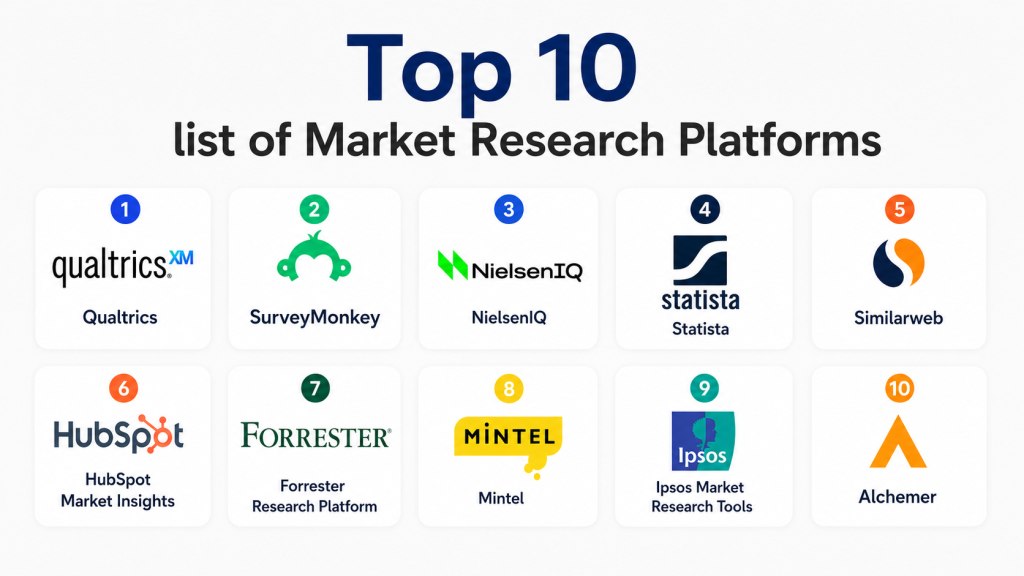
Top 10 Market Research Platforms
1- Qualtrics
Short description: Enterprise-grade experience and market insights platform for capturing customer, employee, and market data.
Key Features
- Multi-channel surveys
- AI-powered sentiment analysis
- Real-time dashboards
- Predictive analytics
- Customizable reporting
- Integration with CRM and ERP systems
- API access for data export
Pros
- Strong analytics depth
- Highly customizable surveys
- Scalable for large enterprises
Cons
- Higher cost for smaller teams
- Learning curve for complex features
- Limited offline data collection
Platforms / Deployment
- Web / iOS / Android
- Cloud
Security & Compliance
- SOC 2, GDPR
- SSO/SAML, MFA, encryption
Integrations & Ecosystem
Supports major CRM, ERP, marketing platforms.
- Salesforce
- Microsoft Dynamics
- Tableau
- Slack
- REST API
Support & Community
Extensive documentation, onboarding support, dedicated account managers, active community forums.
2- SurveyMonkey
Short description: Simple and flexible survey platform suitable for SMBs and marketing teams to gather market feedback.
Key Features
- Pre-built survey templates
- Logic branching and skip patterns
- AI-driven analysis and recommendations
- Multi-device survey access
- Export to Excel, CSV
- Integration with collaboration tools
- Real-time reporting
Pros
- Easy to use
- Affordable for SMBs
- Quick survey creation
Cons
- Limited advanced analytics
- Less suitable for enterprise-scale insights
- Fewer predictive analytics features
Platforms / Deployment
- Web / iOS / Android
- Cloud
Security & Compliance
- Not publicly stated
Integrations & Ecosystem
Integrates with:
- Salesforce
- HubSpot
- Mailchimp
- Zapier
Support & Community
Knowledge base, chat/email support, active online community.
3- NielsenIQ
Short description: Global market measurement and consumer insights platform for retail and consumer packaged goods industries.
Key Features
- Retail and consumer analytics
- Product and pricing tracking
- AI-driven trend forecasting
- Customizable dashboards
- Category performance tracking
- Consumer panel data access
- Predictive modeling
Pros
- Deep retail and consumer insights
- Longitudinal data coverage
- Established industry credibility
Cons
- Expensive for small businesses
- Complexity in setup
- Limited non-retail use cases
Platforms / Deployment
- Web / Desktop
- Cloud
Security & Compliance
- SOC 2, GDPR
- Encryption and role-based access
Integrations & Ecosystem
APIs for ERP, CRM, and analytics platforms.
- Tableau
- Power BI
- SAP
Support & Community
Dedicated account managers, customer support, training programs.
4- Statista
Short description: Market data and statistics aggregator for businesses, analysts, and researchers.
Key Features
- Access to global market data
- Industry reports and forecasts
- Interactive charts and visualization
- Downloadable datasets
- AI-assisted trend identification
- API access
Pros
- Broad market coverage
- Quick access to credible secondary data
- Intuitive interface
Cons
- Limited primary research capabilities
- Subscription cost can be high
- Limited customization of insights
Platforms / Deployment
- Web
- Cloud
Security & Compliance
- Not publicly stated
Integrations & Ecosystem
- Excel / CSV export
- API for dashboards
- Integrates with analytics software
Support & Community
- Knowledge base, email support, tutorials
5- Similarweb
Short description: Digital market intelligence platform focused on web analytics, competitor tracking, and audience insights.
Key Features
- Web traffic and engagement analysis
- Competitor benchmarking
- Keyword and SEO insights
- Market share analytics
- Mobile app analytics
- Customizable dashboards
- Alerts for digital trends
Pros
- Strong competitive intelligence
- Real-time web metrics
- User-friendly interface
Cons
- Limited offline market data
- Some features require premium plans
- Less robust survey capabilities
Platforms / Deployment
- Web
- Cloud
Security & Compliance
- Not publicly stated
Integrations & Ecosystem
- Tableau
- Power BI
- API access for dashboards
Support & Community
- Online resources, customer support tiers, webinars
6- HubSpot Market Insights
Short description: Part of HubSpot ecosystem, offering integrated market intelligence and customer feedback tools for marketing and sales teams.
Key Features
- CRM integration
- Lead and account insights
- Industry trend analytics
- Survey and feedback collection
- AI-driven recommendations
- Custom reporting
- Workflow automation
Pros
- Seamless integration with HubSpot CRM
- Good for SMBs
- AI-powered suggestions
Cons
- Limited advanced analytics
- Not ideal for large-scale enterprise research
- Dependent on HubSpot ecosystem
Platforms / Deployment
- Web / iOS / Android
- Cloud
Security & Compliance
- SOC 2, GDPR
- SSO, encryption
Integrations & Ecosystem
- HubSpot CRM
- Marketing automation
- Slack
- Zapier
Support & Community
- Extensive tutorials, support tiers, active forums
7- Forrester Research Platform
Short description: Research and advisory platform providing industry analysis, market reports, and forecasts.
Key Features
- Analyst-driven insights
- Industry benchmarks
- Predictive market modeling
- Custom report creation
- Data visualization tools
- Primary and secondary research access
Pros
- Trusted research authority
- Deep industry coverage
- Actionable strategic insights
Cons
- High subscription cost
- Limited self-service features
- Less suitable for real-time tracking
Platforms / Deployment
- Web
- Cloud
Security & Compliance
- Not publicly stated
Integrations & Ecosystem
- Downloadable reports
- API for dashboards
- Integrates with BI platforms
Support & Community
- Analyst consultation, webinars, documentation
8- Mintel
Short description: Market intelligence platform for consumer and product trends, providing reports and analytics to inform innovation.
Key Features
- Consumer and product trend data
- Forecasting and market sizing
- Benchmarking and category insights
- Interactive dashboards
- Industry-specific reports
- AI-assisted analysis
- Exportable datasets
Pros
- Strong trend identification
- Actionable consumer insights
- Specialized industry coverage
Cons
- Expensive for small businesses
- Reports can be dense
- Limited integration options
Platforms / Deployment
- Web
- Cloud
Security & Compliance
- Not publicly stated
Integrations & Ecosystem
- API access
- Excel export
- Dashboard integration
Support & Community
- Customer support, training sessions, documentation
9- Ipsos Market Research Tools
Short description: Platform for global market surveys, opinion polls, and custom research.
Key Features
- Custom survey creation
- Multichannel data collection
- Real-time analytics
- Benchmarking
- AI-assisted sentiment analysis
- Integration with reporting dashboards
- Data visualization
Pros
- Extensive global panel
- Reliable survey methodology
- Multilingual support
Cons
- Costly for small projects
- Complex for beginners
- Limited automated insights
Platforms / Deployment
- Web
- Cloud
Security & Compliance
- Not publicly stated
Integrations & Ecosystem
- CRM integration
- Dashboard export
- API access
Support & Community
- Training, account managers, online resources
10- SurveyGizmo / Alchemer
Short description: Flexible survey and data analytics platform for SMBs and enterprise market research.
Key Features
- Advanced survey logic
- Data dashboards and reporting
- API and integration support
- AI-assisted insights
- Multi-device access
- Exportable analytics
- Custom branding
Pros
- Flexible survey options
- Strong reporting features
- Scalable for SMBs and enterprises
Cons
- UI complexity for new users
- Some features require advanced plan
- Limited pre-built industry benchmarks
Platforms / Deployment
- Web / iOS / Android
- Cloud
Security & Compliance
- SOC 2
- Encryption, role-based access
Integrations & Ecosystem
- Salesforce
- HubSpot
- Tableau
- Zapier
Support & Community
- Documentation, tutorials, support tiers, community forum
Comparison Table (Top 10)
| Tool Name | Best For | Platform(s) Supported | Deployment | Standout Feature | Public Rating |
|---|---|---|---|---|---|
| Qualtrics | Enterprise insights | Web, iOS, Android | Cloud | AI-powered sentiment analysis | N/A |
| SurveyMonkey | SMB surveys | Web, iOS, Android | Cloud | Easy survey creation | N/A |
| NielsenIQ | Retail / CPG analytics | Web, Desktop | Cloud | Product & pricing tracking | N/A |
| Statista | Data aggregation / secondary research | Web | Cloud | Global market data | N/A |
| Similarweb | Digital / competitor insights | Web | Cloud | Web traffic & competitor data | N/A |
| HubSpot Market Insights | SMB marketing teams | Web, iOS, Android | Cloud | CRM-integrated insights | N/A |
| Forrester Research Platform | Enterprise strategic planning | Web | Cloud | Analyst-driven insights | N/A |
| Mintel | Consumer trends / innovation | Web | Cloud | Trend identification | N/A |
| Ipsos Market Research Tools | Global survey / polling | Web | Cloud | Extensive survey panels | N/A |
| Alchemer | Custom surveys & analytics | Web, iOS, Android | Cloud | Flexible survey options | N/A |
Evaluation & Scoring of Market Research Platforms
| Tool Name | Core (25%) | Ease (15%) | Integrations (15%) | Security (10%) | Performance (10%) | Support (10%) | Value (15%) | Weighted Total (0–10) |
|---|---|---|---|---|---|---|---|---|
| Qualtrics | 9 | 7 | 8 | 8 | 9 | 8 | 7 | 8.3 |
| SurveyMonkey | 7 | 9 | 6 | 7 | 8 | 7 | 9 | 7.7 |
| NielsenIQ | 9 | 6 | 7 | 8 | 9 | 7 | 6 | 7.9 |
| Statista | 6 | 9 | 6 | 7 | 7 | 7 | 8 | 7.3 |
| Similarweb | 7 | 8 | 7 | 7 | 8 | 7 | 8 | 7.6 |
| HubSpot Insights | 7 | 8 | 8 | 8 | 8 | 8 | 7 | 7.8 |
| Forrester | 9 | 6 | 6 | 7 | 8 | 7 | 6 | 7.4 |
| Mintel | 8 | 7 | 6 | 7 | 7 | 7 | 6 | 7.1 |
| Ipsos | 8 | 6 | 7 | 7 | 8 | 7 | 6 | 7.2 |
| Alchemer | 8 | 7 | 7 | 8 | 8 | 7 | 7 | 7.6 |
Which Market Research Platform Is Right for You?
Solo / Freelancer
- SurveyMonkey or Statista are affordable, easy-to-use, and quick for one-off projects or small-scale research.
SMB
- HubSpot Market Insights or Alchemer offer CRM integration and flexible survey options suited for growing teams.
Mid-Market
- Qualtrics or Similarweb provide deeper analytics, dashboards, and multi-source data access.
Enterprise
- NielsenIQ, Mintel, or Forrester provide robust, industry-specific intelligence and predictive modeling.
Budget vs Premium
- Budget: SurveyMonkey, Statista, Alchemer
- Premium: Qualtrics, NielsenIQ, Mintel, Forrester
Feature Depth vs Ease of Use
- Trade-off between ease of onboarding (SurveyMonkey) and advanced capabilities (Qualtrics, NielsenIQ)
Integrations & Scalability
- HubSpot Insights, Similarweb, and Alchemer excel in integration for workflows and dashboards, scaling with company growth.
Security & Compliance Needs
- Enterprises should prioritize tools with SOC 2, GDPR compliance, and SSO/MFA support, such as Qualtrics or HubSpot Market Insights.
Frequently Asked Questions (FAQs)
1- What pricing models are common in Market Research Platforms?
Most Market Research Platforms use subscription-based pricing.
Pricing may depend on users, survey volume, data access, reports, or enterprise features.
Some platforms also offer custom pricing for large teams and advanced analytics.
Buyers should compare total cost, add-ons, support, and data export limits before choosing.
2- How long does onboarding usually take?
Basic survey and research tools can be set up within a few hours or days.
Enterprise platforms may require several weeks for configuration, permissions, integrations, and training.
The timeline depends on data sources, team size, workflows, and reporting needs.
A small pilot project is the best way to test onboarding before full rollout.
3- Can Market Research Platforms support international research?
Yes, many platforms support global surveys, multilingual research, and regional data analysis.
Enterprise tools may provide stronger global panels, industry benchmarks, and country-level insights.
Buyers should check language support, respondent coverage, and local privacy requirements.
For global teams, data quality and regional reporting depth are very important.
4- How secure are Market Research Platforms?
Security varies by vendor, so buyers should carefully review each platform’s security documentation.
Important features include encryption, SSO, MFA, RBAC, audit logs, and secure data exports.
For regulated industries, compliance expectations may include GDPR, SOC 2, or ISO alignment.
If compliance is not clearly stated, treat it as “Not publicly stated” until verified.
5- Can these platforms integrate with CRM and BI tools?
Most modern platforms provide integrations with CRM, BI, marketing, and collaboration tools.
Common integrations include Salesforce, HubSpot, Tableau, Power BI, Slack, and spreadsheet exports.
APIs and webhooks are useful when teams need custom workflows or automated reporting.
Before buying, confirm whether integrations are native, third-party, or require technical setup.
6- What are common mistakes when choosing a Market Research Platform?
A common mistake is buying a complex enterprise platform when the team only needs simple surveys.
Another mistake is ignoring data export, integration, and dashboard requirements.
Some teams also overlook security reviews, respondent quality, and long-term pricing.
The best approach is to match the tool to real use cases, not just feature lists.
7- Can businesses switch from one platform to another easily?
Switching is possible, but it depends on data portability and integration complexity.
Simple survey data can often be exported through CSV, Excel, or API options.
Custom dashboards, workflows, templates, and historical benchmarks may need rebuilding.
Before switching, review export options and run a migration test with sample data.
8- Are Market Research Platforms suitable for real-time insights?
Some platforms provide near real-time dashboards, alerts, and digital behavior tracking.
Survey-based research may take longer because responses need to be collected and cleaned.
Digital intelligence platforms are stronger for live traffic, competitor, and audience trends.
Buyers should define whether they need instant signals, periodic reports, or deep research.
9- Do Market Research Platforms use AI?
Yes, many platforms now include AI for sentiment analysis, survey design, trend detection, and reporting.
AI can help summarize responses, identify patterns, and recommend follow-up questions.
However, AI insights should still be validated by human analysts and reliable data sources.
Buyers should check transparency, data privacy, and control over AI-generated outputs.
10- What are alternatives to Market Research Platforms?
Alternatives include spreadsheets, manual surveys, social listening tools, CRM reports, and BI dashboards.
These options may work for small teams with limited research needs.
However, dedicated platforms are better for structured studies, benchmarking, and repeatable reporting.
The right choice depends on research complexity, budget, data volume, and decision-making needs.
Conclusion
Market Research Platforms are essential for companies that need structured, actionable insights from data across multiple channels. The “best” platform depends on your organization’s size, budget, and the depth of analytics required. SMBs may prioritize ease of use and affordability, while enterprises require scalability, security, and predictive analytics. The practical approach is to shortlist 2–3 tools, run pilot projects to validate capabilities, confirm integration and compliance readiness, and then scale adoption across teams.

Find Trusted Cardiac Hospitals
Compare heart hospitals by city and services — all in one place.
Explore Hospitals
Market research platforms are most effective when they combine reliable data collection with powerful analytics to uncover meaningful customer and industry insights. By streamlining survey management, trend analysis, and audience segmentation, these tools help organizations make better-informed decisions, reduce market uncertainty, and identify new growth opportunities.