Introduction
Disaster Management & Response Platforms are digital tools designed to help governments, NGOs, emergency services, and businesses prepare for, respond to, and recover from natural and man-made disasters. These platforms provide real-time situational awareness, resource allocation, coordination, and analytics to streamline emergency response efforts. the increasing frequency of natural disasters, climate-related events, and industrial incidents has made these systems essential. Modern platforms leverage AI, cloud computing, GIS mapping, and IoT devices to predict, monitor, and coordinate disaster response more efficiently.
Real-world use cases include:
- Real-time monitoring of hurricanes, floods, and wildfires
- Coordinating emergency response teams and resource deployment
- Managing evacuation routes and shelter logistics
- Incident reporting and analytics for disaster recovery
- Integration with early warning systems for predictive alerts
What buyers should evaluate:
- Real-time monitoring and alerting capabilities
- GIS and mapping integration
- Mobile access for field teams
- Interoperability with government, NGOs, and first responder systems
- Predictive analytics and AI-driven insights
- Workflow automation for emergency response
- Reporting and compliance tools
- Security and data privacy
- Scalability to handle large geographic areas
- Multi-agency collaboration features
Best for: emergency management agencies, municipal disaster teams, NGOs, and enterprises with critical infrastructure.
Not ideal for: small organizations with minimal exposure to disasters; basic manual coordination or lightweight project management tools may suffice.
Key Trends in Disaster Management & Response Platforms
- AI-assisted disaster prediction and risk scoring
- Cloud-native, scalable deployments
- Real-time data integration from IoT sensors, drones, and satellites
- GIS and mapping for situational awareness and resource allocation
- Automated incident reporting and workflow management
- Integration with government and first responder systems
- Mobile apps for field personnel
- Predictive analytics for resource optimization
- Multi-agency coordination and shared dashboards
- SaaS subscription models replacing legacy on-premise solutions
How We Selected These Tools (Methodology)
- Evaluated market adoption and mindshare among emergency management agencies
- Assessed feature completeness including monitoring, alerts, and response coordination
- Reviewed reliability and performance under real-time, high-pressure scenarios
- Checked security and compliance including encryption and role-based access
- Considered integration capabilities with GIS, IoT, and government systems
- Analyzed customer fit for small agencies, mid-market, and national emergency management teams
- Evaluated scalability to cover large geographic areas and multiple disaster types
- Reviewed vendor support quality and training materials
- Prioritized platforms with modern architecture, cloud compatibility, and mobile access
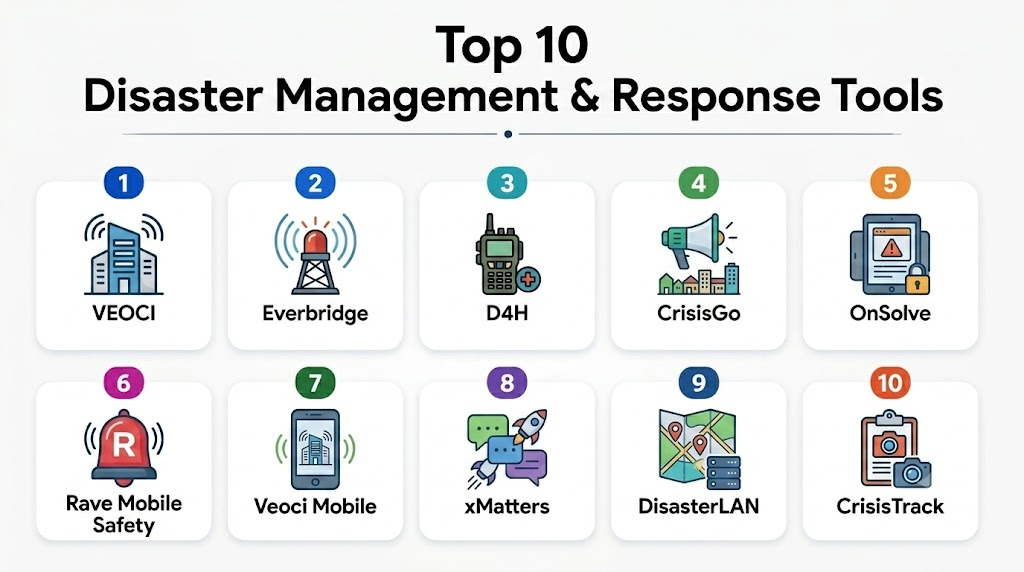
Top 10 Disaster Management & Response Platforms
1- VEOCI
Short description: Cloud-based emergency management platform for incident reporting, resource management, and response coordination.
Key Features
- Real-time incident tracking
- Resource allocation and personnel management
- GIS mapping integration
- Workflow automation for emergency response
- Mobile field access
- Reporting and analytics dashboards
Pros
- Centralized platform for multi-agency coordination
- Real-time situational awareness
Cons
- Complex setup for smaller organizations
- Licensing cost may be high
Platforms / Deployment
- Web, iOS, Android
- Cloud
Security & Compliance
Not publicly stated
Integrations & Ecosystem
- GIS and mapping tools
- Emergency alert systems
- IoT sensors and dashboards
- API access for custom integrations
Support & Community
Vendor support, online documentation, and training
2- Everbridge
Short description: Critical event management system for public safety, emergency alerts, and disaster response.
Key Features
- Multi-channel emergency notifications
- Incident and crisis management
- GIS visualization of affected areas
- Automated workflows for alerts
- Analytics for post-incident review
- Integration with emergency services and local authorities
Pros
- Rapid notification and alert capabilities
- Scalable for large populations
Cons
- Interface complexity for new users
- Premium pricing
Platforms / Deployment
- Web, iOS, Android
- Cloud
Security & Compliance
Not publicly stated
Integrations & Ecosystem
- Government alert systems
- GIS and mapping software
- Mobile and SMS notification providers
Support & Community
Vendor support, training, and knowledge base
3- D4H
Short description: Emergency response management platform for incident logging, team coordination, and resource tracking.
Key Features
- Incident reporting and logging
- Team management and dispatch
- Resource tracking
- Customizable workflows
- Reporting and compliance dashboards
- Mobile and web access
Pros
- Intuitive for field responders
- Flexible workflow management
Cons
- Limited integration options for some agencies
- May require customization for large-scale operations
Platforms / Deployment
- Web, iOS, Android
- Cloud
Security & Compliance
Not publicly stated
Integrations & Ecosystem
- GIS mapping
- Alerting and notification systems
- ERP and logistics software
Support & Community
Vendor support and user community
4- CrisisGo
Short description: Platform for real-time communication, incident reporting, and emergency coordination in organizations and municipalities.
Key Features
- Mass notifications and alerts
- Incident tracking and response
- Two-way communication between teams
- Mobile app for field personnel
- Analytics and reporting dashboards
- Workflow management
Pros
- Rapid communication features
- User-friendly mobile interface
Cons
- Limited advanced analytics
- Smaller integration ecosystem
Platforms / Deployment
- Web, iOS, Android
- Cloud
Security & Compliance
Not publicly stated
Integrations & Ecosystem
- Mobile push notifications
- Alerting systems
- GIS and mapping tools
Support & Community
Vendor support and documentation
5- OnSolve
Short description: Critical event management platform for emergency alerts, mass notifications, and disaster coordination.
Key Features
- Real-time notifications
- Crisis management dashboards
- GIS mapping
- Multi-channel communication
- Analytics for post-event review
- Workflow automation
Pros
- Scalable for large organizations
- Supports multiple communication channels
Cons
- Implementation complexity
- Subscription cost
Platforms / Deployment
- Web, iOS, Android
- Cloud
Security & Compliance
Not publicly stated
Integrations & Ecosystem
- GIS mapping
- ERP and logistics systems
- Alerting services
Support & Community
Vendor support and online training
6- Rave Mobile Safety
Short description: Emergency communication and incident management platform for public safety agencies.
Key Features
- Mass notification system
- Incident tracking
- GIS mapping integration
- Mobile app for responders
- Analytics and reporting
- Workflow automation
Pros
- Strong mobile and alert capabilities
- Widely adopted by public safety agencies
Cons
- Premium pricing
- Customization may require vendor support
Platforms / Deployment
- Web, iOS, Android
- Cloud
Security & Compliance
Not publicly stated
Integrations & Ecosystem
- GIS mapping
- Government alert systems
- IoT and sensors
Support & Community
Vendor support, user forums
7- Veoci Mobile
Short description: Mobile-first emergency management solution for incident response and resource coordination.
Key Features
- Mobile field reporting
- Real-time situational awareness
- Resource allocation and tracking
- Automated workflows
- GIS mapping
- Analytics dashboards
Pros
- Mobile-first approach for field teams
- Cloud-native and scalable
Cons
- May require training for full functionality
- Licensing cost for smaller organizations
Platforms / Deployment
- iOS, Android, Web
- Cloud
Security & Compliance
Not publicly stated
Integrations & Ecosystem
- GIS and mapping tools
- Alerting systems
- ERP and logistics
Support & Community
Vendor support, online resources
8- xMatters
Short description: Incident management and communication platform for enterprise and public sector emergency response.
Key Features
- Automated alerts and notifications
- Incident and response workflow
- Multi-channel communication
- Analytics and reporting
- GIS integration
- Mobile field access
Pros
- Rapid communication
- Workflow automation
Cons
- Limited GIS capabilities
- Higher cost for small teams
Platforms / Deployment
- Web, iOS, Android
- Cloud
Security & Compliance
Not publicly stated
Integrations & Ecosystem
- GIS mapping
- ERP and workflow systems
- Alerting platforms
Support & Community
Vendor support and documentation
9- DisasterLAN
Short description: Platform for emergency management, incident tracking, and disaster recovery planning.
Key Features
- Incident and resource management
- Real-time dashboards
- GIS mapping integration
- Reporting and analytics
- Multi-agency collaboration
- Mobile support
Pros
- Flexible for municipal and state agencies
- Strong coordination features
Cons
- Limited mobile functionality
- Requires training
Platforms / Deployment
- Web, Windows, iOS
- Cloud / Hybrid
Security & Compliance
Not publicly stated
Integrations & Ecosystem
- GIS and mapping tools
- Government alerting systems
- ERP integration
Support & Community
Vendor support and training
10- CrisisTrack
Short description: Emergency management and disaster response platform with real-time monitoring and communication tools.
Key Features
- Incident tracking
- Real-time alerts
- Resource and personnel coordination
- GIS mapping
- Mobile access
- Analytics and reporting
Pros
- Real-time situational awareness
- Mobile-friendly interface
Cons
- Smaller user community
- Integration options may be limited
Platforms / Deployment
- Web, iOS, Android
- Cloud
Security & Compliance
Not publicly stated
Integrations & Ecosystem
- GIS and mapping
- Alerting systems
- ERP and logistics tools
Support & Community
Vendor support and documentation
Comparison Table (Top 10)
| Tool Name | Best For | Platform(s) Supported | Deployment | Standout Feature | Public Rating |
|---|---|---|---|---|---|
| VEOCI | Municipal & enterprise | Web, iOS, Android | Cloud | Multi-agency coordination | N/A |
| Everbridge | Large organizations | Web, iOS, Android | Cloud | Rapid notifications | N/A |
| D4H | Emergency services | Web, iOS, Android | Cloud | Workflow automation | N/A |
| CrisisGo | Schools & municipalities | Web, iOS, Android | Cloud | Two-way communication | N/A |
| OnSolve | Enterprise & governments | Web, iOS, Android | Cloud | Multi-channel alerts | N/A |
| Rave Mobile Safety | Public safety agencies | Web, iOS, Android | Cloud | Mobile alerting | N/A |
| Veoci Mobile | Field teams | iOS, Android, Web | Cloud | Mobile-first reporting | N/A |
| xMatters | Enterprise & public sector | Web, iOS, Android | Cloud | Incident workflow | N/A |
| DisasterLAN | Municipal/state agencies | Web, Windows, iOS | Cloud / Hybrid | Resource management | N/A |
| CrisisTrack | Disaster response teams | Web, iOS, Android | Cloud | Real-time monitoring | N/A |
Evaluation & Scoring of Disaster Management & Response Platforms
| Tool Name | Core (25%) | Ease (15%) | Integrations (15%) | Security (10%) | Performance (10%) | Support (10%) | Value (15%) | Weighted Total |
|---|---|---|---|---|---|---|---|---|
| VEOCI | 9 | 8 | 8 | 8 | 8 | 7 | 7 | 7.9 |
| Everbridge | 9 | 7 | 8 | 8 | 8 | 7 | 7 | 7.8 |
| D4H | 8 | 8 | 7 | 7 | 8 | 7 | 7 | 7.5 |
| CrisisGo | 7 | 9 | 6 | 7 | 7 | 7 | 7 | 7.2 |
| OnSolve | 8 | 8 | 7 | 7 | 8 | 7 | 7 | 7.5 |
| Rave Mobile Safety | 8 | 8 | 7 | 7 | 8 | 7 | 7 | 7.5 |
| Veoci Mobile | 8 | 8 | 7 | 7 | 8 | 7 | 7 | 7.5 |
| xMatters | 8 | 7 | 7 | 7 | 7 | 7 | 7 | 7.3 |
| DisasterLAN | 8 | 7 | 7 | 7 | 7 | 7 | 7 | 7.3 |
| CrisisTrack | 7 | 8 | 6 | 7 | 7 | 7 | 7 | 7.1 |
Which Disaster Management & Response Platform Is Right for You?
Solo / Freelancer
Lightweight tools like CrisisGo are ideal for small agencies or schools managing limited incidents.
SMB
Regional emergency services can use D4H or Veoci Mobile for real-time coordination and reporting.
Mid-Market
Municipal and state agencies may adopt VEOCI or OnSolve for comprehensive workflow and multi-agency coordination.
Enterprise
Large national agencies should consider Everbridge or Rave Mobile Safety for scalable, multi-channel alerting and predictive analytics.
Budget vs Premium
Smaller organizations can adopt SaaS tools with basic alerts; premium platforms offer automation, predictive analytics, and full GIS integration.
Feature Depth vs Ease of Use
Enterprise platforms provide advanced features but require training; smaller tools prioritize usability and rapid deployment.
Integrations & Scalability
Agencies needing GIS, IoT, and ERP integration should select VEOCI or Everbridge for large-scale deployment.
Security & Compliance Needs
Agencies handling sensitive emergency data should choose systems with encryption, audit logs, and role-based access.
Frequently Asked Questions (FAQs)
1- What pricing models are typical?
Most systems use SaaS subscription models; some enterprise solutions may include licensing fees.
2- How long does implementation take?
Small deployments may launch in weeks; enterprise-scale solutions can require months.
3- Can these platforms handle real-time alerts?
Yes, enterprise-grade platforms provide real-time notifications and incident updates.
4- Are mobile apps supported for field teams?
Yes, most platforms offer iOS and Android apps for incident reporting and monitoring.
5- How secure are these tools?
Leading platforms offer encryption, access controls, and compliance with relevant regulations.
6- Can they integrate with GIS and IoT devices?
Yes, integration with mapping systems and IoT sensors is common.
7- Are predictive analytics features included?
Many enterprise platforms provide AI-driven predictions for disaster impact and resource allocation.
8- Do these platforms support multi-agency coordination?
Yes, most include dashboards and workflows to enable collaboration across agencies.
9- What are common implementation mistakes?
Neglecting staff training, poor integration planning, and insufficient testing are common pitfalls.
10- Are open-source options available?
Few open-source platforms exist; most agencies adopt commercial SaaS solutions for reliability and support.
Conclusion
Disaster Management & Response Platforms are critical for effective emergency preparedness, real-time monitoring, and coordinated response. They enable rapid alerts, resource allocation, and multi-agency collaboration during crises. Selection depends on organization size, integration requirements, and budget constraints. Pilot deployments help validate workflows, mobile access, and GIS integration. Staff training and technical support are essential for successful adoption. Agencies should balance feature depth with usability to maximize operational efficiency. The right system ensures timely response, accurate reporting, and effective disaster management.

Find Trusted Cardiac Hospitals
Compare heart hospitals by city and services — all in one place.
Explore Hospitals
Disaster management platforms are most valuable when they provide real-time coordination before, during, and after emergencies. By combining situational awareness, resource tracking, and communication tools, these solutions help responders make faster decisions, improve collaboration, and minimize the impact of natural and human-made disasters.