Introduction
Public Health Surveillance Systems are digital platforms that collect, monitor, and analyze health-related data to detect, prevent, and respond to disease outbreaks. These systems provide real-time insights into public health trends, enabling governments, hospitals, and research organizations to make informed decisions, allocate resources efficiently, and improve population health outcomes. the importance of such systems has surged due to global health challenges, pandemics, and the growing need for early warning mechanisms. Modern surveillance platforms leverage AI, cloud computing, and IoT data from hospitals, laboratories, and wearable devices to enhance disease prediction, response coordination, and reporting accuracy.
Real-world use cases include:
- Monitoring infectious disease outbreaks
- Tracking immunization coverage and adverse events
- Syndromic surveillance in hospitals and clinics
- Environmental health monitoring and early warning alerts
- Resource allocation and public health policy planning
What buyers should evaluate:
- Real-time data collection and reporting
- Integration with hospital, lab, and government systems
- AI and analytics capabilities for predictive insights
- Security and privacy compliance (HIPAA, GDPR)
- Mobile and remote data collection
- Customizable dashboards and alerts
- Scalability to cover large populations or regions
- Interoperability with public health APIs and IoT devices
- Automated compliance reporting
- Support for multi-agency collaboration
Best for: public health agencies, hospitals, laboratories, epidemiology centers, and global health organizations.
Not ideal for: small clinics or research groups with minimal monitoring needs; simple spreadsheet tracking may suffice.
Key Trends in Public Health Surveillance Systems
- AI-assisted outbreak prediction and risk scoring
- Cloud-native deployment for scalability and remote access
- Integration with electronic health records (EHRs) and laboratory information systems (LIS)
- Mobile data collection and field surveillance
- Real-time dashboards and alert systems
- Interoperability with national and international health reporting systems
- Blockchain for secure, tamper-proof health records
- Automated syndromic surveillance and anomaly detection
- Subscription-based SaaS pricing models replacing legacy on-premise solutions
- Use of wearables and IoT for environmental and patient monitoring
How We Selected These Tools (Methodology)
- Evaluated market adoption and usage in hospitals, public health agencies, and research institutions
- Assessed feature completeness including data collection, analytics, and alerting
- Reviewed reliability and performance in high-volume, real-time scenarios
- Checked security and compliance with HIPAA, GDPR, and ISO standards
- Considered integration capabilities with EHRs, LIS, and governmental reporting platforms
- Analyzed customer fit for small clinics to large national health agencies
- Examined scalability for large population coverage
- Reviewed vendor support quality and training resources
- Prioritized modern architecture, cloud compatibility, and AI readiness
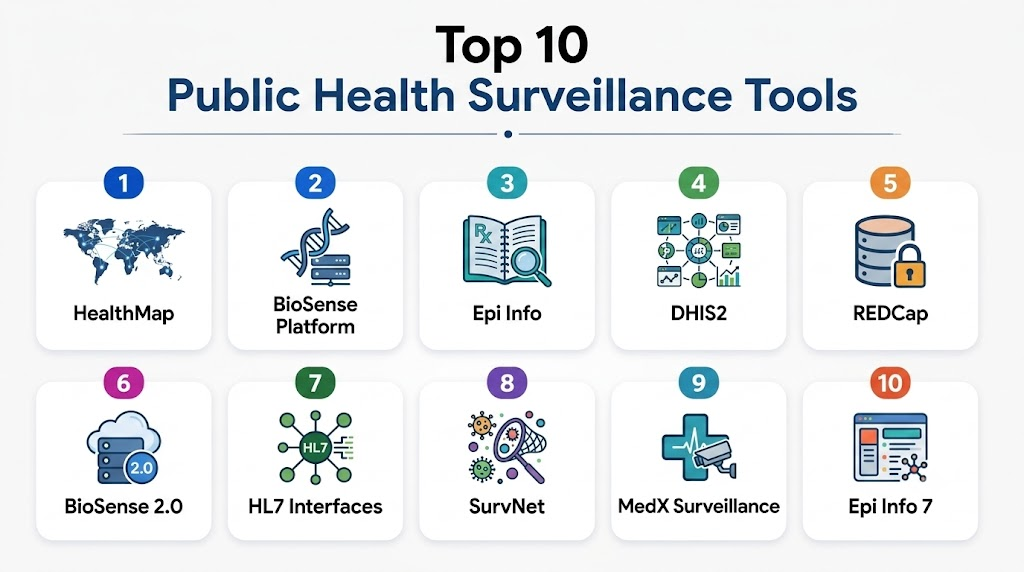
Top 10 Public Health Surveillance Systems
1- HealthMap
Short description: Real-time infectious disease monitoring platform providing outbreak alerts and visualization for health agencies and researchers.
Key Features
- Real-time outbreak mapping
- Global disease alert aggregation
- Predictive analytics
- Customizable dashboards
- Multi-source data integration
- Mobile access for field surveillance
Pros
- Excellent real-time visualization
- Supports global epidemiology monitoring
Cons
- Limited customization for local datasets
- Reliant on external data feeds
Platforms / Deployment
- Web, iOS, Android
- Cloud
Security & Compliance
Not publicly stated
Integrations & Ecosystem
- EHR and hospital databases
- Government health reporting
- Public health APIs
Support & Community
Vendor support and research community collaboration
2- BioSense Platform
Short description: Syndromic surveillance platform for the CDC and health departments to monitor disease trends and detect outbreaks.
Key Features
- Syndromic surveillance
- Hospital and clinic integration
- Automated alerting and notifications
- Data visualization dashboards
- Predictive modeling
- Historical trend analysis
Pros
- Strong integration with public health networks
- Scalable for large regions
Cons
- Complex setup
- Limited mobility options
Platforms / Deployment
- Web
- Cloud
Security & Compliance
- HIPAA compliant
- Encryption and role-based access
Integrations & Ecosystem
- EHR systems
- Lab reporting platforms
- Public health APIs
Support & Community
Vendor and CDC support, documentation available
3- Epi Info
Short description: Free public health software for epidemiology, outbreak investigation, and disease surveillance used by global health agencies.
Key Features
- Data collection and analysis
- Disease outbreak investigation tools
- Customizable questionnaires
- Mapping and visualization
- Reporting and statistics
- Mobile app for field data
Pros
- Open-source and widely used
- Flexible for custom studies
Cons
- Limited cloud support
- Less modern UI
Platforms / Deployment
- Windows, Web, Android
- Cloud / On-premise (Varies)
Security & Compliance
Varies / N/A
Integrations & Ecosystem
- EHR and lab data
- GIS platforms
- APIs for analytics
Support & Community
Strong open-source community, online tutorials
4- DHIS2
Short description: Open-source health management platform supporting data collection, analysis, and visualization for public health programs.
Key Features
- Health data management
- Aggregated reporting
- GIS mapping and dashboards
- Mobile data entry
- Data validation and quality checks
- Analytics for decision-making
Pros
- Scalable for national health programs
- Strong open-source ecosystem
Cons
- Requires technical expertise
- Customization can be time-consuming
Platforms / Deployment
- Web, Android
- Cloud / Self-hosted
Security & Compliance
Not publicly stated
Integrations & Ecosystem
- EHR systems
- Lab information systems
- API for analytics
Support & Community
Active global user community, vendor support options
5- REDCap
Short description: Research electronic data capture system for clinical studies and public health data collection.
Key Features
- Web-based data collection
- Custom survey and forms
- Workflow automation
- Secure data storage
- Reporting and analytics
- Mobile data capture
Pros
- Flexible for research projects
- Strong data security features
Cons
- Requires trained staff
- Less suited for real-time outbreak alerts
Platforms / Deployment
- Web, iOS, Android
- Cloud / Self-hosted
Security & Compliance
- HIPAA compliant
- Encryption and access control
Integrations & Ecosystem
- Laboratory systems
- Research databases
- API for analytics
Support & Community
Strong research community, documentation available
6- BioSense 2.0
Short description: Updated syndromic surveillance platform enhancing real-time public health monitoring for hospitals and state health departments.
Key Features
- Real-time health data aggregation
- Automated alerting
- Analytics dashboards
- GIS visualization
- Mobile field access
- Integration with national health databases
Pros
- Real-time outbreak detection
- Comprehensive analytics
Cons
- Limited flexibility for local customization
- Training required for new users
Platforms / Deployment
- Web, iOS, Android
- Cloud
Security & Compliance
Not publicly stated
Integrations & Ecosystem
- Hospital EHRs
- Government reporting systems
- Public health APIs
Support & Community
Vendor support and documentation
7- HealthLevel Seven (HL7) Interfaces
Short description: Framework for integrating health data across systems for public health surveillance and reporting.
Key Features
- Standardized health data exchange
- Interoperability across hospitals and labs
- Real-time data feeds
- Event notification
- Analytics-ready datasets
- Secure messaging
Pros
- Enables seamless integration
- Supports multiple data formats
Cons
- Requires technical expertise
- Not a standalone platform
Platforms / Deployment
- Web, Windows
- Cloud / On-premise
Security & Compliance
- HIPAA compliant
- Secure messaging protocols
Integrations & Ecosystem
- EHR systems
- Laboratory information systems
- Surveillance platforms
Support & Community
Strong HL7 community, vendor support
8- SurvNet
Short description: German public health surveillance software for infectious disease tracking and outbreak management.
Key Features
- Case reporting and tracking
- Automated notifications
- Analysis and visualization
- GIS mapping
- Data export for research
- Integration with labs
Pros
- Widely adopted in Europe
- Real-time outbreak management
Cons
- Limited global adoption
- Language and localization constraints
Platforms / Deployment
- Web
- Cloud / Self-hosted
Security & Compliance
Not publicly stated
Integrations & Ecosystem
- Laboratory data
- Hospital EHRs
- GIS and analytics platforms
Support & Community
Vendor support, documentation in German
9- MedX Surveillance
Short description: Enterprise public health platform for real-time disease monitoring and reporting.
Key Features
- Real-time case tracking
- Automated alerting
- Dashboard visualization
- Reporting and compliance tracking
- Mobile access for field surveillance
- Predictive analytics
Pros
- Scalable for large regions
- Strong analytics
Cons
- High cost
- Requires training for staff
Platforms / Deployment
- Web, iOS, Android
- Cloud
Security & Compliance
Not publicly stated
Integrations & Ecosystem
- Hospitals and labs
- Government databases
- API for analytics
Support & Community
Vendor support and training resources
10- Epi Info 7
Short description: CDC-developed software for epidemiologic data collection, outbreak investigation, and public health reporting.
Key Features
- Data collection and analysis
- GIS mapping
- Custom survey forms
- Outbreak investigation tools
- Reporting and visualization
- Mobile data entry
Pros
- Free and widely used
- Flexible for custom studies
Cons
- Less modern interface
- Limited cloud capabilities
Platforms / Deployment
- Windows, Web, Android
- Cloud / Self-hosted (Varies)
Security & Compliance
Varies / N/A
Integrations & Ecosystem
- EHR and lab systems
- GIS platforms
- API for research
Support & Community
Strong open-source and CDC community
Comparison Table (Top 10)
| Tool Name | Best For | Platform(s) Supported | Deployment | Standout Feature | Public Rating |
|---|---|---|---|---|---|
| HealthMap | Global outbreak monitoring | Web, iOS, Android | Cloud | Real-time visualization | N/A |
| BioSense Platform | Syndromic surveillance | Web | Cloud | CDC-backed integration | N/A |
| Epi Info | Epidemiologic studies | Windows, Web, Android | Cloud / Self-hosted | Flexible research tool | N/A |
| DHIS2 | National health programs | Web, Android | Cloud / Self-hosted | Scalable open-source | N/A |
| REDCap | Clinical and research studies | Web, iOS, Android | Cloud / Self-hosted | Secure data capture | N/A |
| BioSense 2.0 | Hospital & state surveillance | Web, iOS, Android | Cloud | Real-time alerts | N/A |
| HL7 Interfaces | Data integration | Web, Windows | Cloud / On-prem | Standardized health data | N/A |
| SurvNet | Infectious disease tracking | Web | Cloud / Self-hosted | Real-time outbreak management | N/A |
| MedX Surveillance | Enterprise health monitoring | Web, iOS, Android | Cloud | Predictive analytics | N/A |
| Epi Info 7 | Epidemiology research | Windows, Web, Android | Cloud / Self-hosted | Free and flexible | N/A |
Evaluation & Scoring of Public Health Surveillance Systems
| Tool Name | Core (25%) | Ease (15%) | Integrations (15%) | Security (10%) | Performance (10%) | Support (10%) | Value (15%) | Weighted Total |
|---|---|---|---|---|---|---|---|---|
| HealthMap | 9 | 8 | 7 | 7 | 8 | 7 | 8 | 7.9 |
| BioSense Platform | 8 | 7 | 8 | 8 | 8 | 7 | 7 | 7.6 |
| Epi Info | 8 | 7 | 6 | 7 | 7 | 7 | 8 | 7.2 |
| DHIS2 | 8 | 7 | 7 | 7 | 8 | 7 | 7 | 7.5 |
| REDCap | 8 | 7 | 6 | 8 | 7 | 7 | 7 | 7.3 |
| BioSense 2.0 | 8 | 7 | 7 | 7 | 8 | 7 | 7 | 7.5 |
| HL7 Interfaces | 7 | 6 | 8 | 8 | 7 | 7 | 7 | 7.2 |
| SurvNet | 8 | 6 | 7 | 7 | 7 | 7 | 7 | 7.1 |
| MedX Surveillance | 8 | 7 | 7 | 7 | 8 | 7 | 7 | 7.5 |
| Epi Info 7 | 8 | 6 | 6 | 7 | 7 | 7 | 8 | 7.1 |
Which Public Health Surveillance Tool Is Right for You?
Solo / Freelancer
Open-source tools like Epi Info are suitable for researchers or small public health teams.
SMB
Regional hospitals and public health units may adopt BioSense Platform or REDCap for structured data collection and reporting.
Mid-Market
State or multi-hospital networks can use BioSense 2.0 or DHIS2 for real-time monitoring and syndromic surveillance.
Enterprise
National public health agencies and international organizations benefit from HealthMap or MedX Surveillance for global-scale predictive analytics and outbreak monitoring.
Budget vs Premium
Open-source tools minimize costs but require technical setup; premium enterprise platforms provide advanced analytics, integration, and support.
Feature Depth vs Ease of Use
Enterprise platforms deliver rich features and predictive modeling; lightweight tools prioritize usability and flexibility.
Integrations & Scalability
Agencies needing EHR, lab, and GIS integration should consider BioSense 2.0 or DHIS2.
Security & Compliance Needs
Select platforms with HIPAA compliance, encryption, and audit logging for sensitive health data.
Frequently Asked Questions (FAQs)
1- What pricing models are typical?
Most systems use subscription-based SaaS pricing; open-source tools like Epi Info are free but require setup.
2- How long does implementation take?
Small research projects may launch in weeks; enterprise deployments take months.
3- Can these systems handle high-volume data?
Yes, enterprise-grade platforms scale to cover large populations or national datasets.
4- Are mobile apps supported?
Most platforms offer iOS and Android apps for field data collection and monitoring.
5- How secure are these tools?
Leading platforms include encryption, access controls, and HIPAA compliance; open-source options rely on IT configuration.
6- Can they integrate with EHR and lab systems?
Yes, integration with EHR, LIS, and public health reporting APIs is common.
7- Are real-time alerts included?
Enterprise platforms provide automated alerts and notifications for unusual trends or outbreak detection.
8- Do these platforms support predictive analytics?
Yes, AI-assisted forecasting is increasingly available for early outbreak prediction.
9- What are common implementation mistakes?
Neglecting training, underestimating integration complexity, or failing to validate incoming data quality.
10- Are there open-source options?
Yes, Epi Info and DHIS2 are widely used open-source platforms for research and public health monitoring.
Conclusion
Public Health Surveillance Systems are critical for monitoring, preventing, and responding to disease outbreaks. They improve decision-making, resource allocation, and compliance while enhancing population health outcomes. Choosing the right platform depends on organization size, integration needs, and budget. Pilot deployments help validate workflows, mobile access, and analytics. Staff training and technical support are essential for successful adoption. Agencies should balance feature depth with usability to maximize efficiency. The right system enables timely detection, accurate reporting, and effective public health interventions.

Find Trusted Cardiac Hospitals
Compare heart hospitals by city and services — all in one place.
Explore Hospitals
Public health surveillance systems are most effective when they detect emerging health trends early and turn data into timely action. By integrating information from multiple sources, these platforms help health authorities identify outbreaks, monitor population health, and support faster, evidence-based public health responses.