Introduction
Sustainability Data Platforms are specialized software solutions that help organizations collect, manage, analyze, and report environmental, social, and governance (ESG) data. These platforms enable businesses to track carbon emissions, water usage, energy consumption, waste generation, and other sustainability metrics in a structured, centralized way. increasing regulatory pressure and investor demand for ESG transparency, organizations rely on these platforms to streamline compliance, enhance decision-making, and drive sustainability initiatives.
Real-world use cases:
- Monitoring carbon footprint across multiple facilities and operations.
- Generating ESG reports for regulatory compliance or investor relations.
- Tracking supplier sustainability performance for supply chain transparency.
- Analyzing energy and water usage to optimize efficiency and reduce costs.
- Benchmarking sustainability performance against industry standards or peers.
Evaluation criteria for buyers:
- Data collection capabilities and IoT/sensor integration
- Reporting and visualization features
- AI or analytics functionality for predictive insights
- Regulatory compliance support (ESG, GHG, CDP, CSRD)
- Scalability and cloud deployment options
- Integration with ERP, CRM, or supply chain systems
- Security and compliance posture
- Ease of use and onboarding
- Vendor support and community
- Pricing and total cost of ownership
Best for: Sustainability managers, ESG officers, corporate strategy teams, and large enterprises or mid-market firms looking to centralize and standardize ESG and sustainability data.
Not ideal for: Small organizations with minimal sustainability tracking needs, or firms that only require manual spreadsheets and low-frequency reporting.
Key Trends in Sustainability Data Platforms
- AI and ML-driven insights: Predictive modeling for emissions reduction and resource optimization.
- Real-time monitoring: Integration with IoT devices for live energy, water, and waste data.
- Automated compliance reporting: Built-in templates for ESG standards like GRI, CDP, SASB, and CSRD.
- Cloud-first deployments: SaaS models enable scalable, global access for multi-site organizations.
- Data interoperability: Open APIs and connectors for ERP, supply chain, and finance systems.
- Carbon accounting automation: AI-assisted GHG tracking and scenario modeling.
- Supplier sustainability tracking: Tools for evaluating upstream supply chain ESG risks.
- Blockchain for ESG transparency: Immutable reporting for audits and investor assurance.
- Sustainability KPIs dashboards: Enhanced visualization and benchmarking across industries.
- Dynamic scenario planning: Tools simulate the impact of operational changes on ESG metrics.
How We Selected These Tools (Methodology)
- Reviewed market adoption and global mindshare.
- Evaluated feature completeness for ESG data collection, analytics, and reporting.
- Assessed performance and reliability through customer case studies.
- Verified security posture: SSO, MFA, encryption, audit logs.
- Checked integration flexibility with ERP, CRM, supply chain, and IoT platforms.
- Considered suitability for different organizational sizes: SMB, mid-market, enterprise.
- Assessed AI/analytics capabilities and automation features.
- Verified regulatory compliance support (GHG, ESG, CDP, CSRD).
- Reviewed support models, documentation, and community engagement.
- Considered total cost of ownership and scalability.
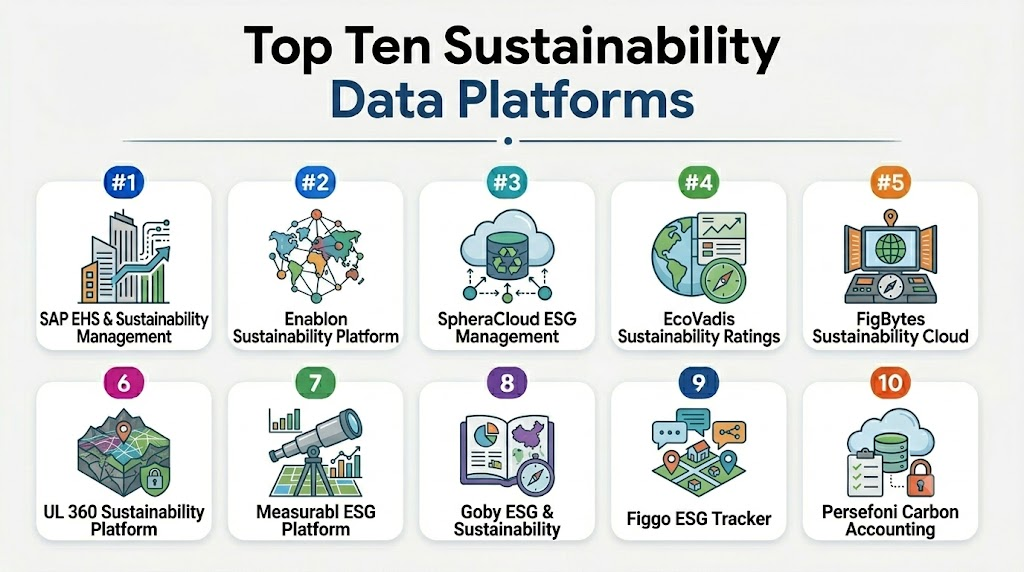
Top 10 Sustainability Data Platforms
1 — SAP EHS & Sustainability Management
Short description: A comprehensive platform for tracking ESG, emissions, and environmental compliance, designed for large enterprises with complex operations.
Key Features
- Carbon and water footprint tracking
- ESG reporting templates for global standards
- Sustainability analytics dashboards
- Supplier ESG performance tracking
- Integration with SAP ERP and supply chain
- Automated compliance alerts
- Predictive sustainability modeling
Pros
- Strong integration with SAP ecosystem
- Extensive reporting and compliance templates
Cons
- Complex setup for smaller organizations
- Premium pricing for full features
Platforms / Deployment
- Web / Cloud / Hybrid
Security & Compliance
- SOC 2, ISO 27001, GDPR, SSO/MFA
Integrations & Ecosystem
- Works with SAP ERP, Ariba, SuccessFactors, and IoT sensors
- REST APIs for third-party systems
- Supports data export to Excel and CSV
Support & Community
- Enterprise-level support, strong global community, comprehensive documentation
2 — Enablon Sustainability Platform
Short description: Designed for enterprise ESG and sustainability reporting, Enablon centralizes environmental and social data for compliance and strategic decision-making.
Key Features
- ESG and risk reporting dashboards
- Carbon, water, and waste tracking
- Scenario modeling and predictive analytics
- Supplier ESG monitoring
- Regulatory compliance automation
- KPI benchmarking
- Workflow automation for sustainability initiatives
Pros
- Excellent regulatory compliance support
- Strong analytics capabilities
Cons
- User interface can be complex
- Higher learning curve for new users
Platforms / Deployment
- Web / Cloud / Hybrid
Security & Compliance
- SOC 2, ISO 27001, GDPR, Not publicly stated MFA/SSO
Integrations & Ecosystem
- ERP, CRM, procurement systems
- APIs for IoT and sensor data
- Data export/import support
Support & Community
- Dedicated support teams, online knowledge base, active user community
3 — SpheraCloud ESG Management
Short description: Cloud-first ESG platform focusing on environmental compliance, risk management, and operational sustainability.
Key Features
- ESG data centralization
- Carbon emissions and energy tracking
- Compliance dashboards for multiple standards
- Scenario and risk analysis
- Supplier sustainability performance
- Automated alerts and notifications
Pros
- Strong cloud-based scalability
- Flexible reporting and analytics
Cons
- Limited offline capabilities
- Customization requires professional services
Platforms / Deployment
- Web / Cloud
Security & Compliance
- SOC 2, ISO 27001, GDPR
Integrations & Ecosystem
- Connects to ERP, MES, and IoT systems
- API access for custom dashboards
Support & Community
- 24/7 support, professional services available, active webinars
4 — EcoVadis Sustainability Ratings
Short description: Focused on supplier ESG performance, EcoVadis helps organizations monitor and benchmark sustainability across supply chains.
Key Features
- Supplier ESG scoring
- Benchmarking across industries
- Customizable assessment questionnaires
- Automated reporting
- Integration with procurement platforms
- Collaboration dashboards
Pros
- Provides validated, standardized supplier ratings
- Easy to compare across sectors
Cons
- Less focus on internal operational metrics
- Premium pricing per supplier
Platforms / Deployment
- Web / Cloud
Security & Compliance
- ISO 27001, GDPR, Not publicly stated SOC 2
Integrations & Ecosystem
- Procurement systems (SAP Ariba, Coupa)
- API access for internal reporting
- Dashboard integration options
Support & Community
- Online help center, community forums, vendor consultation
5 — FigBytes Sustainability Cloud
Short description: Integrates ESG data with corporate strategy, enabling scenario planning, goal tracking, and sustainability performance analytics.
Key Features
- ESG KPI dashboards
- Carbon and energy tracking
- Goal alignment with SDGs
- Predictive analytics
- Stakeholder reporting
- Supplier ESG tracking
Pros
- Highly visual dashboards
- Easy-to-use platform for executives
Cons
- Customization can be complex
- Limited offline support
Platforms / Deployment
- Web / Cloud
Security & Compliance
- SOC 2, GDPR, Not publicly stated MFA
Integrations & Ecosystem
- ERP and CRM integration
- APIs for IoT and sustainability sensors
- Excel and CSV export
Support & Community
- Email support, professional onboarding, active user community
6 — UL 360 Sustainability Platform
Short description: Focuses on corporate ESG reporting, regulatory compliance, and risk management for environmental performance.
Key Features
- ESG and regulatory reporting
- Emissions and resource tracking
- Supplier and operational risk analytics
- KPI benchmarking
- Compliance alerts and audits
- Data visualization tools
Pros
- Strong compliance tracking
- Industry-standard ESG templates
Cons
- Setup requires training
- May be costly for mid-sized companies
Platforms / Deployment
- Web / Cloud
Security & Compliance
- ISO 27001, GDPR, Not publicly stated SOC 2/MFA
Integrations & Ecosystem
- ERP and procurement systems
- Data import/export APIs
- Analytics dashboards
Support & Community
- Dedicated support team, training resources, online forums
7 — Measurabl ESG Platform
Short description: ESG-focused SaaS platform for collecting, analyzing, and reporting environmental and social data for real estate and corporate portfolios.
Key Features
- ESG data centralization
- Carbon, water, and energy tracking
- Automated sustainability reporting
- Benchmarking against industry standards
- Portfolio performance dashboards
- Scenario modeling
Pros
- Easy adoption for real estate portfolios
- Automated reporting reduces manual work
Cons
- Limited to ESG metrics, less operational tracking
- Smaller ecosystem of integrations
Platforms / Deployment
- Web / Cloud
Security & Compliance
- Not publicly stated SOC 2 / ISO 27001
Integrations & Ecosystem
- Excel import/export
- API access for ERP/finance systems
Support & Community
- Online help center, email support, knowledge base
8 — Goby ESG & Sustainability
Short description: Cloud-based platform for ESG reporting, sustainability tracking, and carbon accounting tailored for enterprises.
Key Features
- ESG and sustainability dashboards
- Carbon and energy tracking
- Regulatory reporting automation
- Supplier ESG monitoring
- KPI benchmarking
- Predictive analytics
Pros
- Strong cloud architecture
- Scalable across global operations
Cons
- May require professional services for advanced setup
- UI learning curve
Platforms / Deployment
- Web / Cloud
Security & Compliance
- SOC 2, GDPR, Not publicly stated MFA
Integrations & Ecosystem
- ERP, procurement, and IoT data connectors
- REST API support
Support & Community
- Tiered support, training modules, online community
9 — Figgo ESG Tracker
Short description: Focused on ESG data collection and reporting for corporate and financial institutions with simple dashboards and automated insights.
Key Features
- ESG KPI dashboards
- Automated data collection
- Regulatory reporting support
- Scenario modeling
- Stakeholder reports
Pros
- Simple interface for small-to-medium enterprises
- Quick deployment and adoption
Cons
- Limited advanced analytics
- Less suitable for complex multi-site enterprises
Platforms / Deployment
- Web / Cloud
Security & Compliance
- Not publicly stated
Integrations & Ecosystem
- APIs for ERP and finance platforms
- Data import/export support
Support & Community
- Email support, limited documentation, small user base
10 — Persefoni Carbon Accounting
Short description: A specialized platform for carbon footprint measurement, emissions accounting, and ESG reporting for enterprises.
Key Features
- Carbon footprint tracking
- Scope 1, 2, 3 emissions analytics
- Automated ESG reporting
- Scenario and target modeling
- Supplier emissions tracking
Pros
- Focused carbon accounting expertise
- Integration with financial and ERP systems
Cons
- Narrow focus, less comprehensive for broader ESG metrics
- May require additional tools for full ESG reporting
Platforms / Deployment
- Web / Cloud
Security & Compliance
- SOC 2, ISO 27001, GDPR
Integrations & Ecosystem
- ERP systems, IoT sensors, Excel export
- API support for dashboards
Support & Community
- Strong professional support, training, and community forums
Comparison Table (Top 10)
| Tool Name | Best For | Platform(s) Supported | Deployment | Standout Feature | Public Rating |
|---|---|---|---|---|---|
| SAP EHS & Sustainability | Large enterprises | Web | Cloud/Hybrid | Full SAP integration | N/A |
| Enablon Sustainability Platform | Enterprises, regulatory-focused | Web | Cloud/Hybrid | Compliance templates | N/A |
| SpheraCloud ESG Management | Enterprise ESG analytics | Web | Cloud | Predictive analytics | N/A |
| EcoVadis Sustainability Ratings | Supply chain ESG tracking | Web | Cloud | Supplier benchmarking | N/A |
| FigBytes Sustainability Cloud | Strategy-aligned ESG | Web | Cloud | Visual dashboards | N/A |
| UL 360 Sustainability Platform | Compliance-heavy enterprises | Web | Cloud | Regulatory reporting | N/A |
| Measurabl ESG Platform | Real estate portfolios | Web | Cloud | Portfolio ESG tracking | N/A |
| Goby ESG & Sustainability | Global enterprise ESG | Web | Cloud | Scalable cloud architecture | N/A |
| Figgo ESG Tracker | SMEs | Web | Cloud | Simple dashboards | N/A |
| Persefoni Carbon Accounting | Carbon accounting focus | Web | Cloud | Detailed carbon footprint | N/A |
Evaluation & Scoring of Sustainability Data Platforms
| Tool Name | Core (25%) | Ease (15%) | Integrations (15%) | Security (10%) | Performance (10%) | Support (10%) | Value (15%) | Weighted Total (0–10) |
|---|---|---|---|---|---|---|---|---|
| SAP EHS & Sustainability | 9 | 7 | 8 | 9 | 9 | 8 | 6 | 8.1 |
| Enablon Sustainability Platform | 9 | 6 | 7 | 8 | 8 | 7 | 6 | 7.6 |
| SpheraCloud ESG Management | 8 | 8 | 7 | 8 | 8 | 7 | 7 | 7.8 |
| EcoVadis Sustainability Ratings | 7 | 8 | 6 | 7 | 7 | 6 | 7 | 7.0 |
| FigBytes Sustainability Cloud | 8 | 8 | 7 | 7 | 7 | 7 | 7 | 7.6 |
| UL 360 Sustainability Platform | 8 | 6 | 7 | 8 | 7 | 7 | 6 | 7.2 |
| Measurabl ESG Platform | 7 | 8 | 6 | 7 | 7 | 6 | 7 | 7.0 |
| Goby ESG & Sustainability | 8 | 7 | 7 | 8 | 8 | 7 | 7 | 7.6 |
| Figgo ESG Tracker | 6 | 9 | 6 | 6 | 7 | 6 | 8 | 7.0 |
| Persefoni Carbon Accounting | 8 | 7 | 7 | 8 | 8 | 7 | 7 | 7.7 |
Which Sustainability Data Platform Is Right for You?
Solo / Freelancer
- Small-scale tracking or consultancy work may use Figgo ESG Tracker for simplicity and low-cost deployment.
SMB
- Firms requiring compliance reporting and basic ESG dashboards benefit from Measurabl or FigBytes.
Mid-Market
- Companies needing multi-site operations and predictive analytics should consider SpheraCloud or Goby.
Enterprise
- Large organizations with complex ESG compliance use SAP EHS, Enablon, or UL 360 for full functionality.
Budget vs Premium
- Budget-conscious firms may choose Figgo or EcoVadis. Premium options like SAP EHS or Enablon provide end-to-end enterprise capabilities.
Feature Depth vs Ease of Use
- Platforms like SpheraCloud and Goby balance analytics depth with usability. Simpler dashboards (e.g., Figgo) prioritize ease over full analytics.
Integrations & Scalability
- Enterprise platforms integrate deeply with ERP, supply chain, and IoT systems for scalable global ESG operations.
Security & Compliance Needs
- Choose platforms with SOC 2, ISO 27001, and GDPR support if handling sensitive environmental and corporate data.
Frequently Asked Questions (FAQs)
1- What are the typical pricing models?
Most platforms are SaaS subscription-based, often scaled by number of users, locations, or data points. Some offer tiered plans with premium analytics modules.
2- How long does onboarding take?
Onboarding varies; simple platforms may take a few days, while enterprise tools with integrations and customization can take several weeks.
3- Can I integrate my ERP system?
Yes, most platforms offer APIs or pre-built connectors for ERP, procurement, and finance systems to centralize ESG data.
4- Are these platforms suitable for small companies?
Some, like Figgo or Measurabl, cater to SMEs, while others like SAP EHS and Enablon are enterprise-focused.
5- How do they support regulatory compliance?
Platforms provide templates, automated reporting, and alerts aligned with ESG standards (GRI, CDP, CSRD, SASB).
6- Can I track supplier sustainability performance?
Yes, tools like EcoVadis, Enablon, and Goby allow supplier ESG data collection and scoring.
7- Do they support AI analytics?
Several platforms use AI/ML for predictive insights, scenario modeling, and emissions reduction strategies.
8- How secure is my ESG data?
Leading platforms implement SOC 2, ISO 27001, GDPR compliance, SSO, MFA, and encryption.
9- Can I switch platforms easily?
Migration is possible but may require data mapping and export/import; vendor support is essential.
10- Are open-source options available?
Few open-source ESG tools exist; most solutions are SaaS commercial offerings for reliability and compliance assurance.
Conclusion
Sustainability Data Platforms have become essential for organizations aiming to meet ESG goals, comply with regulations, and drive operational efficiency. Selecting the right platform depends on organizational size, ESG maturity, integration needs, and budget. Enterprise firms may prioritize end-to-end functionality and deep integration, while SMEs may opt for simpler, cost-effective dashboards. Regardless of choice, these platforms provide visibility into environmental impact, supplier sustainability, and regulatory compliance, helping companies make informed, responsible decisions.

Find Trusted Cardiac Hospitals
Compare heart hospitals by city and services — all in one place.
Explore Hospitals
Sustainability data platforms are most effective when they unify environmental, social, and governance (ESG) metrics into a single, auditable system. By standardizing data collection and improving reporting accuracy, these tools help organizations track progress toward sustainability goals, meet regulatory requirements, and make more responsible long-term business decisions.