Introduction
Global Trade Management (GTM) Systems are specialized software platforms that help businesses manage and streamline international trade operations. They provide end-to-end visibility across import and export processes, automate compliance with trade regulations, and optimize costs associated with customs, tariffs, and duties. As global trade becomes more complex companies require GTM solutions to reduce risk, ensure regulatory adherence, and improve operational efficiency.
Real-world use cases include:
- Automating export and import compliance for multinational shipments
- Ensuring accurate classification of goods using HS codes
- Screening suppliers and partners against denied party lists and sanctions
- Optimizing duties, tariffs, and taxes to reduce operational costs
- Generating trade documents for audits and regulatory compliance
Buyers should evaluate criteria such as:
- Automation capabilities for workflows and compliance
- Integration with ERP, WMS, TMS, and shipping systems
- Regulatory updates and risk monitoring
- Ease of use and user interface
- Analytics and reporting for trade performance
- Vendor support and onboarding
- Deployment flexibility (cloud, on-premises, hybrid)
- Security and data compliance
Best for: Enterprises, mid-market companies, trade compliance officers, logistics managers, and international supply chain teams.
Not ideal for: Small businesses with minimal import/export activity or firms using basic manual trade processes where full GTM deployment may not be cost-effective.
Key Trends in Global Trade Management (GTM) Systems
- AI-driven classification and predictive compliance monitoring
- Automated denied party and sanctions screening
- Cloud-native platforms providing real-time global trade visibility
- Analytics for duty, tariff, and total landed cost optimization
- Integration with ERP, WMS, TMS, and e-commerce systems
- Low-code workflow automation for trade processes
- Modular and subscription-based pricing models
- Enhanced cybersecurity features including MFA, encryption, and audit logs
- ESG and sustainability tracking in supply chains
- Predictive alerts to prevent regulatory violations
How We Selected These Tools (Methodology)
- Market adoption and industry recognition
- Feature completeness across trade compliance, visibility, and cost optimization
- Reliability and performance in complex, global operations
- Security posture including encryption, access control, and audit logging
- Integration capabilities with ERP, WMS, TMS, and other enterprise software
- Customer fit across SMB, mid-market, and enterprise segments
- Regulatory coverage and multi-country compliance
- Ease of use and onboarding experience
- Support quality and community engagement
- AI and automation capabilities
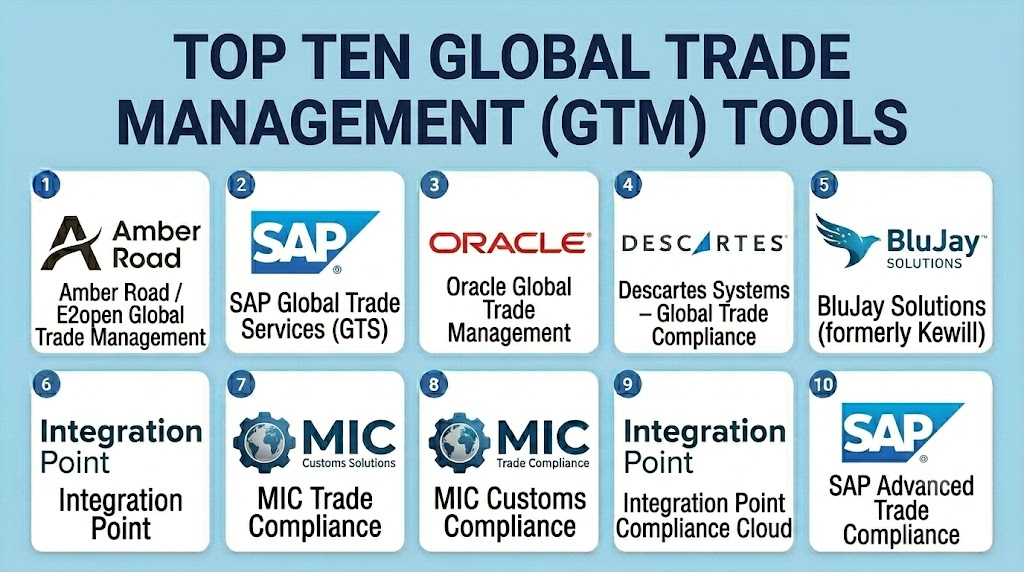
Top 10 Global Trade Management (GTM) Systems Tools
1- Amber Road / E2open Global Trade Management
Short description: Enterprise-grade GTM platform offering comprehensive compliance, visibility, and risk management for global supply chains.
Key Features
- End-to-end import/export compliance
- Sanctions and embargo screening
- HS code classification and tariff optimization
- Trade document generation and archiving
- Integration with ERP and TMS systems
- Real-time analytics dashboards
- AI-driven exception handling
Pros
- Strong compliance automation for complex trade operations
- Real-time monitoring and reporting
- Enterprise scalability
Cons
- High cost for SMBs
- Steep learning curve
Platforms / Deployment
- Web
- Cloud
Security & Compliance
- Not publicly stated
Integrations & Ecosystem
- SAP, Oracle, Microsoft Dynamics
- API support for custom workflows
- ERP and shipping integrations
Support & Community
- Enterprise support tiers and global community
2- SAP Global Trade Services (GTS)
Short description: Comprehensive GTM and trade compliance solution integrated tightly with SAP ERP for multinational enterprises.
Key Features
- Export/import compliance automation
- Denied party and embargo screening
- HS code classification and tariff management
- Trade document automation
- Exception workflow handling
- Analytics for trade compliance performance
Pros
- Deep SAP ERP integration
- Enterprise-grade automation
- Highly scalable
Cons
- Complex implementation
- High total cost of ownership
Platforms / Deployment
- Web
- Cloud / On-premises
Security & Compliance
- Not publicly stated
Integrations & Ecosystem
- SAP ERP modules and TMS
- API-based extensions
Support & Community
- SAP enterprise support and global user network
3- Oracle Global Trade Management
Short description: Enterprise platform offering end-to-end trade compliance, duty optimization, and visibility for complex global operations.
Key Features
- Export/import compliance automation
- Sanctions and denied party screening
- Duty and tariff optimization
- Trade documentation and audit support
- Workflow automation and exception handling
- Advanced analytics dashboards
Pros
- Extensive regulatory coverage
- Strong integration with Oracle ERP
- Advanced analytics
Cons
- High cost for mid-market companies
- Implementation can be lengthy
Platforms / Deployment
- Web
- Cloud
Security & Compliance
- Not publicly stated
Integrations & Ecosystem
- Oracle ERP, TMS, and WMS
- APIs for workflow automation
- Multi-country trade coverage
Support & Community
- Enterprise-level support and professional services
4- Descartes Systems – Global Trade Compliance
Short description: Cloud-native GTM solution suitable for SMBs and mid-market firms, offering automated compliance and documentation capabilities.
Key Features
- Automated classification and compliance checks
- Denied party and embargo screening
- Duty and tax calculation
- Trade documentation generation
- ERP and TMS integration
- Shipment monitoring
Pros
- Intuitive user interface
- Quick deployment
- Scalable for growing businesses
Cons
- Limited advanced analytics
- Customization may be required for complex operations
Platforms / Deployment
- Web
- Cloud
Security & Compliance
- Not publicly stated
Integrations & Ecosystem
- Shipping carriers and ERP systems
- API access for workflow automation
Support & Community
- 24/7 support and webinars
5- BluJay Solutions (formerly Kewill)
Short description: Mid-market-focused GTM and logistics compliance platform with workflow automation and visibility features.
Key Features
- Export/import compliance
- Denied party screening
- HS code and tariff management
- Trade documentation
- Workflow automation
- Analytics dashboards
Pros
- Flexible deployment
- Mid-market adoption-friendly
- Integrates well with logistics systems
Cons
- Advanced analytics limited
- May need additional modules for enterprise complexity
Platforms / Deployment
- Web
- Cloud
Security & Compliance
- Not publicly stated
Integrations & Ecosystem
- ERP and TMS systems
- API support for workflow customization
Support & Community
- Standard support, knowledge base
6- Integration Point
Short description: Enterprise GTM platform providing compliance automation, analytics, and trade visibility for mid-market and large companies.
Key Features
- Compliance automation
- Denied party screening
- Duty and tariff management
- Trade document generation
- Analytics dashboards
- Workflow management
Pros
- Strong analytics
- Scalable for complex trade operations
- Centralized compliance monitoring
Cons
- Premium pricing
- Requires training
Platforms / Deployment
- Web
- Cloud
Security & Compliance
- Not publicly stated
Integrations & Ecosystem
- ERP and TMS integrations
- API-based workflow extensions
Support & Community
- Enterprise support, documentation
7- MIC Trade Compliance
Short description: SMB-focused cloud solution providing trade compliance automation and workflow management for smaller operations.
Key Features
- Denied party screening
- HS code classification
- Duty and tariff calculation
- Trade documentation
- Reporting and audit trail
- ERP integration
Pros
- User-friendly interface
- Rapid deployment
- Cost-effective for SMBs
Cons
- Limited enterprise features
- Basic reporting dashboards
Platforms / Deployment
- Web
- Cloud
Security & Compliance
- Not publicly stated
Integrations & Ecosystem
- ERP systems
- API support for reporting
Support & Community
- Email and phone support
8- MIC Customs Compliance
Short description: Simplified customs compliance software for SMBs managing HS codes, tariffs, and regulatory documentation.
Key Features
- HS code automation
- Tariff and duty calculation
- Denied party screening
- Trade documentation
- Audit support
Pros
- Easy for SMB adoption
- Quick deployment
- User-friendly
Cons
- Limited analytics
- Not suitable for large enterprises
Platforms / Deployment
- Web
- Cloud
Security & Compliance
- Not publicly stated
Integrations & Ecosystem
- ERP integration
- API support for documentation
Support & Community
- Standard support, guides
9- Integration Point Compliance Cloud
Short description: Cloud-native GTM platform for mid-market and enterprise users with automated compliance and analytics.
Key Features
- Compliance workflow automation
- Denied party monitoring
- Duty and tariff management
- Trade document generation
- Cloud scalability
- Analytics dashboards
Pros
- Cloud-native and scalable
- Automated workflows
- Comprehensive reporting
Cons
- Learning curve
- Premium pricing
Platforms / Deployment
- Web
- Cloud
Security & Compliance
- Not publicly stated
Integrations & Ecosystem
- ERP and TMS integrations
- API support
Support & Community
- Enterprise support tiers
10- SAP Advanced Trade Compliance
Short description: Enterprise GTM add-on for SAP ERP with detailed compliance workflows and regulatory automation.
Key Features
- Export/import compliance
- Sanctions screening
- Tariff and duty management
- Document automation
- Exception workflows
- Analytics dashboards
Pros
- Deep SAP integration
- Enterprise-grade automation
- Scalable for multinational operations
Cons
- Expensive
- Complex implementation
Platforms / Deployment
- Web
- Cloud / On-premises
Security & Compliance
- Not publicly stated
Integrations & Ecosystem
- SAP ERP and TMS modules
- API support
Support & Community
- SAP enterprise support
Comparison Table (Top 10)
| Tool Name | Best For | Platform(s) Supported | Deployment | Standout Feature | Public Rating |
|---|---|---|---|---|---|
| Amber Road / E2open | Enterprise | Web | Cloud | Trade compliance automation | N/A |
| SAP GTS | Enterprise | Web | Cloud/On-prem | Deep ERP integration | N/A |
| Oracle GTM | Enterprise | Web | Cloud | Analytics & global coverage | N/A |
| Descartes Systems | SMB / Mid-market | Web | Cloud | Ease of deployment | N/A |
| BluJay Solutions | Mid-market | Web | Cloud | Workflow automation | N/A |
| Integration Point | Mid-market/Enterprise | Web | Cloud | Analytics dashboards | N/A |
| MIC Trade Compliance | SMB | Web | Cloud | User-friendly interface | N/A |
| MIC Customs Compliance | SMB | Web | Cloud | Simplified customs compliance | N/A |
| Integration Point Compliance Cloud | Mid-market/Enterprise | Web | Cloud | Cloud-native automation | N/A |
| SAP Advanced Trade Compliance | Enterprise | Web | Cloud/On-prem | Enterprise SAP integration | N/A |
Evaluation & Scoring of GTM Systems
| Tool Name | Core (25%) | Ease (15%) | Integrations (15%) | Security (10%) | Performance (10%) | Support (10%) | Value (15%) | Weighted Total |
|---|---|---|---|---|---|---|---|---|
| Amber Road / E2open | 9 | 7 | 8 | 7 | 8 | 7 | 6 | 7.8 |
| SAP GTS | 10 | 6 | 9 | 8 | 9 | 8 | 5 | 8.3 |
| Oracle GTM | 9 | 6 | 8 | 8 | 8 | 8 | 6 | 7.9 |
| Descartes Systems | 7 | 8 | 7 | 6 | 7 | 7 | 8 | 7.3 |
| BluJay Solutions | 8 | 7 | 7 | 6 | 7 | 7 | 7 | 7.3 |
| Integration Point | 8 | 7 | 8 | 7 | 8 | 7 | 6 | 7.5 |
| MIC Trade Compliance | 6 | 8 | 6 | 6 | 6 | 7 | 8 | 6.8 |
| MIC Customs Compliance | 6 | 8 | 6 | 6 | 6 | 7 | 7 | 6.7 |
| Integration Point Compliance Cloud | 8 | 7 | 8 | 7 | 8 | 7 | 6 | 7.5 |
| SAP Advanced Trade Compliance | 10 | 6 | 9 | 8 | 9 | 8 | 5 | 8.3 |
Which Global Trade Management (GTM) Tool Is Right for You?
Solo / Freelancer
- Low trade volume; consider cloud-based tools like MIC Trade Compliance for simplicity and cost-effectiveness.
SMB
- Growing trade operations; Descartes or BluJay Solutions provide balance between cost, automation, and compliance.
Mid-Market
- Moderate complexity; Integration Point or BluJay Solutions offer workflow automation and analytics.
Enterprise
- Complex global operations; Amber Road / E2open, SAP GTS, or Oracle GTM offer robust compliance, ERP integration, and analytics.
Budget vs Premium
- SMBs may prioritize cloud-native, cost-effective solutions
- Enterprises benefit from premium platforms for automation, reporting, and scalability
Feature Depth vs Ease of Use
- Smaller teams benefit from simpler, intuitive platforms
- Large enterprises prioritize depth and regulatory coverage
Integrations & Scalability
- Ensure ERP, WMS, TMS, and shipping integrations
- Cloud-native platforms support rapid scaling
Security & Compliance Needs
- Evaluate MFA, encryption, audit logging, and global regulatory coverage
Frequently Asked Questions (FAQs)
1- What pricing models do GTM systems use?
Most use subscription-based SaaS pricing, with enterprise solutions involving multi-year contracts.
2- How long does implementation take?
Deployment ranges from weeks for SMB cloud tools to several months for enterprise-grade platforms.
3- Can I switch GTM platforms easily?
Migration and integration planning are critical; switching mid-operation can be complex.
4- Are GTM systems secure?
Top tools follow standard security practices, but verify certifications like SOC 2 or ISO 27001.
5- How do these systems handle global regulatory updates?
Platforms provide automated updates and alerts; check frequency and region coverage.
6- Can they integrate with ERP/WMS/TMS?
Yes, most offer APIs and pre-built connectors for popular enterprise systems.
7- Are analytics included?
Dashboards, trade performance metrics, and duty optimization are typically included; advanced analytics are premium features.
8- What are common implementation mistakes?
Skipping workflow mapping, inadequate training, and ignoring integration testing reduce effectiveness.
9- Are SMBs supported?
Yes, cloud-native solutions like Descartes or MIC Trade Compliance cater specifically to SMBs.
10- What are alternatives?
Manual spreadsheets, consulting services, or basic ERP compliance modules may suffice for low-volume trade.
Conclusion
Global Trade Management systems are essential for businesses managing international trade, ensuring regulatory compliance, and optimizing costs. Selection depends on trade volume, complexity, and integration needs. Enterprises benefit from platforms like Amber Road / E2open, SAP GTS, or Oracle GTM, while SMBs and mid-market companies can leverage Descartes, BluJay Solutions, or MIC Trade Compliance. Evaluate automation, analytics, and compliance features carefully, shortlist 2–3 platforms, run pilot tests, and validate integration, security, and scalability before full deployment. The right GTM solution ensures smoother operations, fewer compliance risks, and better cost control.

Find Trusted Cardiac Hospitals
Compare heart hospitals by city and services — all in one place.
Explore Hospitals
Global Trade Management systems provide the most value when they keep pace with constantly changing trade regulations, tariffs, and customs requirements. Organizations benefit from platforms that combine compliance automation with real-time visibility into cross-border shipments, helping reduce delays, avoid penalties, and improve supply chain efficiency.