Introduction
Financial Stress Testing Platforms are specialized software solutions that help banks, insurance firms, asset managers, and other financial institutions simulate extreme economic scenarios to assess the resilience of their portfolios and balance sheets. By modeling potential shocks such as market volatility, interest rate swings, liquidity crises, or credit defaults these platforms enable organizations to quantify potential losses, identify vulnerabilities, and satisfy regulatory requirements. stress testing has become increasingly critical due to evolving global market dynamics, regulatory complexity, and growing expectations around scenario analysis and AI-driven forecasting. Modern platforms now leverage advanced analytics, cloud computing, and machine learning to provide faster, more granular insights with reduced operational overhead.
Real-world use cases include:
- Evaluating capital adequacy under macroeconomic shocks.
- Stress testing liquidity and funding positions.
- Scenario analysis for credit and market risk exposure.
- Portfolio optimization in extreme market conditions.
- Regulatory reporting and compliance with central bank requirements.
What buyers should evaluate:
- Scenario modeling flexibility.
- Regulatory compliance support.
- Integration with core banking and trading systems.
- Reporting and visualization capabilities.
- Risk factor coverage (credit, market, liquidity, operational).
- AI/ML forecasting and predictive analytics.
- Ease of use and user interface.
- Deployment flexibility (cloud, on-premises, hybrid).
- Security and compliance features.
- Support and training resources.
Best for:
Risk managers, financial analysts, compliance officers, and enterprise institutions seeking robust scenario analysis and regulatory-ready stress testing solutions.
Not ideal for:
Small firms with minimal regulatory obligations or institutions that only need basic portfolio reporting; spreadsheets or lightweight risk tools may suffice.
Key Trends in Financial Stress Testing Platforms
- Integration of AI/ML to enhance scenario prediction and predictive risk analytics.
- Cloud-native platforms enabling real-time stress testing and portfolio monitoring.
- Modular APIs allowing seamless integration with trading, risk, and data management systems.
- Increasing demand for multi-asset and multi-jurisdiction scenario coverage.
- Automation of regulatory reporting to reduce manual compliance overhead.
- Advanced visualization and dashboard tools for decision-making at board level.
- Use of alternative data (macro, ESG, sentiment) to improve stress assumptions.
- Focus on operational resilience and liquidity stress alongside traditional credit/market risk.
- Subscription-based and SaaS pricing models increasing accessibility.
- Enhanced audit trails and role-based access to support governance and compliance.
How We Selected These Tools (Methodology)
- Analyzed market adoption and mindshare among financial institutions.
- Assessed feature completeness for scenario modeling, reporting, and risk coverage.
- Evaluated reliability, scalability, and system performance in production environments.
- Examined security posture including access controls, encryption, and audit logging.
- Reviewed integration capabilities with trading systems, ERP, and data platforms.
- Considered compliance alignment with Basel III, CCAR, DFAST, and other global regulations.
- Looked at vendor support, training offerings, and user community engagement.
- Evaluated flexibility for cloud, hybrid, and on-premises deployment models.
- Checked AI/ML capabilities for scenario forecasting and predictive analytics.
- Reviewed pricing model transparency and cost-to-value balance for institutions.
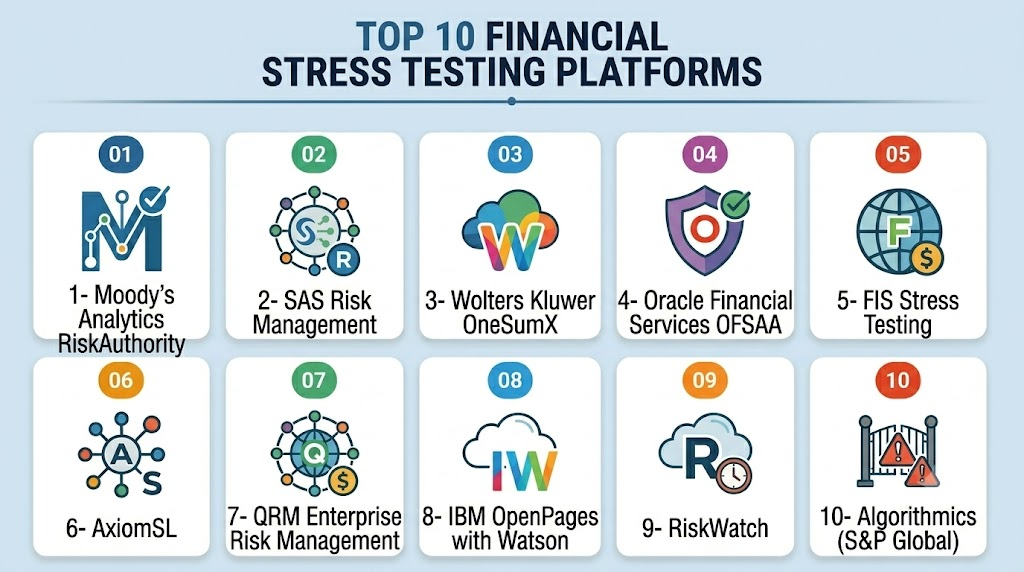
Top 10 Financial Stress Testing Platforms
1- Moody’s Analytics RiskAuthority
Short description: Comprehensive risk and stress testing platform for banks, insurers, and asset managers focusing on regulatory and capital adequacy assessments.
Key Features
- Scenario modeling and macroeconomic simulations.
- Credit and market risk coverage.
- Regulatory reporting modules for CCAR, DFAST, Basel III.
- Portfolio analytics and capital planning.
- Advanced visualization dashboards.
- API integrations for data feeds and core systems.
- Predictive analytics using AI/ML.
Pros
- Strong regulatory alignment.
- Flexible scenario modeling capabilities.
- High scalability for large institutions.
Cons
- Premium pricing may not suit smaller firms.
- Requires training to use advanced analytics features.
Platforms / Deployment
- Web / Windows
- Cloud / Hybrid
Security & Compliance
- SSO/SAML, MFA, encryption, audit logs
- SOC 2, ISO 27001, GDPR
Integrations & Ecosystem
Platform integrates with core banking systems, market data providers, and risk management tools.
- APIs for data import/export
- Trading system connectors
- Data warehouse integration
- Portfolio management tools
Support & Community
Robust documentation, onboarding support, dedicated customer success teams, and active user community.
2- SAS Risk Management
Short description: Enterprise-grade platform for credit, market, and operational stress testing, widely used in global banks and insurance firms.
Key Features
- Scenario and sensitivity analysis.
- Regulatory and capital adequacy reporting.
- Stress testing for liquidity and counterparty exposure.
- Advanced analytics and forecasting.
- Cloud-ready architecture.
- Integrated risk dashboards.
- Customizable reporting templates.
Pros
- Mature platform with global adoption.
- Strong analytical and reporting capabilities.
Cons
- Complex deployment for smaller organizations.
- Learning curve for scenario customization.
Platforms / Deployment
- Windows / Linux / Web
- Cloud / On-premises
Security & Compliance
- SSO, encryption, audit logs
- SOC 2, Not publicly stated (regulatory compliance built-in)
Integrations & Ecosystem
Connects with ERP, trading systems, and risk data repositories.
- API endpoints
- Core banking integration
- Market data feed integration
Support & Community
Comprehensive training, customer support tiers, and online forums.
3- Wolters Kluwer OneSumX
Short description: Regulatory and risk platform for stress testing, capital planning, and liquidity management, optimized for banking compliance.
Key Features
- Automated regulatory reporting.
- Scenario simulation and sensitivity analysis.
- Capital and liquidity stress testing.
- Portfolio risk dashboards.
- Data management modules.
- Cloud deployment capabilities.
- Regulatory change tracking.
Pros
- Strong compliance focus.
- Real-time scenario modeling.
Cons
- Higher costs for smaller banks.
- Integration complexity for legacy systems.
Platforms / Deployment
- Web / Windows
- Cloud / Hybrid
Security & Compliance
- Not publicly stated
Integrations & Ecosystem
Integrates with core banking, treasury, and market data systems.
- API connections
- Data warehouses
- Reporting tools
Support & Community
Varies / Not publicly stated
4- Oracle Financial Services Analytical Applications (OFSAA)
Short description: Enterprise solution for stress testing, capital planning, and risk analytics with multi-asset portfolio coverage.
Key Features
- Credit, market, and liquidity risk modeling.
- Scenario analysis and simulations.
- Capital planning and regulatory compliance modules.
- AI-driven predictive analytics.
- Centralized reporting dashboards.
- Data management integration.
- Cloud and on-prem flexibility.
Pros
- Comprehensive risk coverage.
- Strong enterprise adoption.
Cons
- Requires dedicated IT resources for deployment.
- Learning curve for analytics modules.
Platforms / Deployment
- Windows / Linux / Web
- Cloud / On-prem / Hybrid
Security & Compliance
- Not publicly stated
Integrations & Ecosystem
- ERP and core banking integration
- Market and credit data feeds
- Risk repository connectors
Support & Community
Varies / Not publicly stated
5- FIS Stress Testing
Short description: Designed for banks and financial institutions to model regulatory scenarios, including market shocks, liquidity stress, and capital planning.
Key Features
- Automated scenario simulations.
- Multi-asset portfolio risk analysis.
- Regulatory compliance modules.
- Reporting and visualization dashboards.
- API-enabled data connections.
- AI/ML-driven forecasting.
- Scenario management library.
Pros
- Tailored for banking sector.
- Flexible scenario configuration.
Cons
- Limited adoption in non-banking sectors.
- Requires data standardization.
Platforms / Deployment
- Web / Windows
- Cloud / On-prem
Security & Compliance
- Not publicly stated
Integrations & Ecosystem
- Core banking integration
- Trading system connectors
- Risk data warehouses
Support & Community
- Standard support and documentation
6- AxiomSL
Short description: Risk and regulatory platform focused on stress testing, capital adequacy, and reporting automation for global banks.
Key Features
- Comprehensive stress testing engines.
- Regulatory reporting (Basel III, DFAST, CCAR).
- Data validation and reconciliation.
- Cloud-enabled deployment.
- Advanced analytics dashboards.
- Scenario libraries and modeling tools.
Pros
- Strong regulatory compliance features.
- Modular and scalable.
Cons
- Premium pricing.
- Customization may require consulting.
Platforms / Deployment
- Web / Windows
- Cloud / Hybrid
Security & Compliance
- Not publicly stated
Integrations & Ecosystem
- API for data feeds
- Core banking system connectors
- Risk data integration
Support & Community
- Vendor support with onboarding
7- QRM Enterprise Risk Management
Short description: Platform for integrated risk management including stress testing, scenario planning, and regulatory reporting.
Key Features
- Credit, market, and liquidity stress simulations.
- Scenario analysis with macroeconomic inputs.
- Reporting dashboards.
- Capital adequacy evaluation.
- Data import/export APIs.
- Cloud and on-prem support.
Pros
- Integrated approach to multiple risk types.
- Flexible modeling for complex portfolios.
Cons
- Interface may be complex for new users.
- Some advanced features require additional modules.
Platforms / Deployment
- Web / Windows
- Cloud / On-prem / Hybrid
Security & Compliance
- Not publicly stated
Integrations & Ecosystem
- Trading and treasury system integration
- Data warehouse connectors
- Analytics extensions
Support & Community
Varies / Not publicly stated
8- IBM OpenPages with Watson
Short description: Enterprise governance, risk, and compliance platform with AI-driven stress testing capabilities.
Key Features
- Risk modeling and scenario analysis.
- Regulatory compliance reporting.
- AI/ML-enhanced forecasting.
- Dashboard visualization.
- Data integration modules.
- Workflow and approval automation.
Pros
- AI-powered insights for stress scenarios.
- Integrated GRC functionality.
Cons
- Deployment complexity for small firms.
- Licensing costs may be high.
Platforms / Deployment
- Web / Windows / Linux
- Cloud / On-prem / Hybrid
Security & Compliance
- Not publicly stated
Integrations & Ecosystem
- API connections to ERP and banking systems
- Data warehouses
- Reporting tools
Support & Community
- Vendor support and consulting services
9- RiskWatch
Short description: Financial and operational risk platform enabling scenario analysis, stress testing, and risk reporting.
Key Features
- Credit and market risk simulations.
- Scenario planning tools.
- Regulatory reporting dashboards.
- AI-assisted predictive analytics.
- Data connectors and APIs.
Pros
- Lightweight for faster deployment.
- Flexible scenario modeling.
Cons
- Less widely adopted in large banks.
- Some features require additional configuration.
Platforms / Deployment
- Web / Windows
- Cloud / Hybrid
Security & Compliance
- Not publicly stated
Integrations & Ecosystem
- Core banking integration
- Market and credit data feeds
- Risk reporting tools
Support & Community
Varies / Not publicly stated
10- Algorithmics (S&P Global)
Short description: Enterprise risk management suite for credit, market, and liquidity stress testing, widely adopted by global banks.
Key Features
- Stress testing and scenario analysis.
- Capital and liquidity planning.
- Portfolio risk analytics.
- Regulatory compliance dashboards.
- Predictive analytics and modeling.
- Integration with trading and data systems.
Pros
- Robust scenario modeling library.
- Global banking adoption.
Cons
- Complex deployment for smaller institutions.
- Advanced features require training.
Platforms / Deployment
- Windows / Web
- Cloud / On-prem
Security & Compliance
- Not publicly stated
Integrations & Ecosystem
- API-based data integrations
- Core banking and trading systems
- Portfolio management tools
Support & Community
- Documentation, support tiers, consulting available
Comparison Table (Top 10)
| Tool Name | Best For | Platform(s) Supported | Deployment | Standout Feature | Public Rating |
|---|---|---|---|---|---|
| Moody’s Analytics RiskAuthority | Banks & insurers | Web / Windows | Cloud / Hybrid | Regulatory alignment & scenario flexibility | N/A |
| SAS Risk Management | Large enterprises | Windows / Linux / Web | Cloud / On-prem | Advanced analytics & scenario modeling | N/A |
| Wolters Kluwer OneSumX | Banks & compliance teams | Web / Windows | Cloud / Hybrid | Automated regulatory reporting | N/A |
| Oracle OFSAA | Multi-asset portfolios | Windows / Linux / Web | Cloud / On-prem / Hybrid | AI-driven predictive analytics | N/A |
| FIS Stress Testing | Banking institutions | Web / Windows | Cloud / On-prem | Multi-asset portfolio risk analysis | N/A |
| AxiomSL | Global banks | Web / Windows | Cloud / Hybrid | Regulatory reporting automation | N/A |
| QRM Enterprise Risk Management | Integrated risk teams | Web / Windows | Cloud / On-prem / Hybrid | Multi-risk integration | N/A |
| IBM OpenPages with Watson | Enterprise GRC | Web / Windows / Linux | Cloud / On-prem / Hybrid | AI-powered scenario insights | N/A |
| RiskWatch | SMBs & flexible modeling | Web / Windows | Cloud / Hybrid | Lightweight deployment | N/A |
| Algorithmics (S&P Global) | Global banking | Windows / Web | Cloud / On-prem | Extensive scenario library | N/A |
Evaluation & Scoring of Financial Stress Testing Platforms
| Tool Name | Core (25%) | Ease (15%) | Integrations (15%) | Security (10%) | Performance (10%) | Support (10%) | Value (15%) | Weighted Total (0–10) |
|---|---|---|---|---|---|---|---|---|
| Moody’s Analytics RiskAuthority | 9 | 8 | 8 | 9 | 9 | 8 | 7 | 8.5 |
| SAS Risk Management | 9 | 7 | 8 | 8 | 9 | 8 | 7 | 8.3 |
| Wolters Kluwer OneSumX | 8 | 8 | 7 | 8 | 8 | 7 | 7 | 7.8 |
| Oracle OFSAA | 9 | 7 | 8 | 8 | 9 | 7 | 7 | 8.2 |
| FIS Stress Testing | 8 | 8 | 7 | 8 | 8 | 7 | 8 | 7.9 |
| AxiomSL | 9 | 7 | 8 | 8 | 9 | 8 | 7 | 8.3 |
| QRM Enterprise Risk Management | 8 | 7 | 7 | 7 | 8 | 7 | 7 | 7.5 |
| IBM OpenPages with Watson | 8 | 7 | 8 | 8 | 8 | 8 | 7 | 7.9 |
| RiskWatch | 7 | 8 | 7 | 7 | 7 | 7 | 8 | 7.5 |
| Algorithmics (S&P Global) | 9 | 7 | 8 | 8 | 9 | 8 | 7 | 8.2 |
Which Financial Stress Testing Platform Is Right for You?
Solo / Freelancer
Not typically required; may rely on lightweight spreadsheet modeling or basic risk tools.
SMB
Tools like RiskWatch or FIS Stress Testing offer flexible scenario modeling without enterprise complexity.
Mid-Market
Platforms such as SAS Risk Management, QRM, or Wolters Kluwer OneSumX provide strong analytics and compliance features suitable for growing institutions.
Enterprise
Moody’s Analytics, Oracle OFSAA, AxiomSL, IBM OpenPages, and Algorithmics support full regulatory compliance, multi-asset modeling, and high-volume scenario simulations.
Budget vs Premium
Budget-focused platforms provide essential scenario modeling with basic reporting. Premium platforms deliver end-to-end compliance, AI analytics, and multi-risk integrations.
Feature Depth vs Ease of Use
Enterprise tools prioritize comprehensive capabilities, sometimes at the cost of ease of use. SMB-focused solutions balance simplicity and scenario modeling.
Integrations & Scalability
Evaluate existing system compatibility. Cloud-based platforms enable scalable stress testing, while on-prem options may integrate more tightly with internal data warehouses.
Security & Compliance Needs
High-security industries or regulated entities require platforms with strong encryption, audit logs, and role-based access to ensure compliance with regulatory frameworks.
Frequently Asked Questions (FAQs)
1- What is the typical pricing model for financial stress testing platforms?
Pricing varies; enterprise tools often use subscription or licensing models. Costs depend on deployment type, user seats, and scenario complexity.
2- How long does it take to implement a stress testing platform?
Implementation can range from a few weeks to several months depending on complexity, integrations, and regulatory reporting requirements.
3- Can these platforms automate regulatory reporting?
Yes, most enterprise-grade platforms include modules to generate Basel III, CCAR, DFAST, and other compliance reports automatically.
4- Are cloud deployments secure for financial data?
Cloud solutions now typically offer encryption, audit logs, and role-based access. Compliance certifications should be verified per vendor.
5- Can small businesses benefit from stress testing platforms?
SMBs may use simplified versions like RiskWatch or FIS Stress Testing. They offer scenario analysis without full enterprise complexity.
6- What are common mistakes in stress testing?
Errors include using outdated data, overly simplistic scenarios, ignoring liquidity risk, and failing to validate models with actual outcomes.
7- Do these platforms integrate with trading and banking systems?
Yes, most provide APIs or connectors for core banking, trading systems, and risk data warehouses for seamless analysis.
8- How often should stress tests be conducted?
Regulatory bodies typically require annual or quarterly testing, but institutions often run scenario analyses monthly or during market volatility.
9- Can AI enhance stress testing?
AI/ML can improve scenario predictions, forecast potential losses, and automate anomaly detection, providing faster, data-driven insights.
10- What alternatives exist to full-featured platforms?
Smaller firms may use Excel models, risk calculators, or modular SaaS tools for limited scenario analysis, though with less automation and regulatory compliance.
Conclusion
Financial Stress Testing Platforms help institutions anticipate market shocks, optimize capital, and maintain regulatory compliance. Choosing the right platform depends on company size, risk complexity, and deployment needs. Enterprise solutions offer comprehensive scenario modeling, AI-driven analytics, and full regulatory reporting. SMB-focused platforms provide flexibility and ease of use for smaller portfolios. Integration with core banking, trading, and data systems is essential for accurate insights. Security, compliance, and scalability should guide vendor selection. Next steps: shortlist 2–3 tools, run a pilot, and validate integrations and reporting before full adoption.

Find Trusted Cardiac Hospitals
Compare heart hospitals by city and services — all in one place.
Explore Hospitals
Financial stress testing is most effective when it explores a wide range of realistic economic scenarios instead of relying on a single baseline forecast. Platforms that support flexible scenario modeling can help institutions better understand potential vulnerabilities and improve long-term financial planning.