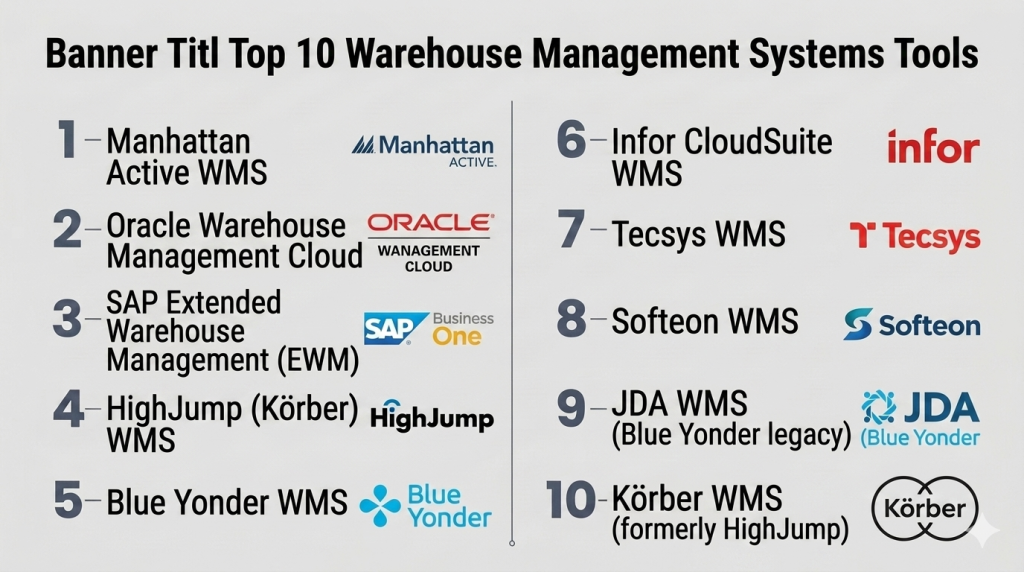
Introduction
Warehouse Management Systems (WMS) are software platforms that help organizations manage warehouse operations efficiently, including inventory tracking, order fulfillment, labor management, and shipping. In simple terms, WMS ensures that goods move through the warehouse quickly, accurately, and cost-effectively.Businesses increasingly rely on WMS to handle growing e-commerce demand, complex multi-channel logistics, and global supply chains. Modern systems offer real-time visibility, AI-powered optimization, and seamless integration with ERP, transportation, and inventory systems.
Real-world use cases include:
- Retailers managing high-volume warehouses and distribution centers
- E-commerce companies optimizing order picking and packing
- Manufacturers controlling raw materials and finished goods
- 3PL providers offering multi-client warehouse services
- Food and pharmaceutical companies tracking compliance and expiry dates
Key evaluation criteria for buyers:
- Real-time inventory visibility
- Order fulfillment and picking optimization
- Labor and resource management
- Integration with ERP, TMS, and e-commerce systems
- Security and compliance features
- Scalability across multiple locations
- Reporting and analytics capabilities
- Automation, robotics, and AI features
- Mobile access for warehouse staff
- Vendor support and ecosystem
Best for: Warehouse managers, supply chain directors, 3PL providers, mid-market to enterprise companies, and e-commerce businesses
Not ideal for: Small businesses with minimal inventory and fulfillment needs or those using simple spreadsheets for operations
Key Trends in Warehouse Management Systems
- AI-driven warehouse optimization and predictive analytics
- Increased automation with robotics, conveyor systems, and autonomous vehicles
- Cloud-native WMS for scalable, multi-site operations
- Real-time inventory tracking using IoT, RFID, and barcode scanning
- Integration with ERP, TMS, and e-commerce platforms
- Advanced reporting dashboards and business intelligence
- Subscription-based SaaS pricing models
- Enhanced security with role-based access, encryption, and audit logs
- Mobile-first WMS apps for warehouse staff and managers
- Compliance tracking for food, pharmaceutical, and regulated industries
How We Selected These Tools (Methodology)
- Evaluated market adoption, brand recognition, and mindshare
- Assessed feature completeness across inventory, order, labor, and shipping management
- Reviewed reliability and performance metrics from real-world deployments
- Verified security posture including encryption, authentication, and compliance standards
- Analyzed integrations and ecosystem support for ERP, TMS, and e-commerce systems
- Assessed customer fit across SMBs, mid-market, and enterprise segments
- Considered deployment flexibility (cloud, on-premises, hybrid)
- Reviewed vendor support, training resources, and community presence
- Evaluated scalability for multi-location and multi-warehouse operations
Top 10 Warehouse Management Systems Tools
#1 — Manhattan Active WMS
Short description: A cloud-native WMS designed for complex, omni-channel warehouse operations. Ideal for large enterprises and 3PL providers requiring advanced optimization.
Key Features
- Real-time inventory visibility
- Advanced order picking and packing workflows
- Labor and resource optimization
- Slotting and space management
- AI-driven warehouse optimization
- Mobile app support
- Multi-client 3PL management
Pros
- Strong multi-channel and multi-client capabilities
- Scalable for large enterprises
Cons
- High implementation cost
- Complex configuration may require training
Platforms / Deployment
- Web, iOS, Android
- Cloud
Security & Compliance
- SSO, encryption, RBAC
- Not publicly stated
Integrations & Ecosystem
- ERP, TMS, e-commerce integrations
- APIs for custom workflows
- Prebuilt connectors for SAP, Oracle, and shipping providers
Support & Community
- Enterprise support packages
- Online knowledge base and training
#2 — Oracle Warehouse Management Cloud
Short description: Cloud-based WMS providing comprehensive warehouse operations management for global enterprises with real-time visibility and automation.
Key Features
- Multi-warehouse inventory tracking
- Task and labor management
- Automated order fulfillment
- Advanced analytics and reporting
- Barcode and RFID support
- AI-enabled optimization
- Mobile workforce support
Pros
- Scalable and feature-rich for large operations
- Seamless integration with Oracle ERP
Cons
- Expensive for SMBs
- Cloud-only deployment may limit some customization
Platforms / Deployment
- Web, iOS, Android
- Cloud
Security & Compliance
- SSO, encryption, audit logs
- Not publicly stated
Integrations & Ecosystem
- ERP, TMS, shipping carriers
- API for custom extensions
- E-commerce platform connectors
Support & Community
- Enterprise support tiers
- Extensive documentation and tutorials
#3 — SAP Extended Warehouse Management (EWM)
Short description: Enterprise WMS integrated with SAP ERP, ideal for complex warehouse operations requiring deep inventory control, automation, and compliance.
Key Features
- Real-time inventory tracking
- Automated storage and retrieval
- Labor and task management
- Advanced reporting and analytics
- Integration with SAP supply chain modules
- Barcode and RFID support
- Multi-location and global warehouse management
Pros
- Tight ERP integration
- Highly scalable and configurable
Cons
- High implementation cost
- Steep learning curve for new users
Platforms / Deployment
- Web, Windows, iOS, Android
- Cloud / On-prem / Hybrid
Security & Compliance
- Role-based access, audit logs
- Not publicly stated
Integrations & Ecosystem
- SAP ecosystem
- Shipping, TMS, and e-commerce connectors
- APIs for custom workflows
Support & Community
- Enterprise-level support
- Active user community
#4 — HighJump (Körber) WMS
Short description: Flexible WMS for mid-market to enterprise companies, providing automation, real-time insights, and omni-channel fulfillment capabilities.
Key Features
- Inventory and order management
- Warehouse automation integration
- Labor management and reporting
- Task interleaving and wave planning
- Barcode and RFID support
- Cloud and on-premises deployment
- Analytics dashboards
Pros
- Flexible deployment options
- Strong mid-market focus
Cons
- Pricing can escalate with scale
- Customization may require technical expertise
Platforms / Deployment
- Web, iOS, Android
- Cloud / On-prem / Hybrid
Security & Compliance
- SSL, RBAC
- Not publicly stated
Integrations & Ecosystem
- ERP, TMS, and e-commerce systems
- APIs for custom workflows
- Warehouse automation integrations
Support & Community
- Email and phone support
- Online resources and tutorials
#5 — Blue Yonder WMS
Short description: Advanced WMS designed for enterprise retailers and distributors, focusing on automation, AI optimization, and omni-channel fulfillment.
Key Features
- Real-time warehouse visibility
- Automated picking and replenishment
- Labor optimization
- Slotting and storage management
- AI-driven predictive analytics
- Multi-site management
- Mobile workforce support
Pros
- Strong AI and optimization features
- Enterprise scalability
Cons
- Expensive for SMBs
- Complex implementation
Platforms / Deployment
- Web, iOS, Android
- Cloud
Security & Compliance
- SSL, RBAC
- Not publicly stated
Integrations & Ecosystem
- ERP, TMS, shipping integrations
- APIs for custom workflows
- E-commerce connectors
Support & Community
- Enterprise support tiers
- Knowledge base and training
#6 — Infor CloudSuite WMS
Short description: Cloud-based WMS suitable for mid-market and enterprise companies, providing real-time inventory control and automation tools.
Key Features
- Multi-warehouse inventory management
- Real-time tracking
- Labor and task management
- Automation and robotics integration
- Reporting and analytics dashboards
- Mobile app for warehouse staff
- Multi-client 3PL support
Pros
- Cloud-native and scalable
- Strong multi-client support
Cons
- Can be complex to configure
- Pricing can be high for smaller operations
Platforms / Deployment
- Web, iOS, Android
- Cloud
Security & Compliance
- SSL, encryption
- Not publicly stated
Integrations & Ecosystem
- ERP and TMS integrations
- Shipping carriers and e-commerce platforms
- APIs for custom solutions
Support & Community
- Email, chat, and phone support
- Online training and documentation
#7 — Tecsys WMS
Short description: WMS for distribution and healthcare organizations, focusing on compliance, traceability, and operational efficiency.
Key Features
- Inventory and order management
- Traceability and compliance tools
- Automated replenishment
- Labor and resource tracking
- Barcode and RFID support
- Analytics dashboards
- Mobile support
Pros
- Strong compliance features
- Good for healthcare and regulated industries
Cons
- Limited global footprint
- Customization may require technical expertise
Platforms / Deployment
- Web, iOS, Android
- Cloud / On-premises
Security & Compliance
- Role-based access, audit trails
- Not publicly stated
Integrations & Ecosystem
- ERP, shipping, and TMS integrations
- API for custom solutions
- E-commerce connectors
Support & Community
- Email and phone support
- Online knowledge base
#8 — Softeon WMS
Short description: WMS for mid-to-large warehouses, focusing on order fulfillment, labor management, and supply chain optimization.
Key Features
- Multi-channel inventory management
- Task and labor optimization
- Wave and batch picking
- Real-time reporting
- Mobile app support
- Automation integration
- Analytics dashboards
Pros
- Flexible for various warehouse types
- Strong mid-market features
Cons
- Smaller community compared to enterprise players
- Implementation can be complex
Platforms / Deployment
- Web, iOS, Android
- Cloud / On-premises
Security & Compliance
- SSL, role-based access
- Not publicly stated
Integrations & Ecosystem
- ERP, TMS, and e-commerce integrations
- APIs for automation
Support & Community
- Email, phone support
- Documentation and training
#9 — JDA WMS (Blue Yonder legacy)
Short description: Established WMS for large-scale retailers and distributors, offering automation, analytics, and global visibility.
Key Features
- Multi-site inventory management
- Automated picking and replenishment
- Labor management
- Slotting optimization
- Reporting and dashboards
- Barcode and RFID
- Mobile workforce support
Pros
- Proven for large enterprises
- Strong analytics and optimization
Cons
- Complex implementation
- Expensive licensing
Platforms / Deployment
- Web, iOS, Android
- Cloud / On-premises
Security & Compliance
- SSO, encryption
- Not publicly stated
Integrations & Ecosystem
- ERP, TMS, e-commerce integrations
- APIs for custom workflows
Support & Community
- Enterprise-level support
- Online training and forums
#10 — Körber WMS (formerly HighJump)
Short description: WMS for mid-market to enterprise, focusing on multi-channel fulfillment, automation, and operational efficiency.
Key Features
- Inventory and order management
- Multi-channel fulfillment
- Labor and task optimization
- Analytics and reporting
- Automation integration
- Mobile workforce support
- Barcode and RFID
Pros
- Flexible deployment
- Strong automation features
Cons
- Pricing can be high for SMBs
- Learning curve for complex features
Platforms / Deployment
- Web, iOS, Android
- Cloud / On-premises / Hybrid
Security & Compliance
- SSL, RBAC
- Not publicly stated
Integrations & Ecosystem
- ERP, TMS, shipping, and e-commerce platforms
- API for custom workflows
Support & Community
- Email, phone support
- Online documentation and training
Comparison Table (Top 10)
| Tool Name | Best For | Platform(s) Supported | Deployment | Standout Feature | Public Rating |
|---|---|---|---|---|---|
| Manhattan Active WMS | Large Enterprise | Web, iOS, Android | Cloud | Multi-client & omni-channel | N/A |
| Oracle WMS Cloud | Enterprise | Web, iOS, Android | Cloud | AI-enabled optimization | N/A |
| SAP EWM | Enterprise | Web, Windows, iOS, Android | Cloud / On-prem / Hybrid | Deep ERP integration | N/A |
| HighJump | Mid-market / Enterprise | Web, iOS, Android | Cloud / On-prem / Hybrid | Flexibility & automation | N/A |
| Blue Yonder WMS | Enterprise | Web, iOS, Android | Cloud | AI & predictive analytics | N/A |
| Infor CloudSuite WMS | Mid-market / Enterprise | Web, iOS, Android | Cloud | Multi-client support | N/A |
| Tecsys WMS | Distribution / Healthcare | Web, iOS, Android | Cloud / On-prem | Compliance & traceability | N/A |
| Softeon WMS | Mid-market | Web, iOS, Android | Cloud / On-prem | Labor & task optimization | N/A |
| JDA WMS | Large Enterprise | Web, iOS, Android | Cloud / On-prem | Proven large-scale operations | N/A |
| Körber WMS | Mid-market / Enterprise | Web, iOS, Android | Cloud / On-prem / Hybrid | Multi-channel fulfillment | N/A |
Evaluation & Scoring of WMS
| Tool Name | Core (25%) | Ease (15%) | Integrations (15%) | Security (10%) | Performance (10%) | Support (10%) | Value (15%) | Weighted Total (0–10) |
|---|---|---|---|---|---|---|---|---|
| Manhattan Active WMS | 9 | 7 | 8 | 7 | 9 | 8 | 7 | 8.0 |
| Oracle WMS Cloud | 9 | 6 | 9 | 8 | 9 | 8 | 6 | 8.1 |
| SAP EWM | 9 | 6 | 9 | 8 | 9 | 8 | 6 | 8.1 |
| HighJump | 8 | 7 | 8 | 7 | 8 | 7 | 7 | 7.6 |
| Blue Yonder WMS | 9 | 6 | 8 | 7 | 8 | 8 | 6 | 7.8 |
| Infor CloudSuite WMS | 8 | 7 | 8 | 7 | 8 | 7 | 7 | 7.6 |
| Tecsys WMS | 7 | 7 | 7 | 7 | 7 | 7 | 7 | 7.0 |
| Softeon WMS | 8 | 7 | 7 | 7 | 8 | 7 | 7 | 7.4 |
| JDA WMS | 9 | 6 | 8 | 7 | 8 | 8 | 6 | 7.8 |
| Körber WMS | 8 | 7 | 8 | 7 | 8 | 7 | 7 | 7.6 |
Scores are comparative. Weighted totals highlight overall suitability. Core features and integrations are critical for enterprises; ease of use and value weigh heavily for mid-market and SMBs.
Which WMS Tool Is Right for You?
Solo / Freelancer
Small-scale WMS is generally not required; simple inventory spreadsheets or Zoho Inventory may suffice.
SMB
HighJump, Infor CloudSuite WMS, and Softeon provide mid-market capabilities with cloud deployment and manageable costs.
Mid-Market
Tecsys WMS or Körber WMS offer robust features, multi-location support, and moderate complexity.
Enterprise
Manhattan Active WMS, Oracle WMS Cloud, SAP EWM, Blue Yonder WMS, and JDA WMS are suited for global scale, ERP integration, and automation.
Budget vs Premium
Budget: Softeon, Tecsys, HighJump
Premium: Manhattan Active, SAP EWM, Oracle WMS, Blue Yonder
Feature Depth vs Ease of Use
High-depth platforms may require training (SAP, Oracle, Manhattan)
Simpler systems prioritize speed and ease (Tecsys, Softeon)
Integrations & Scalability
ERP, TMS, and e-commerce compatibility is critical for scaling across locations
Security & Compliance Needs
Enterprises may require SOC 2, GDPR, audit trails, and MFA
Mid-market may prioritize RBAC and encryption
Frequently Asked Questions (FAQs)
1. What pricing models do WMS solutions use?
Most WMS solutions use subscription-based pricing for cloud deployments, with tiered pricing based on users, warehouses, and automation levels. On-premises licenses may include implementation fees.
2. How long does WMS implementation take?
SMB cloud WMS may take a few weeks, while enterprise platforms like SAP EWM or Manhattan Active can take months for full deployment.
3. Can WMS integrate with existing ERP and e-commerce platforms?
Yes, modern WMS solutions provide APIs, prebuilt connectors, and multi-channel support for ERP, TMS, and e-commerce integration.
4. Are mobile apps important for WMS?
Yes, mobile applications enable warehouse staff to scan barcodes, manage tasks, and track inventory in real-time, increasing efficiency.
5. How does WMS support automation?
WMS integrates with conveyors, robotics, and autonomous vehicles, and can optimize workflows using AI-driven task planning.
6. Can WMS handle multi-location warehouses?
Yes, cloud-based WMS platforms offer real-time visibility and centralized management across multiple locations.
7. How do WMS solutions handle compliance?
Industry-specific WMS platforms provide traceability, audit logs, and reporting to meet food, pharmaceutical, and regulatory requirements.
8. What are common WMS adoption challenges?
- Mapping existing workflows
- Data migration
- User training
- Integration with ERP and TMS
9. Are cloud or on-premises WMS better?
Cloud is easier to scale and maintain, while on-premises allows more control and customization for large enterprises.
10. Can WMS improve labor productivity?
Yes, WMS optimizes picking, packing, and replenishment tasks, helping managers track productivity and assign labor efficiently.
Conclusion
Warehouse Management Systems are critical for businesses seeking operational efficiency, accurate order fulfillment, and optimized warehouse workflows. Choosing the right WMS depends on business size, industry, warehouse complexity, and integration needs. Mid-market businesses benefit from cloud-based, flexible solutions, while global enterprises require robust platforms with advanced automation, analytics, and compliance. Careful evaluation of core features, integrations, security, scalability, and support ensures that the selected WMS drives efficiency, reduces errors, and improves customer satisfaction. Companies should shortlist tools, conduct pilots, and validate integration and compliance requirements before full

Find Trusted Cardiac Hospitals
Compare heart hospitals by city and services — all in one place.
Explore Hospitals
If the system or network goes down, warehouse staff may not be able to pick, receive, or update inventory normally. Teams should test offline processes and make sure data can sync correctly after recovery. This can reduce delays and prevent inventory records from becoming inaccurate.