Introduction
Subscription billing platforms are specialized software solutions that help businesses manage recurring revenue models efficiently. They automate tasks like invoicing, payment collection, customer management, subscription upgrades or downgrades, and revenue recognition. Subscription-based business models continue to dominate industries ranging from SaaS, streaming, digital services, e-commerce memberships, and even hardware-as-a-service offerings. This makes having a reliable subscription billing platform critical for maintaining accurate financial operations, reducing churn, and scaling operations.
Real-world use cases include:
- SaaS companies automating recurring invoices and renewals.
- E-commerce businesses managing memberships or subscription boxes.
- Media and entertainment platforms handling multi-tiered content subscriptions.
- Telecom companies managing postpaid and prepaid recurring plans.
- Fitness or wellness platforms managing recurring memberships.
When evaluating subscription billing platforms, buyers should consider:
- Automation capabilities (invoicing, payment retries, dunning)
- Pricing flexibility (tiered, usage-based, metered)
- Payment gateway support and global currency handling
- Revenue recognition and accounting integration
- Customer self-service portals
- Security and compliance (PCI, GDPR, SOC 2)
- Scalability and reliability
- Integration ecosystem with CRMs, ERPs, analytics
- Reporting and analytics
- Ease of use and onboarding
Best for: Finance teams, subscription-based businesses, SaaS providers, e-commerce platforms, and any organization with recurring revenue models.
Not ideal for: Businesses with purely one-time sales or low transaction volume, where simple invoicing tools suffice; organizations with very specialized billing needs that require custom in-house solutions.
Key Trends in Subscription Billing Platforms
- AI-driven churn prediction and personalized upselling.
- Automation of dunning and failed payment recovery.
- Real-time revenue recognition aligned with accounting standards.
- Flexible pricing models including usage-based and hybrid subscriptions.
- Integration with broader fintech and ERP ecosystems.
- Enhanced compliance with global regulations (PCI DSS, GDPR, SOC 2).
- Cloud-first deployment with high uptime guarantees.
- Embedded analytics dashboards for business insights.
- API-first approaches enabling developer flexibility.
- Expansion into global markets with multi-currency and multi-locale support.
How We Selected These Tools (Methodology)
- Evaluated market adoption and mindshare across SMBs to enterprises.
- Assessed feature completeness and flexibility in subscription models.
- Considered reliability and performance indicators, including uptime and processing speed.
- Reviewed security posture and compliance certifications.
- Analyzed integration capabilities and ecosystem maturity.
- Measured customer fit across industries and company sizes.
- Balanced cost-effectiveness versus feature depth.
- Prioritized modern SaaS platforms with cloud deployment.
- Considered ease of onboarding and customer support quality.
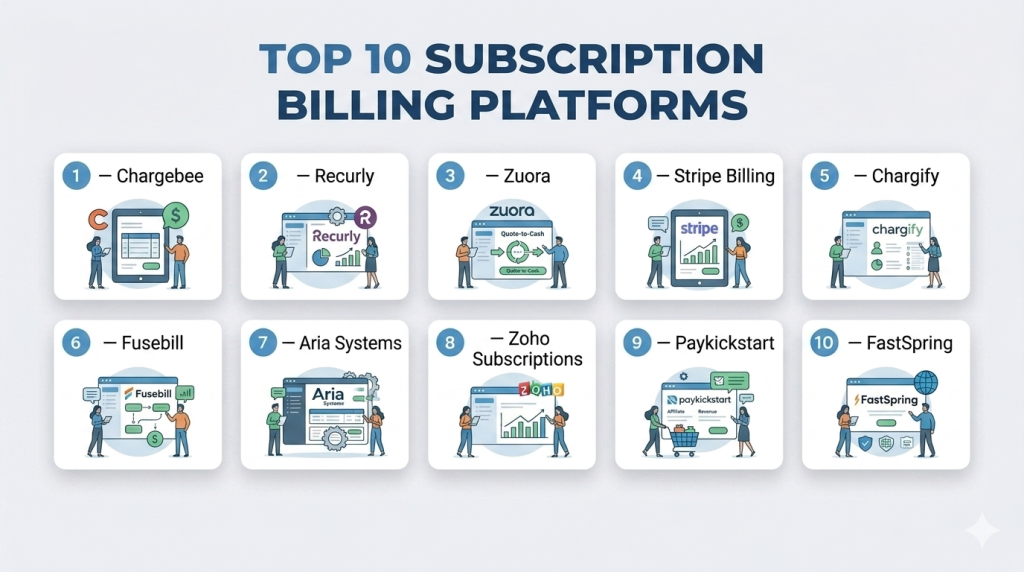
Top 10 Subscription Billing Platforms Tools
#1 — Chargebee
Short description : Chargebee automates subscription management, invoicing, and revenue operations for SaaS and subscription-based businesses. It is ideal for mid-market and enterprise companies seeking flexible billing models.
Key Features
- Recurring billing and automated invoicing
- Usage-based and tiered pricing
- Revenue recognition and accounting integrations
- Customer self-service portal
- Dunning and failed payment automation
- Multi-currency and tax management
- API-first architecture for developers
Pros
- Highly flexible pricing and billing options
- Strong global compliance features
- Extensive integration ecosystem
Cons
- Learning curve for complex workflows
- Premium pricing for advanced features
- Some limitations in reporting customization
Platforms / Deployment
- Web, iOS, Android
- Cloud
Security & Compliance
- SOC 2, GDPR, PCI DSS, SSO/SAML, MFA, RBAC
Integrations & Ecosystem
Chargebee integrates with major CRMs, ERPs, payment gateways, and analytics platforms.
- Salesforce, HubSpot
- QuickBooks, Xero
- Stripe, PayPal
- Zapier, Slack
Support & Community
- Documentation and knowledge base
- Onboarding support and dedicated account managers for enterprise
- Active community forums
#2 — Recurly
Short description : Recurly focuses on subscription revenue management with a strong emphasis on automated billing and revenue recovery. Suitable for growing SaaS, e-commerce, and digital service companies.
Key Features
- Flexible recurring billing models
- Automated failed payment recovery
- Subscription lifecycle management
- Revenue recognition and accounting integration
- Analytics and reporting dashboards
- Tax handling and multi-currency support
Pros
- Advanced revenue recovery features
- Easy integration with payment gateways
- Strong analytics and reporting
Cons
- Limited customization for some SMB workflows
- Higher pricing tiers for advanced features
Platforms / Deployment
- Web
- Cloud
Security & Compliance
- PCI DSS, GDPR, SOC 2
- SSO/SAML and role-based access control
Integrations & Ecosystem
- Payment gateways: Stripe, PayPal, Adyen
- CRMs: Salesforce, HubSpot
- Accounting: NetSuite, QuickBooks
Support & Community
- 24/7 support for premium plans
- Extensive documentation and API guides
#3 — Zuora
Short description : Zuora is a leading enterprise subscription management platform enabling billing, revenue recognition, and subscription analytics. Best suited for large enterprises with complex billing needs.
Key Features
- Enterprise-grade subscription billing
- Usage-based and recurring pricing
- Revenue recognition and finance operations
- Analytics and forecasting
- Customer self-service portals
- API access and ecosystem connectivity
Pros
- Scales for enterprise operations
- Comprehensive revenue and finance management
- Extensive customization options
Cons
- Steep learning curve
- Higher total cost of ownership
- Implementation can be time-intensive
Platforms / Deployment
- Web
- Cloud
Security & Compliance
- SOC 2, ISO 27001, GDPR, PCI DSS
- SSO/SAML, MFA
Integrations & Ecosystem
- Salesforce, NetSuite, SAP
- Payment gateways and analytics integrations
- Developer API and marketplace apps
Support & Community
- Enterprise-grade support
- Training programs and user forums
#4 — Stripe Billing
Short description : Stripe Billing extends Stripe’s payment infrastructure to recurring billing, invoicing, and subscription management. Ideal for developer-first startups and online platforms.
Key Features
- Subscription and recurring billing
- Flexible pricing models (tiered, usage-based)
- Automated invoices and email reminders
- Dunning management and failed payment retries
- Integration with Stripe Payments ecosystem
Pros
- Developer-friendly with robust API
- Fast setup for startups
- Global payment processing support
Cons
- Less suitable for enterprise accounting integration
- Reporting features more basic than specialized platforms
Platforms / Deployment
- Web
- Cloud
Security & Compliance
- PCI DSS, SSO/SAML, MFA
- GDPR compliance
Integrations & Ecosystem
- Stripe Payments, Accounting: QuickBooks, Xero
- CRM: Salesforce
- Zapier, custom API integrations
Support & Community
- Extensive API documentation
- Developer community and Slack groups
- Email support tiers
#5 — Chargify
Short description : Chargify provides subscription billing and revenue management with a focus on B2B SaaS companies. It handles complex recurring billing and customer lifecycle events.
Key Features
- Recurring and usage-based billing
- Dunning and failed payment automation
- Revenue recognition and reporting
- Customer portal and self-service
- Multi-currency and tax management
Pros
- B2B billing optimized
- Strong automation features
- Transparent pricing
Cons
- Limited enterprise-grade customization
- Learning curve for advanced workflows
Platforms / Deployment
- Web
- Cloud
Security & Compliance
- PCI DSS, GDPR
- SSO/SAML, RBAC
Integrations & Ecosystem
- Payment gateways: Stripe, PayPal
- Accounting: QuickBooks, NetSuite
- CRM: Salesforce
Support & Community
- Onboarding support
- Documentation and forums
#6 — Fusebill
Short description : Fusebill automates subscription billing and revenue operations for SMBs and mid-market SaaS companies, providing flexibility and real-time insights.
Key Features
- Automated recurring billing
- Customer self-service portal
- Revenue recognition and analytics
- Dunning management
- Multi-currency support
Pros
- Easy to implement
- Transparent dashboards
- Flexible subscription plans
Cons
- Limited third-party integrations
- May lack enterprise-level scalability
Platforms / Deployment
- Web
- Cloud
Security & Compliance
- PCI DSS, GDPR
- MFA, audit logs
Integrations & Ecosystem
- Payment gateways: Stripe, PayPal
- Accounting: QuickBooks, Xero
- API access for developers
Support & Community
- Knowledge base
- Email and chat support
#7 — Aria Systems
Short description : Aria Systems offers cloud-based subscription management for mid-to-large enterprises with complex billing needs, particularly in telecommunications and SaaS.
Key Features
- Complex recurring billing and usage-based models
- Revenue recognition and finance automation
- Customer lifecycle management
- Advanced analytics and reporting
- API-first architecture
Pros
- Handles large-scale enterprise subscriptions
- Robust revenue management
- Flexible pricing and product bundling
Cons
- Higher learning curve
- Premium pricing
- Implementation can be lengthy
Platforms / Deployment
- Web
- Cloud
Security & Compliance
- SOC 2, PCI DSS
- MFA, SSO/SAML
Integrations & Ecosystem
- ERP: SAP, NetSuite
- CRM: Salesforce
- Payment gateways and analytics
Support & Community
- Enterprise support tiers
- Training programs and documentation
#8 — Zoho Subscriptions
Short description : Zoho Subscriptions is a subscription management tool integrated into the Zoho ecosystem, designed for SMBs and startups.
Key Features
- Recurring billing and invoicing
- Dunning and payment retries
- Customer self-service portal
- Revenue recognition
- Multi-currency and taxation
Pros
- Affordable for SMBs
- Tight integration with Zoho CRM and Finance Suite
- Easy to set up
Cons
- Limited advanced analytics
- Less suitable for complex enterprise billing
Platforms / Deployment
- Web, iOS, Android
- Cloud
Security & Compliance
- PCI DSS, GDPR
- SSO/SAML, MFA
Integrations & Ecosystem
- Zoho CRM, Books
- Payment gateways: Stripe, PayPal
- API access
Support & Community
- Documentation and webinars
- Email and chat support
#9 — Paykickstart
Short description : Paykickstart offers subscription and affiliate management with strong sales and conversion features, targeting SMBs and online entrepreneurs.
Key Features
- Subscription and recurring billing
- Affiliate management
- Checkout optimization and order bumps
- Dunning and failed payment automation
- Analytics and reporting
Pros
- Built-in affiliate and marketing features
- Easy-to-use dashboards
- Flexible checkout options
Cons
- Less robust for enterprise finance
- Limited accounting integrations
Platforms / Deployment
- Web
- Cloud
Security & Compliance
- PCI DSS
- MFA, encryption
Integrations & Ecosystem
- Payment gateways: Stripe, PayPal
- CRM: HubSpot
- Zapier integrations
Support & Community
- Knowledge base
- Email support
#10 — FastSpring
Short description : FastSpring is a full-service e-commerce and subscription billing platform for digital products and SaaS, focusing on global markets.
Key Features
- Recurring billing and subscription management
- Global payment processing and tax compliance
- Customer self-service portal
- Revenue recognition
- Analytics and reporting dashboards
Pros
- Handles international taxes and currencies
- Strong e-commerce capabilities
- Full-service solution
Cons
- Limited flexibility for complex B2B models
- Pricing may be higher for startups
Platforms / Deployment
- Web
- Cloud
Security & Compliance
- PCI DSS, GDPR
- SSO/SAML
Integrations & Ecosystem
- Payment gateways, analytics, CRMs
- API access
Support & Community
- Dedicated account managers
- Documentation and tutorials
Comparison Table (Top 10)
| Tool Name | Best For | Platform(s) Supported | Deployment | Standout Feature | Public Rating |
|---|---|---|---|---|---|
| Chargebee | Mid-market & enterprise | Web, iOS, Android | Cloud | Flexible subscription and revenue ops | N/A |
| Recurly | Growing SaaS & e-commerce | Web | Cloud | Automated revenue recovery | N/A |
| Zuora | Large enterprises | Web | Cloud | Enterprise subscription management | N/A |
| Stripe Billing | Developer-first startups | Web | Cloud | API-first recurring billing | N/A |
| Chargify | B2B SaaS | Web | Cloud | Complex recurring billing | N/A |
| Fusebill | SMB & mid-market SaaS | Web | Cloud | Real-time subscription insights | N/A |
| Aria Systems | Mid-to-large enterprises | Web | Cloud | Handles complex billing workflows | N/A |
| Zoho Subscriptions | SMBs & startups | Web, iOS, Android | Cloud | Integrated Zoho ecosystem | N/A |
| Paykickstart | SMBs & online entrepreneurs | Web | Cloud | Affiliate and marketing features | N/A |
| FastSpring | Digital products & SaaS global | Web | Cloud | Full-service e-commerce & subscription | N/A |
Evaluation & Scoring of Subscription Billing Platforms
| Tool Name | Core (25%) | Ease (15%) | Integrations (15%) | Security (10%) | Performance (10%) | Support (10%) | Value (15%) | Weighted Total (0–10) |
|---|---|---|---|---|---|---|---|---|
| Chargebee | 9 | 8 | 9 | 9 | 9 | 8 | 8 | 8.85 |
| Recurly | 8 | 8 | 8 | 8 | 9 | 7 | 8 | 8.05 |
| Zuora | 10 | 7 | 10 | 9 | 9 | 8 | 7 | 8.95 |
| Stripe Billing | 8 | 9 | 8 | 8 | 9 | 7 | 9 | 8.55 |
| Chargify | 8 | 8 | 7 | 8 | 8 | 7 | 8 | 8.0 |
| Fusebill | 7 | 8 | 7 | 8 | 8 | 7 | 8 | 7.85 |
| Aria Systems | 9 | 7 | 9 | 9 | 9 | 8 | 7 | 8.75 |
| Zoho Subscriptions | 7 | 9 | 7 | 8 | 8 | 7 | 9 | 8.05 |
| Paykickstart | 7 | 8 | 6 | 7 | 8 | 7 | 8 | 7.55 |
| FastSpring | 8 | 8 | 7 | 8 | 9 | 8 | 8 | 8.2 |
Interpretation: Scores are comparative across the top 10 tools. Weighted totals reflect overall capability, factoring feature depth, ease, integrations, security, performance, support, and value. Higher scores indicate better suitability for complex or large-scale subscription operations.
Which Subscription Billing Platforms Tool Is Right for You?
Solo / Freelancer
- Stripe Billing or Zoho Subscriptions are ideal due to simplicity, ease of setup, and affordable pricing.
SMB
- Chargebee, Recurly, Fusebill, or Paykickstart balance automation and cost-effectiveness.
Mid-Market
- Chargebee, Aria Systems, and Chargify offer scalability with advanced analytics and workflow automation.
Enterprise
- Zuora, Aria Systems, and Chargebee handle complex billing, compliance, and multi-market needs.
Budget vs Premium
- Budget: Zoho Subscriptions, Paykickstart – basic automation at low cost
- Premium: Zuora, Chargebee, Aria Systems – enterprise-level features, higher price
Feature Depth vs Ease of Use
- Feature-rich: Zuora, Aria Systems
- Ease of use: Stripe Billing, Zoho Subscriptions
Integrations & Scalability
- Enterprise and mid-market companies should prioritize Chargebee, Zuora, and Aria Systems for robust API and ecosystem support.
Security & Compliance Needs
- Ensure PCI DSS, SOC 2, GDPR compliance; Zuora, Chargebee, and Aria Systems excel in regulated environments.
Frequently Asked Questions (FAQs)
1. What pricing models do subscription billing platforms support?
Most platforms handle recurring, tiered, usage-based, and hybrid pricing. Businesses can choose models suitable for their products or services.
2. How long does implementation take?
Implementation varies from a few days for SMB-friendly tools like Zoho to several weeks for enterprise platforms like Zuora, depending on complexity.
3. Can these platforms handle global currencies and taxes?
Yes, most leading platforms support multi-currency billing, localized tax management, and compliance with VAT/GST regulations.
4. Are these platforms secure for handling sensitive payment data?
Top platforms adhere to PCI DSS, SOC 2, and GDPR. Features like MFA, SSO, and RBAC ensure secure access and compliance.
5. Can I integrate these tools with my existing CRM or ERP?
Yes, platforms like Chargebee, Recurly, and Zuora provide native integrations and APIs for CRMs (Salesforce, HubSpot) and ERPs (NetSuite, SAP).
6. What are common mistakes businesses make with subscription billing?
Common issues include not automating dunning, ignoring revenue recognition, selecting platforms without sufficient integrations, or underestimating global compliance needs.
7. How scalable are these platforms?
Enterprise-grade solutions like Zuora and Aria Systems scale to millions of subscribers, while SMB-focused platforms are best for smaller customer bases.
8. Can I switch platforms if needed?
Most platforms provide data export options, but switching may involve migration planning for subscriptions, invoices, and customer data.
9. Do these tools support customer self-service?
Yes, customer portals for subscription management, plan changes, and invoice access are standard in leading platforms.
10. Are developer APIs available?
Yes, API-first platforms like Stripe Billing, Chargebee, and Aria Systems allow custom integrations, automation, and flexibility for developers.
Conclusion
Subscription billing platforms are essential for any organization relying on recurring revenue. From managing complex enterprise subscriptions to simple SMB automation, the right tool can streamline operations, improve revenue accuracy, and enhance customer experience. Key differentiators include AI-driven analytics, automation of dunning and revenue recognition, multi-currency support, and seamless integration with existing systems. Businesses should evaluate their scale, pricing model needs, integration requirements, and security standards before selecting a platform. A practical next step is to shortlist 2tools aligned with your business size and run a pilot to validate functionality, security, and ease of use in real-world scenarios.

Find Trusted Cardiac Hospitals
Compare heart hospitals by city and services — all in one place.
Explore Hospitals
A small change in pricing, discounts, taxes, or usage rules can affect thousands of subscriptions at once. Teams should test these changes with sample accounts and check invoices before going live. This can help catch billing errors early and avoid customer complaints or revenue problems.