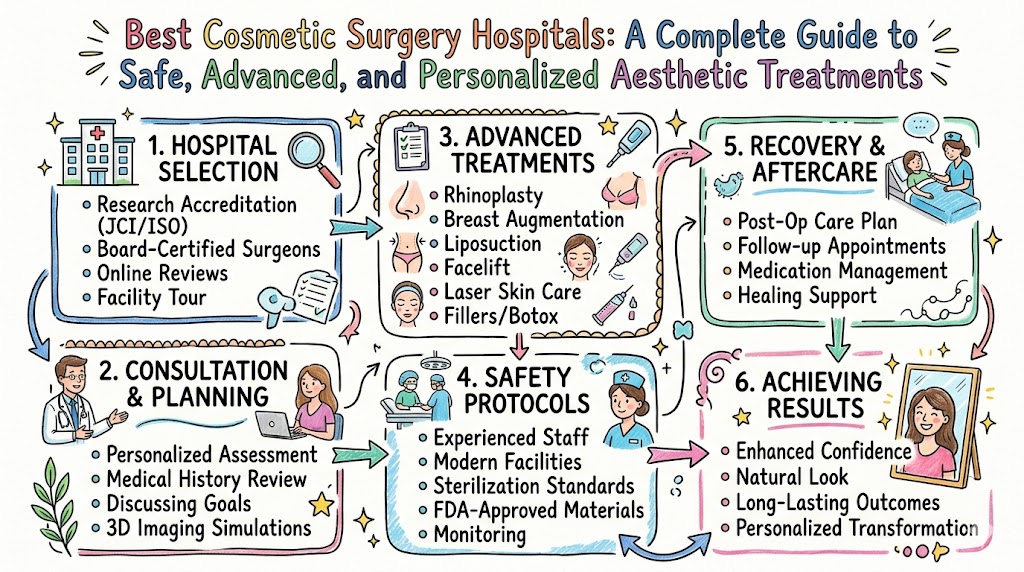
Introduction
Choosing the right medical facility is the most critical step in your aesthetic journey. Whether you are considering a minor touch-up or a major transformation, the environment, expertise, and safety standards of your chosen provider dictate your success.At MyHospitalNow, we simplify this complex process. We help patients discover world-class hospitals, compare top-tier healthcare providers, explore leading specialists, and gain the clarity needed to make informed treatment decisions. This guide is designed to empower you with the knowledge required to navigate the world of aesthetic medicine with confidence, ensuring that your choice aligns with both your safety requirements and your personal vision for beauty.
Understanding Cosmetic Surgery
Cosmetic surgery is a specialized field of medicine dedicated to enhancing physical appearance through surgical and non-surgical procedures. Unlike reconstructive surgery, which focuses on repairing defects to improve function, cosmetic surgery is primarily aesthetic. It encompasses everything from facial rejuvenation to body contouring, requiring a unique blend of technical skill and artistic vision.
Why Patients Choose Cosmetic Surgery
Patients seek aesthetic enhancements for a variety of reasons, ranging from boosting self-confidence to reversing the visible signs of aging. Common motivators include:
- Correction of Insecurities: Addressing features that may have caused long-term self-consciousness.
- Restoring Youthfulness: Reversing the effects of gravity, sun damage, or lifestyle factors.
- Post-Weight Loss Transformation: Removing excess skin to reveal a more contoured silhouette.
- Personal Branding: Many individuals seek enhancements to look as vibrant as they feel in their professional or personal lives.
What Makes the Best Cosmetic Surgery Hospitals Stand Out?
Top-tier facilities prioritize more than just the result; they prioritize the process. Key markers include:
- Board-Certified Expertise: Employment of surgeons with specialized fellowships in plastic and reconstructive surgery.
- Accredited Infrastructure: Full-service operating rooms that meet hospital-grade safety standards.
- Comprehensive Care: Access to pre-operative assessments, specialized anesthesia teams, and dedicated post-operative nursing.
- Patient-Centric Culture: Transparent communication, personalized treatment planning, and emotional support.
Common Cosmetic Surgery Procedures
| Procedure | Purpose | Recovery Time | Benefits |
| Rhinoplasty | Reshaping the nose | 2–4 weeks | Improved breathing and facial harmony |
| Facelift | Tightening facial skin | 3–6 weeks | Reduces wrinkles and sagging |
| Liposuction | Fat removal/contouring | 1–3 weeks | Better body proportions |
| Tummy Tuck | Abdominal tightening | 4–6 weeks | Flatter, firmer midsection |
| Breast Procedures | Augmentation/Reduction | 2–4 weeks | Balanced silhouette and improved comfort |
Surgical vs Non-Surgical Cosmetic Treatments
| Feature | Surgical | Non-Surgical |
| Invasiveness | High (incisions required) | Low (minimal or no incisions) |
| Anesthesia | General or deep sedation | Topical or none |
| Results | Dramatic, long-lasting | Subtle, requires maintenance |
| Downtime | Weeks to months | Minimal to none |
Advanced Technologies Used in Cosmetic Surgery
Modern aesthetic care is evolving rapidly with the integration of cutting-edge technology:
- 3D Imaging: Allows patients to visualize potential results before surgery.
- Robotic-Assisted Surgery: Increases precision in intricate procedures.
- Energy-Based Devices: Tools like radiofrequency (RF) and ultrasound are now used to tighten skin and dissolve fat with less trauma.
- Regenerative Medicine: Using PRP (platelet-rich plasma) and exosomes to accelerate healing and improve tissue health.
Importance of Experienced Cosmetic Surgeons
Your surgeon is the most influential factor in your surgical outcome. An experienced professional doesn’t just know the technique; they understand anatomy, potential complications, and aesthetic proportion. They also possess the “bedside manner” to manage expectations and provide honest advice if a procedure is not in your best interest.
Patient Safety and Accreditation Standards
Safety must never be compromised. Look for hospitals that adhere to:
- Facility Accreditation: Certifications from organizations like The Joint Commission or equivalent national boards.
- Emergency Preparedness: Clear protocols for handling adverse reactions or emergencies.
- Sterilization Protocols: Strict infection control measures that exceed standard clinic requirements.
Benefits of Choosing Reputable Cosmetic Surgery Hospitals
- Lower Complication Rates: Due to better equipment and trained support staff.
- Continuity of Care: From the initial consultation through the long-term recovery phase.
- Ethical Practices: No pressure to undergo unnecessary procedures.
- Access to Specialists: If complications arise, a hospital-based system has a wider array of medical specialists on call.
Risks and Potential Complications
Even with the best surgeons, cosmetic surgery carries inherent risks, including:
- Anesthesia-related complications.
- Infection at the incision site.
- Hematoma or seroma (fluid accumulation).
- Scarring that may require revision.
- Dissatisfaction with aesthetic results.
Recovery and Post-Procedure Care
Recovery is a marathon, not a sprint.
- Immediate Post-Op: Monitoring in a recovery room with specialized nursing staff.
- First Week: Focusing on rest, elevation, and medication management.
- Long-Term: Adhering to activity restrictions (no heavy lifting) and wearing compression garments as prescribed.
How to Choose the Best Cosmetic Surgery Hospital
| Factor | Importance | Questions to Ask |
| Surgeon Credentials | Critical | Are you board-certified in plastic surgery? |
| Facility Safety | Critical | Is this facility accredited for surgery? |
| Patient Reviews | High | Can I see examples of similar cases? |
| Cost Transparency | Moderate | Are all costs (anesthesia, facility) included? |
Checklist: Your Pre-Surgery Preparation
- Medical Clearance: Get a full physical and discuss all medications with your primary doctor.
- Stop Smoking: Nicotine impairs healing; stop at least 6 weeks prior.
- Medication Audit: Stop blood-thinners (as directed) and avoid herbal supplements.
- Support System: Arrange for a caregiver to stay with you for the first 24–48 hours.
- Recovery Station: Set up a comfortable spot at home with pillows, water, and easy access to essentials.
Questions Patients Should Ask Before Treatment
- How many times have you performed this specific procedure?
- What are the most common risks, and how are they managed?
- Where exactly will the surgery be performed?
- What is the protocol if I am unhappy with the result?
- Can you provide a breakdown of all associated costs?
Cost Factors and Financial Planning
Cosmetic surgery is an investment. Costs typically include the surgeon’s fee, anesthesia fees, operating room facility fees, and post-operative supplies. Be wary of “too good to be true” pricing, as this often indicates shortcuts in safety or training.
Common Myths vs Facts About Cosmetic Surgery
- Myth: “Cosmetic surgery is only for the wealthy.” Fact: Many hospitals offer financing options to make procedures accessible.
- Myth: “Recovery is quick and painless.” Fact: While modern techniques have improved, all surgery involves healing, swelling, and temporary discomfort.
- Myth: “You can get ‘perfect’ results.” Fact: The goal is improvement, not perfection.
Latest Innovations in Aesthetic Medicine
The industry is moving toward “Injectable Minimalism” and “Collagen Banking,” focusing on subtle, natural-looking enhancements rather than dramatic, over-filled looks. AI-based skin analysis and 3D facial mapping are also becoming standard for personalized treatment plans.
Future Trends in Cosmetic Surgery
Expect a rise in Regenerative Aesthetics, where the body’s own growth factors are used to rejuvenate tissue, and a surge in “Prejuvenation,” where younger patients use non-surgical methods to delay the aging process.
Expert Recommendations
- Prioritize safety over price.
- Always meet your surgeon in person; avoid purely virtual consults for surgical planning.
- Be honest about your lifestyle and health history during your consultation.
Checklist: Your Post-Surgery Recovery
- Follow Instructions: Strictly adhere to your surgeon’s specific wound care guidelines.
- Hydration: Drink plenty of water to support metabolic recovery.
- Activity Management: Do not rush your return to exercise or work.
- Monitor Symptoms: Watch for signs of infection (fever, redness, or excessive pain) and report them immediately.
- Attend Follow-ups: Do not miss your post-operative checkups.
How Technology Improves Cosmetic Surgery Outcomes
From high-definition 3D visualization that helps surgeons map out body contouring to robotic arms that ensure consistent movement during tissue dissection, technology is minimizing human error. Moreover, advanced cooling systems integrated into lasers and RF machines are making non-surgical procedures safer and more effective than ever before.
Long-Term Maintenance After Cosmetic Procedures
Surgery is not the end of the journey. To protect your investment, maintain:
- Sun Protection: Always use SPF to preserve skin elasticity.
- Stable Weight: Fluctuations can undo the results of body-contouring surgeries.
- Skincare Routine: Medical-grade skincare supports the results of facelifts and peels.
Psychological Considerations Before Cosmetic Surgery
It is vital to have realistic expectations. Cosmetic surgery can improve your self-esteem, but it cannot fix external life problems or emotional instability. Ensure you are choosing surgery for yourself, not to satisfy the expectations of others.
Patient Success Factors for Better Results
The “best” outcomes occur when a healthy, well-prepared patient works with a highly skilled, communicative surgeon in a safe, accredited facility. Patience during the recovery phase is often the final piece of the puzzle.
Frequently Asked Questions
- What is the best age for a facelift? It varies, but many seek it in their 40s to 60s.
- Does insurance cover cosmetic surgery? Rarely, unless there is a functional benefit (e.g., eyelid surgery for vision).
- How long do fillers last? Usually 6–18 months depending on the type.
- Is liposuction a weight-loss tool? No, it is for body contouring.
- How do I choose the best hospital? Look for board certifications and safety accreditations.
- Can I combine multiple surgeries? Yes, but safety is the priority; discuss limits with your surgeon.
- What is the difference between plastic and cosmetic surgery? Plastic surgery is reconstructive; cosmetic is aesthetic.
- Will I have visible scars? All surgery leaves scars, but surgeons aim to hide them.
- How long should I take off work? Usually 1–3 weeks for surgical procedures.
- What is ‘Baby Botox’? Smaller doses for natural movement.
- Are breast implants permanent? Most need replacement or monitoring after 10–15 years.
- Can I fly after surgery? Most surgeons advise against flying for at least 1–2 weeks.
- Is anesthesia safe? Yes, in the hands of a qualified anesthesiologist.
- How do I find a board-certified surgeon? Check national specialty boards online.
- What is the most painful procedure? Pain is subjective, but body contouring is often cited as more intense.
- Can I use my own fat for filler? Yes, via fat grafting.
- What is a “Mommy Makeover”? A combination of breast and abdominal procedures.
- How often should I see my surgeon post-op? Usually at 1 week, 6 weeks, and 6 months.
- What if I have an emergency at night? Accredited hospitals have 24/7 care.
- Can I choose a cheaper surgeon? Never compromise on safety for price.
Conclusion
Embarking on a cosmetic surgery journey is a profound decision that marries personal desires with medical science. As we have explored throughout this guide, the path to a successful aesthetic outcome is built upon the foundation of choosing the best cosmetic surgery hospitals. These facilities are defined by their uncompromising commitment to patient safety, the use of state-of-the-art technology, and, most importantly, the presence of board-certified, experienced surgeons who prioritize your well-being above all else.The importance of accreditation cannot be overstated. A high-quality hospital or surgical center acts as a safeguard, ensuring that every aspect of your care—from the initial consultation to the final stage of your recovery—is managed under rigorous safety protocols. When you align yourself with top-tier providers, you gain the benefit of a professional team that anticipates potential complications and utilizes advanced methodologies to minimize risks, ultimately leading to more natural, long-lasting, and satisfying results.

Find Trusted Cardiac Hospitals
Compare heart hospitals by city and services — all in one place.
Explore Hospitals