Introduction
Application Servers are software frameworks that provide an environment for deploying, running, and managing business applications. They handle application logic, database connectivity, transaction management, messaging, and security. In with hybrid IT environments, microservices, and cloud-native applications on the rise, choosing the right application server is critical for scalability, performance, and reliability.Real-world use cases include powering enterprise ERP systems, running e-commerce platforms, hosting APIs for mobile and web applications, managing microservices in containers, and enabling cloud-based SaaS applications. Buyers should evaluate factors such as scalability, performance, middleware integration, security and compliance, ease of deployment and management, monitoring and logging, multi-platform support, high availability, and cost-effectiveness.
Best for: IT administrators, developers, DevOps teams, enterprise architects, and organizations deploying critical business applications.
Not ideal for: Small projects with minimal application logic needs or teams using fully managed cloud application platforms.
Key Trends in Application Servers
- Container and Kubernetes-native deployment support
- AI-assisted performance optimization and resource allocation
- Enhanced security features including zero-trust and RBAC
- Cloud-native application support and hybrid deployment models
- Integrated monitoring, logging, and observability
- Microservices orchestration and API management
- Subscription and usage-based licensing models
- Automation for deployment, scaling, and patching
- Edge and IoT application support
- Interoperability with DevOps CI/CD pipelines
How We Selected These Tools (Methodology)
- Market adoption and enterprise mindshare
- Feature completeness including middleware and security
- Reliability and performance in production environments
- Security posture and compliance capabilities
- Ecosystem and integration support
- Customer fit across SMB, mid-market, and enterprise segments
- Vendor and community support availability
- Automation, orchestration, and DevOps readiness
- Multi-platform and OS compatibility
- Cost-to-value analysis
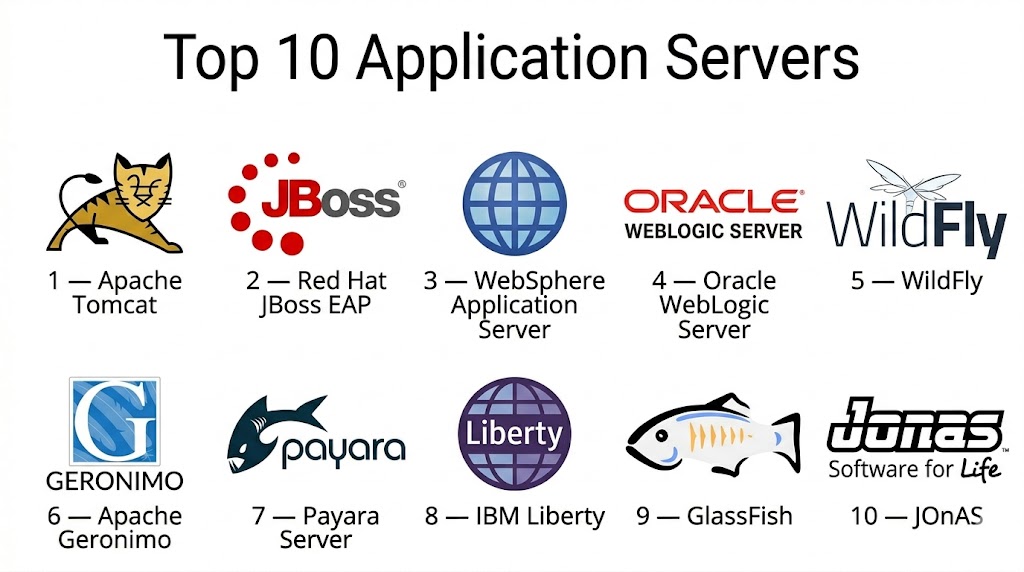
Top 10 Application Servers
#1 — Apache Tomcat
Short description: Apache Tomcat is an open-source application server for Java-based applications, providing a servlet container and JavaServer Pages (JSP) environment. Ideal for developers and enterprises deploying Java web apps.
Key Features
- Java Servlet and JSP support
- WebSocket and HTTP/2 support
- Session management and clustering
- Security and authentication mechanisms
- Logging and monitoring tools
- Virtual hosting capabilities
- CI/CD pipeline integration
Pros
- Open-source and widely supported
- Lightweight and modular
Cons
- Limited features compared to full Java EE servers
- Requires Java expertise
Platforms / Deployment
- Linux, Windows, macOS
- Cloud / On-premises / Hybrid
Security & Compliance
- SSL/TLS, RBAC
- Not publicly stated
Integrations & Ecosystem
- Java frameworks: Spring, Hibernate
- CI/CD pipelines
- Monitoring and logging tools
Support & Community
- Strong community support
- Vendor support via third-party services
#2 — Red Hat JBoss EAP
Short description: JBoss Enterprise Application Platform is a middleware server providing enterprise-grade Java EE capabilities, high availability, and scalability for critical applications.
Key Features
- Full Java EE 8 support
- Clustering and high availability
- Transaction management and messaging
- Security and identity management
- Cloud-native and containerized deployment
- Monitoring and management console
- Integration with DevOps tools
Pros
- Enterprise-grade stability
- Strong security and compliance features
Cons
- Subscription cost
- Complexity for small-scale applications
Platforms / Deployment
- Linux, Windows
- Cloud / On-premises / Hybrid
Security & Compliance
- RBAC, encryption
- SOC 2, ISO 27001
Integrations & Ecosystem
- OpenShift, Kubernetes, CI/CD pipelines
- Java frameworks: Spring, Hibernate
- APIs for automation
Support & Community
- Red Hat enterprise support
- Active community forums
#3 — IBM WebSphere Application Server
Short description: IBM WebSphere provides a robust enterprise application server platform for Java EE applications, offering high performance, scalability, and security features for mission-critical workloads.
Key Features
- Full Java EE support
- Clustering, load balancing, and failover
- Transaction and session management
- Security with SSO, RBAC, and encryption
- DevOps integration
- Monitoring, logging, and observability
- Cloud deployment support
Pros
- Enterprise reliability and performance
- Comprehensive security features
Cons
- High cost
- Steep learning curve
Platforms / Deployment
- Linux, Windows, AIX
- Cloud / On-premises / Hybrid
Security & Compliance
- SSO, RBAC, encryption
- ISO 27001, SOC 2
Integrations & Ecosystem
- CI/CD pipelines, container orchestration
- Enterprise middleware
- APIs for management
Support & Community
- IBM support tiers
- Enterprise community forums
#4 — Oracle WebLogic Server
Short description: Oracle WebLogic Server is an enterprise-grade Java EE application server with high availability, robust middleware support, and cloud-ready deployment.
Key Features
- Java EE and Jakarta EE support
- High availability and clustering
- Messaging, transactions, and persistence
- Security and compliance features
- Cloud and container deployment
- Monitoring and management console
- CI/CD pipeline integration
Pros
- Enterprise-grade scalability
- Advanced middleware support
Cons
- Licensing costs
- Complexity for small deployments
Platforms / Deployment
- Linux, Windows
- Cloud / On-premises / Hybrid
Security & Compliance
- SSL/TLS, RBAC
- SOC 2, ISO 27001
Integrations & Ecosystem
- Oracle Cloud, Kubernetes
- Java frameworks
- CI/CD and DevOps tools
Support & Community
- Oracle enterprise support
- Active documentation and community
#5 — WildFly
Short description: WildFly is a lightweight, open-source Java EE application server offering modular architecture, fast startup, and container-ready deployment. Ideal for developers and microservices.
Key Features
- Java EE support
- Modular architecture
- Fast startup and deployment
- Security features
- Management console and CLI
- Container and cloud-ready
- CI/CD integration
Pros
- Open-source and flexible
- Lightweight and fast
Cons
- Less enterprise support
- Requires Java knowledge
Platforms / Deployment
- Linux, Windows, macOS
- Cloud / On-premises / Hybrid
Security & Compliance
- SSL/TLS, RBAC
- Not publicly stated
Integrations & Ecosystem
- Docker, Kubernetes
- Java frameworks
- CI/CD pipelines
Support & Community
- Community-driven support
- Documentation and forums
#6 — Apache Geronimo
Short description: Apache Geronimo is an open-source Java EE application server focused on flexibility and extensibility, suitable for developers and small to mid-size enterprises.
Key Features
- Java EE and Web services support
- Modular and pluggable architecture
- Clustering and failover
- Security features and authentication
- Logging and monitoring
- CI/CD pipeline support
- Integration with containers
Pros
- Open-source and flexible
- Modularity allows custom setups
Cons
- Limited enterprise adoption
- Smaller community than WildFly
Platforms / Deployment
- Linux, Windows, macOS
- Cloud / On-premises / Hybrid
Security & Compliance
- SSL/TLS, RBAC
- Not publicly stated
Integrations & Ecosystem
- Java frameworks
- CI/CD pipelines
- Container orchestration
Support & Community
- Community support
- Documentation available
#7 — Payara Server
Short description: Payara Server is an open-source Java EE and Jakarta EE application server optimized for cloud deployments, offering high availability and microservices support.
Key Features
- Java EE/Jakarta EE support
- Clustering and failover
- High availability and session replication
- Monitoring and management console
- Container and cloud-ready
- DevOps pipeline integration
- Security and compliance features
Pros
- Cloud and microservices ready
- Enterprise support available
Cons
- Newer ecosystem than WildFly or JBoss
- Some advanced features require subscription
Platforms / Deployment
- Linux, Windows, macOS
- Cloud / On-premises / Hybrid
Security & Compliance
- SSL/TLS, RBAC
- Not publicly stated
Integrations & Ecosystem
- Docker, Kubernetes
- CI/CD pipelines
- Java frameworks
Support & Community
- Vendor support tiers
- Community forums and documentation
#8 — IBM Liberty
Short description: IBM Liberty is a lightweight, modular Java EE application server designed for rapid development and cloud-native applications.
Key Features
- Modular architecture
- Fast startup and deployment
- Cloud and container support
- Java EE and microservices support
- Monitoring and logging tools
- Security and RBAC features
- CI/CD pipeline integration
Pros
- Lightweight and fast
- Cloud and microservices optimized
Cons
- Smaller feature set than WebSphere
- Enterprise support requires subscription
Platforms / Deployment
- Linux, Windows, macOS
- Cloud / On-premises / Hybrid
Security & Compliance
- SSL/TLS, RBAC
- Not publicly stated
Integrations & Ecosystem
- Kubernetes, Docker
- Java frameworks
- CI/CD pipelines
Support & Community
- IBM support tiers
- Documentation available
#9 — GlassFish
Short description: GlassFish is an open-source Java EE application server offering enterprise features, modular architecture, and cloud readiness for developers and small enterprises.
Key Features
- Java EE and Jakarta EE support
- Clustering and high availability
- Web services support
- Security and authentication
- Monitoring and logging
- CI/CD pipeline support
- Cloud deployment ready
Pros
- Open-source and flexible
- Cloud-ready features
Cons
- Enterprise support limited
- Smaller community than WildFly
Platforms / Deployment
- Linux, Windows, macOS
- Cloud / On-premises / Hybrid
Security & Compliance
- SSL/TLS, RBAC
- Not publicly stated
Integrations & Ecosystem
- Docker, Kubernetes
- Java frameworks
- CI/CD pipelines
Support & Community
- Community support
- Documentation available
#10 — JOnAS
Short description: JOnAS is an open-source Java EE application server with modular design and focus on lightweight, scalable deployments for development and small enterprise environments.
Key Features
- Java EE support
- Modular architecture
- Clustering and high availability
- Security and authentication
- Monitoring tools
- Container and cloud-friendly
- CI/CD integration
Pros
- Lightweight and modular
- Open-source and flexible
Cons
- Limited enterprise adoption
- Smaller community support
Platforms / Deployment
- Linux, Windows, macOS
- Cloud / On-premises / Hybrid
Security & Compliance
- SSL/TLS, RBAC
- Not publicly stated
Integrations & Ecosystem
- Java frameworks
- Docker, Kubernetes
- CI/CD pipelines
Support & Community
- Community support
- Documentation available
Comparison Table (Top 10)
| Tool Name | Best For | Platform(s) Supported | Deployment | Standout Feature | Public Rating |
|---|---|---|---|---|---|
| Apache Tomcat | Java web apps | Linux, Windows, macOS | Cloud / On-prem / Hybrid | Lightweight Java EE | N/A |
| JBoss EAP | Enterprise Java | Linux, Windows | Cloud / On-prem / Hybrid | Enterprise Java EE | N/A |
| IBM WebSphere | Enterprise | Linux, Windows, AIX | Cloud / On-prem / Hybrid | High scalability & security | N/A |
| Oracle WebLogic | Enterprise | Linux, Windows | Cloud / On-prem / Hybrid | Middleware integration | N/A |
| WildFly | Developers & microservices | Linux, Windows, macOS | Cloud / On-prem / Hybrid | Fast, modular, cloud-ready | N/A |
| Apache Geronimo | Developers | Linux, Windows, macOS | Cloud / On-prem / Hybrid | Modular and flexible | N/A |
| Payara Server | Cloud & microservices | Linux, Windows, macOS | Cloud / On-prem / Hybrid | High availability | N/A |
| IBM Liberty | Cloud-native apps | Linux, Windows, macOS | Cloud / On-prem / Hybrid | Lightweight and modular | N/A |
| GlassFish | Open-source enterprise | Linux, Windows, macOS | Cloud / On-prem / Hybrid | Enterprise Java EE | N/A |
| JOnAS | Lightweight deployments | Linux, Windows, macOS | Cloud / On-prem / Hybrid | Modular and scalable | N/A |
Evaluation & Scoring of Application Servers
| Tool Name | Core (25%) | Ease (15%) | Integrations (15%) | Security (10%) | Performance (10%) | Support (10%) | Value (15%) | Weighted Total (0–10) |
|---|---|---|---|---|---|---|---|---|
| Apache Tomcat | 8 | 7 | 7 | 7 | 8 | 7 | 8 | 7.5 |
| JBoss EAP | 9 | 7 | 8 | 9 | 9 | 8 | 7 | 8.3 |
| IBM WebSphere | 9 | 7 | 8 | 9 | 9 | 8 | 7 | 8.3 |
| Oracle WebLogic | 9 | 7 | 8 | 9 | 9 | 8 | 7 | 8.3 |
| WildFly | 8 | 8 | 7 | 7 | 8 | 7 | 7 | 7.6 |
| Apache Geronimo | 7 | 7 | 7 | 7 | 7 | 6 | 7 | 7.0 |
| Payara Server | 8 | 8 | 7 | 8 | 8 | 7 | 7 | 7.6 |
| IBM Liberty | 8 | 8 | 7 | 8 | 8 | 7 | 7 | 7.6 |
| GlassFish | 7 | 7 | 7 | 7 | 7 | 6 | 7 | 7.0 |
| JOnAS | 7 | 7 | 7 | 7 | 7 | 6 | 7 | 7.0 |
Interpretation: Scores compare capabilities, usability, integrations, security, and performance. Higher totals indicate stronger suitability for enterprise and cloud-native applications.
Which Application Servers Tool Is Right for You?
Solo / Freelancer
WildFly, Apache Tomcat, GlassFish provide lightweight, developer-friendly solutions for small deployments.
SMB
Payara Server, WildFly, Apache Geronimo are suitable for small to medium enterprises with scalable needs.
Mid-Market
JBoss EAP, IBM Liberty, GlassFish offer enterprise-grade reliability and cloud-readiness.
Enterprise
IBM WebSphere, Oracle WebLogic, JBoss EAP deliver high availability, security, and middleware integration for large organizations.
Budget vs Premium
- Budget: Apache Tomcat, WildFly, GlassFish
- Premium: IBM WebSphere, Oracle WebLogic, JBoss EAP
Feature Depth vs Ease of Use
- Feature-rich: IBM WebSphere, Oracle WebLogic, JBoss EAP
- Easier setup: WildFly, Apache Tomcat, Payara Server
Integrations & Scalability
- Enterprise & cloud-scale: IBM WebSphere, Oracle WebLogic
- Developer & small-scale: WildFly, Apache Tomcat
Security & Compliance Needs
Organizations requiring compliance, RBAC, and enterprise security should prioritize IBM WebSphere, JBoss EAP, and Oracle WebLogic.
Frequently Asked Questions (FAQs)
1. How are application servers priced?
Open-source servers are free; enterprise versions require subscription licenses based on cores, users, or deployment.
2. How quickly can servers be deployed?
Simple setups deploy in hours; enterprise deployment with clustering and high availability may take days.
3. What are common mistakes in application server selection?
Choosing servers incompatible with workloads, neglecting updates, and underestimating middleware integration needs.
4. How secure are application servers?
Security depends on SSL/TLS, RBAC, patch management, and enterprise-grade compliance features.
5. Can application servers scale for high traffic?
Yes, JBoss EAP, WebLogic, and WebSphere provide clustering, load balancing, and high availability for scalability.
6. Which programming languages are supported?
Primarily Java EE/Jakarta EE, but some support integration with other frameworks via connectors or extensions.
7. How do integrations work?
Servers integrate with middleware, cloud platforms, CI/CD pipelines, monitoring, and container orchestration tools.
8. Can application servers run in containers?
Yes, modern servers like WildFly, Payara, and Liberty support Docker and Kubernetes deployment.
9. Are these servers suitable for cloud-native applications?
Yes, enterprise and open-source servers are increasingly optimized for hybrid and cloud-native environments.
10. What alternatives exist to traditional application servers?
Alternatives include serverless platforms, microservices frameworks, and cloud PaaS services.
Conclusion
Application Servers are critical for delivering robust, scalable, and secure enterprise applications. IBM WebSphere, Oracle WebLogic, and JBoss EAP offer enterprise-grade performance and middleware capabilities, while Apache Tomcat, WildFly, and Payara provide developer-friendly, open-source solutions. Selecting the right server depends on workload type, deployment model, security requirements, and scalability needs. Organizations should pilot shortlisted servers, validate integrations, and adopt solutions aligned with long-term application architecture and business goals

Find Trusted Cardiac Hospitals
Compare heart hospitals by city and services — all in one place.
Explore Hospitals
Application servers can behave differently as traffic and connection counts increase. It is useful to monitor thread pools, connection limits, and resource usage instead of looking only at response time. This can help teams find bottlenecks before they turn into production problems.