Introduction
Desktop publishing software allows individuals and organizations to design and produce professional-quality documents, publications, and marketing materials. Unlike basic word processors, these platforms provide advanced layout, typography, and graphic integration capabilities, enabling precise control over page composition.
In today’s fast-paced content landscape, desktop publishing software is essential for creating brochures, magazines, flyers, newsletters, reports, and other print or digital materials efficiently. These tools reduce dependency on design agencies, streamline workflow, and support collaboration among teams.
Real-world use cases:
- Designing print and digital marketing collateral for businesses
- Producing magazines, newsletters, and educational materials
- Creating brand templates for consistent corporate communication
- Generating reports with embedded graphics and charts
- Automating document production for repeatable layouts
Evaluation criteria for buyers:
- Ease of use and learning curve
- Layout and typography capabilities
- Graphic and image integration support
- Cross-platform deployment and collaboration
- Template library and pre-designed assets
- File format export options (PDF, EPUB, print-ready)
- Security and access controls
- Integration with other tools like CRM, design software, and cloud storage
- Support and community resources
- Cost and licensing flexibility
Best for: Marketing teams, design studios, publishers, freelancers, and enterprises requiring professional document design and layout capabilities.
Not ideal for: Users primarily working with basic text documents or small-scale ad hoc content where word processors suffice.
Key Trends in Desktop Publishing Software.
- AI-assisted design, including auto-layout, style suggestions, and content adaptation
- Cloud-based collaboration for real-time editing and feedback
- Integration with workflow and digital asset management systems
- Subscription-based licensing replacing traditional perpetual models
- Cross-platform capabilities, including web-based editing for remote teams
- Enhanced typography, color, and layout automation features
- Support for multi-format output including PDF, EPUB, and web-ready formats
- Compliance with enterprise security standards and data protection regulations
- Improved performance for large and complex document projects
How We Selected These Tools (Methodology)
- Evaluated market adoption, brand recognition, and mindshare
- Assessed completeness of layout, typography, and graphics features
- Reviewed performance and reliability for large document projects
- Examined security posture and enterprise compliance signals
- Considered integration capabilities with design, cloud, and collaboration tools
- Factored suitability across user types: freelancers, SMBs, and enterprises
- Included a mix of commercial, subscription, and free/open-source options
- Considered usability, training resources, and community support
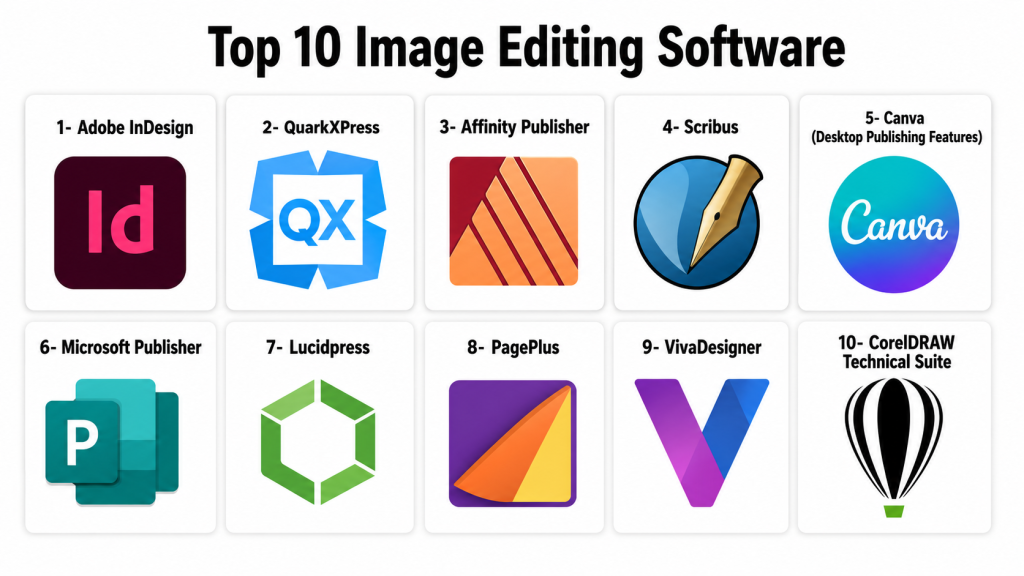
Top 10 Desktop Publishing Software Tools
1- Adobe InDesign
2- QuarkXPress
3- Affinity Publisher
4- Scribus
5- Canva (Desktop Publishing Features)
6- Microsoft Publisher
7- Lucidpress
8- PagePlus
9- VivaDesigner
10- CorelDRAW Technical Suite
1- Adobe InDesign
Key Features
- Advanced typography and page layout tools
- Integration with Adobe Creative Cloud assets
- Multi-page and master page management
- Support for print and digital publications
- Preflight and export for print-ready PDFs
- Collaboration via cloud libraries
Pros
- Industry-standard for publishing
- Extensive design and template resources
- High-quality output for professional print
Cons
- Steep learning curve
- Subscription-based pricing
- Resource-intensive for complex projects
Platforms / Deployment
- Windows / macOS / Web
- Cloud / Desktop
Security & Compliance
- SOC 2, MFA, encryption, GDPR
Integrations & Ecosystem
Integrates with Adobe Creative Cloud apps and stock libraries.
- Photoshop
- Illustrator
- Adobe Fonts
- Adobe Stock
Support & Community
Extensive tutorials, forums, and premium support tiers.
2- QuarkXPress
Key Features
- Professional page layout and design
- Typography and color management
- Image and vector graphics integration
- Print and digital publishing support
- Preflight and export for multiple formats
Pros
- Strong print publishing capabilities
- Flexible layout options
- Mature and stable platform
Cons
- Higher cost for full version
- Less modern UI than competitors
- Limited cloud collaboration
Platforms / Deployment
- Windows / macOS
- Desktop
Security & Compliance
- Not publicly stated
Integrations & Ecosystem
Supports graphic and font libraries, and plugins.
- Adobe Photoshop import
- Stock images
- Third-party plugins
Support & Community
Documentation, webinars, and user forums.
3- Affinity Publisher
Key Features
- Cost-effective professional desktop publishing
- Master pages and layout tools
- Typography and text flow management
- Image and graphic integration
- Export to PDF, print, and web formats
Pros
- One-time purchase
- Smooth performance
- Compatible with Affinity Photo and Designer
Cons
- Fewer templates
- Limited collaboration tools
- Smaller community than Adobe
Platforms / Deployment
- Windows / macOS
- Desktop
Security & Compliance
- Not publicly stated
Integrations & Ecosystem
Compatible with Affinity suite apps and common file formats.
- Affinity Photo
- Affinity Designer
- PDF and SVG export
Support & Community
Active forums, tutorials, and responsive support.
4- Scribus
Key Features
- Open-source desktop publishing
- Professional page layout and typography tools
- CMYK color management
- PDF creation and preflight checking
- Vector and raster graphics integration
Pros
- Free and open-source
- Cross-platform
- Strong layout and print support
Cons
- UI less intuitive
- Limited template library
- Performance can lag on large documents
Platforms / Deployment
- Windows / macOS / Linux
- Desktop
Security & Compliance
- Not publicly stated
Integrations & Ecosystem
Supports common graphics formats and PDF output.
- SVG, EPS, PNG, JPG
- Open-source extensions
Support & Community
Active community forums and documentation.
5- Canva (Desktop Publishing Features)
Key Features
- Drag-and-drop layout editor
- Templates for print and digital documents
- Typography and graphics management
- Cloud-based collaboration
- Export to PDF, JPG, and PNG
Pros
- Easy to use
- Collaborative editing
- Cloud access from any device
Cons
- Limited advanced typography controls
- Cloud-dependent for features
- Free tier has limitations
Platforms / Deployment
- Web / Windows / macOS / iOS / Android
- Cloud
Security & Compliance
- SOC 2, GDPR
Integrations & Ecosystem
Integrates with stock images, Google Drive, and Dropbox.
- Canva Apps
- Stock libraries
- Cloud storage
Support & Community
Tutorials, help center, and forums.
6- Microsoft Publisher
Key Features
- Layout and typography tools for small-scale publishing
- Integration with Microsoft Office suite
- Templates for newsletters, brochures, flyers
- Export to PDF and print formats
Pros
- Easy for Office users
- Familiar interface
- Affordable with Office bundle
Cons
- Limited professional design features
- Windows only
- Not suitable for complex publications
Platforms / Deployment
- Windows
- Desktop
Security & Compliance
- Not publicly stated
Integrations & Ecosystem
Integrates with Office apps and templates.
- Word
- Excel
- OneDrive
Support & Community
Microsoft support, documentation, and user forums.
7- Lucidpress
Key Features
- Web-based design and publishing
- Cloud collaboration and templates
- Drag-and-drop page layout
- Multi-page document management
- Export to PDF, web, and print
Pros
- Cloud-first workflow
- Real-time team collaboration
- Easy template customization
Cons
- Limited offline support
- Subscription required for full features
- Smaller professional feature set
Platforms / Deployment
- Web / Windows / macOS
- Cloud
Security & Compliance
- Not publicly stated
Integrations & Ecosystem
Integrates with CRM, Google Drive, and stock libraries.
- Google Drive
- Dropbox
- Zapier
Support & Community
Help center, tutorials, and online community.
8- PagePlus
Key Features
- Desktop publishing for print and digital
- Templates and style management
- Typography and layout tools
- PDF creation and export
Pros
- Affordable solution
- Good for small business publishing
- Easy-to-use interface
Cons
- Limited advanced features
- Windows only
- Smaller community
Platforms / Deployment
- Windows
- Desktop
Security & Compliance
- Not publicly stated
Integrations & Ecosystem
Supports graphics and template libraries.
- Image import
- PDF export
- Clipart library
Support & Community
Documentation and user forums.
9- VivaDesigner
Key Features
- Professional DTP with layout and typography tools
- XML-based content management
- Print-ready PDF and EPUB export
- Multi-platform support
Pros
- Strong structured content support
- Cross-platform
- Print and digital export options
Cons
- Steep learning curve
- Limited templates
- Smaller user base
Platforms / Deployment
- Windows / macOS / Linux
- Desktop / Cloud hybrid
Security & Compliance
- Not publicly stated
Integrations & Ecosystem
Integrates with XML workflows and external assets.
- XML import/export
- PDF workflows
- Cloud storage
Support & Community
Documentation and vendor support.
10- CorelDRAW Technical Suite
Key Features
- DTP and technical illustration
- Advanced typography and layout tools
- Multi-page document support
- Print-ready and PDF export
- Integration with vector and CAD graphics
Pros
- Excellent for technical publications
- Robust layout tools
- Strong graphics integration
Cons
- Expensive
- Learning curve for beginners
- Windows-focused
Platforms / Deployment
- Windows / macOS
- Desktop
Security & Compliance
- Not publicly stated
Integrations & Ecosystem
Integrates with CAD and design software.
- CorelDRAW
- CorelCAD
- Stock libraries
Support & Community
Documentation, forums, and technical support.
Comparison Table (Top 10)
| Tool Name | Best For | Platform(s) Supported | Deployment | Standout Feature | Public Rating |
|---|---|---|---|---|---|
| Adobe InDesign | Professional publishers | Windows / macOS / Web | Cloud / Desktop | Industry-standard layout | N/A |
| QuarkXPress | Print and digital | Windows / macOS | Desktop | Typography & layout | N/A |
| Affinity Publisher | Freelancers & SMB | Windows / macOS | Desktop | One-time purchase | N/A |
| Scribus | Open-source users | Windows / macOS / Linux | Desktop | Full DTP & PDF support | N/A |
| Canva | Marketing & content teams | Web / Windows / macOS / iOS / Android | Cloud | Templates & collaboration | N/A |
| Microsoft Publisher | Small business publishing | Windows | Desktop | Familiar Office integration | N/A |
| Lucidpress | Teams & cloud workflow | Web / Windows / macOS | Cloud | Cloud collaboration | N/A |
| PagePlus | Small business & print | Windows | Desktop | Easy templates | N/A |
| VivaDesigner | Structured content & XML | Windows / macOS / Linux | Desktop / Cloud hybrid | XML-based workflow | N/A |
| CorelDRAW Technical Suite | Technical publications | Windows / macOS | Desktop | Technical layout & CAD | N/A |
Evaluation & Scoring of Desktop Publishing Software
| Tool Name | Core (25%) | Ease (15%) | Integrations (15%) | Security (10%) | Performance (10%) | Support (10%) | Value (15%) | Weighted Total (0–10) |
|---|---|---|---|---|---|---|---|---|
| Adobe InDesign | 10 | 7 | 9 | 9 | 9 | 10 | 6 | 8.7 |
| QuarkXPress | 9 | 7 | 7 | 7 | 8 | 8 | 7 | 7.6 |
| Affinity Publisher | 8 | 8 | 6 | 6 | 8 | 7 | 9 | 7.5 |
| Scribus | 7 | 6 | 5 | 6 | 7 | 6 | 10 | 6.8 |
| Canva | 7 | 9 | 7 | 8 | 7 | 7 | 8 | 7.6 |
| Microsoft Publisher | 6 | 8 | 5 | 5 | 6 | 6 | 9 | 6.8 |
| Lucidpress | 7 | 8 | 6 | 6 | 7 | 7 | 7 | 7.0 |
| PagePlus | 6 | 7 | 5 | 5 | 6 | 6 | 8 | 6.4 |
| VivaDesigner | 8 | 7 | 6 | 6 | 8 | 7 | 7 | 7.3 |
| CorelDRAW Technical Suite | 9 | 6 | 7 | 6 | 8 | 7 | 6 | 7.1 |
Scores provide a comparative view to help buyers evaluate overall suitability based on features, usability, integration, security, performance, support, and value.
Which Desktop Publishing Tool Is Right for You?
Solo / Freelancer
- Affinity Publisher, Scribus, or Canva for cost-effective solutions and small-scale publishing.
SMB
- Adobe InDesign or Microsoft Publisher for marketing and brand consistency.
- Lucidpress for cloud collaboration and templates.
Mid-Market
- Adobe InDesign or CorelDRAW Technical Suite for advanced layout and design control.
- VivaDesigner for structured content management and XML workflows.
Enterprise
- Adobe InDesign with Creative Cloud for large teams and high-volume publishing.
- CorelDRAW Technical Suite for technical publications and CAD integration.
Budget vs Premium
- Budget: Scribus, Affinity Publisher, Canva
- Premium: Adobe InDesign, CorelDRAW Technical Suite, QuarkXPress
Feature Depth vs Ease of Use
- Feature depth: Adobe InDesign, CorelDRAW Technical Suite
- Ease of use: Canva, Microsoft Publisher, PagePlus
Integrations & Scalability
- Adobe InDesign, Lucidpress, and Canva offer strong cloud and design ecosystem integrations.
- CorelDRAW Technical Suite and VivaDesigner support technical integrations and complex workflows.
Security & Compliance Needs
- Adobe InDesign, Canva, and Lucidpress meet enterprise-level security standards.
- Open-source tools like Scribus require self-managed security measures.
Frequently Asked Questions (FAQs)
1. Are these tools suitable for beginners?
Yes, tools like Canva, PagePlus, and Scribus are beginner-friendly, while Adobe InDesign and QuarkXPress require professional experience.
2. Can I use these tools for print and digital?
Most tools support both print-ready PDFs and digital exports, including EPUB and web formats.
3. Do these tools support collaboration?
Lucidpress, Canva, and Adobe InDesign with cloud libraries provide team collaboration features.
4. Are there free alternatives?
Scribus is free and open-source, suitable for individuals and small teams.
5. How steep is the learning curve?
Professional-grade tools like Adobe InDesign and CorelDRAW Technical Suite require significant training, whereas Canva and PagePlus are more intuitive.
6. What integrations are available?
Most tools integrate with stock libraries, CRM systems, and other design or cloud platforms.
7. Can I migrate documents between tools?
Yes, exporting in universal formats like PDF, EPS, or SVG ensures cross-tool compatibility.
8. Are there AI-assisted features?
Canva and Adobe InDesign include AI-powered suggestions for layouts and design elements.
9. Which tool is best for technical publications?
CorelDRAW Technical Suite and VivaDesigner excel for technical and CAD-related publications.
10. How do I ensure professional print quality?
Preflight checks, CMYK color management, and using templates in tools like InDesign or QuarkXPress ensure high-quality output.
Conclusion
Desktop publishing software empowers individuals and organizations to produce professional-quality documents efficiently, balancing creativity, consistency, and productivity. The right tool depends on your workflow, team size, and project complexity. Freelancers and small teams may prefer cost-effective options like Affinity Publisher or Scribus, while mid-market and enterprise users benefit from Adobe InDesign, CorelDRAW Technical Suite, or Lucidpress for advanced layout, collaboration, and technical publication needs. Evaluate each tool’s integration, cloud capabilities, template library, and security features to ensure smooth operations. Next steps: shortlist 2–3 tools based on your publishing requirements, run a pilot project to test workflow and collaboration, and verify integrations and security before full adoption for consistent, high-quality output.

Find Trusted Cardiac Hospitals
Compare heart hospitals by city and services — all in one place.
Explore Hospitals
Desktop publishing software tools are explained clearly, and the comparison helps in understanding how design, layout, and publishing workflows are managed in a professional and efficient way.