Introduction
Geofencing Tools are software platforms that allow businesses to create virtual geographic boundaries geofences around specific locations. When a device enters or exits these predefined areas, the system triggers predefined actions, such as notifications, alerts, or workflow automations. Geofencing has become critical for businesses seeking location-based engagement, operational efficiency, and compliance monitoring.
Why it matters now:
With the proliferation of mobile devices, IoT sensors, and location-aware applications, geofencing enables precise contextual experiences. AI-driven insights enhance predictive location analytics, and real-time alerts improve operational efficiency. Organizations in retail, logistics, field service, security, and marketing increasingly rely on geofencing to gain actionable intelligence.
Real-world use cases include:
- Retail stores sending personalized offers when customers enter specific zones.
- Logistics companies monitoring vehicle movement within designated areas.
- Field service teams tracking technician locations for dispatch optimization.
- Security operations triggering alerts for restricted area breaches.
- Smart cities implementing automated traffic or environmental controls.
Evaluation Criteria for Buyers:
- Ease of geofence creation and management
- Accuracy and granularity of location detection
- Real-time alerting and automation capabilities
- Integration with existing apps, CRM, or IoT systems
- Analytics and reporting features
- Platform scalability and performance
- Security and compliance standards
- Pricing and licensing flexibility
- Support and onboarding resources
Best for: Enterprises, SMBs, retail chains, logistics and delivery companies, field service teams, and smart city initiatives seeking precise location-based control.
Not ideal for: Organizations without mobile or IoT-enabled workflows, companies with minimal location-based operational needs, or those using simpler location notifications embedded in existing apps.
Key Trends in Geofencing Tools
- AI-driven predictive geofencing for customer behavior forecasting
- Integration with IoT and smart devices for automated workflows
- Enhanced accuracy using GPS, BLE beacons, and Wi-Fi triangulation
- Cross-platform mobile SDKs for seamless app integration
- Compliance with GDPR, CCPA, and industry-specific location regulations
- Cloud-native platforms offering scalable, multi-region geofence management
- Low-code/no-code interfaces for rapid deployment
- Advanced analytics dashboards with location heatmaps and engagement metrics
- Integration with CRM, marketing automation, and fleet management software
- Adoption of location-based loyalty programs and in-store engagement campaigns
How We Selected These Tools (Methodology)
- Evaluated market adoption and mindshare among enterprises and SMBs
- Assessed feature completeness including geofence types, triggers, and reporting
- Verified reliability and performance using latency and accuracy benchmarks
- Examined security posture (encryption, SSO, compliance)
- Reviewed integration ecosystems with popular SaaS, mobile, and IoT platforms
- Considered customer fit across segments (solo developers, SMBs, mid-market, enterprise)
- Analyzed pricing flexibility and licensing models
- Checked support quality including documentation, onboarding, and community
- Monitored innovation trajectory for AI and IoT capabilities
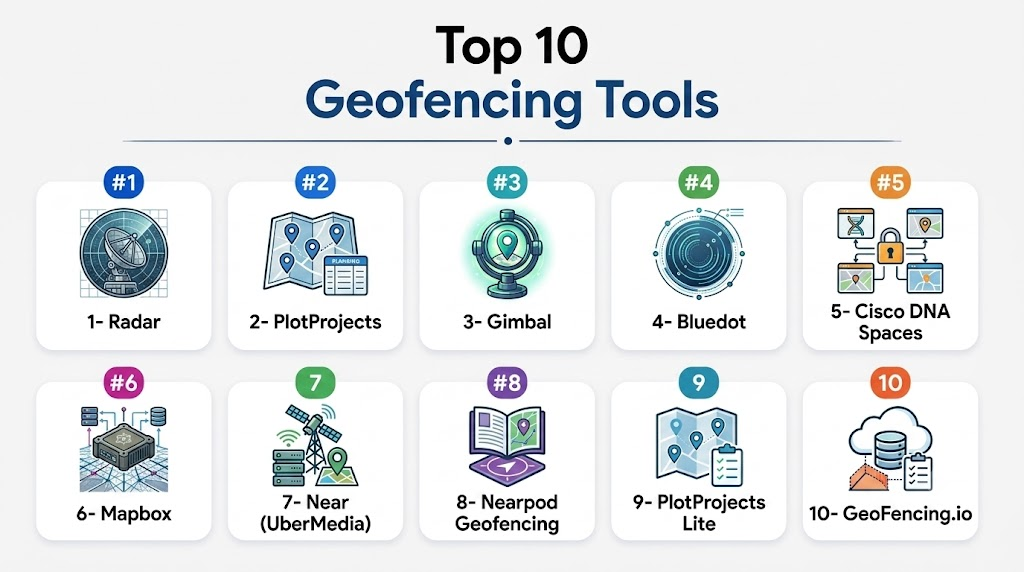
Top 10 Geofencing Tools
1- Radar
Short description : Radar enables developers and marketers to trigger real-time location events for mobile apps. It’s ideal for businesses seeking location-based notifications and tracking.
Key Features
- Real-time geofence triggers and events
- Geolocation SDKs for iOS and Android
- Customizable notifications and actions
- Location analytics and insights dashboards
- Webhooks and API integrations for workflow automation
- Low-power geolocation tracking
Pros
- Easy SDK integration for mobile apps
- Real-time, high-accuracy geolocation events
Cons
- Advanced analytics require higher-tier plans
- Limited offline geofencing support
Platforms / Deployment
- iOS, Android, Web
- Cloud
Security & Compliance
- Encryption in transit
- Not publicly stated for SOC 2 / ISO 27001
Integrations & Ecosystem
Radar integrates with marketing platforms, CRMs, and workflow automation tools.
- Salesforce
- HubSpot
- Zapier
- Custom API support
Support & Community
- Developer documentation and SDK guides
- Email and ticket support
- Community forums for developers
2- PlotProjects
Short description : PlotProjects provides geofencing solutions for enterprise apps, enabling location-based marketing, push notifications, and operational alerts.
Key Features
- Geofence event triggers
- Mobile SDK for iOS and Android
- Custom push notifications
- Location analytics dashboards
- API access for external integrations
Pros
- High scalability for enterprise deployments
- Flexible event triggers and reporting
Cons
- Interface can be complex for beginners
- Some features limited to higher-tier subscriptions
Platforms / Deployment
- iOS, Android, Web
- Cloud
Security & Compliance
- Encryption at rest and in transit
- GDPR compliant
Integrations & Ecosystem
- Marketing automation tools
- Custom APIs
- Webhooks for workflow automation
Support & Community
- Online documentation and developer support
- Enterprise support plans available
3- Geofencing by Gimbal
Short description : Gimbal offers geofencing and proximity marketing solutions using BLE beacons and GPS for customer engagement and analytics.
Key Features
- BLE and GPS geofencing
- Proximity marketing automation
- Analytics and customer insights
- Mobile SDKs for app integration
- API access for third-party integration
Pros
- Supports both BLE and GPS geofences
- Rich analytics for marketing insights
Cons
- Hardware-dependent for beacon-based features
- Pricing can be steep for SMBs
Platforms / Deployment
- iOS, Android
- Cloud
Security & Compliance
- Data encryption and SSO
- GDPR and CCPA compliant
Integrations & Ecosystem
- Marketing platforms
- Analytics tools
- CRM systems
Support & Community
- Documentation and developer guides
- Email and phone support
4- Bluedot
Short description : Bluedot provides location-based services for retail, logistics, and enterprise apps with precise geofencing and real-time triggers.
Key Features
- Highly accurate geofencing
- Real-time location event triggers
- Mobile SDKs and APIs
- Analytics and reporting dashboards
- Workflow automation
Pros
- Precision geolocation ideal for retail and logistics
- Scalable for enterprise applications
Cons
- Integration setup requires technical expertise
- Limited low-tier plans for smaller teams
Platforms / Deployment
- iOS, Android, Web
- Cloud
Security & Compliance
- TLS encryption, SSO support
- Not publicly stated for certifications
Integrations & Ecosystem
- Mobile apps, CRMs, messaging platforms
- Webhooks and APIs
Support & Community
- Developer documentation
- Email support
5- Cisco DNA Spaces
Short description : Cisco DNA Spaces provides enterprise-grade geofencing with location analytics and engagement tools, optimized for large organizations.
Key Features
- Location-based alerts and automation
- Integration with Cisco network infrastructure
- Analytics dashboards
- Real-time visitor insights
- API and SDK for developers
Pros
- Enterprise-grade reliability
- Strong analytics and network integration
Cons
- Complex setup for smaller deployments
- Premium pricing
Platforms / Deployment
- Web, iOS, Android
- Cloud
Security & Compliance
- Enterprise-grade encryption
- SOC 2, GDPR, ISO 27001
Integrations & Ecosystem
- Cisco network products
- CRM and marketing tools
- API integrations
Support & Community
- Enterprise support with SLAs
- Extensive documentation
6- Mapbox
Short description : Mapbox offers geofencing through its Maps SDKs, enabling developers to trigger events based on location in custom apps and services.
Key Features
- Custom geofencing with Maps SDK
- Mobile and web SDK support
- Event triggers and notifications
- Analytics and location tracking
- Integration APIs
Pros
- Developer-focused with high customization
- Powerful mapping and visualization tools
Cons
- Requires coding expertise
- Geofencing features may need additional setup
Platforms / Deployment
- iOS, Android, Web
- Cloud
Security & Compliance
- Encryption in transit
- Not publicly stated for certifications
Integrations & Ecosystem
- APIs for custom apps
- Workflow automation platforms
- CRMs
Support & Community
- Developer forums
- Documentation and SDK guides
7- UberMedia (Near)
Short description : UberMedia provides consumer and enterprise geofencing solutions with location intelligence and audience engagement capabilities.
Key Features
- Mobile location SDK
- Real-time geofence triggers
- Audience segmentation
- Analytics dashboards
- API and webhook support
Pros
- Strong mobile audience targeting
- Detailed engagement metrics
Cons
- Focused on marketing; less suitable for logistics
- Data privacy limitations for small teams
Platforms / Deployment
- iOS, Android
- Cloud
Security & Compliance
- Data encryption, privacy controls
- GDPR compliant
Integrations & Ecosystem
- Marketing platforms
- CRM integration
- API extensibility
Support & Community
- Documentation and onboarding guides
- Email support
8- Nearpod Geofencing
Short description : Nearpod Geofencing offers location-based notifications and engagement solutions, mainly for retail, events, and educational apps.
Key Features
- Real-time geofence notifications
- Event-triggered messages
- Analytics for engagement
- Mobile SDK support
- API integrations
Pros
- Easy deployment for marketing campaigns
- Simple interface for non-technical users
Cons
- Limited advanced automation
- Smaller integration ecosystem
Platforms / Deployment
- iOS, Android
- Cloud
Security & Compliance
- Encryption at rest and in transit
- Not publicly stated for certifications
Integrations & Ecosystem
- CRMs, marketing automation tools
- APIs for external workflows
- Limited third-party apps
Support & Community
- Online documentation
- Email support
9- PlotProjects Lite
Short description : Lite version of PlotProjects tailored for SMBs and developers, providing simplified geofencing and mobile notifications.
Key Features
- Simple geofence creation
- Mobile SDK support
- Event-triggered notifications
- Basic analytics dashboard
- API access
Pros
- Affordable for SMBs
- Easy to implement
Cons
- Limited analytics and enterprise features
- Lower scalability
Platforms / Deployment
- iOS, Android
- Cloud
Security & Compliance
- Data encryption
- GDPR compliant
Integrations & Ecosystem
- APIs for custom apps
- Webhooks
- Basic CRM integrations
Support & Community
- Documentation and community support
- Email assistance
10- GeoFencing.io
Short description : GeoFencing.io offers a developer-friendly geofencing platform for mobile apps with real-time triggers and automation.
Key Features
- Real-time location triggers
- SDK for iOS and Android
- Analytics and reporting
- API and webhook support
- Multi-geofence support
Pros
- Developer-friendly APIs
- Lightweight and easy to integrate
Cons
- Limited marketing automation
- Smaller support community
Platforms / Deployment
- iOS, Android, Web
- Cloud
Security & Compliance
- TLS encryption
- Not publicly stated for certifications
Integrations & Ecosystem
- API for mobile apps
- Webhooks for workflow automation
- Basic CRM integrations
Support & Community
- Developer documentation
- Email support
Comparison Table (Top 10)
| Tool Name | Best For | Platform(s) Supported | Deployment | Standout Feature | Public Rating |
|---|---|---|---|---|---|
| Radar | Mobile apps & retail | iOS, Android, Web | Cloud | Real-time triggers | N/A |
| PlotProjects | Enterprise apps | iOS, Android, Web | Cloud | Scalable geofencing | N/A |
| Gimbal | Marketing & proximity | iOS, Android | Cloud | BLE + GPS geofences | N/A |
| Bluedot | Retail & logistics | iOS, Android, Web | Cloud | Precision geolocation | N/A |
| Cisco DNA Spaces | Enterprise | iOS, Android, Web | Cloud | Network integration | N/A |
| Mapbox | Developer apps | iOS, Android, Web | Cloud | Custom maps & SDK | N/A |
| UberMedia (Near) | Mobile marketing | iOS, Android | Cloud | Audience segmentation | N/A |
| Nearpod Geofencing | Retail/events | iOS, Android | Cloud | Engagement campaigns | N/A |
| PlotProjects Lite | SMBs/developers | iOS, Android | Cloud | Simplified geofencing | N/A |
| GeoFencing.io | Developer apps | iOS, Android, Web | Cloud | Multi-geofence support | N/A |
Evaluation & Scoring of Geofencing Tools
| Tool Name | Core (25%) | Ease (15%) | Integrations (15%) | Security (10%) | Performance (10%) | Support (10%) | Value (15%) | Weighted Total |
|---|---|---|---|---|---|---|---|---|
| Radar | 9 | 8 | 8 | 7 | 8 | 7 | 8 | 8.1 |
| PlotProjects | 8 | 7 | 8 | 7 | 8 | 7 | 7 | 7.6 |
| Gimbal | 8 | 7 | 7 | 7 | 7 | 6 | 7 | 7.3 |
| Bluedot | 9 | 7 | 7 | 7 | 8 | 6 | 7 | 7.6 |
| Cisco DNA Spaces | 9 | 6 | 8 | 9 | 9 | 8 | 7 | 8.2 |
| Mapbox | 8 | 7 | 8 | 7 | 7 | 7 | 7 | 7.5 |
| UberMedia (Near) | 8 | 7 | 7 | 7 | 7 | 6 | 7 | 7.2 |
| Nearpod Geofencing | 7 | 8 | 6 | 6 | 6 | 6 | 7 | 6.7 |
| PlotProjects Lite | 6 | 8 | 6 | 6 | 6 | 6 | 8 | 6.7 |
| GeoFencing.io | 7 | 7 | 6 | 6 | 7 | 6 | 7 | 6.8 |
Which Geofencing Tool Is Right for You?
Solo / Freelancer
- Radar or GeoFencing.io for lightweight mobile app integration
- Mapbox for developers seeking full SDK customization
SMB
- PlotProjects Lite for cost-effective deployment
- Nearpod Geofencing for marketing campaigns
Mid-Market
- Bluedot or PlotProjects for more advanced analytics and multi-location management
Enterprise
- Cisco DNA Spaces for large-scale, multi-location geofencing
- Gimbal for BLE-based proximity campaigns
Budget vs Premium
- Lite or GeoFencing.io for budget-conscious deployments
- Cisco DNA Spaces or Radar for premium enterprise features
Feature Depth vs Ease of Use
- Mapbox for maximum developer customization
- Nearpod Geofencing for simplified ease of use
Integrations & Scalability
- PlotProjects and Cisco DNA Spaces for enterprise integrations and IoT workflows
Security & Compliance Needs
- Cisco DNA Spaces and Gimbal for strong compliance and enterprise security
Frequently Asked Questions (FAQs)
1- What pricing models do geofencing tools use?
Most geofencing tools offer tiered subscription plans based on the number of geofences, devices, or events. Some developer-focused platforms have pay-as-you-go options.
2- How difficult is onboarding for these tools?
Onboarding ranges from simple SDK integration (Radar, GeoFencing.io) to more complex enterprise setups (Cisco DNA Spaces, Bluedot) that may require dedicated support.
3- Can geofencing work offline?
Most tools rely on GPS or BLE signals and need active connectivity. Some platforms cache location events but offline functionality is limited.
4- Are these tools GDPR and CCPA compliant?
Many enterprise-focused tools have GDPR/CCPA compliance, but smaller or developer-focused platforms may require user-implemented privacy measures.
5- How scalable are these tools?
Enterprise platforms like Cisco DNA Spaces and PlotProjects scale across regions and thousands of geofences, while SMB-focused tools like PlotProjects Lite are best for smaller deployments.
6- What integrations are common?
Geofencing tools integrate with mobile apps, CRMs, marketing automation, analytics platforms, and workflow systems through APIs and webhooks.
7- Can geofencing improve marketing campaigns?
Yes, tools like Gimbal, Radar, and Nearpod Geofencing provide location-triggered notifications to enhance engagement and conversion rates.
8- How accurate is geofencing location detection?
Accuracy varies by technology: GPS is generally accurate within meters outdoors, BLE beacons excel indoors, and Wi-Fi triangulation offers medium precision.
9- Can I switch between geofencing tools easily?
Switching is possible but may require SDK updates, reconfiguration of geofences, and migration of analytics data. Planning and testing are advised.
10- Are geofencing tools suitable for logistics and field operations?
Absolutely. Tools like Bluedot, PlotProjects, and Cisco DNA Spaces are widely used to track vehicles, technicians, and assets in real time for operational efficiency.
Conclusion
Geofencing tools are essential for businesses seeking precise location-based engagement and operational efficiency. They enable real-time alerts, automated workflows, and actionable insights for marketing, logistics, and field operations. Selecting the right tool depends on company size, technical expertise, and integration needs. Enterprise platforms offer scalability and advanced analytics, while SMB and developer-focused tools provide cost-effective simplicity. Security, compliance, and ease of use are critical evaluation factors. To maximize ROI, test a pilot with 2–3 shortlisted tools in real-world scenarios. Finally, validate performance, integrations, and compliance before full deployment.

Find Trusted Cardiac Hospitals
Compare heart hospitals by city and services — all in one place.
Explore Hospitals
Geofencing tools are most effective when they combine location-based triggers with real-time analytics and automation. By enabling organizations to define virtual boundaries, these platforms help improve customer engagement, enhance security, and support smarter decision-making in logistics, marketing, and field operations.