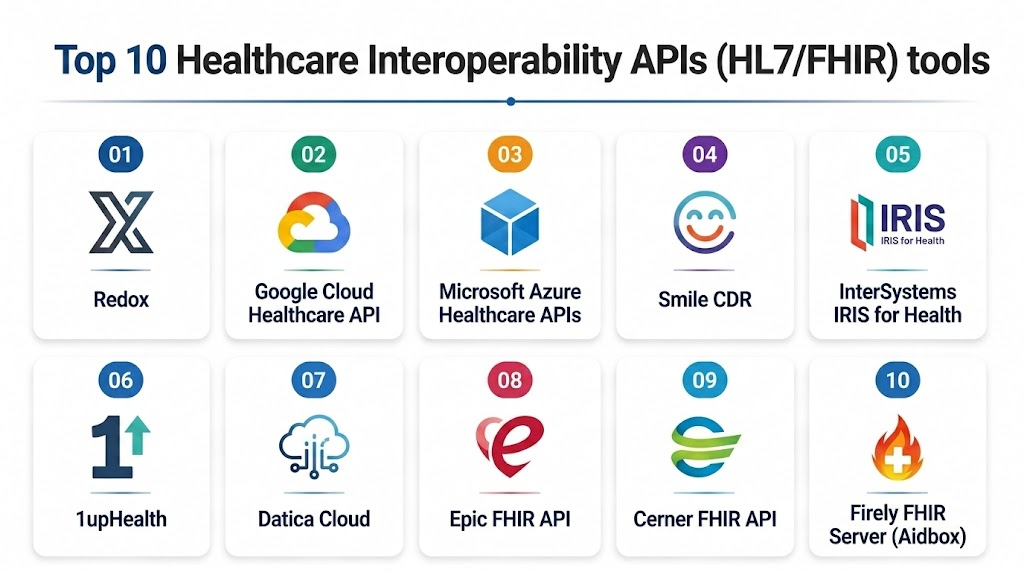
Introduction
Healthcare Interoperability APIs, particularly those built around HL7 and FHIR standards, are the backbone of modern digital health ecosystems. In plain terms, these APIs allow healthcare applications, electronic health records (EHRs), devices, and patient apps to share structured medical data seamlessly and securely. As healthcare providers increasingly rely on digital tools for patient management, remote monitoring, and predictive analytics, interoperability ensures that critical information flows efficiently across systems. the pressure for real-time data exchange, AI-driven clinical insights, and regulatory compliance has made HL7/FHIR APIs more important than ever. Hospitals, clinics, insurers, and health tech companies need standards-based APIs to reduce operational friction, improve care coordination, and enable data-driven decision-making.
Real-world use cases include:
- EHR integration: Syncing patient records across multiple hospital systems for a unified patient view.
- Telemedicine apps: Real-time access to medical histories, lab results, and prescriptions.
- Population health analytics: Aggregating anonymized patient data to drive public health strategies.
- Medical device integration: Connecting wearable and in-hospital devices to EHRs for monitoring vital signs.
- Patient-facing portals: Allowing patients to view their records, schedule appointments, and communicate securely with providers.
Evaluation Criteria for Buyers:
- Compliance with HL7/FHIR standards and profiles
- API performance, reliability, and latency
- Security and privacy (HIPAA, GDPR, SOC 2)
- Ease of integration with existing EHRs, apps, and devices
- Support for real-time and batch data exchange
- Extensibility and developer ecosystem
- Documentation quality and onboarding support
- Pricing and licensing model
- Community adoption and third-party integrations
- Scalability for multi-site or enterprise deployments
Mandatory paragraph
- Best for: Healthcare IT teams, digital health startups, hospital systems, insurance companies, and developers building patient apps or integrating medical devices.
- Not ideal for: Organizations with minimal patient data exchange needs or those relying on proprietary systems without plans for cross-platform interoperability.
Key Trends in Healthcare Interoperability APIs
- AI-driven data normalization: APIs increasingly include AI to map, validate, and transform non-standard data into FHIR-compliant formats.
- Cloud-native EHR integrations: SaaS EHRs now support FHIR-first APIs for seamless cloud-to-cloud data exchange.
- Enhanced patient consent management: APIs integrate consent workflows for GDPR/HIPAA-compliant sharing.
- Device-to-EHR connectivity: Direct FHIR-enabled device feeds from wearables and IoT medical devices.
- API-first health platforms: Hospitals and insurers favor platforms with open FHIR APIs over proprietary interfaces.
- Event-driven architectures: Real-time streaming APIs replace batch transfers for lab results, vitals, and medication updates.
- Smart contract and blockchain pilots: Some APIs include verifiable data exchange and audit trails.
- Standardized terminologies: SNOMED CT, LOINC, and ICD-11 mappings embedded in API payloads.
- Cross-border compliance frameworks: APIs now support multi-jurisdictional healthcare regulations.
- Developer experience focus: Improved sandbox environments, SDKs, and documentation for faster integrations.
How We Selected These Tools (Methodology)
- Reviewed market adoption and mindshare among healthcare providers and tech vendors.
- Assessed feature completeness, including read/write capabilities, batch vs real-time support, and terminologies.
- Analyzed reliability signals, including uptime SLAs and latency performance benchmarks.
- Evaluated security posture, such as encryption, RBAC, audit logging, and regulatory compliance.
- Checked integrations and ecosystem, including plug-ins, SDKs, and marketplace adoption.
- Considered customer fit across solo developers, SMB health apps, mid-market hospitals, and enterprise health systems.
- Verified documentation quality and support channels.
- Observed scalability and multi-site deployments suitability.
- Factored open-source contributions and community activity where relevant.
- Compared pricing transparency and licensing flexibility.
Top 10 Healthcare Interoperability APIs
1- Redox
Short description: Redox provides a cloud-based interoperability API connecting healthcare systems, apps, and devices to EHRs for real-time and batch data exchange.
Key Features
- FHIR-compliant read/write APIs
- EHR adapters for major systems (Epic, Cerner, Allscripts)
- Event-driven data streaming
- HL7 v2 and CDA mapping
- Secure patient identity matching
- Audit and monitoring dashboards
Pros
- Broad EHR connectivity reduces custom integration work
- Reliable data delivery with monitoring and retry mechanisms
Cons
- Cloud-only solution may limit on-prem deployments
- Premium pricing may not suit smaller startups
Platforms / Deployment
- Web
- Cloud
Security & Compliance
- HIPAA, SOC 2
- Encryption at rest and in transit
- RBAC and audit logs
Integrations & Ecosystem
Redox supports wide integration with EHRs, payer platforms, telemedicine apps, and analytics tools.
- Epic, Cerner, Allscripts, AthenaHealth
- Telehealth apps
- Population health platforms
- Custom developer SDKs
Support & Community
- Comprehensive documentation and onboarding
- Dedicated integration support tiers
- Active developer community
2- Google Cloud Healthcare API
Short description: Google Cloud Healthcare API offers HL7, FHIR, and DICOM data services for secure, scalable medical data exchange and analytics.
Key Features
- Full HL7 v2, FHIR, DICOM support
- Cloud-native, scalable API endpoints
- AI/ML integration with BigQuery and Vertex AI
- Audit logging and policy enforcement
- Consent and de-identification tools
Pros
- Excellent scalability and cloud reliability
- Tight integration with Google Cloud analytics and AI services
Cons
- Requires cloud expertise for setup
- May be overkill for small clinics
Platforms / Deployment
- Web
- Cloud
Security & Compliance
- HIPAA, SOC 2, ISO 27001, GDPR
- Encryption in transit and at rest
- Identity and Access Management integration
Integrations & Ecosystem
- Cloud-native tools (BigQuery, Vertex AI)
- HL7/FHIR bridges to on-prem systems
- Healthcare analytics platforms
- Telemedicine and device data ingestion
Support & Community
- Extensive documentation, tutorials, and sample code
- Google Cloud support plans
- Large community and Stack Overflow presence
3- Microsoft Azure Healthcare APIs
Short description: Azure Healthcare APIs provide FHIR, DICOM, and HL7 services for hospitals, insurers, and health apps, enabling secure interoperable data exchange.
Key Features
- FHIR and HL7 v2 ingestion
- Managed DICOM services
- Azure AI and analytics integration
- Role-based access controls
- Audit logging and monitoring
Pros
- Seamless Azure ecosystem integration
- Strong security and compliance controls
Cons
- Complex pricing structure
- May require Azure expertise for optimal usage
Platforms / Deployment
- Web
- Cloud / Hybrid
Security & Compliance
- HIPAA, SOC 2, ISO 27001
- Encryption, RBAC, and audit logging
Integrations & Ecosystem
- Azure Synapse, Power BI, and ML pipelines
- EHR system connectors
- Telehealth and patient apps
Support & Community
- Extensive Microsoft documentation
- Support tiers with enterprise SLAs
- Active developer forums
4- Smile CDR
Short description: Smile CDR is a FHIR-based clinical data repository platform that offers HL7/FHIR API access and EHR interoperability for healthcare organizations.
Key Features
- Full FHIR server support
- HL7 v2 ingestion
- Terminology services (SNOMED CT, LOINC)
- Consent and audit modules
- API extensions and plugin support
Pros
- Highly customizable FHIR server
- Supports both cloud and on-prem deployments
Cons
- Requires FHIR expertise for advanced configuration
- Smaller community compared to public cloud providers
Platforms / Deployment
- Web
- Cloud / Self-hosted / Hybrid
Security & Compliance
- HIPAA, SOC 2
- Encryption and RBAC
- Audit logging
Integrations & Ecosystem
- Connects to EHRs and health apps
- Supports SMART on FHIR apps
- Terminology services integration
Support & Community
- Vendor documentation and enterprise support
- Developer community moderate
5- InterSystems IRIS for Health
Short description: IRIS for Health provides a multi-model FHIR-enabled platform for healthcare data integration, analytics, and real-time interoperability.
Key Features
- Native FHIR and HL7 support
- Real-time event processing
- Embedded analytics engine
- Data quality and mapping tools
- SMART on FHIR support
Pros
- Mature platform with enterprise-grade reliability
- Strong data processing and analytics capabilities
Cons
- High learning curve for smaller teams
- Cost can be significant for SMBs
Platforms / Deployment
- Web
- Cloud / Self-hosted / Hybrid
Security & Compliance
- HIPAA, SOC 2, ISO 27001
- Encryption, audit logs, RBAC
Integrations & Ecosystem
- EHR connectors
- Analytics and AI pipelines
- Telehealth integrations
Support & Community
- Professional support and training
- Documentation comprehensive
- Moderate developer community
6- 1upHealth
Short description: 1upHealth delivers a FHIR-first API platform enabling health app developers and payers to access, aggregate, and manage clinical data.
Key Features
- FHIR v4 API endpoints
- Patient data aggregation
- Consent and data-sharing management
- App marketplace support
- Developer sandbox and testing
Pros
- Developer-friendly and easy to onboard
- Focused on patient-centric APIs
Cons
- Limited HL7 v2 capabilities
- Enterprise features may require custom integration
Platforms / Deployment
- Web
- Cloud
Security & Compliance
- HIPAA-compliant
- Encryption and secure API authentication
Integrations & Ecosystem
- Patient apps, payer platforms, health analytics tools
- Supports SMART on FHIR apps
- SDKs and developer portal
Support & Community
- Developer documentation and sandbox
- Email support and enterprise support tiers
- Active community
7- Datica Cloud
Short description: Datica Cloud offers a secure, compliant environment with FHIR and HL7 APIs for integrating digital health solutions with EHR systems.
Key Features
- FHIR API for read/write
- HL7 v2 messaging support
- HIPAA-compliant infrastructure
- API monitoring and logging
- Pre-built EHR connectors
Pros
- Strong compliance and security focus
- Simplifies EHR integration
Cons
- Limited analytics features
- Platform cost may be high for SMBs
Platforms / Deployment
- Web
- Cloud
Security & Compliance
- HIPAA, SOC 2
- Encryption, audit logging
Integrations & Ecosystem
- Major EHRs: Epic, Cerner, Allscripts
- Telehealth and patient apps
- Analytics pipelines
Support & Community
- Documentation, onboarding support
- Email and enterprise support tiers
- Small community
8- Epic FHIR API
Short description: Epic provides its own FHIR APIs for hospitals and healthcare partners to access clinical data and integrate third-party apps.
Key Features
- FHIR-based data access
- SMART on FHIR app support
- HL7 v2 interface for legacy systems
- Patient record management
- Scheduling and lab integration
Pros
- Direct EHR vendor integration
- Supports enterprise hospital deployments
Cons
- Limited external developer flexibility
- Licensing and access requires Epic agreement
Platforms / Deployment
- Web
- Cloud / On-prem hybrid
Security & Compliance
- HIPAA, SOC 2
- RBAC, encryption, audit logs
Integrations & Ecosystem
- Epic App Orchard apps
- Telehealth and analytics tools
- FHIR apps ecosystem
Support & Community
- Vendor support and training
- Moderate external developer community
9- Cerner FHIR API
Short description: Cerner’s FHIR APIs allow hospitals and health tech providers to access and manage patient data within Cerner EHR systems.
Key Features
- FHIR v4 compliant API
- SMART on FHIR support
- Patient, medication, and encounter data access
- HL7 v2 support for legacy systems
- Integration sandbox
Pros
- Enterprise-ready EHR connectivity
- Supports broad clinical workflows
Cons
- Restricted access outside Cerner ecosystem
- Custom integration may be required
Platforms / Deployment
- Web
- Cloud / Hybrid
Security & Compliance
- HIPAA, SOC 2
- Encryption and audit logs
Integrations & Ecosystem
- Third-party health apps
- Population health tools
- Patient portals
Support & Community
- Vendor support programs
- Documentation and sandbox access
- Limited external developer community
10- Firely FHIR Server (Aidbox)
Short description: Aidbox provides a FHIR-first server platform enabling developers and healthcare organizations to build compliant interoperable applications.
Key Features
- FHIR server with read/write support
- Custom resource and workflow definitions
- Terminology services integration
- Consent and privacy modules
- Developer sandbox
Pros
- Highly flexible and developer-friendly
- Supports complex clinical workflows
Cons
- Requires technical expertise for setup
- Smaller community compared to cloud giants
Platforms / Deployment
- Web
- Cloud / Self-hosted / Hybrid
Security & Compliance
- Not publicly stated
- Supports encryption and RBAC where configured
Integrations & Ecosystem
- Connectors to EHRs
- Telehealth apps
- SMART on FHIR apps
Support & Community
- Documentation available
- Enterprise support optional
- Developer forum active
Comparison Table (Top 10)
| Tool Name | Best For | Platform(s) Supported | Deployment | Standout Feature | Public Rating |
|---|---|---|---|---|---|
| Redox | Enterprise & app integrations | Web | Cloud | Broad EHR connectivity | N/A |
| Google Cloud Healthcare API | AI-driven health analytics | Web | Cloud | FHIR + AI/ML integration | N/A |
| Microsoft Azure Healthcare APIs | Cloud-first hospital systems | Web | Cloud/Hybrid | Azure ecosystem integration | N/A |
| Smile CDR | Customizable FHIR server | Web | Cloud/Self-hosted/Hybrid | Terminology services | N/A |
| InterSystems IRIS for Health | Enterprise real-time processing | Web | Cloud/Self-hosted/Hybrid | Event-driven FHIR data | N/A |
| 1upHealth | Developer & patient-centric apps | Web | Cloud | Patient data aggregation | N/A |
| Datica Cloud | Secure, compliant integrations | Web | Cloud | HIPAA-focused API | N/A |
| Epic FHIR API | Large hospitals using Epic | Web | Cloud/Hybrid | Direct EHR integration | N/A |
| Cerner FHIR API | Hospitals with Cerner EHR | Web | Cloud/Hybrid | SMART on FHIR support | N/A |
| Firely FHIR Server (Aidbox) | Developers building FHIR apps | Web | Cloud/Self-hosted/Hybrid | Flexible custom workflows | N/A |
Evaluation & Scoring of Healthcare Interoperability APIs
| Tool Name | Core (25%) | Ease (15%) | Integrations (15%) | Security (10%) | Performance (10%) | Support (10%) | Value (15%) | Weighted Total (0–10) |
|---|---|---|---|---|---|---|---|---|
| Redox | 9 | 8 | 9 | 9 | 8 | 8 | 7 | 8.5 |
| Google Cloud Healthcare API | 9 | 7 | 8 | 9 | 9 | 7 | 8 | 8.3 |
| Microsoft Azure Healthcare APIs | 9 | 7 | 8 | 9 | 9 | 7 | 7 | 8.1 |
| Smile CDR | 8 | 7 | 7 | 8 | 8 | 6 | 7 | 7.6 |
| InterSystems IRIS for Health | 9 | 6 | 8 | 9 | 9 | 7 | 6 | 7.9 |
| 1upHealth | 8 | 9 | 7 | 8 | 8 | 7 | 8 | 8.0 |
| Datica Cloud | 7 | 7 | 6 | 9 | 7 | 6 | 6 | 7.1 |
| Epic FHIR API | 8 | 6 | 7 | 9 | 8 | 6 | 6 | 7.3 |
| Cerner FHIR API | 8 | 6 | 7 | 9 | 8 | 6 | 6 | 7.3 |
| Firely FHIR Server (Aidbox) | 8 | 7 | 7 | 7 | 7 | 6 | 7 | 7.3 |
Which Healthcare Interoperability API Is Right for You?
Solo / Freelancer
Choose 1upHealth or Firely Aidbox for flexible FHIR development and sandbox environments. Focus on developer-friendly APIs with good documentation.
SMB
Redox or Datica Cloud are ideal for small healthcare apps needing quick EHR connectivity and HIPAA compliance without large IT overhead.
Mid-Market
Smile CDR and InterSystems IRIS fit multi-clinic setups requiring FHIR server customization, analytics, and moderate-scale integrations.
Enterprise
Epic FHIR API, Cerner FHIR API, and Google Cloud Healthcare API suit large hospitals and insurers, integrating enterprise EHRs and advanced analytics.
Budget vs Premium
Freelancer or SMB solutions like 1upHealth provide low-cost, flexible options. Enterprise deployments with Redox, Epic, or Azure involve premium pricing but higher scalability and support.
Feature Depth vs Ease of Use
- High feature depth: InterSystems IRIS, Smile CDR
- Easier
onboarding: 1upHealth, Redox, Datica
Integrations & Scalability
Select cloud-native APIs (Google, Azure, Redox) for multi-site scalability and extensive third-party integration.
Security & Compliance Needs
HIPAA/SOC 2-certified platforms (Redox, Datica, Epic, Cerner) are non-negotiable for regulated healthcare environments.
Frequently Asked Questions (FAQs)
1- What pricing models do Healthcare Interoperability APIs use?
Pricing varies: cloud subscription, per-API call, or enterprise licensing. Free tiers may exist for developer sandboxes.
2- How long does implementation typically take?
Small apps can integrate in weeks; large hospital systems require months for full EHR connectivity and compliance checks.
3- Are HL7 and FHIR interchangeable?
No. HL7 v2 is older messaging standard; FHIR is modern, resource-based, and API-friendly. Many APIs support both for backward compatibility.
4- How secure are these APIs?
Top APIs implement encryption, RBAC, audit logs, and comply with HIPAA, SOC 2, and GDPR where applicable.
5- Can I switch between APIs?
Yes, but migrating involves mapping FHIR resources and possibly HL7 message transformations. Consider vendor lock-in and data normalization.
6- Do these APIs support real-time data exchange?
Most cloud-native APIs like Redox, Google Healthcare, and Azure support both real-time streaming and batch modes.
7- What are common integration mistakes?
Skipping consent management, ignoring terminologies, and underestimating latency/throughput requirements are frequent pitfalls.
8- Can I use these APIs for patient apps?
Yes. Many APIs support SMART on FHIR apps, allowing secure patient access to records, lab results, and scheduling.
9- Are there open-source FHIR servers?
Yes. Examples include Firely Aidbox, Smile CDR community edition, and HAPI FHIR server.
10- How do APIs handle multi-jurisdiction compliance?
Modern platforms include configurable consent modules and audit logging to meet HIPAA, GDPR, and local health data regulations.
Conclusion
Healthcare Interoperability APIs are critical for enabling seamless, secure, and scalable data exchange across hospitals, apps, and devices. Selection depends heavily on organization size, technical expertise, cloud strategy, and regulatory needs. While Redox and 1upHealth provide quick integration and developer-friendly environments, enterprise-grade solutions like Epic FHIR API, Cerner FHIR API, and Google Cloud Healthcare API excel in large-scale deployments with advanced analytics. Start by shortlisting 2–3 APIs, running pilot integrations, and validating security, compliance, and interoperability before committing to full-scale adoption. Investing in these APIs ensures robust, future-proof healthcare digital ecosystems.

Find Trusted Cardiac Hospitals
Compare heart hospitals by city and services — all in one place.
Explore Hospitals
Interoperability is most valuable when clinical information moves effortlessly between systems without forcing healthcare teams to re-enter or reconcile data. APIs built on modern standards can support more connected care, but long-term success also depends on consistent implementation and data quality across participating organizations.