Introduction
HR Analytics Platforms are specialized software tools that help organizations collect, process, and analyze human resources data to make data-driven decisions. These platforms transform raw HR data such as employee performance, engagement, attrition, recruitment, and learning metrics into actionable insights. HR Analytics Platforms are essential for companies navigating hybrid work models, talent shortages, and an increased focus on employee experience. Organizations rely on these platforms not only to track workforce metrics but also to predict trends, optimize workforce planning, and align HR strategy with business objectives.
Real-world use cases include:
- Identifying high-performing employees and succession planning
- Reducing attrition through predictive analytics
- Measuring the impact of learning and development programs
- Optimizing recruitment funnel efficiency
- Monitoring engagement and organizational health
What buyers should evaluate:
- Data integration capabilities with HRIS, ATS, payroll, and collaboration tools
- Predictive analytics and AI-driven insights
- Customizable dashboards and reporting
- Security and compliance features
- Scalability for different workforce sizes
- User experience and adoption rate
- ROI tracking and business alignment
- Custom metrics and KPIs
- Actionable recommendations and workflow automation
- Best for: HR leaders, people operations teams, analytics professionals, mid-to-large enterprises, and organizations seeking data-driven workforce decision-making.
- Not ideal for: Very small organizations with minimal HR operations, companies that only need basic reporting, or teams not ready to invest in structured analytics.
Key Trends in HR Analytics Platforms
- Increased use of AI and machine learning to predict attrition and performance
- Integration of employee experience metrics alongside traditional HR metrics
- Real-time dashboards and automated reporting replacing static HR reports
- Embedded analytics within collaboration and productivity tools
- Privacy-first data architecture with compliance to GDPR, CCPA, and other regional standards
- Cloud-first deployments with hybrid flexibility for global teams
- Predictive analytics for workforce planning and talent strategy
- Continuous listening and pulse survey integration for real-time insights
- Adoption of NLP for sentiment and engagement analysis
- Emphasis on measurable ROI and alignment with business KPIs
How We Selected These Tools (Methodology)
- Market adoption and recognition across HR segments
- Depth of analytics features including predictive and prescriptive capabilities
- Integration ecosystem with HRIS, ATS, payroll, and communication tools
- Security posture including SSO, encryption, and audit logging
- Scalability for SMB, mid-market, and enterprise organizations
- User interface and adoption ease
- Real-time analytics and reporting capabilities
- Vendor reliability and platform maturity
- Customization and KPI flexibility
- AI and automation support in analytics workflows
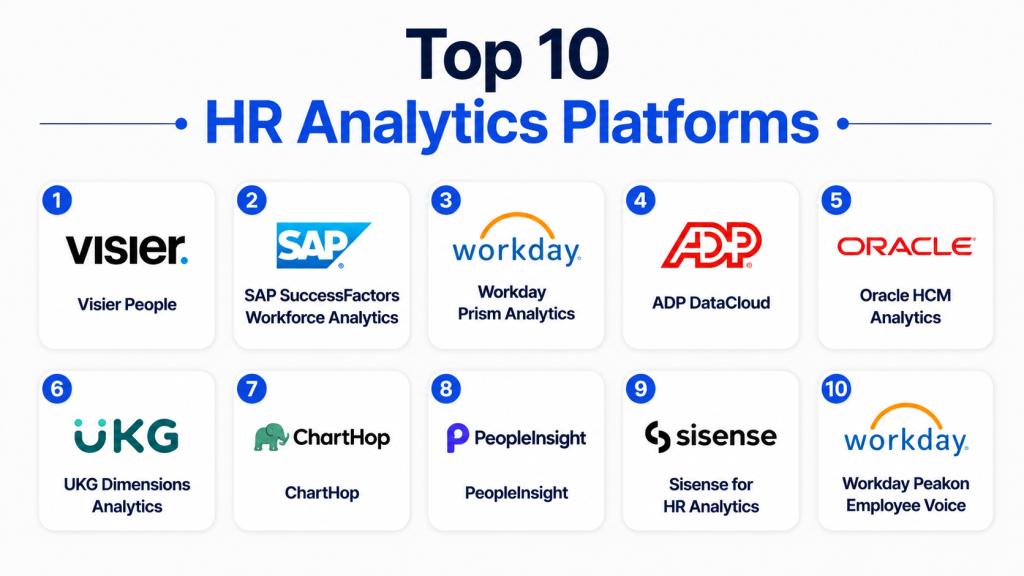
Top 10 HR Analytics Platforms
1- Visier People
Short description:
Visier People is an enterprise HR analytics platform providing deep workforce insights and predictive modeling for large organizations.
Key Features
- Workforce planning and modeling
- Predictive attrition analytics
- Customizable dashboards and reports
- Integration with HRIS and payroll systems
- Diversity, equity, and inclusion metrics
- Scenario planning and what-if analysis
- Real-time workforce insights
Pros
- Powerful predictive analytics
- Extensive reporting and visualization
- Strong enterprise scalability
Cons
- Complex setup for smaller organizations
- Higher cost for mid-market
Platforms / Deployment
- Web / Cloud
Security & Compliance
- SOC 2, GDPR
- SSO, RBAC, MFA
Integrations & Ecosystem
Connects to HRIS, payroll, ATS, and collaboration platforms:
- Workday
- SAP SuccessFactors
- Oracle HCM
- API-based integrations
Support & Community
Enterprise-level onboarding, documentation, and dedicated support.
2- SAP SuccessFactors Workforce Analytics
Short description:
SAP SuccessFactors Workforce Analytics enables global enterprises to manage HR data, measure workforce performance, and predict workforce trends.
Key Features
- Standard and custom workforce KPIs
- Predictive analytics for talent and attrition
- Executive dashboards and reporting
- Scenario planning for workforce strategy
- Integration with SAP HCM and HRIS
- Diversity and compliance metrics
- Automated insights and alerts
Pros
- Deep integration with SAP ecosystem
- Robust global workforce analytics
- Enterprise-ready reporting
Cons
- Best for organizations already in SAP
- Steep learning curve for new users
Platforms / Deployment
- Web / Cloud
Security & Compliance
- SOC 2, ISO 27001, GDPR
- SSO, audit logs
Integrations & Ecosystem
- SAP HCM, SAP SuccessFactors modules
- Microsoft Teams, Slack
- API extensibility
Support & Community
Strong support via SAP SuccessFactors network with global customer base.
3- Workday Prism Analytics
Short description:
Workday Prism Analytics enables HR and finance leaders to combine HR data with business metrics for actionable insights.
Key Features
- Data blending from multiple sources
- Predictive and prescriptive analytics
- Employee lifecycle insights
- Custom KPI dashboards
- Integration with Workday HCM and ERP
- Scenario planning
- AI-powered insights
Pros
- Unified HR and business analytics
- Strong predictive modeling
- Enterprise-grade security
Cons
- Works best within Workday ecosystem
- Limited standalone deployment flexibility
Platforms / Deployment
- Web / Cloud
Security & Compliance
- SOC 2, GDPR
- SSO, encryption, audit logs
Integrations & Ecosystem
- Workday HCM and ERP
- Collaboration tools via API
- HRIS connectors
Support & Community
Enterprise onboarding, documentation, and Workday community access.
4- ADP DataCloud
Short description:
ADP DataCloud provides workforce analytics and benchmarking to improve HR decision-making and strategy.
Key Features
- Benchmarking against industry peers
- Predictive analytics for turnover and performance
- Custom dashboards and reports
- Integration with ADP payroll and HRIS
- Workforce segmentation analytics
- Diversity and inclusion reporting
- Data-driven HR recommendations
Pros
- Easy benchmarking across industries
- Strong HR analytics foundation
- Prebuilt HR dashboards
Cons
- Limited flexibility for non-ADP clients
- Not as deep for complex predictive modeling
Platforms / Deployment
- Web / Cloud
Security & Compliance
- SOC 2, GDPR
- Encryption and role-based access
Integrations & Ecosystem
- ADP payroll, HRIS modules
- Microsoft Teams, Slack
- API access for custom workflows
Support & Community
Customer support and onboarding resources for ADP clients.
5- Oracle HCM Analytics
Short description:
Oracle HCM Analytics delivers comprehensive HR data analysis with predictive insights for global workforce management.
Key Features
- Prebuilt HR dashboards
- Predictive attrition and performance analytics
- Custom KPI reporting
- AI-powered insights
- Global workforce metrics
- HRIS and payroll integration
- Scenario and planning analytics
Pros
- Robust enterprise analytics
- AI-driven predictive capabilities
- Global compliance support
Cons
- Complex for small organizations
- High cost and setup effort
Platforms / Deployment
- Web / Cloud
Security & Compliance
- SOC 2, ISO 27001, GDPR
- SSO, RBAC, MFA
Integrations & Ecosystem
- Oracle HCM modules
- Collaboration and HRIS tools
- API integration
Support & Community
Global support, extensive documentation, and professional services.
6- UKG Dimensions Analytics
Short description:
UKG Dimensions Analytics provides real-time workforce insights and operational HR analytics for enterprises.
Key Features
- Workforce planning dashboards
- Predictive scheduling and attrition insights
- HR and operational KPI reporting
- Employee engagement metrics
- Scenario modeling
- Integration with UKG HRIS and payroll
- Customizable analytics
Pros
- Real-time workforce insights
- Strong operational focus
- Scalable for large enterprises
Cons
- Best suited for UKG clients
- Moderate learning curve
Platforms / Deployment
- Web / Cloud
Security & Compliance
- SOC 2, GDPR
- RBAC and audit logging
Integrations & Ecosystem
- UKG HRIS and payroll
- Collaboration tools
- API access
Support & Community
Professional onboarding, documentation, and enterprise support.
7- Visier People
Short description:
Visier People combines HR data analytics with predictive insights for strategic workforce management.
Key Features
- Workforce analytics and visualization
- Predictive attrition and performance modeling
- Scenario planning
- Diversity and inclusion metrics
- Custom dashboards
- HRIS integrations
- AI-powered insights
Pros
- Strong predictive analytics
- Enterprise-ready
- Customizable reports
Cons
- Higher cost for smaller firms
- Steeper learning curve
Platforms / Deployment
- Web / Cloud
Security & Compliance
- SOC 2, GDPR
- SSO, encryption, audit logs
Integrations & Ecosystem
- HRIS, payroll, ATS
- Collaboration tools
- API extensibility
Support & Community
Enterprise-level support and documentation.
8- ChartHop
Short description:
ChartHop provides workforce visualization, analytics, and scenario planning for strategic HR decisions.
Key Features
- Org chart-based analytics
- Employee lifecycle dashboards
- Scenario modeling for workforce planning
- Diversity and inclusion tracking
- Integration with HRIS and ATS
- Predictive analytics
- Custom reporting
Pros
- Easy visual analytics
- Strong for mid-market and enterprise
- Real-time org insights
Cons
- Limited depth compared to larger enterprise platforms
- Feature set may be overkill for small teams
Platforms / Deployment
- Web / Cloud
Security & Compliance
- SOC 2, GDPR
- Encryption and RBAC
Integrations & Ecosystem
- Workday, BambooHR, ADP
- Slack, Teams
- API integrations
Support & Community
Onboarding and support for mid-market and enterprise clients.
9- PeopleInsight
Short description:
PeopleInsight aggregates HR data to provide actionable insights on engagement, attrition, and workforce productivity.
Key Features
- Predictive attrition analysis
- Engagement scoring and reporting
- Custom dashboards and KPIs
- HRIS integrations
- Scenario planning
- Benchmarking metrics
- AI-driven insights
Pros
- Affordable analytics for mid-market
- Easy-to-use dashboards
- Predictive workforce insights
Cons
- Smaller ecosystem than enterprise competitors
- Limited advanced analytics
Platforms / Deployment
- Web / Cloud
Security & Compliance
- SOC 2
- GDPR compliance
Integrations & Ecosystem
- HRIS and payroll systems
- Collaboration tools
- API support
Support & Community
Support via documentation and mid-market customer service.
10- Sisense for HR Analytics
Short description:
Sisense provides customizable analytics and dashboards for HR teams, combining data from multiple sources for insights.
Key Features
- Data aggregation from HRIS, payroll, ATS
- Custom dashboards and visualizations
- Predictive analytics
- KPI tracking
- AI-powered insights
- Workforce segmentation
- Scenario planning
Pros
- Highly customizable
- Integrates multiple data sources
- Strong visualizations
Cons
- Requires technical setup
- Less prebuilt HR-specific templates
Platforms / Deployment
- Web / Cloud / Hybrid
Security & Compliance
- SOC 2, GDPR
- Encryption and SSO
Integrations & Ecosystem
- HRIS, payroll, ATS
- Collaboration platforms
- APIs for custom data sources
Support & Community
Enterprise support with onboarding resources and documentation.
Comparison Table (Top 10)
| Tool Name | Best For | Platform(s) Supported | Deployment | Standout Feature | Public Rating |
|---|---|---|---|---|---|
| Visier People | Enterprise predictive analytics | Web | Cloud | Predictive modeling | N/A |
| SAP SuccessFactors Workforce Analytics | Global HR analytics | Web | Cloud | Industry benchmarking | N/A |
| Workday Prism Analytics | HR + business metrics | Web | Cloud | Data blending & predictive insights | N/A |
| ADP DataCloud | HR benchmarking | Web | Cloud | Industry comparisons | N/A |
| Oracle HCM Analytics | Enterprise workforce insights | Web | Cloud | AI-driven predictive analytics | N/A |
| UKG Dimensions Analytics | Operational workforce insights | Web | Cloud | Real-time dashboards | N/A |
| ChartHop | Org chart & scenario planning | Web | Cloud | Org chart-based analytics | N/A |
| PeopleInsight | Mid-market HR analytics | Web | Cloud | Engagement & attrition insights | N/A |
| Sisense for HR Analytics | Custom HR dashboards | Web | Cloud / Hybrid | Data aggregation & visualizations | N/A |
| Workday Peakon Employee Voice | Engagement & feedback analytics | Web | Cloud | Employee feedback + predictive analytics | N/A |
Evaluation & Scoring of HR Analytics Platforms
| Tool Name | Core (25%) | Ease (15%) | Integrations (15%) | Security (10%) | Performance (10%) | Support (10%) | Value (15%) | Weighted Total |
|---|---|---|---|---|---|---|---|---|
| Visier People | 10 | 8 | 9 | 9 | 9 | 9 | 7 | 8.8 |
| SAP SuccessFactors | 10 | 7 | 10 | 10 | 9 | 9 | 7 | 8.9 |
| Workday Prism Analytics | 10 | 7 | 9 | 9 | 9 | 9 | 7 | 8.7 |
| ADP DataCloud | 8 | 9 | 8 | 9 | 8 | 8 | 8 | 8.2 |
| Oracle HCM Analytics | 10 | 7 | 9 | 9 | 9 | 9 | 7 | 8.7 |
| UKG Dimensions Analytics | 9 | 8 | 8 | 9 | 8 | 8 | 8 | 8.2 |
| ChartHop | 8 | 9 | 8 | 8 | 8 | 8 | 8 | 8.1 |
| PeopleInsight | 8 | 9 | 7 | 8 | 8 | 8 | 9 | 8.2 |
| Sisense for HR Analytics | 9 | 7 | 9 | 9 | 8 | 8 | 8 | 8.2 |
| Workday Peakon | 9 | 8 | 9 | 9 | 8 | 8 | 8 | 8.3 |
Which HR Analytics Tool Is Right for You?
Solo / Freelancer
- ChartHop, PeopleInsight
- Lightweight analytics with easy dashboards
SMB
- ADP DataCloud, ChartHop, PeopleInsight
- Mid-market focus with predictive insights and ease of use
Mid-Market
- Sisense, Workday Peakon, ChartHop
- Balance of analytics depth and adoption ease
Enterprise
- Visier People, SAP SuccessFactors, Workday Prism, Oracle HCM Analytics
- Advanced analytics, predictive modeling, global compliance
Budget vs Premium
- Budget: PeopleInsight, ChartHop
- Premium: SAP SuccessFactors, Visier, Oracle HCM
Feature Depth vs Ease of Use
- Depth: Visier, SAP, Workday Prism
- Ease: ChartHop, PeopleInsight
Integrations & Scalability
- Enterprise: SAP, Workday, Oracle
- Mid-market: ChartHop, PeopleInsight
- Small teams: lightweight integrations sufficient
Security & Compliance Needs
- Enterprise: SOC 2, ISO, GDPR, RBAC required (Visier, SAP, Oracle)
- Mid-market: Standard encryption and SSO sufficient
Frequently Asked Questions (FAQs)
1- What are HR Analytics Platforms used for?
They analyze HR and workforce data to provide insights on engagement, performance, attrition, and workforce planning. They support strategic HR decisions.
2- How do these platforms integrate with existing HR systems?
Most connect with HRIS, ATS, payroll, and collaboration tools. API integrations allow custom workflows and data aggregation.
3- Are HR Analytics Platforms suitable for small businesses?
Yes, but some enterprise-grade platforms may be too complex or expensive. Tools like ChartHop or PeopleInsight suit SMBs better.
4- What security measures are standard in HR Analytics Platforms?
Encryption, SSO/SAML, audit logs, RBAC, and compliance with SOC 2, GDPR, ISO 27001 are common in enterprise tools.
5- Can these platforms predict employee attrition?
Yes, AI and predictive analytics detect attrition risks based on engagement, performance, and demographic data.
6- How long does implementation take?
Depends on complexity. SMB tools may deploy in days; enterprise platforms often require weeks for configuration and integration.
7- Do these platforms support real-time reporting?
Yes, most provide dashboards with real-time or near-real-time updates for workforce metrics.
8- Are custom KPIs possible?
Yes, platforms allow organizations to define metrics aligned to their HR and business objectives.
9- Can these platforms handle global workforces?
Enterprise-grade platforms like SAP, Workday, and Visier support multi-region and multi-language deployments with compliance features.
10- What is the ROI of HR Analytics Platforms?
ROI comes from better workforce planning, reduced attrition, improved engagement, and data-driven HR decisions. Savings and efficiency vary by adoption.
Conclusion
HR Analytics Platforms are essential for organizations seeking to leverage workforce data to improve decision-making and optimize performance, and choosing the right platform depends on company size, complexity, and integration needs, while smaller businesses may prefer lightweight tools and enterprises may require predictive and AI-driven analytics, and running a pilot with 2–3 shortlisted tools helps validate usability, security, and data integration, ensuring actionable insights and adoption, which ultimately leads to improved employee engagement, retention, and strategic workforce planning across the organization.

Find Trusted Cardiac Hospitals
Compare heart hospitals by city and services — all in one place.
Explore Hospitals
HR analytics platforms deliver the greatest value when they transform workforce data into meaningful insights for strategic decision-making. By combining metrics related to hiring, retention, performance, and employee trends, these solutions help organizations improve talent planning, identify challenges early, and build more effective HR strategies.