Introduction
In software quality is non-negotiable, and Test Case Management Tools are the backbone of delivering reliable, high-performing applications. These platforms go beyond simple tracking—they empower QA teams, developers, and product managers to plan, execute, and analyze tests seamlessly, ensuring faster releases with minimal risk.From complex web applications to mobile apps and API-driven platforms, test case management ensures every requirement is covered, defects are traceable, and teams can collaborate efficiently. Real-world use cases include automating regression testing for large-scale projects, integrating with CI/CD pipelines, managing test execution across remote teams, maintaining audit-ready compliance records, and improving visibility into test coverage for stakeholders.
Key evaluation criteria include test case organization, reporting and analytics, CI/CD integration, automation support, team collaboration, scalability, platform compatibility, compliance and security, ease of use, and pricing flexibility.
Best for: QA teams, DevOps engineers, product managers, and IT leaders in SMBs, mid-market companies, and enterprises looking to optimize testing workflows.
Not ideal for: Small projects with minimal testing needs or teams relying on informal, manual test tracking.
Key Trends in Test Case Management Tools
- AI-powered test case generation and optimization for smarter coverage
- CI/CD pipeline integration for automated regression and functional testing
- Cloud-first platforms enabling distributed QA teams and real-time collaboration
- Low-code or codeless test creation for rapid adoption by non-technical testers
- Multi-platform support for web, mobile, and API testing
- Advanced dashboards and real-time analytics for actionable insights
- Agile and DevOps alignment with sprint tracking and workflow automation
- Enhanced security features including SSO, MFA, and audit logs
- Flexible subscription and usage-based pricing models
- Ecosystem interoperability with bug trackers, automation frameworks, and collaboration tools
How We Selected These Tools (Methodology)
- Market adoption, popularity, and mindshare evaluation
- Assessment of feature completeness across manual and automated testing
- Reliability and performance metrics from enterprise and SMB deployments
- Verification of security features and regulatory compliance support
- Ecosystem and integration capabilities with CI/CD, Jira, Git, and automation frameworks
- Customer fit across team sizes and industry requirements
- Vendor support quality and documentation clarity
- Ease of adoption and learning curve for new users
- Deployment flexibility including cloud, on-premise, and hybrid options
- Cost-to-value analysis across different organizational scales
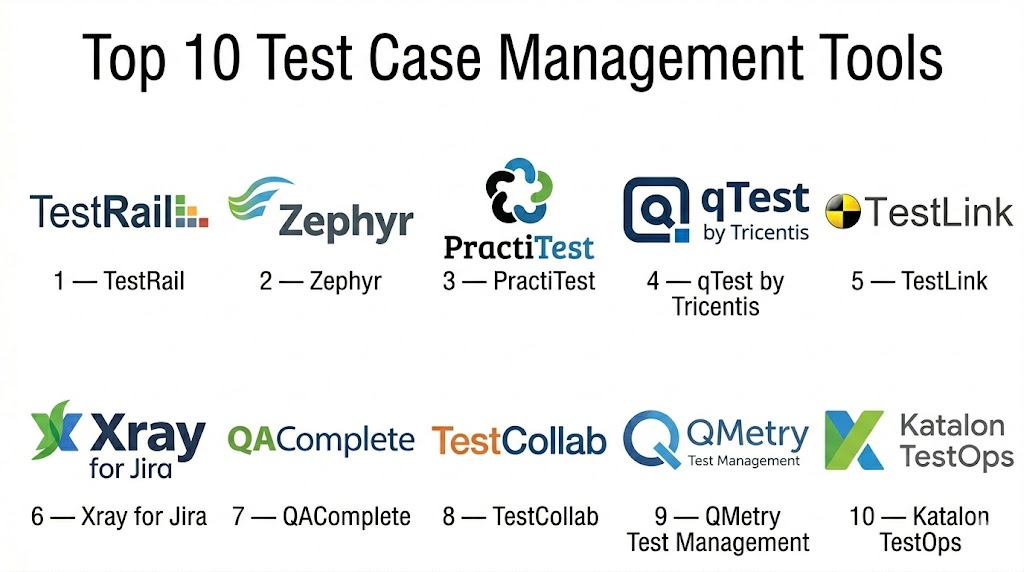
Top 10 Test Case Management Tools
#1 — TestRail
Short description: TestRail centralizes test planning, execution, and reporting for large QA teams. It supports manual and automated testing while offering deep analytics and customizable dashboards to track progress.
Key Features
- Centralized test case repository
- Advanced reporting and real-time dashboards
- Seamless integration with Jira, GitHub, and CI/CD pipelines
- Milestone tracking and test run management
- Parallel execution and customizable workflows
- Requirement and defect linking
- Test coverage analytics
Pros
- Enterprise-grade scalability
- Rich reporting for actionable insights
Cons
- Subscription-based pricing
- Advanced features have a learning curve
Platforms / Deployment
- Web
- Cloud / Self-hosted / Hybrid
Security & Compliance
- SSO/SAML, MFA
- Not publicly stated
Integrations & Ecosystem
- Jira, GitHub, Jenkins
- Selenium, Appium, CI/CD pipelines
- Slack notifications
Support & Community
- Vendor support and training
- Active user community with forums
#2 — Zephyr
Short description: Zephyr integrates tightly with Jira, offering a test management solution for Agile and DevOps teams to plan, execute, and track test cycles efficiently.
Key Features
- Native Jira integration
- Test cycle planning and execution
- Automated and manual test management
- Real-time dashboards and reporting
- Requirement and defect traceability
- Cross-project visibility
- API access for automation frameworks
Pros
- Seamless Jira-native experience
- Enterprise-ready with Agile support
Cons
- Premium pricing for enterprise features
- UI may require time to master
Platforms / Deployment
- Web
- Cloud / Self-hosted
Security & Compliance
- SSO/SAML
- Not publicly stated
Integrations & Ecosystem
- Jenkins, CI/CD pipelines
- Selenium, Appium
- Slack and email notifications
Support & Community
- Vendor support and documentation
- Community forums for user collaboration
#3 — PractiTest
Short description: PractiTest emphasizes traceability, offering end-to-end visibility across testing projects. It supports Agile, DevOps, and regulated environments with real-time dashboards and analytics.
Key Features
- Hierarchical test case organization
- Requirement and defect linking
- Real-time dashboards and reporting
- API for automation integration
- Agile and DevOps workflow support
- Collaboration and role-based access
- Test coverage metrics
Pros
- Strong traceability and reporting
- Supports Agile and regulated workflows
Cons
- Premium subscription costs
- Learning curve for advanced analytics
Platforms / Deployment
- Web
- Cloud
Security & Compliance
- SSO/SAML, MFA
- Not publicly stated
Integrations & Ecosystem
- Jira, GitLab, Jenkins
- Selenium, TestNG
- Slack, CI/CD integration
Support & Community
- Vendor support and training resources
- Active user community
#4 — qTest by Tricentis
Short description: qTest provides enterprise-grade test management with deep CI/CD and automation integration for large DevOps teams.
Key Features
- Agile and DevOps workflow alignment
- Centralized test case repository
- Real-time dashboards and reporting
- Automation framework integration
- Risk-based testing and requirement mapping
- Collaboration tools
- Cross-project visibility
Pros
- Enterprise-ready with robust automation support
- Real-time metrics for better QA insights
Cons
- High cost for large deployments
- Complex initial setup
Platforms / Deployment
- Web
- Cloud / Self-hosted
Security & Compliance
- SSO/SAML, MFA
- Not publicly stated
Integrations & Ecosystem
- Selenium, Jenkins, Jira
- CI/CD pipelines and Git
- Slack notifications
Support & Community
- Vendor support and documentation
- Enterprise-grade training programs
#5 — TestLink
Short description: TestLink is an open-source platform providing basic test case management, supporting both manual and automated test workflows.
Key Features
- Manual and automated test management
- Requirement traceability
- Test plan and milestone tracking
- Basic reporting and metrics
- Integration with Jira, Bugzilla, Selenium
- Role and user management
Pros
- Free and highly customizable
- Community-driven support
Cons
- Outdated interface
- Limited advanced analytics
Platforms / Deployment
- Web
- Self-hosted
Security & Compliance
- Not publicly stated
Integrations & Ecosystem
- Jira, Bugzilla, Selenium
- CI/CD integration via APIs
Support & Community
- Community forums and documentation
#6 — Xray for Jira
Short description: Xray is a Jira-native test management plugin supporting both manual and automated testing with full traceability.
Key Features
- Jira-native interface
- Test execution and planning
- Automation framework integration
- CI/CD support
- Requirement mapping
- Test environment management
- Reporting and analytics
Pros
- Seamless integration with Jira
- Supports manual and automated tests
Cons
- Requires Jira environment
- Paid subscription
Platforms / Deployment
- Web
- Cloud / Self-hosted
Security & Compliance
- SSO/SAML
- Not publicly stated
Integrations & Ecosystem
- Selenium, Jenkins, CI/CD tools
- Jira workflows
Support & Community
- Vendor support and active community
#7 — QAComplete
Short description: QAComplete provides centralized test management with planning, execution, and reporting features for Agile and Waterfall projects.
Key Features
- Test case management
- Requirement mapping
- Defect tracking
- Reporting dashboards
- Automation integration
- Collaboration and role-based access
- Multi-project support
Pros
- Flexible workflows
- Strong reporting and analytics
Cons
- Commercial licensing
- Complex initial setup
Platforms / Deployment
- Web
- Cloud / Self-hosted
Security & Compliance
- SSO/SAML, MFA
- Not publicly stated
Integrations & Ecosystem
- Jira, Jenkins, Selenium
- Slack and CI/CD pipelines
Support & Community
- Vendor support and documentation
#8 — TestCollab
Short description: TestCollab emphasizes collaboration and real-time dashboards, supporting both manual and automated testing for Agile teams.
Key Features
- Test case creation and execution
- Automation integration
- Agile workflow support
- Requirement traceability
- Reporting and analytics
- Collaboration tools
- Role-based access
Pros
- Easy collaboration
- Agile-focused
Cons
- Limited enterprise features
- Paid plans for advanced functionality
Platforms / Deployment
- Web
- Cloud / Self-hosted
Security & Compliance
- SSO/SAML
- Not publicly stated
Integrations & Ecosystem
- Selenium, Jenkins, Jira
- GitLab, CI/CD pipelines
Support & Community
- Vendor support
- Documentation
#9 — QMetry Test Management
Short description: QMetry delivers enterprise-grade test management for Agile and DevOps teams, offering automation integration, traceability, and reporting.
Key Features
- Test case repository and execution tracking
- CI/CD integration
- Requirement mapping
- Reporting and analytics
- Automation framework support
- Risk management
- Agile project support
Pros
- Enterprise scalability
- Strong integration capabilities
Cons
- Premium pricing
- Advanced configuration required
Platforms / Deployment
- Web
- Cloud / Self-hosted
Security & Compliance
- SSO/SAML, MFA
- Not publicly stated
Integrations & Ecosystem
- Jenkins, Selenium, Jira
- CI/CD pipelines
Support & Community
- Vendor support
- Active documentation
#10 — Katalon TestOps
Short description: Katalon TestOps provides a modern, AI-driven test management solution with real-time analytics and automation integration for both SMB and enterprise teams.
Key Features
- Centralized test case management
- AI-assisted test optimization
- Automation integration
- Real-time dashboards
- Requirement traceability
- CI/CD support
- Collaboration features
Pros
- AI-driven insights
- Easy for non-technical testers
Cons
- Advanced AI features require subscription
- Cloud-focused
Platforms / Deployment
- Web
- Cloud / Self-hosted
Security & Compliance
- SSO/SAML, MFA
- Not publicly stated
Integrations & Ecosystem
- Selenium, Jenkins, Jira
- CI/CD pipelines
- Slack
Support & Community
- Vendor support
- Active documentation
Comparison Table (Top 10)
| Tool Name | Best For | Platform(s) Supported | Deployment | Standout Feature | Public Rating |
|---|---|---|---|---|---|
| TestRail | Enterprise QA | Web | Cloud/Self-hosted/Hybrid | Advanced reporting | N/A |
| Zephyr | Agile teams | Web | Cloud/Self-hosted | Jira integration | N/A |
| PractiTest | Regulated industries | Web | Cloud | Traceability | N/A |
| qTest | DevOps teams | Web | Cloud/Self-hosted | Automation integration | N/A |
| TestLink | Open-source | Web | Self-hosted | Free & customizable | N/A |
| Xray | Jira-centric | Web | Cloud/Self-hosted | Jira plugin | N/A |
| QAComplete | Multi-project QA | Web | Cloud/Self-hosted | Dashboards & collaboration | N/A |
| TestCollab | Agile teams | Web | Cloud/Self-hosted | Real-time dashboards | N/A |
| QMetry | Enterprise-scale | Web | Cloud/Self-hosted | Agile & DevOps support | N/A |
| Katalon TestOps | AI-driven insights | Web | Cloud / Self-hosted | AI-assisted optimization | N/A |
Evaluation & Scoring of Test Case Management Tools
| Tool Name | Core (25%) | Ease (15%) | Integrations (15%) | Security (10%) | Performance (10%) | Support (10%) | Value (15%) | Weighted Total (0–10) |
|---|---|---|---|---|---|---|---|---|
| TestRail | 9 | 8 | 8 | 7 | 8 | 8 | 7 | 8.0 |
| Zephyr | 8 | 7 | 9 | 7 | 8 | 7 | 7 | 7.7 |
| PractiTest | 8 | 7 | 8 | 7 | 8 | 7 | 7 | 7.5 |
| qTest | 9 | 8 | 8 | 7 | 8 | 8 | 7 | 8.0 |
| TestLink | 7 | 7 | 7 | 6 | 7 | 7 | 8 | 7.1 |
| Xray | 8 | 7 | 9 | 7 | 8 | 7 | 7 | 7.7 |
| QAComplete | 8 | 7 | 8 | 7 | 8 | 7 | 7 | 7.5 |
| TestCollab | 7 | 8 | 7 | 6 | 7 | 7 | 7 | 7.1 |
| QMetry | 9 | 8 | 8 | 7 | 8 | 8 | 7 | 8.0 |
| Katalon TestOps | 8 | 8 | 8 | 7 | 8 | 7 | 7 | 7.7 |
Interpretation: Weighted scoring reflects comparative strengths in functionality, usability, integrations, security, performance, support, and overall value to guide decision-making.
Which Test Case Management Tools Tool Is Right for You?
Solo / Freelancer
TestLink, TestCollab, Xray – lightweight, intuitive, and cost-effective.
SMB
Zephyr, QAComplete, Katalon – balanced feature set for growing teams.
Mid-Market
PractiTest, qTest, QMetry – robust functionality for integrated DevOps and Agile workflows.
Enterprise
TestRail, qTest, QMetry – scalable, enterprise-ready with deep analytics and automation support.
Budget vs Premium
- Budget: TestLink, TestCollab, Xray
- Premium: TestRail, qTest, QMetry, Katalon TestOps
Feature Depth vs Ease of Use
- Feature-rich: TestRail, qTest, QMetry
- Easy adoption: TestCollab, Zephyr
Integrations & Scalability
- Enterprise-scale: TestRail, QMetry
- Developer-friendly: Xray, TestCollab
Security & Compliance Needs
- Enterprise SSO/MFA: TestRail, qTest, QMetry
Frequently Asked Questions (FAQs)
1. What pricing models are available?
Open-source tools are free; commercial options use subscriptions or per-user licensing.
2. Can these tools manage automated tests?
Yes; integrations with Selenium, Appium, and CI/CD pipelines are common.
3. Are cloud and on-premise deployments supported?
Yes; cloud enables remote collaboration, on-premise offers full control.
4. Do they support Agile workflows?
Yes; Zephyr, qTest, and TestRail integrate with Agile boards and sprints.
5. Are dashboards and analytics included?
Yes; nearly all tools provide dashboards for test coverage, execution, and defect trends.
6. Is mobile testing supported?
Yes; platforms like Katalon TestOps, qTest, and TestRail support mobile app testing.
7. Can these tools handle multiple projects simultaneously?
Yes; enterprise tools like TestRail, qTest, and QMetry excel in multi-project environments.
8. How secure are these tools?
Enterprise-grade tools provide SSO, MFA, role-based access, and audit logs.
9. Can they integrate with CI/CD pipelines?
Yes; Jenkins, GitHub Actions, Azure DevOps, and other pipelines are commonly supported.
10. What is the typical implementation timeline?
Cloud deployments can be operational within days; enterprise setups may take weeks.
Conclusion
Test Case Management Tools are essential for QA efficiency, traceability, and faster releases. While open-source options like TestLink offer cost-effective solutions for small teams, premium platforms such as TestRail, qTest, QMetry, and Katalon TestOps deliver enterprise-scale capabilities, automation integration, and real-time analytics. Selection depends on team size, project complexity, required integrations, and compliance needs. Begin with a small pilot, integrate with CI/CD pipelines, and measure impact on test coverage and defect detection to make informed decisions.

Find Trusted Cardiac Hospitals
Compare heart hospitals by city and services — all in one place.
Explore Hospitals
Test cases can become outdated when the product changes quickly. It helps to review them after major feature updates and remove steps that no longer match the current application. Keeping the test library fresh makes it easier for the team to trust the results.