Introduction
VFX Compositing Software enables artists to combine live-action footage, CGI, and other visual elements into seamless, high-quality imagery. It is a cornerstone of modern film, television, and advertising production, allowing studios to craft realistic visual effects, integrate 3D assets, and apply advanced image corrections. These tools are increasingly important as production pipelines evolve to support remote collaboration, real-time rendering, and AI-assisted automation.
Real-world use cases include compositing green screen footage into live-action films, creating complex particle effects for video games, integrating CGI elements into commercials, restoring archival footage, and applying cinematic color grading. Buyers should evaluate software based on integration with 3D and 2D pipelines, support for GPU acceleration, advanced node-based compositing, AI-assisted cleanup and rotoscoping, cross-platform compatibility, rendering efficiency, security and licensing compliance, and support/community availability.
Best for: VFX studios, post-production houses, freelance compositors, film and advertising teams, and educational institutions teaching visual effects.
Not ideal for: Casual hobbyists or teams without high-performance workstations; simple editing or color correction tools may suffice for less demanding projects.
Key Trends in VFX Compositing Software .
- AI-powered rotoscoping and object tracking reduce manual frame-by-frame work.
- Real-time GPU-accelerated compositing improves feedback loops in post-production.
- Cloud-based collaboration allows distributed teams to work on large scenes simultaneously.
- Integration with 3D software and game engines streamlines pipelines.
- Expanded support for HDR, 8K, and VR/AR workflows for next-gen content.
- Automated color correction and scene matching using machine learning.
- Flexible subscription and licensing models adapting to freelance and studio needs.
- Open-source and customizable nodes encourage studio-specific pipelines.
- Enhanced security and project management features for high-value IP.
- Cross-platform deployment ensures compatibility with diverse production setups.
How We Selected These Tools (Methodology)
- Evaluated market adoption and mindshare in professional VFX studios.
- Assessed feature completeness including node-based compositing, GPU acceleration, and AI integration.
- Reviewed reliability and performance signals, including render speed and crash rates.
- Checked security posture, license flexibility, and compliance with industry standards.
- Analyzed integration capabilities with 3D software, renderers, and pipelines.
- Considered support and community engagement for troubleshooting and knowledge sharing.
- Reviewed scalability for small teams to large studios.
- Factored in real-world applicability across film, TV, and advertising.
- Compared pricing models for both freelance and enterprise setups.
- Ensured ease of learning and onboarding for new artists.
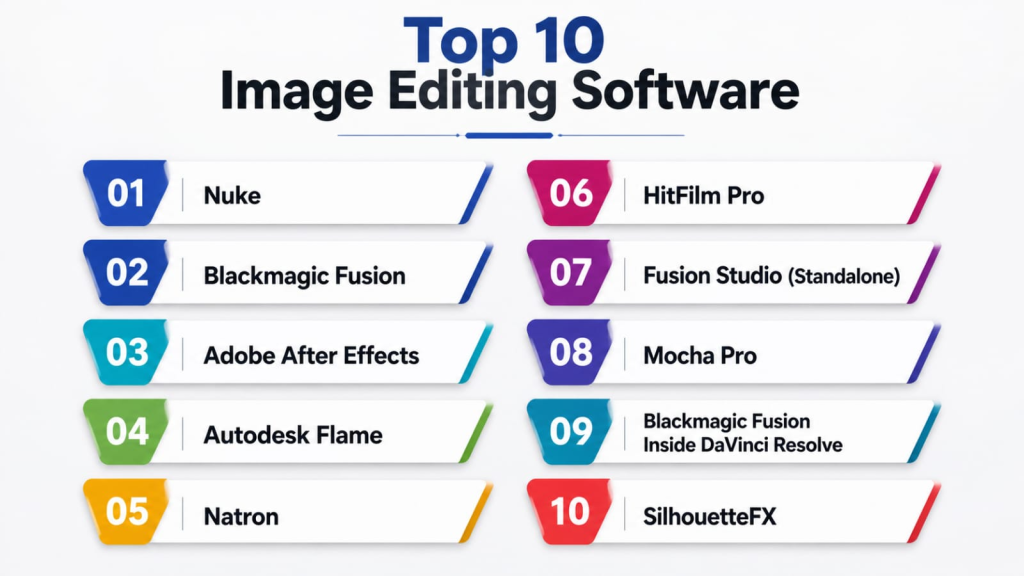
Top 10 VFX Compositing Software Tools
1 — Nuke
Short description: Nuke is an industry-standard node-based compositing tool widely used in major film studios. Its real-world applications include blockbuster VFX shots, complex particle integration, and photorealistic compositing pipelines.
Key Features
- Node-based workflow for precise compositing
- Deep pixel compositing for advanced effects
- GPU-accelerated rendering
- 3D camera tracking and integration
- Stereoscopic workflow support
- Extensive plugin ecosystem
- Python scripting for automation
Pros
- High performance on large-scale projects
- Widely adopted in professional studios
- Strong community and plugin support
Cons
- Steep learning curve for beginners
- Premium pricing
- Requires powerful workstation hardware
Platforms / Deployment
- Windows / macOS / Linux
- Self-hosted / License-based
Security & Compliance
- Not publicly stated
Integrations & Ecosystem
Supports integration with Maya, Houdini, After Effects, Redshift, Arnold, and other 3D/rendering pipelines.
- Python API for custom workflows
- OpenFX plugin support
- Studio pipeline customization
- Render farm integration
Support & Community
Official documentation, tutorials, active forum, and studio training available.
- Nuke user community forums
- Online tutorials and courses
- Studio pipeline support
2 — Blackmagic Fusion
Short description: Fusion combines node-based compositing and motion graphics. Its real-world use spans film post-production, broadcast graphics, and commercials, offering high-quality visual effects with integrated GPU acceleration.
Key Features
- Node-based compositing and 3D workspace
- Real-time playback and GPU rendering
- Integrated particle and vector paint tools
- Keying and tracking tools
- VR and 360-degree video support
- Scripting with Python and Lua
- Template-based motion graphics
Pros
- Free version available for freelancers
- Strong integration with DaVinci Resolve
- Efficient GPU utilization
Cons
- Steeper learning curve compared to layer-based tools
- Limited enterprise support in free version
- Occasional compatibility issues with some plugins
Platforms / Deployment
- Windows / macOS / Linux
- Self-hosted / Cloud optional
Security & Compliance
- Not publicly stated
Integrations & Ecosystem
Integrates seamlessly with DaVinci Resolve, After Effects, Cinema 4D, and various render engines.
- OpenFX plugin support
- Python scripting for automation
- VR workflow plugins
Support & Community
- Official training and documentation
- Active user forums
- Blackmagic Design community support
3 — Adobe After Effects
Short description: After Effects is a versatile layer-based compositing tool widely used in real-world broadcast, marketing, and VFX workflows, ideal for motion graphics and post-production compositing.
Key Features
- Layer-based compositing and motion graphics
- 2D/3D integration with Cinema 4D
- Keying, tracking, and rotoscoping tools
- Advanced effects and animation presets
- GPU acceleration
- Integration with Creative Cloud apps
Pros
- Strong motion graphics capabilities
- Large user base and tutorials
- Seamless Adobe ecosystem integration
Cons
- Less suited for high-end 3D compositing
- Can be resource-intensive
- Node-based flexibility is limited
Platforms / Deployment
- Windows / macOS
- Cloud subscription
Security & Compliance
- Not publicly stated
Integrations & Ecosystem
- Adobe Premiere Pro, Photoshop, Illustrator
- 3D plugins for Cinema 4D
- Scripting via ExtendScript and JavaScript
Support & Community
- Adobe official support
- Large online tutorial library
- Active creative community
4 — Autodesk Flame
Short description: Flame delivers high-end compositing, color grading, and finishing tools for studios. Real-world usage includes feature films, commercials, and broadcast finishing.
Key Features
- Node-based compositing and batch processing
- Advanced color correction
- 3D camera and geometry tracking
- Stereoscopic workflow support
- Integrated visual effects and finishing tools
- GPU acceleration
Pros
- Comprehensive finishing suite
- Industry-standard for high-end post-production
- Powerful automation and batch capabilities
Cons
- High cost
- Complex interface
- Requires professional training
Platforms / Deployment
- Linux / Windows
- Self-hosted
Security & Compliance
- Not publicly stated
Integrations & Ecosystem
- Connects with Maya, Nuke, After Effects
- Python scripting for custom pipelines
- Third-party plugin support
Support & Community
- Autodesk support and documentation
- Studio-focused training
- Community forums
5 — Natron
Short description: Natron is an open-source node-based compositing software. Its real-world applications include indie films, student projects, and smaller VFX studios seeking flexibility without high costs.
Key Features
- Node-based workflow
- OpenFX plugin support
- GPU acceleration
- Keying, tracking, and rotoscoping
- Python scripting
Pros
- Free and open-source
- Customizable and extendable
- Active development community
Cons
- Limited official support
- Smaller plugin ecosystem
- Performance may lag on very large projects
Platforms / Deployment
- Windows / macOS / Linux
- Self-hosted
Security & Compliance
- Not publicly stated
Integrations & Ecosystem
- OpenFX plugins
- Python-based pipeline customization
- Compatible with other open-source tools
Support & Community
- Community forums
- GitHub tutorials
- Online user guides
6 — HitFilm Pro
Short description: HitFilm Pro merges compositing and video editing. Its real-world usage includes VFX-heavy YouTube content, independent films, and broadcast graphics.
Key Features
- Layer-based compositing and editing
- Particle simulator
- 3D model support
- GPU acceleration
- Integrated VFX library
Pros
- Easy for motion graphics and VFX beginners
- Affordable compared to high-end tools
- Combines editing + compositing
Cons
- Less suitable for large-scale film production
- Limited advanced 3D compositing features
- Smaller community
Platforms / Deployment
- Windows / macOS
- Self-hosted
Security & Compliance
- Not publicly stated
Integrations & Ecosystem
- Supports import/export from After Effects, Premiere Pro
- Plugin support for 3D assets
- Community-created VFX packs
Support & Community
- Official tutorials and forum
- Online user guides
- Community support
7 — Fusion Studio (Standalone)
Short description: Fusion Studio offers advanced node-based compositing for professional VFX. Real-world projects include television visual effects, commercial ads, and motion graphics pipelines.
Key Features
- 3D compositing and particle effects
- GPU acceleration
- Motion tracking and stabilization
- Stereoscopic workflow
- Python scripting
Pros
- Professional-grade compositing
- Node-based flexibility
- Supports large studio pipelines
Cons
- High learning curve
- Premium licensing
- May require integration with other software
Platforms / Deployment
- Windows / macOS / Linux
- Self-hosted / License
Security & Compliance
- Not publicly stated
Integrations & Ecosystem
- DaVinci Resolve, After Effects, Cinema 4D
- OpenFX plugin support
- Custom scripting pipelines
Support & Community
- Blackmagic Design tutorials
- Community forums
- Studio support packages
8 — Mocha Pro
Short description: Mocha Pro is specialized for planar tracking, rotoscoping, and visual effects cleanup. Its real-world use is vital in compositing complex shots and high-precision VFX tasks.
Key Features
- Planar tracking and roto
- Object removal and cleanup
- GPU acceleration
- Stereoscopic support
- Plug-in versions for Nuke, After Effects
Pros
- Industry-standard tracking solution
- High precision for difficult shots
- Integrates with multiple host applications
Cons
- Narrower scope than full compositing suites
- Premium pricing
- Requires host software for full pipeline
Platforms / Deployment
- Windows / macOS / Linux
- Self-hosted
Security & Compliance
- Not publicly stated
Integrations & Ecosystem
- Nuke, After Effects, Premiere Pro
- OpenFX plugin
- Python scripting
Support & Community
- Official support and documentation
- Active user forums
- Online tutorials
9 — Blackmagic Fusion Inside DaVinci Resolve
Short description: Fusion integrated inside DaVinci Resolve brings real-world compositing workflows together with editing and color grading, ideal for end-to-end post-production.
Key Features
- Node-based compositing inside Resolve
- 3D workspace
- GPU-accelerated playback
- Integrated VFX and color workflows
- Scripting support
Pros
- All-in-one editing + VFX + color
- Efficient studio workflow
- Strong GPU acceleration
Cons
- Interface may feel complex for beginners
- Some high-end features reserved for Studio version
- Limited external plugin support
Platforms / Deployment
- Windows / macOS / Linux
- Self-hosted / License
Security & Compliance
- Not publicly stated
Integrations & Ecosystem
- Resolve ecosystem, Cinema 4D
- OpenFX plugin support
- Python scripting
Support & Community
- Official Blackmagic support
- Online tutorials
- Active creative forums
10 — SilhouetteFX
Short description: SilhouetteFX is designed for advanced rotoscoping and paint for VFX pipelines. Its real-world use cases include feature film clean-up, high-end visual effects shots, and motion tracking.
Key Features
- Node-based rotoscoping and paint
- Planar tracking
- GPU acceleration
- Stereoscopic support
- Python scripting
Pros
- Precision tools for high-end VFX
- Flexible node-based workflow
- Integrated tracking and painting
Cons
- Limited compositing outside rotoscoping
- High cost
- Learning curve
Platforms / Deployment
- Windows / macOS / Linux
- Self-hosted
Security & Compliance
- Not publicly stated
Integrations & Ecosystem
- Nuke, After Effects, Fusion
- Python scripting
- OpenFX plugin support
Support & Community
- Official documentation
- Community forums
- Training resources
Comparison Table (Top 10)
| Tool Name | Best For | Platform(s) Supported | Deployment | Standout Feature | Public Rating |
|---|---|---|---|---|---|
| Nuke | High-end film studios | Windows/macOS/Linux | Self-hosted | Node-based compositing | N/A |
| Blackmagic Fusion | Film & broadcast | Windows/macOS/Linux | Self-hosted | Integrated motion graphics | N/A |
| After Effects | Motion graphics & VFX | Windows/macOS | Cloud | Layer-based compositing | N/A |
| Flame | Feature film finishing | Windows/Linux | Self-hosted | Advanced finishing tools | N/A |
| Natron | Indie studios & education | Windows/macOS/Linux | Self-hosted | Open-source node-based | N/A |
| HitFilm Pro | Indie VFX & YouTube | Windows/macOS | Self-hosted | Editing + compositing | N/A |
| Fusion Studio | Professional VFX | Windows/macOS/Linux | Self-hosted | Node-based flexibility | N/A |
| Mocha Pro | Tracking & cleanup | Windows/macOS/Linux | Self-hosted | Planar tracking | N/A |
| Fusion in Resolve | Editing + compositing | Windows/macOS/Linux | Self-hosted | Integrated workflow | N/A |
| SilhouetteFX | Rotoscoping & paint | Windows/macOS/Linux | Self-hosted | Precision rotoscoping | N/A |
Evaluation & Scoring of VFX Compositing Software
| Tool | Core (25%) | Ease (15%) | Integrations (15%) | Security (10%) | Performance (10%) | Support (10%) | Value (15%) | Weighted Total |
|---|---|---|---|---|---|---|---|---|
| Nuke | 10 | 8 | 9 | 7 | 10 | 9 | 7 | 9.0 |
| Fusion | 9 | 7 | 8 | 7 | 9 | 8 | 9 | 8.3 |
| After Effects | 8 | 9 | 9 | 7 | 8 | 9 | 8 | 8.3 |
| Flame | 10 | 7 | 8 | 7 | 10 | 8 | 6 | 8.2 |
| Natron | 7 | 8 | 7 | 6 | 7 | 7 | 10 | 7.6 |
| HitFilm Pro | 7 | 8 | 6 | 6 | 7 | 7 | 9 | 7.5 |
| Fusion Studio | 9 | 7 | 8 | 7 | 9 | 8 | 7 | 8.1 |
| Mocha Pro | 8 | 7 | 8 | 7 | 8 | 7 | 6 | 7.4 |
| Fusion in Resolve | 8 | 8 | 8 | 7 | 8 | 8 | 8 | 8.0 |
| SilhouetteFX | 9 | 7 | 7 | 7 | 9 | 7 | 6 | 7.8 |
Interpretation: Scores are comparative across core features, integrations, and real-world applicability. Weighted total reflects overall utility for professional VFX workflows.
Which VFX Compositing Tool Is Right for You?
Solo / Freelancer
- Fusion or HitFilm Pro for affordable and capable VFX.
- Natron for open-source workflows.
SMB
- Fusion Studio or After Effects for mid-size teams needing flexibility.
- Mocha Pro for high-precision tasks.
Mid-Market
- Nuke or Flame for studio-level pipelines and client deliverables.
- Fusion inside Resolve for combined editing/compositing.
Enterprise
- Nuke and Flame dominate high-end feature film pipelines.
- SilhouetteFX for rotoscoping-intensive projects.
Budget vs Premium
- Natron and HitFilm Pro for budget-conscious projects.
- Nuke, Flame, Fusion Studio for premium production pipelines.
Feature Depth vs Ease of Use
- Nuke and Flame offer depth but steep learning curve.
- After Effects and HitFilm Pro balance usability with features.
Integrations & Scalability
- Nuke and Fusion Studio excel in pipeline integration and team scalability.
- Fusion in Resolve integrates well for all-in-one workflows.
Security & Compliance Needs
- Enterprise studios prioritize self-hosted setups for IP protection.
- Freelancers may rely on local machines and project backups.
Frequently Asked Questions (FAQs)
- What is the difference between node-based and layer-based compositing?
Node-based allows more complex control and branching, ideal for high-end VFX, whereas layer-based (like After Effects) is simpler and faster for motion graphics. - Which software is best for indie filmmakers?
Fusion, Natron, and HitFilm Pro offer a strong balance of features, affordability, and real-world applicability for indie projects. - Can I integrate these tools with 3D software?
Yes, most VFX compositing tools integrate with Maya, Houdini, Cinema 4D, and Blender for seamless 3D workflows. - Is GPU acceleration important?
Absolutely. GPU acceleration speeds up rendering and real-time previews, crucial for complex real-world scenes. - Do these tools support VR and 360-degree content?
Fusion, Nuke, and After Effects have VR/360-degree support, enabling immersive content creation. - Which software is suitable for educational purposes?
Natron and HitFilm Pro are excellent for teaching VFX fundamentals without high licensing costs. - How steep is the learning curve?
Nuke and Flame are professional-grade with steeper learning curves. After Effects and HitFilm Pro are easier for beginners. - Can I use open-source tools for commercial projects?
Yes, Natron and other open-source solutions can be used commercially, but check licensing terms for plugins. - Are there tools specifically for rotoscoping?
Mocha Pro and SilhouetteFX are industry-standard for rotoscoping-intensive real-world tasks. - What is the cost range?
Costs vary: Natron is free, HitFilm Pro affordable, Fusion Studio mid-tier, while Nuke and Flame are premium enterprise tools. - Do these tools work on multiple platforms?
Most support Windows, macOS, and Linux, though some like After Effects are macOS/Windows only. - Can these tools handle large-scale studio projects?
Yes, Nuke, Flame, and Fusion Studio are optimized for high-resolution, multi-shot pipelines in feature films. - How do I choose the right tool?
Evaluate based on project scale, team size, budget, integration needs, and the real-world workflow requirements of your production.
Conclusion
Choosing the right VFX Compositing Software depends heavily on your team’s size, project complexity, and budget. Freelancers and small studios may benefit from Natron, Fusion, or HitFilm Pro for real-world practical use without high costs. Mid-market and enterprise teams often require Nuke, Flame, or Fusion Studio for robust pipelines and integration with 3D tools. Consider GPU acceleration, scripting capabilities, and licensing models when evaluating software. Next steps: shortlist 2–3 tools based on your workflow, run a pilot project to assess real-world performance, and validate integrations and security measures before scaling across production. Investing time in the right toolset ensures smoother production, higher-quality output, and efficient team collaboration.

Find Trusted Cardiac Hospitals
Compare heart hospitals by city and services — all in one place.
Explore Hospitals
VFX compositing tools are explained clearly, and the comparison helps in understanding how layering, tracking, and visual effects are combined to create realistic final outputs.