Introduction
Business Process Management (BPM) Suites are software platforms designed to help organizations model, automate, monitor, and optimize their business processes. They provide a structured framework for designing workflows, integrating systems, and managing tasks across departments. BPM Suites are more critical than ever as organizations face increasing pressure to digitize operations, adopt AI-driven automation, and maintain compliance in a rapidly evolving regulatory environment.
Real-world use cases include automating invoice approvals, streamlining customer onboarding, coordinating cross-functional project workflows, managing compliance reporting, and optimizing supply chain operations. Organizations leverage BPM Suites to reduce manual errors, improve visibility into process bottlenecks, and enable data-driven process improvements.
Evaluation Criteria for Buyers:
- Process modeling and workflow automation capabilities
- Integration with existing systems and APIs
- AI and analytics features for process optimization
- Security and compliance adherence
- Ease of use and user interface
- Deployment flexibility (cloud, on-premises, hybrid)
- Scalability across business units
- Vendor support and community ecosystem
- Cost and licensing models
Best for: Mid-to-large enterprises, IT managers, operations teams, and organizations requiring robust automation, compliance, and workflow management across departments.
Not ideal for: Small businesses with minimal workflow complexity or teams that can rely on lightweight automation tools or spreadsheets.
Key Trends in BPM Suites
- AI-driven process optimization: Predictive analytics and machine learning models now recommend workflow improvements.
- Low-code and no-code adoption: Business users can configure processes without heavy developer involvement.
- Hybrid deployment models: Organizations increasingly choose flexible cloud, on-prem, or hybrid deployment strategies.
- Process mining integration: BPM Suites are leveraging process mining to identify bottlenecks and inefficiencies.
- Enhanced collaboration: Real-time collaboration features across teams streamline approval cycles.
- Robust compliance and auditing: Stronger focus on GDPR, SOC 2, and industry-specific regulations.
- Embedded RPA capabilities: Automation of repetitive tasks within BPM workflows is becoming standard.
- Seamless ecosystem integration: APIs and prebuilt connectors ensure interoperability with CRM, ERP, and HR platforms.
- Mobile-first workflows: BPM platforms increasingly support task management and approvals on mobile devices.
- Subscription-based pricing flexibility: Shift from perpetual licenses to subscription and consumption-based models.
How We Selected These Tools (Methodology)
- Reviewed market adoption and mindshare across enterprise and SMB segments.
- Evaluated feature completeness, including modeling, automation, and analytics.
- Assessed reliability and performance through user reports and case studies.
- Verified security posture, compliance, and audit capabilities.
- Analyzed integration capabilities and ecosystem extensibility.
- Examined ease of use and onboarding for business and IT users.
- Considered customer fit for various industries and deployment scales.
- Looked for innovation in AI, RPA, and low-code/no-code capabilities.
- Reviewed support offerings, documentation, and community engagement.
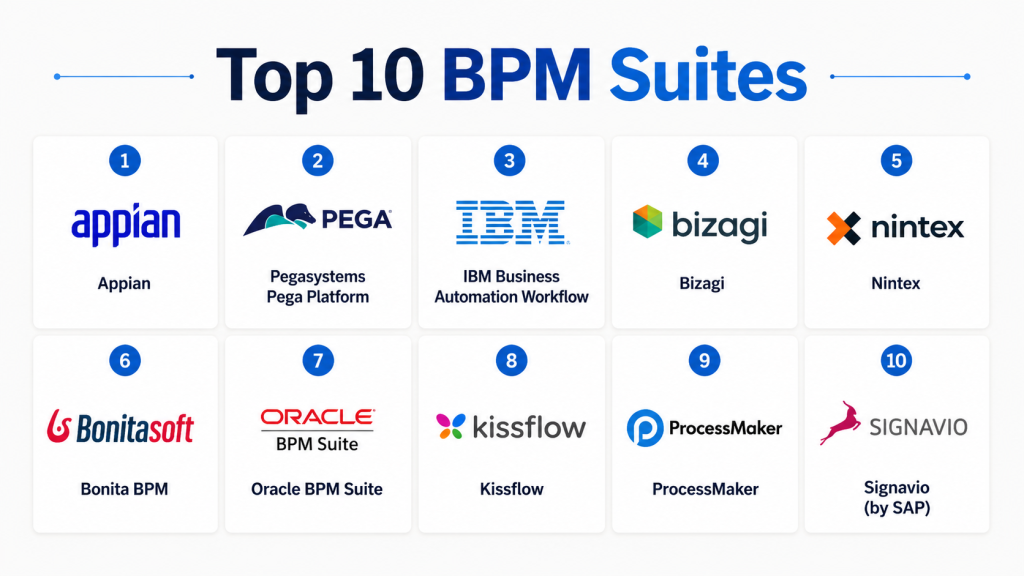
Top 10 BPM Suites
1- Appian
Short description: Appian offers a low-code BPM platform for designing, automating, and optimizing workflows across enterprises.
Key Features
- Low-code application development
- AI and RPA integration
- Dynamic case management
- Real-time analytics dashboards
- Mobile and web task management
- Prebuilt connectors for ERP, CRM, and cloud apps
Pros
- Rapid deployment and easy configuration
- Strong automation and AI-driven insights
- Intuitive interface for business users
Cons
- Licensing can be expensive for smaller teams
- Custom integrations may require developer support
- Learning curve for advanced features
Platforms / Deployment
- Web, iOS, Android
- Cloud / Hybrid
Security & Compliance
- SSO/SAML, MFA, encryption, audit logs
- SOC 2, ISO 27001, GDPR
Integrations & Ecosystem
Appian supports integration with a wide array of enterprise systems and cloud applications.
- Prebuilt connectors for Salesforce, SAP, Workday
- REST and SOAP APIs
- RPA tool integration
- AI/ML integration modules
Support & Community
- Comprehensive documentation and training
- Tiered support plans
- Active user community and online forums
2- Pegasystems Pega Platform
Short description: Pega Platform provides BPM and case management with AI-driven decisioning to optimize complex workflows.
Key Features
- Real-time decisioning and AI recommendations
- Case and process management
- Omnichannel workflow automation
- Low-code application development
- Predictive analytics and reporting
Pros
- Strong AI-driven decision support
- Enterprise-grade scalability
- Extensive industry templates
Cons
- High cost for smaller deployments
- Advanced features require technical expertise
- Custom UI development can be complex
Platforms / Deployment
- Web, iOS, Android
- Cloud / On-prem / Hybrid
Security & Compliance
- SSO, encryption, role-based access
- SOC 2, GDPR, HIPAA (varies by deployment)
Integrations & Ecosystem
Pega provides robust integration capabilities for CRM, ERP, and cloud applications.
- Salesforce, SAP, Oracle connectors
- RESTful APIs and integration hub
- Event-driven architecture support
Support & Community
- Global support network
- Extensive knowledge base
- Pega Community portal
3- IBM Business Automation Workflow
Short description: IBM’s BPM suite combines process automation, case management, and decisioning tools for enterprise-scale workflow management.
Key Features
- Business process modeling and automation
- Workflow and case management
- Decision automation with AI
- Process analytics and optimization
- Integration with IBM Cloud and third-party apps
Pros
- Enterprise-grade reliability and scalability
- Strong analytics and AI integration
- Extensive industry templates
Cons
- Complex setup and configuration
- Steeper learning curve for business users
- Licensing and cost complexity
Platforms / Deployment
- Web, Windows
- Cloud / On-prem / Hybrid
Security & Compliance
- SSO, RBAC, encryption, audit logs
- SOC 2, ISO 27001, GDPR, HIPAA
Integrations & Ecosystem
IBM BPM supports broad integration via APIs and connectors.
- SAP, Salesforce, Oracle ERP
- REST/SOAP APIs
- IBM Watson AI integration
- Cloud app connectors
Support & Community
- 24/7 enterprise support
- Extensive online documentation
- Active IBM user community
4- Bizagi
Short description: Bizagi delivers a digital process automation platform with low-code BPM and cloud-based workflow orchestration.
Key Features
- Low-code process modeling
- Cloud and on-prem workflow management
- RPA integration
- Analytics and reporting dashboards
- Collaboration and task management
Pros
- Easy-to-use low-code platform
- Quick deployment and onboarding
- Flexible deployment options
Cons
- Advanced customization may require developers
- Limited AI capabilities compared to enterprise competitors
- Mobile interface can be basic
Platforms / Deployment
- Web, Windows, iOS, Android
- Cloud / On-prem / Hybrid
Security & Compliance
- SSO, encryption, audit trails
- GDPR, SOC 2 (Not publicly stated for all)
Integrations & Ecosystem
Bizagi integrates with major enterprise apps and databases.
- Microsoft Dynamics, SAP, Salesforce
- REST APIs and custom connectors
- Collaboration with RPA platforms
Support & Community
- Online documentation and forums
- Paid support tiers
- Active global community
5- Nintex
Short description: Nintex offers a BPM platform emphasizing workflow automation, process mapping, and document generation for business users.
Key Features
- Drag-and-drop workflow automation
- Process mapping and analytics
- Document generation and e-signatures
- Cloud and on-premises support
- Integration with Microsoft 365 and SharePoint
Pros
- User-friendly interface for non-technical users
- Strong SharePoint integration
- Rapid workflow deployment
Cons
- Limited AI/ML capabilities
- Complex enterprise integrations may require help
- Reporting features less advanced than competitors
Platforms / Deployment
- Web, Windows
- Cloud / On-prem / Hybrid
Security & Compliance
- SSO/SAML, encryption
- SOC 2, GDPR (Not publicly stated for all)
Integrations & Ecosystem
Nintex integrates tightly with Microsoft ecosystem and other cloud apps.
- Microsoft 365, SharePoint, Salesforce
- REST APIs
- Prebuilt connectors for ERP systems
Support & Community
- Vendor support and training resources
- User community forums
- Online templates and resources
6- Bonita BPM
Short description: Bonita BPM is an open-source BPM suite offering process automation and workflow orchestration with strong developer extensibility.
Key Features
- Open-source BPM engine
- Low-code process design
- Custom UI and portal creation
- Integration connectors for cloud and on-prem apps
- Process monitoring dashboards
Pros
- Open-source flexibility
- Strong developer community
- Customizable process interfaces
Cons
- Steeper learning curve for non-technical users
- Limited out-of-the-box AI capabilities
- Community support may be less comprehensive than enterprise tools
Platforms / Deployment
- Windows, Linux, macOS
- Cloud / On-prem / Hybrid
Security & Compliance
- RBAC, encryption, audit logging
- Not publicly stated for certifications
Integrations & Ecosystem
Bonita integrates through APIs and connectors, supporting ERP, CRM, and other enterprise systems.
- REST APIs
- Java-based connectors
- Workflow integration with RPA tools
Support & Community
- Community forums and documentation
- Paid support plans for enterprise edition
- Active open-source contributors
7- Oracle BPM Suite
Short description: Oracle BPM Suite provides enterprise-grade process automation, case management, and analytics with integration into the Oracle ecosystem.
Key Features
- Process modeling and execution
- Case management
- Advanced analytics dashboards
- Oracle ERP and cloud app integration
- Business rules engine
Pros
- Deep Oracle ecosystem integration
- Enterprise scalability
- Strong analytics capabilities
Cons
- Complexity for smaller teams
- Cost and licensing can be high
- Implementation requires skilled resources
Platforms / Deployment
- Web, Windows
- Cloud / On-prem / Hybrid
Security & Compliance
- SSO, MFA, encryption, audit logs
- SOC 2, ISO 27001, GDPR (varies)
Integrations & Ecosystem
Oracle BPM integrates with ERP, CRM, and cloud applications.
- Oracle Cloud Apps, SAP, Salesforce
- REST/SOAP APIs
- Oracle RPA connectors
Support & Community
- Enterprise support tiers
- Extensive documentation
- Oracle user community
8- Kissflow
Short description: Kissflow offers a no-code BPM platform focused on workflow automation for mid-sized businesses and departmental processes.
Key Features
- No-code process automation
- Task management and approvals
- Process analytics
- Collaboration tools
- Integration with common cloud apps
Pros
- Very easy for non-technical users
- Quick deployment
- Affordable for SMBs
Cons
- Limited AI features
- Less suitable for complex enterprise workflows
- Customization options are constrained
Platforms / Deployment
- Web, iOS, Android
- Cloud / Hybrid
Security & Compliance
- SSO, encryption, audit logging
- Not publicly stated for SOC/ISO certifications
Integrations & Ecosystem
Kissflow integrates with common cloud apps for workflow triggers.
- G Suite, Microsoft 365
- Slack, Salesforce
- REST API
Support & Community
- Online documentation
- Email and chat support
- User forums
9- ProcessMaker
Short description: ProcessMaker provides BPM and workflow automation with low-code capabilities and strong process analytics.
Key Features
- Low-code process design
- Workflow automation
- Form and document generation
- Analytics dashboards
- RPA integration
Pros
- Flexible low-code platform
- Strong workflow visualization
- Good for SMBs and mid-market
Cons
- Advanced integrations may require coding
- AI capabilities limited
- Mobile interface can be basic
Platforms / Deployment
- Web, Windows, Linux
- Cloud / On-prem / Hybrid
Security & Compliance
- SSO, encryption, audit logs
- SOC 2, GDPR (Not publicly stated for all)
Integrations & Ecosystem
ProcessMaker integrates via APIs with cloud and on-prem applications.
- Salesforce, SAP, Microsoft 365
- REST APIs, webhooks
- RPA platforms
Support & Community
- Online help and documentation
- Paid support options
- Community forum
10- Signavio (by SAP)
Short description: Signavio BPM Suite focuses on process modeling, analytics, and collaboration for enterprise digital transformation.
Key Features
- Process modeling and simulation
- Collaborative process design
- Analytics and reporting
- Workflow execution
- SAP ecosystem integration
Pros
- Strong collaboration and process visibility
- Enterprise-grade modeling tools
- Seamless SAP integration
Cons
- Cost can be high
- Less flexible for non-SAP environments
- Some features require SAP licensing
Platforms / Deployment
- Web
- Cloud / On-prem / Hybrid
Security & Compliance
- SSO, encryption, audit logs
- GDPR, SOC 2 (varies)
Integrations & Ecosystem
Signavio integrates with SAP, ERP, and other cloud applications.
- SAP S/4HANA, Salesforce, Microsoft 365
- REST API and connectors
- Analytics integration
Support & Community
- Vendor support tiers
- Documentation and tutorials
- Active user community
Comparison Table (Top 10)
| Tool Name | Best For | Platform(s) Supported | Deployment | Standout Feature | Public Rating |
|---|---|---|---|---|---|
| Appian | Enterprise automation | Web, iOS, Android | Cloud / Hybrid | Low-code + AI integration | N/A |
| Pegasystems Pega | Decision-driven workflows | Web, iOS, Android | Cloud / On-prem / Hybrid | AI decisioning engine | N/A |
| IBM Business Automation Workflow | Large enterprises | Web, Windows | Cloud / On-prem / Hybrid | Enterprise-scale automation | N/A |
| Bizagi | Mid-market automation | Web, Windows, iOS, Android | Cloud / On-prem / Hybrid | Low-code process orchestration | N/A |
| Nintex | Document & workflow automation | Web, Windows | Cloud / On-prem / Hybrid | Microsoft ecosystem integration | N/A |
| Bonita BPM | Open-source BPM | Windows, Linux, macOS | Cloud / On-prem / Hybrid | Open-source flexibility | N/A |
| Oracle BPM Suite | Enterprise processes | Web, Windows | Cloud / On-prem / Hybrid | Oracle ecosystem integration | N/A |
| Kissflow | SMB workflow automation | Web, iOS, Android | Cloud / Hybrid | No-code process automation | N/A |
| ProcessMaker | Mid-market BPM | Web, Windows, Linux | Cloud / On-prem / Hybrid | Low-code workflow | N/A |
| Signavio | Enterprise modeling | Web | Cloud / On-prem / Hybrid | SAP integration & collaboration | N/A |
Evaluation & Scoring of BPM Suites
| Tool Name | Core (25%) | Ease (15%) | Integrations (15%) | Security (10%) | Performance (10%) | Support (10%) | Value (15%) | Weighted Total (0–10) |
|---|---|---|---|---|---|---|---|---|
| Appian | 9 | 8 | 9 | 9 | 9 | 8 | 7 | 8.75 |
| Pegasystems Pega | 9 | 7 | 8 | 9 | 9 | 8 | 6 | 8.35 |
| IBM Workflow | 8 | 6 | 9 | 9 | 9 | 7 | 6 | 7.95 |
| Bizagi | 7 | 8 | 7 | 8 | 8 | 7 | 8 | 7.75 |
| Nintex | 7 | 8 | 7 | 7 | 8 | 7 | 8 | 7.55 |
| Bonita BPM | 7 | 6 | 7 | 7 | 7 | 6 | 9 | 7.25 |
| Oracle BPM | 8 | 6 | 8 | 9 | 9 | 7 | 6 | 7.85 |
| Kissflow | 6 | 9 | 6 | 7 | 7 | 6 | 8 | 7.05 |
| ProcessMaker | 7 | 7 | 7 | 7 | 7 | 6 | 8 | 7.25 |
| Signavio | 8 | 7 | 7 | 8 | 8 | 7 | 6 | 7.55 |
Interpretation: Scores are comparative across the Top 10. Weighted totals reflect strengths in core features, ease of use, integrations, security, performance, support, and value. High totals indicate better alignment with enterprise needs; lower totals may suit SMBs or targeted use cases.
Which BPM Suite Tool Is Right for You?
Solo / Freelancer
- Tools like Kissflow and Bizagi are ideal for small teams needing simple workflow automation without complex infrastructure.
SMB
- Appian, Nintex, and ProcessMaker provide low-code/no-code flexibility with manageable costs.
Mid-Market
- Bizagi, ProcessMaker, and Signavio offer scalable workflows and collaboration capabilities.
Enterprise
- Appian, Pegasystems Pega, IBM Workflow, Oracle BPM, and Signavio are suited for large organizations with complex, cross-department processes.
Budget vs Premium
- Budget-conscious organizations: Kissflow, Bonita BPM
- Premium/Enterprise: Appian, Pegasystems, IBM, Oracle
Feature Depth vs Ease of Use
- High feature depth: Pega, IBM, Oracle
- Ease of use: Kissflow, Nintex, Bizagi
Integrations & Scalability
- Large integrations: Appian, Oracle, IBM, Signavio
- Lightweight SMB integrations: Kissflow, Bonita BPM
Security & Compliance Needs
- Enterprises with strict regulatory requirements: Appian, IBM, Oracle, Pega
- SMBs with basic compliance: Bizagi, Kissflow, ProcessMaker
Frequently Asked Questions (FAQs)
1. What pricing models do BPM Suites offer?
Most offer subscription-based or perpetual licenses. Cloud solutions generally use SaaS subscriptions, while on-premises deployments may involve upfront licensing.
2. How long does implementation take?
Implementation ranges from a few weeks for SMB-focused tools to several months for enterprise-grade platforms with complex workflows.
3. Can BPM Suites integrate with existing software?
Yes, most provide REST/SOAP APIs, prebuilt connectors, and RPA integrations to connect with ERP, CRM, and cloud applications.
4. Are BPM Suites secure for sensitive data?
Top vendors implement SSO, MFA, encryption, audit logs, and comply with SOC 2, ISO 27001, and GDPR where applicable.
5. What industries benefit most from BPM?
Finance, healthcare, manufacturing, logistics, and government sectors benefit from automated workflows, compliance management, and process optimization.
6. Can non-technical users design workflows?
Yes, low-code and no-code BPM Suites like Bizagi, Kissflow, and Appian enable business users to design and automate processes.
7. Do BPM Suites support mobile workflows?
Many modern suites support iOS and Android apps, allowing approvals, task management, and workflow monitoring on the go.
8. How do I measure ROI for BPM?
Track metrics like process completion time, error reduction, compliance adherence, and employee productivity improvements.
9. Is training required for BPM adoption?
Yes, most platforms provide documentation, tutorials, and vendor-led training to ensure effective adoption and minimize errors.
10. Can BPM Suites replace legacy workflow systems?
They can modernize and consolidate workflows, but careful migration and integration planning are necessary to avoid disruptions.
Conclusion
BPM Suites remain essential for organizations seeking efficiency, visibility, and automation in their business processes. Selection should be guided by company size, workflow complexity, integration needs, and regulatory requirements. Enterprises will benefit from feature-rich platforms like Appian, Pega, IBM, or Oracle, while SMBs and departmental teams can leverage Bizagi, Kissflow, or ProcessMaker for rapid deployment and ease of use. Evaluating security, compliance, integrations, and total cost ensures a smooth transition. Next steps: shortlist 2–3 tools based on needs, run pilot workflows, and validate integrations and security before full-scale deployment. BPM Suites can significantly reduce operational bottlenecks, improve process visibility, and support data-driven decision-making across the organization.

Find Trusted Cardiac Hospitals
Compare heart hospitals by city and services — all in one place.
Explore Hospitals
I learned how BPM suites help organizations automate and manage complex business processes more efficiently. I’d like to understand more about how these systems are used in real enterprise workflows.