Introduction
Web servers are software systems that deliver web content to users over the internet or intranet. They handle HTTP requests, serve static and dynamic content, and provide essential services such as load balancing, security enforcement, and logging. In with the rise of cloud computing, microservices, and high-traffic applications, choosing a robust web server is critical for performance, scalability, and security.
Real-world use cases include hosting corporate websites, powering e-commerce platforms, serving APIs for mobile and web applications, managing high-traffic media streaming services, and supporting internal enterprise portals. When evaluating web servers, organizations should consider performance and concurrency, security features, protocol support, ease of configuration, scalability, OS compatibility, logging and monitoring capabilities, integration with application frameworks, community and vendor support, and cost.
Best for: IT administrators, developers, DevOps teams, cloud architects, and enterprises of all sizes managing web infrastructure.
Not ideal for: Organizations with very low traffic or fully managed platforms where web server selection is abstracted.
Key Trends in Web Servers
- AI-driven traffic optimization and predictive scaling
- HTTP/3 and QUIC protocol adoption for faster content delivery
- Built-in security features including WAF and DDoS protection
- Integration with container orchestration and microservices
- Cloud-native web server deployment options
- Edge server and CDN integration for latency reduction
- Automation in deployment and configuration using DevOps pipelines
- Subscription and usage-based pricing models
- Observability and logging enhancements for troubleshooting
- Multi-cloud and hybrid deployment support
How We Selected These Tools (Methodology)
- Market adoption and overall mindshare
- Feature completeness including performance, security, and scalability
- Reliability signals in high-traffic production environments
- Security posture including encryption, access control, and audit logging
- Integration with frameworks, CI/CD pipelines, and monitoring tools
- Fit across SMB, mid-market, and enterprise organizations
- Vendor and community support availability
- Automation and AI-driven management features
- Cross-platform and OS compatibility
- Cost-to-value assessment
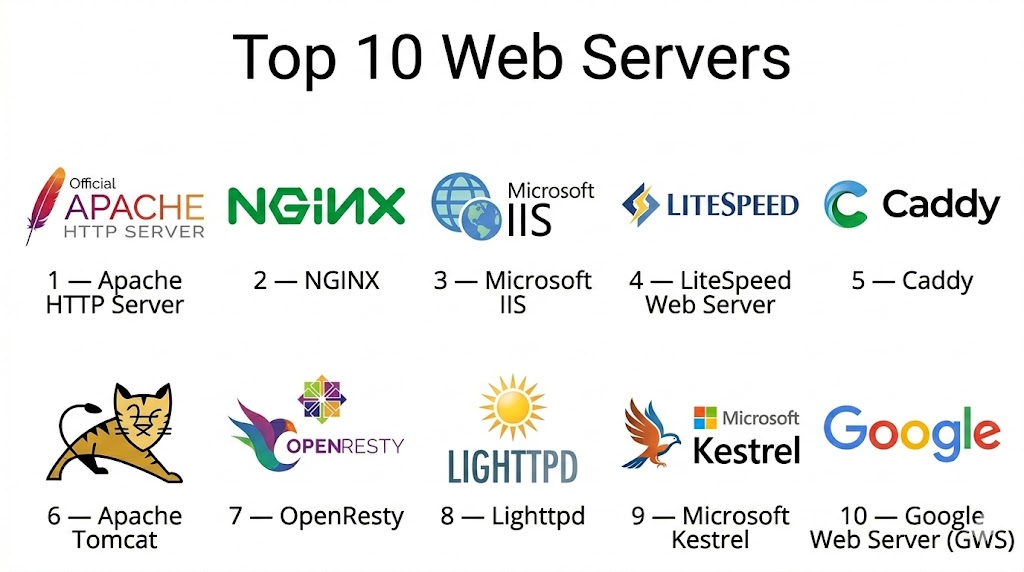
Top 10 Web Servers
#1 — Apache HTTP Server
Short description: Apache HTTP Server is an open-source web server renowned for its stability, modularity, and extensibility. Suitable for enterprises and developers needing a flexible, high-performance server.
Key Features
- Modular architecture with extensive modules
- Cross-platform support (Linux, Windows, macOS)
- SSL/TLS encryption support
- Virtual hosting capabilities
- Logging and monitoring tools
- URL rewriting and caching modules
- Integration with PHP, Python, and other frameworks
Pros
- Highly flexible and extensible
- Strong open-source community support
Cons
- Configuration can be complex for beginners
- Performance overhead under high concurrency
Platforms / Deployment
- Linux, Windows, macOS
- Cloud / On-premises / Hybrid
Security & Compliance
- SSL/TLS, RBAC
- Not publicly stated
Integrations & Ecosystem
- PHP, Python, Java frameworks
- CI/CD integration
- Load balancers and caching systems
Support & Community
- Strong community support
- Vendor and third-party support available
#2 — NGINX
Short description: NGINX is a high-performance web server and reverse proxy widely used for serving static content, load balancing, and handling high-concurrency traffic. Ideal for modern web architectures.
Key Features
- Reverse proxy and load balancing
- HTTP/2 and HTTP/3 support
- Caching and compression
- SSL/TLS termination
- Dynamic and static content handling
- Integration with microservices and containers
- Observability and logging
Pros
- Excellent performance under high load
- Lightweight and efficient
Cons
- Advanced configurations may require expertise
- Some modules require commercial licenses
Platforms / Deployment
- Linux, Windows
- Cloud / On-premises / Hybrid
Security & Compliance
- SSL/TLS, encryption, RBAC
- Not publicly stated
Integrations & Ecosystem
- Docker, Kubernetes
- CI/CD pipelines
- Monitoring tools (Prometheus, Grafana)
Support & Community
- Active community and enterprise support
- Documentation and tutorials
#3 — Microsoft IIS
Short description: Microsoft Internet Information Services (IIS) is a Windows-based web server for hosting websites, applications, and APIs, offering deep integration with Microsoft technologies.
Key Features
- Integration with ASP.NET and .NET frameworks
- Windows authentication and access control
- SSL/TLS support
- Request filtering and URL rewriting
- Logging, monitoring, and diagnostics
- Load balancing and web farms support
- IIS Manager GUI for administration
Pros
- Tight integration with Windows ecosystem
- Enterprise-grade security and management
Cons
- Limited cross-platform support
- Less popular in non-Windows environments
Platforms / Deployment
- Windows Server
- On-premises / Hybrid
Security & Compliance
- Windows authentication, RBAC, encryption
- Not publicly stated
Integrations & Ecosystem
- Microsoft 365, Azure
- CI/CD with Azure DevOps
- Monitoring with Windows tools
Support & Community
- Microsoft enterprise support
- Large professional community
#4 — LiteSpeed Web Server
Short description: LiteSpeed is a commercial high-performance web server designed for low-latency delivery, caching, and security, suitable for high-traffic websites and applications.
Key Features
- High-performance HTTP/2 and HTTP/3 support
- Built-in caching and load balancing
- DDoS protection
- SSL/TLS management
- PHP and WordPress optimization
- Control panel integration (cPanel, Plesk)
- Monitoring and analytics
Pros
- Extremely fast for high concurrency
- Efficient caching and resource management
Cons
- Licensing costs
- Less community support than open-source servers
Platforms / Deployment
- Linux, Windows
- Cloud / On-premises / Hybrid
Security & Compliance
- SSL/TLS, encryption, RBAC
- Not publicly stated
Integrations & Ecosystem
- cPanel, Plesk
- PHP and CMS platforms
- CI/CD pipelines
Support & Community
- Enterprise support available
- Documentation and forums
#5 — Caddy
Short description: Caddy is an open-source web server known for automated HTTPS, easy configuration, and cloud-native deployment capabilities. Ideal for developers and small enterprises.
Key Features
- Automatic HTTPS via Let’s Encrypt
- Reverse proxy and load balancing
- HTTP/2 and HTTP/3 support
- Static site hosting
- Simple configuration files
- Observability and logging
- Extensible with plugins
Pros
- Easy setup and automatic HTTPS
- Lightweight and cloud-friendly
Cons
- Smaller ecosystem
- Limited enterprise features compared to NGINX or Apache
Platforms / Deployment
- Linux, Windows, macOS
- Cloud / On-premises / Hybrid
Security & Compliance
- SSL/TLS, encryption
- Not publicly stated
Integrations & Ecosystem
- Docker, Kubernetes
- CI/CD pipelines
- Monitoring tools
Support & Community
- Community support
- Documentation and active forum
#6 — Apache Tomcat
Short description: Apache Tomcat is an open-source web server and servlet container for Java-based web applications, widely used in enterprise environments.
Key Features
- Java Servlet, JSP, and WebSocket support
- Session management and clustering
- Security and authentication
- Logging and monitoring tools
- Integration with application frameworks
- Virtual hosting support
- CI/CD pipeline compatibility
Pros
- Ideal for Java-based applications
- Open-source and flexible
Cons
- Less suitable for static content
- Requires Java expertise
Platforms / Deployment
- Linux, Windows
- Cloud / On-premises / Hybrid
Security & Compliance
- SSL/TLS, RBAC
- Not publicly stated
Integrations & Ecosystem
- Java frameworks
- Monitoring tools
- CI/CD pipelines
Support & Community
- Active open-source community
- Vendor support through third parties
#7 — OpenResty
Short description: OpenResty is a web server based on NGINX with Lua scripting for dynamic content, ideal for developers seeking high flexibility and performance.
Key Features
- Lua scripting support
- NGINX performance and modules
- HTTP/2 and HTTP/3 support
- Reverse proxy and load balancing
- Caching and compression
- Observability and metrics
- Extensible modules
Pros
- High flexibility for dynamic applications
- Strong performance
Cons
- Requires Lua programming knowledge
- Smaller user base
Platforms / Deployment
- Linux, Windows
- Cloud / On-premises / Hybrid
Security & Compliance
- SSL/TLS, encryption
- Not publicly stated
Integrations & Ecosystem
- Lua libraries
- Docker and Kubernetes
- CI/CD pipelines
Support & Community
- Community-driven support
- Documentation available
#8 — Lighttpd
Short description: Lighttpd is a lightweight open-source web server optimized for speed-critical applications and high-concurrency workloads.
Key Features
- Low memory footprint
- FastCGI support
- HTTP/2 support
- SSL/TLS encryption
- URL rewriting
- Logging and monitoring
- Integration with PHP, Python, and Perl
Pros
- Very fast and resource-efficient
- Ideal for high-concurrency static content
Cons
- Limited enterprise features
- Smaller community than NGINX or Apache
Platforms / Deployment
- Linux, Windows
- Cloud / On-premises / Hybrid
Security & Compliance
- SSL/TLS
- Not publicly stated
Integrations & Ecosystem
- FastCGI, PHP, Python
- Monitoring tools
- CI/CD pipelines
Support & Community
- Community support
- Documentation available
#9 — Microsoft Kestrel
Short description: Kestrel is the cross-platform web server for ASP.NET Core, designed for high performance and cloud-native deployment scenarios.
Key Features
- Cross-platform .NET Core support
- Asynchronous I/O for high performance
- HTTP/2 and HTTPS support
- Integration with IIS and reverse proxies
- Monitoring and logging
- Container-friendly
- CI/CD pipeline integration
Pros
- High-performance for .NET Core apps
- Lightweight and cloud-ready
Cons
- Primarily for .NET applications
- Requires integration with reverse proxies for advanced features
Platforms / Deployment
- Windows, Linux, macOS
- Cloud / On-premises / Hybrid
Security & Compliance
- SSL/TLS, encryption
- Not publicly stated
Integrations & Ecosystem
- ASP.NET Core
- Docker and Kubernetes
- CI/CD pipelines
Support & Community
- Microsoft support tiers
- Active developer community
#10 — Google Web Server (GWS)
Short description: Google Web Server is the proprietary web server used internally by Google, optimized for high performance, scalability, and reliability.
Key Features
- Optimized HTTP handling
- Load balancing and caching
- High concurrency and low latency
- Integration with Google Cloud infrastructure
- Observability and telemetry
- Security features for Google services
- Scalable across global infrastructure
Pros
- Extremely high performance and scalability
- Optimized for cloud-native workloads
Cons
- Proprietary and not available for public use
- Limited visibility into features
Platforms / Deployment
- Linux
- Cloud (Google infrastructure)
Security & Compliance
- Encryption and internal Google policies
- Not publicly stated
Integrations & Ecosystem
- Google Cloud services
- CI/CD pipelines internally
- APIs for internal tooling
Support & Community
- Not publicly stated
Comparison Table (Top 10)
| Tool Name | Best For | Platform(s) Supported | Deployment | Standout Feature | Public Rating |
|---|---|---|---|---|---|
| Apache HTTP Server | Enterprise & open-source | Linux, Windows, macOS | Cloud / On-prem / Hybrid | Modular and extensible | N/A |
| NGINX | High-concurrency apps | Linux, Windows | Cloud / On-prem / Hybrid | Performance and reverse proxy | N/A |
| Microsoft IIS | Windows web apps | Windows | On-prem / Hybrid | Windows ecosystem integration | N/A |
| LiteSpeed | High-traffic sites | Linux, Windows | Cloud / On-prem / Hybrid | Performance and caching | N/A |
| Caddy | Small businesses & developers | Linux, Windows, macOS | Cloud / On-prem / Hybrid | Automatic HTTPS | N/A |
| Apache Tomcat | Java apps | Linux, Windows | Cloud / On-prem / Hybrid | Java servlet container | N/A |
| OpenResty | Dynamic web apps | Linux, Windows | Cloud / On-prem / Hybrid | Lua scripting integration | N/A |
| Lighttpd | Static content & low-resource | Linux, Windows | Cloud / On-prem / Hybrid | Lightweight and fast | N/A |
| Microsoft Kestrel | .NET apps | Windows, Linux, macOS | Cloud / On-prem / Hybrid | High-performance for .NET Core | N/A |
| Google Web Server | Google cloud apps | Linux | Cloud | Scalability and performance | N/A |
Evaluation & Scoring of Web Servers
| Tool Name | Core (25%) | Ease (15%) | Integrations (15%) | Security (10%) | Performance (10%) | Support (10%) | Value (15%) | Weighted Total (0–10) |
|---|---|---|---|---|---|---|---|---|
| Apache HTTP Server | 9 | 7 | 8 | 8 | 8 | 7 | 8 | 7.9 |
| NGINX | 9 | 8 | 8 | 8 | 9 | 8 | 8 | 8.4 |
| Microsoft IIS | 8 | 8 | 7 | 8 | 8 | 8 | 7 | 7.8 |
| LiteSpeed | 8 | 7 | 7 | 8 | 9 | 7 | 7 | 7.7 |
| Caddy | 7 | 9 | 7 | 8 | 8 | 7 | 8 | 7.8 |
| Apache Tomcat | 8 | 7 | 7 | 8 | 8 | 7 | 7 | 7.5 |
| OpenResty | 8 | 7 | 7 | 8 | 8 | 7 | 7 | 7.5 |
| Lighttpd | 7 | 8 | 6 | 7 | 8 | 6 | 7 | 7.0 |
| Microsoft Kestrel | 8 | 8 | 7 | 8 | 8 | 7 | 7 | 7.7 |
| Google Web Server | 9 | 7 | 7 | 8 | 9 | 7 | 7 | 7.8 |
Interpretation: Weighted totals provide comparative insights across core capabilities, ease of use, integrations, security, performance, and value. Higher totals indicate stronger overall suitability.
Which Web Servers Tool Is Right for You?
Solo / Freelancer
Caddy, Lighttpd, and Apache HTTP Server offer lightweight and easy-to-deploy options for personal projects and small websites.
SMB
NGINX, LiteSpeed, and Apache Tomcat provide robust performance, flexibility, and cost-effective solutions for small-to-medium businesses.
Mid-Market
Microsoft IIS, NGINX, and LiteSpeed offer enterprise-grade features, load balancing, and security for growing web infrastructures.
Enterprise
Apache HTTP Server, NGINX, Microsoft IIS, and Google Web Server provide scalable, secure, and high-performance capabilities for large-scale deployments.
Budget vs Premium
- Budget: Caddy, Lighttpd, Apache Tomcat
- Premium: NGINX, LiteSpeed, Microsoft IIS
Feature Depth vs Ease of Use
- Feature-rich: NGINX, LiteSpeed, Microsoft IIS
- Easier to use: Caddy, Lighttpd
Integrations & Scalability
- High-scale, multi-cloud: NGINX, Google Web Server
- Small deployments: Caddy, Lighttpd
Security & Compliance Needs
For enterprise compliance and advanced security, prioritize NGINX, Microsoft IIS, LiteSpeed, and Apache HTTP Server.
Frequently Asked Questions (FAQs)
1. How are web servers priced?
Open-source web servers are free, while commercial solutions like LiteSpeed or Microsoft IIS require licensing.
2. How quickly can a web server be deployed?
Simple configurations can deploy in minutes; complex setups with load balancing and SSL may take hours.
3. What are common mistakes in web server deployment?
Misconfiguring SSL, neglecting security patches, and improper resource allocation are common errors.
4. How secure are web servers?
Security depends on SSL/TLS, access control, logging, and patch management; enterprise versions provide advanced features.
5. Can web servers handle high concurrency?
Yes, NGINX, LiteSpeed, and Google Web Server are optimized for high-concurrency workloads.
6. Which web servers support containers?
NGINX, Apache Tomcat, and Kestrel integrate seamlessly with container orchestration platforms.
7. Are web servers suitable for cloud environments?
Yes, most modern web servers support cloud deployment with auto-scaling and monitoring.
8. How do integrations work?
Web servers integrate with CI/CD pipelines, application frameworks, monitoring tools, and caching systems.
9. Can web servers host dynamic content?
Yes, servers like Apache, NGINX, Tomcat, and OpenResty handle dynamic content efficiently.
10. What are alternatives to traditional web servers?
Alternatives include serverless platforms, PaaS environments, and cloud-native HTTP servers.
Conclusion
Web servers are essential for delivering web content, powering applications, and ensuring reliable user experiences. NGINX, Apache HTTP Server, and Microsoft IIS provide high performance, scalability, and enterprise-grade features, while Caddy and Lighttpd offer lightweight, developer-friendly options. Evaluating security, integrations, ease of use, and scalability ensures optimal web infrastructure. Organizations should test shortlisted servers, validate performance under real workloads, and select solutions aligned with operational and strategic goals.

Find Trusted Cardiac Hospitals
Compare heart hospitals by city and services — all in one place.
Explore Hospitals
Web server performance can change when traffic suddenly increases or many connections stay open for a long time. It helps to watch connection limits, request queues, and resource usage during peak periods. Testing these conditions early can help prevent slow responses when real traffic grows.