Introduction
Brand Tracking Tools help organizations continuously measure how customers perceive their brand across awareness, consideration, preference, sentiment, loyalty, and competitive positioning metrics. These platforms combine surveys, social listening, market research, AI-driven analytics, and reporting dashboards to provide ongoing visibility into brand health. As markets become more competitive and customer expectations evolve rapidly, organizations need real-time visibility into how their brand is performing. Modern brand tracking solutions help marketing teams identify emerging trends, evaluate campaign effectiveness, understand audience sentiment, and benchmark against competitors.
Real-World Use Cases
- Brand awareness measurement across target audiences.
- Campaign effectiveness tracking before and after launches.
- Customer sentiment analysis across digital channels.
- Competitive benchmarking against industry rivals.
- Product perception monitoring during market expansion.
Evaluation Criteria for Buyers
When evaluating Brand Tracking Tools, buyers should consider:
- Survey and research capabilities
- Real-time monitoring features
- AI-powered insights and analytics
- Data visualization and dashboards
- Competitive benchmarking support
- Global research coverage
- Integration ecosystem
- Reporting flexibility
- Security controls
- Pricing and scalability
Best for: Enterprise marketing teams, brand managers, market research professionals, agencies, consumer brands, retail organizations, technology companies, and businesses focused on customer perception.
Not ideal for: Small businesses with minimal research requirements, organizations needing only basic social media monitoring, or companies that conduct infrequent brand studies.
Key Trends in Brand Tracking Tools
- AI-generated brand insights and predictive trend forecasting.
- Real-time brand health monitoring replacing quarterly reporting cycles.
- Multi-channel sentiment analysis across social, web, reviews, and surveys.
- Voice-of-customer integration becoming a standard requirement.
- Automated competitor intelligence capabilities expanding.
- Greater focus on privacy-compliant consumer research.
- Natural language querying for executive dashboards.
- Predictive brand equity scoring models gaining adoption.
- Increased integration with CRM and customer experience platforms.
- Generative AI-assisted reporting and recommendation engines.
How We Selected These Tools (Methodology)
The tools in this list were evaluated based on:
- Market adoption and industry recognition.
- Brand tracking feature depth and maturity.
- Survey and research capabilities.
- AI-driven analytics and reporting functionality.
- Reliability and platform performance.
- Integration ecosystem strength.
- Security and compliance capabilities.
- Global audience research support.
- Customer support and implementation resources.
- Suitability across SMB, mid-market, and enterprise environments.
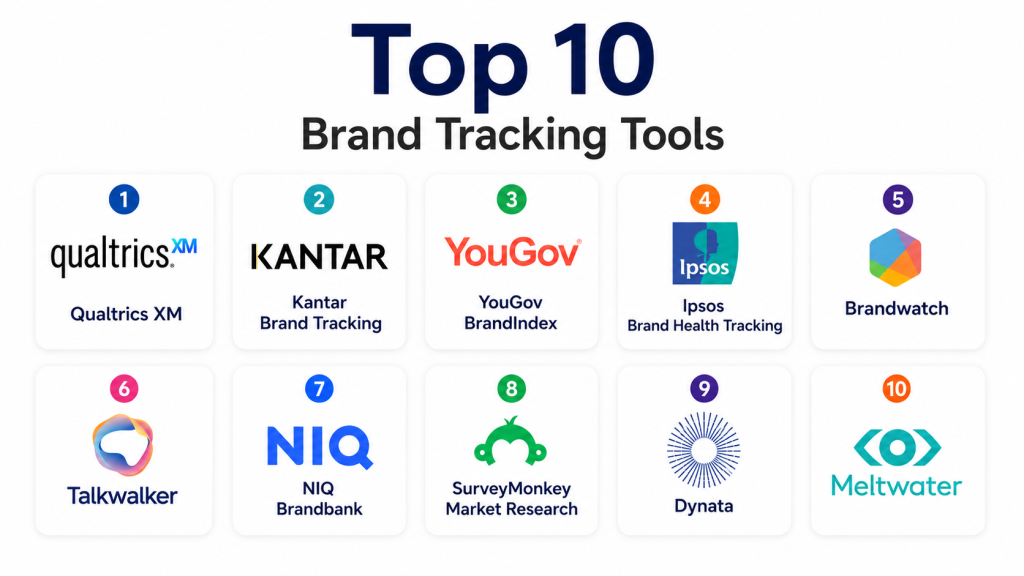
Top 10 Brand Tracking Tools
1- Qualtrics XM
Short description: Qualtrics XM is one of the most comprehensive experience management platforms available. It enables organizations to track brand perception, customer sentiment, awareness, and loyalty at enterprise scale.
Key Features
- Continuous brand tracking studies
- Advanced survey platform
- AI-powered sentiment analysis
- Brand health dashboards
- Competitor benchmarking
- Audience segmentation
- Predictive analytics
Pros
- Highly customizable research programs
- Enterprise-grade analytics
- Strong global survey capabilities
Cons
- Premium pricing
- Learning curve for advanced features
- May be excessive for small teams
Platforms / Deployment
- Web
- Cloud
Security & Compliance
- SSO/SAML
- MFA
- RBAC
- Audit logs
- GDPR support
- Various enterprise compliance programs
Integrations & Ecosystem
Qualtrics integrates with CRM, marketing automation, business intelligence, and customer experience platforms.
- Salesforce
- Microsoft Dynamics
- Adobe
- Tableau
- Power BI
- APIs
Support & Community
Extensive documentation, training programs, consulting services, and enterprise support offerings.
2- Kantar Brand Tracking
Short description: Kantar offers advanced brand tracking research solutions used by global enterprises for measuring brand performance, awareness, and market position.
Key Features
- Continuous brand health tracking
- Consumer panel research
- Market intelligence
- Competitive analysis
- Category benchmarking
- Trend identification
- Global research capabilities
Pros
- Strong research expertise
- Global market coverage
- Trusted by large enterprises
Cons
- Research-focused approach
- Higher implementation costs
- Less self-service flexibility
Platforms / Deployment
- Web
- Cloud
Security & Compliance
- Not publicly stated
Integrations & Ecosystem
Kantar supports data exports and integration into enterprise reporting environments.
- BI tools
- Data warehouses
- APIs
- Research systems
Support & Community
Strong professional services and consulting support.
3- YouGov BrandIndex
Short description: YouGov BrandIndex provides continuous brand perception data using large-scale consumer panels across numerous markets.
Key Features
- Daily brand health metrics
- Consumer sentiment tracking
- Competitor benchmarking
- Brand awareness measurement
- Purchase intent analysis
- Demographic segmentation
- Trend reporting
Pros
- Large consumer panels
- Frequent data updates
- Strong benchmarking capabilities
Cons
- Less customization than survey platforms
- Enterprise-focused pricing
- Limited proprietary survey flexibility
Platforms / Deployment
- Web
- Cloud
Security & Compliance
- Not publicly stated
Integrations & Ecosystem
- APIs
- Data exports
- BI platforms
- Analytics environments
Support & Community
Strong onboarding and research support resources.
4- Ipsos Brand Health Tracking
Short description: Ipsos provides brand health and consumer perception measurement services across global markets with extensive research expertise.
Key Features
- Brand equity measurement
- Consumer perception studies
- Competitive tracking
- Awareness analysis
- Campaign evaluation
- Market segmentation
- Executive reporting
Pros
- Strong research methodologies
- Global audience reach
- Deep industry expertise
Cons
- Service-oriented model
- Longer implementation timelines
- Premium pricing
Platforms / Deployment
- Web
- Cloud
Security & Compliance
- Not publicly stated
Integrations & Ecosystem
- Analytics platforms
- Reporting systems
- APIs
- Enterprise exports
Support & Community
Professional consulting and research support available.
5- Brandwatch
Short description: Brandwatch combines social listening, consumer intelligence, and brand monitoring capabilities to help organizations understand brand perception in real time.
Key Features
- Social listening
- Brand mention tracking
- Sentiment analysis
- AI-powered insights
- Competitor monitoring
- Trend detection
- Audience intelligence
Pros
- Strong social data coverage
- Excellent visualization tools
- Real-time monitoring
Cons
- Social-focused compared to survey-first tools
- Premium pricing
- Advanced features require training
Platforms / Deployment
- Web
- Cloud
Security & Compliance
- SSO
- RBAC
- Enterprise security controls
Integrations & Ecosystem
- Salesforce
- Slack
- Tableau
- APIs
- Social platforms
Support & Community
Strong documentation and enterprise support options.
6- Talkwalker
Short description: Talkwalker helps organizations monitor brand conversations, sentiment, and market trends across digital channels.
Key Features
- Brand monitoring
- Social listening
- AI sentiment analysis
- Competitive intelligence
- Crisis detection
- Visual analytics
- Trend forecasting
Pros
- Powerful AI analytics
- Strong media coverage
- Real-time alerts
Cons
- Complex setup for new users
- Premium pricing
- Advanced analytics learning curve
Platforms / Deployment
- Web
- Cloud
Security & Compliance
- Enterprise-grade security controls
- SSO support
Integrations & Ecosystem
- Salesforce
- Slack
- APIs
- BI tools
- CRM systems
Support & Community
Strong enterprise support and onboarding resources.
7- NIQ Brandbank
Short description: NIQ Brandbank focuses on consumer insights, product perception, and retail-related brand intelligence.
Key Features
- Consumer analytics
- Retail intelligence
- Brand performance tracking
- Product perception analysis
- Category insights
- Reporting dashboards
- Market trend analysis
Pros
- Strong retail expertise
- Comprehensive consumer insights
- Trusted market intelligence
Cons
- Retail-centric focus
- Less flexible for some industries
- Premium service model
Platforms / Deployment
- Web
- Cloud
Security & Compliance
- Not publicly stated
Integrations & Ecosystem
- Analytics platforms
- Data exports
- Enterprise reporting systems
Support & Community
Professional support and consulting services.
8- SurveyMonkey Market Research
Short description: SurveyMonkey provides accessible brand tracking and market research capabilities suitable for SMBs and mid-sized organizations.
Key Features
- Brand tracking surveys
- Audience targeting
- Customer feedback collection
- Trend reporting
- Survey analytics
- Benchmarking
- Dashboard reporting
Pros
- Easy to use
- Affordable entry point
- Fast deployment
Cons
- Less advanced analytics
- Limited enterprise capabilities
- Fewer predictive features
Platforms / Deployment
- Web
- iOS
- Android
- Cloud
Security & Compliance
- SSO options
- Encryption
- Various compliance features
Integrations & Ecosystem
- Salesforce
- HubSpot
- Microsoft Teams
- APIs
- Zapier
Support & Community
Large user community and extensive knowledge base.
9- Dynata
Short description: Dynata offers consumer research and brand tracking solutions supported by large global respondent panels.
Key Features
- Continuous brand tracking
- Consumer panel access
- Audience segmentation
- Brand awareness metrics
- Competitor analysis
- Reporting dashboards
- Global research support
Pros
- Large respondent database
- Strong global reach
- Reliable research infrastructure
Cons
- Research-heavy implementation
- Less real-time monitoring
- Premium pricing
Platforms / Deployment
- Web
- Cloud
Security & Compliance
- Not publicly stated
Integrations & Ecosystem
- APIs
- Analytics platforms
- Enterprise reporting tools
Support & Community
Strong research and customer support teams.
10- Meltwater
Short description: Meltwater combines media intelligence, social listening, and brand monitoring into a unified platform for marketing teams.
Key Features
- Media monitoring
- Brand mention tracking
- Social listening
- Competitive analysis
- Sentiment tracking
- Reporting dashboards
- AI-driven insights
Pros
- Broad media coverage
- Easy reporting
- Good monitoring capabilities
Cons
- Some advanced analytics require premium tiers
- Enterprise pricing
- Social-heavy focus
Platforms / Deployment
- Web
- Cloud
Security & Compliance
- SSO support
- Enterprise security controls
Integrations & Ecosystem
- Salesforce
- Slack
- CRM platforms
- APIs
- Analytics tools
Support & Community
Good onboarding resources and enterprise support.
Comparison Table
| Tool Name | Best For | Platform(s) Supported | Deployment | Standout Feature | Public Rating |
|---|---|---|---|---|---|
| Qualtrics XM | Enterprise research | Web | Cloud | Experience management analytics | N/A |
| Kantar Brand Tracking | Global enterprises | Web | Cloud | Large-scale brand research | N/A |
| YouGov BrandIndex | Consumer insights | Web | Cloud | Daily brand metrics | N/A |
| Ipsos Brand Health Tracking | Market research | Web | Cloud | Global consumer studies | N/A |
| Brandwatch | Social intelligence | Web | Cloud | Advanced social listening | N/A |
| Talkwalker | Real-time monitoring | Web | Cloud | AI sentiment analysis | N/A |
| NIQ Brandbank | Retail brands | Web | Cloud | Consumer and retail intelligence | N/A |
| SurveyMonkey Market Research | SMB research | Web, iOS, Android | Cloud | Easy brand surveys | N/A |
| Dynata | Panel-based research | Web | Cloud | Global respondent network | N/A |
| Meltwater | Media intelligence | Web | Cloud | Media monitoring coverage | N/A |
Evaluation & Scoring of Brand Tracking Tools
| Tool Name | Core | Ease | Integrations | Security | Performance | Support | Value | Weighted Total |
|---|---|---|---|---|---|---|---|---|
| Qualtrics XM | 10 | 8 | 10 | 9 | 9 | 9 | 7 | 8.95 |
| Kantar | 9 | 7 | 7 | 7 | 9 | 9 | 7 | 8.00 |
| YouGov BrandIndex | 9 | 8 | 7 | 7 | 9 | 8 | 8 | 8.15 |
| Ipsos | 9 | 7 | 7 | 7 | 9 | 9 | 7 | 8.00 |
| Brandwatch | 9 | 8 | 9 | 8 | 9 | 8 | 8 | 8.50 |
| Talkwalker | 9 | 8 | 9 | 8 | 9 | 8 | 8 | 8.50 |
| NIQ Brandbank | 8 | 7 | 7 | 7 | 8 | 8 | 7 | 7.50 |
| SurveyMonkey | 7 | 10 | 8 | 8 | 8 | 8 | 9 | 8.20 |
| Dynata | 8 | 7 | 7 | 7 | 8 | 8 | 7 | 7.50 |
| Meltwater | 8 | 8 | 8 | 8 | 8 | 8 | 8 | 8.00 |
Which Brand Tracking Tool Is Right for You?
Solo / Freelancer
SurveyMonkey Market Research is often the most practical choice due to its affordability, ease of use, and accessible survey capabilities.
SMB
SurveyMonkey, Meltwater, and Brandwatch provide a balance of usability, analytics, and scalability without requiring extensive research teams.
Mid-Market
Brandwatch, Talkwalker, and YouGov BrandIndex offer stronger competitive intelligence and advanced monitoring capabilities for growing organizations.
Enterprise
Qualtrics XM, Kantar, Ipsos, and Talkwalker are well suited for organizations requiring global research programs and sophisticated analytics.
Budget vs Premium
Budget-conscious buyers should consider SurveyMonkey. Premium buyers seeking deeper analytics should evaluate Qualtrics XM, Brandwatch, and Talkwalker.
Feature Depth vs Ease of Use
Qualtrics and Kantar deliver exceptional depth but require more expertise. SurveyMonkey offers simplicity while sacrificing some advanced functionality.
Integrations & Scalability
Organizations heavily invested in CRM, marketing automation, and BI ecosystems should prioritize Qualtrics, Brandwatch, Talkwalker, and Meltwater.
Security & Compliance Needs
Enterprises requiring advanced governance, SSO, RBAC, audit logs, and compliance controls should focus on Qualtrics and enterprise-grade monitoring platforms.
Frequently Asked Questions (FAQs)
1- What is a brand tracking tool?
A brand tracking tool measures how customers perceive a brand over time. It helps organizations monitor awareness, sentiment, loyalty, preference, and competitive positioning using surveys, analytics, and market intelligence data.
2- Why is brand tracking important?
Brand tracking helps companies understand whether marketing investments are improving perception and awareness. It also identifies risks, opportunities, and changing customer attitudes before they impact business performance.
3- How often should brand tracking be conducted?
Many organizations run continuous tracking programs with monthly or quarterly reporting. Real-time monitoring solutions can provide daily insights for rapidly changing markets.
4- What metrics are commonly tracked?
Common metrics include brand awareness, consideration, preference, sentiment, purchase intent, customer loyalty, net promoter scores, and competitive share of voice.
5- Are social listening tools enough for brand tracking?
Not always. Social listening provides valuable sentiment and conversation data, but comprehensive brand tracking often requires surveys, customer research, and audience studies as well.
6- Can small businesses benefit from brand tracking?
Yes. Even small businesses can use lightweight brand tracking solutions to understand customer perception, measure campaign impact, and identify market opportunities.
7- How long does implementation take?
Implementation varies from a few days for survey-based tools to several weeks for enterprise research programs involving multiple data sources and integrations.
8- What are the biggest mistakes buyers make?
Common mistakes include focusing only on social media data, ignoring competitor benchmarking, underestimating survey quality, and failing to establish baseline metrics before tracking begins.
9- How do integrations improve brand tracking?
Integrations connect brand data with CRM, marketing automation, customer support, and analytics systems, enabling richer insights and better decision-making.
10- What alternatives exist to brand tracking platforms?
Alternatives include standalone survey tools, social listening platforms, customer feedback systems, market research agencies, and custom analytics solutions built internally.
Conclusion
Brand tracking has evolved from periodic market research into a continuous intelligence capability that helps organizations understand customer perception, measure marketing effectiveness, and stay ahead of competitors. Enterprise buyers often gravitate toward Qualtrics XM, Kantar, Ipsos, and Talkwalker for advanced analytics and global reach, while Brandwatch and Meltwater provide strong real-time monitoring capabilities. SMBs frequently find SurveyMonkey Market Research to be a practical starting point due to its accessibility and ease of use. The right choice depends on your research maturity, budget, reporting needs, integration requirements, and desired level of analytical sophistication. Before making a decision, shortlist two or three platforms, run a pilot project, validate integration and security requirements, and compare the quality of insights generated from your target audience.

Find Trusted Cardiac Hospitals
Compare heart hospitals by city and services — all in one place.
Explore Hospitals
I had not looked into brand tracking tools before, and this post helped me understand how they can be used to monitor brand performance and customer perception.