Introduction
Data Observability Tools enable organizations to monitor, understand, and ensure the reliability of their data pipelines and infrastructure. These platforms provide visibility into data health, lineage, quality, and anomalies, helping teams proactively detect and resolve data issues. By offering actionable insights, they reduce downtime, improve analytics accuracy, and support compliance objectives.
Common use cases include:
- Monitoring data pipelines and ETL processes for failures or delays.
- Identifying anomalies in data quality metrics.
- Ensuring accurate reporting and analytics.
- Supporting regulatory compliance and audit readiness.
- Maintaining trust in data for machine learning and business intelligence.
When evaluating tools, buyers should consider:
- Real-time monitoring and alerting capabilities
- Data lineage visualization
- Integration with existing data stack (ETL, BI, MDM)
- Automated anomaly detection using AI/ML
- Historical trend analysis and reporting
- User access control and security
- Ease of setup and maintenance
- Scalability across large datasets
- Deployment options (cloud, on-premises, hybrid)
- Support, community, and documentation quality
Best for: Data engineers, analytics teams, data operations, and compliance teams in enterprises or high-data-volume organizations.
Not ideal for: Small organizations with minimal data complexity or limited data infrastructure; manual monitoring may suffice.
Key Trends in Data Observability Tools
- Increased adoption of AI/ML for anomaly detection and root cause analysis
- Real-time monitoring and alerting of data pipelines
- End-to-end data lineage tracking for operational transparency
- Integration with cloud-native data warehouses, lakes, and pipelines
- Automated remediation and data quality fixes
- Emphasis on compliance, audit logs, and governance
- Low-code/no-code interfaces for faster adoption
- API-first platforms for easier integrations and extensibility
- Subscription or usage-based pricing models
- Collaborative dashboards for cross-team visibility
How We Selected These Tools (Methodology)
- Evaluated market adoption and vendor mindshare
- Reviewed feature completeness, including monitoring, lineage, and anomaly detection
- Analyzed reliability and performance signals
- Considered security and compliance capabilities
- Reviewed integration ecosystem with ETL, BI, and MDM platforms
- Evaluated customer fit across enterprise, mid-market, and SMB segments
- Assessed ease of implementation and learning curve
- Considered vendor innovation and AI/automation features
- Examined total cost of ownership and scalability
- Reviewed support channels, documentation, and community presence
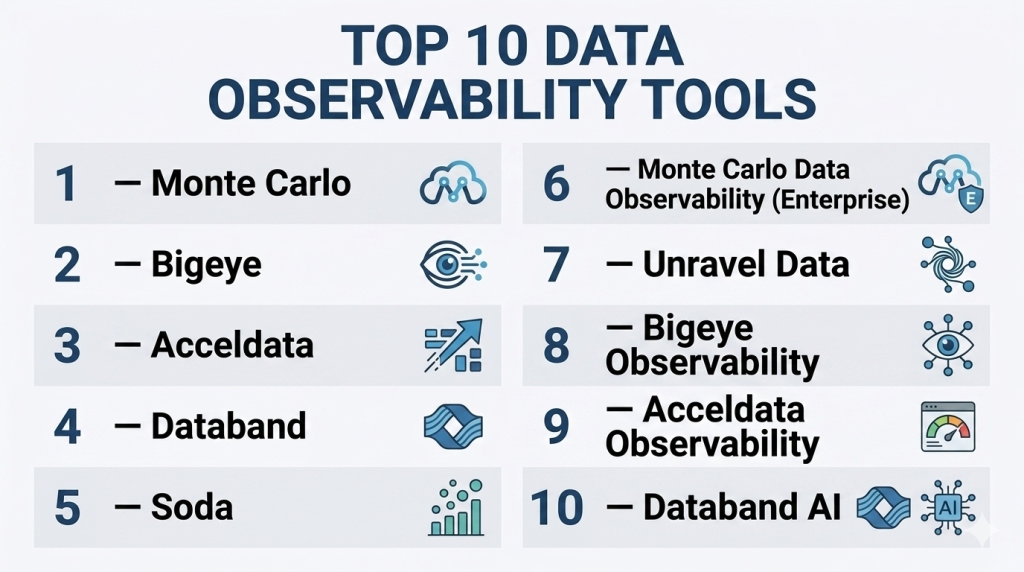
Top 10 Data Observability Tools
#1 — Monte Carlo
Short description: Monte Carlo provides an end-to-end data observability platform focused on data reliability. It helps organizations detect, resolve, and prevent data issues proactively, offering analytics teams confidence in their data pipelines.
Key Features
- Automated data lineage tracking
- Real-time data quality monitoring
- Anomaly detection using ML
- Alerting and incident management
- Historical trend analysis
- Integration with modern data stack
- Centralized dashboards
Pros
- Proactive issue detection reduces downtime
- Strong ML-powered anomaly detection
- Comprehensive lineage and metrics visualization
Cons
- Higher price point for smaller organizations
- Requires training for optimal setup
Platforms / Deployment
- Web
- Cloud
Security & Compliance
- Encryption, RBAC, audit logs
- SOC 2, GDPR
Integrations & Ecosystem
- Data warehouses: Snowflake, Redshift, BigQuery
- ETL tools: Fivetran, dbt
- BI tools: Tableau, Power BI
Support & Community
- Extensive documentation, onboarding support, active community
#2 — Bigeye
Short description: Bigeye offers data observability with a strong focus on automated monitoring, quality scoring, and anomaly detection. Suitable for organizations seeking operational insights into data health.
Key Features
- Data quality scoring
- Automated anomaly detection
- Historical monitoring and alerts
- Lineage tracking
- Integration with cloud data stack
Pros
- Automated scoring for data reliability
- Easy integration with modern cloud tools
Cons
- Limited advanced governance features
- May require customization for complex pipelines
Platforms / Deployment
- Web
- Cloud
Security & Compliance
- Encryption, RBAC
- SOC 2
Integrations & Ecosystem
- Snowflake, Redshift, BigQuery
- dbt, Fivetran
- Tableau, Looker
Support & Community
- Responsive support, onboarding guides, active community forum
#3 — Acceldata
Short description: Acceldata provides a scalable data observability platform, integrating data quality, lineage, and operational monitoring. It targets enterprises managing large, complex datasets across multi-cloud environments.
Key Features
- Real-time monitoring
- ML-based anomaly detection
- Data lineage and pipeline visualization
- Quality metrics dashboards
- Policy and SLA tracking
Pros
- Scalable for enterprise-level data
- Centralized operational insights
Cons
- Requires data engineering expertise
- Setup complexity for new users
Platforms / Deployment
- Web
- Cloud / Hybrid
Security & Compliance
- RBAC, encryption
- SOC 2, ISO 27001
Integrations & Ecosystem
- Cloud data warehouses, ETL pipelines
- BI and analytics platforms
- APIs for extensibility
Support & Community
- Professional support and documentation, active enterprise community
#4 — Databand
Short description: Databand specializes in monitoring data pipelines with a focus on observability and operational reliability. It ensures issues are detected and resolved before impacting analytics or business decisions.
Key Features
- Pipeline performance monitoring
- Data quality checks
- Alerting and root cause analysis
- Lineage tracking
- Integration with ETL and orchestration tools
Pros
- Strong pipeline monitoring
- Integrates with existing orchestration tools
Cons
- Smaller community compared to enterprise platforms
- Some advanced analytics features may be limited
Platforms / Deployment
- Web
- Cloud
Security & Compliance
- Encryption, audit logs
- SOC 2
Integrations & Ecosystem
- Airflow, dbt, Fivetran
- Snowflake, Redshift, BigQuery
Support & Community
- Responsive support, technical documentation available
#5 — Soda
Short description: Soda provides open-source and enterprise solutions for monitoring data quality and pipeline observability. It is useful for teams seeking flexibility and transparency in monitoring.
Key Features
- Open-source data quality monitoring
- Customizable metrics and alerts
- Historical analysis and dashboards
- Lineage tracking
- Integration with data warehouses
Pros
- Open-source flexibility
- Customizable alerts and monitoring
Cons
- Enterprise support may be required for large deployments
- Limited advanced AI features in open-source version
Platforms / Deployment
- Web
- Cloud / Self-hosted
Security & Compliance
- Encryption, RBAC
- GDPR, SOC 2
Integrations & Ecosystem
- Snowflake, BigQuery, Redshift
- dbt, Airflow
- BI tools via connectors
Support & Community
- Strong community, optional enterprise support
#6 — Monte Carlo Data Observability (Enterprise)
Short description: Enhanced version of Monte Carlo with enterprise-grade SLAs, advanced analytics, and governance integration. Suitable for large organizations needing deep observability and operational control.
Key Features
- SLA and policy enforcement
- Advanced anomaly detection
- Centralized dashboards and reporting
- Integration with governance platforms
Pros
- Deep enterprise functionality
- Strong compliance and audit readiness
Cons
- Higher complexity and cost
- Requires specialized training
Platforms / Deployment
- Web
- Cloud
Security & Compliance
- SOC 2, ISO 27001, GDPR
Integrations & Ecosystem
- BI, ETL, MDM, data warehouses
Support & Community
- Enterprise support, professional services available
#7 — Unravel Data
Short description: Unravel focuses on operational intelligence for data pipelines, combining observability with performance monitoring to optimize ETL and analytics workloads.
Key Features
- Pipeline performance metrics
- Root cause analysis
- Data quality checks
- Integration with orchestration tools
Pros
- Strong operational insights
- Supports multiple big data platforms
Cons
- Limited governance-specific features
- Complexity for small teams
Platforms / Deployment
- Web
- Cloud / Hybrid
Security & Compliance
- RBAC, encryption
- SOC 2
Integrations & Ecosystem
- Hadoop, Spark, Airflow, dbt
- Snowflake, Redshift
Support & Community
- Enterprise support, documentation available
#8 — Bigeye Observability
Short description: Bigeye offers proactive monitoring and anomaly detection for modern data pipelines, emphasizing trustworthiness and data quality.
Key Features
- Automated anomaly detection
- Data lineage visualization
- Alerting and dashboards
- Integration with ETL and BI tools
Pros
- Proactive issue detection
- Easy-to-use dashboards
Cons
- Limited advanced governance functionality
- Pricing for enterprise features
Platforms / Deployment
- Web
- Cloud
Security & Compliance
- SOC 2, encryption, RBAC
Integrations & Ecosystem
- Snowflake, Redshift, BigQuery
- dbt, Fivetran
- Tableau, Power BI
Support & Community
- Documentation, responsive support
#9 — Acceldata Observability
Short description: Acceldata Observability provides full-stack monitoring for big data pipelines, combining quality, performance, and lineage metrics for enterprises.
Key Features
- Data pipeline monitoring
- Quality checks and alerts
- Lineage and dependency tracking
- Historical trends analysis
Pros
- Enterprise-grade monitoring
- Scalability across large datasets
Cons
- Requires data engineering expertise
- Setup complexity
Platforms / Deployment
- Web
- Cloud / Hybrid
Security & Compliance
- Encryption, RBAC, audit logs
- SOC 2, ISO 27001
Integrations & Ecosystem
- ETL, orchestration, data warehouses
- API support
Support & Community
- Professional services, enterprise support
#10 — Databand AI
Short description: Databand AI enhances data observability with machine learning-driven insights, alerting, and automated root cause detection, suitable for organizations leveraging AI/ML pipelines.
Key Features
- ML-based anomaly detection
- Root cause analysis automation
- Lineage tracking and dashboards
- Integration with modern ETL and data pipelines
Pros
- AI-powered observability
- Reduces mean time to detect data issues
Cons
- Higher learning curve
- Limited governance reporting
Platforms / Deployment
- Web
- Cloud
Security & Compliance
- SOC 2, encryption, RBAC
Integrations & Ecosystem
- ETL, orchestration, BI tools
- APIs for automation
Support & Community
- Documentation, enterprise support
Comparison Table (Top 10)
| Tool Name | Best For | Platform(s) Supported | Deployment | Standout Feature | Public Rating |
|---|---|---|---|---|---|
| Monte Carlo | Enterprise observability | Web | Cloud | ML-driven anomaly detection | N/A |
| Bigeye | Data quality monitoring | Web | Cloud | Automated data scoring | N/A |
| Acceldata | Enterprise pipelines | Web | Cloud/Hybrid | Full-stack monitoring | N/A |
| Databand | Pipeline monitoring | Web | Cloud | Root cause analysis | N/A |
| Soda | Open-source & enterprise | Web | Cloud/Self-hosted | Customizable monitoring | N/A |
| Monte Carlo Enterprise | Deep enterprise observability | Web | Cloud | SLA & governance integration | N/A |
| Unravel Data | Performance insights | Web | Cloud/Hybrid | Pipeline performance metrics | N/A |
| Bigeye Observability | Data reliability | Web | Cloud | Proactive anomaly alerts | N/A |
| Acceldata Observability | Big data observability | Web | Cloud/Hybrid | Lineage and dependency tracking | N/A |
| Databand AI | AI-driven observability | Web | Cloud | ML-based root cause detection | N/A |
Evaluation & Scoring of Data Observability Tools
| Tool Name | Core (25%) | Ease (15%) | Integrations (15%) | Security (10%) | Performance (10%) | Support (10%) | Value (15%) | Weighted Total (0–10) |
|---|---|---|---|---|---|---|---|---|
| Monte Carlo | 9 | 7.5 | 9 | 8.5 | 9 | 8 | 7 | 8.3 |
| Bigeye | 8 | 8 | 8 | 8 | 8 | 7.5 | 7.5 | 8 |
| Acceldata | 8 | 7 | 8 | 8 | 8 | 7.5 | 7.5 | 7.95 |
| Databand | 7.5 | 7.5 | 7.5 | 7 | 7.5 | 7 | 7.5 | 7.35 |
| Soda | 7.5 | 7 | 7.5 | 7.5 | 7 | 7 | 7 | 7.2 |
| Monte Carlo Enterprise | 9 | 7 | 9 | 8.5 | 9 | 8 | 7 | 8.3 |
| Unravel Data | 7.5 | 7 | 7.5 | 7 | 7 | 7 | 7 | 7.1 |
| Bigeye Observability | 8 | 7.5 | 8 | 7.5 | 7.5 | 7 | 7.5 | 7.75 |
| Acceldata Observability | 8 | 7 | 7.5 | 7.5 | 7 | 7 | 7.5 | 7.6 |
| Databand AI | 8 | 7 | 7.5 | 7.5 | 7 | 7 | 7.5 | 7.6 |
Which Data Observability Tools Tool Is Right for You?
Solo / Freelancer
Open-source or cloud-native tools like Soda or Bigeye offer simple monitoring without extensive setup.
SMB
Bigeye Observability or Databand provide easy-to-deploy observability without full enterprise overhead.
Mid-Market
Acceldata or Databand AI offer stronger pipeline insights and anomaly detection for growing teams.
Enterprise
Monte Carlo, Acceldata Enterprise, and Monte Carlo Enterprise provide full observability, AI-driven alerts, and compliance support.
Budget vs Premium
Budget-conscious teams may leverage Soda or Databand; premium users benefit from Monte Carlo Enterprise or Acceldata.
Feature Depth vs Ease of Use
AI-driven tools provide depth but require learning; lighter platforms prioritize ease of use.
Integrations & Scalability
Enterprises should prioritize platforms with rich connectors to ETL, BI, MDM, and pipeline orchestration tools.
Security & Compliance Needs
Platforms with SOC 2, ISO 27001, GDPR compliance, and strong access controls are critical for regulated industries.
Frequently Asked Questions (FAQs)
1. What is Data Observability?
A set of tools and practices to monitor, detect, and analyze data quality, lineage, and performance across pipelines and storage systems.
2. How do these tools prevent data issues?
By monitoring anomalies, tracking lineage, alerting users, and sometimes automating remediation before issues impact business decisions.
3. Are they suitable for cloud data warehouses?
Yes, most tools integrate with Snowflake, Redshift, BigQuery, and other cloud-native warehouses.
4. Can AI be used in observability?
Many platforms leverage AI/ML for anomaly detection, trend analysis, and root cause identification.
5. How steep is the learning curve?
Open-source or simpler tools are easier; enterprise solutions may require training for optimal use.
6. Can small teams use these tools effectively?
Yes, cloud-native tools or open-source solutions allow smaller teams to monitor data without complex deployments.
7. How do these tools handle security?
Through RBAC, encryption, audit logs, SSO/MFA, and compliance certifications such as SOC 2 and ISO 27001.
8. Do they support unstructured data?
Many modern platforms can monitor unstructured, semi-structured, and structured data.
9. How do integrations work?
They offer APIs, pre-built connectors, or adapters to ETL, orchestration, BI, and data lake/warehouse platforms.
10. What mistakes should be avoided during implementation?
Skipping baseline metrics, underestimating integration complexity, or failing to assign clear ownership for data incidents.
Conclusion
Data Observability Tools are essential for organizations relying on accurate, timely, and reliable data. By monitoring pipelines, quality, and lineage, these platforms reduce downtime, improve analytics, and support compliance initiatives. Tools like Monte Carlo, Bigeye, and Acceldata provide enterprise-grade features, while Soda and Databand suit mid-market and smaller teams. When selecting a platform, consider pipeline complexity, integration needs, security requirements, and team capacity. Conduct pilots, validate AI-driven monitoring capabilities, and ensure robust training to fully leverage observability and maintain trust in your data ecosystem

Find Trusted Cardiac Hospitals
Compare heart hospitals by city and services — all in one place.
Explore Hospitals
If every table or pipeline creates its own checks and alerts, teams can quickly end up with too much noise. It helps to focus monitoring on the data that is most important to the business and regularly remove checks that are no longer useful. This keeps observability easier to manage and makes important alerts easier to notice.