Introduction
Edge Device Management Tools are software solutions that allow organizations to monitor, control, and update devices operating at the edge of their networks. These edge devices include IoT sensors, gateways, industrial machinery, retail kiosks, and remote endpoints that operate outside centralized data centers. Effective edge management ensures devices remain secure, compliant, and operational, while minimizing downtime and maintenance costs. as businesses expand their IoT deployments and industrial automation, managing distributed devices efficiently has become critical. Real-time monitoring, remote updates, and AI-driven insights are increasingly required to maintain operational efficiency and prevent security breaches. Edge device management also plays a pivotal role in reducing latency and ensuring local processing of critical data, enhancing decision-making speed.
Real-world use cases:
- Industrial manufacturing: Monitoring and updating machinery sensors across multiple factories.
- Smart retail: Managing POS systems, digital signage, and inventory sensors.
- Healthcare: Ensuring connected medical devices operate securely in hospitals and clinics.
- Transportation & logistics: Tracking and updating fleet telematics devices remotely.
- Energy & utilities: Monitoring and maintaining edge controllers in distributed grid systems.
Evaluation criteria for buyers:
- Device provisioning and onboarding capabilities
- Remote monitoring and troubleshooting
- Over-the-air updates and patching
- Security and compliance support
- Integration with existing IT/OT systems
- Scalability to thousands of devices
- Analytics and AI-driven insights
- Deployment flexibility (cloud, on-prem, hybrid)
- Cost and licensing model
- Support and documentation quality
Best for: Enterprises, industrial IoT operators, utilities, healthcare providers, and companies deploying large-scale IoT networks.
Not ideal for: Organizations with minimal IoT deployments or simple device setups where native vendor tools suffice.
Key Trends in Edge Device Management
- Increased adoption of AI and machine learning for predictive maintenance and anomaly detection.
- Greater integration between IT and OT management systems for unified device control.
- Over-the-air (OTA) updates with zero downtime for critical edge devices.
- Enhanced security frameworks, including zero-trust device authentication and encryption.
- Edge-native analytics enabling real-time processing at the device level.
- Deployment flexibility with hybrid and multi-cloud management platforms.
- Standardization of protocols for interoperability across device vendors.
- Pay-as-you-grow pricing models to accommodate rapidly scaling IoT networks.
- Remote troubleshooting and automated remediation workflows.
- Emphasis on regulatory compliance (GDPR, HIPAA, ISO/IEC 27001) for sensitive data.
How We Selected These Tools (Methodology)
- Evaluated global market adoption and recognition among IT/OT operators.
- Assessed feature completeness, including device provisioning, monitoring, and analytics.
- Reviewed reliability and performance indicators, including uptime and latency reduction.
- Verified security and compliance capabilities.
- Checked integration support with enterprise software, cloud platforms, and IoT protocols.
- Considered customer fit across small, mid-market, and enterprise deployments.
- Prioritized tools offering AI/ML-driven insights and automation features.
- Balanced coverage of cloud-native, hybrid, and on-prem deployment options.
- Considered scalability for thousands of edge devices in distributed environments.
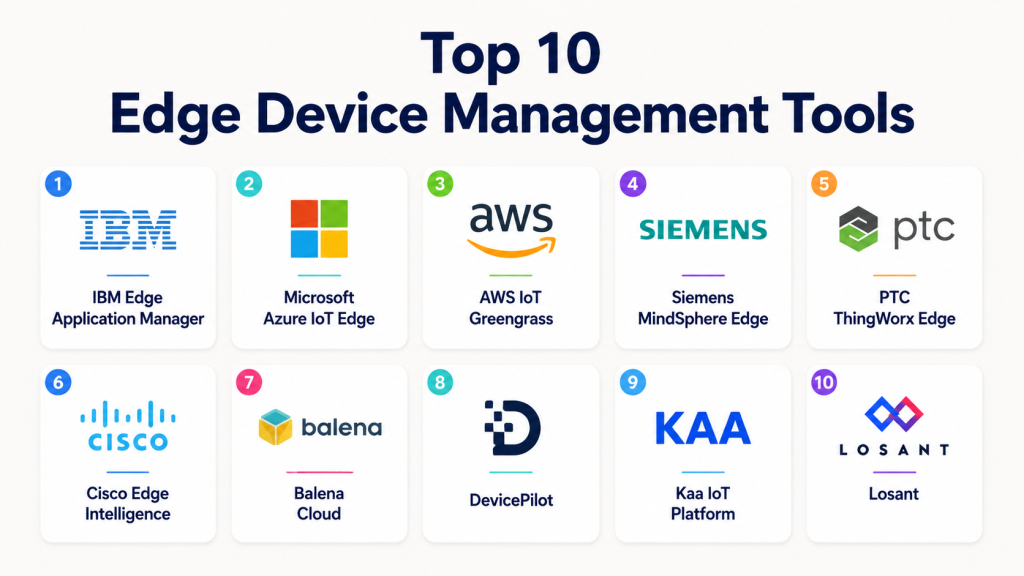
Top 10 Edge Device Management Tools
1- IBM Edge Application Manager
Short description : IBM Edge Application Manager enables autonomous management of thousands of edge devices with AI-driven insights. Ideal for industrial, retail, and healthcare edge deployments.
Key Features
- AI-driven edge orchestration
- Automated device provisioning and lifecycle management
- Real-time analytics at edge nodes
- OTA updates with rollback support
- Multi-cloud and hybrid deployment
- Integration with IBM Cloud and third-party platforms
Pros
- Scalable to tens of thousands of devices
- Strong security and compliance support
- AI-enabled predictive maintenance
Cons
- Complex setup for small deployments
- Licensing costs may be high for SMBs
Platforms / Deployment
- Web / Windows / Linux / iOS / Android
- Cloud / Hybrid
Security & Compliance
- SSO/SAML, MFA, encryption, audit logs, RBAC
- SOC 2, ISO 27001, GDPR
Integrations & Ecosystem
Supports integration with IoT frameworks and enterprise apps:
- IBM Cloud Pak for Data
- MQTT and OPC UA protocols
- REST APIs for custom applications
- Node-RED support
Support & Community
- Extensive documentation, tutorials, and enterprise support tiers
- Active community forums for developers
2- Microsoft Azure IoT Edge
Short description : Azure IoT Edge extends cloud intelligence to edge devices, enabling local processing and analytics. Suitable for enterprises with existing Microsoft ecosystem investments.
Key Features
- Modular containerized workloads at edge
- AI and ML models deployment
- Centralized device management through Azure IoT Hub
- Secure device-to-cloud communication
- Cross-platform device runtime
Pros
- Seamless integration with Azure cloud
- Scalable and flexible deployment
- Supports AI inferencing at edge
Cons
- Heavy reliance on Azure cloud services
- Learning curve for container-based deployment
Platforms / Deployment
- Windows / Linux / ARM-based devices
- Cloud / Hybrid
Security & Compliance
- Device identity and access management
- Encryption in transit and at rest
- ISO/IEC 27001, GDPR
Integrations & Ecosystem
Integrates with Microsoft ecosystem and IoT tools:
- Azure Machine Learning
- Azure Stream Analytics
- Logic Apps and Power Automate
- REST APIs and SDKs
Support & Community
- Comprehensive documentation and support tiers
- Active GitHub and Microsoft developer community
3- AWS IoT Greengrass
Short description : AWS IoT Greengrass allows edge devices to act locally while communicating with AWS cloud. Ideal for industrial and smart building deployments.
Key Features
- Local compute, messaging, and data caching
- OTA updates and Lambda function deployment
- Secure device authentication
- Integration with AWS analytics and AI services
- Multi-platform runtime support
Pros
- Tight integration with AWS ecosystem
- Strong security features
- Reliable for large-scale IoT networks
Cons
- Cloud dependency for advanced features
- Cost complexity for large device fleets
Platforms / Deployment
- Linux / ARM / Windows
- Cloud / Hybrid
Security & Compliance
- TLS encryption, IAM, audit logging
- SOC 2, ISO 27001, GDPR
Integrations & Ecosystem
- AWS AI and analytics services
- MQTT protocol and REST APIs
- Third-party IoT frameworks
Support & Community
- Enterprise support plans
- Developer forums and GitHub resources
4- Siemens MindSphere Edge
Short description : Siemens MindSphere Edge provides industrial IoT management with analytics and device orchestration. Focused on manufacturing and energy sectors.
Key Features
- Industrial-grade device management
- Edge analytics and digital twin support
- Remote firmware updates
- Integration with MindSphere cloud
- Predictive maintenance capabilities
Pros
- Strong industrial IoT focus
- Scalable analytics
- Reliable for critical infrastructure
Cons
- Specialized for Siemens ecosystem
- May be complex for small deployments
Platforms / Deployment
- Windows / Linux
- Cloud / Hybrid
Security & Compliance
- Encryption, SSO, RBAC
- ISO 27001, GDPR
Integrations & Ecosystem
- MindSphere platform integration
- OPC UA, Modbus protocols
- REST APIs for custom integrations
Support & Community
- Vendor-provided enterprise support
- Limited developer community
5- PTC ThingWorx Edge
Short description : ThingWorx Edge supports connected device management, analytics, and industrial automation. Best for IoT-enabled manufacturing operations.
Key Features
- Edge device orchestration
- AI-driven predictive analytics
- Remote software and firmware updates
- Integration with ThingWorx platform
- Real-time monitoring dashboards
Pros
- Deep integration with industrial IoT
- Scalable analytics and visualization
- Strong AI support
Cons
- Platform complexity
- Licensing costs
Platforms / Deployment
- Windows / Linux
- Cloud / Hybrid
Security & Compliance
- Encryption, access controls
- SOC 2, ISO 27001
Integrations & Ecosystem
- ThingWorx apps and analytics
- MQTT, REST APIs
- Third-party industrial protocols
Support & Community
- Professional support and documentation
- Active industrial user community
6- Cisco Edge Intelligence
Short description : Cisco Edge Intelligence provides secure edge device management with real-time data processing. Suitable for enterprise networks and industrial IoT.
Key Features
- Real-time edge data aggregation
- Device monitoring and remote updates
- AI-powered data filtering
- Integration with Cisco IoT cloud
- Secure communication channels
Pros
- Enterprise-grade network support
- Strong security features
- AI-assisted edge processing
Cons
- Best for Cisco-centric deployments
- May require Cisco expertise
Platforms / Deployment
- Linux / Windows / IoT gateways
- Cloud / Hybrid
Security & Compliance
- Encryption, MFA, RBAC
- SOC 2, ISO 27001
Integrations & Ecosystem
- Cisco IoT and networking stack
- REST APIs and SDKs
- Third-party IoT platforms
Support & Community
- Enterprise support tiers
- Cisco developer community
7- Balena Cloud
Short description : Balena Cloud manages containerized IoT devices at the edge, providing remote updates and monitoring. Ideal for developer-focused IoT projects.
Key Features
- Container-based device management
- OTA updates for fleets
- Real-time monitoring and logging
- Supports edge AI workloads
- Multi-platform device support
Pros
- Developer-friendly
- Easy to deploy containers
- Lightweight and scalable
Cons
- Limited enterprise-grade analytics
- Less focused on industrial IoT
Platforms / Deployment
- Linux / ARM / Windows
- Cloud
Security & Compliance
- Device authentication and encryption
- Not publicly stated
Integrations & Ecosystem
- Docker-based integrations
- REST APIs and SDKs
- Supports Node.js, Python, Go
Support & Community
- Documentation and developer support
- Active open-source community
8- DevicePilot
Short description : DevicePilot offers SaaS-based edge device management for IoT deployments. Focused on operational efficiency and automated monitoring.
Key Features
- Fleet monitoring and alerting
- Remote firmware updates
- Custom dashboards and reporting
- Integration with cloud platforms
- Automation workflows
Pros
- Easy to onboard new devices
- Automated alerts and analytics
- SaaS simplicity
Cons
- Limited AI capabilities
- Cloud-only deployment
Platforms / Deployment
- Web / Linux / Windows / ARM
- Cloud
Security & Compliance
- TLS encryption, role-based access
- Not publicly stated
Integrations & Ecosystem
- MQTT, REST APIs
- Cloud integrations
- Third-party IoT analytics tools
Support & Community
- SaaS support plans
- Limited developer community
9- Kaa IoT Platform
Short description : Kaa provides an open-source edge device management platform for IoT devices. Suitable for flexible, custom IoT deployments.
Key Features
- Device provisioning and configuration
- Remote software updates
- Analytics and reporting
- Multi-tenant support
- Integration with cloud services
Pros
- Open-source and flexible
- Supports custom workflows
- Scalable for large IoT fleets
Cons
- Requires in-house expertise
- Community support only for advanced issues
Platforms / Deployment
- Linux / Windows / Cloud
- Cloud / Self-hosted
Security & Compliance
- Encryption and access control
- Not publicly stated
Integrations & Ecosystem
- REST APIs and SDKs
- Cloud integration with AWS, Azure
- IoT protocols MQTT, CoAP
Support & Community
- Community support
- Documentation and tutorials
10- Losant
Short description : Losant offers an enterprise IoT platform with edge computing capabilities, device orchestration, and data analytics. Ideal for diverse IoT deployments.
Key Features
- Edge device orchestration and management
- Workflow automation
- Data visualization and analytics
- OTA updates
- Cloud and hybrid integration
Pros
- Flexible workflow design
- Good analytics and visualization
- Multi-cloud support
Cons
- Less focused on industrial-specific devices
- SaaS pricing may increase with scale
Platforms / Deployment
- Web / Linux / Windows / IoT gateways
- Cloud / Hybrid
Security & Compliance
- Encryption, role-based access
- Not publicly stated
Integrations & Ecosystem
- REST APIs, MQTT
- Integration with third-party analytics and dashboards
- Supports Node-RED and custom workflows
Support & Community
- Enterprise support plans
- Active online community
Comparison Table (Top 10)
| Tool Name | Best For | Platform(s) Supported | Deployment | Standout Feature | Public Rating |
|---|---|---|---|---|---|
| IBM Edge Application Manager | Industrial IoT | Web, Windows, Linux, iOS, Android | Cloud/Hybrid | AI-driven orchestration | N/A |
| Azure IoT Edge | Enterprises | Windows, Linux, ARM | Cloud/Hybrid | Containerized AI workloads | N/A |
| AWS IoT Greengrass | Industrial & Smart Buildings | Linux, ARM, Windows | Cloud/Hybrid | Local compute with cloud sync | N/A |
| Siemens MindSphere Edge | Manufacturing | Windows, Linux | Cloud/Hybrid | Digital twin and analytics | N/A |
| PTC ThingWorx Edge | Industrial IoT | Windows, Linux | Cloud/Hybrid | Edge analytics + dashboards | N/A |
| Cisco Edge Intelligence | Enterprise IoT | Linux, Windows, IoT gateways | Cloud/Hybrid | Real-time edge data filtering | N/A |
| Balena Cloud | Developer IoT | Linux, ARM, Windows | Cloud | Containerized device management | N/A |
| DevicePilot | Operational IoT | Web, Linux, Windows, ARM | Cloud | Fleet monitoring & automation | N/A |
| Kaa IoT Platform | Custom IoT | Linux, Windows, Cloud | Cloud/Self-hosted | Open-source flexibility | N/A |
| Losant | Enterprise IoT | Web, Linux, Windows, IoT gateways | Cloud/Hybrid | Workflow automation | N/A |
Evaluation & Scoring of Edge Device Management Tools
| Tool Name | Core (25%) | Ease (15%) | Integrations (15%) | Security (10%) | Performance (10%) | Support (10%) | Value (15%) | Weighted Total |
|---|---|---|---|---|---|---|---|---|
| IBM Edge Application Manager | 9 | 7 | 8 | 9 | 8 | 8 | 7 | 8.3 |
| Azure IoT Edge | 8 | 8 | 9 | 8 | 8 | 8 | 7 | 8.1 |
| AWS IoT Greengrass | 8 | 7 | 8 | 8 | 8 | 8 | 7 | 7.9 |
| Siemens MindSphere Edge | 8 | 6 | 7 | 8 | 8 | 7 | 6 | 7.4 |
| PTC ThingWorx Edge | 8 | 6 | 7 | 7 | 7 | 7 | 6 | 7.1 |
| Cisco Edge Intelligence | 7 | 7 | 7 | 8 | 7 | 7 | 6 | 7.2 |
| Balena Cloud | 7 | 8 | 7 | 6 | 7 | 6 | 7 | 7.0 |
| DevicePilot | 6 | 8 | 7 | 6 | 7 | 6 | 7 | 6.9 |
| Kaa IoT Platform | 7 | 6 | 7 | 6 | 7 | 6 | 7 | 6.9 |
| Losant | 7 | 7 | 7 | 6 | 7 | 7 | 7 | 7.0 |
Which Edge Device Management Tool Is Right for You?
Solo / Freelancer
- Balena Cloud is lightweight and developer-friendly.
- Kaa IoT is open-source and allows experimentation on small fleets.
SMB
- DevicePilot provides SaaS simplicity for smaller fleets.
- Losant offers workflow automation without complex infrastructure.
Mid-Market
- Azure IoT Edge or AWS IoT Greengrass for containerized deployments with moderate scale.
- PTC ThingWorx for industrial edge analytics.
Enterprise
- IBM Edge Application Manager for large, AI-driven orchestration.
- Siemens MindSphere Edge for manufacturing and industrial deployments.
- Cisco Edge Intelligence for enterprise-grade IoT networks.
Budget vs Premium
- Open-source Kaa IoT and Balena Cloud suit budget-conscious organizations.
- Premium options like IBM and Siemens offer enterprise-grade support and analytics.
Feature Depth vs Ease of Use
- Deep industrial and AI features: IBM, PTC, Siemens
- Ease of onboarding and SaaS simplicity: DevicePilot, Losant
Integrations & Scalability
- Azure IoT Edge, AWS Greengrass, IBM Edge scale across thousands of devices.
- Balena and Kaa offer developer extensibility for custom integrations.
Security & Compliance Needs
- For regulated environments (healthcare, utilities), IBM, Azure, and Siemens provide strong compliance features.
- Smaller SaaS or open-source platforms may require additional security implementations.
Frequently Asked Questions (FAQs)
1- What pricing models are common for edge device management tools?
Most tools offer subscription-based pricing, either per device or per deployment scale. Open-source tools like Kaa may require only hosting and support costs.
2- How complex is onboarding for edge devices?
Enterprise tools may require detailed setup and provisioning, whereas SaaS platforms offer guided onboarding and remote provisioning for smaller fleets.
3- Can these tools manage thousands of devices?
Yes, solutions like IBM Edge Application Manager, Azure IoT Edge, and AWS Greengrass scale to tens of thousands of devices with centralized orchestration.
4- How do updates and patches work remotely?
Most tools support over-the-air updates with rollback capability, ensuring devices stay current
without disrupting operations.
5- Are these platforms secure for sensitive data?
Enterprise tools provide encryption, RBAC, MFA, and compliance with SOC 2, ISO 27001, and GDPR. Open-source tools may require custom security measures.
6- Can I integrate these tools with existing cloud or IT systems?
Yes, most platforms offer REST APIs, MQTT, OPC UA, and cloud integration capabilities for seamless interoperability.
7- What common mistakes should buyers avoid?
Avoid ignoring security, scalability, and compatibility with existing IT/OT systems when selecting an edge device management tool.
8- How do I switch from one edge management tool to another?
Plan migration carefully, export device configurations, validate integration compatibility, and test OTA updates on a small pilot fleet first.
9- Can AI and analytics be applied at the edge?
Yes, tools like IBM, Azure, and AWS provide AI/ML capabilities for predictive maintenance, anomaly detection, and local decision-making.
10- Are cloud-only tools sufficient for all edge use cases?
Cloud-only platforms may work for SMBs, but hybrid or on-prem options are preferable for latency-sensitive or industrial environments.
Conclusion
Edge Device Management Tools are essential for modern enterprises operating large IoT and distributed device networks. Choosing the right platform depends on your fleet size, industry requirements, security needs, and AI/analytics expectations. Enterprises benefit from feature-rich, scalable tools like IBM Edge Application Manager, while SMBs and developers may prefer SaaS or open-source options like DevicePilot or Balena Cloud. The recommended next steps are to shortlist 2–3 tools, run pilot deployments, validate integrations and security, and scale gradually as the organization’s edge network grows.

Find Trusted Cardiac Hospitals
Compare heart hospitals by city and services — all in one place.
Explore Hospitals
Edge device management is rarely just about monitoring device status. As deployments grow across remote locations, organizations often find that remote diagnostics, configuration consistency, and minimizing on-site maintenance visits deliver the biggest operational benefits.