Introduction
Meal Planning Apps are digital platforms that help individuals, families, and organizations plan, track, and manage meals. They provide tools for creating weekly meal plans, generating shopping lists, monitoring nutrition, and integrating with fitness and health devices. meal planning has become increasingly important due to the rise in health awareness, busy lifestyles, and personalized dietary needs.
Real-world use cases include:
- Individuals managing weight loss, keto, vegan, or diabetic diets.
- Families organizing weekly meals and grocery shopping.
- Fitness coaches planning diet schedules for clients.
- Corporate wellness programs offering nutrition support.
- Dietitians tracking client meal adherence and nutrition intake.
Evaluation criteria for buyers:
- Recipe and meal database quality
- AI-powered meal suggestions
- Shopping list automation
- Integration with health and fitness apps
- Ease of use and UI quality
- Multi-device sync and cloud backup
- Offline logging capabilities
- Subscription cost and plan options
- Customization for dietary goals
- Analytics and reporting features
Best for: Health-conscious individuals, families, fitness coaches, dietitians, and corporate wellness programs.
Not ideal for: Users who need occasional meal ideas without tracking or analytics.
Why It Matters Now
- Health Awareness: Personalized meal planning improves nutrition and overall wellness.
- Time-Saving: Automatic shopping lists and recipe suggestions reduce prep time.
- Dietary Management: Supports special diets, allergies, and chronic conditions.
- Integration: Syncs with wearable devices and fitness apps for holistic health tracking.
- Lifestyle Convenience: Helps busy users plan meals efficiently and consistently.
Key Trends in Meal Planning Apps
- AI-driven personalized meal recommendations.
- Integration with wearable devices and smart kitchen appliances.
- Cloud-first architecture with offline support.
- Recipe databases with detailed nutritional analysis.
- Multi-language support and culturally diverse meal options.
- Gamification and habit tracking features.
- Corporate wellness program integration.
- Automated grocery lists and online delivery integration.
- Freemium and subscription pricing tiers with premium analytics.
- Data privacy and HIPAA/GDPR compliance.
How We Selected These Tools (Methodology)
- Market adoption and user base size.
- Completeness of features for meal planning, tracking, and analytics.
- Reliability, performance, and offline functionality.
- Security and privacy, including GDPR and HIPAA.
- Integration ecosystem with health and fitness apps.
- Suitability for solo users, families, SMBs, and enterprises.
- Ease of use and onboarding experience.
- Community support and tutorials.
- AI personalization and recommendations.
- Pricing structure and overall value.
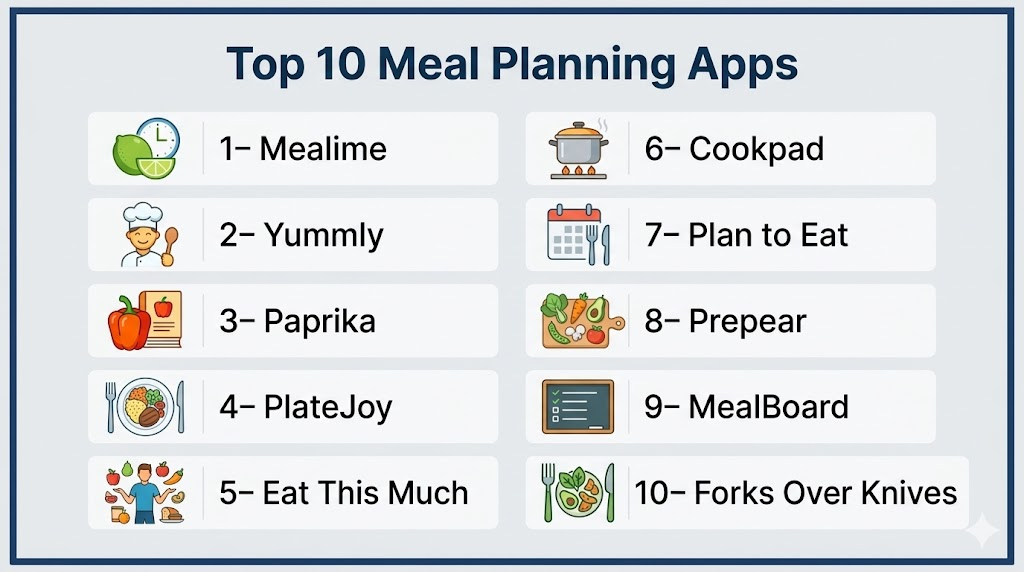
Top 10 Meal Planning Apps
1- Mealime
Short description: Simplified meal planner for individuals and families with AI-generated meal plans.
Key Features
- Personalized AI meal plans
- Grocery list generation
- Recipe customization
- Dietary preference filters
- One-click shopping export
Pros
- Quick and intuitive setup
- Supports multiple dietary needs
Cons
- Limited free features
- Some recipes may require ingredient substitution
Platforms / Deployment
- iOS / Android / Web
- Cloud
Security & Compliance
- Not publicly stated
Integrations & Ecosystem
- Apple Health, Google Fit
- Grocery app integration
Support & Community
- Email support, tutorials
2- Yummly
Short description: Meal planning with personalized recipe recommendations and shopping list automation.
Key Features
- Personalized recipes
- AI meal planning
- Shopping list generation
- Nutritional information
- Recipe video guides
Pros
- Extensive recipe database
- Smart recommendation engine
Cons
- Premium required for advanced analytics
- Overwhelming interface for new users
Platforms / Deployment
- iOS / Android / Web
- Cloud
Security & Compliance
- Not publicly stated
Integrations & Ecosystem
- Smart kitchen devices
- Grocery apps
Support & Community
- Tutorials, FAQs, email support
3- Paprika
Short description: Recipe-focused meal planner with grocery integration and cross-device sync.
Key Features
- Recipe import and organization
- Meal calendar planning
- Grocery list generation
- Nutritional tracking
- Multi-device sync
Pros
- Excellent recipe management
- Works across devices
Cons
- No AI suggestions
- Paid upfront
Platforms / Deployment
- iOS / Android / Windows / Mac
- Cloud
Security & Compliance
- Not publicly stated
Integrations & Ecosystem
- Grocery apps, Apple Health
- Recipe import from websites
Support & Community
- Tutorials, support forum
4- PlateJoy
Short description: Personalized diet plans with AI-generated meal schedules.
Key Features
- AI meal planning
- Grocery delivery integration
- Dietary customization
- Calorie and macro tracking
- Multi-person support
Pros
- Tailored meal plans
- Integrated grocery options
Cons
- Subscription required
- Limited offline functionality
Platforms / Deployment
- iOS / Android / Web
- Cloud
Security & Compliance
- Not publicly stated
Integrations & Ecosystem
- Grocery apps, fitness trackers
Support & Community
- Email support, guides
5- Eat This Much
Short description: Automated meal planner for weight management with nutrition tracking.
Key Features
- Auto-generated meal plans
- Macro and calorie tracking
- Grocery list export
- Custom diet goals
- Recipe database
Pros
- Saves planning time
- Supports multiple diets
Cons
- Free version limited
- Premium subscription required
Platforms / Deployment
- iOS / Android / Web
- Cloud
Security & Compliance
- Not publicly stated
Integrations & Ecosystem
- Fitness apps, grocery apps
Support & Community
- Tutorials, email support
6- Cookpad
Short description: Community-driven recipe app with meal planning capabilities.
Key Features
- Recipe sharing and discovery
- Meal calendar
- Grocery list generation
- Video and photo guides
- Community engagement
Pros
- Social inspiration
- Family-friendly
Cons
- Limited AI recommendations
- Some premium features
Platforms / Deployment
- iOS / Android / Web
- Cloud
Security & Compliance
- Not publicly stated
Integrations & Ecosystem
- Grocery apps, smart kitchen devices
Support & Community
- Community forums, tutorials
7- Plan to Eat
Short description: Simplifies planning with recipe storage and automated grocery lists.
Key Features
- Meal calendar planning
- Recipe organization
- Shopping list automation
- Cross-device sync
- Recipe import
Pros
- Streamlined meal planning
- Supports multiple users
Cons
- Subscription required
- No AI meal suggestions
Platforms / Deployment
- iOS / Android / Web
- Cloud
Security & Compliance
- Not publicly stated
Integrations & Ecosystem
- Grocery apps
- Exportable shopping lists
Support & Community
- Email support, guides
8- Prepear
Short description: Family-friendly meal planner with recipe database and shopping integration.
Key Features
- Recipe organization
- Meal calendar
- Grocery list generation
- Family account support
- Nutrition tracking
Pros
- Simple interface
- Family meal planning
Cons
- Premium subscription needed
- Limited AI guidance
Platforms / Deployment
- iOS / Android / Web
- Cloud
Security & Compliance
- Not publicly stated
Integrations & Ecosystem
- Grocery apps, Apple Health / Google Fit
Support & Community
- Tutorials, email support
9- MealBoard
Short description: Integrated meal planner with recipes, grocery lists, and nutrition tracking.
Key Features
- Recipe import and storage
- Grocery list automation
- Meal calendar
- Nutritional analysis
- Multi-device sync
Pros
- Strong recipe management
- Multi-person support
Cons
- Paid app
- No AI suggestions
Platforms / Deployment
- iOS / Android / Web
- Cloud
Security & Compliance
- Not publicly stated
Integrations & Ecosystem
- Grocery apps, health apps
Support & Community
- Tutorials, email support
10- Forks Over Knives
Short description: Plant-based meal planner with recipes, grocery lists, and tutorials.
Key Features
- Plant-based meal suggestions
- Weekly meal calendar
- Grocery list generation
- Recipe video tutorials
- Nutrition information
Pros
- Specialized for plant-based diets
- Easy planning
Cons
- Subscription required
- Limited diet customization
Platforms / Deployment
- iOS / Android / Web
- Cloud
Security & Compliance
- Not publicly stated
Integrations & Ecosystem
- Grocery apps, health trackers
Support & Community
- Tutorials, email support
Comparison Table (Top 10)
| Tool Name | Best For | Platform(s) Supported | Deployment | Standout Feature | Public Rating |
|---|---|---|---|---|---|
| Mealime | Quick personal meal planning | iOS / Android / Web | Cloud | AI meal plans | N/A |
| Yummly | Recipe discovery | iOS / Android / Web | Cloud | Smart recipe recommendations | N/A |
| Paprika | Recipe management | iOS / Android / Windows / Mac | Cloud | Recipe import & calendar | N/A |
| PlateJoy | Personalized diet | iOS / Android / Web | Cloud | AI-driven meal planning | N/A |
| Eat This Much | Automated meal planning | iOS / Android / Web | Cloud | Automatic meal generation | N/A |
| Cookpad | Community & inspiration | iOS / Android / Web | Cloud | Social recipe sharing | N/A |
| Plan to Eat | Family & meal calendar | iOS / Android / Web | Cloud | Grocery automation | N/A |
| Prepear | Family-friendly planning | iOS / Android / Web | Cloud | Family meal planning | N/A |
| MealBoard | Efficient multi-person plans | iOS / Android / Web | Cloud | Integrated grocery list | N/A |
| Forks Over Knives | Plant-based diet planning | iOS / Android / Web | Cloud | Plant-based recipes | N/A |
Evaluation & Scoring of Meal Planning Apps
| Tool Name | Core (25%) | Ease (15%) | Integrations (15%) | Security (10%) | Performance (10%) | Support (10%) | Value (15%) | Weighted Total (0–10) |
|---|---|---|---|---|---|---|---|---|
| Mealime | 9 | 9 | 8 | 7 | 8 | 8 | 8 | 8.30 |
| Yummly | 9 | 8 | 8 | 7 | 9 | 8 | 8 | 8.35 |
| Paprika | 8 | 9 | 7 | 7 | 8 | 8 | 8 | 8.05 |
| PlateJoy | 10 | 8 | 8 | 8 | 9 | 8 | 8 | 8.60 |
| Eat This Much | 9 | 8 | 7 | 7 | 8 | 7 | 8 | 7.95 |
| Cookpad | 8 | 9 | 7 | 7 | 8 | 7 | 8 | 7.90 |
| Plan to Eat | 8 | 8 | 7 | 7 | 8 | 7 | 8 | 7.85 |
| Prepear | 8 | 8 | 7 | 7 | 8 | 7 | 8 | 7.85 |
| MealBoard | 8 | 8 | 7 | 7 | 8 | 7 | 8 | 7.85 |
| Forks Over Knives | 9 | 8 | 7 | 7 | 8 | 7 | 8 | 8.00 |
Which Meal Planning App Is Right for You?
Solo / Freelancer
Mealime, Paprika, and Eat This Much are ideal for individuals seeking quick, personalized meal plans. They provide recipe recommendations, grocery lists, and AI suggestions for efficient meal preparation. Free and premium options allow flexibility based on feature needs.
SMB
Yummly, PlateJoy, and Prepear suit small teams or family meal planning. They offer collaboration features, shared meal schedules, grocery integration, and trend analysis. Cloud syncing ensures all members stay aligned.
Mid-Market
Plan to Eat, Cookpad, and MealBoard offer mid-sized organizations robust recipe management, analytics, and multi-user support. These apps integrate with grocery apps and health platforms for scalable nutrition management.
Enterprise
PlateJoy Enterprise and Yummly Premium cater to corporate wellness programs. Multi-user dashboards, team dietary tracking, and detailed analytics allow organizations to promote nutrition initiatives at scale.
Budget vs Premium
Free tiers provide basic meal planning, recipe suggestions, and simple grocery lists. Premium tiers unlock AI recommendations, analytics, advanced customization, and multi-user support. Enterprises require subscription plans for team management and reporting.
Feature Depth vs Ease of Use
Depth-focused apps: PlateJoy, Yummly, Eat This Much.
Easy-to-use apps: Mealime, Paprika, Prepear.
Balance is essential: choose intuitive apps for fast adoption or feature-rich apps for comprehensive tracking.
Integrations & Scalability
Apps integrate with grocery delivery services, Apple Health, Google Fit, and smart kitchen devices. Enterprise options support multi-user scaling and API integration with wellness programs. Cloud-based syncing ensures real-time updates.
Security & Compliance Needs
Enterprise plans and premium tiers offer encryption, role-based access, and privacy compliance. Free or basic apps follow standard cloud security protocols. Verify GDPR/HIPAA adherence when handling sensitive health data.
Frequently Asked Questions (FAQs)
1. What pricing models are available?
Free, subscription, and enterprise tiers; free for individuals, premium for AI meal suggestions, enterprise for multi-user tracking.
2. Can these apps work offline?
Some apps offer offline logging; cloud features require internet. Offline data syncs automatically when connected.
3. Are AI-powered recommendations included?
PlateJoy, Mealime, and Yummly provide AI meal suggestions; premium subscription may unlock advanced features.
4. Can multiple users share a plan?
Enterprise and family-focused apps allow multi-user collaboration, sharing meal plans and grocery lists.
5. How accurate are nutritional calculations?
Most apps provide estimates; wearable integration and database quality improve precision.
6. Can these apps integrate with grocery delivery?
Yes, many apps support grocery delivery services and smart shopping lists.
7. Do they support special diets?
Yes, including vegan, keto, diabetic-friendly, and allergy-specific meal plans.
8. Are wearable devices required?
No, most apps work independently, but integration with wearables improves tracking of calories and macros.
9. Is data secure?
Premium and enterprise apps use encryption and secure cloud storage. Free apps follow standard protocols.
10. Can these apps be used in corporate wellness programs?
Yes, enterprise-tier apps provide dashboards, team reporting, and multi-user tracking for wellness initiatives.
Conclusion
Selecting the right Meal Planning App depends on user type, diet goals, and usage context. Solo users may prefer Mealime, Paprika, or Eat This Much for intuitive meal planning and AI guidance. SMBs and families benefit from Yummly, PlateJoy, or Prepear with shared meal schedules and grocery automation. Mid-sized organizations can leverage Plan to Eat, Cookpad, or MealBoard for team management and analytics. Enterprises rely on PlateJoy Enterprise or Yummly Premium for scalable dashboards, multi-user tracking, and integration with corporate wellness programs. Evaluate AI-driven suggestions, integration with health tools, and reporting features. Offline access, cloud syncing, and secure data storage ensure flexibility and privacy. Test 2–3 apps to identify the best fit. Ultimately, the right app balances ease-of-use, personalization, and feature depth to optimize meal planning and nutrition outcomes.

Find Trusted Cardiac Hospitals
Compare heart hospitals by city and services — all in one place.
Explore Hospitals
Meal planning apps are most effective when they simplify the entire process of organizing meals, creating shopping lists, and tracking nutrition. By offering personalized meal suggestions, recipe management, grocery integration, and dietary preferences, these tools help users save time, reduce food waste, and maintain healthier eating habits.