Introduction
Returns Management Software helps ecommerce brands, retailers, marketplaces, and logistics teams manage the full returns lifecycle, from return request creation to approval, label generation, refund, exchange, store credit, inspection, restocking, reverse logistics, and reporting. Instead of handling returns manually through emails, spreadsheets, customer support tickets, or disconnected shipping tools, these platforms create a structured workflow for both customers and operations teams. Returns management matters because returns directly affect customer experience, profit margins, inventory accuracy, warehouse workload, fraud risk, and repeat purchases. A strong returns platform helps businesses reduce support tickets, automate return approvals, encourage exchanges instead of refunds, control return policies, and capture insights into why products come back.
Real World Use Cases
- Creating branded self-service return portals for customers
- Automating return approvals, labels, refunds, exchanges, and store credits
- Managing reverse logistics between customers, stores, warehouses, and 3PL partners
- Reducing refund loss by encouraging exchanges and instant store credit
- Tracking return reasons, return rates, fraud patterns, and product quality issues
Evaluation Criteria for Buyers
- Return portal experience and customization
- Exchange, refund, and store credit workflows
- Return policy automation and rule configuration
- Shipping label generation and carrier integrations
- Ecommerce, OMS, WMS, 3PL, and help desk integrations
- Fraud prevention and return abuse controls
- Analytics for return reasons, costs, products, and customers
- Multi-channel and international return support
- Security, permissions, and audit controls
- Total cost, operational savings, and implementation effort
Best for: Ecommerce brands, D2C retailers, fashion and apparel stores, footwear brands, electronics sellers, marketplace operators, subscription commerce teams, omnichannel retailers, 3PL-supported brands, and customer experience teams that need controlled, customer-friendly return workflows.
Not ideal for: Very small businesses with extremely low return volume, sellers that only operate through marketplaces where returns are fully handled by the marketplace, or companies that only need basic manual refunds without exchanges, automation, analytics, or reverse logistics control.
Key Trends in Returns Management Software
- Exchange-first return flows: Retailers are prioritizing exchanges, store credit, and product recommendations to retain revenue instead of immediately issuing refunds.
- AI-assisted return prevention: Modern systems increasingly use return reason data, size feedback, product quality signals, and customer behavior to identify why products are returned and prevent repeat issues.
- Return fraud and abuse detection: Businesses need better controls for serial returners, damaged item claims, policy abuse, wardrobing, false return reasons, and suspicious refund patterns.
- Branded self-service portals: Customers now expect simple return portals where they can select items, choose return reasons, receive instructions, and track return status without contacting support.
- Omnichannel returns: Retailers need workflows for buy-online-return-in-store, ship-back returns, drop-off returns, exchange in store, and cross-channel refunds.
- Reverse logistics optimization: Returns platforms are becoming more connected with carriers, warehouses, 3PLs, refurbishers, recommerce channels, and inventory systems.
- Sustainability and recommerce workflows: Businesses are tracking return disposition, resale, repair, refurbishment, donation, recycling, and waste reduction more closely.
- International returns support: Cross-border ecommerce requires return labels, customs documentation, local carriers, regional policies, duties, and localized customer instructions.
- Return analytics for product teams: Return reason data is increasingly used by merchandising, product, quality, sizing, and supplier teams to improve future product decisions.
- Integration-first operations: Returns software is most valuable when it connects with ecommerce platforms, help desks, OMS, WMS, CRM, shipping tools, payment systems, and analytics platforms.
How We Selected These Tools
- We selected tools widely recognized in ecommerce returns, post-purchase experience, reverse logistics, exchange automation, and retail operations.
- We prioritized platforms that support branded return portals, return authorization, refunds, exchanges, store credit, shipping labels, and analytics.
- We included tools suitable for D2C brands, SMB ecommerce teams, mid-market retailers, enterprise retailers, and logistics-heavy operations.
- We considered fit across apparel, footwear, electronics, beauty, home goods, subscription commerce, marketplaces, and omnichannel retail.
- We evaluated integration potential with Shopify, BigCommerce, WooCommerce, Adobe Commerce, Salesforce Commerce Cloud, help desks, carriers, OMS, WMS, and 3PL tools.
- We considered usability for customer support, warehouse, operations, ecommerce, finance, and customer experience teams.
- We looked at features that can reduce refund loss, improve customer satisfaction, prevent fraud, and streamline return processing.
- We considered security posture signals such as permissions, admin controls, auditability, encryption, and customer data handling.
- We avoided guessing public ratings, exact pricing, certifications, or unsupported compliance claims.
- We focused on practical buyer fit rather than naming one universal best platform.
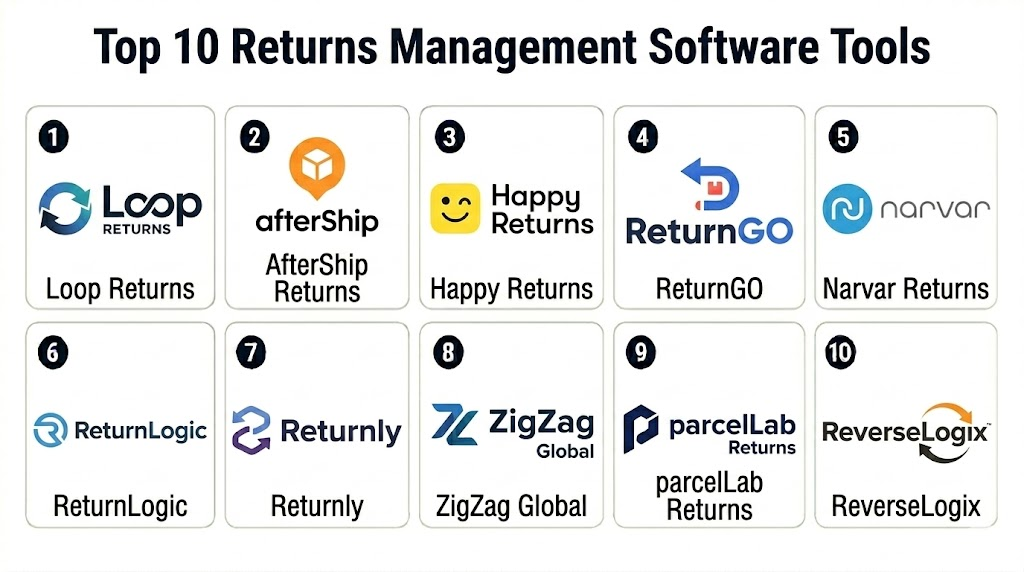
Top 10 Returns Management Software Tools
1- Loop Returns
Short description: Loop Returns is a returns and exchange platform built mainly for ecommerce brands that want to retain revenue through exchanges, store credit, and branded return experiences. It is especially popular with D2C retailers that want customer-friendly returns without losing every return as a refund.
Key Features
- Branded self-service return portal
- Exchange-first workflows
- Store credit and refund management
- Return policy rules and automation
- Return reason tracking and analytics
- Ecommerce platform integrations
- Customer communication and return status updates
Pros
- Strong focus on revenue retention through exchanges
- Good fit for D2C and Shopify-centered brands
- Helps reduce customer support workload through self-service returns
Cons
- May be more focused on ecommerce brands than complex enterprise retail operations
- Advanced workflows may depend on plan and integrations
- Businesses with low return volume may not need the full platform
Platforms / Deployment
Web
Cloud
Security & Compliance
Security capabilities vary by plan and configuration. Buyers should verify SSO, permissions, encryption, audit logs, customer data handling, and compliance documentation directly with the vendor.
Integrations & Ecosystem
Loop Returns fits ecommerce operations where returns need to connect with storefront, fulfillment, support, and customer communication workflows.
- Shopify ecosystem
- Ecommerce platforms
- Shipping carriers
- Help desk tools
- Warehouse and fulfillment workflows
- Customer communication tools
Support & Community
Loop Returns provides documentation, onboarding resources, customer support, and ecommerce returns guidance. Support depth may vary by plan and merchant size.
2- AfterShip Returns
Short description: AfterShip Returns helps ecommerce businesses create branded return portals, automate return approvals, generate return labels, and track return shipments. It is useful for brands that want returns connected with tracking, shipping, notifications, and post-purchase workflows.
Key Features
- Branded returns portal
- Automated return rules and approvals
- Return label generation
- Return shipment tracking
- Refund and exchange support
- Customer notifications
- Return analytics and reason tracking
Pros
- Strong fit for ecommerce brands already focused on post-purchase experience
- Good carrier and tracking-oriented workflow support
- Useful for reducing support tickets around return status
Cons
- Advanced operations may require careful integration setup
- Enterprise reverse logistics workflows should be validated
- Some features may depend on selected plan
Platforms / Deployment
Web
Cloud
Security & Compliance
Security details vary by plan and configuration. Buyers should verify permissions, encryption, authentication controls, audit logs, customer data protection, and compliance documentation.
Integrations & Ecosystem
AfterShip Returns works well for ecommerce brands that want returns, tracking, notifications, and shipping workflows connected.
- Ecommerce platforms
- Shipping carriers
- Tracking tools
- Help desk systems
- Email and notification tools
- Analytics workflows
Support & Community
AfterShip provides documentation, support resources, onboarding guidance, and post-purchase workflow education. Support depth may vary by plan.
3- Happy Returns
Short description: Happy Returns is a returns solution known for return portals, return bars, box-free drop-off options, and reverse logistics support. It is especially useful for brands that want convenient customer drop-off experiences and operationally efficient return handling.
Key Features
- Branded return initiation workflows
- Box-free and label-free return options depending on network availability
- Return drop-off network support
- Refund and exchange workflows
- Reverse logistics processing
- Return status tracking
- Return analytics and operational reporting
Pros
- Strong customer convenience for drop-off returns
- Useful for brands trying to simplify reverse logistics
- Helps reduce friction in return packaging and shipping workflows
Cons
- Drop-off network availability may vary by region
- Fit depends on return volume and logistics model
- Businesses should validate integration and operational requirements
Platforms / Deployment
Web
Cloud
Security & Compliance
Security capabilities vary by configuration and agreement. Buyers should verify data protection, permissions, encryption, audit controls, payment and refund handling, and compliance documentation.
Integrations & Ecosystem
Happy Returns is useful when return operations need to connect with ecommerce, refund workflows, logistics networks, and customer communication systems.
- Ecommerce platforms
- Shipping and logistics workflows
- Payment and refund systems
- Customer support tools
- Warehouse and processing workflows
- Analytics tools
Support & Community
Happy Returns provides implementation support, documentation, operational guidance, and return network resources depending on agreement and brand requirements.
4- ReturnGO
Short description: ReturnGO is a returns and exchange automation platform for ecommerce brands that need branded return portals, policy automation, exchanges, store credit, and return analytics. It is useful for brands that want flexible return rules and revenue-retention workflows.
Key Features
- Branded return portal
- Automated return policy rules
- Exchange and store credit workflows
- Refund automation support
- Return reason analytics
- Customer communication workflows
- Ecommerce and support integrations
Pros
- Strong exchange and automation workflow support
- Good fit for growing ecommerce brands
- Helps teams configure return policies without fully manual handling
Cons
- Complex enterprise return networks may need deeper evaluation
- Advanced workflows can require careful setup
- Small sellers may not need detailed automation
Platforms / Deployment
Web
Cloud
Security & Compliance
Security features vary by plan and configuration. Buyers should verify user permissions, encryption, audit logs, authentication, data handling, and compliance documentation.
Integrations & Ecosystem
ReturnGO fits ecommerce teams that need return rules, customer communication, support tools, and storefront data connected.
- Ecommerce platforms
- Help desk tools
- Shipping carriers
- Email and notification tools
- Store credit workflows
- Analytics and reporting tools
Support & Community
ReturnGO provides documentation, onboarding resources, customer support, and ecommerce returns guidance. Support depth may vary by plan and implementation scope.
5- Narvar Returns
Short description: Narvar Returns supports post-purchase customer experience, branded returns, return tracking, notifications, and customer communication. It is best for retailers and brands that want returns connected with delivery experience, tracking, and customer engagement.
Key Features
- Branded return experiences
- Return initiation and tracking
- Customer notifications
- Exchange and refund support
- Return reason capture
- Post-purchase communication workflows
- Analytics for customer experience and return behavior
Pros
- Strong post-purchase customer experience focus
- Useful for retailers managing delivery and return communication
- Helps reduce customer support questions around order and return status
Cons
- Best fit depends on broader post-purchase strategy
- May require integration planning with existing commerce and fulfillment systems
- Smaller brands may prefer simpler return-focused tools
Platforms / Deployment
Web
Cloud
Security & Compliance
Security capabilities vary by contract and configuration. Buyers should verify SSO, permissions, encryption, audit controls, customer data protection, and compliance documentation.
Integrations & Ecosystem
Narvar Returns works well where returns are part of a broader post-purchase experience strategy.
- Ecommerce platforms
- Order management systems
- Shipping carriers
- Customer support tools
- Email and notification systems
- Analytics platforms
Support & Community
Narvar provides implementation support, documentation, customer success resources, and post-purchase experience expertise. Support scope depends on contract and deployment size.
6- ReturnLogic
Short description: ReturnLogic is a returns management platform for ecommerce brands that need return automation, exchanges, refund workflows, operational visibility, and return analytics. It is useful for brands that want better control over return operations and decision-making.
Key Features
- Branded return portal
- Return merchandise authorization workflows
- Exchange and refund support
- Return policy automation
- Return reason and product analytics
- Operational reporting
- Ecommerce and workflow integrations
Pros
- Strong focus on return operations and analytics
- Useful for brands that want to understand why returns happen
- Helps automate customer and operations workflows
Cons
- May require process setup for best results
- Smaller brands with few returns may not need deep analytics
- Advanced integrations should be validated during pilot
Platforms / Deployment
Web
Cloud
Security & Compliance
Security capabilities vary by plan and configuration. Buyers should verify user permissions, encryption, access controls, audit logs, customer data protection, and compliance documentation.
Integrations & Ecosystem
ReturnLogic fits ecommerce return operations where returns need to connect with store platforms, support teams, and warehouse workflows.
- Ecommerce platforms
- Shipping tools
- Help desk platforms
- Inventory workflows
- Fulfillment systems
- Reporting and analytics tools
Support & Community
ReturnLogic provides onboarding, documentation, customer support, and returns best-practice guidance. Support level may vary by plan.
7- Returnly
Short description: Returnly is a returns solution focused on customer-friendly returns, exchanges, and instant credit-style experiences. It is useful for ecommerce brands that want to improve the return experience while encouraging customers to keep shopping.
Key Features
- Branded return workflows
- Exchange and refund support
- Instant credit-style return experiences depending on configuration
- Return portal functionality
- Customer communication workflows
- Return reason tracking
- Ecommerce integration support
Pros
- Strong focus on customer experience and retention
- Useful for brands that want to encourage repurchase during returns
- Helps reduce friction in the returns journey
Cons
- Availability and product direction should be validated during evaluation
- May not fit every reverse logistics model
- Advanced operations should be tested with real workflows
Platforms / Deployment
Web
Cloud
Security & Compliance
Security details vary by current product configuration and agreement. Buyers should verify permissions, encryption, payment and refund handling, audit controls, and compliance documentation.
Integrations & Ecosystem
Returnly fits ecommerce brands that want return workflows connected with checkout, store credit, customer communication, and fulfillment systems.
- Ecommerce platforms
- Payment and refund workflows
- Shipping tools
- Customer support tools
- Store credit workflows
- Analytics systems
Support & Community
Support and onboarding resources may vary by current product availability and agreement. Buyers should validate support model before selection.
8- ZigZag Global
Short description: ZigZag Global is a returns management and reverse logistics platform designed for retailers that need domestic and international returns, carrier options, return portals, and operational control. It is especially useful for brands managing cross-border returns.
Key Features
- Branded returns portal
- Domestic and international return workflows
- Carrier and logistics network support
- Return label and documentation support
- Refund and exchange workflows
- Return tracking and status visibility
- Analytics for returns and reverse logistics
Pros
- Strong fit for international and cross-border returns
- Useful for retailers needing logistics flexibility
- Helps manage reverse logistics complexity
Cons
- Best value depends on shipping regions and return volume
- Implementation may require logistics process alignment
- Smaller domestic-only retailers may not need full network depth
Platforms / Deployment
Web
Cloud
Security & Compliance
Security capabilities vary by contract and configuration. Buyers should verify permissions, encryption, audit logs, customer data handling, logistics data governance, and compliance documentation.
Integrations & Ecosystem
ZigZag Global fits retailers that need returns connected with carriers, ecommerce platforms, international logistics, and warehouse workflows.
- Ecommerce platforms
- Carrier networks
- Warehouse systems
- Order management tools
- Customer communication tools
- Analytics and reporting systems
Support & Community
ZigZag provides onboarding, logistics support, documentation, and reverse logistics expertise. Support depth depends on contract and region.
9- parcelLab Returns
Short description: parcelLab Returns supports branded post-purchase experiences, return initiation, return tracking, customer communication, and operational visibility. It is suited for retailers that want returns integrated with customer engagement and delivery communication.
Key Features
- Branded return communication
- Return portal and initiation workflows
- Return status tracking
- Customer notifications
- Carrier and logistics integration
- Analytics and customer experience reporting
- Post-purchase workflow support
Pros
- Strong customer communication and branded experience focus
- Useful for retailers managing returns as part of post-purchase engagement
- Helps reduce support inquiries around return status
Cons
- May be broader than teams needing only a simple return portal
- Logistics and ecommerce integrations should be validated
- Smaller brands may prefer lighter tools
Platforms / Deployment
Web
Cloud
Security & Compliance
Security capabilities vary by contract and configuration. Buyers should verify SSO, permissions, encryption, audit controls, data protection, and compliance documentation.
Integrations & Ecosystem
parcelLab Returns works best where returns are part of a broader customer communication and post-purchase experience strategy.
- Ecommerce platforms
- Shipping carriers
- Customer support tools
- Order management systems
- Notification channels
- Analytics tools
Support & Community
parcelLab provides customer success resources, documentation, implementation support, and post-purchase experience guidance. Support scope depends on agreement.
10- ReverseLogix
Short description: ReverseLogix is a reverse logistics and returns management platform for retailers, manufacturers, 3PLs, and enterprises that need deeper control over return operations, repair, refurbishment, disposition, and logistics workflows.
Key Features
- Returns management workflows
- Reverse logistics process control
- Return authorization and tracking
- Inspection, disposition, repair, and refurbishment support
- Warehouse and 3PL workflow support
- Reporting and operational analytics
- Enterprise integration options
Pros
- Strong fit for complex reverse logistics operations
- Useful for manufacturers, 3PLs, and enterprise retailers
- Supports deeper operational workflows beyond simple customer returns
Cons
- May be too complex for small ecommerce brands
- Implementation requires operational process planning
- Best value depends on returns volume and workflow complexity
Platforms / Deployment
Web
Cloud
Security & Compliance
Security capabilities vary by plan and configuration. Buyers should verify SSO, RBAC, encryption, audit logs, operational data controls, and compliance documentation.
Integrations & Ecosystem
ReverseLogix fits organizations that need returns connected with warehouses, 3PLs, repair centers, inventory systems, and enterprise operations.
- Warehouse management systems
- ERP systems
- 3PL platforms
- Carrier systems
- Order management tools
- Reporting and analytics systems
Support & Community
ReverseLogix provides implementation support, documentation, enterprise guidance, and reverse logistics expertise. Support scope depends on contract and operational complexity.
Comparison Table
| Tool Name | Best For | Platform Supported | Deployment | Standout Feature | Public Rating |
|---|---|---|---|---|---|
| Loop Returns | D2C ecommerce exchanges and retention | Web | Cloud | Exchange-first return workflows | N/A |
| AfterShip Returns | Branded returns and shipment tracking | Web | Cloud | Returns connected with tracking and notifications | N/A |
| Happy Returns | Drop-off and reverse logistics convenience | Web | Cloud | Box-free and drop-off return experience | N/A |
| ReturnGO | Automated ecommerce returns and exchanges | Web | Cloud | Flexible return rules and exchange automation | N/A |
| Narvar Returns | Post-purchase customer experience | Web | Cloud | Branded return tracking and customer communication | N/A |
| ReturnLogic | Return operations and analytics | Web | Cloud | Return reason analytics and workflow control | N/A |
| Returnly | Customer-friendly return and credit flows | Web | Cloud | Instant credit-style return experience | N/A |
| ZigZag Global | International and carrier-connected returns | Web | Cloud | Cross-border reverse logistics support | N/A |
| parcelLab Returns | Branded post-purchase return communication | Web | Cloud | Customer communication across return journey | N/A |
| ReverseLogix | Enterprise reverse logistics operations | Web | Cloud | Return disposition, repair, and logistics workflows | N/A |
Evaluation & Scoring of Returns Management Software
| Tool Name | Core 25% | Ease 15% | Integrations 15% | Security 10% | Performance 10% | Support 10% | Value 15% | Weighted Total |
|---|---|---|---|---|---|---|---|---|
| Loop Returns | 9 | 9 | 8 | 8 | 8 | 8 | 8 | 8.40 |
| AfterShip Returns | 8 | 9 | 9 | 8 | 8 | 8 | 8 | 8.35 |
| Happy Returns | 8 | 8 | 8 | 8 | 8 | 8 | 8 | 8.00 |
| ReturnGO | 8 | 8 | 8 | 7 | 8 | 8 | 8 | 7.85 |
| Narvar Returns | 8 | 8 | 8 | 8 | 8 | 8 | 7 | 7.85 |
| ReturnLogic | 8 | 8 | 8 | 7 | 8 | 8 | 8 | 7.85 |
| Returnly | 7 | 8 | 7 | 7 | 8 | 7 | 8 | 7.45 |
| ZigZag Global | 8 | 7 | 8 | 8 | 8 | 8 | 7 | 7.75 |
| parcelLab Returns | 7 | 8 | 8 | 8 | 8 | 8 | 7 | 7.70 |
| ReverseLogix | 9 | 6 | 8 | 8 | 8 | 8 | 7 | 7.85 |
Which Returns Management Software Tool Is Right for You?
Solo / Freelancer
Solo sellers and very small ecommerce operators may not need advanced returns software immediately. If return volume is low, the built-in return process inside an ecommerce platform or help desk may be enough. When returns become frequent, tools like AfterShip Returns, ReturnGO, or Loop Returns can help reduce manual work and improve customer experience.
SMB
SMBs should focus on ease of setup, branded return portals, exchange workflows, refund rules, shipping label automation, and ecommerce integrations. Loop Returns, AfterShip Returns, ReturnGO, ReturnLogic, and Happy Returns are good options to evaluate. These teams should prioritize tools that reduce customer support workload and encourage exchanges instead of refunds.
Mid-Market
Mid-market brands usually need more automation, analytics, return policy controls, warehouse coordination, and international or multi-channel workflows. Loop Returns, Narvar Returns, parcelLab Returns, ZigZag Global, ReturnLogic, and Happy Returns are worth evaluating. Teams should test how each platform handles exchanges, partial returns, damaged goods, carrier labels, 3PL workflows, and refund approvals.
Enterprise
Enterprise retailers should prioritize reverse logistics, fraud controls, international returns, auditability, integration depth, reporting, and operational scalability. ReverseLogix, Narvar Returns, ZigZag Global, Happy Returns, parcelLab Returns, and AfterShip Returns can be strong candidates depending on the return model. Enterprises should run pilots with real return scenarios across stores, warehouses, ecommerce, customer support, and finance teams.
Budget vs Premium
Budget-conscious brands should start with a returns platform that solves the biggest pain point, such as branded portals, shipping labels, or exchange automation. Premium buyers may justify larger platforms when returns volume, international complexity, reverse logistics, fraud risk, and operational cost are significant. Total cost should include software, return labels, processing fees, warehouse labor, refunds, exchanges, integrations, and customer support time.
Feature Depth vs Ease of Use
Loop Returns, ReturnGO, AfterShip Returns, and ReturnLogic are easier fits for ecommerce brands that need practical return automation. Narvar, parcelLab, and Happy Returns are stronger when post-purchase experience and logistics convenience matter. ReverseLogix provides deeper reverse logistics control but requires more operational planning. ZigZag Global is especially relevant for cross-border and carrier-network complexity.
Integrations & Scalability
Returns software should connect with ecommerce platforms, OMS, WMS, 3PLs, shipping carriers, payment systems, refund workflows, help desks, CRM, inventory systems, and analytics platforms. Buyers should test workflows such as partial returns, exchanges, damaged items, replacement orders, instant credit, return labels, return status updates, and warehouse inspection outcomes before rollout.
Security & Compliance Needs
Returns platforms handle customer data, order details, refund information, shipping addresses, product records, and sometimes payment-related workflows. Buyers should verify SSO, MFA, RBAC, encryption, audit logs, data retention, admin permissions, refund controls, and compliance documentation. Security review is especially important when connecting returns software with payments, order systems, and customer support platforms.
Frequently Asked Questions
1. What is returns management software?
Returns management software helps businesses manage customer returns, exchanges, refunds, return labels, approvals, reverse logistics, and return analytics. It creates a smoother process for both customers and operations teams.
2. How is returns management different from order management?
Order management focuses on processing and fulfilling customer purchases. Returns management focuses on what happens after a customer sends something back, including approval, shipping, inspection, refund, exchange, and restocking.
3. What is the best returns management software for ecommerce brands?
Loop Returns, AfterShip Returns, ReturnGO, ReturnLogic, and Happy Returns are strong options for ecommerce brands. The best choice depends on return volume, ecommerce platform, exchange strategy, and logistics needs.
4. What is the best returns platform for enterprise retailers?
Narvar Returns, ReverseLogix, ZigZag Global, Happy Returns, parcelLab Returns, and AfterShip Returns are strong candidates for larger retailers. Enterprises should evaluate integration depth, reverse logistics, security, and international support.
5. Can returns software help reduce refunds?
Yes, many tools encourage exchanges, store credit, replacement orders, and product recommendations instead of direct refunds. This can help brands retain revenue while still giving customers a smooth return experience.
6. Can returns software detect return fraud?
Some platforms support return rules, policy enforcement, customer behavior tracking, and suspicious return patterns. Buyers should validate fraud prevention features carefully if return abuse is a major concern.
7. Does returns software integrate with Shopify?
Many returns platforms integrate with Shopify and other ecommerce platforms. Buyers should test exchange orders, refunds, inventory updates, return reasons, labels, and customer notifications before launching.
8. Can returns management software support international returns?
Yes, some platforms support international returns through carrier networks, regional return hubs, customs documentation, and localized return workflows. ZigZag Global is especially relevant for cross-border return scenarios.
9. What are common mistakes when choosing returns software?
Common mistakes include focusing only on the return portal, ignoring warehouse workflows, not testing exchange logic, overlooking fraud controls, underestimating international returns, and failing to connect return data with product teams.
10. How much does returns management software cost?
Costs vary by platform, return volume, integrations, shipping labels, advanced features, support, and contract type. Buyers should compare total operational impact, not only software subscription cost.
Conclusion
Returns Management Software helps retailers and ecommerce brands turn a costly, frustrating process into a controlled customer experience and operational workflow. The right platform can reduce support tickets, improve return visibility, automate approvals, encourage exchanges, protect revenue, identify product issues, and improve reverse logistics. Loop Returns, ReturnGO, ReturnLogic, and AfterShip Returns are strong choices for ecommerce return automation, while Happy Returns, Narvar, parcelLab, and ZigZag Global support broader post-purchase and logistics needs. ReverseLogix is especially useful for enterprises that need deep reverse logistics, disposition, repair, and warehouse workflows. Returnly remains relevant for customer-friendly return and credit experiences where available and fit is confirmed. The best tool depends on return volume, product category, refund strategy, logistics model, ecommerce platform, international needs, fraud risk, and budget. Start by shortlisting two or three platforms, test real return and exchange scenarios, validate carrier and warehouse integrations, review security controls, and choose the system that improves both customer satisfaction and operational efficiency.

Find Trusted Cardiac Hospitals
Compare heart hospitals by city and services — all in one place.
Explore Hospitals
Returns management software helps businesses handle product returns more smoothly while improving customer satisfaction and reducing operational hassle.